Most people fail at this dish because they treat the broccoli and the pasta as two separate entities. You’ve likely been there before: a plate of pasta sitting in a sad, thin puddle of green-tinted water while the florets roll around aimlessly. It’s frustrating when a healthy dinner feels more like a soggy chore than a bistro-quality meal.
The secret to restaurant-quality broccoli pasta is all about the emulsion. Instead of keeping the broccoli crisp-tender, we’re going to intentionally overcook it until it’s soft enough to surrender. This creates a thick, vibrant green coating that clings to every single shell, ensuring your sauce is rich, cohesive, and deeply infused with flavor.
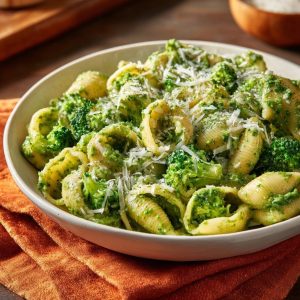
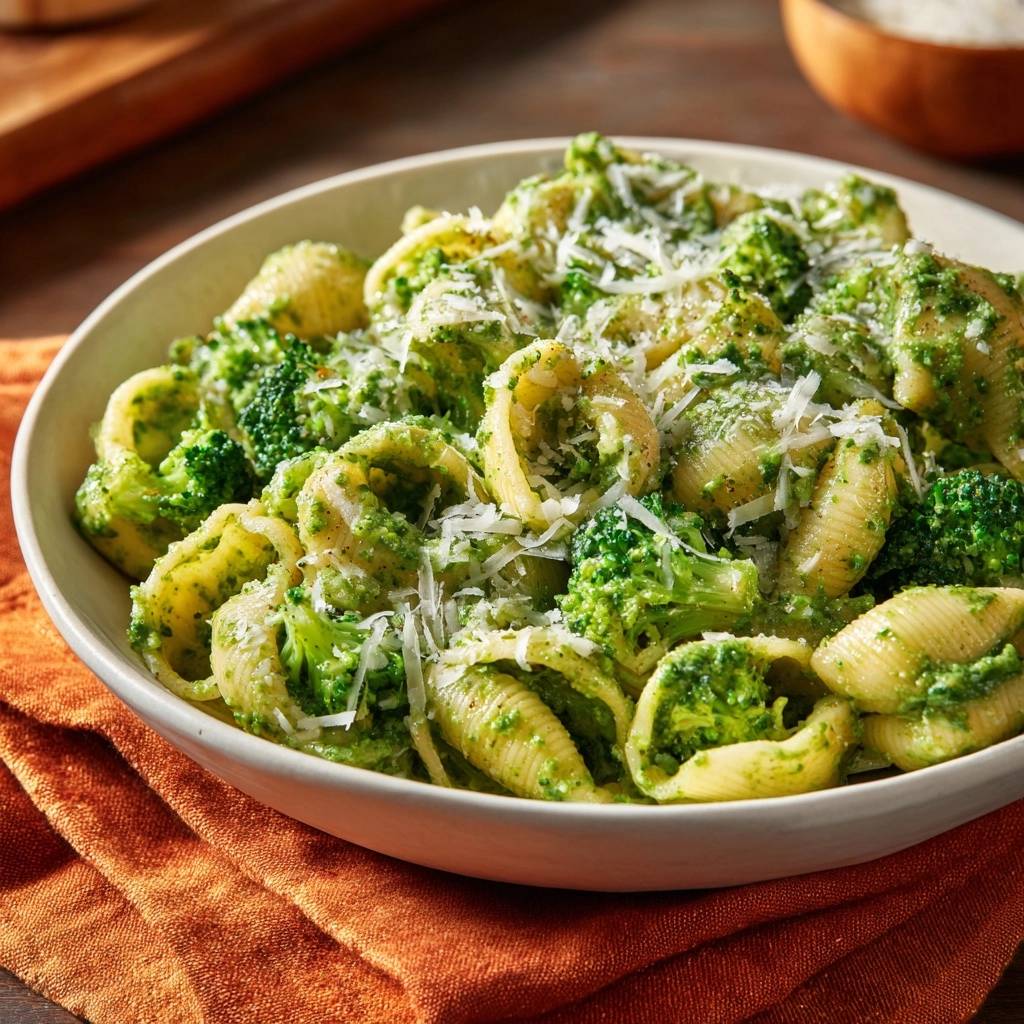
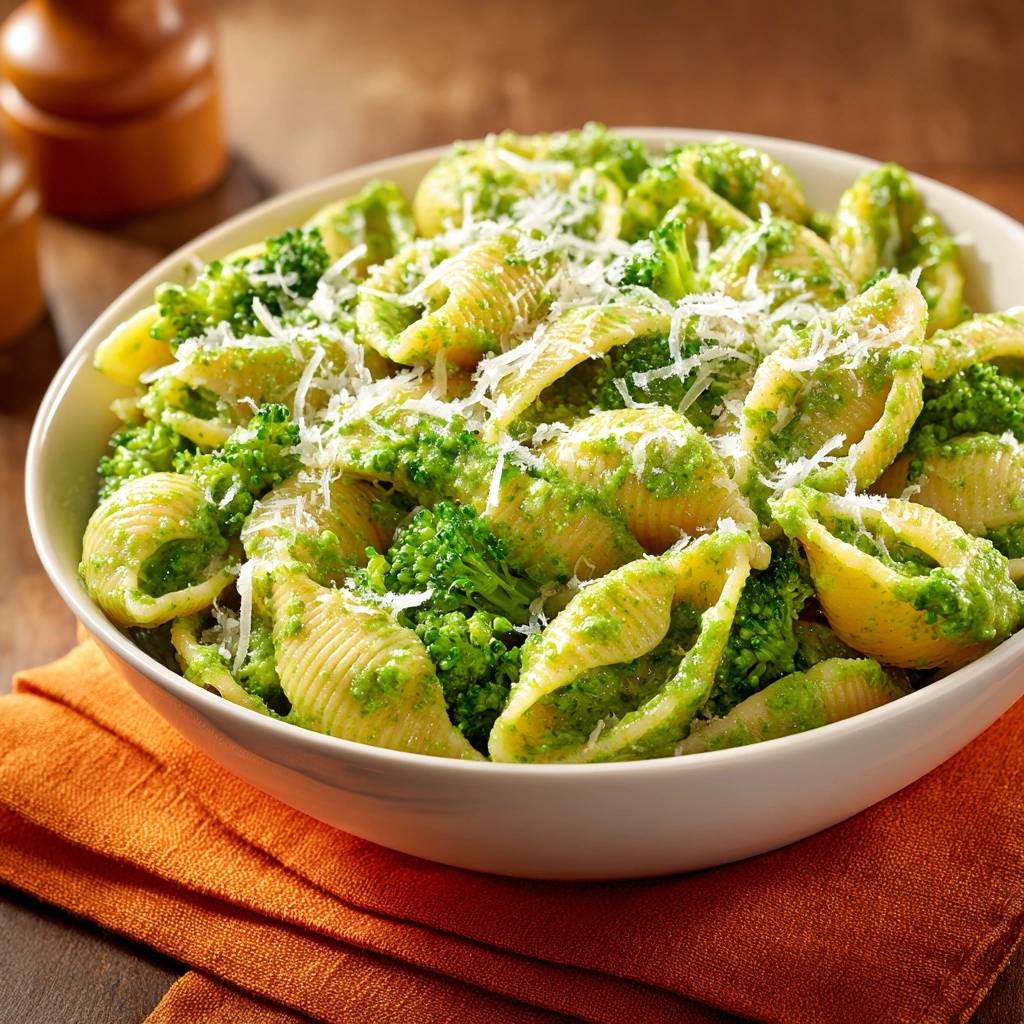
I’ve found that the real magic happens when you use the pasta shells as a tool. Because of their concave shape, they act like little scoops that trap the softened broccoli mash. By the time you’re done stirring, you aren’t just eating pasta with vegetables; you’re eating pasta in a creamy, vegetable-based gravy that requires zero heavy cream.
The Science of the Broccoli Emulsion
In the world of pasta, a “broken” sauce is the ultimate enemy. This happens when the fats, like olive oil and butter, refuse to bond with the water-based components. However, we can use chemistry to our advantage by creating a bridge between these ingredients. In this recipe, the bridge is built from two things: disintegrated broccoli fibers and concentrated starch.
When you boil broccoli past the point of “al dente,” its cellular structure begins to collapse. These softened fibers act as a natural thickener, much like a flour-based roux but with far more flavor. As you toss the pasta, these tiny green particles suspend themselves in the oil, creating a rustic puree that coats the shells perfectly.
Furthermore, the starch released by the pasta shells during the boiling process is essential. This starch acts as an emulsifier, grabbing onto the olive oil and the moisture from the broccoli to create a glossy, uniform sauce. Without this deliberate overcooking, the broccoli would remain whole, the oil would stay at the bottom of the bowl, and you’d be left with that dreaded watery mess.
Why Starchy Pasta Water is Non-Negotiable
Think of your pasta water as “liquid gold.” As the shells cook, they release amylose, a type of starch that turns the water cloudy and slightly viscous. This liquid is the secret weapon for a silky mouthfeel. When you add this salty, starchy water back into the pan with the Parmesan and oil, it creates a creamy tension. It binds the fat to the pasta, ensuring the sauce doesn’t just slide off the noodles and pool at the bottom of your plate.
Essential Components for Creamy Broccoli Shells
Since this recipe relies on just a few ingredients, quality is everything. Start with the cheese. You want a high-fat, aged Parmesan, preferably Parmigiano-Reggiano. Domestic “shaker” cheese contains anti-caking agents like cellulose that prevent it from melting smoothly. Freshly grated cheese will melt into the sauce instantly, contributing to that luxurious, velvety texture we’re after.
The garlic also plays a massive role. Avoid the pre-minced stuff in jars, which often tastes metallic or sour. Fresh cloves provide a pungent, sweet aroma that balances the earthy notes of the broccoli. When combined with a high-quality extra virgin olive oil, these aromatics form the flavor backbone of the entire dish.
Finally, the pasta shape matters more than you think. Medium shells are the superior vessel here. Their deep interior “pocket” is designed to trap the broccoli emulsion. While orecchiette is a traditional choice, shells have a larger surface area and a thinner wall, which allows them to cook at a similar rate to the broccoli stems.
Selecting and Prepping Your Broccoli
Don’t toss those stems! The stalks actually contain more sugar and a denser texture than the florets. To get the best results, peel the woody outer layer of the stems with a vegetable peeler and chop the tender inner core into tiny cubes. These bits provide the “meat” of the sauce, while the delicate florets break down to create the “cream.” Using the whole head ensures no flavor is wasted and adds complexity to every bite.
Step-by-Step: Achieving the Perfect Sauce Coating
Creating this dish is a fast-paced process that requires your full attention for about 15 minutes. You aren’t just boiling ingredients; you’re managing a transformation. The goal is to move from raw components to a unified, glossy emulsion through three specific phases: the par-boil, the infusion, and the final stir.
Phase 1: The Strategic Timing of the Boil
Start by boiling the pasta for exactly 4 minutes on its own. This gives the shells a head start so they don’t turn into mush. Then, drop in your finely chopped broccoli. You’ll notice the water temperature dip slightly, but it will quickly return to a roar. Watch for the broccoli to turn from a deep forest green to a bright, almost neon shade. By the time the pasta is al dente, the broccoli should be soft enough to crush between your fingers.
Phase 2: Infusing the Aromatics
While the pasta drains, heat your olive oil over medium-low. This is a gentle process. Add the garlic and red pepper flakes, watching for tiny bubbles to form around the garlic. You want it to become fragrant and translucent, not brown or crispy. If the garlic turns dark, it becomes bitter and will overwhelm the sweetness of the broccoli. This step builds the aromatic base that seasons the oil before the pasta returns to the pot.
Phase 3: The Vigorous Stirring Technique
This is where the magic happens. Return the pasta and broccoli to the pot with a splash of that reserved water and the cheese. Use a sturdy wooden spoon and stir with purpose. You want to physically mash some of the broccoli against the side of the pot. As you toss, the shells act like mini-whisks, beating the starch, oil, and cheese into a thick, green sauce. If it looks dry, add more water. If it looks thin, keep stirring over the heat.
Troubleshooting Common Pasta Texture Issues
If your sauce feels “tight” or sticky, it usually means the cheese has clumped or the water has evaporated too quickly. Simply add another tablespoon of pasta water and stir vigorously; the heat and moisture will loosen the proteins in the cheese. On the flip side, if the sauce looks broken or oily, you likely didn’t stir enough or the broccoli wasn’t soft enough to emulsify. In this case, keep the heat low and continue mashing the broccoli bits until the liquid thickens up.
Flavor Variations and Ingredient Swaps
While this dish is incredible in its simplest form, you can easily customize it. A burst of fresh lemon zest added at the very end provides a bright acidity that cuts through the richness of the Parmesan. If you want some crunch, toasted pine nuts or walnuts offer a beautiful textural contrast to the soft shells. For those who love a bit of sweetness, sautéing some finely diced red onion with the garlic adds a subtle depth without changing the creamy integrity of the broccoli base.
What to Serve with Creamy Broccoli Shells
Because this pasta is quite rich and earthy, it pairs beautifully with something bright and crisp. A simple arugula salad with a sharp lemon vinaigrette provides a peppery bite that cleanses the palate between forkfuls of creamy shells. If you want to lean into the comfort food vibes, a piece of toasted sourdough or a crusty baguette is essential. You’ll want something sturdy to mop up every last drop of that green emulsion left at the bottom of your bowl.
Expert Tips for Reheating and Storage
This dish is undoubtedly best served immediately while the emulsion is at its peak silkiness. However, if you have leftovers, don’t just throw them in the microwave. The pasta will soak up the moisture, leaving it dry. To rescue it, place the pasta in a small pan with a splash of water or milk. Heat it gently over medium-low, stirring constantly to re-emulsify the fats. This brings back that glossy coating and prevents the shells from becoming rubbery.
Frequently Asked Questions
Can I use frozen broccoli for this recipe?
You can use frozen broccoli, but keep in mind that it holds more water than fresh. Thaw it completely and pat it dry before adding it to the boiling water. Since frozen broccoli is usually blanched before freezing, it may soften much faster than fresh, so reduce its boiling time by 2 or 3 minutes to prevent it from completely dissolving into a soup.
Can I use a different pasta shape?
Yes, though shapes with high surface areas work best. Orecchiette, fusilli, or campanelle are excellent alternatives. Avoid long, thin noodles like spaghetti or linguine, as they don’t have the “pockets” necessary to trap the thick broccoli mash, which might result in the sauce sliding to the bottom of the plate.
How do I make this recipe vegan?
To make this vegan, swap the Parmesan for a half-cup of nutritional yeast and a tablespoon of white miso paste for that salty, umami kick. Use a high-quality vegan butter or simply increase the extra virgin olive oil. The starch from the pasta water and the softened broccoli will still create a creamy texture even without the dairy cheese.
Why is my sauce still watery even after stirring?
This usually happens if the broccoli wasn’t cooked long enough or if you used too much pasta water at once. The broccoli must be very soft to break down into the sauce. If it’s already plated and watery, you can try stirring in an extra handful of finely grated cheese, which acts as a binder to help pull the liquid and oil together.
Does this dish freeze well?
I don’t recommend freezing this dish. The emulsion of oil, starch, and broccoli tends to break when frozen and thawed, resulting in a grainy texture. Additionally, the pasta shells will lose their structure and become mushy. It is much better enjoyed fresh or kept in the fridge for up to three days.
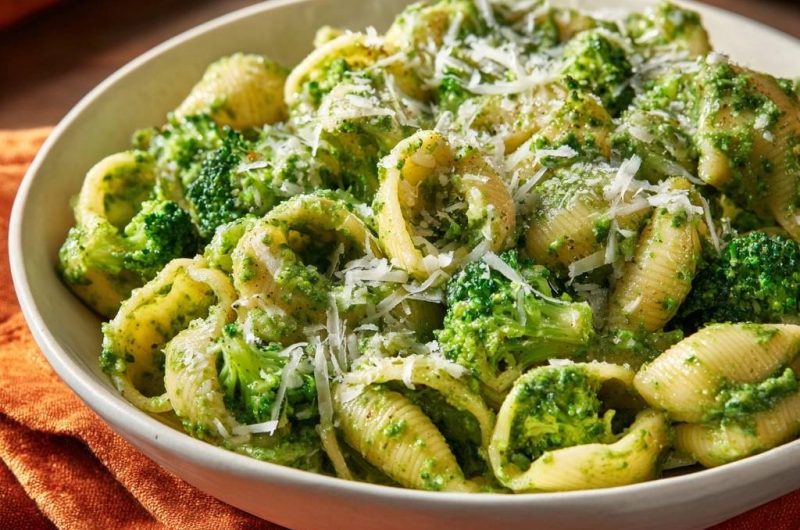
Creamy Broccoli Shells
Course: Main CourseCuisine: Italian-AmericanDifficulty: easy4
servings10
minutes15
minutes25
Minutes440
kcalItalian-American
Ingredients
12 ounces medium pasta shells
2 large heads of broccoli (approx. 1.5 lbs), cut into very small florets and tender stems finely chopped
1/4 cup extra virgin olive oil
4 cloves garlic, minced
1/2 teaspoon red pepper flakes
3/4 cup freshly grated Parmesan cheese, plus more for serving
1 cup reserved starchy pasta water
1 tablespoon unsalted butter (optional, for extra silkiness)
Salt and black pepper to taste
Directions
- Bring a large pot of heavily salted water to a boil. Add the pasta shells and cook for 4 minutes.
- Add the finely chopped broccoli florets and stems directly into the boiling water with the pasta. Continue cooking for another 5 to 6 minutes. The goal is for the pasta to be al dente while the broccoli becomes very soft and bright green.
- Before draining, reserve at least 1 cup of the cloudy, starchy pasta water. This is the essential “liquid gold” that prevents a watery sauce. Drain the pasta and broccoli.
- In the same pot, heat the olive oil over medium-low heat. Add the minced garlic and red pepper flakes, sautéing for 1-2 minutes until fragrant and softened, but do not let the garlic brown.
- Return the pasta and broccoli to the pot. Add 1/2 cup of the reserved pasta water, the Parmesan cheese, and the butter (if using).
- Use a sturdy wooden spoon to vigorously stir and toss the mixture for 2-3 minutes over medium heat. As you stir, the softened broccoli will partially break down and mash into the water and oil.
- Continue stirring until the starch, cheese, and disintegrated broccoli emulsify into a thick, creamy green sauce that coats the inside and outside of the shells. If the sauce is too thick or “tight,” add the remaining pasta water a tablespoon at a time until the desired creamy consistency is reached.
- Season generously with salt and black pepper. Serve immediately in warm bowls with an extra dusting of grated Parmesan cheese.
Notes
- The secret to this sauce is the ‘liquid gold’ starchy water and the mashing of the overcooked broccoli to create a pesto-like consistency.