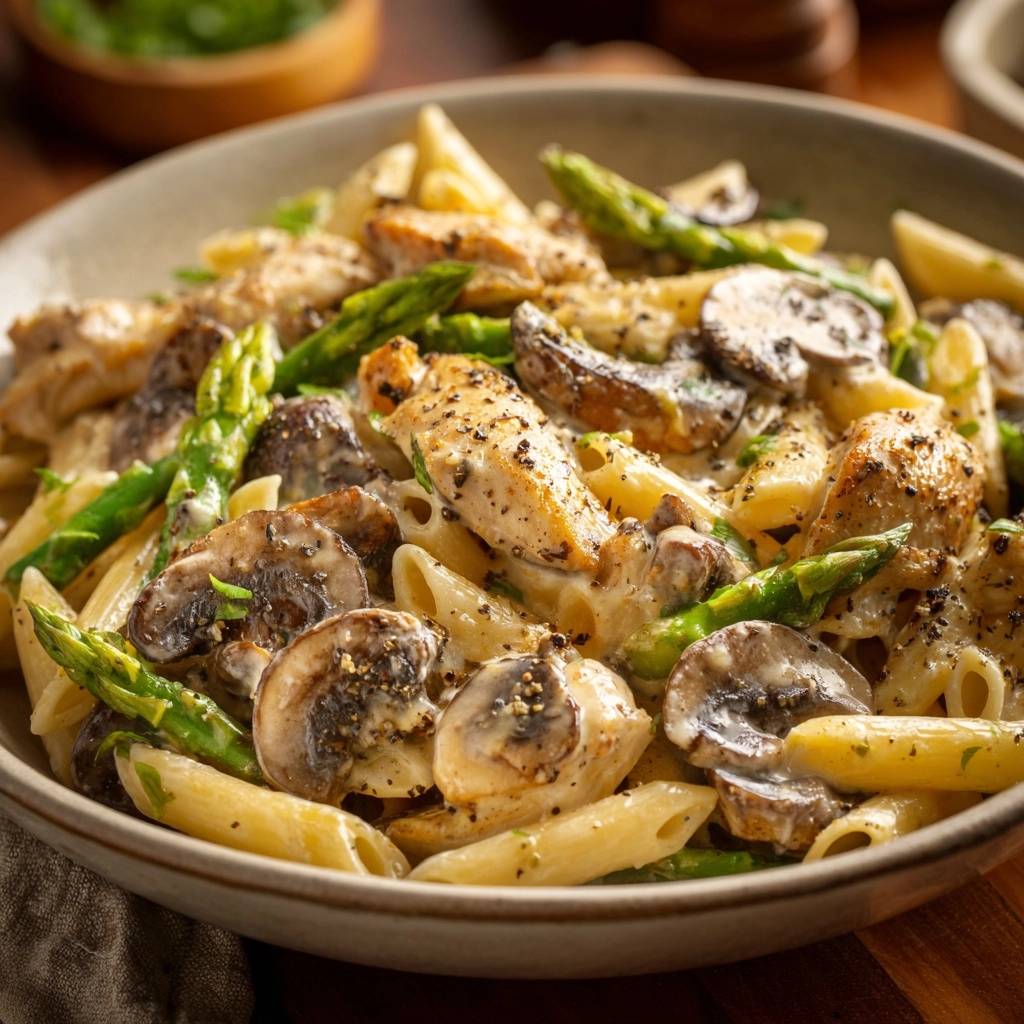
We’ve all been there. You sit down to a beautiful plate of pasta, but by the time you reach the middle of the bowl, the noodles are swimming in a thin, milky puddle. It’s frustrating because the flavor is usually there, but the texture feels like a failure. A truly great Creamy Chicken and Mushroom Penne should feel like a warm hug, with a sauce that acts more like a velvet cloak than a soup.
The difference between a “broken” sauce and a restaurant-quality emulsion comes down to how you handle the fats and starches. When cream isn’t properly reduced or bound to the pasta, the water from the vegetables and the moisture in the cream separate. This creates that dreaded watery residue that slides right off your penne. To fix this, we focus on building a stable structure that grips the ridges of the pasta and stays thick until the very last bite.
The secret to this success is the “liquid gold” you usually pour down the drain: starchy pasta water. By pulling the penne out of the pot just before it’s fully cooked, you leave enough “thirst” in the noodle to soak up the cream. When you combine that starch with a heavy cream reduction, you create a physical bond that prevents separation. It’s a simple technique, but it changes everything about the final mouthfeel.
The Chemistry of a Stable Cream Sauce
Creating a stable sauce isn’t just about luck; it’s about managing evaporation and fat content. Heavy cream is essential here because its high fat-to-water ratio makes it naturally resistant to curdling when exposed to heat. As you simmer the cream, the water evaporates, leaving behind concentrated fats and proteins that provide a luxurious, thick base. If you skip the reduction step, you’re essentially just pouring warm milk over your dinner.
This recipe intentionally avoids a flour-based roux. While a roux is great for gravies, it can often mask the delicate, earthy notes of the cremini mushrooms and the sweetness of the garlic. Instead, we rely on the “bridge” effect. Starch molecules from the pasta water act as a middleman, linking the fats in the cream to the liquids in the pan. This creates a cohesive glaze that is much lighter and more flavorful than a heavy, flour-thickened sauce.
Why Starchy Pasta Water is Non-Negotiable
As pasta boils, it releases microscopic starch particles into the water. This cloudy liquid is a powerful natural emulsifier. When you add a splash of this water to your skillet, those starch granules swell and trap the fat droplets from the cream and cheese. This prevents the sauce from “breaking” or turning into a pool of oil, ensuring every inch of your penne is coated in a glossy, stable finish.
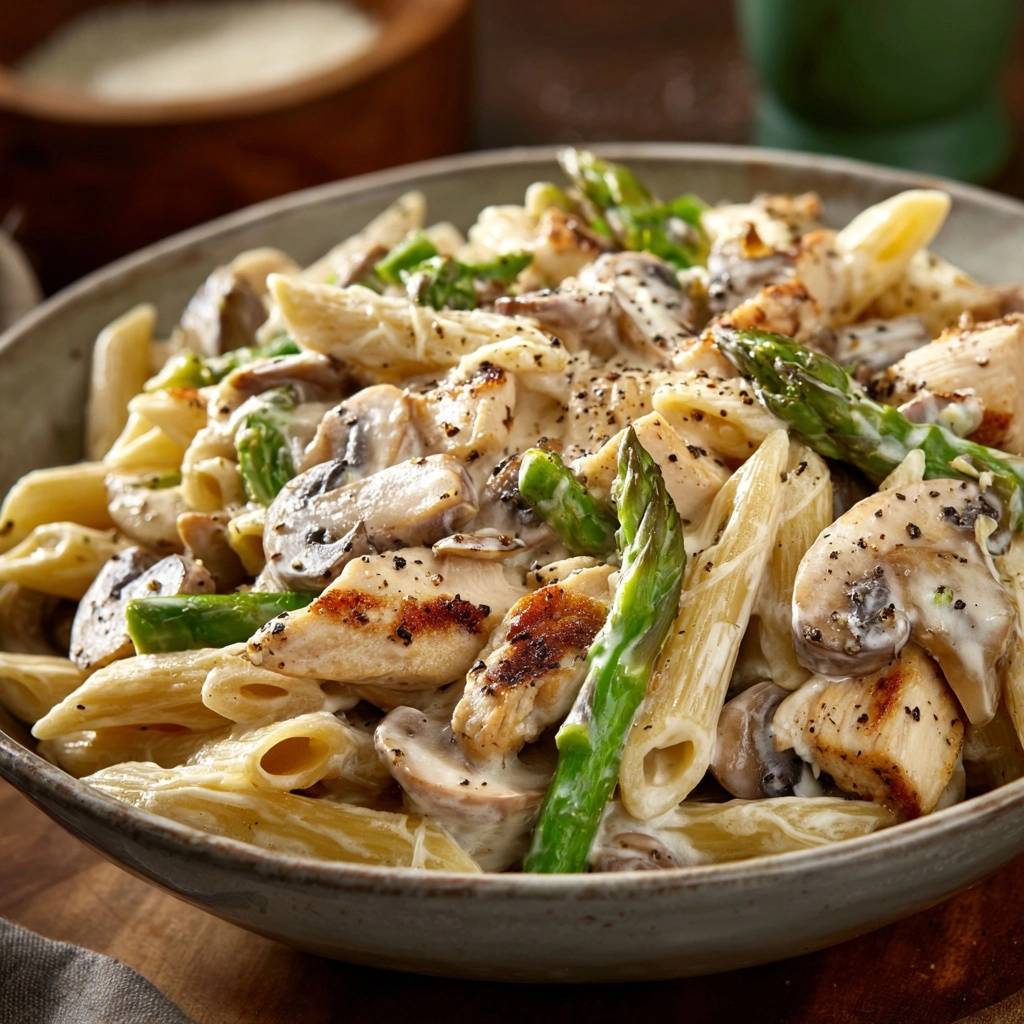
Essential Components for the Perfect Penne
The shape of your pasta matters just as much as the sauce itself. For this dish, Penne Rigate is the gold standard. The “rigate” refers to the ridges on the outside of the tube, which act like tiny gutters to catch and hold the mushroom-flecked cream. Smooth penne allows the sauce to slide off, but ridged penne ensures you get a burst of flavor in every single bite. It’s all about maximizing the surface area for the sauce to cling to.
When it comes to the mushrooms, skip the basic white buttons and reach for Cremini (often sold as Baby Bellas). Cremini mushrooms are more mature, meaning they have a lower water content and a much deeper umami profile. They hold their shape better during the searing process and provide a meaty texture that stands up to the chicken. Using fresh, firm mushrooms ensures they absorb the cream rather than turning into mushy sponges.
Selecting and Prepping the Chicken Medallions
Juicy chicken is a requirement, not a suggestion. Instead of cutting the breast into tiny cubes that dry out instantly, slice them into thick medallions. This extra thickness allows you to get a hard, golden sear on the outside while the center stays tender and moist. For the best results, take your chicken out of the fridge 15 minutes before cooking. Cold meat hitting a hot pan causes the fibers to seize, which can lead to a tough, rubbery texture.
The Role of Freshly Grated Parmesan
If you use the cheese from a green shaker bottle or even the pre-shredded bags, your sauce will likely be grainy. Pre-shredded cheeses are coated in potato starch or cellulose to prevent clumping, which interferes with how the cheese melts. A block of fresh Parmesan-Reggiano has natural proteins that melt smoothly into the cream. This adds a salty depth and acts as a final thickening agent to give the sauce its signature body.
Step-by-Step: Searing and Building the Flavor Base
The foundation of this dish is built in the first five minutes of cooking. When you sear the chicken, you’re looking for the Maillard reaction—that beautiful brown crust that develops on the surface of the meat. Don’t rush this! That crust isn’t just for looks; it’s concentrated flavor. As the chicken cooks, it leaves behind “fond,” which are the little brown bits stuck to the bottom of the skillet. These bits are the soul of your sauce.
Once the chicken is removed, those brown bits are waiting to be deglazed by the moisture from the mushrooms and the cream. This integrates the savory chicken essence directly into the sauce. By building layers of flavor in a single pan, you ensure the dish tastes complex and well-rounded. Every step, from the initial sear to the final toss, is designed to keep those flavors trapped inside the skillet rather than lost in the steam.
Achieving the Perfect Mushroom Crust
The biggest mistake people make with mushrooms is crowding the pan. Mushrooms are roughly 90% water. If you pile them on top of each other, that water gets trapped, and they end up steaming in their own juices. To get a crisp, golden crust, spread them out in a single layer and leave them alone! Don’t stir for at least three minutes. You’ll hear them sizzle, and once they stop releasing steam and start to brown, you’ve successfully locked in their flavor.
Timing the Asparagus for Maximum Snap
Asparagus can go from perfect to pathetic in a matter of seconds. You want to hit the “tender-crisp” window, where the stalks are bright green and have a slight snap when you bite them. By adding the asparagus toward the end of the mushroom sauté, you give it just enough time to soften without losing its structural integrity. If it turns a dull, olive-drab color, it’s overcooked. Keep it vibrant to provide a fresh contrast to the rich cream.
The Reduction: Transforming Cream into Velvet
Once you pour the heavy cream into the pan, your job is to watch the bubbles. At first, the bubbles will be small and thin. As the water evaporates and the sauce thickens, the bubbles will become larger and slower to pop. This is the reduction process in action. You are looking for the “nappe” stage, a French culinary term meaning the sauce is thick enough to coat the back of a spoon without immediately running off.
Integrating the Emulsion
The final toss is the most active part of the recipe. When you add the pasta and that splash of starchy water, you need to toss vigorously. This mechanical agitation helps the starch and fat bind together. You’ll see the sauce transform from a liquid into a glossy, thick glaze that sticks to the penne. If it looks too thick or “tight,” don’t panic. Just add another tablespoon of pasta water to loosen it back up to your desired consistency.
Troubleshooting Common Pasta Texture Issues
Even experienced cooks run into trouble sometimes. If your sauce looks oily or separated, it usually means the heat was too high or the cream reduced too far. If the chicken feels dry, it was likely overcooked during the initial sear; remember that it will continue to cook slightly when it’s added back into the hot sauce. Always taste as you go, especially for salt, as the Parmesan and pasta water both add their own saltiness to the final profile.
Fixing a Sauce That Has Separated
If you see the fat separating from the solids, you can usually save it. Remove the pan from the heat immediately. Add a single teaspoon of boiling water (or more pasta water) and whisk or toss the pasta rapidly. The sudden introduction of moisture and the drop in temperature can help the emulsion reform. It’s a quick fix that can rescue a dish that looks like it’s headed for the “watery” category.
Preventing Overcooked, Mushy Penne
Always cook your pasta for two minutes less than the box instructions. This is because of “carry-over cooking.” The penne will spend its final few minutes simmering in the hot cream sauce, where it will absorb liquid and finish softening. If you boil it to perfect tenderness in the water, it will inevitably turn mushy by the time it hits the plate. Aim for a firm, slightly white core when you drain it.
Flavor Variations and Ingredient Swaps
While cremini mushrooms are fantastic, you can elevate this dish by using a mix of oyster and shiitake mushrooms for a more “forest-floor” earthy flavor. If asparagus isn’t in season, broccolini or sugar snap peas make excellent substitutes. They both offer that necessary crunch and bright green color. Just be sure to blanch them briefly or sauté them just as you would the asparagus to maintain that perfect texture.
What to Serve with Creamy Chicken and Mushroom Penne
Because this dish is so rich and savory, you want sides that offer acidity and crunch. A simple arugula salad tossed in a sharp lemon vinaigrette is the perfect palate cleanser. The peppery greens cut right through the heavy cream. You could also serve some charred, crusty bread rubbed with a raw garlic clove. Avoid sides like mashed potatoes or buttery corn, as they will compete with the richness of the pasta rather than balancing it.
Expert Tips for Reheating and Storage
Cream sauces are notoriously tricky to reheat because the emulsion often breaks in the microwave, leaving you with oily noodles. To store, keep the pasta in an airtight container for up to three days. When you’re ready to eat, place the pasta in a skillet over low heat. Add a splash of milk or a tiny bit of water. As it warms, stir gently to re-incorporate the fats. This “re-emulsifies” the sauce, bringing back that velvety texture.
Frequently Asked Questions
Can I use half-and-half instead of heavy cream?
It’s not recommended if you want to avoid a watery sauce. Half-and-half has a much higher water content and lower fat content than heavy cream. This makes it prone to curdling when it hits the acidic garlic or high heat. It also won’t thicken as effectively during the reduction phase, which is the main cause of that thin, runny consistency at the bottom of the bowl.
How do I keep the garlic from burning?
Timing is everything with garlic. If you add it at the beginning with the mushrooms, it will turn bitter and black long before the mushrooms are browned. Always wait until the mushrooms have released their moisture and started to crisp. Adding the garlic in the last 60 seconds of the sauté ensures it releases its aromatic oils without scorching in the hot butter and oil.
Is there a substitute for the Parmesan cheese?
Yes, you can use Pecorino Romano if you prefer a sharper, saltier kick, though you should reduce the added salt in the recipe. Grana Padano is another excellent choice; it’s slightly milder and sweeter than Parmesan but has the same excellent melting properties. Just ensure whatever you choose is freshly grated from a block to maintain the integrity of the sauce’s texture.
Why is my sauce still thin after adding the water?
If the sauce seems thin, it usually means the cream wasn’t reduced enough before the water was added, or the heat wasn’t high enough during the final toss. The starch in the water needs heat to “activate” and thicken. Try simmering the dish for an extra minute while tossing constantly. The combination of the cheese melting and the starch swelling should pull everything together into a thick glaze.
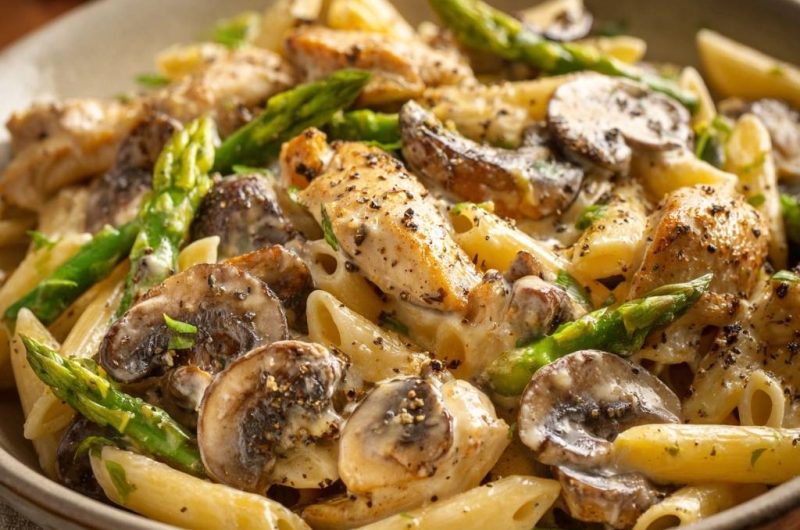
Creamy Chicken and Mushroom Penne
Course: Main CourseCuisine: AmericanDifficulty: easy4
servings15
minutes20
minutes35
Minutes580
kcalAmerican
Ingredients
1 pound penne pasta
1 pound chicken breast, sliced into thick medallions
10 ounces cremini mushrooms, sliced thick
1 bunch asparagus, trimmed and cut into 2-inch pieces
3 cloves garlic, minced
1 cup heavy cream
1/2 cup freshly grated Parmesan cheese
2 tablespoons olive oil
1 tablespoon unsalted butter
1 1/2 teaspoons coarse cracked black pepper (plus more for garnish)
1/2 teaspoon salt
1/4 cup fresh parsley, chopped
1/2 cup reserved starchy pasta water
Directions
- Bring a large pot of heavily salted water to a boil. Add the penne and cook until just shy of al dente (about 2 minutes less than package directions). Important: Before draining, scoop out 1 cup of the starchy pasta water and set it aside. This water is the key to preventing a watery sauce.
- While the pasta cooks, heat olive oil in a large skillet over medium-high heat. Season chicken medallions generously with salt and half of the cracked black pepper. Sear until golden brown and cooked through. Remove chicken from the pan and set aside.
- In the same skillet, melt the butter. Add the sliced mushrooms in a single layer. Sauté them undisturbed for 3-4 minutes to allow the moisture to evaporate and the edges to become deeply browned and crisp. This prevents the mushrooms from releasing excess water into your final sauce.
- Add the asparagus and garlic to the mushrooms, sautéing for another 2-3 minutes until the asparagus is bright green and tender-crisp.
- Lower the heat to medium. Pour in the heavy cream and the remaining cracked black pepper. Bring to a gentle simmer and let the cream reduce by one-third until it begins to thicken naturally.
- Add the cooked pasta and chicken back into the skillet. Sprinkle in the Parmesan cheese.
- To solve the watery sauce problem, pour in 1/4 cup of the reserved pasta water and toss vigorously over the heat. The starch in the water acts as a bridge between the fats in the cream and the pasta, creating a thick glaze. If the sauce is too tight, add a splash more water until it perfectly coats the back of a spoon.
- Fold in the fresh parsley. Finish with an extra heavy dusting of cracked black pepper to match the visual profile. Serve immediately while the emulsion is at its peak.
Notes
- The secret to preventing a watery sauce is using reserved starchy pasta water and reducing the heavy cream before adding the pasta. Ensure mushrooms are sautéed undisturbed to evaporate moisture and achieve a deep brown crust.