Stop settling for tough, chewy mussels that taste like pencil erasers. Most home cooks fail at this dish because they treat seafood like pasta, boiling it until the proteins shrink and toughen into rubbery knots. The secret to restaurant-quality results isn’t the price of the shellfish; it’s precise temperature control and a gentle touch.
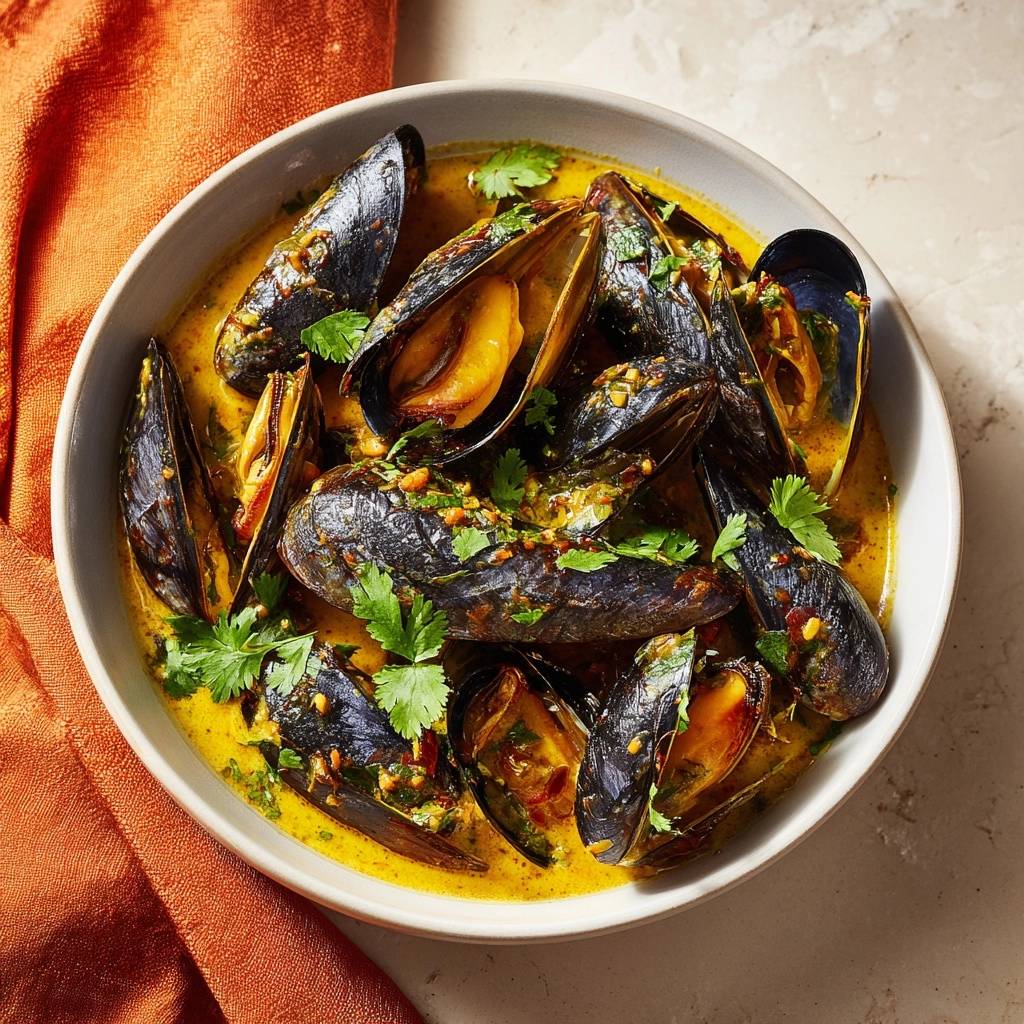
Imagine lifting a heavy lid to reveal a cloud of aromatic steam, scented with ginger and earthy turmeric. Each shell has popped open to reveal a plump, tender morsel bathed in a rich, golden broth. This recipe focuses on a gentle steam infusion method that locks in moisture while the mussels absorb the complex, creamy flavors of the curry.
The real pro tip here is the “single layer” rule. If you pile mussels three inches deep, the ones at the bottom overcook while the ones at the top stay raw. By using a wide, heavy-bottomed pot, you ensure every shell hits the heat at the same time, resulting in a uniform, melt-in-your-mouth texture that feels truly indulgent.
The Science of Tender, Non-Rubbery Mussels
Mussels are essentially pure protein held together by delicate connective tissues. When you subject them to aggressive, high-heat boiling, those muscle fibers seize up instantly. This reaction squeezes out the internal moisture, leaving you with a shrunken, dry, and unappealing texture. It’s the most common mistake in home seafood preparation.
However, the gentle steam infusion method changes the physics of the pot. By bringing your coconut curry base to a simmer and then trapping the steam with a tight lid, you create a pressurized chamber. This environment cooks the mussels from the inside out at a lower, more stable temperature than boiling water.
Therefore, the protein relaxes rather than contracts. The steam gently coaxes the shells to open, allowing the aromatic broth to seep inside without toughening the meat. This method preserves the natural briny juices of the mussel, which then mingle with the coconut milk to create a deeper, more complex sauce.
Essential Components for the Golden Curry Broth
The foundation of this dish relies on the quality of your fats and aromatics. You must use full-fat coconut milk for this recipe. Lite versions lack the necessary viscosity to cling to the shells and often break or curdle when they hit the acidic lime juice later in the process. Full-fat milk provides a stable emulsion that carries the heat of the chili perfectly.
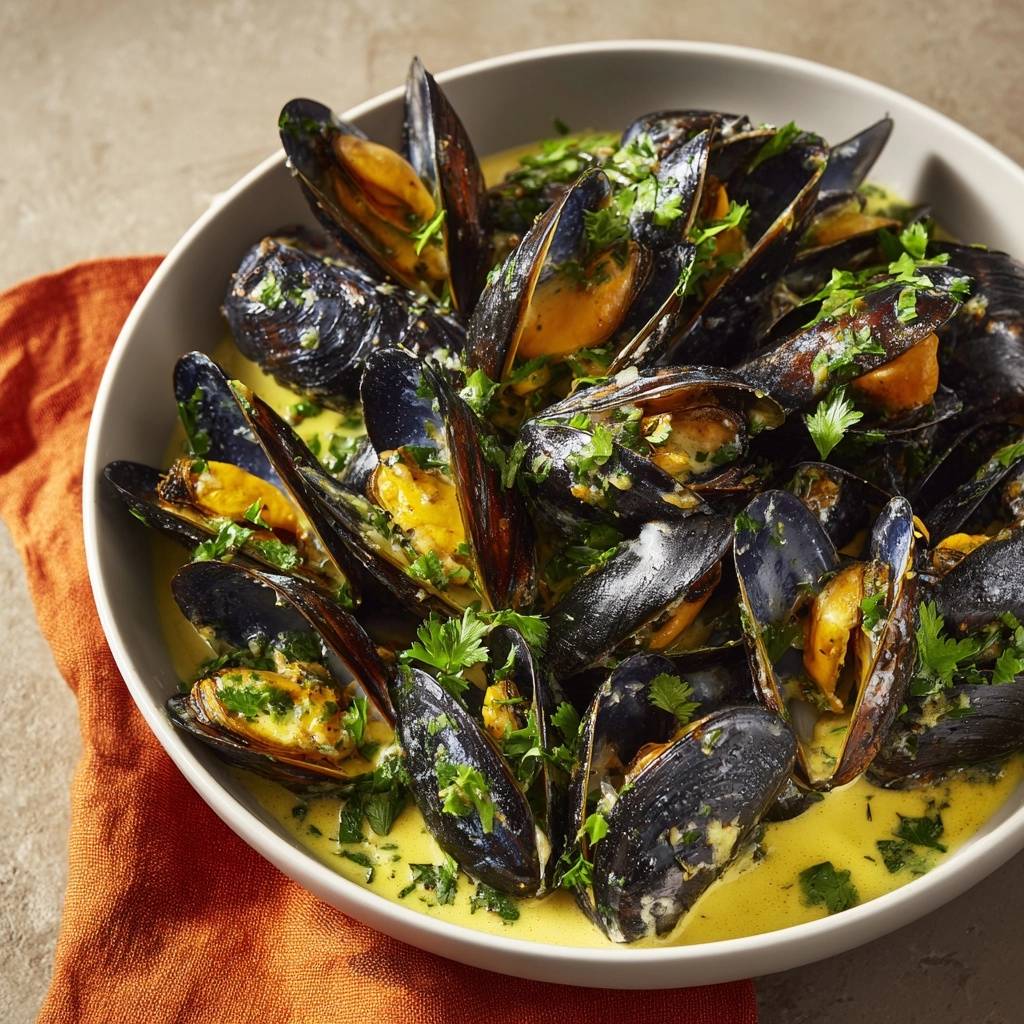
Yellow curry paste and turmeric powder work together to create that iconic, vibrant sun-yellow hue. While the paste provides the spice and herb base, the extra turmeric adds an earthy depth and ensures the broth looks as rich as it tastes. It’s the difference between a pale, watery sauce and a professional-grade curry.
In addition, always reach for low-sodium seafood or vegetable broth. Mussels naturally release salty liquor as they open. If you start with a high-sodium base, the final reduction will be far too salty to enjoy. Using a low-sodium liquid gives you total control over the final seasoning profile.
Selecting and Cleaning Fresh Shellfish
When buying mussels, look for shells that are tightly closed and smell like the fresh ocean, not “fishy.” If you find an open shell, give it a firm tap on the counter. A live, healthy mussel will slowly close its shell in response. If it doesn’t move, it’s dead and must be discarded immediately to avoid food safety issues.
Before cooking, you need to “debeard” the mussels. This involves pulling away the brown, fuzzy clump of fibers sticking out from the shell. Simply grab the beard and pull it firmly toward the hinge of the mussel. Scrub the shells with a stiff brush under cold running water to remove any grit or sand that would ruin your smooth broth.
Aromatic Bases: Garlic, Ginger, and Chili
Freshness is non-negotiable when it’s time to build your flavor base. Minced garlic and grated ginger provide a sharp, zingy contrast to the mellow coconut milk. Powdered versions simply cannot replicate the pungent aroma that fills the kitchen when fresh ginger hits hot oil. It’s the soul of the dish.
The fresh red chili adds a clean, bright heat that cuts through the richness of the coconut fat. If you prefer a milder experience, remove the seeds before slicing. The goal isn’t to burn your palate but to provide a gentle back-of-the-throat warmth that balances the sweetness of the curry paste.
Step-by-Step: Building the Aromatic Foundation
Firstly, heat your oil over medium heat and sauté your garlic, ginger, and chili. You aren’t looking for brown, crispy bits here. Instead, wait for the 60-second mark when the aroma becomes intense and the garlic looks soft and translucent. This creates the flavored oil that will carry the rest of the ingredients.
Next, you must “bloom” your curry paste and turmeric. Stir them into the hot oil for about two minutes. You’ll notice the paste darken slightly and the oil begin to separate at the edges. This process toasts the dried spices and releases fat-soluble flavor compounds that would otherwise remain dormant if you just stirred the paste into cold liquid.
Once the paste is fragrant, whisk in the coconut milk, broth, and fish sauce. Keep whisking until the liquid is a uniform, creamy gold with no lumps of paste remaining. Bring it to a gentle simmer, but don’t let it reach a rolling boil, as this can cause the coconut milk to lose its silky texture.
The Precision Steaming Process
Now comes the most critical phase. Once your broth is simmering, add the mussels and immediately clamp the lid down tight. Do not peek! Every time you lift the lid, you let out the precious steam that is doing the hard work of cooking the seafood gently. Set a timer for exactly four minutes.
While the lid is on, grab the handles of the pot with oven mitts and give it a vigorous shake once or twice. This redistributes the mussels so the ones on top get a turn in the hot liquid. Shaking is much better than stirring with a spoon, which can accidentally knock the delicate meat out of the shells or break the shells into shards.
After four to six minutes, remove the lid. A perfectly cooked mussel should be wide open, with the meat looking plump and slightly opaque. If the meat looks shriveled or tiny, they’ve been in too long. Use a slotted spoon to move the opened mussels to your bowls, leaving the liquid behind for the final seasoning touch.
Troubleshooting Common Shellfish Mistakes
If you find a few mussels that are still tightly closed after seven minutes, throw them away. Do not try to pry them open. A shell that refuses to open usually indicates the mussel was dead before it ever hit the pot, and it isn’t worth the risk to your stomach to find out.
Sometimes your broth might look a little thin if the mussels released a lot of liquid. If this happens, simply turn the heat up to medium-high for two minutes after the mussels are removed. This quick reduction thickens the sauce and concentrates the flavors. If the sauce ever looks like it’s curdling, whisk in a splash of room-temperature coconut milk to bring the emulsion back together.
Flavor Variations and Ingredient Swaps
While yellow curry is classic, you can easily pivot this recipe toward a Thai-leaning profile. Swap the yellow paste for green curry paste and add a bruised stalk of lemongrass to the simmering broth. This creates a brighter, more herbal experience that pairs beautifully with the briny mussels.
If you can’t find mussels, this exact base works wonders with littleneck clams or even large prawns. Just keep in mind that clams may take a minute or two longer to pop open. For those who want more heat, a spoonful of chili oil drizzled over the top at the end adds a beautiful red contrast to the golden broth.
What to Serve with Creamy Coconut Curry Mussels
The broth is the star of the show, so you need a vehicle to soak it up. A toasted baguette or a thick slice of crusty sourdough is the traditional choice. The crunch of the bread provides a fantastic textural contrast to the soft, tender mussels and the velvety sauce.
For a more filling meal, serve the mussels over a bed of jasmine rice or thin rice noodles. The rice acts like a sponge, absorbing every drop of the turmeric-infused coconut milk. To balance the richness, I always serve a simple side salad with a sharp, acidic lime dressing to cleanse the palate between bites.
Expert Tips for Seafood Presentation
Presentation is everything with a dish this vibrant. Use wide, shallow bowls rather than deep ones. This allows the mussels to spread out so you can pour the broth over all of them evenly. It also makes it much easier for your guests to access the shells without digging through a mountain of seafood.
Don’t forget the final garnish. The fresh cilantro adds a pop of green that makes the yellow broth sing. Most importantly, serve with extra lime wedges on the side. A fresh squeeze of lime right before eating wakes up the turmeric and ginger, providing a bright finish that cuts through the creamy coconut milk perfectly.
Frequently Asked Questions
Can I use frozen mussels for this curry?
You can use frozen mussels, but the texture will be slightly different. Most frozen mussels are pre-cooked, so they only need to be heated through in the sauce for 2 to 3 minutes. If you use raw frozen-in-shell mussels, do not thaw them first; add them directly to the simmering broth and extend the steaming time by about 2 minutes. Note that frozen seafood often releases more water, so you may need to reduce the sauce for longer at the end.
How do I store and reheat leftovers?
Seafood is best enjoyed fresh, but you can store leftovers in an airtight container in the fridge for up to 24 hours. To reheat, do not use the microwave, as it will turn the mussels into rubber. Instead, pour the broth into a pan and bring it to a very gentle simmer on the stove. Add the mussels just long enough to warm them through (about 60 seconds) and then serve immediately.
Is there a substitute for fish sauce?
Fish sauce provides a unique umami depth that is hard to replicate, but you can use a mixture of soy sauce and a extra squeeze of lime juice if you’re in a pinch. The goal is to provide a salty, fermented funk that balances the sweetness of the coconut. While the flavor won’t be identical, it will still result in a very delicious and savory broth.
What is the best pot for steaming shellfish?
A heavy-bottomed vessel like a cast-iron Dutch oven or a deep stainless steel skillet is ideal. These materials retain heat exceptionally well, which ensures the liquid stays at a steady simmer even after you drop in two pounds of cold mussels. A tight-fitting lid is the most important part, as it prevents the steam from escaping during the crucial 5-minute cooking window.
How can I make the broth even creamier?
If you want an ultra-decadent sauce, you can use the reduction technique. After you remove the cooked mussels from the pot, keep the broth simmering over medium-high heat for 3 to 4 minutes before adding the lime juice and cilantro. This evaporates excess water and thickens the coconut fats. You can also whisk in a tablespoon of cold butter at the very end for a glossy, restaurant-style finish.
Creamy Coconut Curry Mussels
Course: Main CourseCuisine: Thai InspiredDifficulty: easy2
servings15
minutes10
minutes25
Minutes440
kcalThai Inspired
Ingredients
2 pounds fresh mussels, scrubbed and debearded
1 can (13.5 oz) full-fat coconut milk
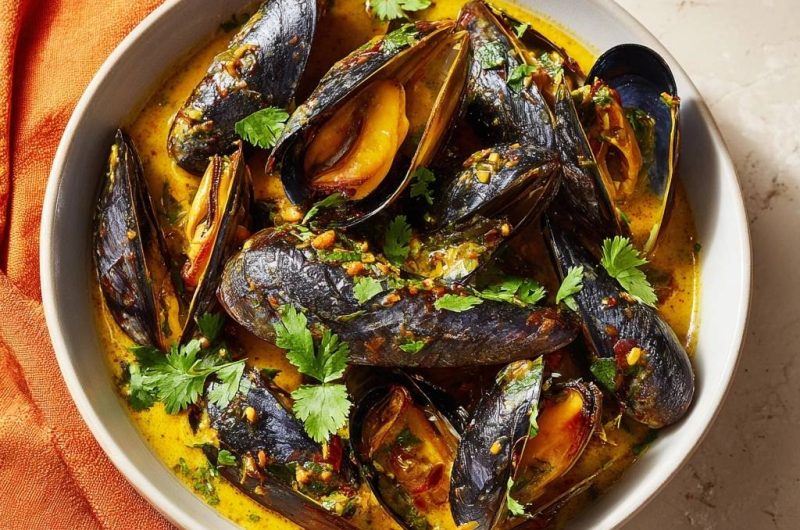
2 tablespoons yellow curry paste (provides the vibrant golden hue seen in the image)
1 tablespoon turmeric powder (for enhanced color and earthiness)
3 cloves garlic, minced
1 tablespoon fresh ginger, grated
1 tablespoon neutral oil (like avocado or vegetable oil)
1/2 cup low-sodium seafood or vegetable broth
1 tablespoon fish sauce (for authentic depth)
1 tablespoon lime juice
1/2 cup fresh cilantro, roughly chopped
1 fresh red chili, thinly sliced (or 1 teaspoon red chili flakes)
Directions
- Heat the oil in a large, heavy-bottomed pot or deep skillet over medium heat. Add the minced garlic, ginger, and sliced chili. Sauté for 60 seconds until fragrant but not browned.
- Stir in the yellow curry paste and turmeric powder. Cook for 2 minutes, stirring constantly, to “bloom” the spices and release the oils.
- Pour in the coconut milk, broth, and fish sauce. Bring the liquid to a gentle simmer, whisking to ensure the curry paste is fully incorporated into a smooth, creamy sauce.
- The Secret to Avoiding Rubbery Seafood: Do not boil the mussels vigorously. Once the liquid is simmering, add the mussels to the pot in a single layer if possible. Immediately cover with a tight-fitting lid.
- Reduce the heat to medium-low. Steam for exactly 4 to 6 minutes. The trapped steam gently cooks the protein without seizing the muscle fibers. Shake the pot once or twice (with the lid on) to redistribute the mussels.
- Remove the lid. Use a slotted spoon to transfer the opened mussels to wide serving bowls. Discard any mussels that remain tightly closed after 7 minutes.
- Stir the lime juice and half of the chopped cilantro directly into the hot curry broth. Taste and adjust seasoning if necessary.
- Pour the rich, golden broth generously over the mussels. Garnish with the remaining fresh cilantro. Serve immediately with crusty bread or lime wedges to preserve the delicate texture.
Notes
- The secret to avoiding rubbery seafood is using a tight-fitting lid and medium-low heat to steam rather than boil. Discard any mussels that do not open after 7 minutes of cooking.