
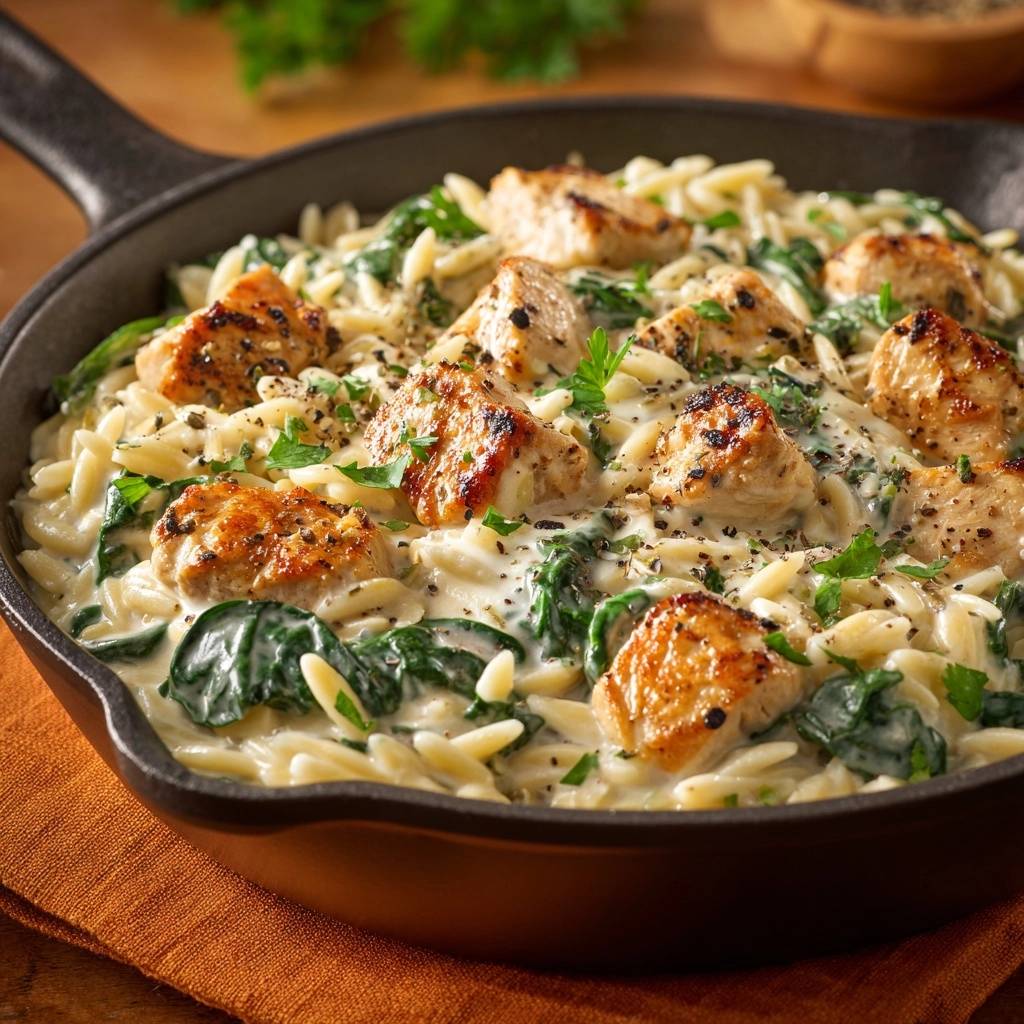
Most home cooks avoid making orzo because it often turns into a sticky, unappealing clump of mush. You’ve likely experienced that disappointing moment when your pasta absorbs too much liquid and loses all its structural integrity. This Creamy Garlic Chicken and Spinach Orzo changes that narrative by focusing on a specific culinary technique that ensures every grain stays distinct and tender.
The beauty of this dish lies in the contrast between the deeply seared, savory chicken and the velvety, garlic-rich sauce. It’s a one-pan wonder that feels like a high-end bistro meal but takes less than thirty minutes to pull together. You’ll love how the bright green spinach wilts into the warm cream, creating a vibrant look that matches the bold flavors.
The secret to this recipe’s success is the “dry toast” method. By browning the dry pasta in butter before adding any liquid, you create a protective barrier that prevents the starch from turning gummy. This simple professional trick is what separates a mediocre pasta dish from a restaurant-quality masterpiece that holds its texture perfectly on the plate.
The Science of Non-Gummy Orzo Texture
Orzo is a tiny, rice-shaped pasta that has a high surface-area-to-volume ratio. Because it’s so small, it releases a significant amount of starch into the cooking liquid very quickly. In traditional boiling methods, this starch creates a thick, glue-like film that causes the grains to stick together in a massive, heavy clump.
To combat this, we utilize the Maillard reaction by toasting the dry orzo in the skillet with butter. As the heat hits the pasta, it undergoes a chemical transformation that develops a nutty aroma and a golden hue. More importantly, this heat creates a hydrophobic barrier on the exterior of each grain, which limits the rate of starch gelatinization during the simmering phase.
Therefore, instead of the starch leaching out and thickening the broth into a paste, it stays mostly contained within the pasta. This ensures that the grains remain “al dente” and separate, even after being tossed in a heavy cream sauce. You’ll notice the difference immediately as the orzo glides across the pan rather than sticking to the bottom in a thick layer.
Essential Components for Garlic Chicken and Orzo
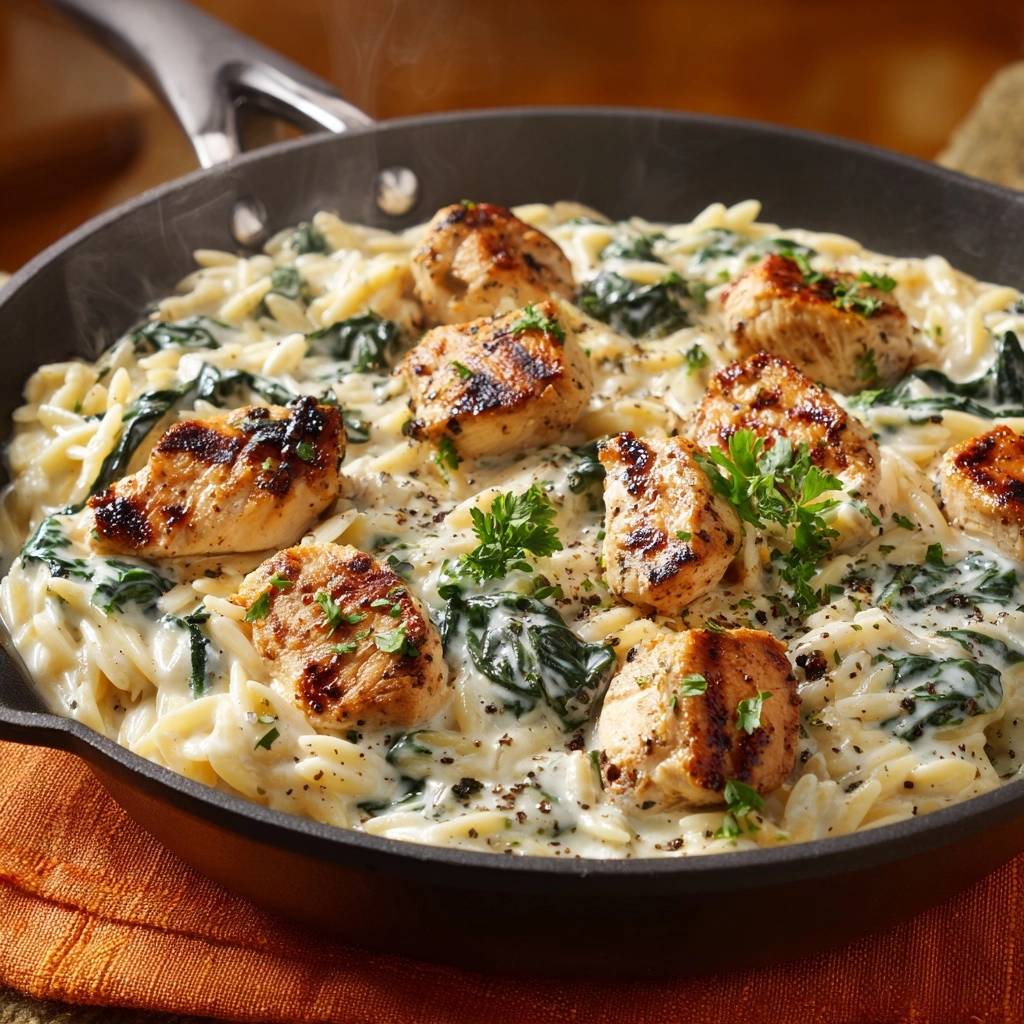
Choosing the right ingredients is the first step toward a successful dinner. For the protein, I recommend cutting your chicken breast into large 1-inch cubes. This size is optimal because it provides enough surface area to get a dark, flavorful sear while keeping the center juicy and tender. If the pieces are too small, they’ll dry out before the outside gets that beautiful golden crust.
When it comes to the orzo itself, stick with a high-quality semolina pasta. While whole wheat orzo is an option, it has a grainier texture that can interfere with the silkiness of the cream sauce. Semolina provides the classic, smooth mouthfeel that makes this dish feel so indulgent. In addition, using fresh baby spinach is a must; the leaves are delicate enough to wilt in seconds from the residual heat of the pan.
Aromatics play a huge role in the flavor profile here. Use fresh garlic cloves rather than the pre-minced stuff in a jar, which can often taste bitter or metallic. I also include onion powder as a base layer of seasoning for the chicken. It provides a savory, umami depth that coats the meat evenly without the risk of burning fresh onion bits in the high-heat skillet.
Selecting the Best Parmesan and Cream
The sauce is only as good as the cheese you use. Please avoid the pre-shredded cheese found in plastic tubs, as it’s coated in cellulose and potato starch to prevent clumping. These additives will prevent the cheese from melting smoothly, often resulting in a grainy or “broken” sauce. Grate a block of fresh Parmesan yourself for a flawless, creamy finish.
Similarly, heavy cream is the best choice for the liquid base. Lower-fat substitutes like half-and-half or whole milk are more likely to curdle when they hit the hot, slightly acidic chicken broth. The high fat content in heavy cream creates a stable emulsion that stays thick and glossy, perfectly coating every single grain of toasted orzo.
Step-by-Step: Searing the Seasoned Chicken
Before the chicken ever touches the pan, you must pat it dry with paper towels. Moisture is the enemy of a good sear; if the meat is wet, it will steam in the pan rather than brown. Once dry, season it generously so the spices can form a flavorful crust. Use a heavy cast-iron skillet if you have one, as it retains heat better than stainless steel.
Heat your oil until it’s shimmering, then add the chicken in a single layer. Don’t crowd the pan, or the temperature will drop too quickly. You’re looking for a deep, golden-brown color and charred edges. This browning creates “fond”—those little brown bits stuck to the bottom of the pan. That fond is concentrated flavor, and it’s the foundation of your entire sauce.
The Critical Toasting and Deglazing Phase
After removing the chicken, don’t you dare wipe out that pan! Add your butter and let it foam, then toss in the dry orzo. Stir it constantly. You’ll hear a light crackling sound, and within a few minutes, the kitchen will smell like toasted popcorn. This is the moment the pasta transforms from a simple starch into a flavor-packed component.
Once the orzo is golden, add your garlic for just thirty seconds so it doesn’t burn. Then, pour in the chicken broth. Use a wooden spoon to scrape the bottom of the skillet vigorously. This is called deglazing. All those browned chicken bits will lift off the pan and dissolve into the broth, infusing the orzo with incredible depth as it simmers.
Simmering and Emulsifying the Creamy Sauce
Cover the pan and let the orzo simmer until it has absorbed most of the liquid. When you lift the lid, the pasta should be tender but still have a slight bite. Now, turn the heat down to low before adding the cream and Parmesan. Adding dairy to a boiling liquid can cause it to separate, so a gentle touch is necessary here.
Stir the mixture slowly until the cheese melts and the sauce becomes thick and velvety. Finally, fold in the fresh spinach. You don’t need to “cook” the spinach; the heat from the pasta will wilt it perfectly in about sixty seconds. Return the chicken and any juices from the plate back to the skillet to warm through, ensuring everything is coated in that luscious garlic sauce.
Troubleshooting Common Orzo Obstacles
If you find there’s still too much liquid in the pan after the simmering time, simply leave the lid off and turn the heat up slightly for a minute. The extra moisture will evaporate quickly. Conversely, if the orzo looks too dry or the sauce is too thick, stir in a splash of extra broth or warm water to loosen the emulsion back to a creamy state.
Overcooked chicken is another common pitfall. To avoid this, ensure you remove the chicken from the pan the moment it’s seared. It doesn’t need to be fully cooked through at that stage because it will finish poaching in the sauce during the final minute of assembly. This keeps the meat incredibly moist and tender.
Flavor Variations and Ingredient Swaps
This recipe is a fantastic canvas for customization. If you want to swap the protein, chickpeas or canned white beans make an excellent vegetarian base. Just be sure to use vegetable broth instead of chicken broth. You can also experiment with different herbs; fresh basil or thyme added at the very end provides a completely different aromatic profile than the earthy oregano.
For those who enjoy a bit of heat, try adding a teaspoon of red pepper flakes when you sauté the garlic. The spice cuts through the richness of the heavy cream beautifully. You could also add sun-dried tomatoes or artichoke hearts during the simmering phase to give the dish a Mediterranean flair that pairs perfectly with the spinach and garlic.
Optimal Pairings for Creamy Pasta Dishes
Since this dish is quite rich and savory, it benefits from a side dish with high acidity to cleanse the palate. A simple arugula salad dressed with fresh lemon juice and a drizzle of olive oil is a perfect match. The peppery greens and sharp citrus balance the heavy cream and salty Parmesan cheese.
Roasted balsamic asparagus or sautéed green beans with a splash of vinegar also work well. These vegetables provide a crisp texture that contrasts with the soft, creamy orzo. If you want to keep it simple, a few slices of crusty bread are great for mopping up any extra sauce left in the skillet.
Storage and Reheating for Best Results
Orzo is notorious for continuing to absorb liquid even after it’s refrigerated. If you have leftovers, store them in an airtight container for up to three days. When you’re ready to eat, you’ll notice the pasta has thickened significantly. Avoid the microwave if possible, as it can make the chicken rubbery and the sauce oily.
Instead, reheat the orzo in a small skillet over medium-low heat. Add a tablespoon or two of broth or water to the pan to help “unlock” the sauce and restore its creamy consistency. Stir gently until it’s heated through. This stovetop method ensures the texture remains as close to the original meal as possible.
Expert Tips for Skillet Success
To get the best results, always use a wide skillet. A larger surface area allows for better evaporation and more even toasting of the orzo. Additionally, make sure your chicken isn’t crowded during the searing phase; if the pieces are touching, they won’t develop that crucial brown crust that provides so much flavor to the fond.
I always recommend using low-sodium chicken broth. This gives you total control over the salt levels of the final dish. Since Parmesan cheese is naturally quite salty, using a full-sodium broth can often result in a dish that’s overwhelming. Finally, never skip the fresh parsley at the end. That hit of fresh, green herb brightens the entire flavor profile and makes the dish pop.
How do I prevent the orzo from sticking to the bottom of the pan?
The key is the toasting step and consistent stirring. By coating the orzo in butter and toasting it until golden, you create a surface that is less likely to stick. Additionally, when you add the broth, make sure to scrape the bottom of the pan thoroughly with a wooden spoon to release any stuck bits. Once it’s simmering, a quick stir every few minutes will keep everything moving freely.
Can I use frozen spinach instead of fresh?
You can use frozen spinach, but you must thaw it and squeeze out every drop of excess moisture first. Frozen spinach holds a lot of water, which can thin out your creamy sauce and make it watery. Fresh baby spinach is preferred because it wilts instantly and adds a much brighter color and cleaner flavor to the finished dish.
What is the best substitute for heavy cream?
If you don’t have heavy cream, the best substitute is a mixture of whole milk and a little extra butter, though it won’t be quite as stable. You could also use full-fat Greek yogurt stirred in at the very end off the heat, which adds a nice tang. Avoid using fat-free milk or non-dairy milks like almond milk, as they lack the fat content needed to emulsify with the cheese and broth properly.
Why is my sauce grainy instead of smooth?
A grainy sauce is usually caused by using pre-shredded cheese or adding the cheese to a boiling liquid. The anti-clumping agents in bagged cheese don’t melt, and high heat can cause the proteins in the cheese to clump together. Always grate your Parmesan fresh from a block and turn the heat down to low before stirring it into the pasta.
Can I freeze this orzo dish?
I do not recommend freezing this dish. Dairy-based sauces often break and become grainy when frozen and thawed. Furthermore, the orzo will continue to soften and likely turn into a mushy texture once reheated from frozen. This meal is best enjoyed fresh or kept in the fridge for a few days.
Is it possible to make this with chicken thighs?
Absolutely! Chicken thighs are a great substitution and are actually more forgiving than breasts because they have a higher fat content. They won’t dry out as easily during the searing process. Just follow the same steps, ensuring you get a good sear on the outside before removing them from the pan to toast the orzo.
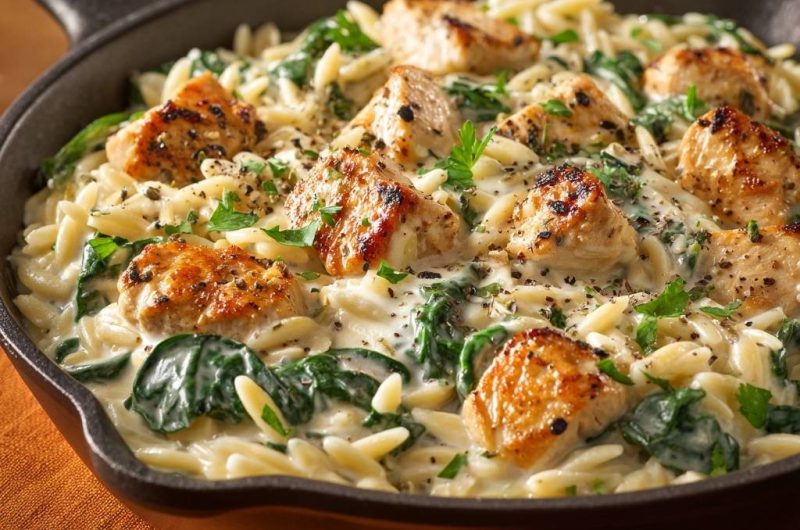
Creamy Garlic Chicken and Spinach Orzo
Course: Main CourseCuisine: AmericanDifficulty: easy4
servings10
minutes20
minutes30
Minutes510
kcalAmerican
Ingredients
1.25 pounds chicken breast, cut into large 1-inch cubes
1.5 cups dry orzo pasta
3 cups low-sodium chicken broth
3 cups fresh baby spinach, packed
4 cloves garlic, minced
1/2 cup heavy cream
1/2 cup freshly grated parmesan cheese
2 tablespoons butter
1 tablespoon olive oil
1 teaspoon dried oregano
1/2 teaspoon onion powder
Salt and plenty of coarse black pepper to taste
Fresh Italian parsley for garnish
Directions
- Season the chicken cubes generously with salt, onion powder, and half of the dried oregano. Heat the olive oil in a large cast-iron skillet over medium-high heat.
- Sear the chicken in a single layer until deeply golden brown and charred on the edges, about 3-4 minutes per side. Remove the chicken from the skillet and set aside on a plate. Do not wipe out the pan.
- Lower the heat to medium and add the butter to the skillet. Once melted, add the dry orzo. Stir the dry pasta constantly for 2-3 minutes until it smells nutty and turns a distinct golden brown. This toasting process is critical to prevent a gummy texture.
- Add the minced garlic and the remaining oregano; cook for 30 seconds until fragrant.
- Pour in the chicken broth, using a wooden spoon to scrape up the browned bits (fond) from the bottom of the skillet. Bring to a boil, then reduce heat to a simmer. Cover and cook for 8-10 minutes, or until the orzo is tender and most of the liquid is absorbed.
- Remove the lid and stir in the heavy cream and parmesan cheese. Continue to stir over low heat until a thick, velvety white sauce forms and coats the pasta.
- Fold in the fresh spinach and return the seared chicken (and any juices from the plate) to the pan. Toss gently for 1 minute until the spinach is wilted and the chicken is heated through.
- Garnish heavily with fresh parsley and extra coarse cracked black pepper to match the visual finish. Serve immediately directly from the skillet.
Notes
- Toasting the dry orzo in butter until golden brown is a critical step to ensure the pasta stays distinct and avoids a gummy or mushy texture.