We’ve all been there. You spend thirty minutes at the stove, dreaming of a rich, velvety pasta, only to plate it and find a puddle of thin, milky liquid at the bottom of the bowl. It’s frustrating when a sauce refuses to cling to the pasta, leaving your meal feeling more like a soup than a decadent Italian-inspired dinner.
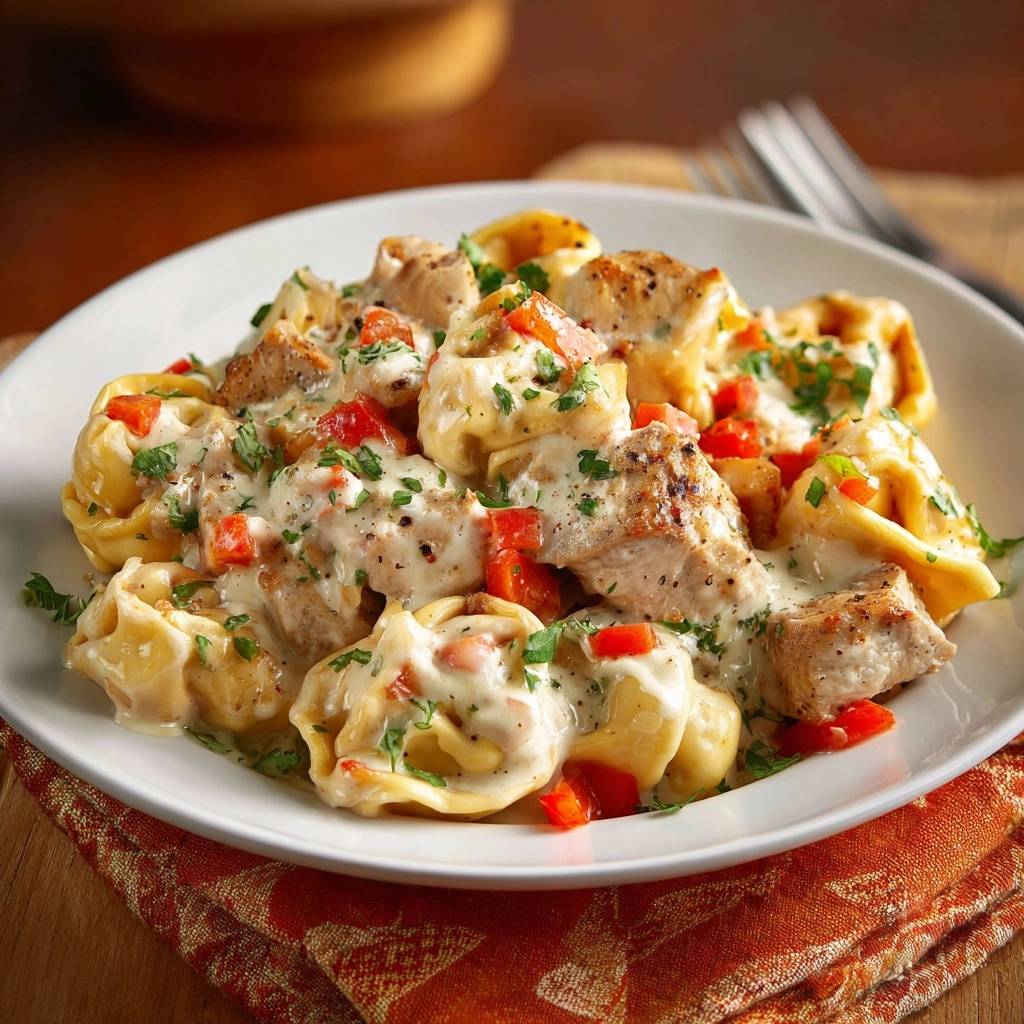
This Creamy Garlic Chicken Tortellini is the definitive solution to that “broken sauce” heartbreak. By focusing on temperature control and a specific starch-binding technique, you’ll create a sauce that is thick, stable, and incredibly savory. It’s a restaurant-quality meal that hits the table in under half an hour.
The secret to this success lies in the pasta itself. Most people cook their tortellini until it’s soft, but we’re going to pull it out of the water while it still has a firm bite. This allows the pasta to finish cooking inside the cream, acting like a sponge that pulls the sauce into the dough rather than leaking water out into your skillet.
The Science of Emulsification in Creamy Sauces
Creating a stable cream sauce is more about chemistry than luck. When you combine heavy cream and Parmesan cheese, you’re trying to create an emulsion—a smooth mixture of fats and liquids that stay bonded together. If the heat is too high, the proteins in the dairy tighten up and squeeze out the fat, resulting in a greasy, separated mess.
Therefore, we use a gentle simmer rather than a rolling boil. This lower temperature allows the water in the cream to evaporate slowly, thickening the sauce naturally without shocking the dairy. As the cream reduces, its fat content becomes more concentrated, which provides a sturdier base for the cheese to melt into.
In addition, we utilize the “fond,” which are those golden-brown bits stuck to the bottom of the pan after searing the chicken. These bits aren’t just flavor bombs; they contain proteins and caramelized sugars that help anchor the sauce. When you deglaze the pan with cream, those bits dissolve and act as a structural foundation for your garlic cream base.
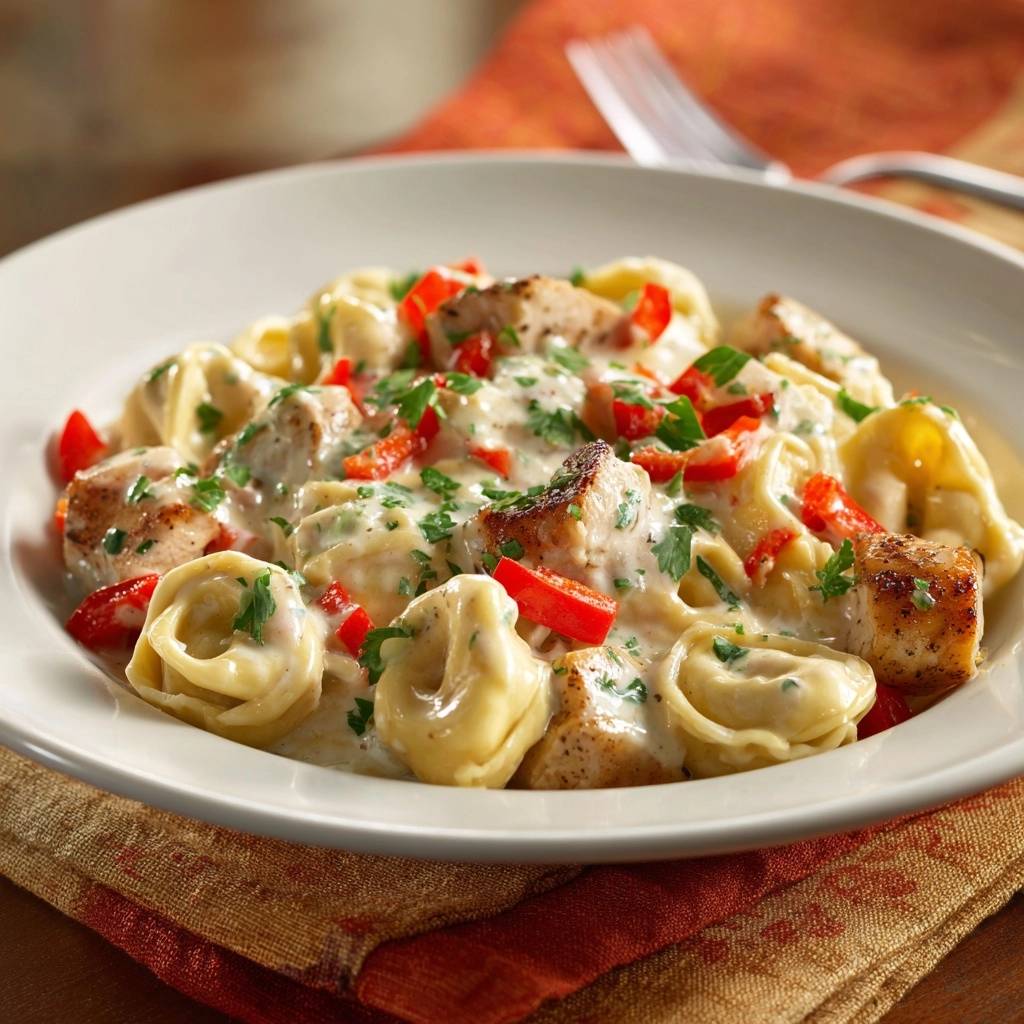
Essential Components for Creamy Garlic Chicken Tortellini
Quality ingredients are the difference between a bland meal and a spectacular one. For the cheese, you must use freshly grated Parmesan from a wedge. Pre-shredded cheese in a bag or a green can is coated in potato starch or cellulose to prevent clumping, which prevents it from melting smoothly into your sauce.
I prefer chicken breast for this recipe because it cooks quickly and provides a lean, clean protein that doesn’t compete with the richness of the cream. However, the real hero is the red bell pepper. Its natural sweetness and slight acidity provide a necessary “cut” through the heavy fats of the cream and cheese, balancing the entire palate.
Don’t forget the butter! While we use olive oil to sear the chicken at high heat, the butter is added later for the vegetables. Butter contains milk solids that add a nutty depth to the garlic and peppers, enhancing the overall “luxury” feel of the final dish.
Selecting the Right Tortellini: Fresh vs. Frozen
Refrigerated “fresh” tortellini is the gold standard here because it has a porous texture that loves to soak up sauce. Frozen tortellini is a great second choice, though it may need an extra minute in the boiling water. Both options release more surface starch than dried pasta, which helps thicken your garlic cream naturally.
The Role of Aromatics and Dried Herbs
Garlic is the star of the show, but it’s delicate. If you add it too early, it burns and turns bitter. By adding the minced garlic only after the peppers have softened, you preserve its pungent, sweet aroma. The dried oregano and onion powder provide a savory “backbeat” that makes the sauce taste complex rather than just salty.
Phase One: Preparing the Protein and Pasta
Start by searing your seasoned chicken cubes in a hot skillet. You want to hear a loud sizzle the moment the meat hits the oil. Don’t move the chicken around too much; let it sit for a few minutes to develop a deep golden crust. This Maillard reaction is where the savory “umami” flavor begins.
While the chicken sears, drop your tortellini into boiling salted water. Here is the critical step: set your timer for two minutes less than the package says. The pasta should feel slightly too firm to eat. Drain it immediately and do not rinse it. That coating of surface starch is exactly what we need to bond the sauce to the pasta later.
Phase Two: Building the Garlic Cream Base
Once the chicken is out of the pan, melt your butter and toss in the diced red peppers. You’re looking for them to soften and perhaps get a little char on the edges. This adds a smoky sweetness to the dish. Add the garlic last, stirring constantly for about 30 seconds until the kitchen smells like a dream.
Now, turn the heat down to medium-low before pouring in the heavy cream. Use a wooden spoon to scrape the bottom of the pan. You’ll see the cream turn a light tan color as it picks up the chicken fond. This is exactly what you want. Let it simmer gently until you see small bubbles around the edges.
Temperature Control for a Velvety Texture
Watch the cream closely. It should never reach a violent, rolling boil, which can cause the dairy to grain. You’ll know it’s ready when the volume has reduced slightly and the bubbles look a bit “soapy” or thick. This reduction phase is what ensures your sauce won’t be watery once the pasta is added.
Integrating the Parmesan Emulsion
Slowly whisk in your freshly grated Parmesan. Do this in handfuls rather than dumping it all at once. As the cheese melts, it acts as a natural emulsifier, pulling the cream together into a thick glaze. Test the thickness by dipping a spoon in; if you can run your finger through the sauce on the back of the spoon and the line stays clear, it’s perfect.
Phase Three: The Starch-Binding Finishing Technique
Now comes the “marriage” of the ingredients. Toss the seared chicken and the undercooked tortellini into the simmering sauce. Over the next two to three minutes, the pasta will finish cooking by absorbing the liquid from the sauce. This creates a permanent bond between the noodle and the cream.
You’ll see the sauce transform from a liquid into a thick, glossy coating that hugs every curve of the tortellini. If it looks too thick, add a tiny splash of cream to loosen it up. This final simmer is the “Skyscraper” secret that prevents any watery separation on the plate. Garnish with fresh parsley for a pop of color and brightness.
Troubleshooting Common Sauce Consistency Issues
If your sauce feels too thin, don’t panic. Simply let it simmer for another minute or two on low heat to allow more evaporation. However, if the sauce looks oily or “broken,” it usually means the heat was too high. You can often fix this by whisking in a teaspoon of room-temperature cream very quickly to bring the emulsion back together.
If the sauce is too thick or “gloopy,” it’s likely because the Parmesan was added to a sauce that was already too reduced. In this case, add a tablespoon of warm milk or cream—never water—and stir gently. The extra liquid will thin the fats without diluting the rich flavor you’ve built.
Flavor Variations and Ingredient Swaps
While red peppers are classic, you can easily swap them for sun-dried tomatoes for a more intense, tangy flavor. If you want more greens, fold in a few handfuls of fresh baby spinach during the last minute of cooking; the heat of the sauce will wilt it perfectly without making it mushy.
For a vegetarian version, replace the chicken with thick slices of cremini or shiitake mushrooms. Sear the mushrooms exactly like the chicken to get that deep brown color. The earthy flavor of the mushrooms pairs beautifully with the garlic and Parmesan base, maintaining that “meaty” satisfaction.
Optimal Side Dishes for Rich Pasta
Because this dish is so rich and creamy, you want side dishes that offer a crisp or acidic contrast. A simple arugula salad with a sharp lemon vinaigrette is the perfect palate cleanser. The peppery greens and citrus juice cut right through the heavy cream, making every bite of pasta feel fresh.
Roasted broccolini with a sprinkle of sea salt and red pepper flakes also works wonders. The charred florets provide a nice crunch that contrasts with the soft tortellini. Finally, a piece of crusty sourdough bread is essential for mopping up every last drop of that garlic sauce from your plate.
Storage and Reheating for Maximum Creaminess
Cream sauces are notorious for separating in the microwave, as the intense heat turns the sauce into a pool of oil. To store leftovers, place them in an airtight container in the fridge for up to three days. I don’t recommend freezing this dish, as the tortellini can become mushy and the dairy may grain upon thawing.
To reheat, place the pasta in a small skillet over low heat. Add a splash of milk or cream to the pan. As it warms, gently stir the pasta to help the old sauce re-emulsify with the new liquid. This “low and slow” method restores the original velvety texture without making the chicken rubbery.
Expert Tips for Professional Results
Firstly, use a heavy-bottomed skillet, like cast iron or stainless steel. These pans distribute heat more evenly, which prevents “hot spots” that could burn your garlic or break your cream. Secondly, let the sauce rest for about 60 seconds off the heat before serving; this allows the proteins to settle and the sauce to reach its maximum thickness.
Thirdly, always use fresh parsley at the very end. The volatile oils in fresh herbs disappear quickly with heat, so adding them as a garnish preserves that bright, peppery finish. Finally, don’t be afraid of black pepper! A heavy hand with the pepper mill adds a subtle heat that balances the sweetness of the cream and peppers perfectly.
How do I prevent the garlic from burning?
Garlic burns quickly because of its low water content and high sugar levels. To prevent bitterness, wait until your peppers are fully softened before adding the garlic. You only need about 30 seconds of contact with the hot butter; as soon as you smell that intense “garlicky” aroma, pour in the cream to drop the pan’s temperature.
Can I use half-and-half instead of heavy cream?
You can, but it is much riskier. Half-and-half has a lower fat content, which makes it more prone to curdling or breaking when it hits the heat or the acidic peppers. If you use it, you must keep the heat very low and expect a thinner sauce. Heavy cream is the secret to that “unbreakable” restaurant-style silkiness.
Is it possible to make this gluten-free?
Yes, you can find excellent gluten-free tortellini in the refrigerated section of many health food stores. Keep in mind that gluten-free pasta often releases more starch into the water, so be extra careful not to overcook it in the first step. The sauce itself is naturally gluten-free as long as you don’t use flour to thicken it.
What is the best way to grate Parmesan for melting?
For the smoothest melt, use a microplane or the smallest holes on your box grater. You want the cheese to look like light, fluffy “snow.” This creates more surface area, allowing the cheese to dissolve almost instantly into the warm cream rather than clumping into chewy balls of protein.
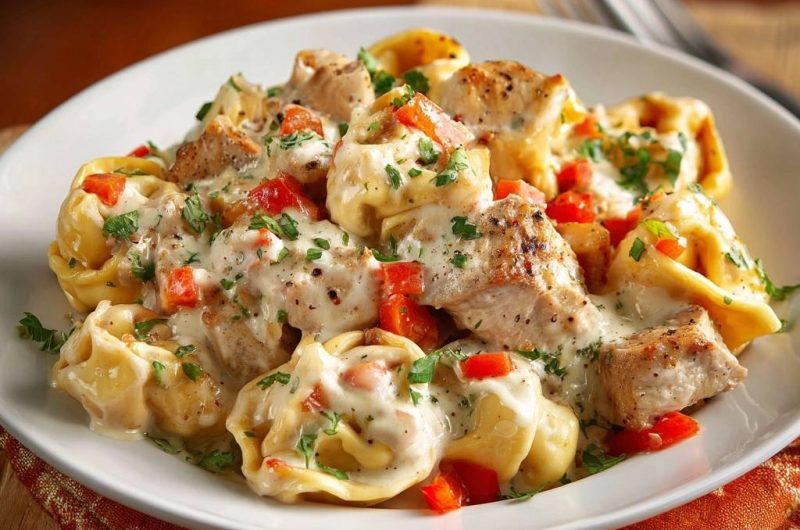
Creamy Garlic Chicken Tortellini
Course: Main CourseCuisine: AmericanDifficulty: easy4
servings10
minutes20
minutes30
MinutesAmerican
Ingredients
1 pound cheese tortellini (fresh or frozen)
1.5 pounds chicken breast, cut into 1-inch cubes
1 large red bell pepper, diced
4 cloves garlic, minced
1.5 cups heavy cream
3/4 cup freshly grated Parmesan cheese (do not use canned)
1 teaspoon dried oregano
1/2 teaspoon onion powder
Salt and black pepper to taste
2 tablespoons olive oil
1 tablespoon unsalted butter
Fresh parsley, finely chopped for garnish
Directions
- Bring a large pot of salted water to a boil. Cook the tortellini for 2 minutes less than the package directions. This is the first secret to preventing a watery dish: the pasta must be underdone so it absorbs the liquid from the sauce rather than releasing water into it. Drain and set aside.
- While the water boils, heat olive oil in a large skillet over medium-high heat. Season chicken cubes generously with salt, pepper, and oregano. Sear the chicken in a single layer until golden brown and cooked through (about 5-6 minutes). Remove chicken from the pan and set aside.
- In the same skillet, melt the butter. Add the diced red bell pepper and sauté for 3 to 4 minutes until softened and slightly charred. Add the minced garlic and onion powder, cooking for just 30 seconds until fragrant.
- To solve the watery sauce problem, reduce the heat to medium-low before adding the cream. Pour in the heavy cream and scrape the bottom of the pan to release the flavorful browned bits (fond). Let the cream simmer gently for 4-5 minutes until it begins to reduce and thicken naturally. Do not let it reach a rolling boil.
- Slowly whisk in the grated Parmesan cheese. The cheese acts as a natural emulsifier. Continue to stir over low heat until the sauce is smooth and thick enough to coat the back of a spoon.
- Add the chicken and the undercooked tortellini back into the skillet. Toss gently for 2 to 3 minutes. This allows the pasta to finish cooking inside the sauce, locking the cream and cheese into the starch of the pasta for a permanent, thick bond. If the sauce becomes too thick, add a splash of cream, not water.
- Garnish heavily with fresh parsley and extra black pepper. Serve immediately while the sauce is at its peak creamy consistency.
Notes
- The secret to preventing a watery sauce is undercooking the tortellini by 2 minutes and finishing it in the skillet. Use freshly grated Parmesan cheese rather than canned for proper emulsification.