We’ve all been there. You sit down to a plate of pasta expecting a luxurious, silky experience, but instead, you find a puddle of watery liquid at the bottom of the bowl. It’s frustrating when a sauce refuses to cling to the ravioli, sliding off like water on a raincoat. That thin, broken texture usually happens because the moisture from the mushrooms wasn’t managed or the emulsion didn’t quite take hold.
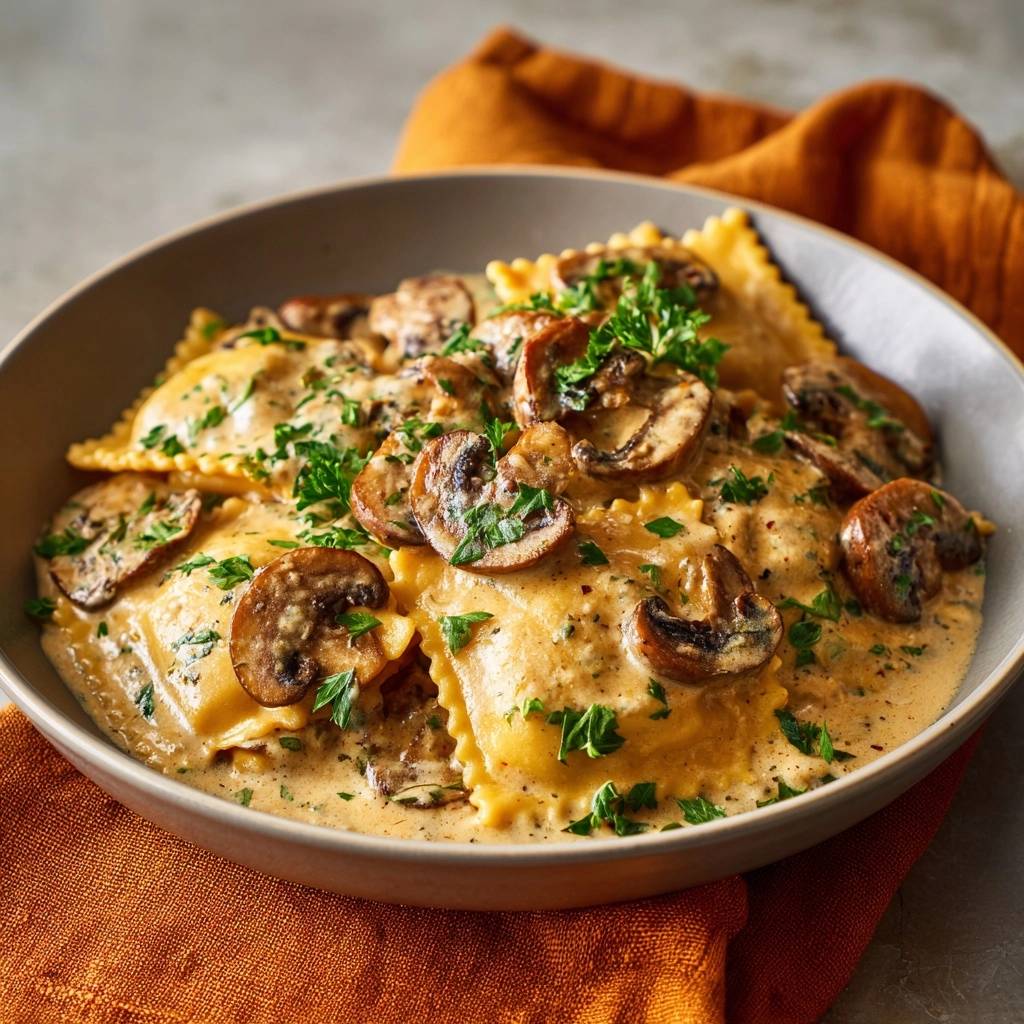
This recipe changes that by focusing on the “Golden Fond.” By searing mushrooms until they’re deeply caramelized, you create a concentrated base of flavor that anchors the cream. When you combine that savory foundation with starchy pasta water, the sauce transforms into a velvet coating that hugs every curve of the pasta. It’s a restaurant-grade result that you can honestly pull off in under 30 minutes.
The secret to this success lies in the timing of your salt. If you salt your mushrooms the moment they hit the pan, they’ll release their liquid immediately and boil in their own juices rather than searing. By waiting until they are browned and crisp, you preserve their meaty texture and keep the pan dry enough to build that essential crust. This small technical shift is what separates a home-cooked meal from a professional plate.
The Science of Moisture Control in Mushroom Sauces
Cremini mushrooms are essentially little sponges, made up of about 90% water. Their cellular structure is porous, meaning they’ll soak up oil or butter instantly if you aren’t careful. To get a true sear, you have to drive that internal moisture out through high-heat evaporation before the mushroom has a chance to get soggy.
When you leave the mushrooms undisturbed in a hot skillet, you trigger the Maillard reaction. This is the chemical process where amino acids and sugars react under heat to create those complex, savory flavors and that beautiful brown color. If you salt them too early, the salt draws out the water through osmosis, dropping the pan’s temperature and steaming the fungi instead of browning them.
Why Your Cream Sauce Usually Separates
A cream sauce is a delicate emulsion, which is just a fancy way of saying a mixture of fat and water that usually don’t want to stay together. In this dish, the heavy cream and butter provide the fat, while the pasta water provides the liquid. If the heat is too high or the ingredients aren’t bonded correctly, the fat will slick away, leaving you with a grainy or oily mess.
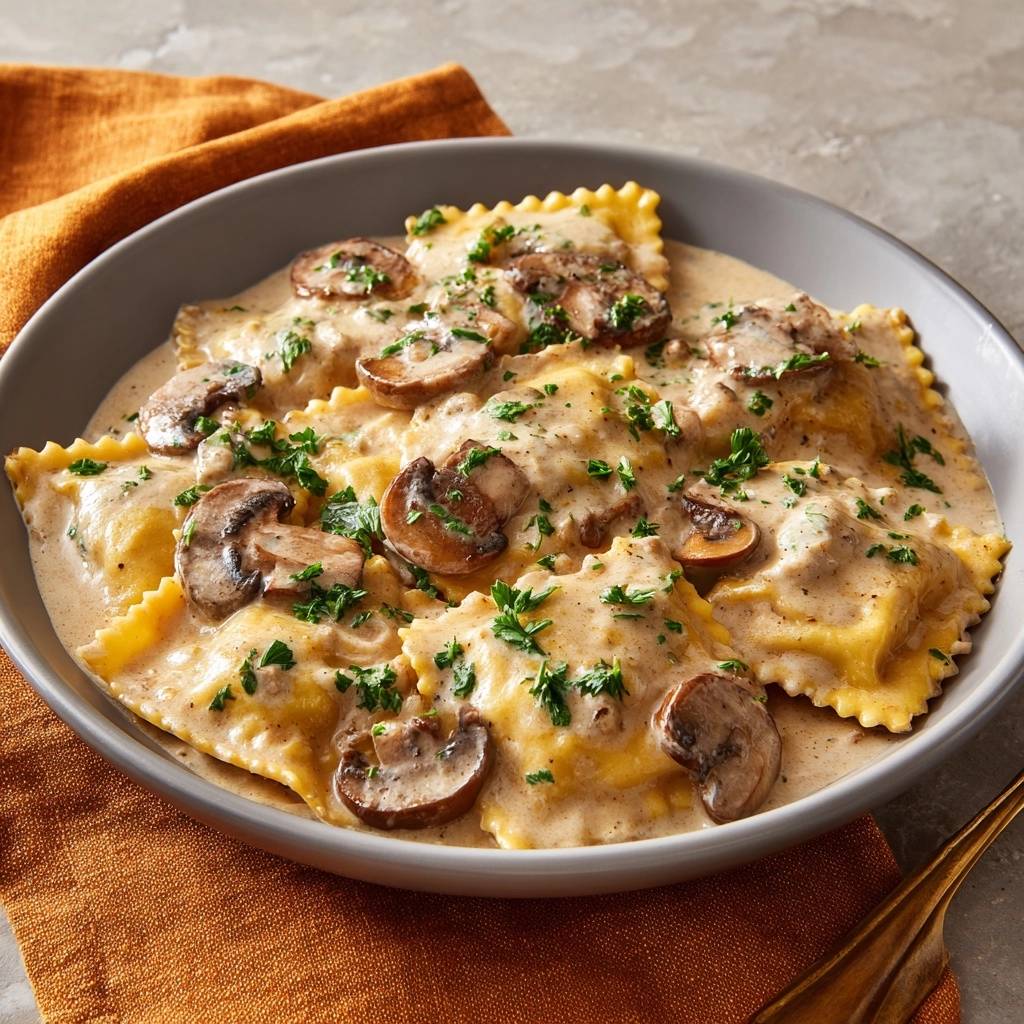
Temperature fluctuations are the biggest culprit for a “broken” sauce. If you dump cold cheese into a boiling liquid, the proteins in the cheese can tighten up and clump. By simmering the cream gently and using starchy water as a stabilizer, you create a bridge that keeps the fats and liquids in a smooth, unified state.
Essential Components for Creamy Mushroom Ravioli
Quality matters when the ingredient list is this short. I always reach for cremini mushrooms, often sold as “baby bellas,” because they have a much deeper, earthier flavor than standard white button mushrooms. They hold their shape better under heat, providing a satisfying “bite” that mimics meat.
For the sauce, you really need heavy cream. Lower-fat options like milk or half-and-half lack the stable fat content required to thicken properly without a flour roux. Additionally, use freshly grated Parmesan cheese. The pre-shredded stuff in the green can or even the bagged variety is coated in potato starch to prevent clumping, which will make your sauce feel gritty rather than silky.
Selecting the Right Ravioli Base
Fresh ravioli from the refrigerated section is my top choice because it cooks in minutes and has a tender, delicate skin. Frozen ravioli is a fantastic pantry staple, but keep in mind it may need an extra two minutes of boiling time. Just be sure to check the edges; you want them cooked through but still firm enough to handle a toss in the skillet.
While cheese-filled ravioli is the classic choice, this mushroom sauce is versatile. Spinach and ricotta fillings add a nice herbal note, while butternut squash ravioli creates a lovely sweet-and-savory contrast. No matter which you choose, the goal is to keep the pasta slightly underdone before it hits the sauce.
The Role of Aromatics: Shallots vs. Onions
I prefer shallots over standard yellow onions for this sauce because they offer a more sophisticated, subtle sweetness. They melt into the butter almost completely, providing flavor without the chunky texture of a large onion. It’s a small detail that makes the dish feel much more “chef-prepared.”
When it comes to the thyme, adding it to the butter and oil (a process called blooming) is vital. The heat wakes up the essential oils in the dried herb, spreading that earthy aroma throughout the entire fat base. This ensures every bite of ravioli has a hint of herb, rather than just having flecks of green on top.
Step-by-Step: Achieving the Perfect Mushroom Sear
The most important rule in this kitchen: do not crowd the pan. If the mushrooms are piled on top of each other, the steam escaping from the bottom layer will soften the top layer. Spread them out in a single layer so the heat can hit every surface. If your pan is small, it’s better to sear them in two batches.
Once they hit the oil, leave them alone. It’s tempting to stir, but they need about 4 minutes of direct contact with the heat to develop a dark, golden-brown crust. You’ll know they’re ready when they stop sticking to the pan and have shrunk slightly in size, smelling intensely savory and nutty.
Building the Fond: The Secret to Golden Sauce
As the mushrooms sear, you’ll notice a brown film forming on the bottom of the skillet. This is the “fond,” and it is pure flavor gold. Don’t scrub it away! When you pour in the heavy cream, use your wooden spoon to gently scrape those bits into the liquid.
This fond dissolves into the cream, naturally tinting the sauce a beautiful toasted-gold color. It adds a layer of umami that you simply can’t get from cream alone. It’s the difference between a sauce that tastes like “milk” and a sauce that tastes like “roasted mushrooms.”
The Emulsion Phase: Integrating Pasta Water and Cream
Before you drain your pasta, grab a measuring cup and scoop out some of that cloudy boiling water. This is “liquid gold.” The starch released by the pasta acts as a natural thickener and emulsifier, helping the fatty cream and the watery pasta surfaces bond together perfectly.
To check if your sauce is ready, use the “back of the spoon” test. Dip your spoon into the sauce and run your finger through the middle. If the line stays clean and the sauce doesn’t run back into the gap, you’ve achieved the perfect consistency. It should feel heavy and rich, like a warm blanket for your pasta.
Folding and Finishing: The Al Dente Marriage
Always pull your ravioli out of the water about 60 seconds before the package says they’re done. They should still have a slight “snap” in the center. This is because the pasta will continue to cook once it hits the cream sauce in the skillet.
By finishing the cooking process in the sauce, the ravioli actually absorbs some of the cream into the dough. This creates a cohesive dish where the pasta and sauce are “married” together. Gently toss them with a wide spatula to avoid tearing the delicate skins of the ravioli.
Troubleshooting Common Creamy Pasta Obstacles
If your sauce looks too thick or starts to get “gloppy,” don’t panic. Simply whisk in a tablespoon of your reserved pasta water at a time. The heat and starch will loosen the proteins and restore that glossy sheen. It’s much easier to thin a sauce than it is to thicken one.
On the flip side, if the sauce is too thin, let it simmer for another minute or two without the pasta. This allows more water to evaporate, concentrating the fats. If you’ve already added the cheese and it’s clumping, it usually means the pan was too hot. Lower the heat and add a tiny splash of cream to help it smooth out.
Preventing Rubbery Ravioli
Over-boiling is the enemy of good ravioli. When the dough gets too soft, it becomes rubbery and loses its ability to hold onto the sauce. Keep the water at a gentle boil rather than a violent roll to prevent the ravioli from knocking into each other and bursting their seams.
When tossing the pasta in the skillet, use a folding motion rather than a vigorous stir. You want to coat the pasta without putting pressure on the filled centers. If a ravioli does burst, the filling will actually thicken the sauce, so it’s not the end of the world, but a gentle hand keeps the presentation beautiful.
Flavor Variations and Ingredient Swaps
This recipe is a fantastic canvas for your own twists. If you want to make it feel even more luxurious, a tiny drizzle of truffle oil right before serving adds an incredible aroma. You could also swap the thyme for fresh sage leaves fried in the butter for a more autumnal, earthy vibe.
For added texture, try tossing in some toasted walnuts or pine nuts at the very end. The crunch provides a great contrast to the soft pasta and creamy sauce. If you want more protein, sliced seared chicken breast or even some sautéed shrimp work beautifully alongside the mushrooms.
Vegetarian-Friendly Umami Boosters
If you want to deepen the savory “meatiness” of the dish without adding meat, try a teaspoon of white miso paste whisked into the cream. It adds a fermented saltiness that highlights the mushrooms perfectly. A single drop of soy sauce can also do wonders for the color and depth of the sauce without making it taste like Asian cuisine.
Another trick is to use a mix of mushrooms. Adding some dried porcini (rehydrated in a little warm water) provides a massive punch of flavor. Just make sure to strain the soaking liquid and use it in place of some of the pasta water for an even more intense mushroom experience.
What to Serve with Creamy Mushroom Ravioli
Because this dish is so rich and decadent, you need something bright and acidic to balance the palate. A simple arugula salad tossed in a sharp lemon vinaigrette is the perfect companion. The peppery bite of the greens cuts right through the heavy cream.
For a cooked side, try charred broccolini with a squeeze of lemon or roasted asparagus drizzled with a bit of balsamic glaze. The slight bitterness of these green vegetables provides a necessary counterpoint to the sweet shallots and earthy mushrooms, making the whole meal feel more balanced.
Make Ahead, Storage, and Reheating Protocols
Cream sauces are notoriously finicky when it comes to leftovers. As the dish cools, the fats solidify and the pasta soaks up the remaining moisture, often leaving you with a dry clump the next day. For this reason, I don’t recommend freezing the finished dish, as the cream will likely break and become grainy upon thawing.
If you do have leftovers, store them in an airtight container in the fridge for up to two days. To reheat, do not use the microwave if you can avoid it. Instead, place the pasta in a small skillet over low heat and add a splash of water or a tablespoon of cream. Gently stir as it warms up to re-emulsify the sauce and bring back that silky texture.
Expert Tips for Professional Presentation
Presentation starts with the temperature of your dishes. If you put hot, creamy pasta into a cold porcelain bowl, the sauce will begin to thicken and seize immediately. Run your bowls under hot water or pop them in a low oven for a minute before plating to keep the sauce fluid while you eat.
When plating, try to give the ravioli some height rather than spreading them flat. Use a spoon to drizzle extra sauce over the top, ensuring the mushrooms are visible. For the parsley, make sure it is chopped very finely and is completely dry; this allows it to fall like “dust” over the plate rather than clumping together in wet patches.
The Importance of Cracked Black Pepper
Never use pre-ground black pepper for this dish. The oils in black pepper dissipate quickly once ground, leaving you with a one-dimensional heat. Freshly cracked pepper provides “pops” of spicy, floral flavor that are essential for cutting through the richness of the heavy cream and Parmesan.
I like to use a coarse grind setting so you get those visible black specks. It adds a rustic, finished look to the plate and provides a textural element that complements the soft mushrooms. Don’t be afraid to be generous with it; the cream can handle the heat!
Frequently Asked Questions
How do I store leftovers and will they freeze well?
Store any leftovers in an airtight container in the refrigerator for up to 2 days. I strongly advise against freezing this dish. Cream-based sauces often undergo a structural change when frozen, causing the fat to separate from the liquid. When reheated, the sauce will likely turn oily and grainy rather than returning to its original creamy state.
Why did my sauce turn out thin and watery?
This usually happens for two reasons: either the mushrooms weren’t seared long enough to cook off their moisture, or you didn’t let the cream reduce sufficiently. To fix this, let the sauce simmer for an extra 2-3 minutes before adding the pasta. Also, ensure you are using heavy cream; lower-fat milks do not have the viscosity needed to coat the pasta properly.
Can I use a different type of mushroom?
Absolutely. While cremini are great for everyday cooking, shiitake, oyster, or even chanterelle mushrooms work beautifully. Just remember that different mushrooms have different water contents. Shiitakes are drier and will sear faster, while oyster mushrooms are more delicate and should be added toward the end of the searing process so they don’t burn.
What can I use if I don’t have heavy cream?
If you must substitute, the best option is a mix of whole milk and a little extra butter, though it won’t be as stable. You can also use mascarpone cheese or a dollop of heavy sour cream stirred in at the very end for a similar richness, though the flavor profile will be slightly more tangy.
How do I prevent the ravioli from breaking?
The key is a gentle boil. A violent, rolling boil will toss the ravioli against each other, weakening the dough. Also, use a large enough pot so they aren’t crowded. When transferring them to the skillet, use a slotted spoon or a spider strainer rather than dumping them into a colander, which can crush the bottom layer of pasta.
Is there a way to make this sauce even thicker without more cream?
Yes! You can whisk a teaspoon of cornstarch into a small amount of cold water to create a slurry, then stir that into the simmering cream. However, the most flavorful way to thicken the sauce is simply to add more freshly grated Parmesan cheese, which acts as a natural binder and adds a savory punch at the same time.
Creamy Mushroom Ravioli
Course: Main CourseCuisine: Italian-AmericanDifficulty: easy4
servings10
minutes15
minutes25
Minutes540
kcalItalian-American
Ingredients
1 pound cheese ravioli (fresh or frozen)
1 pound cremini mushrooms, sliced 1/4 inch thick
1 small shallot, finely minced
3 cloves garlic, minced
1 cup heavy cream
1/2 cup freshly grated parmesan cheese
2 tablespoons unsalted butter
1 tablespoon olive oil
1/2 teaspoon dried thyme
1/2 cup reserved starchy pasta water
Fresh curly parsley, chopped (for garnish)
Kosher salt and cracked black pepper to taste
Directions
- Bring a large pot of heavily salted water to a boil. Cook the ravioli according to package instructions, but remove them 1 minute early so they remain al dente.
- Crucial Step: Before draining, scoop out 1 cup of the starchy pasta water. This starch is the emulsifying agent that prevents a watery sauce. Drain the ravioli and set aside.
- In a large skillet, heat the olive oil over medium-high heat. Add the mushrooms in a single layer. Do not salt them yet. Let them sear undisturbed for 3-4 minutes until deeply browned and caramelized. Flip and sear the other side.
- Reduce heat to medium. Add the butter, minced shallot, and garlic. Sauté for 2 minutes until the shallots are translucent and the garlic is fragrant. Stir in the dried thyme.
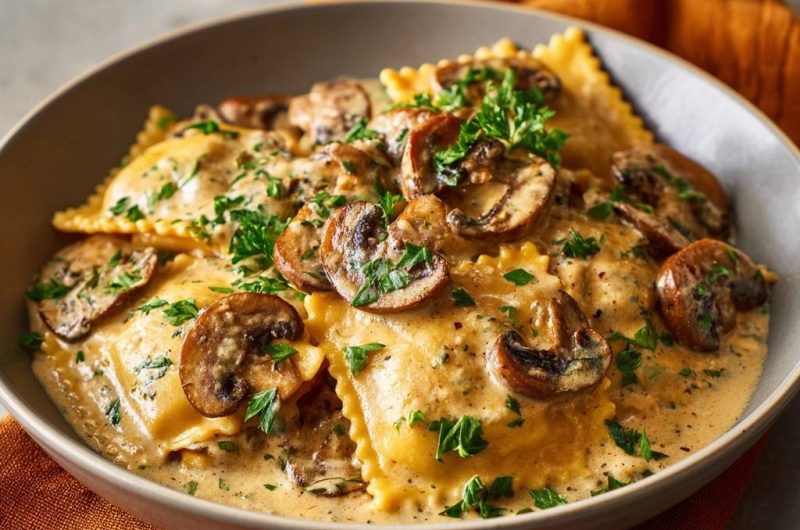
- Pour in the heavy cream. Use a wooden spoon to scrape up the brown bits (fond) from the bottom of the pan-this gives the sauce its rich, golden color seen in the image. Let it simmer for 3 minutes until it begins to reduce and thicken.
- Whisk in the parmesan cheese and 1/4 cup of the reserved pasta water. Stir vigorously until the cheese is melted and the sauce is glossy and emulsified.
- Gently fold the ravioli into the skillet. Toss for 1 to 2 minutes to allow the pasta to finish cooking in the sauce. If the sauce becomes too thick, add a splash more pasta water until it reaches a heavy cream consistency that coats the back of a spoon.
- Season with salt and plenty of cracked black pepper. Garnish generously with fresh chopped parsley and serve immediately while the sauce is perfectly creamy.
Notes
- The secret to the sauce is searing the mushrooms without salt initially to develop a deep fond, and using starchy pasta water to emulsify the cream and cheese.