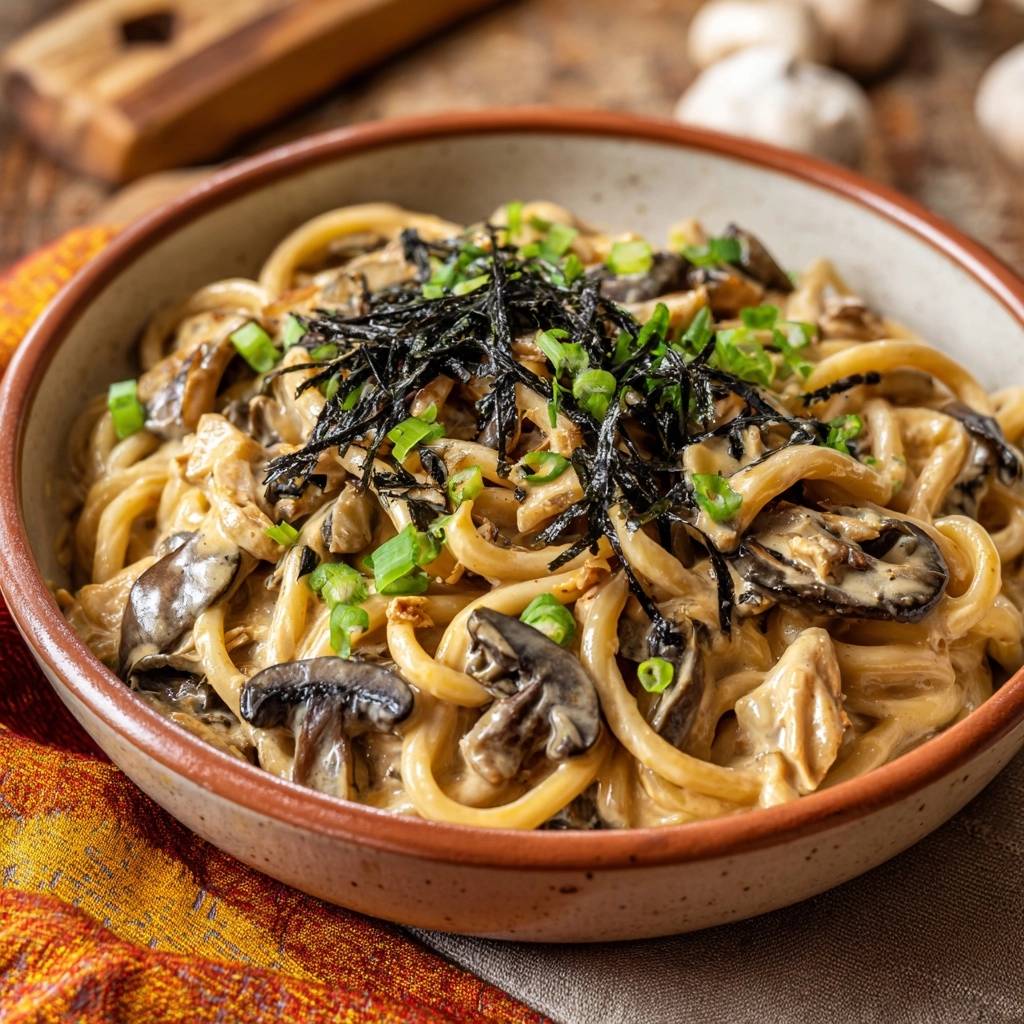
Imagine a bowl of thick, chewy udon noodles draped in a sauce so glossy and rich it looks like it came from a high-end bistro. The earthy aroma of deeply browned cremini mushrooms hits you first, followed by the savory punch of soy and the salty crunch of shredded nori. This isn’t just another pasta dish; it’s a masterclass in balancing textures and flavors in under 25 minutes.
Most home cooks struggle with cream-based Asian fusion dishes because the sauce often ends up thin, watery, or pooling at the bottom of the bowl. We’re fixing that today by focusing on a specific emulsion technique that binds the sauce directly to the noodle. You’ll get a restaurant-quality finish that stays thick and velvety from the first bite to the last.
The real secret to this dish lies in the starchy noodle water. Never toss that liquid down the drain! That cloudy water contains the exact starches needed to bridge the gap between the heavy cream and the slippery udon, creating a cohesive sauce that clings rather than slides. Once you master this “liquid gold” trick, your noodle game changes forever.
The Science of the Perfect Mushroom Sear
To get that “meaty” bite, you have to understand the Maillard reaction. This is the chemical process that happens when proteins and sugars in the mushrooms hit high heat, creating that beautiful brown crust and deep flavor. If you crowd the pan or salt them too early, the mushrooms will release their moisture immediately and steam in their own juices, leaving them rubbery and gray.
Always use a wide skillet and lay the sliced mushrooms in a single layer. Let them sit undisturbed for at least three minutes. You want to hear a consistent sizzle, not a bubbling sound. By waiting to add salt until after the sear is established, you ensure the moisture stays locked inside the mushroom cells until the very last moment, preserving their structural integrity.
Why Texture Matters in Creamy Udon Dishes
Udon noodles are prized for their “mochi-mochi” texture, which is a Japanese term for something bouncy and soft yet firm. Because the noodles are so substantial, a thin sauce simply won’t do. You need a textural counterpoint to all that softness.
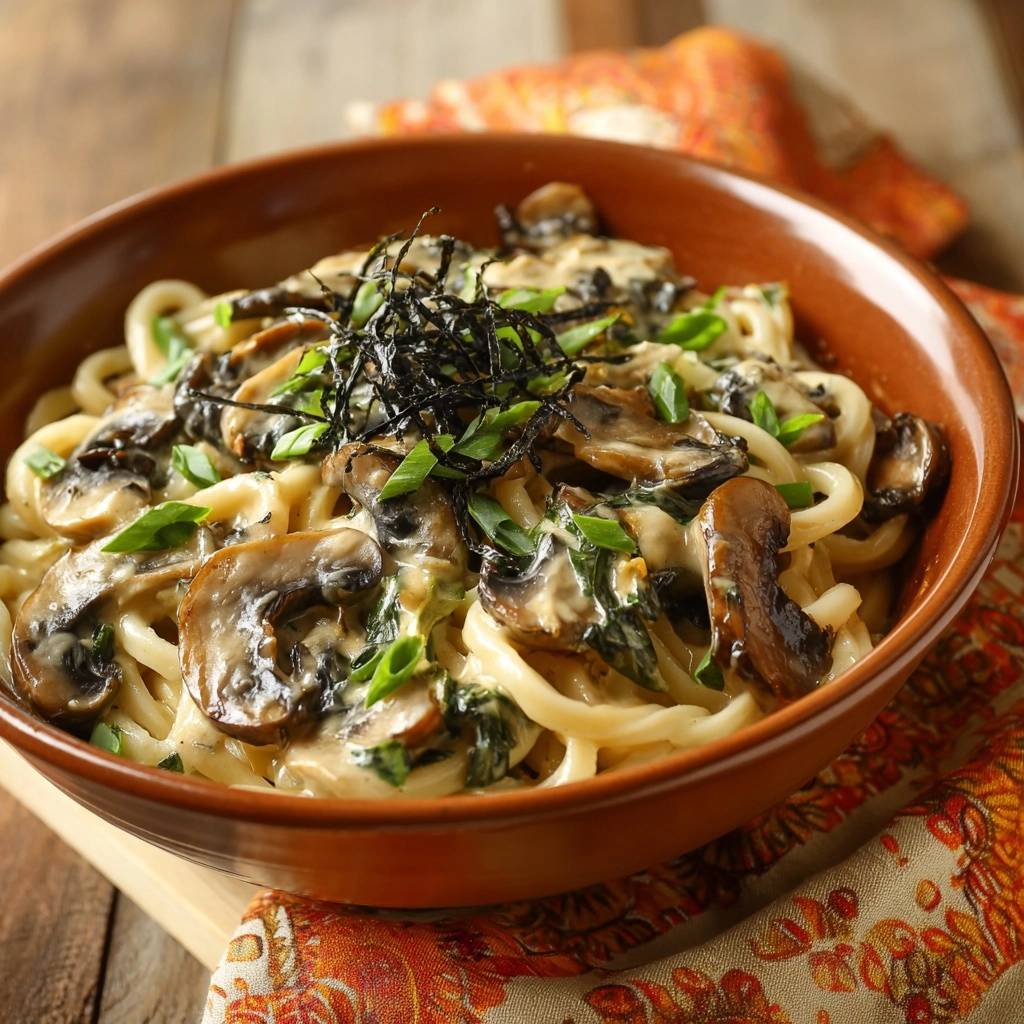
A properly seared mushroom provides a firm, almost steak-like chew that breaks up the silkiness of the cream. Without that hard sear, the entire dish becomes one-dimensional and mushy. The contrast between the crispy edges of the fungi and the pillowy noodles is what makes this recipe feel like a professional meal.
Essential Components for Creamy Mushroom Udon Noodles
The quality of your udon makes a massive difference. If you can find frozen udon packs, grab them. They are flash-frozen at the peak of freshness and maintain a much better “snap” than the shelf-stable, vacuum-sealed varieties which can sometimes have a sour, acidic aftertaste. Fresh udon from the refrigerated section is also an excellent choice.
When it comes to the cream, heavy cream is non-negotiable here. Because we are adding acidic and salty elements like soy sauce and parmesan, lower-fat milks or half-and-half are prone to curdling or breaking. Heavy cream has the fat content necessary to create a stable, luscious emulsion that can stand up to the heat of the skillet.
The Umami Trifecta: Soy, Oyster Sauce, and Parmesan
This recipe relies on three heavy hitters to build a complex flavor profile. Soy sauce provides the foundational salt and a dark, fermented depth. Oyster sauce (ensure it is a high-quality brand) adds a hint of sweetness and a thick viscosity that helps the sauce coat the noodles. It also lends a beautiful mahogany tint to the cream.
The wild card is the Parmesan cheese. While it might seem out of place in a noodle dish, it acts as a powerful thickening agent and flavor booster. It contains high levels of natural glutamates, which enhance the “savory” feel of the mushrooms. Make sure it is finely grated so it melts instantly into the sauce without leaving any grainy clumps.
Selecting and Preparing Your Mushrooms
Cremini mushrooms, often sold as “Baby Bellas,” are the best all-around choice because they have less water content than white buttons. However, you can easily elevate this dish by mixing in shiitake or oyster mushrooms for a more “forest-like” flavor. Shiitakes add a smoky note, while oyster mushrooms provide a delicate, velvety texture.
Whatever you choose, never soak your mushrooms in water to clean them. Mushrooms act like sponges and will absorb that water, making a proper sear impossible. Instead, use a damp paper towel to wipe away any dirt. This keeps them dry and ready to brown the moment they hit the hot oil.
Step-by-Step: Achieving a Professional Sauce Emulsion
Creating a professional sauce isn’t about luck; it’s about the order of operations. We break this down into three distinct phases to ensure the flavors are layered correctly and the texture is flawless. If you follow these steps, you’ll avoid the common pitfall of a broken or greasy sauce.
Phase 1: Developing the Flavor Base
Start with your oil shimmering in the pan. Once those mushrooms are browned and beautiful, drop in the butter and the minced garlic. This is a critical timing moment. Garlic burns quickly, and burnt garlic is bitter. By adding it after the mushrooms are seared, you only need about 60 seconds of sautéing to release its fragrance and turn it golden.
The butter will foam up and mingle with the mushroom juices, creating a rich base. This is where the “soul” of the dish is born. You’ll notice the aroma change from earthy to nutty and sweet. Keep the heat at medium-high during this phase to keep the moisture evaporating quickly.
Phase 2: The Starchy Water Secret
While your mushrooms are finishing, boil your udon. Since frozen udon only takes a minute or two, you have to be ready. Before you tip the pot into a colander, dip a measuring cup in and grab that starchy water. This liquid is the “glue” for your sauce.
The starch in the water acts as an emulsifier. In chemistry terms, it helps the fats (cream and butter) mix with the liquids (soy sauce and oyster sauce). Without this starch, the fat would just sit on top of the noodles. With it, you get a unified, creamy coating that looks like it was made by a chef.
Phase 3: Tossing for Maximum Coating
Once the cream and sauces are in the pan, add your noodles and that reserved water. Now, don’t be gentle. You want to toss the noodles vigorously using tongs or a spatula. This movement, combined with the heat, encourages the starch and cheese to thicken the cream rapidly.
Watch for the “nappe” stage. This is a French culinary term meaning the sauce is thick enough to coat the back of a spoon. If you run your finger through the sauce on the spoon and the line stays clean, you’ve nailed it. The noodles should look shiny and fully enveloped, not sitting in a pool of liquid.
Troubleshooting Common Creamy Sauce Issues
If your sauce looks like it’s separating or looks oily, don’t panic. This usually means the heat was too high or the sauce got too dry. Simply add another tablespoon of warm water and whisk it in quickly. The extra moisture and agitation will usually pull the emulsion back together.
On the flip side, if the noodles absorb the sauce too fast and become “gummy,” you likely let it reduce for too long. Udon is very thirsty! Always pull the pan off the heat while the sauce still looks a tiny bit looser than you want it. It will continue to thicken as you plate it and as it cools slightly.
Flavor Variations and Ingredient Swaps
You can easily adapt this recipe to what you have in the fridge. If you want to add protein, seared shrimp or cubes of firm tofu work beautifully. Just cook them separately and toss them in at the very end so they don’t overcook or mess with the sauce’s consistency.
For a different flavor profile, try adding a teaspoon of miso paste along with the cream. This doubles down on the fermented, salty notes. If you like heat, a drizzle of chili oil or a sprinkle of red pepper flakes during the garlic sauté phase adds a wonderful back-of-the-throat warmth that cuts through the heavy cream.
Vegetarian and Vegan Adjustments
To make this vegetarian, ensure you are using a “vegetarian stir-fry sauce” instead of traditional oyster sauce. These are usually made from mushroom extracts and provide the same thick, savory punch without the seafood. It’s a pantry staple for many plant-based cooks.
For a vegan version, swap the heavy cream for full-fat coconut cream (the thick stuff at the top of the can) and use nutritional yeast instead of Parmesan. While the flavor will have a slight coconut hint, the mushroom and soy will still dominate, and the nutritional yeast provides that necessary “cheesy” thickness.
Optimal Serving Suggestions and Garnishes
Presentation is key for a dish this rich. Serve the udon in shallow, warmed bowls. Cold bowls will cause the cream sauce to seize up and lose its silkiness. A shallow bowl allows you to pile the noodles high, creating a beautiful nest for the toppings.
The garnishes aren’t just for looks. The fresh green onions provide a sharp, grassy bite that refreshes the palate between heavy mouthfuls of cream. The shredded nori is essential; it adds a whisper of the sea and a delicate crunch. If you want even more texture, a sprinkle of toasted sesame seeds adds a lovely nutty finish.
Expert Tips for Success
First, never rinse your udon noodles after boiling. You want that surface starch to remain on the noodle so the sauce has something to grab onto. Rinsing them makes them too slippery for the cream to stick.
Second, use the widest skillet you own. A wide surface area allows for faster evaporation, which is how you get a concentrated, flavorful sauce. In a deep pot, the steam gets trapped, and you’ll end up with a “soupy” consistency rather than a “saucy” one.
Third, if you are doubling the recipe, sear the mushrooms in two batches. Overcrowding the pan is the fastest way to ruin the texture. It’s better to take the extra five minutes to get a proper sear than to end up with a pile of boiled fungi.
Finally, this is a “cook and eat” dish. Because of the high starch content in udon, the noodles will continue to drink up the sauce even after they are plated. For the best experience, have everyone at the table ready to eat the moment the noodles hit the bowl.
Frequently Asked Questions
Can I use dried udon instead of frozen?
Yes, you can use dried udon, but keep in mind the texture will be different. Dried udon tends to be flatter and more similar to a thick linguine. It lacks the extreme “bounce” of frozen udon. If using dried, make sure to undercook them by about one minute, as they will finish softening in the cream sauce.
How do I store leftovers without the noodles getting mushy?
Leftover udon will naturally absorb the sauce as it sits in the fridge. To revive them, add a splash of water or milk before reheating in a skillet over low heat. This will loosen the sauce back up. However, for the best texture, this dish is best enjoyed fresh. I do not recommend freezing the cooked dish as the cream will likely separate upon thawing.
Is there a substitute for heavy cream?
If you must avoid heavy cream, full-fat coconut milk is the best substitute for texture. I would avoid using Greek yogurt or silken tofu; while they are creamy, they lack the fat stability needed for this specific high-heat emulsion and may result in a grainy or sour sauce that doesn’t coat the noodles properly.
Why is my sauce pooling at the bottom of the bowl?
This usually happens if you skipped the starchy noodle water or didn’t toss the noodles long enough in the pan. The “tossing” phase is where the magic happens. You need that physical agitation to help the starch, cheese, and cream bind together. If it’s still pooling, let it simmer for another 60 seconds while stirring constantly.
Can I add vegetables like spinach or bok choy?
Absolutely! If adding spinach, toss it in during the last 30 seconds of cooking so it just barely wilts. For heartier greens like bok choy, sauté them with the mushrooms after the initial sear is complete. Be careful not to add too many watery vegetables (like zucchini), as they can dilute the richness of your cream sauce.
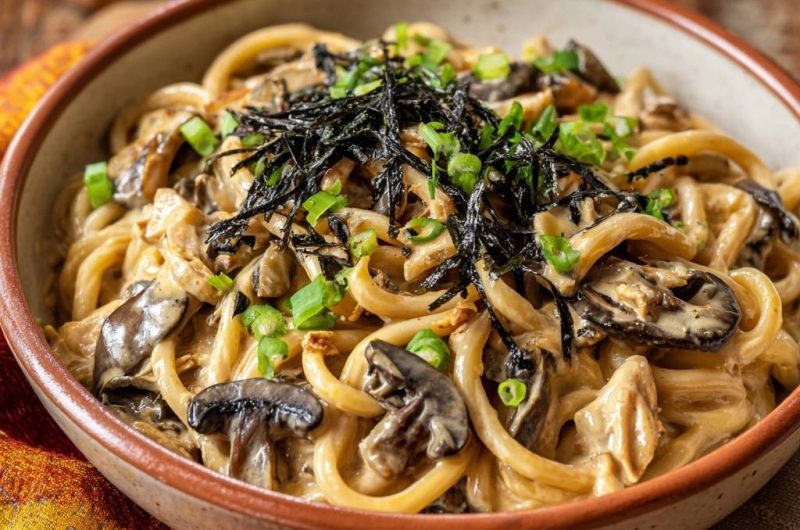
Creamy Mushroom Udon Noodles
Course: Main CourseCuisine: Japanese FusionDifficulty: easy2
servings10
minutes15
minutes25
Minutes510
kcalJapanese Fusion
Ingredients
2 packs (approx. 14 oz) frozen or fresh udon noodles
10 oz cremini mushrooms, sliced
2 cloves garlic, minced
1/2 cup heavy cream
1/4 cup grated Parmesan cheese (for thickening and salt)
2 tablespoons soy sauce
1 tablespoon oyster sauce (for deep color and umami)
1 tablespoon butter
1/2 cup reserved starchy noodle water
2 green onions, sliced
1 sheet nori, finely shredded
1 tablespoon vegetable oil
Black pepper to taste
Directions
- Heat vegetable oil in a large skillet over medium-high heat. Add the mushrooms in a single layer. Do not salt them yet. Let them sear undisturbed for 3-4 minutes to develop a deep brown crust. This prevents them from releasing excess water and ensures they maintain a meaty texture.
- Once browned, add the butter and minced garlic. Saute for 1 minute until the garlic is golden and fragrant.
- While mushrooms cook, boil the udon noodles according to package instructions (usually 1-2 minutes for frozen). Crucial step: Before draining, scoop out 1/2 cup of the starchy noodle water and set it aside. Drain the noodles.
- Lower the skillet heat to medium. Pour in the heavy cream, soy sauce, and oyster sauce. Stir to combine with the mushrooms.
- Add the cooked udon noodles directly into the skillet. Pour in the reserved noodle water and the grated Parmesan cheese.
- Toss the noodles vigorously for 2 minutes. The combination of the starchy water and the cheese acts as a bridge between the fat in the cream and the noodles, creating a thick, glossy emulsion that clings to the udon rather than pooling at the bottom of the bowl.
- Once the sauce has reduced to a thick, velvety consistency that coats the back of a spoon, remove from heat.
- Serve immediately in shallow bowls, topped generously with fresh green onions and a high pile of shredded nori for a salty, umami crunch.
Notes
- Do not salt the mushrooms during the initial sear to prevent them from releasing water. Always reserve starchy noodle water before draining to ensure the sauce reaches the correct consistency.