
Most cauliflower soups are a disappointment. You expect a rich, comforting bowl, but you often end up with a thin, gray liquid that tastes like boiled water and sulfur. It’s a common kitchen letdown that happens when you treat cauliflower like a standard boiled vegetable instead of the flavor powerhouse it actually is.
The secret to a truly velvety bisque lies in a sensory shift. We’re moving away from the “boiled vegetable” method and toward a “Skyscraper” approach. This means we build layers of flavor through intense caramelization and careful starch management to create a golden, decadent soup that rivals any potato leek classic.
I’ve found that the real magic happens when you focus on the emulsion. By roasting the florets until they’re nearly charred and then blending them with a specific starch-to-fat ratio, you achieve a texture that’s thick enough to coat the back of a spoon without feeling heavy or gluey. It’s all about that perfect, glossy finish.
The Maillard Reaction: Why Roasting Beats Boiling
If you want deep, savory umami, you have to roast. When you subject cauliflower to 425°F heat, you trigger the Maillard reaction. This chemical process transforms the raw glucosinolates in the vegetable into nutty, sweet, and complex compounds that boiling simply cannot replicate.
Boiling is the enemy of flavor here because it leaches all the goodness into the water, which you then usually pour down the drain. Furthermore, boiled cauliflower often releases a pungent, cabbage-like aroma. Roasting, however, dries out the exterior and concentrates the natural sugars, turning the florets a beautiful mahogany brown.
Don’t be afraid of those dark edges! “Deeply browned” is your target color. Those caramelized bits are the primary source of flavor for the entire pot. When they hit the broth, they dissolve into a rich, toasted essence that makes the soup taste like it’s been simmering for hours rather than minutes.
Essential Components for a Velvety Texture
Success starts at the grocery store. When selecting your cauliflower, look for a head that feels heavy for its size with tightly packed florets. If the head is loose or has dark spots, it’s likely past its prime and will have a more bitter, watery profile.
The Yukon Gold potato is my secret weapon for that visual thickness. Unlike Russet potatoes, which can turn mealy and grainy when blended, Yukon Golds have a medium starch content and a buttery texture. They provide a natural “glue” that keeps the soup glossy and smooth rather than starchy.
Parmesan cheese isn’t just for garnish; it’s a functional ingredient. It acts as a natural emulsifier and flavor enhancer, adding a salty backbone that balances the sweetness of the roasted cauliflower. It provides a “body” to the liquid that cream alone can’t achieve.
Finally, the crispy beef bacon provides the essential textural foil. A smooth soup needs a loud crunch. The smoky, salty bits of beef bacon cut through the richness of the heavy cream, making every bite exciting rather than monotonous.
Choosing the Right Fat and Broth
I always recommend a high-quality, low-sodium vegetable broth. This gives you total control over the seasoning profile. If you use a full-sodium version, the soup can quickly become too salty once you add the Parmesan and the beef bacon.
When it comes to the fat, heavy cream is the gold standard for a silk-like mouthfeel. However, timing is everything. We add the cream at the very end over low heat to prevent curdling. This ensures the fats stay suspended in the liquid for a perfectly uniform, luxurious finish.
Step-by-Step: Achieving the Perfect Emulsion
Phase one is the high-heat roast. When you spread your florets on the baking sheet, give them space! If you crowd the pan, the cauliflower will release steam and turn mushy instead of browning. You want the hot air to circulate around every piece so they crisp up properly.
Phase two involves the aromatic base. While the cauliflower is in the oven, you’ll sweat your onions and diced potatoes in olive oil. The goal here is “translucent,” not “browned.” By keeping the heat at medium, you soften the vegetables without adding color, which keeps the final soup looking vibrant and golden.
Phase three is the long blend, and this is where most people stop too soon. A quick 30-second pulse will leave you with a gritty texture. If you’re using an immersion blender, keep it submerged to create a “vortex.” This pulls the roasted cauliflower and softened potatoes into the blades repeatedly.
Blend for at least 2 to 3 full minutes. You’ll actually see the color lighten and the texture become glossy as air and fat incorporate into the vegetable fibers. If you want that restaurant-quality “bisque” look, this patience is non-negotiable. The soup should look like liquid velvet before you even add the cream.
Troubleshooting Common Cauliflower Soup Issues
If your soup feels watery, it’s likely because the cauliflower had a high water content or the potatoes weren’t simmered long enough to release their starch. You can fix this by simmering the soup uncovered for an extra 10 minutes before adding the cream to reduce the liquid and concentrate the solids.
A grainy texture usually points to undercooked potatoes or a blender that didn’t quite finish the job. If it’s already blended and still feels “sandy,” try passing it through a fine-mesh sieve. It’s an extra step, but it will remove any stubborn fibers and guarantee a professional finish.
Is the flavor falling flat? Blandness is usually an acidity issue. Even with the Parmesan, a tiny drop of lemon juice or a touch more salt can “wake up” the flavors. Acidity acts like a volume knob for savory dishes, making the roasted notes sing.
Flavor Variations and Dietary Adaptations
If you want a spicy kick, try adding a tablespoon of harissa paste or a teaspoon of red pepper flakes during the onion sauté. The heat pairs beautifully with the creamy base and the smoky beef bacon. It transforms the soup into something much more adventurous.
For an herb-forward version, toss a few sprigs of fresh thyme or sage into the pot while the broth simmers. Remove the woody stems before blending. These earthy herbs complement the nuttiness of the roasted cauliflower and add a sophisticated, “Sunday roast” aroma to the kitchen.
To make this dairy-free, you can swap the heavy cream for full-fat coconut milk or a homemade cashew cream. To replace the Parmesan’s function, add a tablespoon of nutritional yeast. You’ll still get that savory depth and thick body without using any animal products.
Plating for Visual Impact
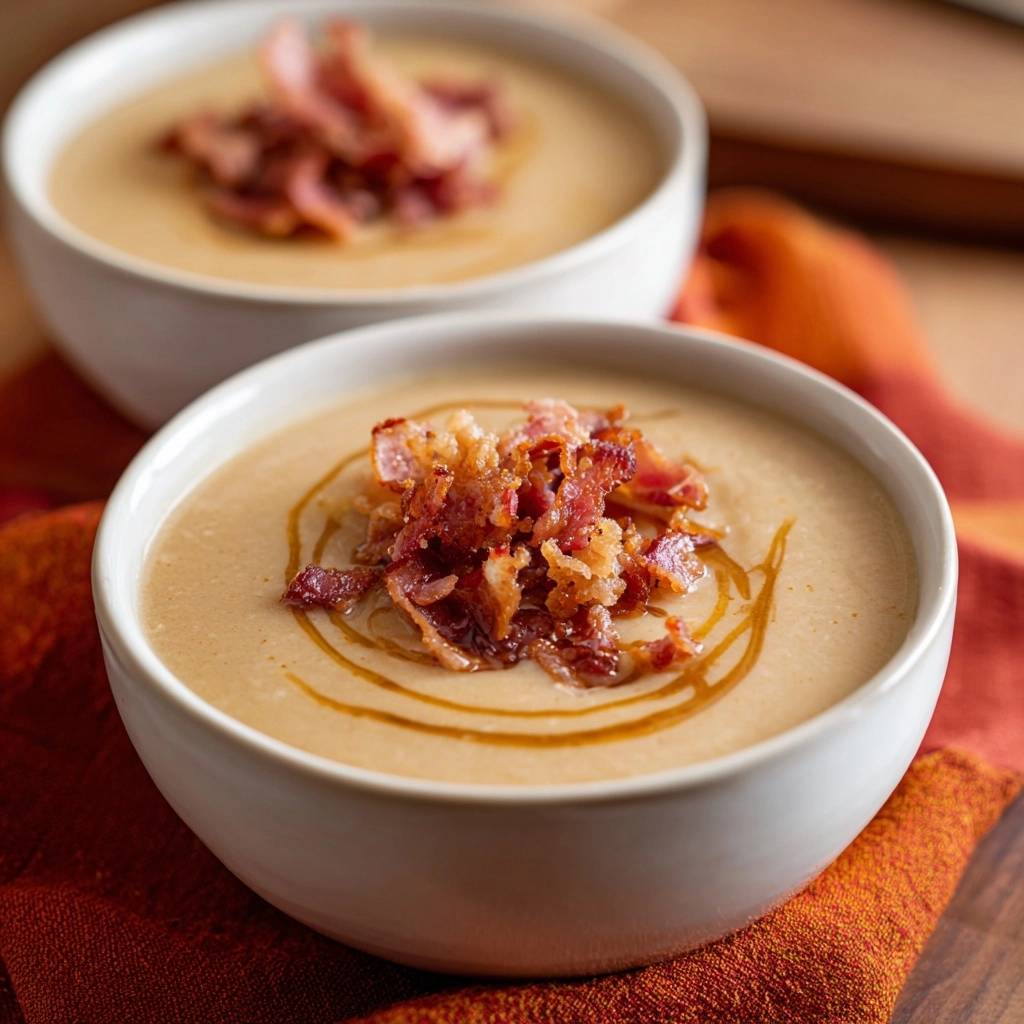
To get that professional look, use the back of a large spoon to create a slight circular groove on the surface of the soup. This creates a “track” for your olive oil. Drizzle the oil slowly into that groove so it stays on the surface rather than disappearing into the puree.
When adding your beef bacon, think about height. Pile a generous mound right in the center. If you scatter it too thinly, the weight of the bacon will cause it to sink. By creating a little “island” of bacon, it stays crispy and looks much more appetizing on the table.
Optimal Pairings for a Complete Meal
Because this soup is so rich and velvety, you need something high-acid or high-crunch on the side. A bitter green salad, like arugula or radicchio, tossed in a sharp lemon vinaigrette provides the perfect palate cleanser between spoonfuls of creamy soup.
If you’re a bread lover, go for a crusty sourdough boule. I like to toast the slices and rub a raw clove of garlic over the warm crust. The sharp garlic and tangy bread are incredible when dipped into the thick, roasted cauliflower base.
Storage, Reheating, and Freezing Protocols
This soup stores beautifully in an airtight container in the fridge for up to four days. In fact, the flavors often deepen overnight. When reheating, do it on the stovetop over medium-low heat. Avoid the microwave if possible, as uneven heating can cause the cream to separate.
If the soup has thickened too much in the fridge, just whisk in a splash of broth or water as you reheat it. This will restore that original silky consistency. Be careful not to let it reach a rolling boil, or you might lose that delicate, glossy emulsion we worked so hard to create.
Freezing is possible, but be warned: the starch in the Yukon Gold potatoes can sometimes become slightly grainy after thawing. If you do freeze it, let it thaw completely in the fridge and then give it a quick 30-second whirl with the blender after reheating to bring the texture back to life.
Expert Tips for Soup Success
Never discard the cauliflower core! While it’s too tough for a salad, it’s packed with flavor. Chop it into small pieces and roast it right along with the florets. Once it’s simmered and blended, it adds even more body and “cauliflower essence” to the final dish.
Practice the “Resting Rule.” Let the soup sit off the heat for about 10 minutes before serving. This allows the flavors to meld and the temperature to drop just enough that you can actually taste the nuances of the roasted vegetable rather than just “heat.”
Keep a close eye on your temperature once the cream and cheese are in the pot. You want a gentle simmer at most. If the soup reaches a violent, rolling boil, the proteins in the cheese can tighten up and become stringy, ruining that perfectly smooth mouthfeel.
Frequently Asked Questions
How do I store leftovers and does this freeze well?
Store your soup in an airtight container in the refrigerator for up to 4 days. While you can freeze it for up to 2 months, the texture of the potatoes and cream can sometimes change, becoming slightly grainy. If you freeze it, reheat slowly on the stove and use an immersion blender for 30 seconds to re-emulsify the fats and starches for a smooth finish.
Why is my cauliflower soup grainy instead of smooth?
Graininess usually happens for two reasons: undercooked potatoes or a short blending time. Ensure your diced potatoes are completely fork-tender before blending. Additionally, most people only blend for 30 seconds. For a truly velvety texture, you must blend for at least 2 to 3 minutes to fully break down the vegetable fibers and incorporate the fats.
What can I use instead of heavy cream?
If you want to lighten the dish or avoid dairy, full-fat coconut milk is an excellent substitute that maintains the creamy body. Alternatively, you can blend half a cup of raw cashews (soaked in water for an hour) with a bit of the broth to create a “cashew cream” that provides incredible richness without the dairy.
Can I make this soup without a high-speed blender?
Yes, you can use a standard upright blender, but you must be careful with hot liquids. Only fill the blender halfway, remove the center plastic piece from the lid, and cover it with a folded kitchen towel to allow steam to escape. This prevents the lid from blowing off. You may need to blend in batches to achieve the desired smoothness.
My soup tastes a bit bland, how can I fix it?
Blandness is often a lack of salt or acidity. First, add a pinch more salt and taste again. If it still feels “flat,” add a teaspoon of fresh lemon juice or a splash of white vinegar. The acid brightens the roasted flavors and cuts through the richness of the cream and Parmesan.
Can I use frozen cauliflower for this recipe?
You can, but the results won’t be quite as flavorful. Frozen cauliflower contains more moisture, which makes it harder to achieve that deep, dark caramelization in the oven. If using frozen, roast it directly from frozen at a slightly higher temperature (450°F) and ensure the florets are well-spaced to evaporate the extra water quickly.

Creamy Roasted Cauliflower Soup
Course: SoupCuisine: AmericanDifficulty: easy4
servings15
minutes40
minutes55
Minutes310
kcalAmerican
Ingredients
1 large head cauliflower (approx. 2 lbs), cut into small florets
3 tablespoons olive oil, divided
1 medium yellow onion, finely diced
3 cloves garlic, minced
1 large Yukon Gold potato, peeled and diced (the secret to the visual thickness shown)
3 ½ cups low-sodium vegetable broth
½ cup heavy cream
½ cup freshly grated Parmesan cheese (for depth and body)
½ teaspoon smoked paprika
Salt and black pepper to taste
6 slices beef bacon, cooked until extra crispy and roughly chopped
Extra virgin olive oil or chili oil for drizzling
Directions
- Preheat your oven to 425°F (220°C). Toss cauliflower florets with 2 tablespoons of olive oil, salt, and pepper on a large baking sheet. Roast for 25-30 minutes, tossing halfway through, until the edges are deeply browned and caramelized.
- While the cauliflower roasts, heat the remaining 1 tablespoon of olive oil in a large heavy-bottomed pot over medium heat. Add the onion and diced potato. Sauté for 8-10 minutes until the onions are translucent and the potatoes begin to soften. Add the garlic and cook for 1 minute more until fragrant.
- Add the roasted cauliflower to the pot (reserve a few tiny bits for garnish if desired). Pour in the vegetable broth. Bring to a boil, then reduce heat and simmer for 10-12 minutes until the potatoes are fork-tender.
- Remove from heat. Use a high-speed immersion blender to puree the soup. For the ultra-smooth, thick consistency seen in the image, blend for at least 2-3 minutes.
- Stir in the heavy cream, grated Parmesan cheese, and smoked paprika. Return to low heat and whisk until the cheese is fully melted and the soup is glossy. If the soup is too thick, add a splash of broth; if it needs more body, simmer for 5 minutes to reduce.
- Taste and adjust seasoning with salt and pepper.
- Ladle into bowls. To match the visual presentation, use a spoon to create a slight circular indentation on the surface. Drizzle a ring of high-quality olive oil into the groove and pile a generous mound of crispy beef bacon in the center.
Notes
- For the smoothest texture, use a high-speed immersion blender for at least 2 to 3 minutes. Reserve a few roasted florets for garnish to add extra texture.