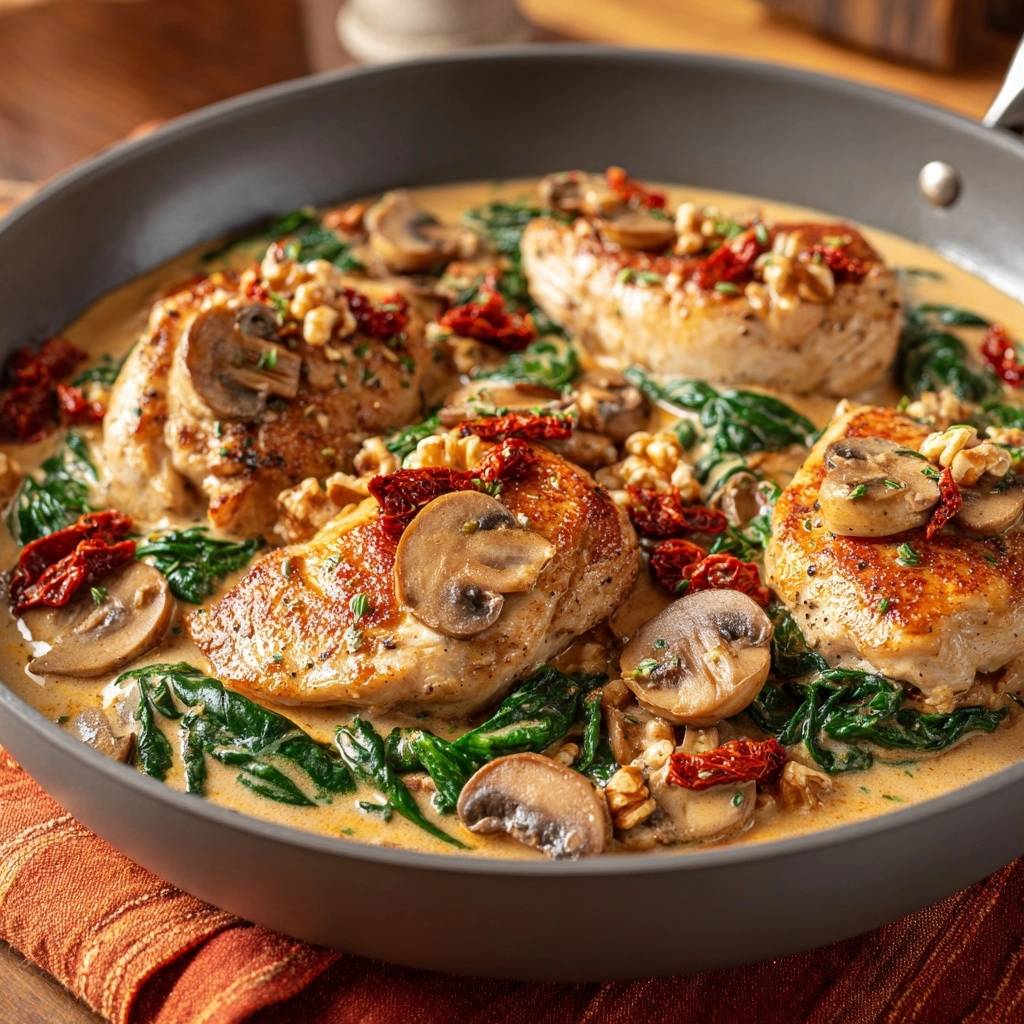
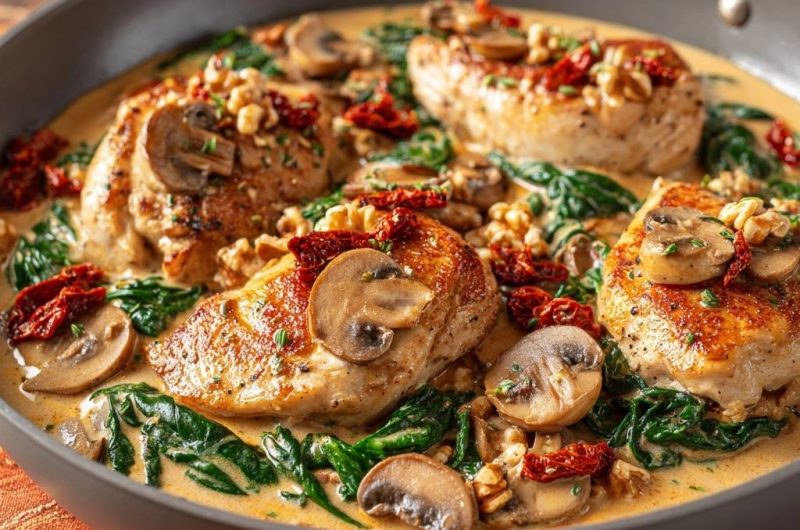
Imagine slicing into a perfectly seared chicken thigh, only to have it swimming in a thin, grey puddle of liquid. It’s the ultimate kitchen heartbreak. We’ve all been there, chasing a “creamy” sauce around the plate with a fork, wondering where the richness went. This Creamy Sun-Dried Tomato and Mushroom Chicken is the antidote to those watery disappointments, offering a sauce so thick and velvety it clings to every bite like a silk ribbon.
The magic lies in the deep, earthy umami of cremini mushrooms paired with the concentrated, tart punch of sun-dried tomatoes. When these bold flavors meet a properly reduced cream base, the result is pure comfort. It’s the kind of meal that feels like a high-end bistro specialty but comes together in a single skillet in under thirty minutes. You get that gorgeous golden hue from the paprika and a satisfying crunch from toasted walnuts that most recipes overlook.
However, the real secret to this restaurant-quality finish isn’t a fancy ingredient; it’s the “reduction first” approach. Most home cooks add their liquids too quickly, trapping mushroom steam in the pan. By searing the mushrooms until they are bone-dry and golden before deglazing, you ensure the water stays out and the flavor stays in. This technique creates a stable emulsion that won’t break or separate, even as it sits on your dinner table.
The Science of a Non-Watery Cream Sauce
Creating a sauce that stays thick requires understanding how moisture behaves in a hot pan. When you sear chicken and mushrooms, they leave behind “fond,” those little brown bits stuck to the bottom. These bits are concentrated flavor gold, but they need a liquid to release them. By deglazing with chicken broth first and letting it simmer down by two-thirds, you create a flavor syrup that acts as a foundation for the dairy.
In addition, the stability of your sauce depends on emulsification. Heavy cream is an ideal candidate for this because its high fat content (usually around 36%) prevents it from curdling when it hits the acidic sun-dried tomatoes. When you stir in the freshly grated Parmesan, the proteins in the cheese bind with the fats in the cream. This creates a structural web that holds the sauce together, ensuring it coats the back of a spoon rather than running off like water.
Therefore, patience during the simmering stage is your best friend. If you rush the process and add the chicken back while the sauce is still thin, the juices from the meat will dilute your hard work. Wait for those gentle bubbles to transform the liquid into a glossy, opaque coating. This ensures that every element of the dish, from the spinach to the chicken, is enveloped in a consistent, rich texture that lasts until the very last bite.
Essential Components for the Mushroom Chicken Base
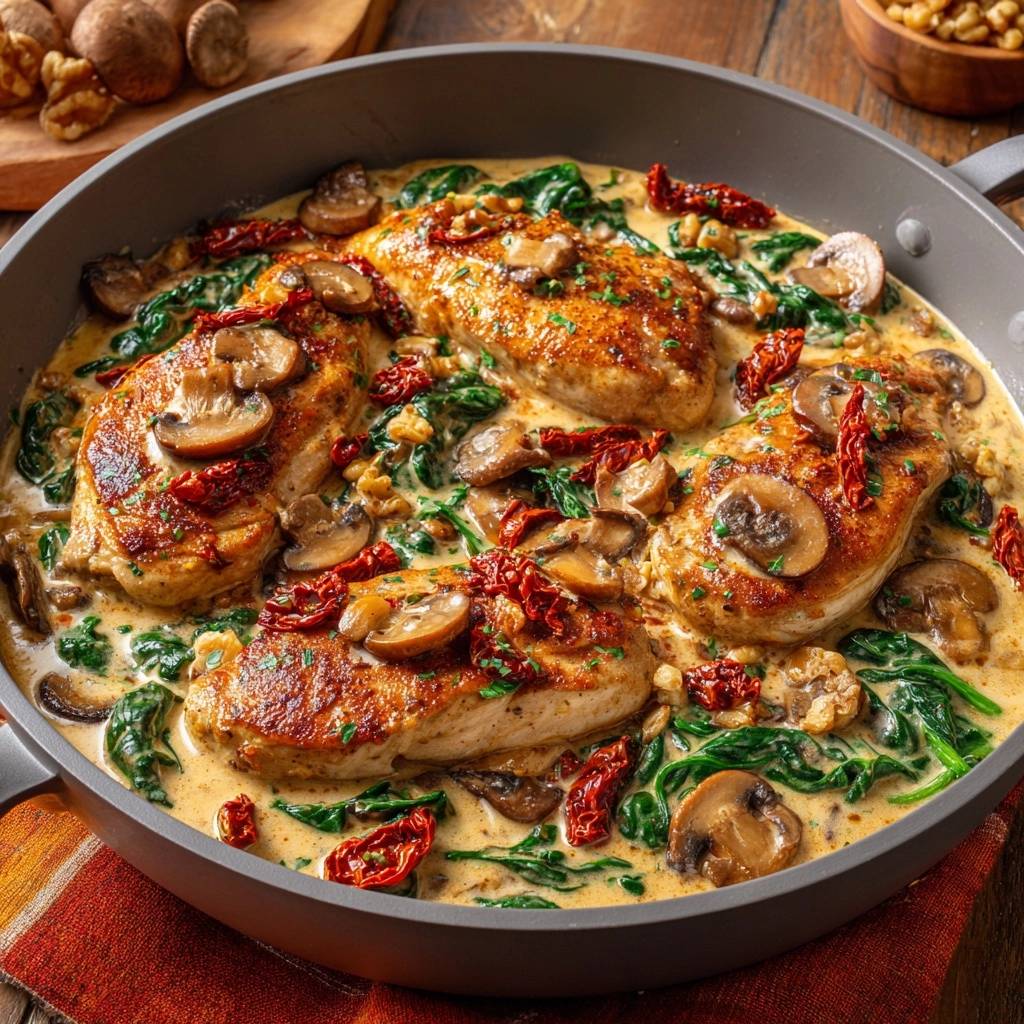
While you can use chicken breasts, I strongly recommend boneless skinless chicken thighs for this recipe. Thighs contain more connective tissue and fat, which means they stay incredibly juicy even after a hard sear. Breasts tend to dry out quickly in the time it takes for the sauce to reach its peak thickness. If you do choose breasts, consider slicing them into thinner cutlets to ensure they cook evenly and stay tender.
The choice of mushrooms also dictates the final texture of your sauce. Cremini mushrooms, often sold as “Baby Bellas,” are superior to standard white button mushrooms because they have a lower water content. They hold their shape better and offer a much deeper, woodsy flavor that stands up to the heavy cream. Slicing them thick ensures they don’t disappear into the sauce, providing a meaty bite that complements the chicken perfectly.
Don’t throw away the oil from your sun-dried tomato jar! That oil is packed with concentrated tomato essence and herbs. Using two tablespoons of this oil to sear your chicken and sauté your mushrooms adds a layer of flavor that plain olive oil simply can’t match. It’s a simple “pantry hero” move that infuses the entire dish with a Mediterranean warmth from the very first step.
Selecting and Prepping Your Sun-Dried Tomatoes
For the best results, always reach for the sun-dried tomatoes packed in oil rather than the dry-packed pouches. The oil-packed variety is much more supple and tender, whereas dry-packed tomatoes can often feel like chewing on leather. Drain them well, but don’t rinse them, as you want that herb-infused oil to stay on the surface. Chop them into bite-sized strips so they distribute evenly, ensuring every forkful has a hit of sweetness.
Why Freshly Grated Parmesan is Non-Negotiable
It’s tempting to grab the green shaker bottle or a bag of pre-shredded cheese, but those products are coated in potato starch or cellulose to prevent clumping. These additives are the enemy of a smooth sauce, often resulting in a grainy or “sandy” texture. Grating a block of real Parmigiano-Reggiano takes sixty seconds but makes a world of difference. It melts instantly into the cream, acting as a natural thickener that creates a professional, skyscraper-quality finish.
Step-by-Step: Searing the Chicken for Maximum Flavor
Start by seasoning your chicken generously. Don’t be shy with the paprika; it provides that signature sunset-orange glow to the final sauce. Heat your skillet until the oil is shimmering but not smoking. When you drop the chicken in, you should hear a loud, aggressive sizzle. This is the Maillard reaction in action, creating a crust that locks in moisture and adds a savory depth to the pan.
Cook the chicken for about 5 to 7 minutes per side. You aren’t just looking for “cooked through”; you want a deep, mahogany-gold color. If the spices start to smell slightly toasted, that’s perfect, but if they smell acrid or burnt, turn the heat down slightly. Once the chicken reaches an internal temperature of 165°F, move it to a plate. Those juices that collect on the plate are precious, so make sure to pour them back into the skillet later.
The Mushroom Technique: Evaporating Moisture for Texture
After removing the chicken, toss your mushrooms into the hot fat. Here is the most important rule: do not touch them for at least three minutes. Mushrooms are like sponges filled with water. If you stir them constantly, they will steam in their own juices and turn rubbery. By letting them sit undisturbed, you force the water to evaporate and allow the natural sugars to caramelize against the hot metal.
You will notice the mushrooms release a lot of liquid at first. Keep cooking until that liquid is completely gone and the pan looks dry again. At this point, the mushrooms will begin to brown and take on a firm, meaty texture. This is when you add your minced garlic and sun-dried tomatoes. Sautéing them for just a minute at this stage wakes up the aromatics without the risk of burning the delicate garlic bits.
Deglazing and Reducing the Creamy Tomato Base
Now comes the deglazing. Pour in your chicken broth and use a wooden spoon to scrape up every bit of that brown crust (the fond) from the bottom of the pan. This is where the soul of your sauce lives. However, don’t add the cream yet! You must let that broth simmer and reduce until there is only a thin layer of highly concentrated liquid left in the pan. This step is your primary defense against a watery sauce.
Once the broth has reduced by about two-thirds, lower the heat to medium-low before pouring in the heavy cream. You want a gentle simmer, not a rolling boil. As the cream heats up, it will begin to thicken naturally. Stir it occasionally, watching as it changes from a thin liquid to a rich, ivory-colored sauce that starts to bubble lazily. This slow reduction builds a flavor profile that is far more complex than a sauce thickened with flour or cornstarch.
Integrating Spinach and Finishing the Emulsion
When the sauce looks nearly ready, stir in your freshly grated Parmesan and the baby spinach. The cheese will melt almost instantly, providing the final “grip” the sauce needs. The spinach only needs about 30 to 60 seconds to wilt. We add it at the very end because spinach is mostly water; if you cook it too long, it will leak moisture into your perfect sauce and turn it grey. Adding it last keeps the color vibrant and the sauce thick.
Finally, return the chicken and those saved juices to the skillet. Use a large spoon to bathe the chicken in the sauce, ensuring the mushrooms and tomatoes are nestled all around the meat. The residual heat from the sauce will bring the chicken back up to temperature without overcooking it. Garnish with those crushed walnuts for a surprising, earthy crunch that cuts through the richness of the dairy.
Troubleshooting Common Sauce Consistency Issues
If your sauce ends up too thick, don’t panic. This often happens if the heat was a bit too high during the cream reduction. Simply whisk in a tablespoon of chicken broth or water at a time until you reach your desired consistency. The sauce should be thick enough to coat the chicken but fluid enough to pool slightly on the plate. It’s much easier to thin a sauce than it is to thicken one!
Sometimes a cream sauce can look oily or “broken,” which usually means the fat has separated from the solids. This often happens if the sauce gets too hot. To fix this, remove the pan from the heat and whisk in a teaspoon of warm water very vigorously. The water helps re-emulsify the fats. If the sauce curdles, it’s likely because you used a low-fat dairy or boiled it too hard. Always stick to heavy cream and keep the heat at a gentle simmer.
Optimal Side Dishes for Creamy Poultry
A sauce this good deserves a vehicle to carry it. Al dente pappardelle or fettuccine are classic choices, as the wide ribbons of pasta provide plenty of surface area for the cream to cling to. If you prefer potatoes, a pile of roasted garlic mashed potatoes creates a decadent, comforting base. For a lighter option, try serving this over a bed of cauliflower rice or even some simple zoodles, which soak up the tomato essence beautifully.
Because this dish is quite rich, I always recommend something acidic on the side to balance the palate. A simple arugula salad dressed with nothing but fresh lemon juice and a pinch of salt works wonders. The peppery bite of the greens and the sharp citrus cut right through the heavy cream and Parmesan. A crusty piece of sourdough baguette is also essential for mopping up every last drop of that sun-dried tomato sauce.
Storage and Reheating Without Breaking the Sauce
Leftovers of this chicken are fantastic the next day, but you have to be careful with the reheat. Cream sauces are delicate and can easily separate in the microwave, leaving you with a greasy mess. Store the chicken and sauce in an airtight container in the fridge for up to three days. I do not recommend freezing this dish, as the cream and spinach will change texture significantly once thawed, often becoming grainy or watery.
To reheat, place the chicken and sauce in a small skillet over low heat. Add a splash of milk or chicken broth to the pan to help loosen the sauce. Cover the pan with a lid to trap the steam, which helps the chicken heat through without drying out. Stir the sauce gently as it warms up to encourage the emulsion to stay together. Once it’s steaming and the sauce is glossy again, it’s ready to serve.
Expert Tips for Flavor Customization
If you want to add a little “zip” to the dish, try adding a half-teaspoon of red pepper flakes when you sauté the garlic. The heat plays beautifully against the sweetness of the sun-dried tomatoes. For a more aromatic finish, you can swap the walnuts for toasted pine nuts or even slivered almonds. Each nut provides a different flavor profile that changes the character of the dish slightly.
Another sophisticated variation involves the deglazing step. While chicken broth is the standard, you can use a splash of white grape juice or even a little extra tomato liquid to add more acidity. If you find the sauce too savory, a tiny squeeze of fresh lemon juice right before serving can brighten all the flavors. This dish is incredibly versatile, so don’t be afraid to tweak the herbs or the type of mushroom to suit your pantry.
Frequently Asked Questions
Can I use half-and-half instead of heavy cream?
I don’t recommend it for this specific recipe. Half-and-half has a much lower fat content and a higher water content, which makes it prone to curdling when mixed with the acidic sun-dried tomatoes and high heat. Heavy cream provides the stability needed for a thick, “never watery” sauce. If you must use half-and-half, you will likely need to add a cornstarch slurry to get the same thickness.
How do I make this dairy-free?
To make a dairy-free version, substitute the heavy cream with full-fat canned coconut milk. It provides a similar richness, though it will add a slight coconut flavor. Replace the Parmesan cheese with two tablespoons of nutritional yeast to maintain that savory, cheesy depth. Ensure you use a dairy-free butter or oil for the searing process to keep the entire dish plant-based or dairy-free.
Can I use frozen spinach?
Yes, you can use frozen spinach, but you must be extremely careful. Frozen spinach holds a massive amount of water. Thaw it completely and squeeze it in a kitchen towel until it is bone-dry before adding it to the sauce. If you skip this, the excess water will instantly ruin your thick sauce. Fresh baby spinach is much easier to manage and provides a better texture for this particular skillet meal.
Is it possible to make this in a slow cooker?
While you can technically make chicken in a slow cooker, this specific recipe relies on the skillet searing and reduction techniques to prevent a watery sauce. In a slow cooker, moisture is trapped, which would result in a very thin, soup-like consistency. For the best results and that signature velvety texture, the 25-minute skillet method is far superior to any long-form cooking method.
Why is my chicken tough even though there is sauce?
This usually happens if the chicken was overcooked during the initial searing phase. Remember that the chicken will continue to cook slightly when you return it to the hot sauce at the end. Use a meat thermometer to pull the chicken at exactly 165°F. If you are using chicken breasts, they are much less forgiving than thighs, so keep a close eye on the clock during the first step.
Creamy Sun-Dried Tomato and Mushroom Chicken
Course: Main CourseCuisine: AmericanDifficulty: easy4
servings10
minutes25
minutes35
Minutes485
kcalAmerican
Ingredients
4 boneless skinless chicken thighs (preferred for juiciness) or breasts
2 cups cremini mushrooms, sliced thick
1/2 cup sun-dried tomatoes (packed in oil), drained and chopped
3 cups fresh baby spinach
4 cloves garlic, minced
1 1/4 cups heavy cream
1/2 cup chicken broth
1/2 cup freshly grated parmesan cheese
2 tablespoons olive oil (use the oil from the sun-dried tomato jar for extra flavor)
1 teaspoon dried oregano
1/2 teaspoon paprika (for the golden color seen in the image)
Salt and black pepper to taste
1/4 cup toasted walnut halves, lightly crushed for garnish
Fresh thyme or parsley for garnish
Directions
- Season the chicken generously with salt, pepper, oregano, and paprika.
- Heat olive oil in a large skillet over medium-high heat. Sear the chicken for 5 to 7 minutes per side until deep golden brown and cooked through (165°F internal temp). Remove chicken from the pan and set aside on a plate.
- In the same pan, add the sliced mushrooms. Do not crowd them. Cook undisturbed for 3-4 minutes to allow them to brown and release their moisture. Continue sautéing until the liquid has completely evaporated and the mushrooms are golden.
- Add the garlic and sun-dried tomatoes to the mushrooms. Sauté for 1-2 minutes until the garlic is fragrant but not burnt.
- Pour in the chicken broth to deglaze the pan, scraping up all the browned bits (fond) from the bottom. Let the broth simmer and reduce by at least two-thirds. This concentrates the flavor and prevents a watery finish.
- Lower the heat to medium-low. Pour in the heavy cream. Simmer gently for 4-5 minutes, stirring occasionally, until the sauce reduces and begins to thicken naturally.
- Stir in the parmesan cheese and fresh spinach. Stir constantly until the cheese is fully melted and the spinach is just wilted. The cheese acts as a natural binder to thicken the sauce further.
- Taste the sauce and adjust seasoning with salt and pepper if needed. Return the chicken and any accumulated juices to the pan, spooning the thick sauce and mushrooms over the top.
- Garnish with the crushed walnuts and fresh herbs. Serve immediately while the sauce is at its peak velvety consistency.
Notes
- To prevent a watery sauce, ensure the mushrooms release all moisture before adding liquids and reduce the chicken broth by two-thirds. Using oil from the sun-dried tomato jar adds extra depth of flavor.