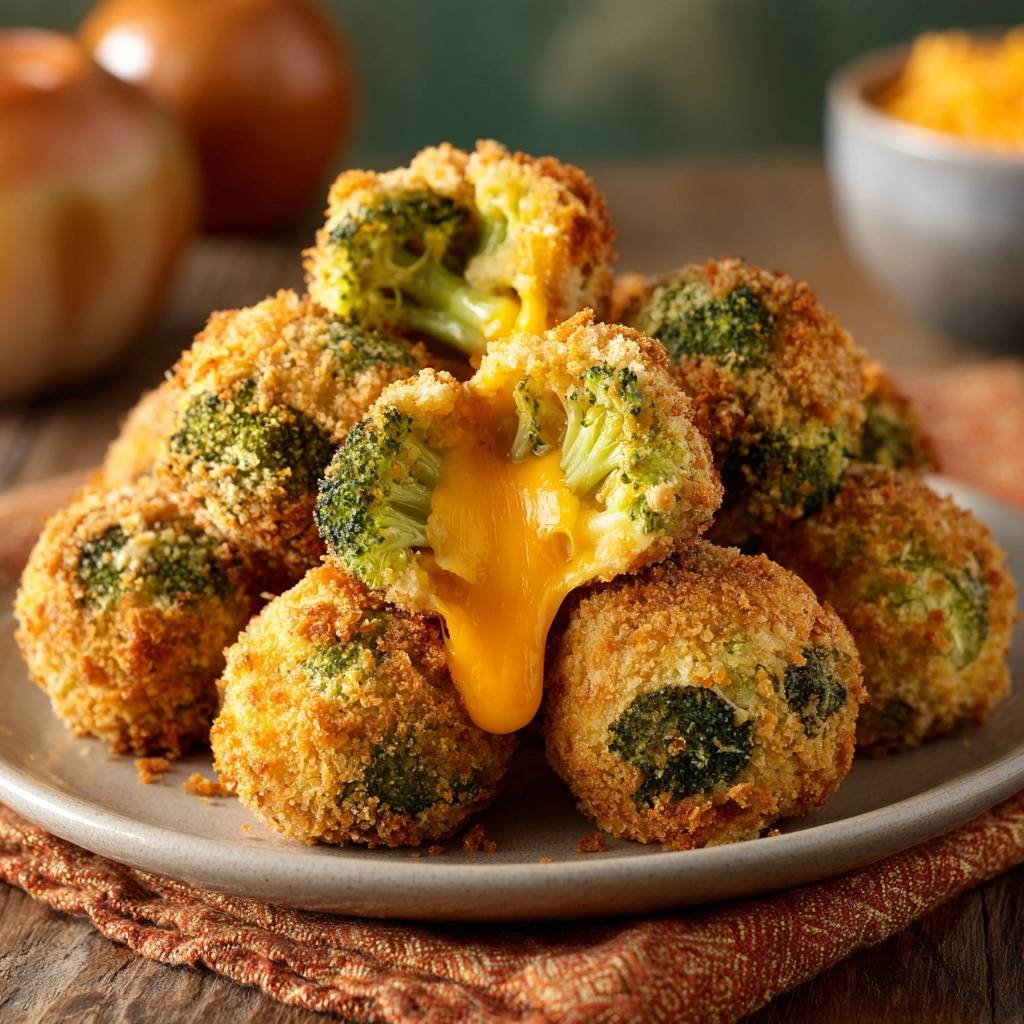
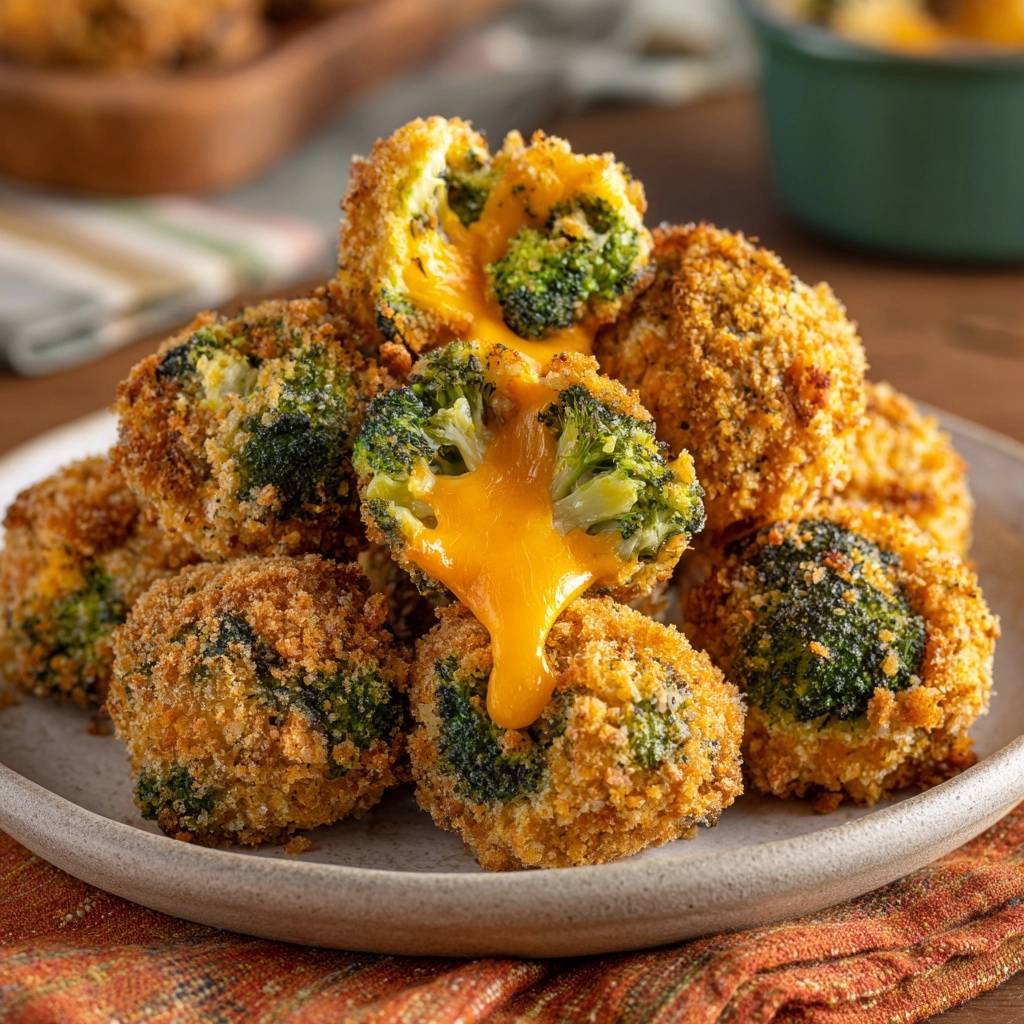
Forget every mushy, water-logged vegetable appetizer you’ve ever had. Most broccoli bites suffer from a “soggy bottom” because the vegetable releases steam inside the breading, turning your snack into a limp mess. These Crispy Cheddar Broccoli Bites solve that problem with a specific technique that guarantees a shatteringly crisp Panko shell and a molten, gooey center.
The magic lies in the contrast between the golden-brown exterior and the tender-crisp broccoli florets nestled around a cube of sharp cheddar. By focusing on moisture removal before the breading even touches the vegetable, we create a snack that stays firm and crunchy even after it leaves the pan. It’s a total game-changer for anyone who usually finds veggie appetizers underwhelming.
The secret to this recipe’s success is the dry-roast method. Most people try to steam or boil their broccoli first, which is a huge mistake because it traps water inside the florets. Instead, we roast the raw florets in a hot oven for a few minutes to evaporate that internal moisture, ensuring the breading sticks perfectly and stays crunchy.
The Science of Moisture Control in Broccoli
Broccoli florets are essentially tiny, edible sponges. Their complex, tree-like structure is designed to hold onto liquid, which is why they often turn into a watery disaster when fried or baked in a batter. If you don’t remove that water, it turns into steam during the cooking process, pushing the breading away from the surface and making the crust soft.
Boiling or steaming the broccoli before breading only adds to this problem by saturating the cellular walls. However, the “Dry-Roast” concept flips the script. By placing the florets on a dry baking sheet at high heat, we force the surface moisture to evaporate and concentrate the natural sugars in the vegetable. This creates a dry, slightly tacky surface that the flour and egg can actually grip onto, resulting in a professional-grade crust.
Essential Components for Crispy Cheddar Broccoli Bites
Success starts with how you prep your broccoli. You want to cut the head into uniform, bite-sized florets so they roast and fry at the same rate. If some pieces are huge and others are tiny, you’ll end up with a mix of raw and overcooked bites. Aim for pieces that are about an inch wide, which provides enough “branches” to hold your cheese cube securely.
When it comes to the cheese, always reach for a block of sharp cheddar rather than the pre-shredded bags. Pre-shredded cheese is coated in potato starch or cellulose to prevent clumping, which interferes with that perfect, molten melt we’re after. A fresh cube of cheddar from a block will liquefy beautifully inside the broccoli without becoming grainy or oily.
For the coating, Panko is non-negotiable. Unlike traditional fine breadcrumbs, Panko has a jagged, airy texture that creates more surface area. This extra surface area translates to more crunch. We boost the flavor by mixing garlic powder, onion powder, and smoked paprika into the flour, providing a savory, smoky backbone that perfectly balances the earthy notes of the broccoli.
Selecting the Right Cheese for Melting
While you might be tempted to grab the most aged, extra-sharp cheddar you can find, medium-to-sharp cheddar is actually the better choice here. Extra-sharp cheeses have a lower oil-separation point due to the aging process, which means they can “break” and become greasy when exposed to high heat. A medium cheddar has the structural integrity to stay contained within the floret while still offering a sharp, punchy flavor.
Pre-Roasting: The Secret to Structural Integrity
Preheating your oven to 400°F for the dry-roast step is the most important part of this entire process. You aren’t trying to fully cook the broccoli here; you’re looking for “par-cooking.” After about 6 to 8 minutes, the florets should be a vibrant, bright green and feel slightly tender when poked with a fork.
You’ll notice the tips might just barely start to brown, and the visible steam coming off the tray is a sign that the moisture is leaving. Be careful not to over-roast them until they are limp. If the broccoli loses its structure now, it won’t be able to hold the cheese cube during the breading and frying stages. Let them cool completely before you try to stuff them, or the cheese will start melting too early.
The Engineering of the Cheese-Stuffed Floret
Think of the broccoli floret as a natural cradle for the cheese. To “nestle” the 1/2-inch cheddar cube, look at the underside of the floret where the stems branch out. Gently press the cube into that center gap. The natural tension of the small stems should hold the cheese in place like a claw machine.
If you have a floret that is a bit too small or thin, don’t worry. You can “sandwich” the cheese by taking two smaller pieces of broccoli and pressing them against opposite sides of the cube. Once you dredge this sandwich in flour and egg, the breading will act like a glue, locking the two pieces together into a single, solid ball.
Executing the Three-Stage Breading Station
Setting up a proper station makes the process much cleaner. Start with the seasoned flour; this acts as a primer, drying the surface of the broccoli even further so the egg has something to cling to. Shake off every bit of excess flour so the coating doesn’t become cakey or thick.
Next, the egg wash provides the protein-rich “glue” that binds the Panko to the floret. After the egg, move the piece to the Panko bowl. Instead of just rolling it around, use your hands to firmly press the crumbs onto the broccoli. You want to ensure the cheese cube is hermetically sealed inside the breading. If you see any yellow cheese peeking through, add a little more egg and Panko to that spot to prevent a blowout in the hot oil.
Shallow Frying vs. Air-Frying Techniques
If you want that classic, deep golden crust, shallow frying in a skillet is the way to go. Use about 1/2 inch of neutral oil and wait until it reaches roughly 350°F. You’ll know it’s ready if a single breadcrumb sizzles immediately when dropped in. Fry the bites for about 2-3 minutes per side, turning carefully with tongs until they are bronzed all over.
For a lighter version, the air-fryer works wonders if you use a heavy hand with the cooking oil spray. Without oil, Panko stays pale and dry. Spray the bites generously until no white dry spots remain, then air-fry at 390°F. The high-velocity air will brown the crust in about 8-10 minutes, but make sure you don’t overcrowd the basket or the sides will stay soggy.
Troubleshooting Common Broccoli Bite Failures
The most common heartbreak is the “cheese leak,” where the cheddar escapes into the pan. This usually happens because the breading wasn’t pressed firmly enough or the cheese cube was too large for the floret. If you see a leak starting, remove that piece immediately to keep your oil clean.
If your coating feels greasy rather than crispy, your oil temperature likely dropped too low. Don’t crowd the pan with too many bites at once, as this chilled the oil. On the flip side, if the broccoli inside feels raw, it means you skipped the pre-roast or cut the florets too large. Stick to the par-roasting step and you’ll never have that problem.
Optimal Pairings and Dipping Textures
Since these bites are rich and cheesy, you need a dipping sauce with some acidity to cut through the fat. A spicy Greek yogurt dip with a squeeze of lemon and a dash of hot sauce is a fantastic choice. The tanginess of the yogurt brightens the whole dish.
A garlic aioli with plenty of lemon zest also works beautifully. Avoid heavy, sugary sauces like standard ketchup, which can overwhelm the delicate flavor of the roasted broccoli. You want something sharp and fresh to highlight the savory cheddar core.
Make-Ahead Strategies and Storage Logistics
These are perfect for hosting because you can do all the messy work in advance. Use the “Flash Freeze” method: place your fully breaded, uncooked bites on a parchment-lined tray and freeze them for an hour. Once they are firm, toss them into a freezer bag.
When you’re ready to eat, you can fry or air-fry them directly from frozen. Just add an extra 2-3 minutes to the cooking time. If you have leftovers, store them in an airtight container in the fridge for up to two days. To reheat, put them back in the air-fryer or oven at 375°F for a few minutes; never use the microwave or they will turn into mush.
Expert Tips for High-Volume Batching
If you’re doubling the recipe for a party, don’t let the finished bites sit on a flat plate. The residual heat will create steam underneath them, ruining that crispy bottom you worked so hard for. Instead, set a wire cooling rack over a baking sheet and keep the finished bites in a 200°F oven.
This setup allows air to circulate entirely around each bite, keeping them hot and shatteringly crisp while you finish the rest of the batches. Also, remember to wipe out your skillet between batches if you notice any loose Panko crumbs burning in the oil, as this can give the later bites a bitter taste.
Frequently Asked Questions
Can I use frozen broccoli florets for this recipe?
It is very difficult to get good results with frozen broccoli. Frozen vegetables have a broken cellular structure that releases a massive amount of water when thawed. Even with the dry-roast method, they tend to stay too soft to hold the cheese cubes properly. For the best crunch and structural integrity, fresh broccoli is a must.
What is the best substitute for Panko if I have a gluten sensitivity?
You can find gluten-free Panko in most grocery stores, which works perfectly. Alternatively, crushed pork rinds provide an incredibly crispy, carb-free coating that mimics the texture of Panko. Just ensure whatever substitute you use has a coarse, jagged texture rather than a fine, sandy one.
How do I prevent the Panko from burning before the cheese melts?
This is why the pre-roasting step and the 1/2-inch cheese cube size are so important. Because the broccoli is already par-cooked and the cheese is in a small cube, they only need a few minutes in the pan. If your Panko is browning too fast, turn your heat down to medium. The oil should be shimmering, not smoking.
Can I use other cheeses like Mozzarella or Pepper Jack?
Absolutely! Pepper Jack is a fantastic substitute if you want a little kick. Mozzarella provides a great “cheese pull,” though it has a milder flavor than cheddar. Just make sure you are using a low-moisture block cheese and cutting it into consistent cubes so it melts at the same rate as the broccoli cooks.
Why did my breading fall off in the skillet?
Breading usually falls off for two reasons: the broccoli was too wet or you didn’t use enough flour. The flour layer must be thin but complete to “prime” the surface. If you skip the flour or the broccoli is damp, the egg wash will slide right off, taking the Panko with it. Always pat your roasted broccoli dry if you see any visible moisture before starting the breading station.

Crispy Cheddar Broccoli Bites
Course: AppetizerCuisine: AmericanDifficulty: easy4
servings20
minutes15
minutes35
Minutes285
kcalAmerican
Ingredients
1 large head of broccoli, cut into bite-sized florets (approx. 3 cups)
8 oz block sharp cheddar cheese, cut into 1/2-inch cubes
1.5 cups Panko breadcrumbs
2 large eggs, beaten
1/2 cup all-purpose flour
1 teaspoon garlic powder
1/2 teaspoon onion powder
1/2 teaspoon smoked paprika
1/2 teaspoon salt
Neutral oil for shallow frying (or heavy cooking oil spray for air-frying)
Directions
- Preheat your oven to 400°F. Place the broccoli florets on a dry baking sheet and roast for 6 to 8 minutes. This is the critical step to evaporate internal moisture so your bites never get soggy. The broccoli should be bright green and slightly tender, but not soft.
- Remove the broccoli and let it cool completely. Once cooled, take a cube of cheddar cheese and “nestle” it into the underside of a broccoli floret, or press two small florets around a cheese cube to form a ball shape.
- Set up a breading station with three bowls: one with flour mixed with salt, garlic powder, onion powder, and smoked paprika; one with the beaten eggs; and one with the Panko breadcrumbs.
- Dredge each cheese-stuffed broccoli piece in the flour, shaking off the excess. Dip thoroughly into the egg wash, then roll in the Panko breadcrumbs. Press the crumbs firmly onto the broccoli to ensure the cheese is fully sealed inside the breading.
- To achieve the deep golden, fried crust shown in the image: Heat 1/2 inch of oil in a large skillet over medium-high heat. Fry the bites for 2-3 minutes per side until the Panko is deeply bronzed and crispy.
- Alternatively, for air-frying: Spray the bites generously with oil and air-fry at 390°F for 8-10 minutes, shaking halfway through.
- Serve immediately while the center is molten and the crust is at peak crunch.
Notes
- The dry-roasting step is critical to ensure the bites do not become soggy. Ensure the cheese is fully sealed by the breading to prevent it from leaking during the frying process.