You’ve likely experienced the heartbreak of a soggy fruit fritter. You bite into what looks like a golden treat, only to have the greasy coating slide right off a limp, watery apple slice. It’s a common kitchen fail that turns a great idea into a messy disappointment.
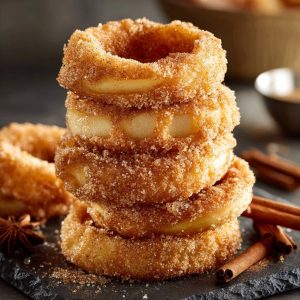
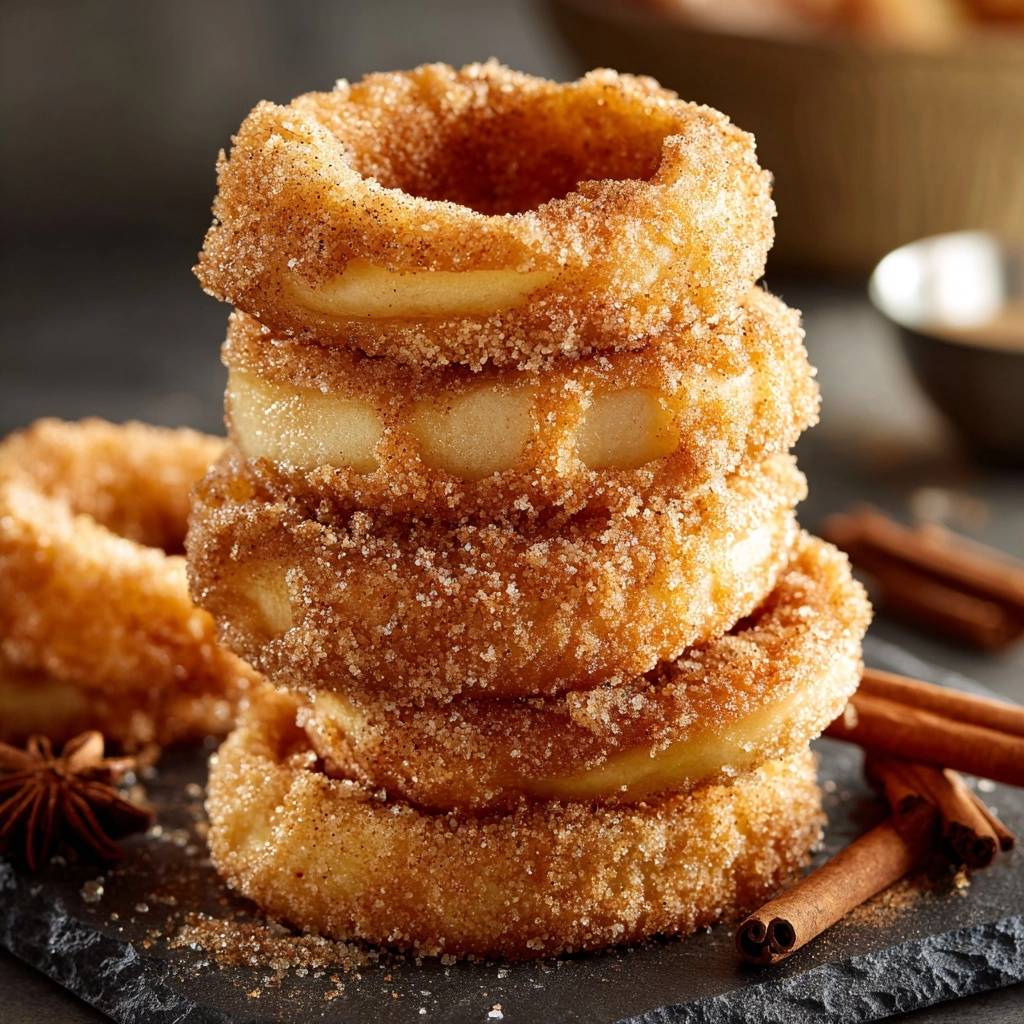
The secret to these perfect apple rings lies in a specific double-dredge technique and a high-heat flash fry. By drawing out the surface moisture before the batter ever touches the fruit, we create a structural bond that locks the coating in place. This results in a shatteringly crisp shell that stays crunchy long after the rings leave the pan.
I’ve found that the real trick is managing the temperature of your ingredients just as much as the temperature of your oil. When you combine ice-cold liquids with a hot frying environment, the thermal shock creates an immediate airy puff. This creates that signature “shatter-crisp” texture that makes these rings better than anything you’ll find at a local fair.
The Science of the Shatter-Crisp Coating
Creating a crust that actually crunches requires more than just flour and water. Therefore, we use ice-cold sparkling water as our primary liquid. The carbon dioxide bubbles in the water act as tiny leavening agents, aerating the batter from the inside out as soon as it hits the hot oil.
In addition to the bubbles, the temperature is vital. Cold water prevents the flour from absorbing too much oil, which is the main reason most fried foods end up heavy. When the cold batter meets the 375°F oil, the water evaporates instantly, creating a steam barrier that pushes back against the oil.
Furthermore, the inclusion of cornstarch is a deliberate move to inhibit gluten development. While gluten is great for chewy bread, it’s the enemy of a crisp fritter. Cornstarch ensures the coating remains rigid and delicate rather than bready or tough. This combination of aeration and starch chemistry is what gives you that professional, high-end crunch.
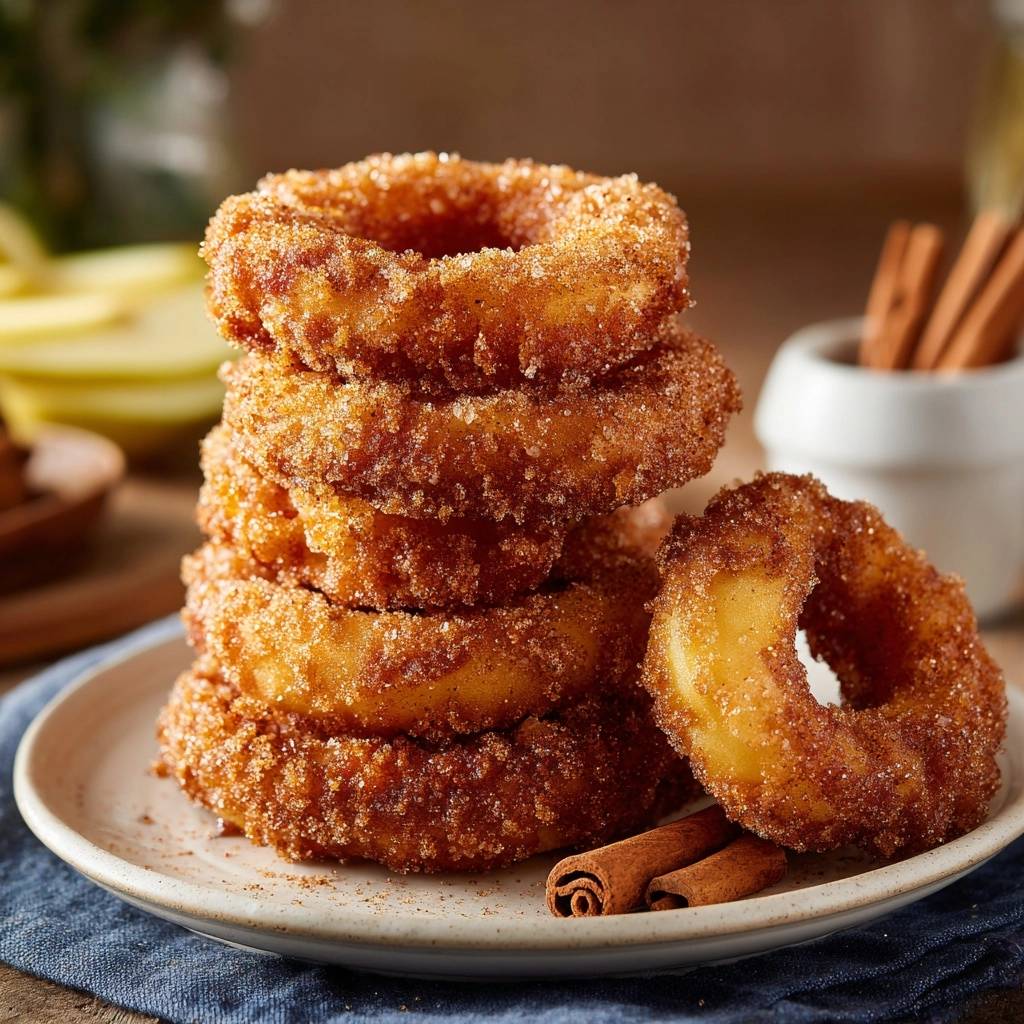
Essential Components for Crispy Cinnamon Sugar Apple Rings
The foundation of this recipe starts with the fruit itself. You must use Granny Smith apples because their high acidity and firm cellular structure are non-negotiable. However, other apples might turn to mush under high heat, but the Granny Smith holds its shape beautifully while providing a tart contrast to the sweet coating.
Dry Goods and Leavening Agents
We use a specific ratio of all-purpose flour to cornstarch to achieve the perfect balance of strength and lightness. The baking powder provides an extra boost of lift, ensuring the batter puffs up rather than laying flat against the apple. A pinch of salt is also essential, as it sharpens the flavors and balances the heavy sweetness of the cinnamon sugar finish.
The Wet Batter Elements
A large, well-beaten egg acts as the primary binder, helping the batter cling to the fruit. It’s important to ensure the egg is fully incorporated so you don’t end up with “eggy” patches in the crust. Remember, the sparkling water must be ice-cold; if it warms up, the starch in the flour will begin to soften, leading to a greasy result.
The Double-Dredge Technique Explained
Most people fail at apple rings because they dip wet fruit directly into wet batter. This is a recipe for disaster because the natural juices of the apple will cause the coating to slip off during frying. To prevent this, we use a “primer” coat of dry flour.
Firstly, you must pat the apple rings completely dry with paper towels. Secondly, you dredge them in plain flour, which absorbs any remaining surface moisture and creates a textured surface for the wet batter to grab onto. This mechanical bond is what keeps the crust attached to the apple even after you take a bite.
Think of the dry flour as the glue that holds the entire structure together. Without this step, the steam escaping from the apple during cooking will push the batter away from the fruit. By using this industrial-style coating method, you ensure every single ring comes out with a perfectly intact, golden shell.
Step-by-Step: Frying the Perfect Apple Ring
The first phase is all about preparation. After slicing your apples into 1/2-inch rings, you must be aggressive with the paper towels. Press down on the slices to wick away as much moisture as possible. If the apples feel tacky or wet, the flour won’t stick evenly.
Next comes the dip. Work with one ring at a time to maintain control. Drop the floured ring into the wet batter, lift it out, and let the excess drip off for just a second. You want a thin, even coating. If the batter is too thick, the interior won’t cook through before the outside burns.
Finally, the sizzle is where the transformation happens. Carefully drop the rings into the oil, ensuring they don’t overlap. You’ll see them puff up almost instantly. Once they are deep golden brown and rigid, move them to a wire rack. Do not use paper towels for draining; a wire rack allows air to circulate, preventing the “steam-back” effect that softens the bottom of the rings.
Maintaining Optimal Oil Temperature
Temperature control is the difference between a light snack and a greasy mess. I highly recommend using a Dutch oven or a heavy cast-iron skillet. These vessels hold heat much better than thin pans, which means the temperature won’t plummet when you add the cold batter.
You must allow for “recovery time” between batches. After you remove a set of rings, wait a minute or two for the oil to return to 375°F. If you rush the process and the oil drops below 350°F, the batter will soak up the oil like a sponge instead of searing shut. Use a thermometer to stay precise.
Troubleshooting Common Textural Issues
If your batter falls off the apple, it’s almost always due to moisture. Either the apples weren’t dried thoroughly enough, or you skipped the initial dry flour dredge. That dry layer is the only thing keeping the batter anchored to the slick surface of the fruit.
Greasy rings are usually the result of low oil temperature. If the oil isn’t hot enough to create an immediate steam barrier, it will seep into the crust. Conversely, if your cinnamon sugar isn’t sticking, you likely waited too long to toss them. The rings need to be slightly tacky and hot to anchor those sugar crystals.
Flavor Variations and Spice Adjustments
While cinnamon is the classic choice, you can easily customize the flavor profile. Adding a half-teaspoon of ground cardamom or a grating of fresh nutmeg to the sugar mix adds a sophisticated, floral depth. These spices pair beautifully with the tartness of the Granny Smith apples.
For those who like a bit of a kick, a tiny pinch of cayenne pepper in the sugar mixture creates a wonderful sweet-heat sensation. Alternatively, a dusting of ground ginger can provide a sharp, clean bite that cuts through the richness of the fried batter. Just ensure any spices are finely ground so they distribute evenly in the sugar.
Serving Suggestions and Texture Pairings
These rings are best served while the contrast between the hot, crunchy shell and the tender apple is at its peak. To elevate the experience, try serving them with a side of cold, honey-sweetened labneh. The thick, tangy yogurt provides a beautiful temperature contrast and cuts through the fried richness.
If you prefer something lighter, a dollop of dairy-free coconut cream whip works wonders. The subtle tropical notes of the coconut complement the cinnamon without overpowering the apple. Avoid heavy syrups that might make the crust soggy; instead, focus on creamy accompaniments that allow the “shatter-crisp” texture to shine.
Expert Tips for Success
- The Paper Towel Press: Don’t just pat the apples; press them firmly between layers of paper towels to dehydrate the surface as much as possible.
- The Lump Rule: When mixing your wet batter, leave a few small lumps. Over-whisking develops gluten, which will make your rings chewy instead of crispy.
- The Sugar Window: You have about a 60-second window after the 30-second rack rest to toss the rings in sugar. If they cool too much, the sugar will just fall off.
- Slicing Consistency: Aim for exactly 1/2-inch thickness. If they are too thin, the apple disappears; if they are too thick, the fruit stays raw in the middle.
- Oil Selection: Use a neutral oil with a high smoke point, like vegetable or canola oil. Avoid olive oil, as it will smoke and impart a bitter flavor at 375°F.
Can I bake these instead of frying?
While you can technically bake battered apples, you will not achieve the same “shatter-crisp” result. Frying provides an immediate, even heat that sets the batter instantly. Baking uses convection heat, which takes longer to set the crust, often resulting in the batter dripping off the apple and becoming bready rather than crispy.
How do I store leftovers?
If you have leftovers, store them in an airtight container in the refrigerator for up to two days. To revive the crunch, place them in an air fryer at 350°F for 3-4 minutes or in a conventional oven on a wire rack. Never use a microwave, as it will turn the delicate crust rubbery and tough.
Which apple varieties are the best substitutes?
If you can’t find Granny Smith, Honeycrisp or Braeburn apples are the next best options. They have a relatively firm texture and a good balance of sugar and acid. However, keep in mind that Honeycrisp apples have a higher moisture content, so you may need to fry them for an extra 30 seconds to ensure the crust fully dehydrates.
Can I make the batter in advance?
No, the batter must be made fresh right before you are ready to fry. The sparkling water loses its carbonation quickly, and the baking powder begins to react the moment it touches liquid. For the lightest, airiest results, whisk the wet ingredients together only when your oil has reached the target temperature.
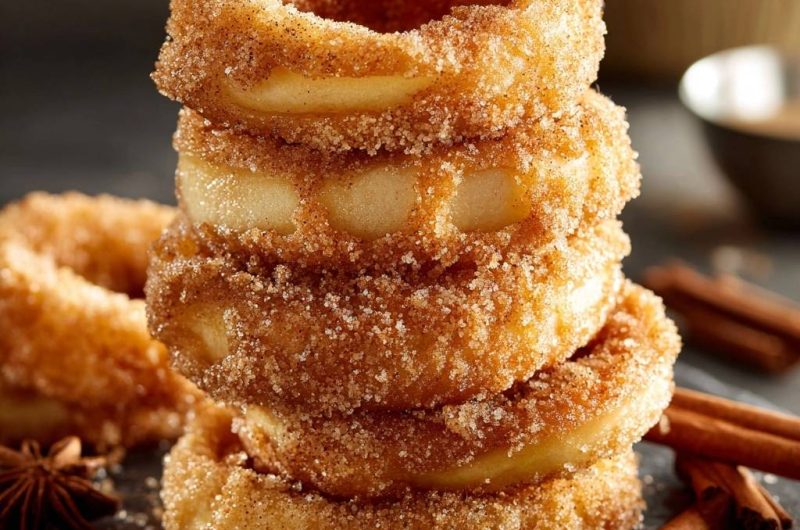
Crispy Cinnamon Sugar Apple Rings
Course: DessertCuisine: AmericanDifficulty: easy4
servings15
minutes10
minutes25
Minutes240
kcalAmerican
Ingredients
4 large Granny Smith apples, cored and sliced into 1/2-inch rings
1 1/4 cups all-purpose flour, divided
1/2 cup cornstarch
1 teaspoon baking powder
1/4 teaspoon salt
1 large egg, beaten
1 cup sparkling water, ice-cold
1/2 cup granulated sugar
2 tablespoons ground cinnamon
Neutral oil for frying (vegetable or canola)
Directions
- Whisk the granulated sugar and ground cinnamon together in a shallow bowl. Set aside for the final coating.
- Pat every apple ring thoroughly dry with paper towels. This is the most critical step to prevent the batter from slipping off the fruit.
- Prepare the dredging station: Place 1/2 cup of flour in a small bowl. In a separate medium bowl, whisk the remaining 3/4 cup flour, cornstarch, baking powder, and salt. Add the beaten egg and ice-cold sparkling water, whisking until just combined (a few small lumps are fine). The cornstarch and cold water are essential for the “shatter-crisp” texture seen in the image.
- Heat 2 inches of oil in a heavy skillet or Dutch oven to 375°F (190°C). Use a thermometer to maintain this temperature; if the oil drops too low, the rings will become greasy.
- Working in small batches, dredge an apple ring in the dry flour first, shaking off all excess.
- Dip the floured ring into the wet batter, letting the excess drip off for a second, and immediately drop it into the hot oil.
- Fry for 2 to 3 minutes per side until the coating is deep golden brown, puffed, and rigid.
- Remove the rings with a slotted spoon and let them drain on a wire rack for exactly 30 seconds. This allows steam to escape so the crust sets rather than steaming itself soft on a paper towel.
- While still hot and slightly tacky, toss the rings thoroughly in the cinnamon sugar mixture. The residual heat will anchor the sugar crystals to the crust for that thick, sparkling finish.
Notes
- The secret to the anti-soggy texture is using ice-cold sparkling water and cornstarch, plus letting the rings drain on a wire rack instead of paper towels to prevent steaming.