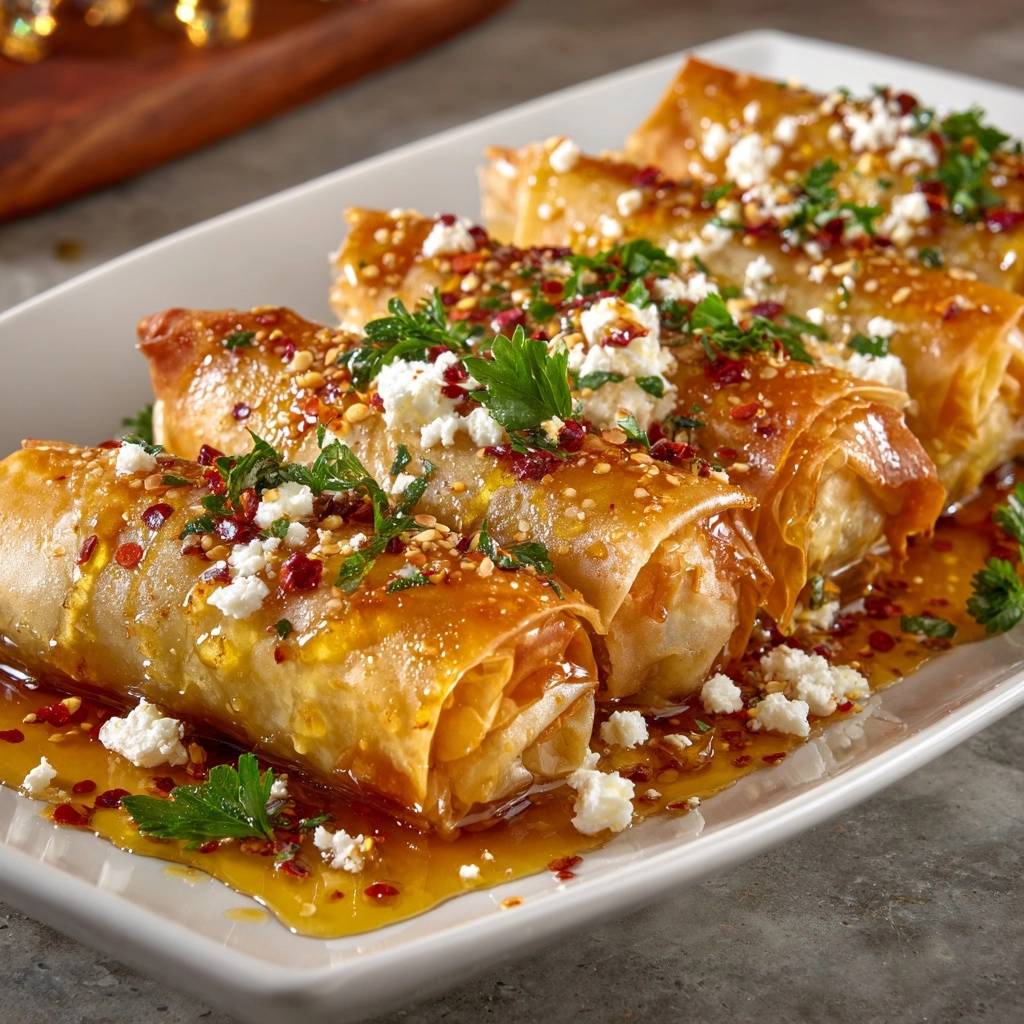
Imagine biting into a golden pastry that shatters like glass, revealing a warm, tangy center of molten feta cheese. The contrast between the brittle, buttery layers and the creamy, salty interior creates a sensory experience that most home cooks struggle to replicate. Too often, phyllo appetizers end up as greasy, limp disappointments that leave a puddle of oil on the plate.
The secret to achieving that elusive, high-end restaurant crunch lies in moisture control and thermal management. By using a specific double-brushing technique and a high-heat blast, you can ensure the pastry stays rigid and crisp even after the honey drizzle hits. This recipe isn’t just about assembly; it’s about mastering the physics of the dough to prevent the dreaded soggy bottom forever.
I’ve found that the most common mistake is treating phyllo like puff pastry. While puff pastry relies on internal steam to rise, phyllo needs external fat and intense heat to dehydrate and crisp. The addition of a preheated baking sheet acts as a searing tool, locking in the structure of the bottom layer the moment the roll touches the metal. This technical tweak changes everything.
The Science of Shatter-Crisp Phyllo Pastry
Phyllo dough is essentially a series of paper-thin starch sheets with almost no fat content of their own. To get that signature “shatter,” you must introduce a fat source between every single layer. When the heat of the oven hits these layers, the tiny amount of water in the dough evaporates instantly, creating microscopic air pockets that give the pastry its light, flaky volume.
Using a blend of melted unsalted butter and extra virgin olive oil is a strategic move. Butter provides that unmistakable rich flavor and aids in browning due to its milk solids. However, butter has a relatively low smoke point. By whisking in olive oil, you raise the overall smoke point of the fat mixture. This allows you to bake at 400°F without the fat breaking down or tasting acrid, resulting in a harder, more durable shell.
Steam is the enemy of crispness once the rolls leave the oven. If you place a hot, oil-laden pastry onto a flat ceramic plate, the residual heat traps steam underneath the roll. That steam migrates back into the bottom layers, turning your hard-earned crunch into a mushy mess within minutes. Understanding this transition from oven to cooling rack is vital for maintaining the structural integrity of the pastry.
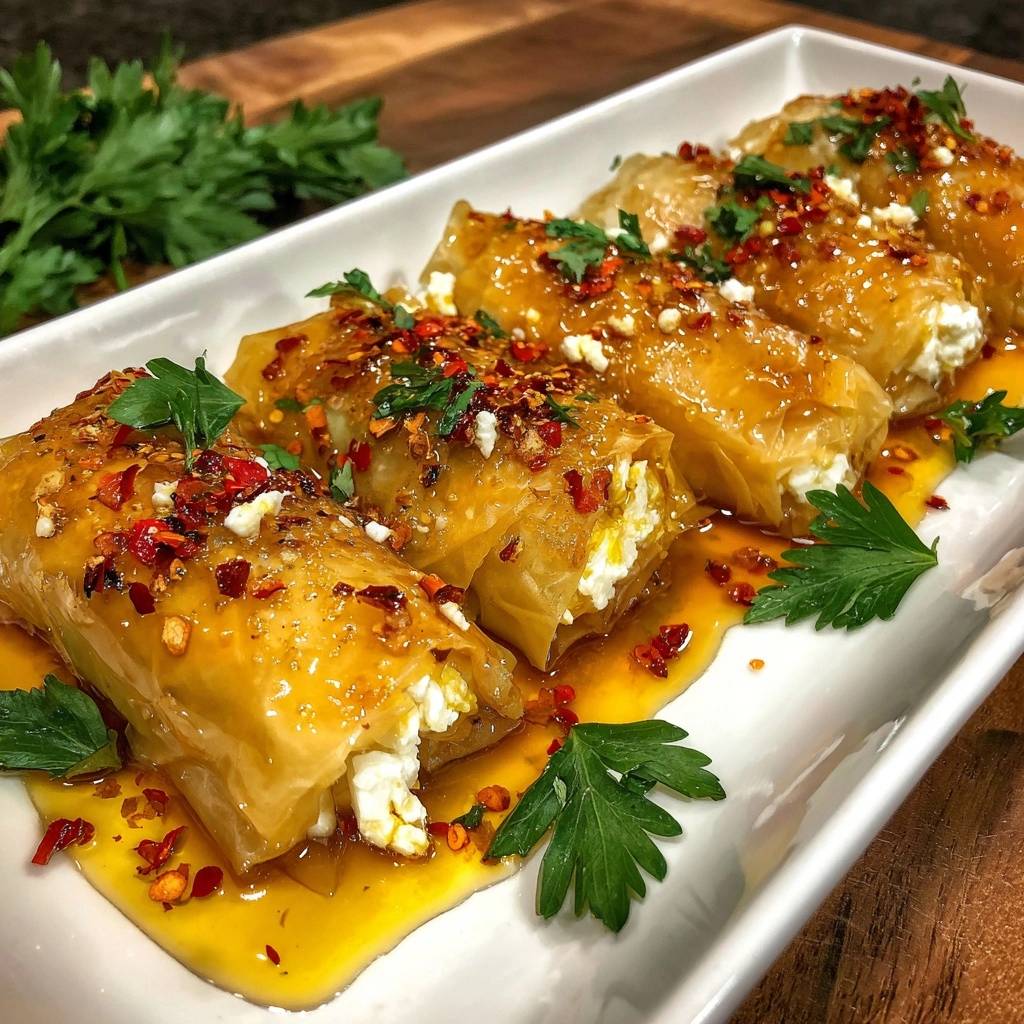
Essential Components for Crispy Feta Phyllo Rolls
Quality ingredients are the backbone of this dish because there are so few of them. You want a high-quality Greek feta sold in a block of brine. Pre-crumbled feta is often coated in anti-caking agents like potato starch, which prevents the cheese from melting into that luscious, gooey consistency we want. The brine keeps the cheese moist, but you must dry the surface thoroughly before wrapping.
The honey glaze serves as the final flavor bridge, but it must be handled with care. If you apply the honey too early or use a cold, thick honey, it will weigh down the delicate pastry. Warming the honey with red pepper flakes thins its viscosity, allowing it to coat the ridges of the phyllo without soaking through the layers. This ensures the sweetness stays on the surface where it belongs.
Freshness provides the necessary contrast to the heavy fats and salts. Roughly chopped parsley adds a bright, grassy note that cuts through the richness of the feta. Similarly, toasted sesame seeds aren’t just for decoration; they provide a secondary, nutty crunch that complements the fragile texture of the phyllo. Always toast them just before serving to release their natural oils.
Selecting the Right Feta and Phyllo
Look for Greek feta made from sheep’s milk or a blend of sheep and goat’s milk. These varieties have a higher fat content and a more complex, tangy profile than cow’s milk “feta-style” cheeses. The higher fat content ensures the cheese softens beautifully without becoming watery or rubbery under high heat.
Handling phyllo requires a bit of patience. It dries out in seconds, becoming brittle and impossible to roll. Always keep your stack of dough covered with a slightly damp (not soaking wet) kitchen towel while you work. If the dough does crack, don’t panic. The double-layering and folding process in this recipe is designed to hide imperfections and create a sturdy wrap.
Preheating and Thermal Shock: The Secret Step
Most recipes tell you to place your rolls on a cold baking sheet and then slide them into the oven. This is a recipe for greasiness. As the oven slowly heats the metal, the butter in the pastry begins to melt and pool at the bottom before the starch has a chance to set. The dough then sits in a bath of lukewarm oil, absorbing it like a sponge.
By preheating the baking sheet at 400°F, you create a “thermal shock” effect. The moment the butter-brushed roll hits the hot metal, the bottom layer begins to fry and set instantly. You should hear a distinct sizzle. This immediate sear creates a barrier that prevents the dough from soaking up excess fat, ensuring the bottom is just as crisp as the top.
Step-by-Step: Constructing the Perfect Phyllo Wrap
Start by laying one sheet of phyllo horizontally. Brush it lightly with your butter and oil mixture, focusing on the edges. Place a second sheet directly on top and brush again. This “Double-Brush” technique creates a laminated effect that is much stronger than a single layer. It provides the structural support needed to hold the heavy cheese baton.
Fold the stacked sheets in half lengthwise. You now have a long, narrow strip consisting of four layers of dough and multiple layers of fat. This geometry is crucial. It creates a thick enough wall to prevent the cheese from leaking out, but because the layers are so thin, they will all crisp through to the center. It’s the perfect balance of protection and texture.
When rolling, start from the bottom where the cheese is placed. Fold the sides inward first, like you are making a burrito. This seals the ends so the feta doesn’t escape as it softens. Roll upward with medium tension. If you roll too tightly, the steam from the cheese might burst the dough; too loose, and the roll will feel greasy and hollow.
Securing the Feta Batons
Cut your feta block into uniform batons, roughly the thickness of a finger. Consistency is key here so that every roll finishes cooking at the exact same time. If some pieces are significantly thicker, you risk the pastry burning before the cheese has softened. Aim for about 3 to 4 inches in length for a standard phyllo sheet.
Before the cheese ever touches the dough, pat it dry with paper towels. Any surface brine left on the feta will turn into steam inside the roll. This internal moisture is the primary cause of “soggy middle” syndrome. A dry baton ensures that the only moisture inside the wrap is the natural fat from the cheese itself.
The High-Heat Blast and Cooling Phase
Baking at 400°F is non-negotiable. This high temperature is what creates the “blast” effect, forcing the layers to separate and crisp rapidly. Keep a close eye on the oven around the 12-minute mark. You are looking for a deep, golden-brown color and a translucent appearance where you can almost see the layers through the top crust.
Once you pull the tray from the oven, the next two minutes are the most critical for the final texture. Do not leave the rolls on the hot baking sheet. The carry-over heat will continue to cook the bottom, potentially burning it, while the trapped steam softens the pastry. Use tongs to move them immediately to a wire cooling rack.
The wire rack allows air to circulate 360 degrees around the roll. This lets the internal steam escape into the air rather than being forced back into the dough. This short “resting” period allows the fats to stabilize and the starch to harden, resulting in a roll that stays crunchy for much longer once plated.
Infusing the Spicy Honey Glaze
While the rolls are cooling for those two minutes, quickly warm your honey and red pepper flakes. You only want the honey to become fluid and pourable. If you let it boil, the sugars will begin to caramelize and harden, which can make the glaze sticky and difficult to eat. A gentle warmth also helps the red pepper flakes release their capsaicin into the honey.
The spicy honey provides a necessary “kick” that balances the saltiness of the feta. When you drizzle it over the rolls, do so generously but quickly. The goal is to have the honey coat the exterior and pool slightly on the plate. This way, the diner gets a bit of honey in every bite without the pastry being submerged in liquid for too long.
Troubleshooting Common Pastry Failures
If your phyllo is tearing as you roll, it’s likely too dry. You can usually “patch” a small tear with a little extra butter mixture and a small scrap of dough. However, the best fix is prevention—keep that damp towel over your unused sheets at all times. If the dough is shattering as you try to fold it, it has already lost too much moisture.
Cheese leaking out of the sides usually means the side-folds weren’t deep enough or the roll was too loose. Ensure you fold at least an inch of dough over the ends of the feta baton before you start rolling upward. If you see a leak in the oven, don’t worry; just use a spatula to gently scrape the leaked cheese away once it cools slightly.
Greasiness is almost always a result of a low oven temperature or skipping the preheated tray. If the fat doesn’t sizzle when it hits the pan, it’s soaking in. For soggy bottoms, the culprit is usually the cooling process. If you plate them directly onto a cold ceramic dish, the “sweat” will ruin the crunch in under sixty seconds.
Optimal Pairings for Salty and Sweet Appetizers
These rolls are incredibly rich, so you want pairings that offer acidity and brightness. A crisp sparkling apple cider is a fantastic choice; the carbonation cleanses the palate of the heavy cheese and butter, while the apple notes complement the honey. Alternatively, a bitter lemon tonic or a ginger-heavy sparkling soda provides a sharp contrast to the sweetness.
For side dishes, think fresh and crunchy. A bright cucumber and radish salad with a simple lemon-herb vinaigrette works wonders. The watery crunch of the vegetables offsets the dry, flaky pastry. You could also serve these alongside a charred tomato compote or a bowl of marinated olives to lean into those Mediterranean flavors.
Make-Ahead Strategies and Storage
You can absolutely assemble these rolls in advance. Once they are rolled and brushed with the butter mixture, place them on a parchment-lined tray and freeze them in a single layer. Once frozen solid, transfer them to an airtight bag. You can bake them straight from the freezer—just add about 3 to 5 minutes to the total baking time.
If you have leftovers, never use a microwave. The microwave will turn the phyllo into a rubbery, chewy mess. Instead, place the rolls back into a 350°F oven for about 5 to 8 minutes. This will recrisp the outer layers and warm the cheese through. Note that once they have been drizzled with honey, they won’t ever be quite as crisp as day one, but the oven method is your best bet.
Expert Tips for Phyllo Success
Proper thawing is the most overlooked step in phyllo baking. Never thaw the package on the counter at room temperature. This causes condensation to build up inside the plastic, which makes the sheets stick together in a gummy clump. Always thaw the box overnight in the refrigerator for the most consistent results.
When it comes to tools, a natural bristle pastry brush is often superior to silicone for phyllo. Natural bristles hold more of the butter mixture and allow for a lighter, more even application. Silicone brushes can sometimes “drag” on the delicate dough, causing it to snag or tear. Use a light, dabbing motion rather than heavy strokes.
Always place your rolls seam-side down on the baking sheet. The weight of the cheese baton will keep the seam pressed against the hot metal, effectively “gluing” it shut as it bakes. This prevents the rolls from unravelling in the oven. Finally, if you want the best flavor, toast your sesame seeds in a dry pan for just 60 seconds until they smell fragrant—it makes a world of difference.
Frequently Asked Questions
How do I store leftovers and can I freeze them?
Store any leftover cooked rolls in an airtight container in the refrigerator for up to 2 days. To freeze, it is best to freeze them “raw” after assembly but before baking. Wrap them tightly in plastic wrap and foil; they will stay fresh for up to 2 months. Do not freeze them after they have been drizzled with honey, as the texture will degrade significantly.
Why did my phyllo rolls turn out greasy instead of crispy?
Greasiness usually happens for two reasons: the oven temperature was too low or the baking sheet wasn’t preheated. If the oven isn’t hot enough, the butter soaks into the dough rather than frying it. Always ensure your oven reaches a true 400°F (use an oven thermometer if possible) and never skip the step of heating the tray before adding the rolls.
Can I use a different type of cheese if I don’t have feta?
While feta is traditional, you can use Halloumi or a firm goat cheese log. If using Halloumi, be aware it has a much higher melting point and won’t get as “molten” as feta. Avoid soft cheeses like Brie or Mozzarella for this specific technique, as they contain too much moisture and will likely burst through the phyllo layers during the high-heat bake.
What is the best way to reheat these to keep them crunchy?
The only way to restore the crunch is the oven. Preheat your oven to 350°F and place the rolls on a wire rack set over a baking sheet. Bake for 5-8 minutes. The wire rack is essential during reheating because it allows the heat to hit the bottom of the roll, drying out any moisture that accumulated during refrigeration.
My phyllo sheets are sticking together and won’t separate. What happened?
This is usually caused by improper thawing or moisture getting into the package. If the sheets are stuck, they have likely become damp and then partially dried. Unfortunately, there isn’t a perfect fix for stuck sheets, but you can sometimes use a sharp paring knife to gently score and “sacrifice” a few layers to get to the usable ones underneath. Always thaw slowly in the fridge to prevent this.
Can I substitute the honey with something else?
If you want to avoid honey, a thick balsamic glaze or a fig jam warmed with a little water can work well. The goal is to provide a sweet and acidic counterpoint to the salty feta. Just ensure whatever substitute you use is thick enough to coat the pastry rather than soaking into it like a thin syrup.
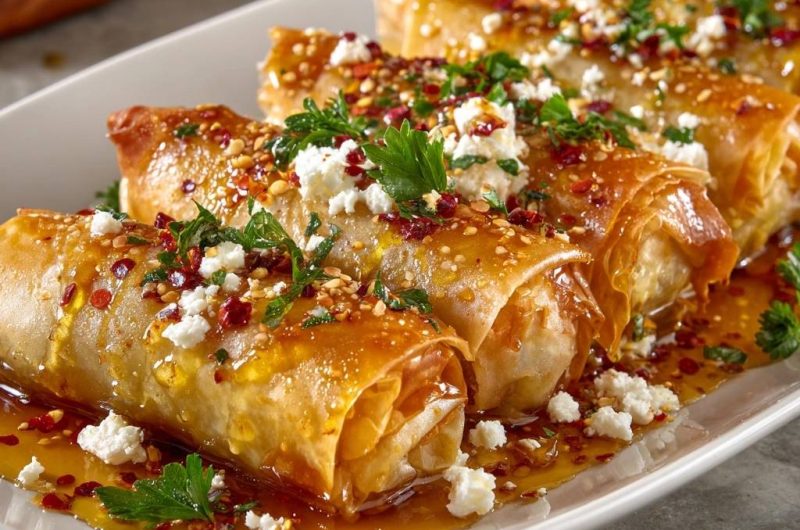
Crispy Feta Phyllo Rolls
Course: AppetizerCuisine: MediterraneanDifficulty: easy4
servings (8 rolls)20
minutes15
minutes35
Minutes345
kcalMediterranean
Ingredients
1 block (7-8 oz) high-quality Greek feta cheese, cut into 8 long batons
1 package phyllo dough, thawed
1/2 cup unsalted butter, melted
1/4 cup extra virgin olive oil
1/2 cup honey
1 tablespoon crushed red pepper flakes
2 tablespoons toasted sesame seeds
1/4 cup fresh parsley, roughly chopped
1/4 cup extra crumbled feta (for garnish)
Directions
- Preheat your oven to 400°F (200°C). Place a large baking sheet inside the oven while it heats. This pre-heated surface is the first secret to preventing oil soakage; it sears the bottom pastry layer instantly upon contact.
- In a small bowl, whisk together the melted butter and olive oil. The olive oil raises the smoke point of the fat mixture, allowing for a harder, crunchier shell that won’t go soft or taste burnt at high temperatures.
- Lay out one sheet of phyllo on a clean work surface (keep the rest covered with a damp towel). Brush lightly with the butter mixture. Place a second sheet directly on top and brush again. Fold the stacked sheets in half lengthwise to create a sturdy, narrow multi-layered strip.
- Pat the feta batons dry with a paper towel to remove excess brine. Place one baton at the bottom of the strip. Fold the sides of the phyllo inward over the cheese, then roll upward tightly like a cigar.
- Repeat for all batons. Brush the outside of each roll generously with the butter mixture.
- Carefully remove the hot baking sheet from the oven. Place the rolls onto the hot sheet, seam-side down. You should hear a slight sizzle.
- Bake for 12 to 15 minutes, turning once halfway through, until the rolls are deep golden brown and translucent.
- While the rolls bake, warm the honey and red pepper flakes in a small saucepan over low heat until fluid. Do not boil.
- Remove the rolls from the oven and transfer them immediately to a wire cooling rack for 2 minutes. This allows steam to escape from the bottom rather than being trapped against a flat plate, which causes sogginess.
- Arrange the rolls on a platter. Generously drizzle the warm spicy honey over the rolls so it pools slightly on the plate as shown. Immediately top with toasted sesame seeds, fresh parsley, and the extra crumbled feta. Serve instantly while the pastry is at maximum shatter-point.
Notes
- To prevent sogginess, always pat the feta dry before rolling and use a wire cooling rack immediately after baking to allow steam to escape. The pre-heated baking sheet is essential for searing the bottom layer of pastry.