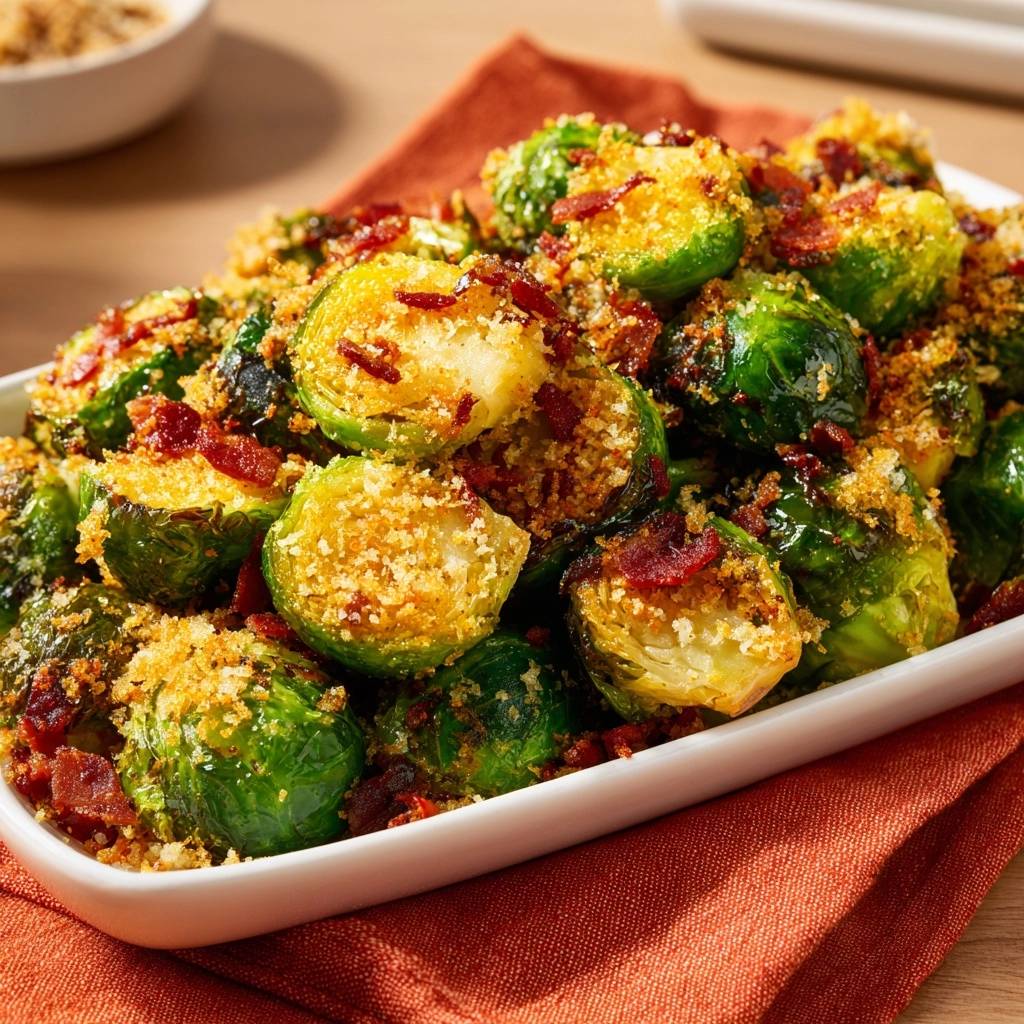
Forget every mushy, gray, or bitter sprout you’ve ever been forced to eat at a holiday dinner. We’re aiming for a shattered-glass exterior that gives way to a buttery, tender core. Most people fail at this dish because they treat Brussels sprouts like a delicate vegetable that needs gentle heat, but the truth is quite the opposite.
The secret to the “Anti-Soggy Bottom” lies in a two-pronged attack: a scorching preheated pan and a strategic Panko-Parmesan barrier. By creating an immediate sear upon contact, we lock in the vegetable’s structure before the internal moisture has a chance to turn into steam. This isn’t just roasting; it’s a high-heat transformation that turns a humble brassica into a salty, savory snack you’ll want to eat straight off the tray.
I’ve found that the biggest mistake home cooks make is crowding the pan, which effectively boils the sprouts in their own juices. If you want that deep, mahogany caramelization, you need to give each sprout its own “personal space” on the baking sheet. One pro tip to remember: always place your sprouts cut-side down. That flat surface area is your best friend for creating a crispy, golden crust that holds up against the weight of the toppings.
The Physics of Crunch: Why Most Sprouts Fail
Achieving the perfect roast is actually a battle against physics. Brussels sprouts are packed with water, and as they heat up, that water wants to escape as steam. If your oven temperature is too low or your pan is too crowded, that steam gets trapped under the sprouts, leading to a limp, boiled texture that gives this vegetable a bad reputation.
To get that addictive crunch, we need to trigger the Maillard reaction as quickly as possible. This chemical reaction between amino acids and reducing sugars is what creates the complex, savory flavors and the browned crust we crave. High heat is the only way to achieve this before the center of the sprout overcooks and becomes sulfurous.
Therefore, we use a heavy-duty baking sheet and a 425°F oven. This intense environment evaporates surface moisture instantly. When you hear that sizzle as the sprouts hit the hot metal, you know you’re on the right track. You’re essentially frying the flat edge of the sprout in a thin layer of oil while the dry heat of the oven crisps the outer leaves.
Essential Components for Crispy Garlic Parmesan Brussels Sprouts
Success starts with the right sprouts. Look for small to medium-sized ones, as they tend to be sweeter and have a tighter leaf structure. Large sprouts can sometimes be woody in the center and take too long to cook, which risks burning the exterior before the inside is tender.
Olive oil is our primary fat here, and it’s crucial for heat conduction. However, don’t be tempted to use extra virgin oil with a very low smoke point; a standard refined olive oil works best for 425°F. It coats the leaves and helps the seasonings stick while providing the medium for that golden sear.
The texture comes from the Panko breadcrumbs. Unlike traditional fine breadcrumbs, Panko has a larger, jagged surface area that catches the light and stays crunchy even after absorbing some of the vegetable’s oils. When mixed with finely grated Parmesan—the kind that looks like sand—it forms a salty, umami-rich crust that clings to the sprouts.
Lastly, we use garlic powder instead of fresh minced garlic. While I love fresh garlic, it contains a lot of moisture and burns easily at high temperatures. Garlic powder distributes more evenly and toasts into the breadcrumb mixture without turning bitter or black during the roasting process.
The Pre-Searing Technique: Equipment and Preparation
Your choice of pan is just as important as your ingredients. A heavy-gauge aluminum rimmed baking sheet or a cast-iron skillet is superior because they retain heat exceptionally well. Thin, flimsy pans will lose their temperature the moment the cold vegetables touch them, ruining your chance at a perfect sear.
By preheating the pan inside the oven, we utilize “thermal shock.” When the room-temperature sprouts hit the scorching metal, the cells on the cut surface collapse and brown instantly. This creates a structural seal that prevents the interior moisture from leaking out and making the bottom of the sprout soggy.
Step-by-Step: Achieving the Perfect Golden Sear
Once your pan is screaming hot, you have to work with speed and precision. Carefully pull the rack out and place each sprout cut-side down. Yes, it takes an extra minute of manual labor, but the reward is a uniform, deep-brown crust on every single piece. If they are tossed haphazardly, you’ll end up with uneven cooking.
During the first 15 minutes of roasting, resist the urge to stir. It’s tempting to check on them, but every time you move the sprouts, you break their contact with the hot pan and release precious heat from the oven. Let them sit undisturbed so the natural sugars can fully caramelize against the metal.
The Crust Phase: Integrating Parmesan and Panko
After the initial sear, it’s time to add the flavor layers. The “Fat-Coated Crumb” trick is essential here. By mixing your Panko and Parmesan with a tablespoon of oil before sprinkling it over the sprouts, you ensure the crumbs fry in the oven rather than just drying out and tasting like cardboard.
Sprinkle the mixture evenly, making sure some of it falls into the nooks and crannies of the leaves. If you want an extra-deep color, you can switch the oven to the broiler for the final minute. Keep a very close eye on it, though; the transition from golden brown to burnt happens in a matter of seconds.
Avoiding Common Mistakes with Roasted Brassicas
One of the most common mistakes is washing your sprouts right before they go into the oven. If they are even slightly damp, they will steam instead of roast. If you must wash them, do it an hour ahead of time and pat them bone-dry with a kitchen towel. Moisture is the absolute enemy of the crunch.
Another pitfall is using pre-shredded cheese from a bag. Those products are often coated in potato starch to prevent clumping, which interferes with the melting process. For a crust that truly fuses to the vegetable, use a block of Parmesan and grate it finely yourself using the smallest holes on your grater.
Finally, don’t over-trim the stems. If you cut too much of the base off, the individual leaves will fall away from the core. While crispy loose leaves are tasty, they burn much faster than the halved sprouts, leading to a tray full of charred bits and undercooked centers.
Flavor Variations and Dietary Adjustments
If you want to add a bit of heat, a pinch of red pepper flakes in the breadcrumb mix adds a nice visual pop and a slow burn. For a more modern twist, try drizzling a little bit of hot honey over the tray the moment it comes out of the oven. The sweetness balances the salty Parmesan perfectly.
Acid is another great way to brighten the dish. A quick squeeze of fresh lemon juice or a tiny drizzle of high-quality balsamic glaze can cut through the richness of the olive oil. If you need a gluten-free option, swap the Panko for finely crushed walnuts or pecans; they provide a similar crunch and a wonderful toasted nuttiness.
Optimal Pairings for Garlic Parmesan Vegetables
These sprouts are bold enough to stand up to hearty proteins. They are a natural partner for a seared steak or a simple roasted chicken. The saltiness of the Parmesan and the smokiness of the beef or chicken skin create a classic, comforting flavor profile that feels like a high-end steakhouse meal.
For a vegetarian-focused dinner, serve them alongside a creamy lemon risotto. The contrast between the velvety, soft rice and the “shattered” texture of the sprouts is incredibly satisfying. They also work well as a topping for a grain bowl, providing a much-needed crunch to soft quinoa or farro.
Expert Tips for Texture Maintenance
The most important rule for these sprouts is the “Immediate Service” rule. Do not cover the dish with foil or a lid while waiting for the rest of dinner to be ready. Trapped steam will turn your hard-earned crispy crust into a soggy mess in less than five minutes. Serve them straight from the pan if possible.
If you happen to have leftovers, stay away from the microwave. The microwave will make the sprouts rubbery and the breadcrumbs soft. Instead, toss them into an air fryer for 3-4 minutes at 350°F, or put them back on a baking sheet in a hot oven until they sizzle again. This will revive the crunch and make them taste almost as good as day one.
Troubleshooting Your Roast
Can I use frozen Brussels sprouts for this recipe?
I don’t recommend using frozen sprouts if you want a truly crispy result. Frozen vegetables undergo a cellular breakdown during the freezing process, which releases a significant amount of water when thawed. This excess moisture makes it nearly impossible to achieve a hard sear, and you’ll likely end up with a mushy texture regardless of how high the heat is.
Why did my garlic powder turn bitter?
Garlic powder can turn bitter if it’s exposed to direct, intense heat for too long, especially under a broiler. If you find your sprouts have a bitter aftertaste, try mixing the garlic powder into the oil that coats the sprouts initially rather than putting it in the breadcrumb topping. This keeps the garlic “insulated” by the vegetable’s moisture while still providing flavor.
My cheese didn’t melt into a crust; it just stayed dry. Why?
This usually happens if there isn’t enough fat to bind the cheese and breadcrumbs together. Ensure you are using the full tablespoon of oil in the Panko mixture. Additionally, using finely grated Parmesan (the powdery kind) is essential. Larger shreds of cheese don’t have enough surface contact with the breadcrumbs to create that unified, cracker-like crust.
How do I scale this for a crowd without losing the crispness?
The key to scaling is surface area. If you double the recipe, you must use two separate baking sheets. If you try to cram two pounds of sprouts onto one tray, they will be too close together, creating a steam pocket that prevents browning. Rotate the pans halfway through cooking to ensure even heat distribution from your oven’s heating elements.
Why are my sprouts still hard in the middle?
If the outside is brown but the inside is tough, your sprouts were likely too large or your oven was running too hot. For very large sprouts, you can microwave them for 60 seconds before tossing them in oil to jumpstart the softening process. Alternatively, lower the heat to 400°F and extend the roasting time by 5-7 minutes to allow the heat to penetrate the core.
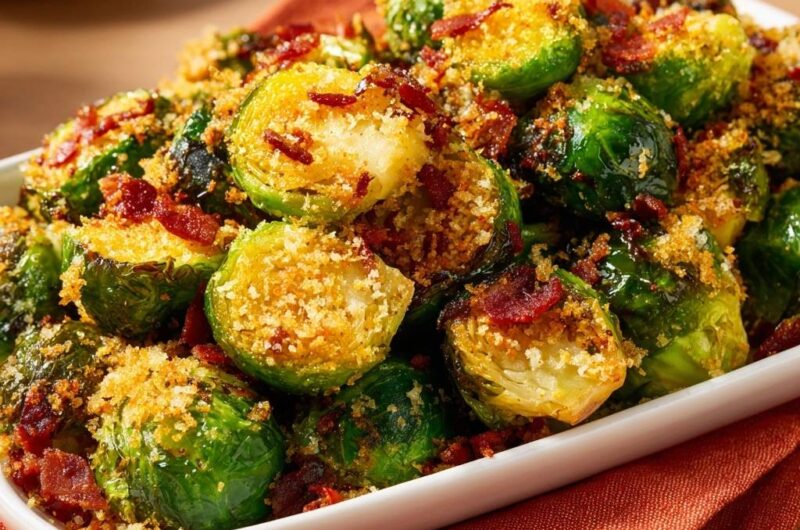
Crispy Garlic Parmesan Brussels Sprouts
Course: Side DishCuisine: AmericanDifficulty: easy4
servings10
minutes20
minutes30
Minutes195
kcalAmerican
Ingredients
1 pound Brussels sprouts, trimmed and halved
3 tablespoons olive oil, divided
1/2 cup Panko breadcrumbs
1/4 cup finely grated Parmesan cheese
4 strips thick-cut bacon, cooked until very crispy and finely chopped
1 teaspoon garlic powder
1/2 teaspoon salt
1/4 teaspoon black pepper
1/2 teaspoon red pepper flakes (optional, for visual pop)
Directions
- Preheat your oven to 425°F (220°C). Place a large, heavy rimmed baking sheet inside the oven while it heats. This preheating step is the secret to an instant sear that prevents sogginess.
- In a large bowl, toss the halved Brussels sprouts with 2 tablespoons of olive oil, salt, pepper, and garlic powder until every crevice is evenly coated.
- In a small separate bowl, mix the Panko breadcrumbs with the remaining 1 tablespoon of olive oil and the Parmesan cheese. This ensures the crumbs toast into a golden crust rather than absorbing moisture from the vegetables.
- Carefully remove the scorching hot baking sheet from the oven. Working quickly, place the sprouts cut-side down onto the hot metal. You should hear an immediate sizzle. This contact locks in the structure and creates the deep caramelization seen in the image.
- Roast for 12-15 minutes without moving them.
- Remove the pan and generously sprinkle the Panko-Parmesan mixture and the finely chopped crispy bacon over the top of the sprouts.
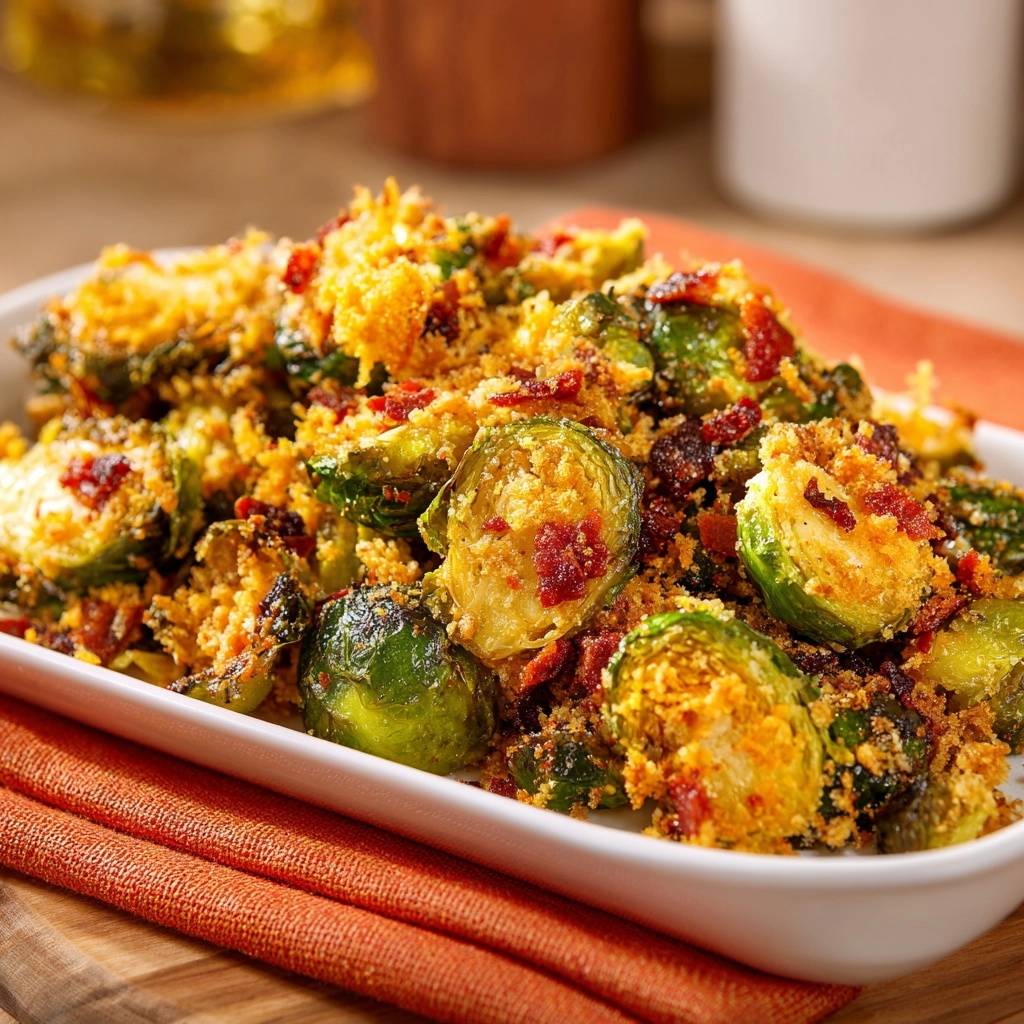
- Return to the oven for 5 more minutes. Switch the oven to “Broil” for the final 60 seconds if needed to achieve the deep golden-brown crust shown.
- Serve immediately while the texture is at its peak. The result is a sprout that is tender on the inside with a shattered-glass crispness on the exterior.
Notes
- The secret to preventing sogginess is the preheated pan and ensuring the sprouts are placed cut-side down to lock in structure and caramelization.