Most veggie burgers are a total letdown because they turn into a soft, mushy mess the second you take a bite. You’ve probably experienced that frustrating moment where the patty squishes out the sides of the bun, leaving you with a pile of flavorless mash. This recipe changes that by focusing entirely on moisture control to give you a firm, satisfying bite.
The secret to these Crispy Sweet Potato Black Bean Patties lies in the balance of smoky, earthy flavors and a specific roasting technique. Instead of boiling the vegetables, we use dry heat to concentrate the natural sugars and remove excess water. This ensures the patties hold their shape and develop a deep, golden-brown crust that actually crunches when you bite into it.
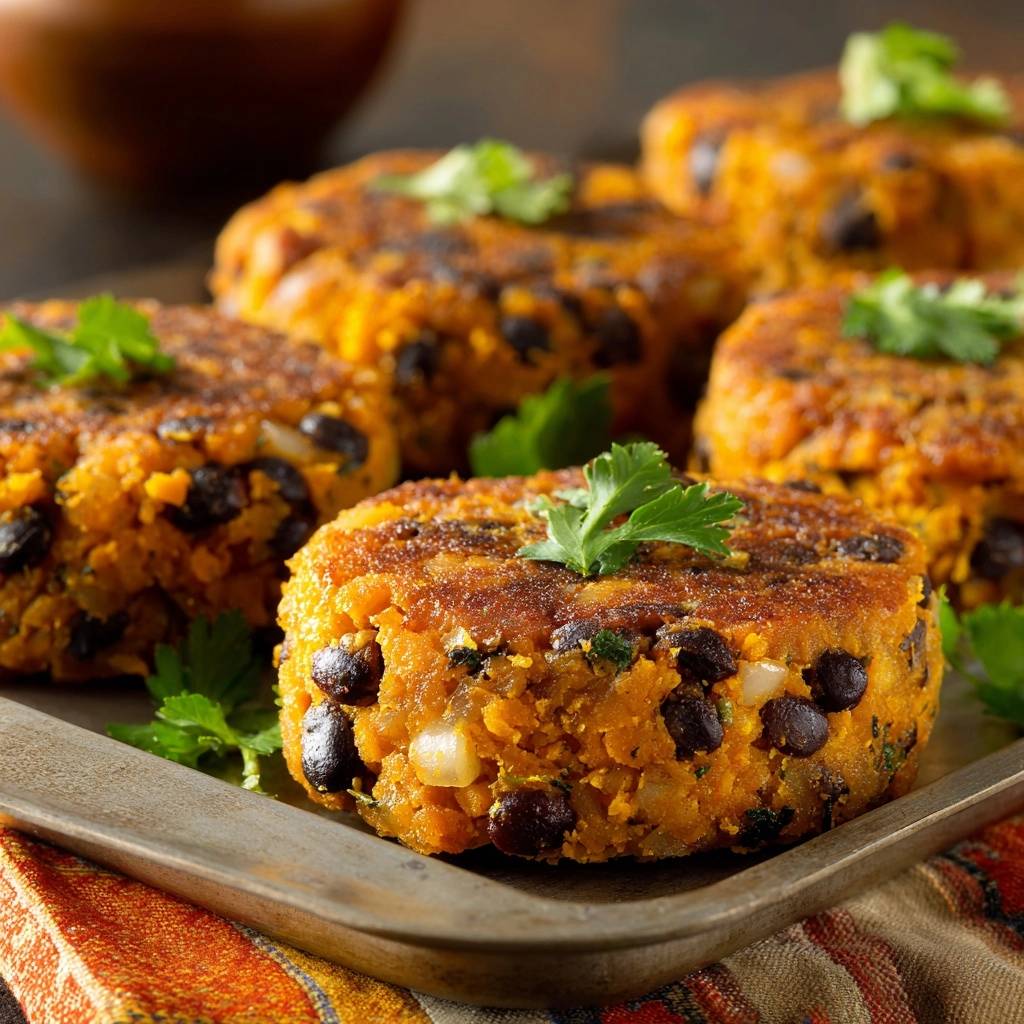
I’ve found that the biggest mistake people make is using a food processor, which turns the ingredients into a wet paste. Therefore, you must use a hand masher or a sturdy fork to keep the texture chunky. Leaving those small pieces of sweet potato intact creates “structural pillars” that prevent the patty from collapsing during the searing process.
The Science of Structural Integrity in Veggie Patties
Vegetable-based patties often fail because of high water content in the main ingredients. Sweet potatoes and canned beans are naturally full of moisture, which turns into steam when it hits a hot pan. This steam prevents the exterior from crisping up and softens the interior until the patty loses all its structural integrity.
To fix this, we use a method called dehydrated roasting. By roasting the sweet potato cubes at a high temperature, we evaporate the surface moisture and some of the internal water. This process transforms the potato from a soggy vegetable into a dense, starchy binder that acts like a glue for the other ingredients.
In addition to roasting the potatoes, we also dry out the black beans. Even after rinsing and patting them dry, beans hold moisture inside their skins. A quick blast in the oven cracks those skins and dries the interior, ensuring they add texture rather than mushiness. This double-dehydration step is the foundation of a patty that stays firm from the pan to the plate.
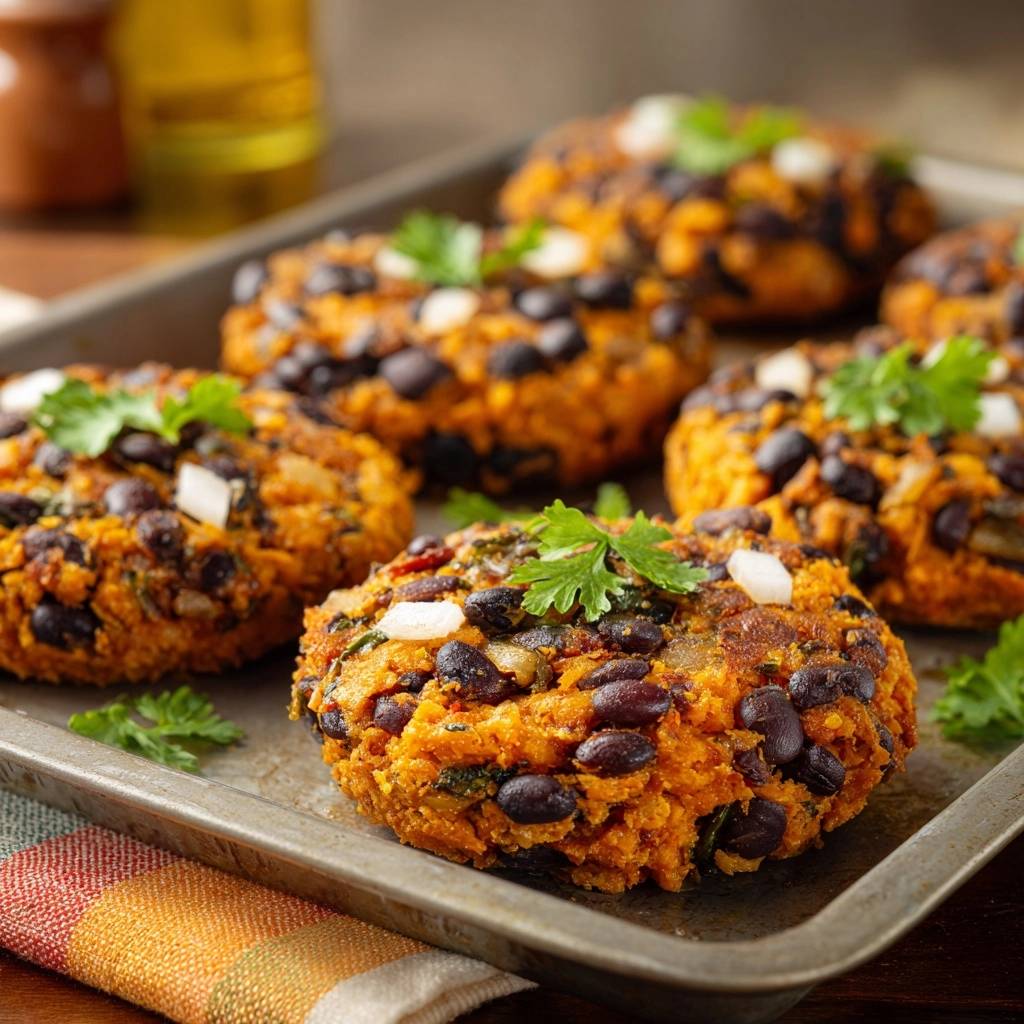
Essential Components for Firm Sweet Potato Black Bean Patties
Every ingredient in this recipe serves a specific functional purpose beyond just adding flavor. For instance, cutting the sweet potatoes into 1/2 inch cubes is vital because it maximizes the surface area for evaporation. Smaller cubes roast faster and more evenly, providing the perfect starchy base for your dough.
The black beans must be “bone dry” before they enter the mix. If you skip the drying step, the beans will release liquid as they cook, which ruins the sear. I recommend spreading them out on a paper towel and pressing firmly to remove every drop of canning liquid before you even think about mashing them.
Panko breadcrumbs are another non-negotiable component. Unlike traditional fine breadcrumbs, Japanese-style panko has a larger, airy surface area that creates a much louder crunch. These crumbs also act as tiny sponges, soaking up the egg and any residual moisture to create a stable, fryable patty.
The egg acts as the primary protein binder, locking the panko and starches together as it hits the heat. Without it, the patties would likely crumble when you try to flip them. Finally, the fresh cilantro and finely diced white onion provide a bright contrast to the heavy starches without adding too much liquid to the mix.
Selecting the Right Sweet Potato Variety
For the best results, I recommend using Jewel or Garnet sweet potatoes. These varieties have a high starch content and a deep orange color that looks beautiful when seared. Avoid the white-fleshed Hannah sweet potatoes for this specific recipe, as they tend to be much drier and more crumbly, which might make the patties fall apart.
Spices That Enhance the Smoky Profile
The combination of cumin and smoked paprika is what gives these patties their “meaty” depth. If you want to take the flavor even further, you can toast whole cumin seeds in a dry pan for two minutes before grinding them. This releases essential oils that make the smoky profile much more intense and aromatic.
Step-by-Step: Achieving the Perfect Golden Sear
Getting that restaurant-quality crust requires patience and the right technical approach. You aren’t just heating the food; you are performing a chemical reaction that creates flavor and texture. Follow these phases closely to ensure your patties turn out perfectly every time.
Phase 1: Roasting for Maximum Moisture Extraction
Preheat your oven to 400°F and spread your potato cubes in a single layer. You want to see the edges start to look slightly shriveled and dehydrated after about 20 minutes. This visual cue tells you the water has left the building. I prefer roasting directly on the baking sheet because parchment paper can sometimes trap steam underneath the vegetables.
Phase 2: The “Rough Mash” Technique
Once the potatoes are tender, move them to a bowl and mash them gently. You are looking for a “puck” texture where you can still see distinct pieces of potato and whole beans. If you over-mash, you’ll end up with a gummy interior. The goal is to have different textures in every bite, which makes the patty feel much more substantial.
Phase 3: The Critical 20-Minute Chill
Do not skip the refrigeration step! Chilling the formed patties allows the starches to “set” and gives the panko time to fully hydrate. When the patties are cold, they are much easier to handle and won’t fall apart when they hit the hot oil. This 20-minute window is the difference between a successful flip and a total mess.
Phase 4: Pan-Searing for a Shatter-Crisp Shell
Use a heavy-bottomed skillet and enough oil to completely coat the bottom. When the oil shimmers, carefully add your patties. Resist the urge to move them for at least five minutes. You need that dark, crispy “shell” to form before you slide a wide spatula underneath for the flip. If the patty sticks, it usually means the crust hasn’t fully formed yet.
Troubleshooting Common Texture Issues
If your patties are falling apart in the pan, it’s almost always because the beans were too wet or the chilling time was cut short. You can try adding an extra tablespoon of panko to the mix to help bind things together. However, the best fix is simply ensuring the initial roasting step was thorough enough to remove the moisture.
If the exterior is burning but the middle is still cold, your heat is too high. Medium heat is the sweet spot that allows the heat to penetrate the thick patty while the outside browns slowly. On the other hand, if the patty feels gummy, you likely over-mashed the potatoes into a puree. Keep it chunky next time for a better mouthfeel.
Flavor Variations and Ingredient Swaps
You can easily swap the black beans for chickpeas or kidney beans if that’s what you have in the pantry. Just keep in mind that chickpeas are slightly firmer, so you might need to mash them a bit more than the black beans. The moisture levels are similar, so the roasting times should remain the same.
For a gluten-free version, use certified gluten-free panko or even almond meal. Almond meal provides a nice nutty flavor, though it won’t be quite as crunchy as panko. If you want more heat, finely mince a jalapeño or add a teaspoon of chipotle powder to the spice mix for a spicy kick.
Make-Ahead Strategies and Freezing Instructions
These patties are excellent for meal prep because the “dough” actually improves after sitting in the fridge for a day. You can store the raw, formed patties in an airtight container for up to three days. This makes it easy to sear off a fresh patty for lunch or dinner whenever you need a quick meal.
To freeze them, place the raw patties on a baking sheet in the freezer for two hours until they are solid. Then, transfer them to a freezer bag with parchment paper between each patty. When you’re ready to eat, don’t use the microwave! Reheat them in the oven or an air fryer to bring back that signature crispiness.
Optimal Pairings for Sweet Potato Black Bean Patties
Since these patties are quite rich and starchy, they pair beautifully with something bright and acidic. A simple cabbage slaw dressed with lime juice and a pinch of salt cuts through the density perfectly. You could also serve them with a spicy avocado mash or a garlic-tahini drizzle for extra creaminess.
If you aren’t serving them on a bun, try placing them over a bed of fluffy quinoa or a crisp green salad. The contrast between the warm, crunchy patty and the cool greens is fantastic. For a more filling meal, a side of roasted corn or a simple tomato salad adds a fresh element that balances the smoky spices.
Expert Tips for High-Volume Cooking
If you’re cooking for a crowd, use a large electric griddle so you can cook all six patties at once. This ensures they all stay hot and reach the same level of crispness. Whatever you do, don’t crowd the pan. If the patties are too close together, they will steam each other, and you’ll lose that precious golden crust.
Frequently Asked Questions
Can I make these without the egg?
You can use a flax-egg (one tablespoon of ground flaxseed mixed with three tablespoons of water) as a substitute. However, be aware that the texture will be slightly softer and more fragile. You’ll need to be extra careful when flipping the patties and ensure they are fully chilled before cooking.
Why are my beans popping in the oven?
That popping sound is actually a good sign! It means the moisture inside the bean is turning to steam and breaking through the skin. This “cracking” process is exactly what we want because it creates a drier bean that won’t turn into mush when you mix it with the sweet potatoes.
Can I air fry these instead of pan-searing?
Yes, you can air fry them at 375°F for about 15-18 minutes, flipping halfway through. Make sure to spray both sides of the patty generously with oil before starting. While they won’t be quite as deeply golden as the pan-seared version, they will still be very crispy and delicious.
Do I need to peel the sweet potatoes?
I highly recommend peeling them for this recipe. While sweet potato skins are edible, they can create “tough” spots in the patty that interfere with the uniform, crispy texture we are aiming for. Peeling ensures the starch can properly emulsify with the egg and panko for a better bind.
Can I use canned sweet potato puree?
No, you should definitely avoid canned puree for this recipe. Puree is far too wet and lacks the structural starch needed to form a solid patty. Using it will result in a batter that is impossible to shape into patties, even if you add extra breadcrumbs. Stick to roasting fresh potatoes for the best results.
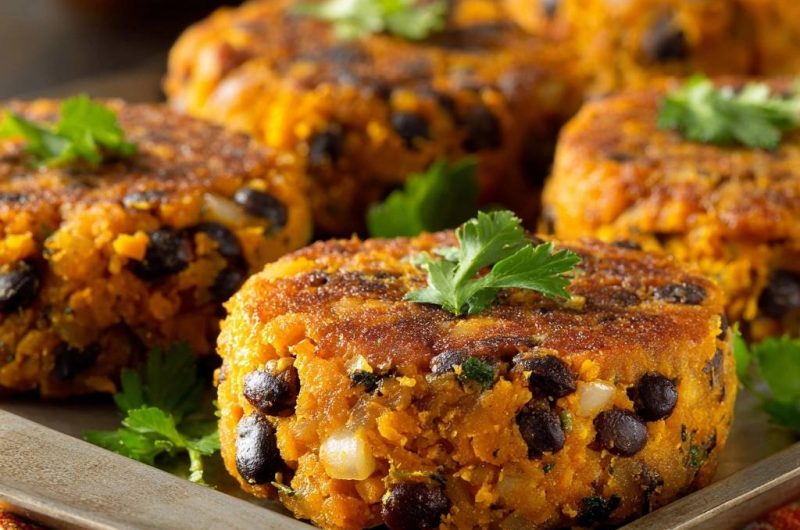
Crispy Sweet Potato Black Bean Patties
Course: Main CourseCuisine: AmericanDifficulty: easy6
patties20
minutes25
minutes45
MinutesAmerican
Ingredients
2 large sweet potatoes (about 1.5 lbs), peeled and cubed into 1/2 inch pieces
1 can (15 oz) black beans, rinsed and patted very dry
1/2 cup panko breadcrumbs
1/4 cup finely diced white onion
2 tablespoons chopped fresh cilantro
1 teaspoon cumin
1/2 teaspoon garlic powder
1/2 teaspoon smoked paprika
1/2 teaspoon salt
1 large egg, lightly beaten (essential binder for the thick texture shown)
3-4 tablespoons neutral oil (grapeseed or vegetable) for pan-searing
Directions
- Roast for Dryness: Preheat your oven to 400°F (200°C). Spread the sweet potato cubes on a baking sheet and roast for 20 minutes until tender and the edges are slightly dehydrated. Avoid boiling or steaming, as this introduces water that causes mushiness.
- Prep the Beans: While potatoes roast, rinse the black beans and spread them on a paper towel. Pat them until bone dry. For the best texture, place the dry beans on a separate tray in the oven for the last 5 minutes of the potato roasting time to slightly crack the skins.
- The Rough Mash: In a large bowl, mash the roasted sweet potatoes. Leave significant chunks (as seen in the image) rather than making a smooth puree.
- Combine: Add the dried black beans, panko, onion, cilantro, cumin, garlic powder, smoked paprika, salt, and the beaten egg. Mix gently by hand. The egg and panko will react with the natural starches to create a firm “dough.”
- Form and Chill: Shape the mixture into 6 thick, puck-shaped patties (about 1 inch thick). Place them on a plate and refrigerate for at least 20 minutes. This chilling step is crucial; it allows the panko to hydrate and the starches to set, ensuring they don’t crumble when flipped.
- The Sear: Heat the oil in a large heavy-bottomed skillet over medium heat. You need enough oil to coat the bottom of the pan to achieve the deep golden-brown crust pictured.
- Cook: Add the patties to the shimmering oil. Cook for 5-6 minutes per side. Do not crowd the pan. Use a wide spatula to flip only once a dark, crispy “shell” has formed on the bottom.
- Serve: Garnish with fresh cilantro leaves and serve immediately while the exterior is at its maximum crispness.
Notes
- The secret to the texture is roasting the potatoes and beans to remove moisture. Do not skip the 20-minute refrigeration step, as it allows the panko and egg to bind the patties properly before frying.