Nothing ruins a beautiful fruit-filled pastry faster than a mushy, wet dough base. You know the feeling when you bite into a roll expecting a fluffy crumb, but instead, you get a soggy mess because the berries released all their juice? It’s a common frustration that turns a gourmet idea into a kitchen fail.
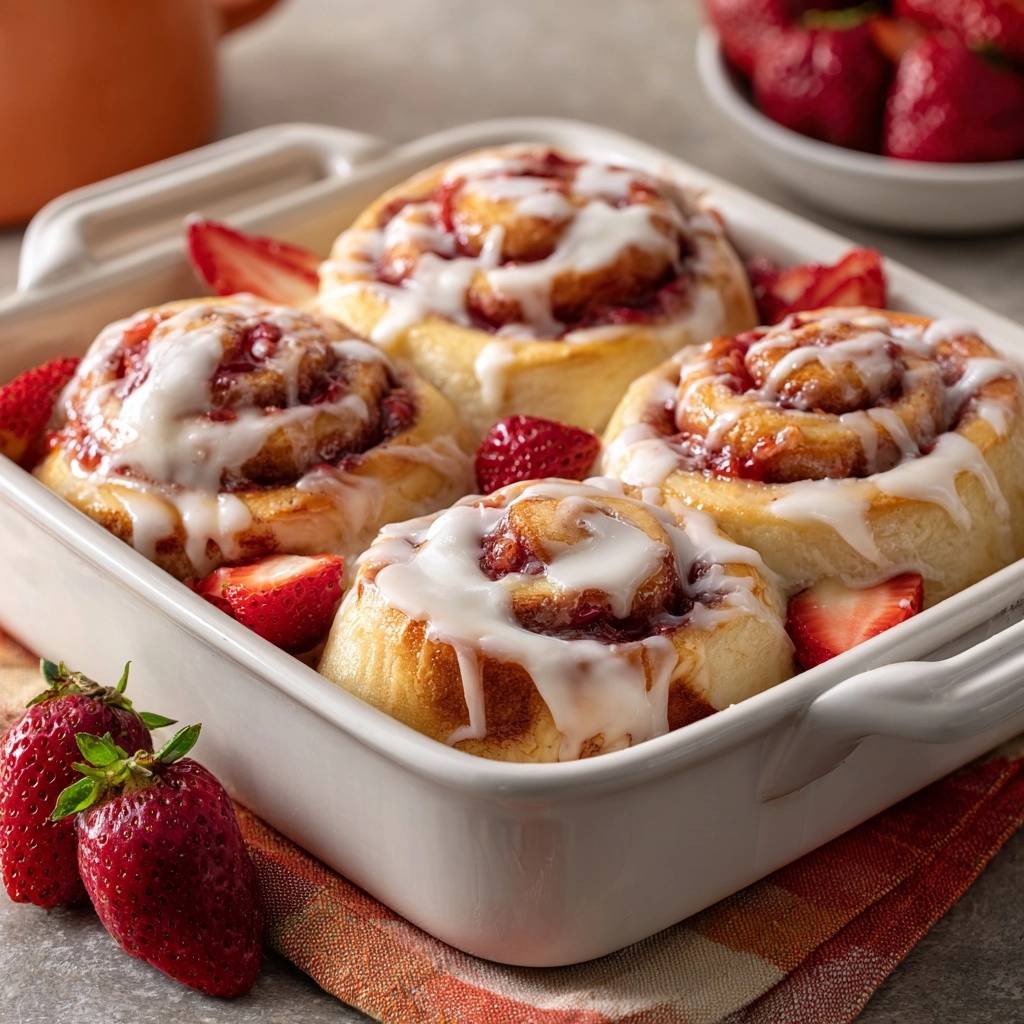
These Glazed Strawberry Sweet Rolls bridge the gap between the convenience of refrigerated dough and the high-end results of a boutique bakery. By using a specific fruit-reduction technique, we concentrate the bright acidity of the lemon and the deep sweetness of the berries. This ensures your rolls stay structurally sound while packing a massive punch of real strawberry flavor.
The secret to this recipe’s success is the temperature control of your filling. If you spread warm strawberry jam onto cold dough, the fats in the dough melt instantly, destroying those beautiful layers. I’ve found that chilling the reduction until it’s completely cold is the only way to keep the rolls light, airy, and perfectly spiraled.
The Science of Fruit Reductions in Baking
Fresh strawberries are a baker’s challenge because they are approximately 91% water. When you put raw sliced berries inside a dough and slide them into a hot oven, that water has nowhere to go but down into the bread. This creates the dreaded “soggy bottom” that plagues most fruit-filled sweet rolls.
To fix this, we use heat to break down the natural pectin in the fruit. By simmering the berries with sugar and lemon juice, we evaporate the excess water before the fruit ever touches the dough. This process transforms the berries into a stable, concentrated jam that stays exactly where you put it.
Adding cornstarch to this mix is vital because it acts as a secondary insurance policy. While the reduction removes most of the water, the cornstarch binds any remaining moisture into a thick gel. Compared to store-bought preserves, which are often thinned with corn syrup, this homemade reduction provides a much more intense flavor without the runny texture.
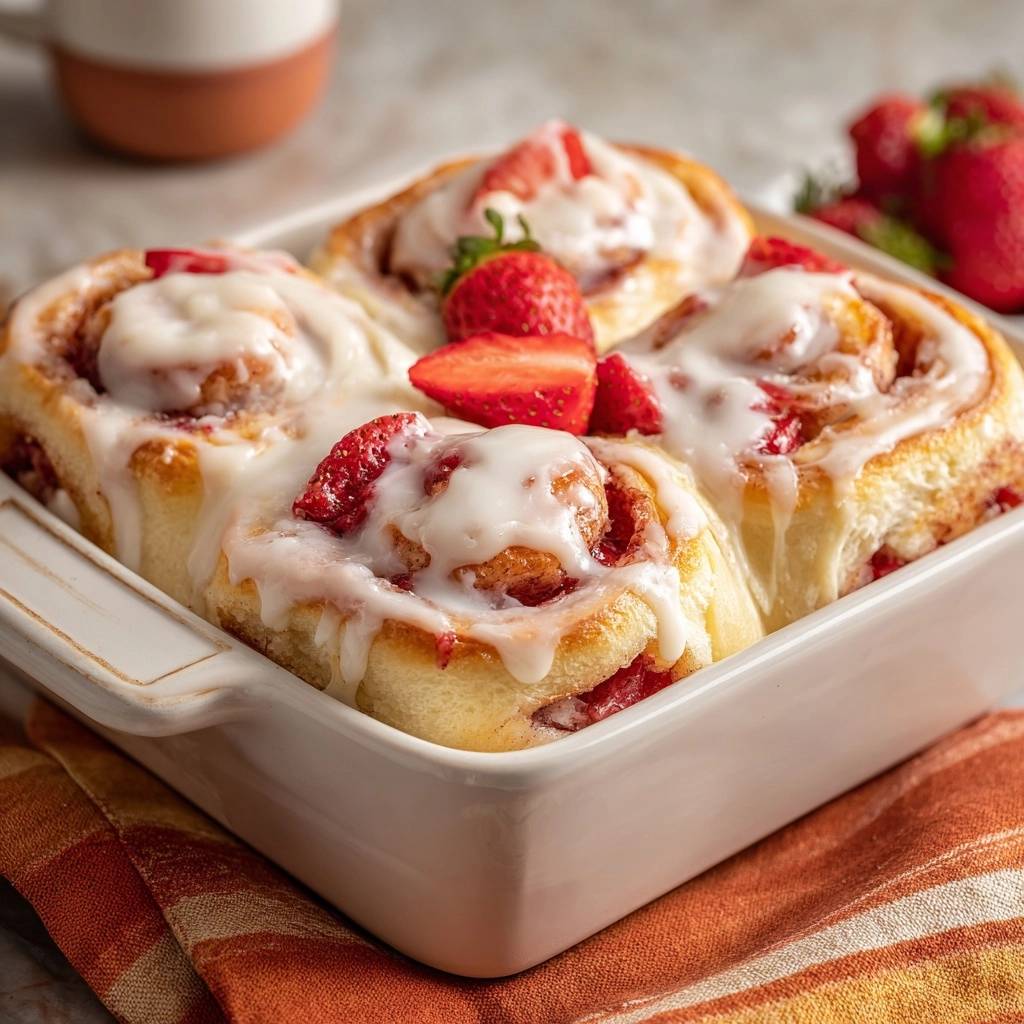
Essential Components for Glazed Strawberry Sweet Rolls
Quality ingredients make the difference between a “canned” taste and a “from-scratch” experience. Start with “Jumbo” refrigerated cinnamon rolls. These larger rolls provide the necessary structural support and surface area to hold the strawberry filling without collapsing under the weight of the fruit.
Lemon juice is another non-negotiable component in this recipe. It serves as a flavor brightener that cuts through the heavy sugar, but it also acts as a pectin activator. The acidity helps the strawberry mixture set properly, ensuring the filling has a clean bite rather than a syrupy drip.
Finally, we have the glaze. While the tube of dough comes with its own icing, it’s usually thin and translucent. By “doctoring” it with powdered sugar, heavy cream, and vanilla, we create a professional, high-opacity finish. This thicker glaze sits beautifully on top of the roll, providing a creamy contrast to the jammy interior.
Selecting and Preparing Fresh Strawberries
Look for berries that are deep red all the way to the hull, as these have the highest natural sugar content. When you prep them, aim for a very fine dice. Large chunks of fruit might look pretty, but they create air pockets during the bake that cause your rolls to lose their shape and collapse.
The Role of Cornstarch as a Stabilizer
Cornstarch is a powerful stabilizer that prevents the “weeping” effect where fruit leaks juice after baking. It activates between 144°F and 162°F, which is why we simmer the reduction on the stove first. You must let this mixture cool completely; if it’s even slightly warm, it will soften the dough and make re-rolling nearly impossible.
Step-by-Step: Preparing the Strawberry Reduction
When you simmer your strawberries, sugar, and lemon juice, watch for the “nappe consistency.” This is a fancy chef term that simply means the mixture is thick enough to coat the back of a spoon without running off. You should be able to draw a line through the jam on the spoon with your finger and have the path stay clear.
As the mixture reduces, use a fork to mash the berries. You want a relatively smooth consistency with just a few small bits of fruit for texture. Once it reaches that heavy, jam-like state, move it to a bowl and get it into the fridge. Cooling it is the most important step for maintaining the lamination and fluffiness of your pre-made dough.
Assembly: Unrolling and Filling the Dough Strips
Carefully unroll each jumbo cinnamon roll into a long, flat strip. If the dough feels tacky or sticks to your fingers, lightly dust your work surface with a tiny bit of flour. You want the dough to stay cold, so work quickly once you take it out of the refrigerator.
When spreading the strawberry reduction, follow the “Thin Layer” rule. It’s tempting to pile on the filling, but more isn’t better here. A thick layer will cause the dough strips to slide apart when you try to roll them back up. Spread it evenly over the cinnamon-sugar side, leaving a tiny border at the edges.
Use a “Tight Roll” technique to finish the assembly. Start at one end and roll the dough firmly back into its original spiral shape. This ensures that the strawberry flavor is tightly wound into every single bite, creating those beautiful red and white swirls you see in professional bakeries.
Baking for Structural Integrity and Color
Fruit-filled rolls require a slightly longer bake time than plain cinnamon rolls. The moisture from the filling, even when reduced, keeps the center of the roll cooler for longer. You are looking for a deep golden brown across the entire top to ensure the dough in the very center is fully set and not gummy.
I recommend using a ceramic baking dish for this recipe. Ceramic heats up more slowly than metal but retains heat more evenly, which helps the centers cook through without burning the bottoms. If you use a dark metal pan, check the rolls a few minutes early as they tend to brown much faster.
Crafting the High-Opacity Vanilla Glaze
The standard icing included in the dough tube is often too runny to give you that iconic bakery look. To fix this, whisk it together with extra powdered sugar and a splash of heavy cream. This creates a thick, opaque white icing that holds its shape instead of melting into a clear liquid.
Adding a touch of vanilla extract to this mixture adds a layer of floral sweetness that ties the strawberry and cinnamon flavors together. The goal is a consistency that is pourable but thick enough to leave distinct ribbons when you drizzle it over the warm rolls.
Troubleshooting Common Sweet Roll Issues
If your strawberry reduction looks too runny after simmering, don’t panic. Just put it back on the heat for another two minutes. It needs to be thick enough that it doesn’t flow across the dough like water. A runny filling is the primary cause of rolls that fall apart in the oven.
If your dough tears while you are unrolling it, simply pinch the edges back together. The dough is very forgiving once it’s rolled back up and baked. Also, remember that the 5-minute cooling rest after baking is non-negotiable. If the rolls are too hot, your beautiful thick glaze will turn into a watery mess instantly.
Preventing the Center from Staying Raw
If you notice the tops of your rolls are getting very dark but the centers still look doughy, use the “tenting” method. Loosely cover the baking dish with a piece of aluminum foil. This reflects the direct heat away from the top, allowing the middle of the rolls to finish cooking without burning the surface.
Adjusting Consistency for High Humidity
On humid days, powdered sugar absorbs moisture from the air, which can make your glaze too thin. If your icing looks watery, add an extra tablespoon of powdered sugar at a time until it regains its thickness. Conversely, if it’s too stiff to drizzle, add heavy cream literally one drop at a time.
Make-Ahead Strategies and Storage
These rolls are undoubtedly best served fresh and warm from the oven. However, if you have leftovers, store them in an airtight container at room temperature for up to two days. The fruit filling makes them slightly more perishable than plain rolls, so don’t leave them out for too long.
To reheat, avoid the microwave, which often makes the dough rubbery and tough. Instead, pop them into an air fryer or a 300°F oven for about five minutes. This restores the crisp exterior and softens the strawberry center without ruining the texture of the dough.
Expert Tips for Serving and Presentation
For a truly professional look, garnish the finished rolls with a few slices of fresh strawberry and a tiny bit of lemon zest. The zest adds a pop of color and a fresh aroma that balances the rich glaze. When you drizzle the icing, let it pool slightly in the spirals.
This “pooling” effect ensures that every bite has a mix of creamy glaze, spicy cinnamon, and tart strawberry. Serving them while they are still slightly warm ensures the best mouthfeel, as the dough will be at its softest and the strawberry flavors will be most vibrant.
How should I store leftover strawberry rolls?
Store any leftover rolls in an airtight container at room temperature for up to 2 days. If you need to keep them longer, you can refrigerate them for up to 4 days, but be aware that the refrigerator can dry out the dough. For the best texture, always reheat them before eating to soften the crumb and the strawberry filling.
Why did my rolls turn out soggy on the bottom?
Soggy bottoms usually happen for two reasons: the strawberry reduction wasn’t thick enough or it was applied to the dough while still warm. If the reduction is runny, the excess moisture soaks into the dough during baking. Always ensure your jam is cooled completely in the fridge; this “sets” the filling so it stays put during the bake.
Can I use frozen strawberries instead of fresh?
Yes, you can use frozen strawberries for the reduction. However, frozen berries often release even more water than fresh ones. You may need to simmer the mixture for an extra 3 to 5 minutes to achieve that thick, jam-like consistency. Do not use frozen berries for the fresh garnish at the end, as they will become mushy as they thaw.
What if I don’t have heavy cream for the glaze?
If you don’t have heavy cream, you can substitute whole milk or even a dairy-free milk alternative. Just keep in mind that heavy cream provides the highest opacity and a richer flavor. If using milk, add it very slowly, as you will need less of it than you would cream to reach the desired thickness.
Can I make these rolls ahead of time?
You can prepare the strawberry reduction up to three days in advance and keep it in the fridge. However, I do not recommend assembling the rolls until you are ready to bake. If the raw dough sits with the fruit filling for too long, the moisture will begin to break down the dough structure, leading to a poor rise in the oven.
Why is my glaze transparent instead of white?
Transparent glaze usually means there was too much liquid and not enough powdered sugar. The heat of the roll also plays a factor. If you apply glaze to a roll that just came out of the oven, the sugar melts into a syrup. Waiting exactly five minutes allows the roll to cool just enough so the glaze stays thick and white on top.
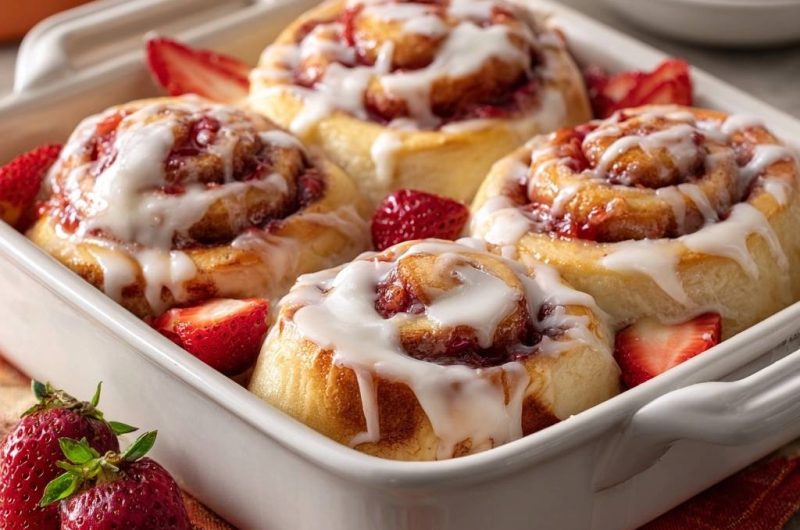
Glazed Strawberry Sweet Rolls
Course: Breakfast and DessertCuisine: AmericanDifficulty: easy4
large rolls20
minutes25
minutes45
Minutes385
kcalAmerican
Ingredients
1 tube refrigerated jumbo cinnamon roll dough (5 count, use 4 for a standard square dish)
1 ½ cups fresh strawberries, finely diced (divided)
2 tablespoons granulated sugar
1 teaspoon cornstarch
1 tablespoon lemon juice
1/2 cup powdered sugar
1 tablespoon heavy cream or milk
1/2 teaspoon vanilla extract
The icing container included with the dough
Directions
- Preheat your oven to 350 degrees F (175 degrees C) and grease a small square ceramic baking dish.
- To solve the soggy bottom problem, place 1 cup of the diced strawberries, granulated sugar, cornstarch, and lemon juice in a small saucepan over medium heat. Simmer for 8 to 10 minutes, mashing the berries with a fork, until the mixture reduces and thickens into a heavy, jam-like consistency. Let this reduction cool completely in the fridge before using.
- Carefully unroll each jumbo cinnamon roll into a long strip. If the dough is too sticky, lightly dust with flour.
- Spread a thin, even layer of the cooled strawberry reduction over the cinnamon-sugar side of the dough strips. Sprinkle a few of the remaining fresh diced strawberries over the jam for texture.
- Re-roll the dough strips tightly and place them in the prepared baking dish, ensuring they are spaced evenly so the heat can circulate.
- Bake for 22 to 25 minutes or until the dough is a deep golden brown and the centers are no longer doughy.
- While the rolls bake, prepare the final glaze. Whisk together the icing provided with the dough, the powdered sugar, heavy cream, and vanilla until you have a thick, opaque white icing that holds its shape.
- Remove the rolls from the oven. Let them cool for exactly 5 minutes (this prevents the icing from melting into a clear liquid).
- Drizzle the thick glaze generously over the rolls, allowing it to pool in the spirals. Garnish with the remaining fresh strawberry slices and serve immediately.
Notes
- Cooling the strawberry reduction completely before spreading is essential to prevent the dough from becoming too soft. Letting the rolls cool for 5 minutes before icing ensures the glaze stays thick and opaque.