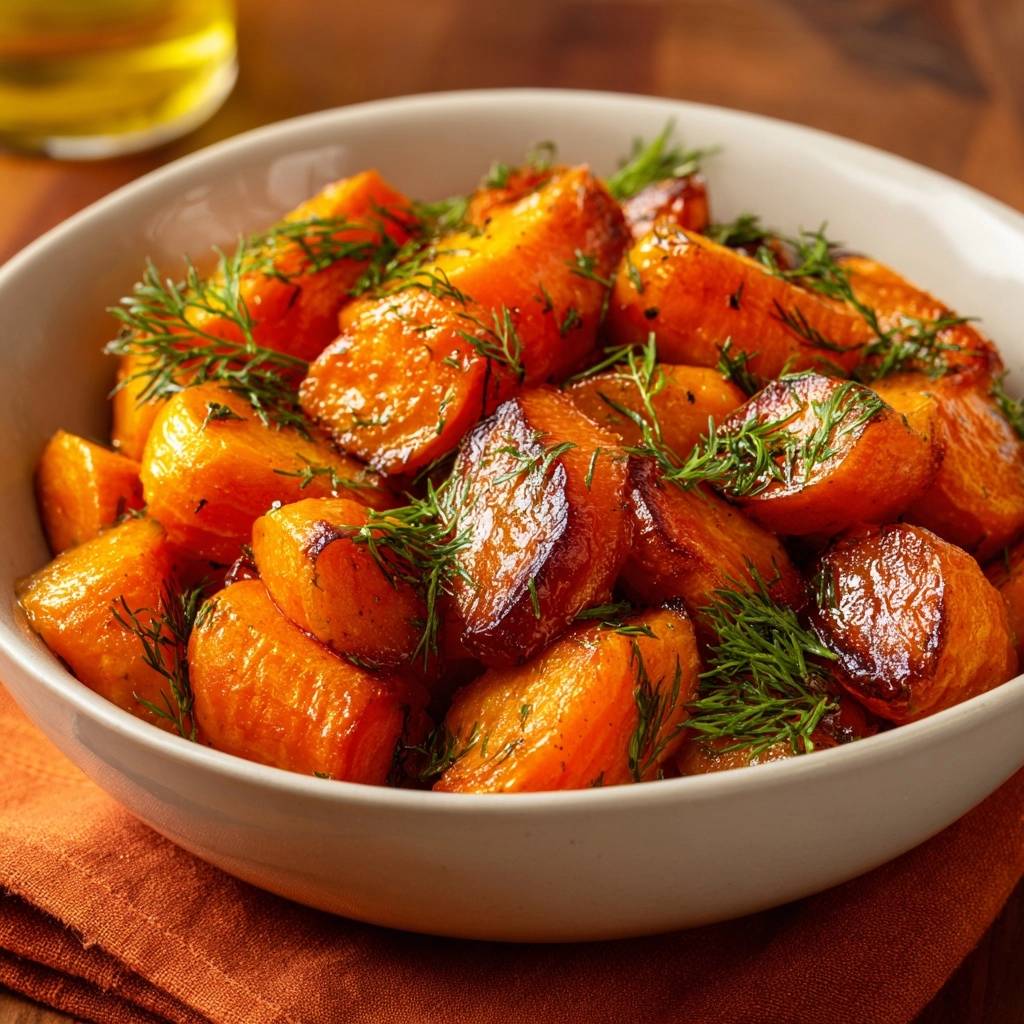
Most people treat carrots as an afterthought, tossing them into a pan and hoping for the best. The result is usually a pile of limp, watery, or mushy orange rounds that lack any real character. If you’ve ever felt disappointed by a side dish that tasted more like baby food than a gourmet vegetable, you aren’t alone. The frustration of “mushy vegetable syndrome” comes down to a lack of moisture control and improper heat application.
The goal here is a structural balance that feels intentional. You want a carrot that offers a slight resistance to the tooth, a tender core, and a deeply caramelized, almost crispy exterior. By mastering the relationship between high heat and natural sugars, you can turn a humble root vegetable into the star of the plate. It’s about creating a dish that is earthy, sweet, and brightened by the punch of fresh herbs.
The secret to this texture isn’t a special tool; it’s the timing of your glaze. Many cooks make the mistake of coating vegetables in sugar-based marinades before they ever hit the oven. This leads to burnt honey and raw carrots. Instead, we focus on searing the vegetable first to lock in the structure, then applying the honey lacquer at the very end for a perfect, sticky finish. I’ve found that this two-stage approach is the only way to get that professional-grade char without the bitter aftertaste of scorched sugar.
The Physics of Non-Mushy Roasted Carrots
Achieving the perfect roast is a battle against water. Carrots are roughly 88% water, and if you don’t give that moisture a way to escape, it stays trapped inside the vegetable fibers. When carrots sit too close together on a tray, they release steam. This steam effectively “boils” the carrot from the outside in, leading to that dreaded gummy texture. To prevent this, you need a high-heat environment of 425°F, which encourages rapid evaporation and triggers the Maillard reaction.
The Maillard reaction is the chemical process where amino acids and reducing sugars react under heat to create new flavors and that beautiful brown color. Because carrots have a high natural sugar content, they are prime candidates for this transformation. However, the surface area-to-volume ratio is critical. If the pieces are too small, they’ll overcook before they brown. If they’re too large, the outside will burn while the inside remains hard.
A bare metal baking sheet is your best friend here. While parchment paper makes cleanup easy, it acts as an insulator and prevents the carrots from making direct contact with the hot metal. That direct contact is what creates the “sear” on the bottom of the carrot. By giving each carrot chunk at least an inch of breathing room, you ensure that dry air can circulate entirely around the vegetable, wicking away moisture and crisping the edges.
Essential Components for Honey Roasted Carrots with Fresh Dill
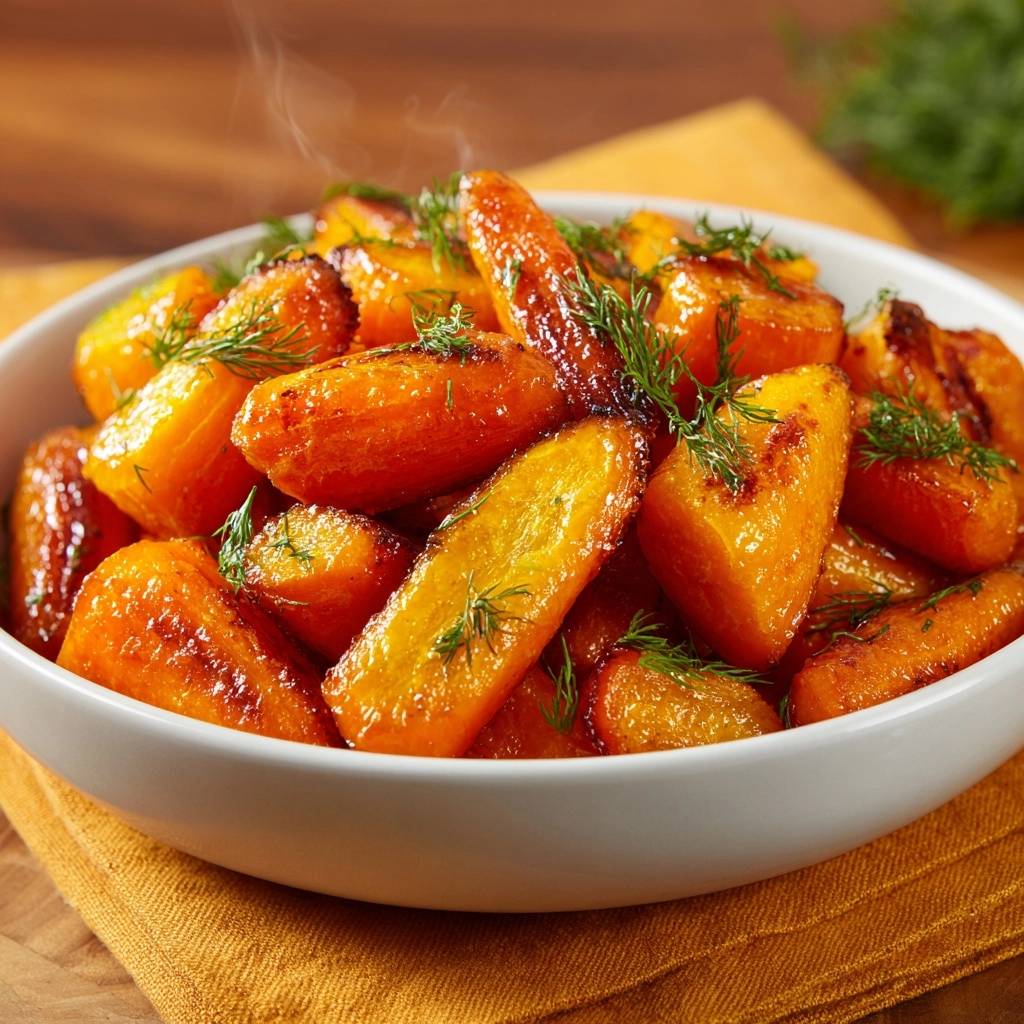
Not all carrots are created equal when it comes to roasting. While you might be tempted to grab a bag of pre-peeled baby carrots, those are actually carved from larger, older carrots and are often kept in water to stay moist. This extra hydration makes them nearly impossible to crisp up. Instead, look for large, whole carrots—specifically Nantes or Imperator varieties. Nantes carrots are sweeter and more cylindrical, while Imperators are the classic long, tapered roots found in most grocery stores.
Cutting these carrots on a bias (a diagonal slice) is more than just a visual choice. A bias cut increases the surface area of each piece, providing more “real estate” for the honey to cling to and for the oven’s heat to caramelize. For the fat, stick with a high-quality olive oil. Butter contains water and milk solids that can burn at 425°F, whereas olive oil provides a clean, high-smoke-point base that helps the carrots sear without smoking out your kitchen.
Seasoning requires a heavy hand with coarse sea salt. The larger grains of sea salt provide a textural contrast that table salt simply can’t match. Finally, let’s talk about the dill. Dried dill tastes like dust compared to the vibrant, citrusy punch of fresh fronds. The fresh herb provides a necessary aromatic lift that cuts through the richness of the honey and oil. If you don’t have fresh dill, it’s better to use fresh parsley or mint than to reach for the dried spice jar.
Selecting and Prepping the Root Vegetables
When shopping, look for carrots that feel turgid and firm. If you can bend the carrot at all, it has already lost too much internal moisture and will likely turn out fibrous rather than tender. Once you get them home, peel them and pat them bone-dry with a paper towel. This is the most important rule of roasting: any water left on the surface will immediately turn to steam in the oven, ruining your chances of a crisp exterior.
Cut your carrots into 1.5-inch chunks on a sharp diagonal. Try to keep the thickness consistent so they all finish cooking at the same time. If you have a very thick top and a very thin tip, slice the thick part in half lengthwise before cutting your chunks. This ensures every piece has a similar density, leading to a uniform roast across the entire baking sheet.
The Role of Late-Stage Honey Glazing
Honey is a delicate ingredient in the world of high-heat cooking. It is composed of fructose and glucose, which begin to caramelize and then burn at much lower temperatures than the carrot itself. If you toss the carrots in honey at the start of a 25-minute roast, the honey will reach its smoke point and turn acrid and black long before the carrots are soft.
By waiting until the final 5 to 7 minutes of cooking, you allow the carrots to do the heavy lifting of softening and browning first. When the honey is finally added, it hits the hot pan and the hot vegetables, instantly liquefying and coating every nook and cranny. This short window is just enough time for the honey to reduce into a thick, sticky lacquer that clings to the carrots without losing its floral sweetness.
Step-by-Step: Achieving the Perfect Roast
Success in the kitchen is often about observing the transformation of your ingredients. Don’t just set a timer and walk away; watch how the carrots change as they move through these three distinct phases of cooking.
Phase 1: High-Heat Dehydration and Searing
After tossing your dry carrot chunks with olive oil, salt, and pepper, spread them out on your rimmed baking sheet. Slide them into the 425°F oven and let them go for about 15 to 20 minutes. During this time, you’ll notice the carrots begin to shrink slightly as their internal water evaporates. The edges will start to look pale or even slightly shriveled, and the bottoms—where they touch the metal—should be developing a light golden crust. You are looking for the carrots to be “al dente” at this stage; they should be pierceable with a fork but still have a firm center.
Phase 2: The Honey Lacquer Application
Pull the tray out of the oven and close the oven door immediately to keep the heat in. Drizzle your tablespoon of honey over the carrots and use a spatula to toss them quickly. You’ll hear a slight sizzle as the honey hits the hot metal. Work fast so the pan doesn’t cool down too much. Once every piece is glistening, spread them back out into a single layer and return them to the oven. In these final minutes, the honey will bubble and darken, creating a professional, lacquered finish that looks like it came from a high-end bistro.
Phase 3: The Herb Infusion Finish
Once the carrots are dark golden brown and tender, remove them from the oven and transfer them to a bowl. Do not add the dill while the carrots are still on the baking sheet, as the intense heat of the metal can scorch the delicate herbs. Instead, toss the chopped dill with the carrots in the serving bowl. The residual heat from the vegetables is just enough to wake up the volatile oils in the dill, releasing a fresh, grassy aroma that perfectly balances the sugary glaze. The dill should stay bright green and vibrant, not turn gray or wilted.
Critical Mistakes That Lead to Soggy Carrots
The biggest enemy of a good roast is overcrowding. I call it the “one-inch rule”—if your carrots are touching, they are steaming. Use two baking sheets if you have to. It is better to have extra cleanup than to serve a pile of mush. Another common pitfall is using a glass baking dish. Glass doesn’t conduct heat as efficiently as metal, and the high sides of a casserole dish trap moisture, ensuring your carrots stay soft and wet.
Furthermore, never skip the preheating step. If you put carrots into a cold oven, they will slowly warm up and leak their juices before the outside has a chance to sear. This results in a carrot that is overcooked on the inside and pale on the outside. Always wait for that little beep from your oven before the tray goes in. Finally, avoid the temptation to stir them too often. They need undisturbed contact with the pan to develop those charred, flavorful “beauty marks.”
Flavor Variations and Ingredient Swaps
While honey and dill are a classic pairing, this roasting technique works with many flavor profiles. If you want a bit of heat, toss in a half-teaspoon of Aleppo pepper or red chili flakes when you add the honey. The spice cuts through the sweetness beautifully. For a vegan version, simply swap the honey for a high-quality maple syrup. Maple syrup has a lower burning point than honey, so keep a close eye on it during those final five minutes.
If you want to add some crunch, toss in a handful of toasted walnuts or slivered almonds at the very end. You can also experiment with different herbs; fresh thyme or rosemary can be added at the beginning of the roast for a more woodsy, savory flavor. However, if you use soft herbs like mint or cilantro, always follow the “Phase 3” rule and add them only after the carrots leave the oven to preserve their color and taste.
Pairing Your Honey Roasted Carrots with Fresh Dill
These carrots are incredibly versatile, but they shine brightest when paired with savory, salty proteins. A simple roasted chicken with crispy skin is the natural partner for the sweetness of the honey glaze. The acidity in a lemon-herb chicken marinade helps balance the sugars in the carrots. Seared lamb chops are another excellent choice, as the earthy notes of the lamb complement the natural sweetness of the root vegetables.
For a vegetarian meal, serve these carrots over a bed of hearty lentil pilaf or quinoa. The carrots provide the “meatiness” and texture that grain bowls often lack. If you find the dish is a bit too sweet for your palate, a tiny squeeze of fresh lemon juice right before serving can brighten the whole plate. The acid acts as a foil to the honey, making the flavors pop without masking the natural taste of the carrots.
Troubleshooting and Technical FAQ
Can I use baby carrots for this recipe?
You can, but I don’t recommend it if you want the best texture. Baby carrots are processed and stored in water, which means they have a much higher moisture content than whole carrots. If you must use them, you need to dry them extremely well and perhaps increase the roasting time by a few minutes. They will never get quite as crispy as a fresh, hand-cut carrot.
Why did my honey turn black and smell burnt?
This usually happens for two reasons: either the honey was added too early in the roasting process, or your oven has a hot spot. Honey burns quickly at 425°F. Make sure you are only glazing for the final 5 to 7 minutes. If your oven runs hot, try moving the rack to the middle position rather than the top to keep the honey away from the upper heating element.
Can I reheat these carrots the next day?
Yes, but avoid the microwave at all costs. A microwave will steam the carrots, making them soft and losing that caramelized edge. To reheat, place them back on a baking sheet in a 350°F oven for about 10 minutes. This will help re-crystallize the honey and restore some of the original texture. They are also delicious served cold in a salad with feta cheese.
How do I scale this recipe for a large holiday crowd?
The most important factor when scaling up is pan space. Do not try to double the recipe on one baking sheet. If you are cooking three pounds of carrots, use two separate large rimmed baking sheets. Rotate the pans from top to bottom halfway through the roasting time to ensure even cooking. If you crowd the pans, you will end up with steamed carrots instead of roasted ones.
My carrots are tender but not brown. What went wrong?
This is usually a sign that the oven temperature wasn’t high enough or the pan was too crowded. If the carrots are already soft but lack color, you can turn on the broiler for 1 to 2 minutes at the very end. Watch them like a hawk, though, as the honey will go from golden to burnt in a matter of seconds under the broiler.
Honey Roasted Carrots with Fresh Dill
Course: Side DishCuisine: AmericanDifficulty: easy4
servings10
minutes25
minutes35
Minutes125
kcalAmerican
Ingredients
1.5 pounds large carrots, peeled and cut into 1.5 inch chunks on a bias
2 tablespoons olive oil
1 tablespoon honey
1/2 teaspoon sea salt
1/4 teaspoon cracked black pepper
2 tablespoons fresh dill, roughly chopped
Directions
- Preheat your oven to 425 degrees F. High heat is essential to prevent the carrots from steaming and becoming mushy before they brown.
- Place the carrot chunks in a large bowl. To solve the mushy texture problem, ensure the carrots are completely dry after washing. Any surface water will create steam in the oven.
- Toss the carrots with olive oil, salt, and pepper. Do not add the honey yet. Adding sugar too early causes the exterior to burn before the inside is cooked through.
- Spread the carrots on a large rimmed baking sheet. Space them out so they are not touching. If the pan is crowded, the carrots will release moisture and steam each other, resulting in a soft, gummy texture.
- Roast for 15 to 20 minutes. Remove the pan and drizzle the honey over the carrots, tossing quickly to coat.
- Return to the oven for another 5 to 7 minutes. This late-stage glazing allows the honey to caramelize into a sticky coating without burning.
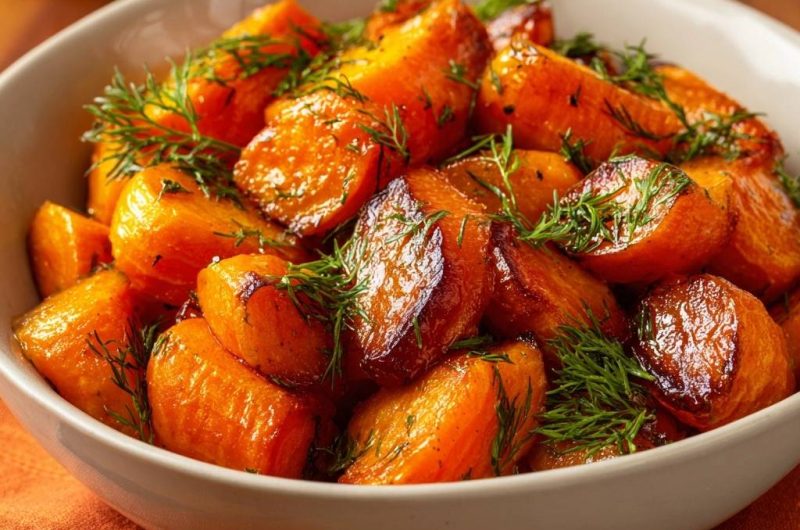
- Remove from the oven once the edges are dark golden brown and the centers are tender but still hold their shape.
- Transfer to a serving bowl and toss immediately with the fresh dill. The residual heat will release the aroma of the herbs without wilting them into a brown mess.
Notes
- To prevent mushiness, ensure carrots are completely dry before roasting and avoid crowding the pan. Add honey only in the last 5-7 minutes of cooking to prevent burning.