Most home cooks struggle with root vegetables that turn into a soft, muddy mess in the oven. You want that perfect bite where the exterior is slightly chewy and caramelized, while the inside remains tender and sweet. This recipe solves the “mush factor” by using a specific high-heat method that locks in texture and keeps those vibrant colors from bleeding together.
The secret lies in the contrast between the deep, earthy tones of the beets and the floral brightness of the honey glaze. By treating the red beets separately from the golden vegetables, you ensure a stunning presentation that looks like it came straight from a professional kitchen. It’s about moving beyond a simple side dish and mastering the art of the perfect roast.
I’ve found that the real trick to success is delaying the sweetness. If you toss your vegetables in honey before they hit the oven, the sugars burn and the moisture gets trapped, leading to steaming rather than roasting. We wait until the very end to add the honey, creating a glossy, sticky finish that clings to the vegetables without compromising their structural integrity.
The Science of Preventing Mushy Roasted Beets
Root vegetables are packed with water and complex carbohydrates. When you roast them at low temperatures, the cell walls collapse slowly, releasing moisture that turns into steam. This is why 425°F is your magic number. This high heat evaporates surface moisture almost instantly, allowing the Maillard reaction to occur on the outside before the interior becomes overcooked.
Caramelization is a chemical process where sugars break down under heat, but it can’t happen if there is standing water on the pan. If you overcrowd your baking sheet, the vegetables sit in a humid microclimate. They end up boiling in their own juices rather than roasting. Give them plenty of “breathing room” so the hot air can circulate and crisp up every edge.
Furthermore, the natural sugars in beets and carrots are quite high. At 425°F, these sugars begin to brown naturally. By adding the honey only in the last ten minutes, you are layering a secondary glaze over the already-caramelized surface. This prevents the honey from reaching its smoke point and turning bitter, ensuring a clean, floral sweetness in every bite.
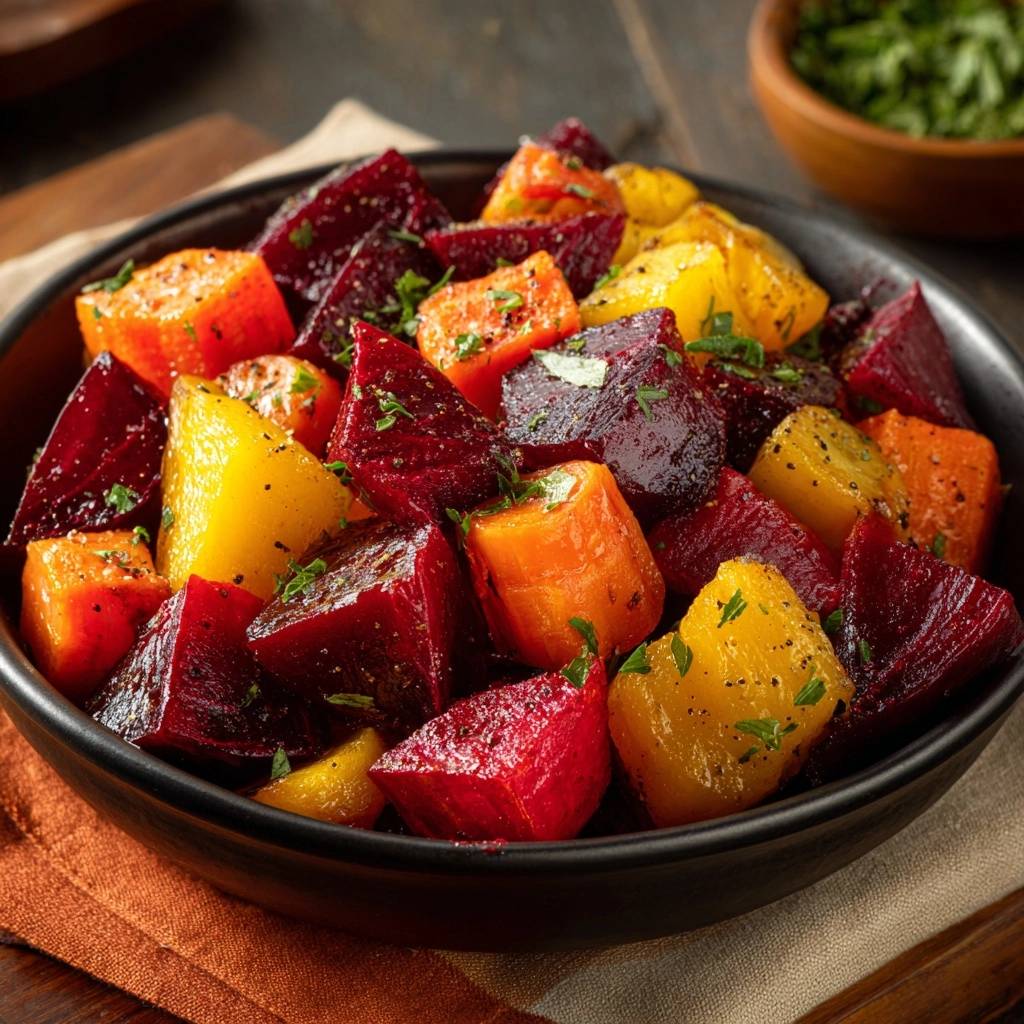
Essential Components for Honey Roasted Root Vegetables
Quality ingredients are the foundation of this dish. Red beets offer a classic, robust earthiness, while golden beets are milder and slightly more buttery. Using both creates a beautiful visual palette. Carrots add a familiar sweetness and a different texture that rounds out the trio perfectly.
I always reach for extra virgin olive oil for the initial roast. While butter tastes great, its milk solids burn too quickly at 425°F. Olive oil has a higher smoke point and helps conduct heat evenly across the surface of the vegetables. It also creates a better barrier against moisture loss than butter does.
Don’t underestimate the power of coarsely cracked black pepper. Because honey is intensely sweet, you need a sharp, spicy counterpoint to keep the dish balanced. The large cracks of pepper provide little bursts of heat that cut through the richness of the root vegetables and the sticky glaze.
Selecting the Best Beets and Carrots
When you’re at the market, look for beets that feel heavy for their size and have smooth, firm skins. If the beets feel soft or spongy, they’ve lost too much moisture and will likely be woody inside. Smaller, younger beets are generally sweeter and have a more delicate texture than the giant, older ones.
For carrots, avoid any that look limp or have deep cracks. “Woody” carrots often have a very thick core that stays tough even after roasting. If you can find carrots with the green tops still attached, that’s usually a great sign of freshness, just be sure to trim them as soon as you get home.
The Role of Fresh Herbs: Parsley and Thyme
Fresh herbs are non-negotiable here. Thyme has a woody, pine-like aroma that pairs naturally with the earthiness of root vegetables. If you use dried thyme, it often tastes dusty and can’t stand up to the high heat. Adding fresh thyme leaves during the roasting process allows their oils to infuse into the oil.
Flat-leaf parsley is the perfect finishing touch. It provides a bright, grassy contrast to the heavy, sweet flavors of the roasted vegetables. Always add the parsley at the very end, just before serving, so it stays vibrant and green rather than wilting into the heat of the pan.
Preparation: The Secret to Vibrant Color Separation
The biggest mistake people make with mixed beets is tossing them all in one bowl. Red beets contain a pigment called betalain, which is incredibly water-soluble and aggressive. If you mix them with golden beets or carrots while raw, everything will turn a dull, muddy pink. This is why the “Two-Bowl Method” is essential.
Start by prepping your vegetables into uniform 1-inch wedges. Consistency is key here; if some pieces are much smaller than others, they will burn before the larger chunks are tender. Once cut, keep the red beets in their own bowl and the golden beets and carrots in another. This keeps the pigments contained until the very last second.
Coat each group with oil and salt separately. When you move them to the baking sheet, create a clear “border” between the red and the gold. By roasting them in separate zones on the same pan, you get the efficiency of a single-pan meal without the color bleed. The heat of the oven sets the surfaces, making the pigments less likely to run later.
Step-by-Step: Achieving the Perfect Caramelized Glaze
The first phase of roasting is all about the sear. For the first 30 minutes, you are looking for the vegetables to shrink slightly and develop dark, caramelized edges. Don’t be tempted to peek too often, as opening the oven door drops the temperature and slows down the roasting process. You’ll know they’re ready for the next step when a fork slides in with just a little resistance.
Once you hit that 30-minute mark, pull the pan out. This is the moment for the honey. Drizzle it evenly, but be careful with your spatula. Toss the golden vegetables first, then gently turn the red beets in their own zone. You want to coat them in the honey without dragging the red juice across the rest of the pan.
Return the pan to the oven for the final 8 to 10 minutes. During this time, the honey will bubble and reduce, turning into a thick, lacquer-like glaze. Watch closely! Honey can go from perfectly caramelized to burnt in a matter of sixty seconds. You are looking for a glossy, “jewel-toned” appearance and a sticky texture that isn’t quite smoking.
Managing Oven Hot Spots and Airflow
Every oven has hot spots, usually in the back corners. To ensure even cooking, rotate your baking sheet halfway through the first roasting phase. If you notice one side of the pan is browning much faster than the other, don’t be afraid to swap positions. Airflow is your best friend when you want a crisp finish.
If your vegetables are touching each other, they will steam. If you find that your baking sheet is looking a bit crowded, it is much better to split the batch onto two separate pans. Use the upper and middle racks and swap them halfway through. This extra space ensures that the hot air hits every surface of the vegetable.
Flavor Variations and Ingredient Swaps
While honey is the star here, you can easily adapt this recipe. For a different profile, try using maple syrup. It has a lower burning point than honey, so keep a closer eye on it during the final minutes. If you want to cut through the sweetness, a tiny splash of balsamic vinegar added with the honey provides a lovely acidic punch.
You can also expand the vegetable mix. Parsnips or rutabaga are excellent additions that thrive under high heat. Just keep in mind that parsnips tend to cook faster than beets, so you might want to cut them into slightly larger chunks to ensure everything finishes at the same time. Avoid starchy potatoes in this specific mix, as they require different moisture levels.
Pairing Suggestions for Roasted Root Vegetables
These vegetables are bold enough to stand up to hearty main courses. They pair beautifully with roasted chicken or seared lamb chops, where the sweetness of the honey complements the savory fats of the meat. The earthy tones also make them a natural partner for a warm quinoa pilaf or a wild rice blend.
If you want to add a creamy element, try serving these over a bed of labneh or topping them with crumbled goat cheese. The tanginess of the cheese cuts through the honey glaze perfectly. For a crunchier finish, a handful of toasted walnuts or pepitas scattered over the top adds a great textural contrast to the tender vegetables.
Troubleshooting Common Roasting Issues
If your vegetables are charred on the outside but still hard in the middle, your oven might be running too hot, or you cut the pieces too large. Next time, try a slightly smaller cut or check your oven temperature with a thermometer. If the red beets still managed to stain everything, it usually means they were tossed together too early or while there was still too much liquid on the pan.
If your honey glaze tastes bitter, it likely stayed in the oven a minute or two too long. Honey is delicate! If you see the glaze turning very dark brown or black on the pan, get it out immediately. To fix a slightly over-caramelized batch, a tiny squeeze of fresh lemon juice can help mask the bitterness and brighten the flavors back up.
Expert Tips for Make-Ahead Preparation
You can absolutely prep the vegetables 24 hours in advance. Peel and cut them, then store them in airtight containers in the fridge. Keep the red beets in their own container to prevent staining. Do not add the oil or salt until you are ready to roast, as salt will draw out moisture and make the vegetables limp before they even hit the oven.
When it comes to leftovers, the oven is your best friend. Reheating in the microwave will make the vegetables soggy and the glaze watery. Instead, spread them on a baking sheet and pop them into a 350°F oven for about 10 minutes. This helps the honey glaze tighten back up and restores that beautiful glossy finish. Avoid freezing these, as the cell structure of beets breaks down when frozen, resulting in a grainy, unpleasant texture.
Frequently Asked Questions
Can I roast these without peeling the skins?
While beet and carrot skins are technically edible, I strongly recommend peeling them for this recipe. Beet skins can be quite thick and often have a gritty, earthy taste that can be overwhelming. Peeling the vegetables allows the olive oil and honey glaze to penetrate the flesh directly, resulting in a much better flavor and a more refined, “restaurant-style” texture.
Why is my honey glaze watery instead of sticky?
A watery glaze usually happens if the vegetables haven’t roasted long enough to evaporate their internal moisture before the honey was added. It can also happen if the oven temperature was too low. To fix this, you can carefully drain any excess liquid from the pan and return the vegetables to the oven for a few extra minutes at a slightly higher heat to help the honey reduce and thicken.
What is the best substitute for honey?
Maple syrup is the best substitute for honey in this recipe, offering a deep, autumnal flavor. Agave nectar also works well and has a neutral sweetness. However, be aware that both maple syrup and agave have different sugar concentrations than honey. They may brown faster or stay slightly thinner, so you should monitor the oven closely during the final glazing stage to prevent burning.
How do I get the red beet stains off my hands?
Red beet juice is a powerful natural dye. If you don’t have kitchen gloves, you can remove the stains by rubbing your hands with a mixture of lemon juice and coarse salt. The acid in the lemon helps break down the pigment, while the salt acts as a gentle abrasive to scrub the color away. Washing your hands with a bit of baking soda and water also works effectively.
Can I add garlic to this recipe?
Yes, you can add garlic, but timing is everything. If you add minced garlic at the beginning with the 425°F heat, it will burn and turn bitter long before the beets are done. The best way to incorporate garlic is to add whole, smashed cloves during the last 10 minutes of roasting when you add the honey. This allows the garlic to soften and perfume the oil without scorching.
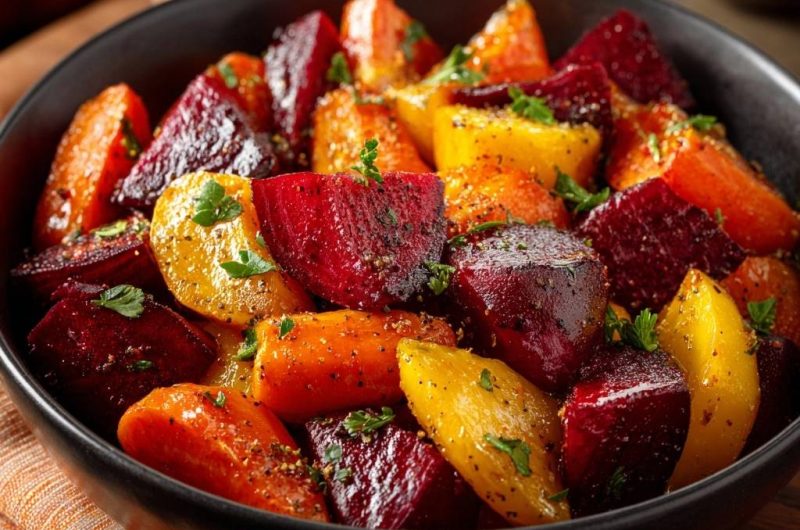
Honey Roasted Root Vegetables
Course: Side DishCuisine: AmericanDifficulty: easy4
servings15
minutes40
minutes55
Minutes155
kcalAmerican
Ingredients
3 large red beets, peeled and cut into 1-inch wedges
3 large golden beets, peeled and cut into 1-inch wedges
4 large carrots, peeled and sliced into thick 1.5-inch diagonal chunks
2 tablespoons extra virgin olive oil
1.5 tablespoons honey
1 teaspoon sea salt
1 teaspoon coarsely cracked black pepper
1 tablespoon fresh parsley, chopped
1/2 teaspoon fresh thyme leaves (optional)
Directions
- Preheat your oven to 425°F (218°C). High heat is essential to evaporating surface moisture quickly, which prevents steaming and mushiness.
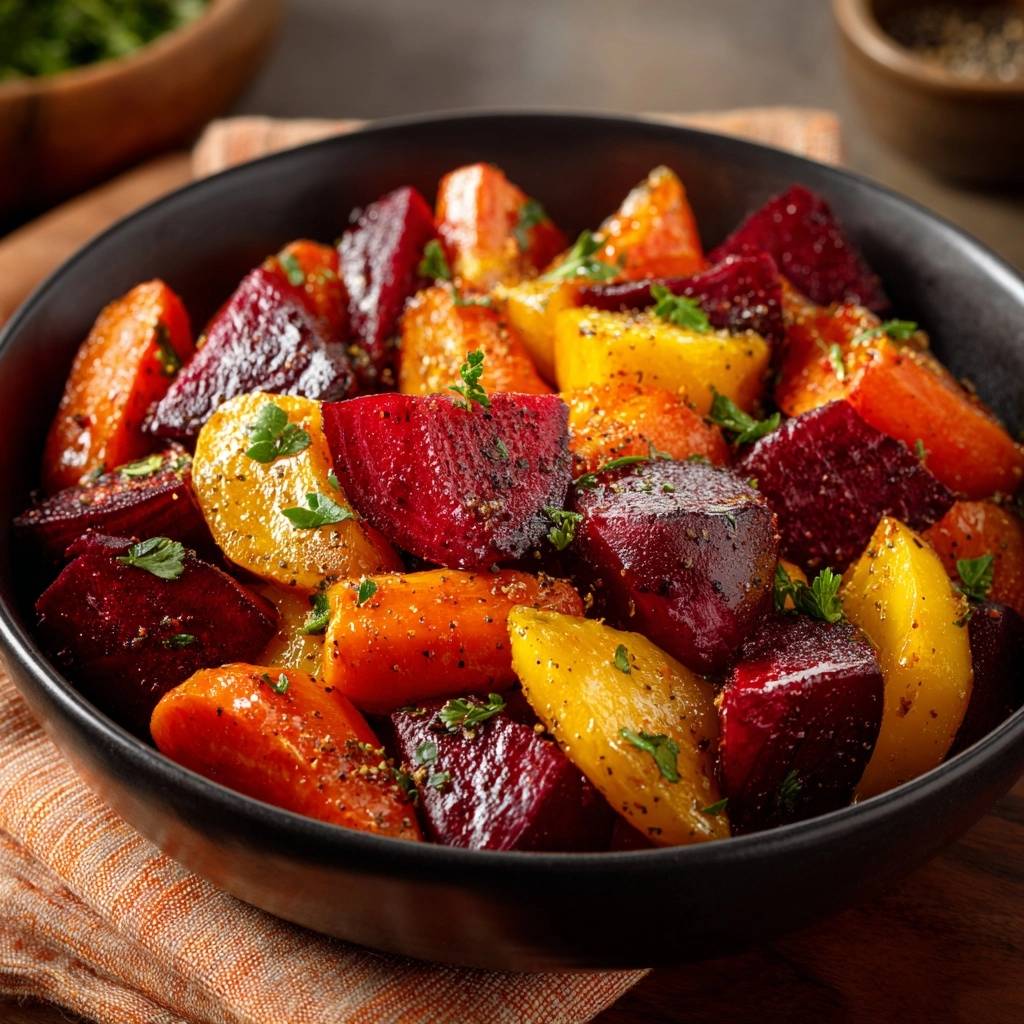
- To keep the colors vibrant as seen in the image, use two separate bowls. In the first bowl, toss the red beets with 1/2 tablespoon of olive oil and a pinch of salt. In the second bowl, toss the golden beets and carrots with the remaining olive oil, salt, and the cracked black pepper. Do not add the honey yet; adding sugar too early causes the vegetables to soften and burn before they are cooked through.
- Prepare a large rimmed baking sheet. Place the red beets on one side and the golden vegetables on the other, ensuring they do not touch. Do not overcrowd the pan; if necessary, use two pans. Space allows hot air to circulate, creating the crisp edges shown in the photo.
- Roast for 30 minutes. At this point, the vegetables should be tender when pierced with a fork but still hold a firm structure.
- Remove the pan from the oven. Drizzle the honey evenly over all the vegetables. Use a spatula to gently toss the golden vegetables together, then carefully turn the red beets separately to avoid color bleeding.
- Return to the oven for a final 8-10 minutes. This allows the honey to reduce into a sticky glaze and creates the glossy, caramelized finish visible in the image.
- Transfer to a serving bowl, tossing them together only at the very last second. Garnish generously with fresh parsley and extra cracked pepper. Serve immediately.
Notes
- To prevent the red beets from staining the other vegetables, keep them separated on the baking sheet and only toss them together right before serving. Do not add honey until the final 10 minutes of roasting to prevent burning.