Most people treat sweet potatoes like a side dish that needs to be hidden under a pile of marshmallows, but when you do them right, they’re the ultimate main course. The biggest tragedy in home cooking is the “Soggy Skin Syndrome” caused by wrapping potatoes in aluminum foil. While it feels like the right move to keep them moist, you’re actually just steaming the skin into a mushy, flavorless mess that can’t hold the weight of a hearty filling.
This recipe changes the game by ditching the foil entirely in favor of a high-heat salt-rub method. By treating the skin like a structural shell, we create a crispy, savory crust that contrasts perfectly with the creamy, sweet interior. It’s a nutrient-dense, high-fiber powerhouse that feels like a cheat meal but fuels you like a superfood. You’ll get that satisfying crunch in every bite, even after you’ve piled on the beans and melted cheese.
The secret to this transformation is using coarse sea salt as a desiccant. When you rub the salt into the oiled skin, it physically draws out surface moisture during the roasting process. This allows the natural sugars in the skin to caramelize rather than boil. I’ve found that skipping the baking sheet and placing the potatoes directly on the oven rack is the only way to get 360-degree airflow for that restaurant-quality finish.
The Physics of the Perfect Crispy Potato Skin
To understand why this method works, you have to look at the science of evaporation. When you wrap a potato in foil, the water escaping the vegetable has nowhere to go, so it sits on the surface and boils the skin. By leaving the potato “naked” in a 425°F oven, that moisture evaporates instantly. This dry heat environment is essential for the Maillard reaction, which is the chemical process that creates those deep, savory flavors and a browned, crispy texture.
The salt rub acts as a secondary defense against sogginess. Because salt is hygroscopic, it pulls moisture from the outermost layers of the potato skin before it can turn into steam. This creates a thin, dehydrated layer that crisps up beautifully under high heat. You aren’t just seasoning the potato; you’re engineering a better texture. Without that salt barrier, the skin remains leathery and tough instead of light and crunchy.
Essential Components for Loaded Black Bean Stuffed Sweet Potatoes
Quality starts with the potato itself, and for this dish, size definitely matters. I always reach for medium-sized sweet potatoes because they cook through to a creamy consistency at the exact moment the skin reaches peak crispness. Oversized potatoes often end up with charred skins and raw, crunchy centers, which ruins the “boat” experience. Look for potatoes that are relatively uniform in shape so they bake at the same rate.
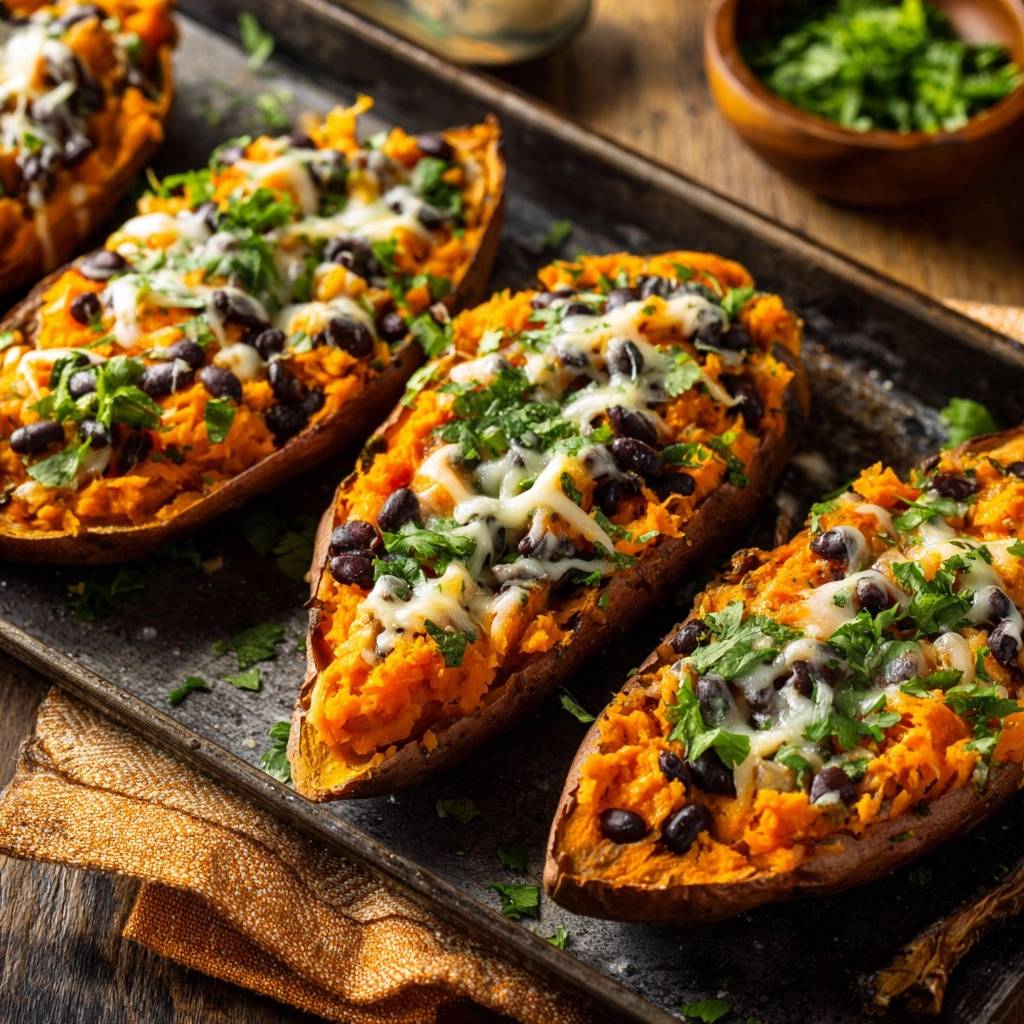
The filling relies on a balance of textures and temperatures. Monterey Jack is my go-to choice here because it has a high moisture content and a low melting point, resulting in a gooey, stretchy finish that binds the beans to the potato. Fresh cilantro isn’t just a garnish; it provides a necessary hit of acid and herbiness that cuts through the earthy, dense flavors of the beans and the natural sweetness of the potato flesh.
Selecting the Right Sweet Potato Variety
While there are dozens of varieties, Jewel and Garnet potatoes are the gold standard for stuffing. They have a high moisture content and a deep orange flesh that fluffs up beautifully once baked. Beauregard potatoes are also a great choice, as they hold their shape well even after you’ve mashed the interior. Avoid the tan-skinned, white-fleshed varieties for this specific recipe, as they tend to be crumbly and dry rather than creamy.
Before you even think about oiling them, you must scrub the skins thoroughly to remove any dirt. More importantly, you have to dry them completely with a kitchen towel. Any water left on the skin will create steam in the oven, undoing all the hard work of the salt rub. A bone-dry potato is the only path to a crispy potato.
The Spice Profile: Beyond Basic Black Beans
Don’t make the mistake of dumping unseasoned beans onto your potato. We use a trio of cumin, chili powder, and garlic powder to create a smoky, savory base that complements the sweetness of the spud. Cumin adds an earthy depth, while the chili powder provides a hint of warmth without being overwhelming. This ensures that every component of the dish can stand on its own flavor-wise.
By tossing the beans in these spices before they hit the potato, you ensure the flavors are evenly distributed. If you just sprinkle spices on top, you’ll end up with “hot spots” of seasoning and bland bites underneath. This extra thirty seconds of prep makes the difference between a “healthy meal” and a “crave-worthy dinner.”
Step-by-Step: Achieving the High-Heat Salt Rub
Start by preheating your oven to 425°F. While it warms up, take your fork and prick each potato about six to eight times. This isn’t just tradition; it allows steam to escape from the center of the potato so it doesn’t explode or become waterlogged from the inside out. Once pricked, pour a little olive oil into your hands and massage it into the skin until every inch is glistening.
Now comes the most important part: the salt. Sprinkle the coarse sea salt generously over the oiled skin. You want to see the grains sticking to the surface. Place the potatoes directly on the middle oven rack. To keep your oven clean, slide a baking sheet onto the rack below to catch any oil drips. This setup allows the hot air to hit the potato from every single angle, ensuring there are no “bald spots” of soft skin.
Phase Two: Fluffing and Seasoning the Filling
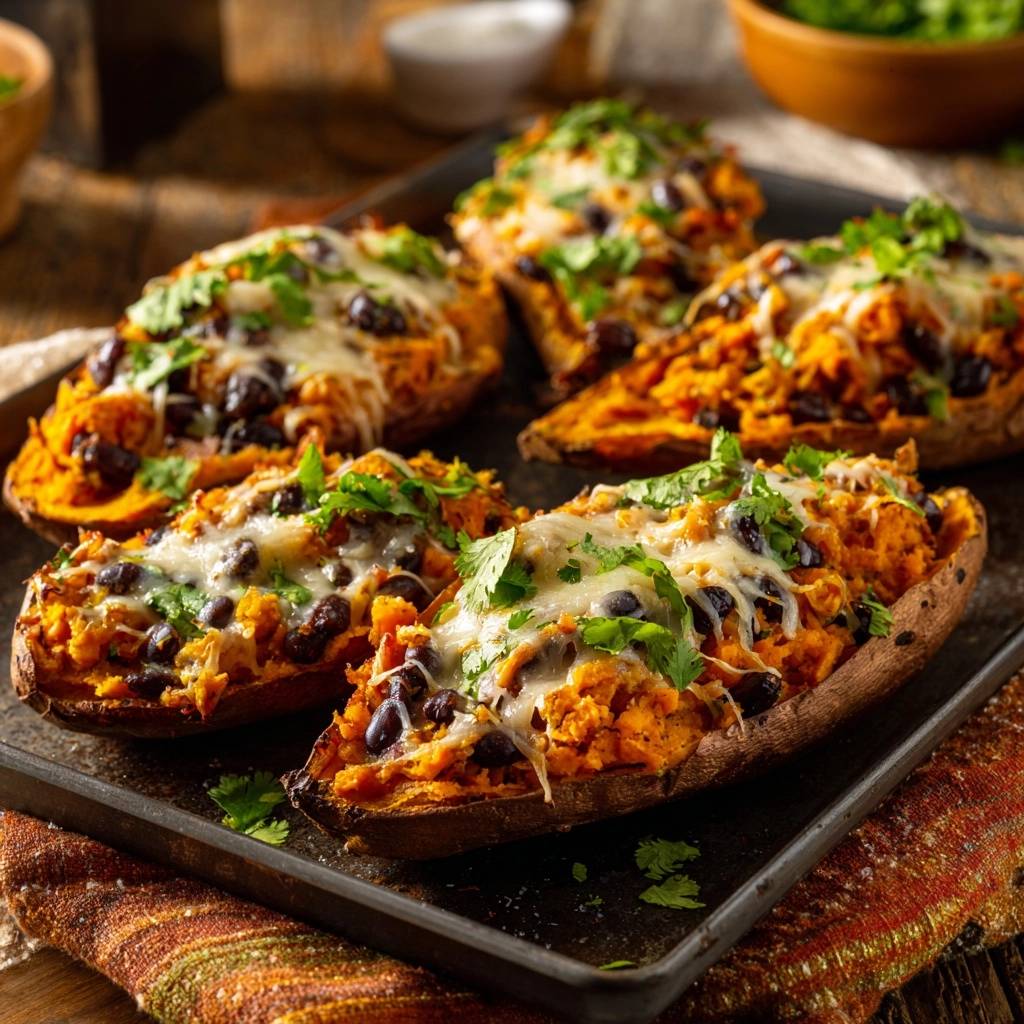
Once a knife slides into the center of the potato with zero resistance, they’re ready. Remove them carefully and slice them down the middle lengthwise. You’re looking to create a “boat” shape. Use a fork to gently mash the orange flesh while it’s still steaming hot. Be careful not to pierce the bottom skin; you want that crispy shell to remain intact to act as your bowl.
While the potato is still hot, fold in your seasoned black beans. Pressing them slightly into the fluffed mash helps the flavors fuse together. The residual heat from the potato will start to bloom the spices on the beans, making them even more fragrant. This is the foundation of your filling, so make sure the beans are tucked in well before you move on to the cheese.
The Final Melt: Achieving Bubbling Cheese Perfection
Pile the shredded cheese high on top of the bean and potato mixture. Don’t be shy here; the cheese acts as a delicious glue that holds everything together. Place the stuffed halves onto a baking sheet for this final stage. Put them back into the 425°F oven for about 5 to 8 minutes. You aren’t just melting the cheese; you’re looking for it to start bubbling and perhaps develop a few golden-brown spots.
That slight browning, known as the “cheese crust,” adds a nutty complexity that pairs perfectly with the smoky cumin. If you’re using Pepper Jack, the oils from the cheese will seep down into the beans, seasoning them further. Once the cheese is molten and gorgeous, pull them out. The contrast between the bubbling top and the crunchy bottom skin is exactly what we’re aiming for.
Avoiding Common Stuffed Sweet Potato Mistakes
If your potatoes come out with hard centers, you likely pulled them too early or your oven runs cold. Always use the knife test; if there is any “crunch” when you poke the center, give it another ten minutes. On the flip side, if the skins are soft, you might have used too much oil or failed to dry the potatoes properly before starting. Remember, the oil should be a light coating, not a bath.
Another common pitfall is skipping the rinse on the black beans. Canned beans sit in a thick, starchy liquid that can make your filling look muddy and taste overly metallic. Rinsing them under cold water until the water runs clear ensures a clean flavor and a vibrant look. It also helps remove excess sodium, giving you total control over the seasoning of the dish.
Flavor Variations and Protein Swaps
If you want to switch things up, try a Mediterranean twist by swapping the black beans for chickpeas and the Monterey Jack for crumbled feta. Add some dried oregano to the spice mix for a completely different vibe. For those who love a bit of smoke, mix a finely chopped chipotle pepper in adobo into the beans before stuffing them into the potato.
To boost the protein even further, you can mix cooked quinoa with your black beans. The quinoa acts like little sponges, soaking up the spices and adding a nice nutty texture to the creamy potato. You could also top the finished potato with a scoop of fresh salsa or some pickled red onions to add a bright, acidic pop that balances the richness of the cheese.
Optimal Pairings for a Balanced Meal
Since these potatoes are quite hearty and starch-heavy, I love pairing them with something bright and crisp. A simple arugula salad with a lemon vinaigrette is perfect because the peppery greens cut right through the density of the sweet potato. A citrus-based cabbage slaw also works wonders, providing a crunch that complements the crispy potato skin.
If you find the spices a bit too warm, a cooling avocado crema or a dollop of Greek yogurt is the way to go. The creaminess helps bridge the gap between the sweet flesh and the savory beans. For a full feast, serve these alongside some grilled corn on the cob seasoned with lime and a little extra chili powder to keep the theme going.
Make-Ahead Strategies and Storage Logistics
These are fantastic for meal prep if you handle the reheating correctly. You can par-bake the potatoes (the first 45-minute bake) up to three days in advance. Store them in an airtight container in the fridge. When you’re ready to eat, slice, fluff, and stuff them, then do the final bake. This actually helps the skin get even crispier the second time around.
Avoid the microwave for reheating if you want to keep that crispy skin. The microwave will turn the skin leathery and tough. Instead, pop them into an air fryer at 375°F for about 5-7 minutes or back into a hot oven. This revives the crunch and melts the cheese perfectly. I don’t recommend freezing the whole assembled potato, as the texture of the sweet potato can become grainy once thawed.
Expert Tips for Restaurant-Quality Presentation
Presentation is all about color contrast. The deep orange of the potato, the matte black of the beans, and the vibrant green of the cilantro make this dish a visual stunner. Don’t just sprinkle a little cilantro; garnish heavily. The herb adds a freshness that is vital to the overall experience. I like to finish with a very aggressive squeeze of fresh lime juice right before serving.
The lime juice isn’t just for show; the acid “wakes up” the earthy flavors of the cumin and beans. If you want to get really fancy, drizzle some hot sauce in a zig-zag pattern across the melted cheese. It adds a professional touch and a bit of extra zing. Serve them on a dark plate to make those colors really pop, and watch how fast they disappear.
Troubleshooting Texture and Flavor
Why is my potato skin still chewy instead of crispy?
This usually happens if the oven temperature wasn’t high enough or if you used too much oil. The oil should be a very thin film. If the potato is “swimming” in oil, it will fry the skin into a leathery texture rather than crisping it. Also, ensure you are using coarse salt; the larger grains are better at wicking away moisture than fine table salt.
Can I use canned seasoned beans instead of seasoning them myself?
You can, but I don’t recommend it. Pre-seasoned beans often have a lot of “sludge” in the can and the flavor profiles can be hit or miss. By using plain black beans and seasoning them yourself, you control the salt, the heat level, and the freshness of the spices. It only takes an extra minute and the flavor payoff is massive.
How do I prevent the potato from rolling over on the plate?
If your potatoes are a bit wobbly, use a sharp knife to shave a very thin slice off the bottom of the potato before you oil and salt it. This creates a flat “base” so the potato sits perfectly upright. Just be careful not to cut too deep, or the filling will leak out of the bottom during the fluffing stage.
Is the skin actually edible with all that salt?
Absolutely! The skin is one of the most nutritious parts of the potato, packed with fiber and potassium. The salt-rub method makes the skin taste like a thick, salty kettle chip. While it might look like a lot of salt, much of it stays on the surface, providing a seasoned crunch that balances the sweet interior perfectly.
What if my cheese isn’t browning?
Every oven is different. If your cheese is melted but looks pale, you can turn on the broiler for the last 60 seconds of cooking. Keep a very close eye on it, though, as the transition from “golden brown” to “burnt” happens in the blink of an eye. The high heat of the broiler will give you those professional-looking toasted cheese spots.
Loaded Black Bean Stuffed Sweet Potatoes
Course: Main CourseCuisine: AmericanDifficulty: easy4
servings10
minutes55
minutes65
MinutesAmerican
Ingredients
4 medium sweet potatoes, scrubbed and dried thoroughly
1 tablespoon olive oil
1 teaspoon coarse sea salt
1 can (15 ounces) black beans, drained and rinsed
1 cup shredded Monterey Jack or pepper jack cheese
1/2 cup fresh cilantro, chopped
1 teaspoon cumin
1/2 teaspoon chili powder
1/4 teaspoon garlic powder
Optional: Sour cream or Greek yogurt for serving
Directions
- Preheat your oven to 425 degrees F. This high temperature is crucial for the skin texture.
- To solve the soggy skin problem, do not use aluminum foil. Instead, prick the potatoes several times with a fork. Rub the outside of each potato with olive oil and then generously coat with the coarse sea salt. The salt acts as a desiccant, pulling moisture away from the skin so it crisps up perfectly.
- Place the potatoes directly on the oven rack with a baking sheet on the rack below to catch any drips. Bake for 40 to 50 minutes until the centers are tender when pierced with a knife.
- While potatoes bake, toss the black beans in a small bowl with the cumin, chili powder, and garlic powder.
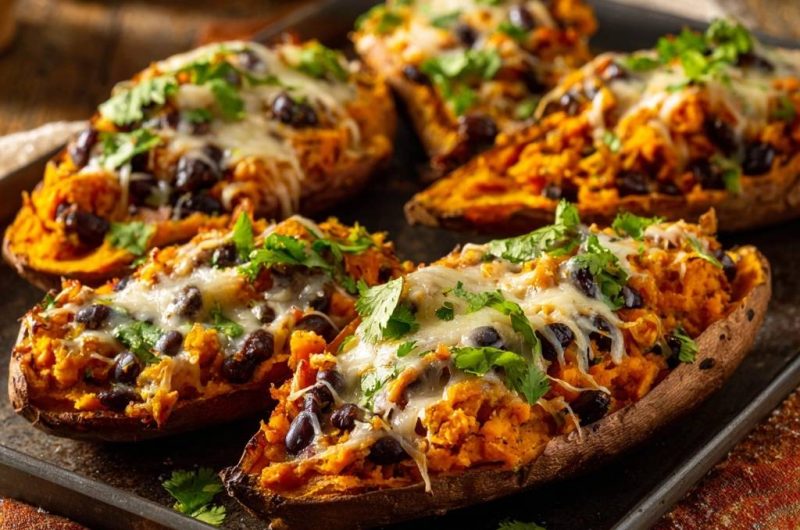
- Remove potatoes from the oven. Slice them in half lengthwise to create open boats (as seen in the image).
- Use a fork to gently mash and fluff the orange flesh inside each half, keeping it within the crispy skin shell.
- Distribute the seasoned black beans evenly across the fluffed potato halves, pressing them slightly into the mash. Top each with a generous handful of shredded cheese.
- Place the stuffed halves onto a baking sheet and return to the oven for 5 to 8 minutes, or until the cheese is fully melted and bubbling.
- Garnish heavily with fresh chopped cilantro and serve with a side of sour cream. The skins will remain firm and crispy, providing a structural base for the loaded filling.
Notes
- Do not use aluminum foil; it traps steam and makes the skins mushy. Placing potatoes directly on the oven rack ensures even heat distribution for maximum crispiness.