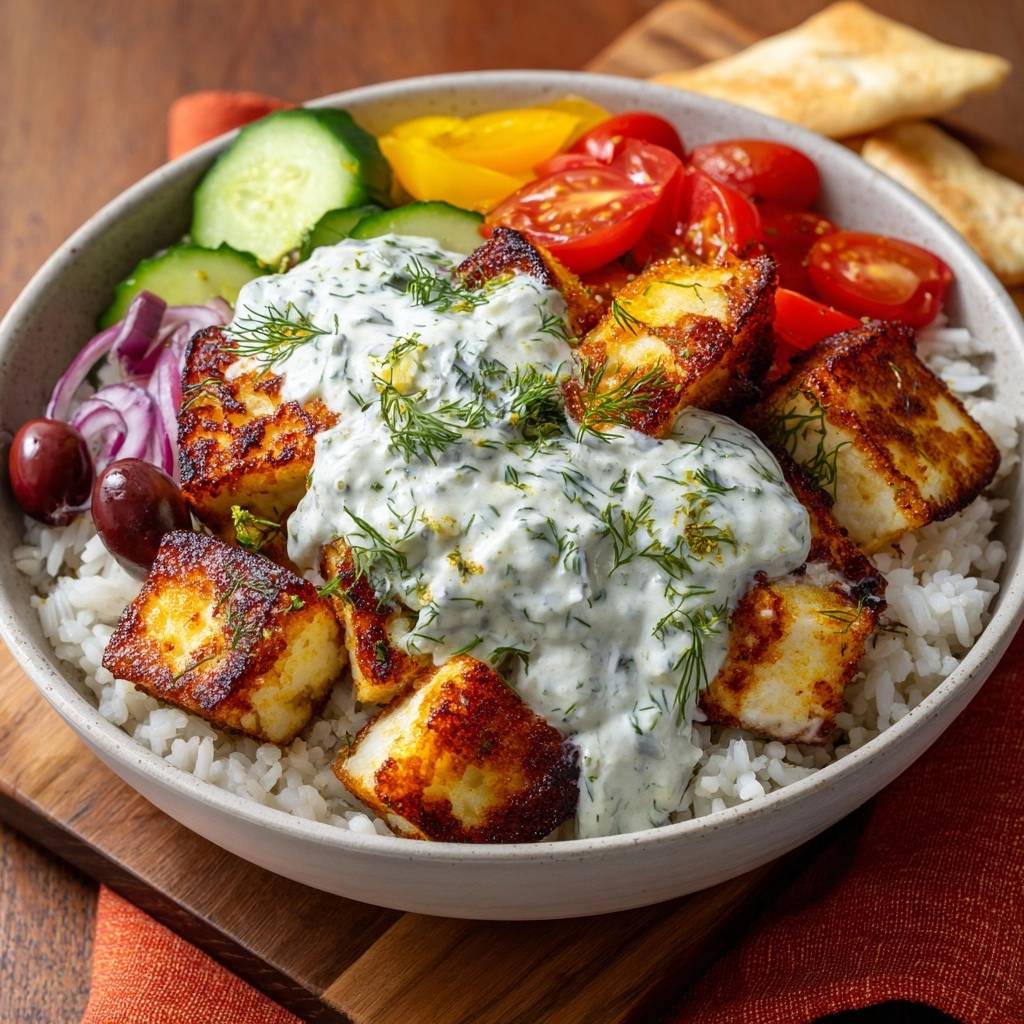
Most people have a love-hate relationship with halloumi because it often ends up feeling like chewing on a salty rubber band. That dreaded “squeak” against your teeth is usually a sign that the cheese was steamed rather than seared. When you get the technique right, however, this cheese transforms into a decadent, buttery centerpiece with a crust so crisp it rivals a perfectly seared steak.
These Mediterranean Halloumi Rice Bowls aren’t just about throwing ingredients into a dish; they’re a study in temperature and texture management. We’re balancing the intense, salty heat of the fried cheese against the cooling crunch of raw cucumbers and the creamy tang of a lemon-dill yogurt sauce. It’s a vibrant, satisfying meal that feels like a breezy seaside lunch even on a busy weeknight.
The secret to professional-grade halloumi lies in the “moisture draw” before the cheese ever touches the pan. If you don’t pat the cheese bone-dry with paper towels, the surface moisture creates a layer of steam that prevents the Maillard reaction. By removing that water, you ensure the heat goes directly into crisping the proteins, giving you that golden-brown exterior and a soft, melty heart.
The Physics of Squeak-Free Halloumi Cheese
Halloumi is a unique “unmeltable” cheese because the curds are heated in whey during production, which creates a dense, heat-resistant protein structure. That famous squeak happens when the long, resilient protein strands rub against the enamel of your teeth. To fix this, we have to use high heat to physically change the surface of the cheese into a rigid, caramelized crust.
When you sear halloumi at a high temperature, you’re initiating the Maillard reaction, which creates hundreds of new flavor compounds and a structural barrier. This crust acts as an insulator, allowing the inside of the cube to soften without the cheese losing its shape or becoming tough. If you cook it over low heat for too long, you simply dehydrate the interior, resulting in a leathery texture that no amount of sauce can save.
Surface moisture is the ultimate enemy of a good sear. Any water on the outside of the cheese must evaporate before the browning process can begin. By the time that water evaporates in a lukewarm pan, the inside of the cheese has already overcooked. This is why the “moisture draw” is the most critical step in the entire recipe for achieving a tender, non-rubbery bite.
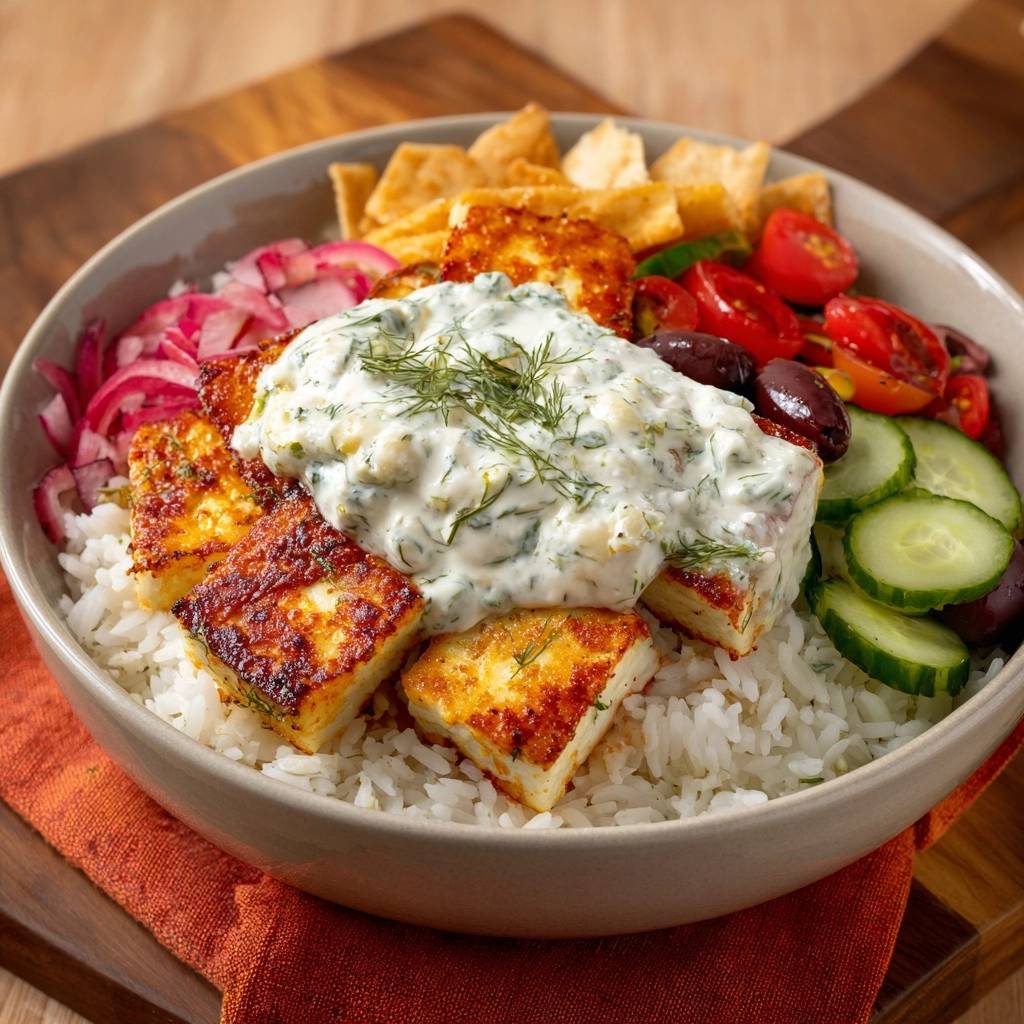
Essential Components for Mediterranean Halloumi Rice Bowls
The success of this bowl depends on the quality and preparation of its individual parts. For the halloumi, I recommend cutting it into 1-inch cubes. This specific size provides the perfect surface-area-to-volume ratio, ensuring you get plenty of crispy edges in every bite without the cheese cooling down too quickly once it hits the rice.
For the base, long-grain white rice is the gold standard because the grains stay separate and fluffy. Avoid short-grain or sticky rice varieties, which can become gummy when topped with the yogurt sauce. You want the rice to act as a neutral, airy foundation that catches the drippings from the seared cheese and the citrus from the dressing.
The fresh produce provides the necessary “water break” from the rich cheese and yogurt. Cherry tomatoes are superior here because their thick skins hold the juice inside, preventing the bowl from becoming soggy. Similarly, Kalamata olives add a deep, fermented brine that cuts right through the fat of the halloumi, acting as a palate cleanser between bites.
Selecting and Prepping the Fresh Produce
When prepping your vegetables, knife technique matters more than you might think. Slice your red onions as thinly as possible—almost translucent—to mellow out their sharp pungency. If you find raw onions too aggressive, you can soak the slices in cold water for five minutes to take the “sting” out while keeping the crunch.
Yellow bell peppers add a mild sweetness and a sunny color that complements the golden cheese. I prefer slicing them into thin strips rather than dicing them, as the long shapes make the bowl easier to eat with a fork. Always use the freshest cucumbers available; the snap of a cold cucumber against the warm rice is one of the best parts of this dish.
The Creamy Dill and Lemon Base
The yogurt sauce is the glue that holds the Mediterranean flavors together. Use a thick, full-fat Greek yogurt to ensure the sauce has enough body to coat the ingredients rather than just running to the bottom of the bowl. The fat in the yogurt also helps carry the fat-soluble flavors of the garlic powder and dried oregano.
Fresh dill is non-negotiable here because it contains volatile oils that provide a bright, grassy aroma that dried dill simply lacks. When you whisk in the lemon juice, the acid slightly tightens the yogurt proteins, creating a velvety texture. This sauce acts as a cooling agent that balances the salty, pan-fried elements of the meal.
Step-by-Step: Achieving the Perfect Golden Sear
Phase one is the desiccation phase. Take your halloumi cubes and sandwich them between several layers of paper towels. Press down firmly to wick away every drop of brine. If the paper towel comes away damp, use a fresh one and repeat. You want the surface of the cheese to feel tacky and dry to the touch before it goes into the oil.
Phase two involves thermal management. You need a heavy-bottomed skillet, like cast iron or a high-quality non-stick pan. Add the olive oil and wait until it is shimmering and just starting to show a tiny wisp of smoke. If the oil isn’t hot enough, the cheese will stick and the internal fats will leak out before the crust can form, leaving you with a greasy mess.
Phase three is the “no-touch” rule. Once you place the cubes in the pan, leave them alone for at least two minutes. It’s tempting to move them around, but every time you lift the cheese, you drop the surface temperature and interrupt the browning process. You are looking for a deep, amber-brown color that looks like a toasted marshmallow.
Phase four is the flip. Use tongs to turn the cubes once they’ve developed that structural crust. The second side usually cooks faster because the pan and the cheese are already at peak temperature. As soon as the cubes feel slightly soft when pressed, get them out of the pan immediately. Halloumi continues to firm up as it cools, so serving it the moment it leaves the heat is the key to that melty heart.
Assembling the Mediterranean Halloumi Rice Bowls
The architecture of the bowl is designed for a multi-sensory experience. Start with a wide, shallow bowl and create a bed of warm rice. Place the hot, seared halloumi right in the center so the residual heat from the cheese keeps the rice warm. This “Base-Protein” core is the heart of the meal.
Arrange the cold vegetables in a perimeter around the cheese. This creates a beautiful color wheel and ensures that the cold cucumbers don’t immediately wilt from the heat of the halloumi. Finally, dollop the yogurt sauce directly onto the warm cheese. The sauce will soften and slightly melt, acting as an insulator that keeps the halloumi tender while you eat.
Troubleshooting Common Halloumi Textural Issues
If your cheese ends up tough or leathery, the culprit was likely a heat level that was too low. When halloumi spends too much time in the pan, the moisture inside the cheese evaporates, leaving behind a dense block of protein. Next time, turn the heat up and shorten the cook time to lock that moisture inside.
If the cheese sticks to the pan and tears, you either had surface moisture on the cheese or you tried to flip it too early. The cheese will naturally “release” from the pan once the crust has fully formed. If it’s resisting the spatula, give it another thirty seconds to finish building that golden barrier.
For those who find halloumi a bit too salty, there is an easy fix. Soak the raw cubes in a bowl of cold water for about 10 to 15 minutes before cooking. This leaches out some of the excess brine. Just make sure you follow the drying steps even more diligently afterward to ensure you still get that perfect sear.
Flavor Variations and Ingredient Swaps
While white rice is the classic choice, you can easily swap it for farro or quinoa. Farro adds a wonderful chewy texture and a nutty flavor that stands up well to the salty cheese. If you want a lower-carb option, cauliflower rice works beautifully, though you should sauté it briefly with a little lemon and garlic first.
To add more protein or crunch, consider tossing in some roasted chickpeas seasoned with cumin. If you want to shift the flavor profile toward a Lebanese style, swap the dill for fresh mint and parsley. For those who enjoy a bit of heat, a sprinkle of Aleppo pepper or Urfa Biber over the finished bowl adds a smoky, mild spice that doesn’t overwhelm the delicate lemon notes.
Optimal Pairings and Serving Suggestions
Warm pita bread is the perfect companion for these bowls. For an extra touch of flavor, char the pita directly over a gas flame for a few seconds until it’s soft and slightly smoky. You can use the bread to scoop up the last bits of yogurt sauce and rice, making sure not a single drop of flavor goes to waste.
To drink, a salted mint Ayran—a traditional yogurt-based drink—complements the creamy elements of the bowl perfectly. If you prefer something lighter, a sparkling pomegranate juice with a squeeze of lime provides a tart, refreshing contrast to the richness of the fried halloumi. These bright, acidic drinks help cleanse the palate between the savory bites of cheese.
Storage and Meal Prep Efficiency
Halloumi is a “cook and eat” ingredient; it doesn’t reheat well because the proteins tighten up significantly once they cool. However, you can easily meal prep the rest of the bowl. Keep the cooked rice, chopped vegetables, and yogurt sauce in separate airtight containers in the fridge for up to three days.
When you’re ready to eat, simply reheat the rice, sear the halloumi fresh, and assemble. This keeps the vegetables crisp and prevents the rice from becoming soggy from the sauce. I strongly advise against freezing the seared cheese, as the freezing process destroys the delicate cellular structure, leaving the halloumi grainy and dry upon thawing.
How do I stop halloumi from being so salty?
Halloumi is stored in a heavy brine, which gives it its signature flavor but can be overwhelming for some. To reduce the saltiness, soak the sliced or cubed cheese in a bowl of cold water for 15 minutes before cooking. This draws out the excess salt without ruining the texture. Just remember to pat it completely dry with paper towels before searing, or it won’t get crispy.
Can I make these rice bowls ahead of time for lunch?
You can prep the rice, chop the vegetables, and mix the yogurt sauce up to three days in advance. However, halloumi is best eaten within minutes of leaving the pan. If you must reheat it, use a toaster oven or a dry skillet rather than a microwave to help regain some of the exterior crunch. Store the sauce separately so the rice doesn’t get mushy while sitting in the fridge.
Why did my halloumi melt into a puddle in the pan?
Authentic halloumi should not melt because of its high pH level and the way the curds are cooked during production. If your cheese melted, you likely bought a “halloumi-style” cheese that wasn’t made using traditional methods, or it was a different grilling cheese like Queso Panela. Always check the label for traditional Cypriot halloumi to ensure it holds its shape under high heat.
What is the best substitute if I can’t find halloumi?
The closest substitute is Paneer or Bread Cheese (Juustoleipä). Paneer has a similar high melting point but is much milder and less salty, so you may want to add an extra pinch of salt or a squeeze of lemon. Bread cheese grills beautifully and has a similar “squeak,” though it tends to be a bit more buttery. In a pinch, a very thick slice of firm Feta can be pan-fried if it’s well-breaded, but it will be much softer.
Is this recipe gluten-free?
Yes, the core components of the rice bowl—rice, halloumi, vegetables, and yogurt sauce—are naturally gluten-free. To keep the entire meal gluten-free, simply omit the pita bread or replace it with your favorite gluten-free flatbread or extra cucumber slices for dipping. Always check the label on your garlic powder and dried herbs to ensure there are no hidden anti-caking agents containing gluten.
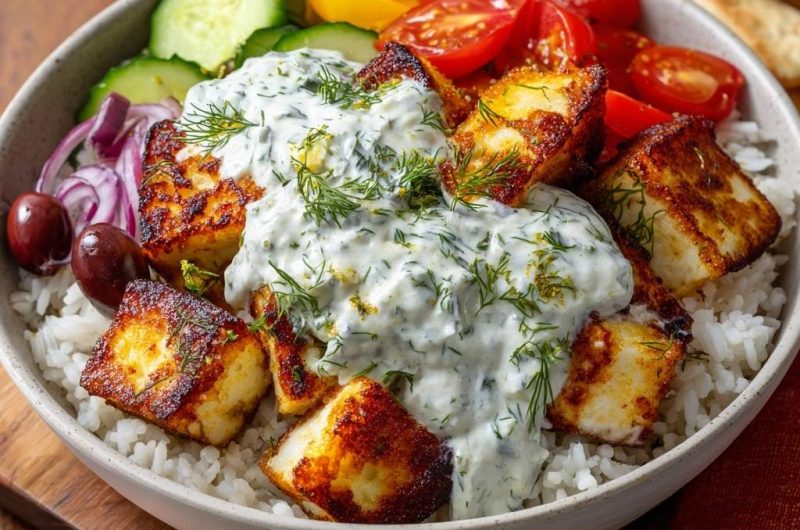
Mediterranean Halloumi Rice Bowls
Course: Main CourseCuisine: MediterraneanDifficulty: easy2
servings15
minutes10
minutes25
Minutes580
kcalMediterranean
Ingredients
8 ounces halloumi cheese, cut into large 1-inch cubes
2 cups cooked long-grain white rice
1/2 cup cherry tomatoes, halved
1/2 cup yellow bell pepper, sliced
1/2 cucumber, sliced into half-moons
1/4 red onion, thinly sliced
1/4 cup whole Kalamata olives
1/2 cup thick Greek yogurt
1 tablespoon fresh dill, finely chopped (plus extra for garnish)
1 teaspoon lemon zest
1 tablespoon lemon juice
1/2 teaspoon garlic powder
3 tablespoons olive oil
Pinch of dried oregano
Warm pita bread for serving
Directions
- To solve the squeaky texture issue, start by patting the halloumi cubes extremely dry with paper towels. Moisture on the surface causes the cheese to steam rather than sear, leading to that dreaded rubbery texture.
- In a small bowl, prepare the Tzatziki-style sauce by whisking together the Greek yogurt, fresh dill, lemon zest, lemon juice, garlic powder, and oregano. Set aside to allow flavors to meld.
- Heat the olive oil in a non-stick or cast-iron skillet over medium-high heat until it is shimmering.
- Place the halloumi cubes in the hot pan. Do not crowd them. Sear for 2 minutes without moving them. This high-heat contact creates the deep brown, structural crust seen in the image, which locks in the fats and prevents the internal proteins from becoming tough.
- Flip the cubes and sear the other sides for 1 minute each until all faces are golden and the cheese feels slightly soft to the touch. Remove immediately from the heat.
- Assemble the bowls by placing a generous base of warm white rice in each dish.
- Arrange the seared halloumi cubes in the center. Surround with the cherry tomatoes, yellow peppers, cucumbers, red onions, and olives.
- Top the halloumi generously with the dill yogurt sauce, allowing it to melt slightly over the warm cheese. Garnish with additional fresh dill and serve immediately with warm pita bread.
Notes
- The secret to avoiding a squeaky texture is patting the cheese extremely dry and using high-heat contact to create a structural crust.