The air in a North African kitchen often carries a heavy, intoxicating scent of warm cinnamon and earthy cumin. This Moroccan Spiced Chicken and Chickpea Couscous captures that essence perfectly, balancing the bright acidity of a concentrated tomato base with the deep, savory notes of slow-simmered poultry. However, the real star isn’t just the spice; it’s the structural integrity of the meal, where every component maintains its own distinct personality on the plate.
Most people struggle with couscous because it often turns into a sad, gummy mound that absorbs too much liquid. This recipe solves that frustration by treating the grain with the respect it deserves, ensuring a light and airy texture. By pairing these fluffy grains with snappy green beans and a rich, shredded chicken sauce, you create a meal that feels both incredibly hearty and sophisticated.
The secret to this success lies in the “Anti-Soggy” steaming method. Instead of boiling the grains in a pot like pasta, we use a precise hydration technique that relies on trapped steam. This prevents the starch from over-gelatinizing, which is the primary cause of that dreaded mushy texture. When you master this ratio, you’ll never look at a box of couscous the same way again.
The Architecture of Fluffy Moroccan Couscous
Couscous is actually a tiny pasta made from semolina, not a whole grain like rice. Because these granules are so small, they have a massive surface area that absorbs moisture almost instantly. If you use too much liquid or cook it over direct heat for too long, the starch molecules burst and create a sticky, clumped-up mess.
Therefore, the 1:1 liquid-to-grain ratio is absolutely non-negotiable for this Moroccan Spiced Chicken and Chickpea Couscous. This specific balance provides just enough hydration to soften the semolina without drowning it. Furthermore, the physics of “raking” the grains with a fork is essential. This action breaks up any small clusters and allows residual steam to escape, which stops the cooking process at the exact moment of perfection.
Why Liquid Ratios Dictate Grain Texture
While water works in a pinch, using a high-quality chicken broth adds a layer of fat and seasoning that coats each individual grain. This fat acts as a natural barrier, helping to keep the grains separate and distinct. Additionally, the broth must be at a rolling boil when it hits the couscous to ensure the heat penetrates the center of every granule immediately.
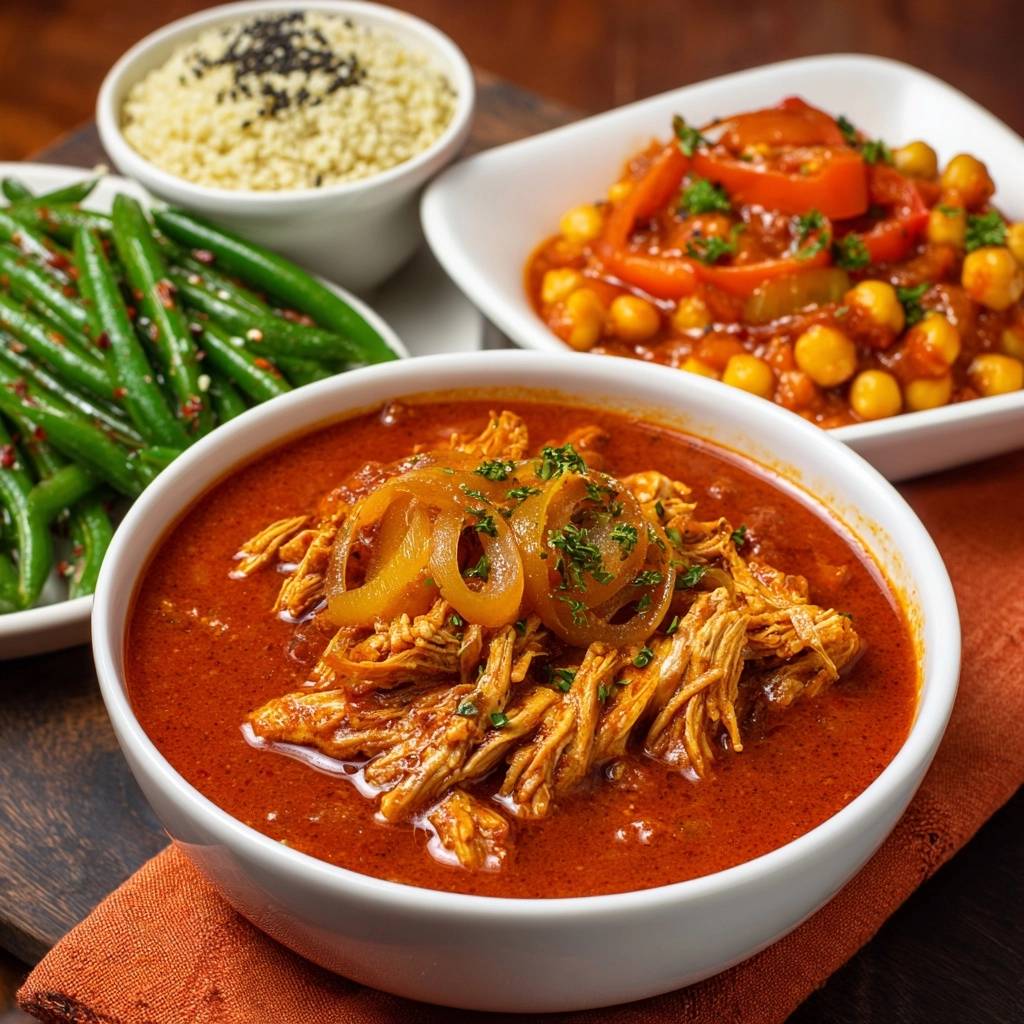
Essential Components for the Tomato-Based Chicken
For the best shredded texture, chicken breast is the ideal choice here. It holds its shape during the initial simmer and then pulls apart into long, sauce-gripping strands that provide a satisfying chew. However, the sauce itself requires a specific base to achieve that velvet-like consistency you see in high-end bistros.
Using passata, or smooth tomato puree, is the key to a professional finish. Unlike crushed tomatoes, which can be chunky and watery, passata provides a thick, uniform coating for the meat. This ensures the Moroccan Spiced Chicken and Chickpea Couscous has a concentrated flavor that clings to the chicken rather than pooling at the bottom of the bowl.
Selecting and Balancing Moroccan Spice Blends
The flavor profile relies on the “four pillars” of Moroccan seasoning: cumin, coriander, cinnamon, and paprika. Cumin provides an earthy foundation, while coriander adds a hint of citrusy brightness. Many people fear cinnamon in savory dishes, but here it provides a sophisticated warmth that mimics the complexity of a slow-cooked tagine.
Because tomatoes are naturally acidic, a small teaspoon of honey is vital to round out the sharp edges of the passata. This doesn’t make the dish sweet; instead, it heightens the savory spices. Finally, always use coarse cracked black pepper. The larger flakes provide a spicy “pop” that contrasts beautifully with the smooth sauce.
The Role of Sun-Dried Tomatoes and Green Beans
Texture is just as important as flavor in this dish. The green beans should be cooked until they are tender-crisp, meaning they still have a distinct “snap” when you bite into them. Adding julienned sun-dried tomatoes to the skillet introduces a concentrated, chewy umami hit that bridges the gap between the fresh vegetables and the rich chicken sauce.
Step-by-Step: Building the Savory Chicken Base
Start by softening your sliced onions in olive oil until they are translucent and sweet. Once you add the whole chicken breasts, broth, passata, and spices, cover the pot tightly. Simmering the chicken whole for the first 20 minutes is a pro move; it keeps the interior of the meat juicy while the outside begins to absorb the aromatic spices.
After removing the chicken to shred it, don’t rush the final simmer of the sauce. You want to see the color shift from a bright, raw red to a deep, concentrated brick red. This reduction thickens the liquid, intensifying the flavors and ensuring the sauce is sturdy enough to stand up to the chickpeas and couscous without making them soggy.
Executing the Anti-Soggy Steaming Technique
Once your broth is boiling, pour it over the dry couscous in a heat-proof bowl and seal it immediately. You must use plastic wrap or a very heavy lid to ensure no steam escapes. Let it sit undisturbed for exactly five minutes. This is the “magic window” where the grains hydrate fully without becoming over-saturated.
When the timer goes off, remove the cover and start raking. Use a large metal fork and move aggressively from the edges toward the center. You’ll see a cloud of steam rise from the bowl; this is exactly what you want. By releasing that heat quickly, you lock in the fluffy texture. Never use a spoon, as the flat surface will smash the delicate grains into a paste.
Sautéing for Texture: Green Beans and Aromatics
To get the best flavor from your green beans, use a hot skillet and don’t overcrowd the pan. You are looking for the Maillard reaction, which creates those little charred brown spots that signal deep flavor. This high-heat sautéing keeps the beans vibrant green and structurally sound.
In a separate small pan, fry your onion rings until they reach a beautiful golden brown. These aren’t just a garnish; they provide a sweet, crispy contrast to the soft chickpeas and tender chicken. Watch them closely toward the end, as the natural sugars in the onion can go from golden to burnt very quickly.
Troubleshooting Common Texture Issues
If your couscous feels slightly crunchy after five minutes, it usually means the broth wasn’t at a full boil or the bowl wasn’t sealed tightly enough. To fix this, sprinkle a tablespoon of hot broth over the top, reseal, and let it sit for another two minutes. However, if you follow the 1:1 ratio strictly, this is rarely an issue.
If your chicken sauce feels too thin, simply simmer it uncovered for an extra five minutes. The steam will escape, and the sugars in the tomato and honey will caramelize, thickening the sauce naturally. If the cinnamon feels too dominant, add a tiny squeeze of lemon juice or an extra pinch of salt to pull the earthy flavors back into balance.
Strategic Substitutions and Dietary Adjustments
If you can’t find passata, you can use a can of crushed tomatoes, but I recommend pulsing them in a blender first for that signature smooth texture. For a lighter flavor profile, vegetable stock works beautifully as a hydration liquid for the couscous, though you may need an extra pinch of salt to compensate for the lower sodium content.
For those who need a gluten-free alternative, millet is a fantastic substitute for couscous. It has a similar nutty flavor and small shape. You can use the same steaming logic, though millet often requires a slightly longer resting time (about 10 minutes) to fully soften while remaining separate and fluffy.
Plating for Visual and Flavor Contrast
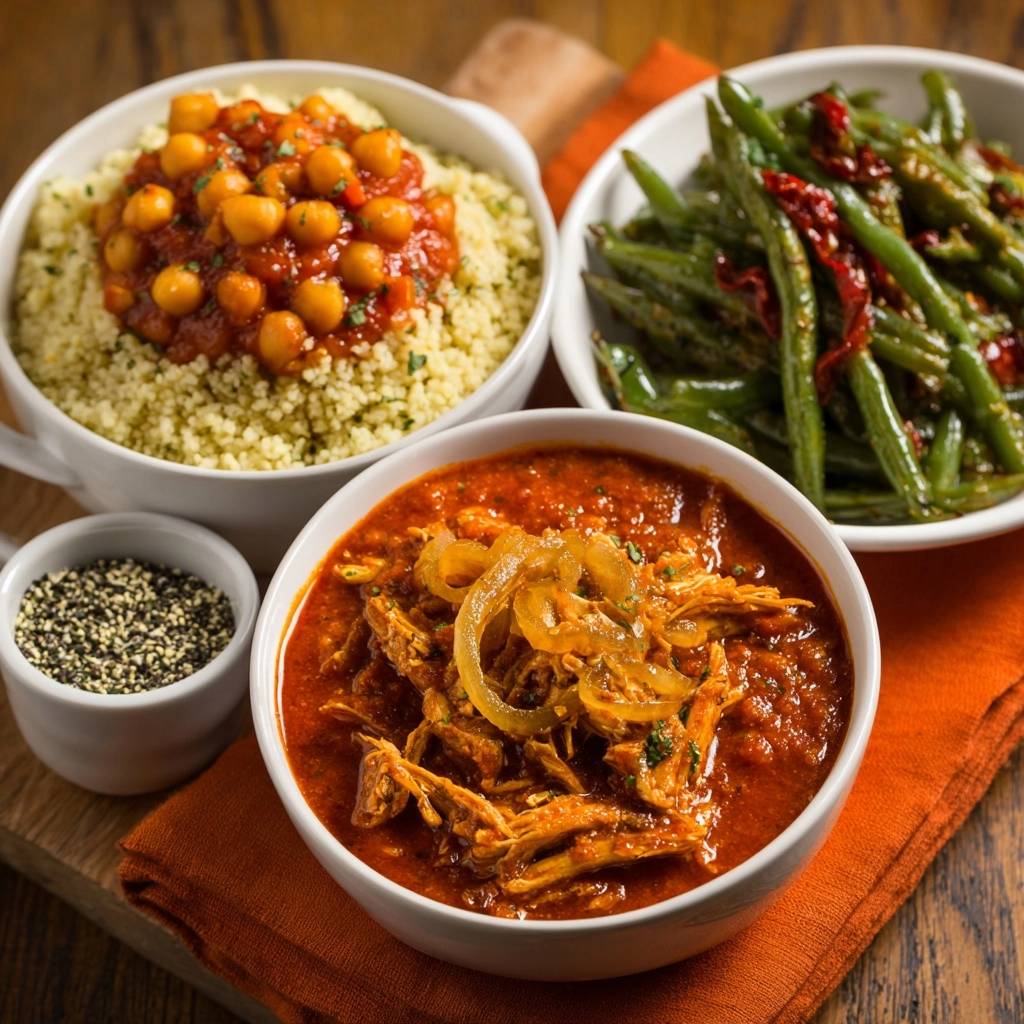
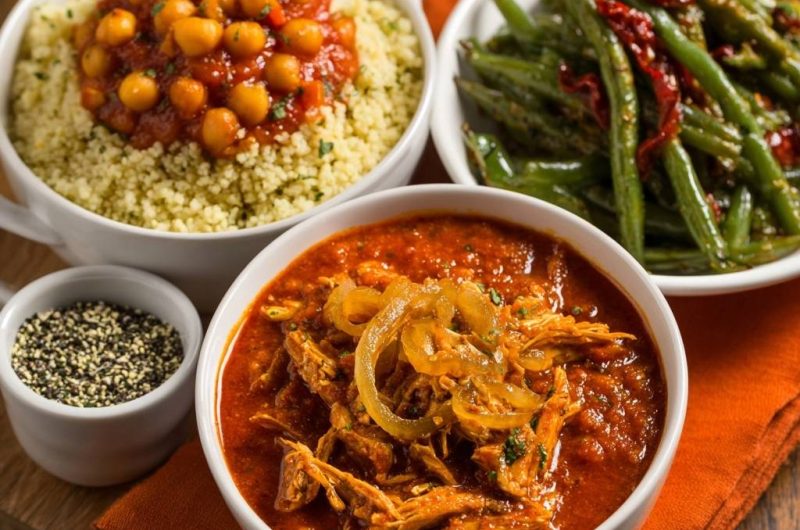
Serving this dish in separate components is a deliberate choice. By keeping the saucy chicken, the chickpeas, and the couscous in their own bowls or distinct sections, you allow your guests to control the moisture levels of their own meal. This prevents the couscous from sitting in sauce and becoming mushy before the first bite is even taken.
The visual contrast is also stunning. The deep red of the chicken, the bright green of the beans, and the pale gold of the couscous create a vibrant spread. Topping the chicken with the fried onion rings adds height and a professional “chef’s touch” that makes the meal feel special.
Make-Ahead Strategies and Storage Logistics
This Moroccan Spiced Chicken and Chickpea Couscous is an excellent candidate for meal prep, provided you store the components correctly. Keep the shredded chicken and sauce in one airtight container and the couscous in another. The chicken actually tastes better the next day as the spices continue to meld and deepen.
When reheating, the couscous can dry out in the microwave. To fix this, place a damp paper towel over the grains before heating; this creates a mini-steamer effect that restores the moisture. The green beans are the only part best enjoyed fresh, as they lose their bright color and “snap” when reheated, but they are still delicious even when softened.
Expert Tips for Moroccan Spiced Chicken and Chickpea Couscous
For an even deeper flavor, try toasting your dry couscous in a pan for two minutes before adding the liquid. This creates a nutty aroma that complements the Moroccan spices perfectly. Also, always use a heavy-bottomed pot for the chicken sauce. The honey and tomato puree can scorch easily on thin metal, and a heavy pot distributes heat more evenly.
Don’t forget to rinse your canned chickpeas thoroughly. This removes the metallic “canned” taste and the excess starch that can make the sauce feel cloudy. Finally, if you choose to use fresh parsley, chop it at the very last second. The volatile oils in the herb dissipate quickly, and adding it just before serving provides a necessary burst of freshness to the heavy, spiced sauce.
How do I store leftovers and does this freeze well?
Store the chicken and couscous in separate airtight containers in the refrigerator for up to four days. The chicken and chickpea sauce freezes exceptionally well for up to three months. However, I do not recommend freezing the cooked couscous or green beans, as the texture becomes grainy and mushy upon thawing. For the best results, make a fresh batch of couscous when you are ready to eat your frozen chicken base.
Why did my couscous turn out clumpy or gummy?
Clumping usually happens for two reasons: too much liquid or using a spoon to stir. If you exceed the 1:1 ratio, the grains sit in excess water and turn into a paste. Additionally, stirring with a spoon smashes the delicate granules together. Always use a fork to “rake” the grains, which separates them while allowing steam to escape. If it’s already gummy, you can try spreading it out on a baking sheet to air dry for a few minutes, but the 1:1 ratio is the best preventative measure.
Can I use a different type of chicken or meat?
Yes, chicken thighs are a great alternative if you prefer darker meat. They are more forgiving and stay very moist, though they may take an extra 5-10 minutes of simmering to become tender enough to shred. You can also use lamb shoulder cut into small cubes for a more traditional Moroccan feel, but you will need to increase the simmering time to about 90 minutes to ensure the meat is tender.
What can I use if I don’t have a Moroccan spice blend?
You can easily make your own by mixing equal parts ground cumin, ground coriander, and smoked paprika, then adding a generous pinch of ground cinnamon and ginger. If you like a bit of heat, add a pinch of cayenne pepper. This DIY blend ensures you get that authentic North African warmth without needing a specialty store-bought jar.
Is there a way to make the dish more or less spicy?
The base recipe is warm and aromatic rather than “hot.” To increase the heat, add a teaspoon of Harissa paste to the tomato sauce while it simmers. To keep it very mild, ensure you are using sweet paprika rather than smoked or hot paprika, and slightly increase the honey to further mellow out the spices.
Can I make this recipe in a slow cooker?
You can certainly cook the chicken and sauce in a slow cooker on low for 6-7 hours or high for 3-4 hours. However, you should still prepare the couscous and green beans on the stovetop just before serving. Cooking couscous in a slow cooker is not recommended as it will almost certainly become a singular, overcooked mass due to the long exposure to moisture.
Moroccan Spiced Chicken and Chickpea Couscous
Course: Main CourseCuisine: Moroccan InspiredDifficulty: easy4
servings15
minutes45
minutes60
Minutes510
kcalMoroccan Inspired
Ingredients
1.5 lbs chicken breast
2 cups chicken broth (divided)
1 can (15 oz) chickpeas, drained and rinsed
1.5 cups dry couscous
2 cups tomato puree (passata)
2 large onions (1 thinly sliced for the sauce, 1 sliced into rings for garnish)
1 lb fresh green beans, trimmed
1/2 cup sun-dried tomatoes, julienned
3 tablespoons olive oil (divided)
1 tablespoon Moroccan spice blend (cumin, coriander, cinnamon, paprika)
1 teaspoon honey (to balance acidity)
Salt and coarse cracked black pepper to taste
Fresh parsley for garnish (optional)
Directions
- Prepare the Chicken Base: Heat one tablespoon of olive oil in a large pot over medium heat. Add the thinly sliced onions and cook until softened. Add the chicken breasts whole with 1/2 cup chicken broth, tomato puree, Moroccan spice blend, and honey. Cover and simmer for 20 minutes.
- Shred and Finish Sauce: Remove the chicken and shred it using two forks. Return the shredded chicken to the tomato sauce. Simmer uncovered for another 10 minutes to thicken the sauce to a rich, deep red consistency as seen in the image.
- The Chickpea Topping: In a small saucepan, combine the drained chickpeas with 1/2 cup of the prepared tomato sauce from the chicken pot. Simmer on low just to coat and warm through.
- Sauté the Sides: In a large skillet, heat one tablespoon of olive oil. Sauté the green beans and sun-dried tomatoes over medium-high heat for 5-7 minutes until tender-crisp and slightly charred. In a separate small pan, fry the onion rings in the remaining oil until golden and translucent for the final garnish.
- The Anti-Soggy Couscous Secret: To ensure fluffy grains, use a strict 1:1 ratio. Place 1.5 cups dry couscous in a large heat-proof bowl. Boil exactly 1.5 cups of chicken broth.
- Steam and Fluff: Pour the boiling broth over the couscous. Immediately cover the bowl tightly with plastic wrap or a heavy lid to trap all steam. Let it sit undisturbed for exactly 5 minutes. Remove the cover and use a fork to aggressively rake the grains from the edges inward. This releases trapped steam instantly, preventing the residual heat from overcooking the starch into a gummy mass.
- Assembly: Serve the components in separate bowls as pictured. Place the fluffy couscous in one bowl topped with the saucy chickpeas. Place the shredded chicken in another bowl, topped with the fried onion rings. Serve the green beans and sun-dried tomatoes in a third bowl. Provide a small side dish of coarse cracked black pepper for customized seasoning.
Notes
- The secret to the texture is the 1:1 liquid ratio and the aggressive raking with a fork immediately after steaming to release trapped heat.