Stop boiling your gnocchi into a mushy, gummy mess that sticks to the roof of your mouth. Most home cooks make the mistake of dropping potato gnocchi straight into a pot of boiling water, which results in a heavy, waterlogged texture. This Pan-Seared Gnocchi in Creamy Herb Sauce fixes that problem by using a specific dry-heat technique to create a golden, crispy exterior while keeping the inside light and pillowy.
The sensory contrast here is incredible because you get a satisfying crunch followed by a melt-in-your-mouth center. By searing the pasta first, you lock the starches in place and prevent that dreaded “soggy pile” effect. Therefore, you end up with a restaurant-quality meal that feels sophisticated but takes less than thirty minutes to prepare.
The secret to this recipe’s success lies in the temperature of your pan and the patience to leave the gnocchi alone. If you move them too early, you’ll tear the delicate potato skin instead of developing a crust. I’ve found that using a blend of olive oil and butter provides the perfect balance of a high smoke point and rich, nutty flavor for that initial sear.
The Physics of Pan-Seared Gnocchi
When you sear gnocchi, you’re initiating the Maillard reaction, which is a chemical reaction between amino acids and reducing sugars that gives browned food its distinctive flavor. In this recipe, the dry heat of the skillet transforms the potato starch on the surface into a crisp, caramelized crust. This process is entirely different from boiling, which relies on hydration and often leads to starch gelatinization and a “slimy” mouthfeel.
Boiling gnocchi causes them to absorb water, making them heavy and prone to falling apart if they sit in sauce for more than a minute. However, searing creates a structural barrier that protects the soft interior. This barrier allows the gnocchi to hold their shape even when tossed in a heavy cream sauce, ensuring every bite maintains its integrity.
To achieve this, a non-stick or well-seasoned cast-iron surface is non-negotiable. A stainless steel pan might cause the starchy dough to bond to the metal, leading to a frustrating cleanup and shredded pasta. The heavy bottom of a cast-iron skillet also retains heat better, which is essential for maintaining a consistent sear when you add the cold gnocchi to the pan.
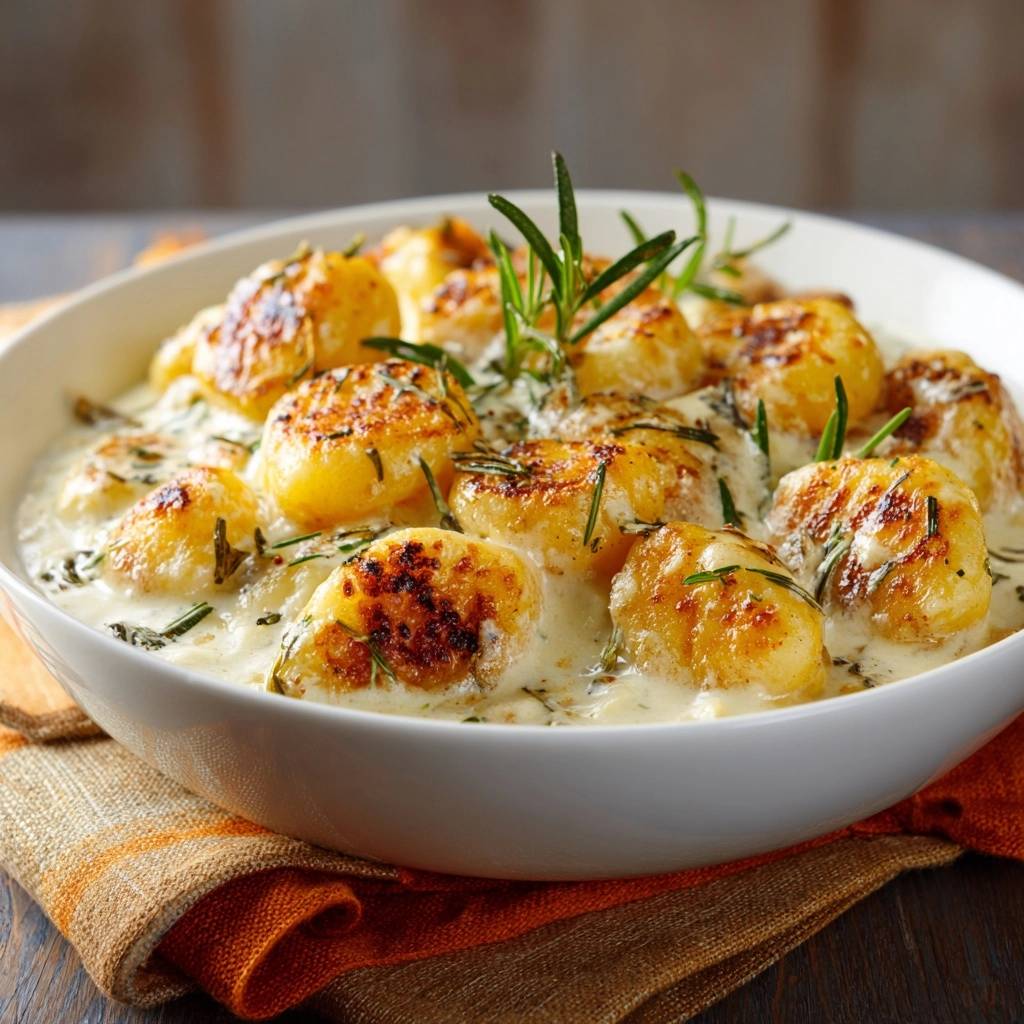
Essential Components for the Creamy Herb Sauce
The sauce relies on high-quality fats to create a velvety coating that clings to the ridges of the gnocchi. I always recommend using heavy cream rather than half-and-half or milk. Heavy cream has a higher fat content, which means it reduces into a thick, stable sauce without curdling or requiring a flour-based roux.
Freshly grated Parmesan cheese is another critical component because it acts as a natural thickener and salt source. Please avoid the pre-shredded cheese found in plastic canisters; those products contain cellulose and potato starch to prevent clumping, which also prevents them from melting smoothly into your sauce. Freshly grated cheese will emulsify instantly, creating a glossy finish.
The aromatic profile of rosemary and sage provides an earthy, piney backbone that cuts through the richness of the dairy. These “hard” herbs are sturdy enough to withstand the heat of the simmering cream. When they hit the warm butter, they release essential oils that infuse the entire dish with a savory fragrance that dried herbs simply cannot replicate.
Selecting the Right Gnocchi
While homemade gnocchi is lovely, vacuum-sealed potato gnocchi is actually the “Goldilocks” choice for this searing method. These store-bought versions have a lower moisture content than fresh dough, which allows them to crisp up much faster in the pan. They are sturdy enough to handle being tossed and turned without losing their shape.
I generally advise against using “shelf-stable” boxes found in the dry pasta aisle that contain high levels of preservatives. These often have a rubbery texture that doesn’t soften properly during the searing process. Look for the vacuum-packed bags in the refrigerated section or the specialty pasta aisle for the best results.
The Role of Nutmeg and Black Pepper
Nutmeg might seem like a baking spice, but it is the “hidden” hero of white sauces. It provides a warm, woody note that enhances the natural sweetness of the potatoes and the cream. Just a quarter teaspoon is enough to add depth without making the dish taste like a dessert.
Freshly cracked black pepper is equally important because it provides a sharp, biting contrast to the mellow cream. I prefer a coarse grind here so you get little pops of heat that wake up your palate. Together, these spices ensure the sauce tastes complex rather than just “salty and fatty.”
Step-by-Step: Achieving the Perfect Golden Sear
Start by heating your olive oil and the first tablespoon of butter over medium-high heat until the butter foam subsides. Add the gnocchi directly from the package into the pan in a single layer. It is vital that you do not crowd the pan; if the gnocchi are touching, they will steam each other and turn soft instead of crispy.
Now comes the hardest part: do not touch them. Let the gnocchi sear undisturbed for at least 3 to 4 minutes. You are looking for a deep, golden-brown color on the bottom. If you try to flip them and they feel stuck, they likely haven’t formed a sufficient crust yet. Give them another thirty seconds and they should release naturally from the pan.
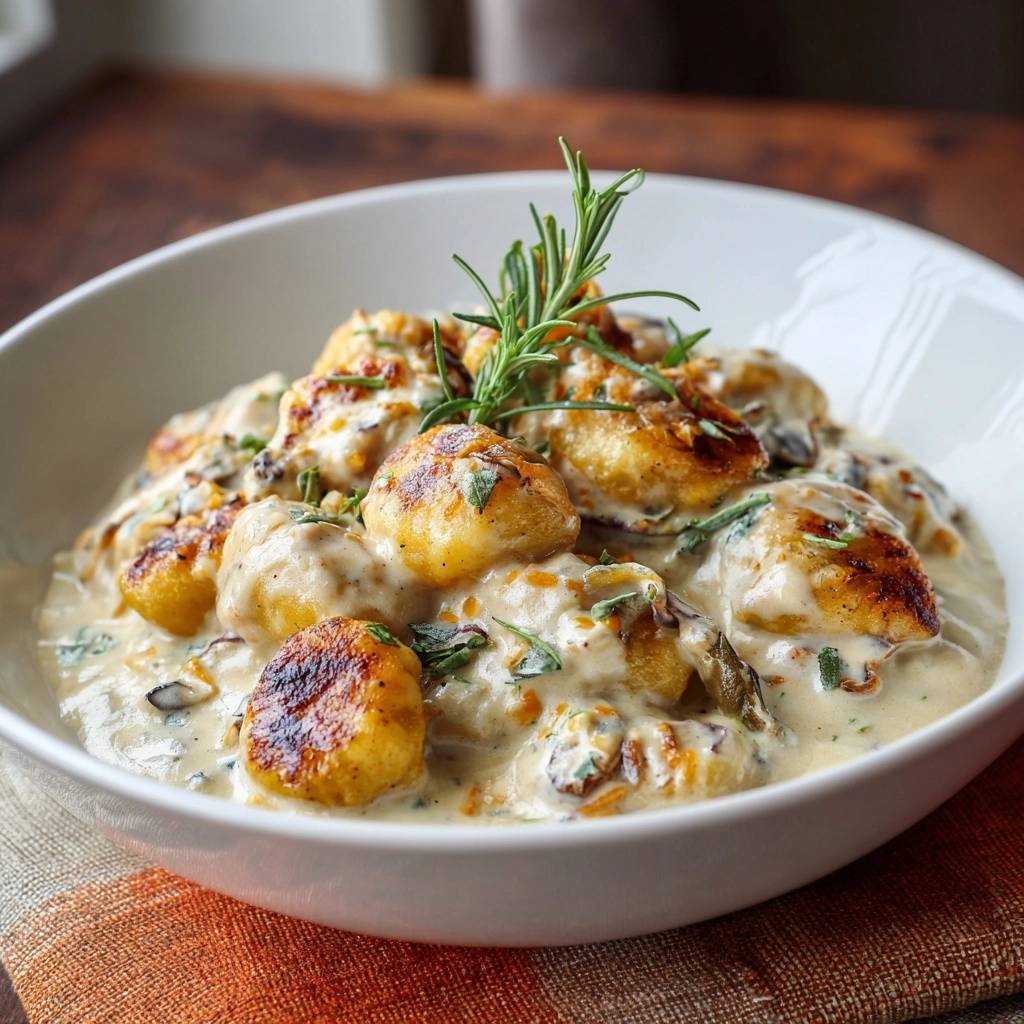
Once the first side is golden, toss the gnocchi or use a spatula to turn them. Continue cooking for another 3 minutes, shaking the pan occasionally to brown the edges. The gnocchi should look like little toasted marshmallows. At this point, remove them from the pan and set them aside on a plate so they don’t overcook while you build the sauce.
Building the Velvety Herb Infusion
After removing the gnocchi, lower the heat to medium before adding the remaining butter. This temperature drop is crucial because garlic and shallots have a high sugar content and will burn instantly in a scorching pan. Sauté the minced aromatics for about two minutes until they are translucent and the kitchen smells incredible.
Pour in the heavy cream and add your chopped rosemary, sage, pepper, and nutmeg. Bring the mixture to a gentle simmer, but do not let it reach a rolling boil. You want to see small bubbles around the edges. Stir frequently for about 3 minutes as the water evaporates and the cream reduces into a thick, “nappe” consistency.
You can tell the sauce is ready when it coats the back of a spoon and you can run your finger through it without the sauce running back together. Once you reach this stage, whisk in the Parmesan cheese. The sauce will transform into a smooth, pale gold velvet. Taste it now before adding any extra salt, as the cheese is already quite salty.
Troubleshooting Common Gnocchi Textures
If your gnocchi are sticking to the pan despite using oil and butter, your heat is likely too low. The surface needs to be hot enough to instantly sear the starch. Conversely, if the outside is burning before the inside is hot, turn the heat down slightly and add a tiny splash of oil to help distribute the heat more evenly.
If your sauce looks “broken” or oily, it usually means the heat was too high after you added the cheese. You can often fix this by whisking in a tablespoon of warm water or an extra splash of cream to re-emulsify the fats. This will bring the sauce back to a smooth, unified state.
The most common mistake is leaving the gnocchi in the sauce for too long. You should only toss them back into the pan for about 30 seconds. This is just enough time to coat them in the herb-infused cream without allowing the moisture to penetrate and soften that beautiful golden crust you worked so hard to create.
Flavor Variations and Ingredient Swaps
This recipe serves as a fantastic base for customization. If you want more earthiness, try sautéing sliced cremini mushrooms in the butter before adding the shallots. The mushrooms will soak up the herb flavors and add a meaty texture to the dish. You could also stir in a handful of fresh baby spinach at the very end; the residual heat will wilt it perfectly.
For those looking for dairy alternatives, cashew cream is an excellent substitute for heavy cream because it has a similar fat profile and thickness. However, keep in mind that plant-based fats often have lower scorch points. You may need to keep the heat lower during the reduction phase to prevent the sauce from sticking to the bottom of the skillet.
If you prefer a bit of acidity, a squeeze of fresh lemon juice right before serving can brighten the entire dish. The acid cuts through the heavy cream and highlights the floral notes of the rosemary. Just be sure to add it at the very end so it doesn’t react with the cream while it’s simmering.
What to Serve with Pan-Seared Gnocchi
Because this dish is quite rich and starch-heavy, I recommend pairing it with something high in acid or bitterness to balance the palate. A simple arugula salad tossed in a sharp lemon vinaigrette is the perfect companion. The peppery bite of the greens cleanses the tongue between mouthfuls of creamy pasta.
Roasted balsamic Brussels sprouts or grilled asparagus also work beautifully. These vegetables provide a charred, savory element that complements the seared exterior of the gnocchi. I usually avoid serving bread with this meal, as the gnocchi themselves are very filling and provide plenty of carbohydrates.
If you want to keep the meal light, a side of steamed green beans with a touch of garlic is a great way to add volume without adding too many calories. The goal is to provide a fresh, crisp contrast to the soft and velvety textures of the main course.
Storage and Reheating for Optimal Texture
Cream-based sauces are notoriously temperamental when stored in the refrigerator. As the sauce cools, the fats will solidify and the gnocchi will absorb some of the moisture. You can store leftovers in an airtight container for up to three days, but be aware that the gnocchi will lose their initial crispness.
To reheat, I strongly suggest using a skillet over medium-low heat rather than a microwave. Add a splash of water or milk to the pan to loosen the sauce as it warms up. Gently toss the gnocchi until they are heated through. While they won’t be as crunchy as they were fresh, the skillet method helps reclaim some of that original texture.
I do not recommend freezing this dish. The cream sauce will likely break and become grainy upon thawing, and the potato gnocchi can become unpleasantly mealy. This is a dish that is truly at its best when eaten immediately after the final toss in the pan.
Expert Tips for Professional Results
If you are using fresh gnocchi instead of vacuum-sealed, let them sit out on a parchment-lined baking sheet for about 20 minutes before cooking. This air-drying step removes surface moisture, which ensures a much better sear. Moisture is the enemy of a good crust, so the drier the surface, the better the crunch.
The blend of olive oil and butter is a professional trick that shouldn’t be skipped. Olive oil has a higher smoke point, which prevents the butter from burning during the long searing process. Meanwhile, the butter provides the milk solids that brown and create that delicious, nutty aroma that defines the dish.
Always wait to salt your sauce until the very end. Parmesan cheese is naturally very salty, and as the cream reduces, the salt concentration increases. If you salt the sauce at the beginning, you risk ending up with an oversalted dish. A final taste test before plating ensures the seasoning is exactly where it needs to be.
Frequently Asked Questions
How do I know when the gnocchi are done searing?
The best indicator is visual. You are looking for a deep, honey-gold color on the flat sides of the gnocchi. Additionally, they should feel firm to the touch of a spatula rather than soft or squishy. If they are still pale, they need more time. Don’t be afraid of a little dark browning; that’s where all the flavor lives!
Can I use frozen gnocchi for this recipe?
Yes, you can use frozen gnocchi, but do not thaw them first. Thawing will make them mushy and sticky. Instead, add them directly to the hot pan from the freezer. You may need to add an extra minute or two to the searing time to ensure the centers are fully heated through, but the technique remains exactly the same.
Why did my cream sauce turn out thin?
A thin sauce usually means it hasn’t reduced enough or the heat was too low. Make sure you let the cream simmer until it visibly thickens and coats the back of a spoon. If it’s still too thin after reducing, adding more freshly grated Parmesan will help thicken it instantly through emulsification.
What can I use if I don’t have fresh herbs?
While fresh rosemary and sage are highly recommended for their bright flavor, you can use dried herbs in a pinch. However, you must reduce the amount by half, as dried herbs are more concentrated. Add them at the beginning of the sauce-making process so they have time to rehydrate and release their oils into the cream.
Is it possible to make this dish ahead of time?
You can prep the shallots, garlic, and herbs ahead of time, but the actual cooking should happen right before serving. Because the appeal of this dish relies on the contrast between the crispy exterior and the creamy sauce, letting it sit will cause the gnocchi to become soft. It only takes 25 minutes, so it’s best made fresh!
Why is my garlic bitter?
Garlic becomes bitter when it burns. This usually happens if the pan is too hot when the garlic is added or if it’s cooked for too long. Always lower the heat after searing the gnocchi and ensure there is enough butter in the pan to cushion the garlic. It should only sauté until fragrant and pale gold, never dark brown.
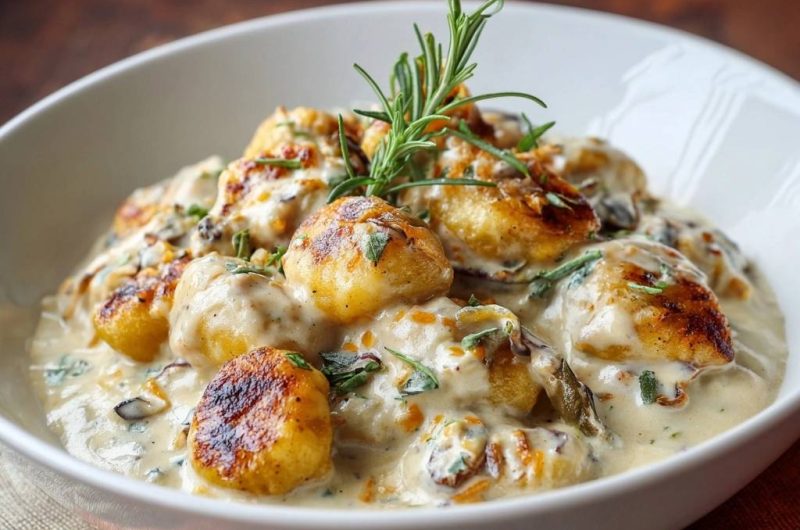
Pan-Seared Gnocchi in Creamy Herb Sauce
Course: Main CourseCuisine: Italian-AmericanDifficulty: easy4
servings10
minutes15
minutes25
Minutes450
kcalItalian-American
Ingredients
1 pound potato gnocchi (fresh or vacuum-sealed)
3 tablespoons unsalted butter, divided
1 tablespoon olive oil
1 small shallot, finely minced
3 cloves garlic, minced
1 cup heavy cream
1/2 cup freshly grated parmesan cheese
1 tablespoon fresh rosemary, finely chopped
1 tablespoon fresh sage, chopped
1/2 teaspoon cracked black pepper
1/4 teaspoon nutmeg
Salt to taste
Fresh rosemary sprig for garnish
Directions
- Heat the olive oil and 1 tablespoon of butter in a large non-stick or cast-iron skillet over medium-high heat.
- Add the gnocchi directly to the pan in a single layer. Do not crowd the pan; work in batches if necessary. Let them sear undisturbed for 3 to 4 minutes until the bottoms are deeply golden and crisp, as seen in the image.
- Toss the gnocchi and cook for another 3 minutes, shaking the pan to brown the edges. This dry-heat method locks the starch in place so the pasta stays firm and pillowy rather than slimy.
- Remove the gnocchi from the pan and set aside on a plate.
- Lower the heat to medium and add the remaining 2 tablespoons of butter to the same pan. Add the minced shallot and garlic, sautéing for 2 minutes until translucent and fragrant.
- Pour in the heavy cream, chopped rosemary, sage, black pepper, and nutmeg. Bring to a gentle simmer for 3 minutes, stirring frequently, until the sauce reduces and thickens to a velvety consistency.
- Whisk in the parmesan cheese until completely melted and smooth. Taste and add salt if needed.
- Return the crispy gnocchi to the pan. Toss gently for 30 seconds just to coat the gnocchi in the sauce without soaking them, which preserves the golden crust.
- Plate immediately, spooning extra sauce from the pan over the top. Garnish with a fresh rosemary sprig and serve.
Notes
- Do not boil the gnocchi beforehand. Adding them dry to the pan is the secret to achieving the crispy texture and preventing them from becoming gummy.