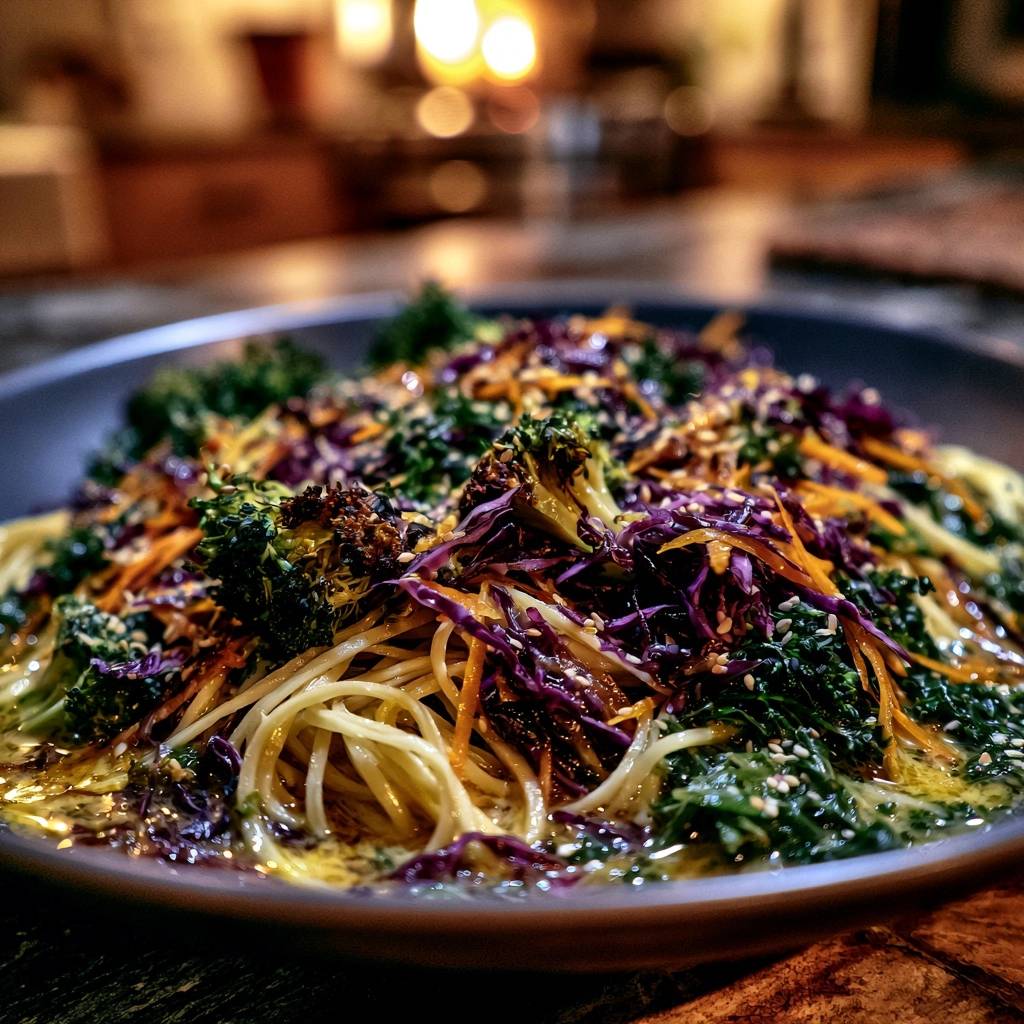
Imagine pulling a forkful of noodles from a bowl where every single strand is coated in a shimmering, savory glaze. You see the deep purple of shredded cabbage, the bright orange of julienned carrots, and the forest green of kale, all popping against the golden noodles. The aroma of toasted sesame and pungent ginger hits you before the first bite, promising a meal that is as vibrant as a summer garden.
However, most home cooks struggle with the dreaded “noodle clump.” You know the one—where the pasta turns into a gummy, singular mass that refuses to separate, no matter how much sauce you pour over it. This recipe solves that frustration by focusing on the structural integrity of the noodle, ensuring you get that professional, silky mouthfeel every time you cook.
The secret to this success lies in the temperature shock method. By stopping the cooking process abruptly and applying a specific fat barrier, you prevent the starches from bonding together. I’ve found that this single step makes the difference between a sticky mess and a restaurant-quality stir-fry that stays fresh even as it sits on the plate.
The Science of Non-Sticky Rainbow Vegetable Sesame Noodles
When you boil wheat-based noodles, the starch molecules—specifically amylose—begin to leach out into the water and onto the surface of the pasta. If you drain the noodles and let them sit while they are still hot, that surface starch acts like a powerful glue. This process, known as starch gelatinization, is the primary reason your stir-fry often ends up looking like a brick of dough rather than individual strands.
To combat this, you must utilize a two-part physical intervention. First, the cold-water rinse washes away the excess surface starch that has already leached out. Second, and most importantly, tossing the damp noodles in toasted sesame oil creates a hydrophobic barrier. This oil coating prevents the strands from re-absorbing moisture or sticking to their neighbors, keeping them slippery and ready for the wok.
This oil barrier also serves a secondary purpose during the final toss. Because the noodles are already coated in fat, they won’t soak up the sauce too quickly. Instead, the sauce sits on top of the oil layer, creating that beautiful, glossy sheen that characterizes high-end sesame noodles. You aren’t just flavoring the dish; you are engineering the texture.
Essential Components for the Perfect Noodle Texture
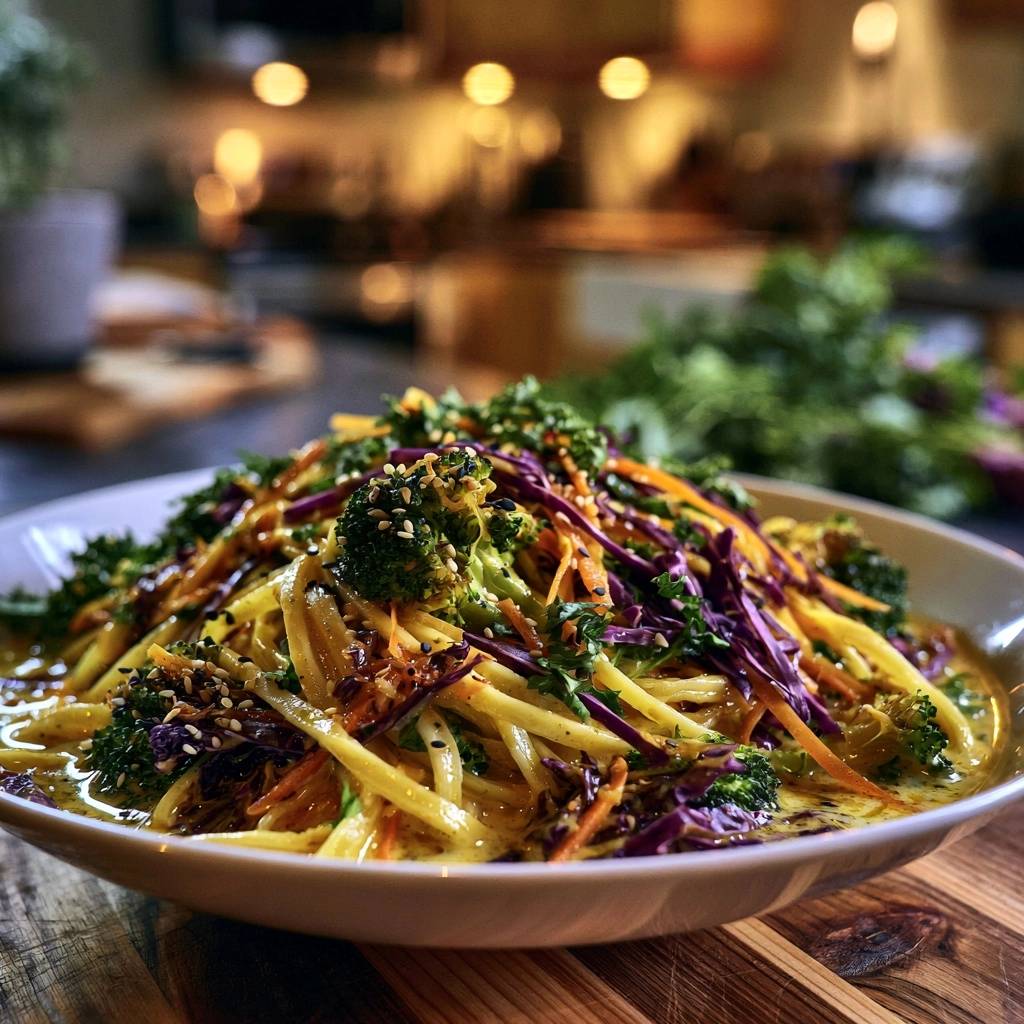
Achieving the right balance in this dish requires understanding how your ingredients interact with heat. You want a sauce that is thick enough to cling to the noodles but fluid enough to pool slightly at the bottom of the bowl. This “glossy pool” is achieved by balancing the chicken or vegetable broth with a precise amount of cornstarch, which activates only when it hits the hot pan.
The vegetables aren’t just there for color; they provide the necessary structural contrast. The charred broccoli offers a smoky, slightly bitter edge, while the raw crunch of the carrots and cabbage provides a refreshing break from the rich, salty sauce. Using fresh ginger and garlic is vital here, as the oils in fresh aromatics cut through the heaviness of the sesame oil.
Selecting the Right Noodle Base
For this specific recipe, thin spaghetti or lo mein noodles are the gold standard. Their high surface-area-to-volume ratio allows them to pick up the maximum amount of sauce without becoming heavy. If you use a thicker noodle, like udon, the sauce-to-noodle ratio shifts, and you might find the flavor feels diluted.
Regardless of the variety you choose, the golden rule is to cook them for exactly one minute less than the package instructions. This “par-cooking” ensures the noodles have enough structural “bite” to withstand the final two minutes of tossing in the skillet. If they are fully soft when they leave the boiling water, they will inevitably turn to mush once the sauce is added.
The Aromatics: Ginger and Garlic Prep
Preparation of your aromatics can change the entire flavor profile of the dish. Mincing the ginger rather than grating it provides tiny bursts of heat throughout the meal, whereas grating it creates a more uniform, subtle warmth. I prefer mincing because it stands up better to the high heat of the wok without burning.
When you add the garlic and ginger to the pan, you only have a 30-second window. You want to cook them just until the kitchen smells like a professional kitchen. If you let the garlic turn dark brown, it will become bitter and ruin the delicate balance of the honey and soy sauce. Keep your ingredients moving constantly during this phase.
Step-by-Step: Preparing the Rainbow Vegetable Sesame Noodles
Success in the kitchen often comes down to timing and sequence. Because this dish cooks very quickly once the heat is on, you need to have all your vegetables chopped and your sauce whisked before the first noodle hits the water. This “mise en place” approach prevents you from overcooking one component while you are busy prepping another.
Phase 1: The Cold-Rinse and Oil-Coating Technique
Once your noodles have reached that slightly-underdone al dente state, move fast. Drain them into a colander and immediately blast them with cold tap water. You want to feel the heat leave the noodles entirely. Use your hands to toss them under the stream so the strands in the middle cool down just as fast as the ones on top.
While the noodles are still slightly damp, drizzle over the first tablespoon of toasted sesame oil. Use tongs or your fingers to ensure every inch of the pasta is slick. This is your insurance policy against clumping. Once coated, you can set them aside with confidence while you focus on the vegetables.
Phase 2: Achieving the Signature Charred Broccoli
To get that restaurant-style char, you need high heat and a bit of patience. Get your vegetable oil shimmering in the skillet before adding the broccoli florets. Do not crowd the pan; if the broccoli is piled too high, it will steam rather than sear. You want to see dark, almost blackened edges on the florets.
This charring process creates a complex flavor known as the Maillard reaction. It adds a savory, smoky depth that balances the sweetness of the honey in the sauce. Once the broccoli looks toasted and smells nutty, you know it is ready for the aromatics to join the party.
Phase 3: Whisking the Glossy Sesame Emulsion
The sauce is the soul of this dish. By whisking the soy sauce, honey, broth, and cornstarch together in a separate bowl, you ensure the cornstarch is fully dissolved. If you were to add the cornstarch directly to the hot pan, it would clump instantly into white, rubbery beads.
The broth is the secret ingredient that provides the “liquid base” seen in professional photography. It thins out the heavy soy and oil just enough to create a sauce that flows. As the honey melts into the warm broth, it creates a sticky emulsion that will eventually grab onto the noodles and vegetables.
Phase 4: Flash-Sautéing the Rainbow Vegetables
Now comes the “rainbow” part. Add the kale, cabbage, and carrots to the skillet. You are only looking to wilt the kale and slightly soften the cabbage. A one-minute toss is all it takes. If you cook them longer, the purple cabbage will bleed its color into the rest of the dish, turning your beautiful rainbow into a muddy brown.
Keeping these vegetables crisp-tender is essential for the eating experience. You want that audible “crunch” when you bite into a carrot sliver. This contrast against the soft, silky noodles is what makes the dish feel fresh and vibrant rather than heavy and oily.
Troubleshooting Common Noodle Consistency Issues
Even with the best intentions, things can go sideways in a hot pan. If you notice your noodles are starting to look dry as you toss them, don’t panic. This usually happens if your heat was a bit too high and the broth evaporated too quickly. Simply add an extra splash of broth or water, one tablespoon at a time, until the glossy finish returns.
If the noodles feel too heavy or oily, you might have used a bit too much sesame oil during the coating phase. You can balance this by adding a tiny squeeze of fresh lime juice or a splash of rice vinegar at the very end. The acid will cut through the fat and brighten the overall flavor profile of the soy sauce.
Fixing a Thin or Watery Sauce
Cornstarch needs to reach a simmer to “activate” and thicken. If your sauce looks like water at the bottom of the pan, turn the heat up slightly and let it bubble for 30 seconds. You will see it transform from a translucent liquid into a thick, shiny glaze almost instantly.
If it is still too thin after bubbling, mix a half-teaspoon of cornstarch with a teaspoon of cold water in a small cup to create a secondary slurry. Pour this into the bubbling sauce and toss vigorously. Never add dry cornstarch to the pan, or you will end up with lumps that are impossible to get out.
Preventing Overcooked, Mushy Vegetables
Vegetables continue to cook even after you turn off the stove due to residual heat. This is called carry-over cooking. To keep your carrots and cabbage bright, remove the skillet from the burner the second the noodles are coated and the sauce has thickened. Transfer the food to a serving bowl immediately rather than letting it sit in the hot metal pan.
Flavor Variations and Ingredient Swaps
This recipe is a fantastic canvas for whatever you have in your crisper drawer. While the “rainbow” theme relies on specific colors, the flavor profile works with almost any vegetable. If you want to add protein, seared tofu cubes or a soft-boiled egg nestled on top work beautifully. The creamy yolk of a soft egg mixed into the sesame sauce is particularly decadent.
For those who like a bit of heat, you can easily customize the spice level. Whisking a teaspoon of red chili flakes or a dollop of chili garlic paste into the sauce mixture adds a slow burn that complements the ginger. If you prefer a cleaner heat, garnish the finished dish with thinly sliced fresh red chilies.
Vegetable Substitutions for Seasonal Cooking
If you can’t find red cabbage, thinly sliced red bell peppers provide that same pop of color and a sweet crunch. In the spring, snap peas or blanched asparagus tips make a wonderful green addition. The key is to maintain the variety of textures—aim for at least one leafy green, one crunchy root, and one sturdy floret.
Purple radishes, julienned thinly, can replace the cabbage if you want a peppery bite. Just remember to add radishes at the very last second, as they lose their vibrant color and crispness very quickly when exposed to high heat.
Adjusting the Sweet-to-Salty Ratio
The balance between the salty soy sauce and the sweet honey is subjective. If you prefer a more savory, umami-forward dish, reduce the honey by half. If you are looking for something closer to a traditional cold sesame noodle, you might even add a tablespoon of creamy peanut butter or tahini to the sauce mixture for extra richness.
For a gluten-free version, tamari is an excellent 1:1 substitute for soy sauce. It has a slightly deeper, richer flavor that pairs exceptionally well with the toasted sesame oil. If you find the dish too salty, always reach for a low-sodium soy sauce next time to give yourself more control over the seasoning.
Equipment: Why a High-Surface Area Pan Matters
While you can make this in a standard frying pan, a wok or a large stainless steel skillet is preferred. The high sides of a wok allow you to toss the noodles vigorously without losing half your vegetables over the edge. More importantly, the wide surface area allows moisture to evaporate quickly, which is how you get that concentrated, glossy sauce.
If you use a pan that is too small, the ingredients will be crowded. Crowding leads to steaming, and steaming leads to soggy noodles. If you are doubling the recipe, it is better to cook in two batches than to cram everything into one pan. This ensures the broccoli gets that essential char and the kale stays vibrant.
Expert Tips for Professional Plating and Presentation
We eat with our eyes first, and these noodles are designed to be a showstopper. When plating, use a pair of long tongs to grab a large portion of noodles. Lift them high above the bowl and twirl them as you lower them down. This creates height and makes the dish look like it came from a high-end bistro.
Once the noodles are piled high, spoon the remaining sauce from the pan over the top, letting it drizzle down and pool at the bottom. Finish with a heavy dusting of sesame seeds. The white seeds against the dark sauce and colorful vegetables provide a final touch of contrast that makes the whole dish pop.
Frequently Asked Questions
Can I make these noodles ahead of time for meal prep?
Yes, these noodles hold up surprisingly well. Store them in an airtight container in the refrigerator for up to three days. To keep them from drying out, ensure they are fully coated in the sauce before storing. When you are ready to eat, the sauce may have thickened or been absorbed slightly.
To reheat, place the noodles in a pan over medium heat and add a tablespoon or two of broth or water. This will loosen the sauce and bring back that glossy sheen. Avoid the microwave if possible, as it can make the noodles rubbery and the vegetables mushy. Do not freeze this dish, as the texture of the noodles and cabbage will degrade significantly upon thawing.
What is the best substitute for toasted sesame oil?
Toasted sesame oil has a very specific, nutty, and intense flavor that is hard to replicate. If you are out, perilla oil is the closest match in terms of earthy depth. If you don’t have that, you can use a neutral oil like grapeseed or canola, but you will lose the signature “sesame” punch of the dish.
In a pinch, you can toast a tablespoon of sesame seeds in a dry pan until golden, then crush them into a neutral oil to infuse it. It won’t be quite as potent as the bottled toasted oil, but it will provide a similar aromatic profile that keeps the spirit of the recipe intact.
Why did my kale turn brown instead of staying bright green?
Kale turns brown for two main reasons: overexposure to heat and reaction to acid. Chlorophyll, the pigment that makes kale green, breaks down quickly when boiled or sautéed for too long. The soy sauce also contains acids that can dull the green color over time.
To prevent this, stick strictly to the one-minute flash-sauté rule. You want the kale to just barely wilt. If you are serving this for a dinner party and want maximum color, you can even blanch the kale in the boiling noodle water for 10 seconds, shock it in ice water, and toss it in at the very end just to warm through.
Is there a way to make this dish lower in sodium?
The easiest way to reduce sodium is to swap the standard soy sauce for a low-sodium version or coconut aminos. Coconut aminos are naturally lower in salt and have a slightly sweeter profile, so you may want to reduce the honey in the recipe if you go that route.
Additionally, you can increase the amount of fresh ginger and garlic. These aromatics provide so much flavor that you won’t miss the extra salt as much. Using a high-quality, unsalted vegetable broth for the sauce base also helps keep the sodium levels in check without sacrificing the liquid volume needed for the glaze.
How do I get the carrots perfectly julienned?
Achieving those thin, uniform matchsticks can be done with a sharp chef’s knife, but it takes practice. Slice the carrot into thin planks on a diagonal, then stack the planks and slice them into thin strips. If you want to save time, a mandoline slicer with a julienne blade is the most efficient tool.
For an even easier method, use a Y-shaped vegetable peeler to create long ribbons, then stack the ribbons and slice them lengthwise. This results in very thin, delicate strands that integrate perfectly with the noodles. If you are in a rush, most grocery stores sell pre-shredded carrots in the produce section which work perfectly fine here.
Rainbow Vegetable Sesame Noodles
Course: Main CourseCuisine: Asian InspiredDifficulty: easy4
servings15
minutes10
minutes25
Minutes410
kcalAsian Inspired
Ingredients
12 ounces thin spaghetti or lo mein noodles
2 cups broccoli florets, chopped small
1 cup red cabbage, thinly shredded
1 cup carrots, julienned or shredded
2 cups kale, finely chopped
2 tablespoons sesame seeds
3 tablespoons soy sauce
1 tablespoon honey
1 tablespoon fresh ginger, minced
2 cloves garlic, minced
2 tablespoons toasted sesame oil
2 tablespoons vegetable oil
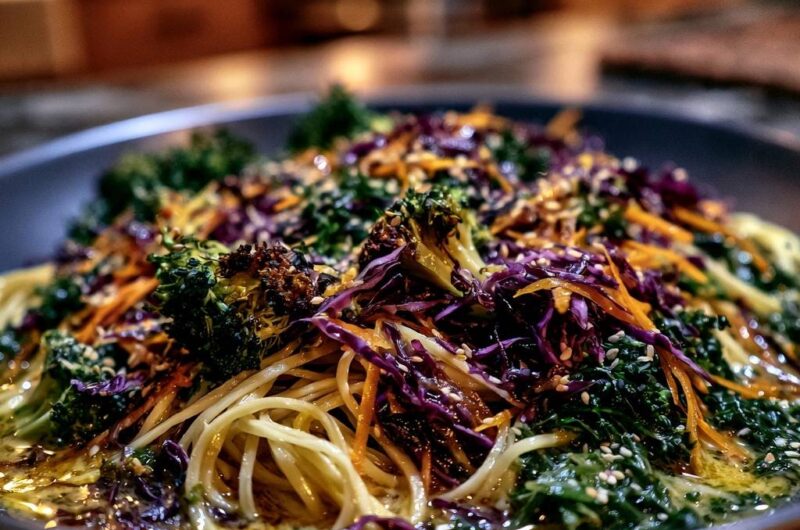
1/4 cup chicken or vegetable broth (to achieve the glossy pool of sauce shown)
1 teaspoon cornstarch
Directions
- Bring a large pot of salted water to a boil. Add the noodles and cook for exactly one minute less than the package directions for al dente.
- To solve the gummy pasta problem, immediately drain the noodles and rinse them under cold running water for 30 seconds to stop the starch from cooking. While still damp, toss them with one tablespoon of the toasted sesame oil. This creates a barrier that prevents the strands from sticking together.
- Heat the vegetable oil in a large skillet or wok over high heat. Add the broccoli and cook for 3 to 4 minutes until the edges are deeply charred and dark, matching the visual profile of the dish.
- Add the garlic and ginger to the pan, stirring for 30 seconds until fragrant.
- In a small bowl, whisk together the soy sauce, honey, remaining sesame oil, broth, and cornstarch. This mixture ensures the sauce is thick enough to coat the noodles while leaving the glossy, liquid base seen in the image.
- Add the kale, shredded cabbage, and carrots to the skillet. Toss for only 1 minute so they retain their bright purple and orange colors.
- Add the oiled noodles to the skillet and pour the sauce mixture over them.
- Toss everything together over medium-high heat for 1 to 2 minutes. The sauce will bubble and thicken slightly, creating a silky, glossy finish.
- Plate the noodles, ensuring the extra sauce pools slightly at the bottom of the dish as pictured. Garnish generously with sesame seeds and serve immediately.
Notes
- To prevent gummy pasta, rinse noodles under cold water immediately after boiling and toss with sesame oil while damp. Use cornstarch and broth to achieve the signature glossy sauce pool at the bottom of the dish.