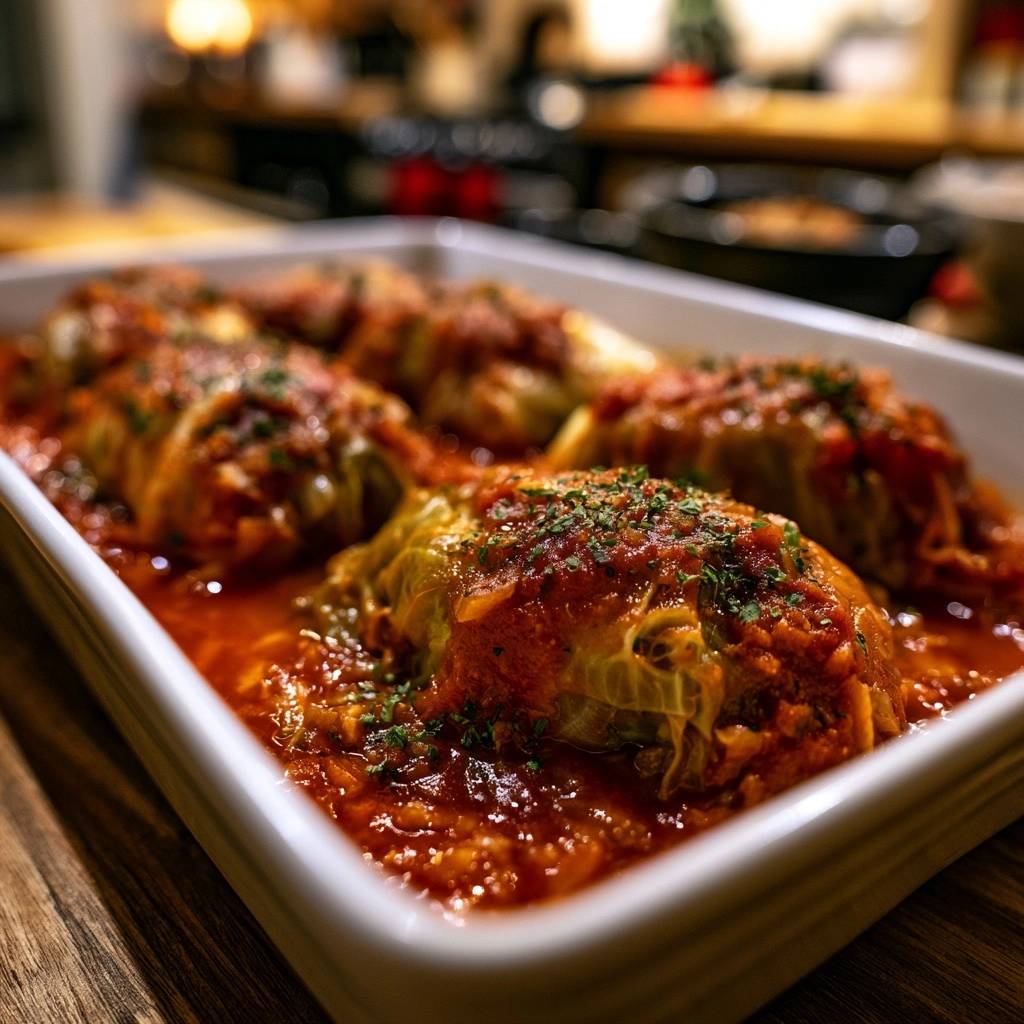
Most people struggle with cabbage rolls because they end up with a watery, bland mess at the bottom of the baking dish. You know the type: the cabbage is slimy, the meat is boiled rather than roasted, and the sauce looks more like a weak soup than a rich glaze. This recipe changes that by focusing on moisture control and a concentrated tomato reduction that clings to every bite.
The secret to a truly savory stuffed cabbage roll lies in the preparation of the leaves and the density of the sauce. By par-boiling the cabbage and then aggressively drying it, you remove the excess water that usually dilutes your flavors. We aren’t just making dinner; we’re building layers of texture that stay firm and satisfying from the first forkful to the last.
I’ve found that the real pro move is shaving down the thick, woody ribs on the back of each leaf. If you leave that heavy vein intact, the roll won’t cook evenly, and you’ll get a distracting crunch in an otherwise tender dish. Taking sixty seconds to flatten those ribs with a paring knife ensures your rolls are tight, professional, and melt-in-your-mouth tender.
The Anatomy of a Perfect Savory Stuffed Cabbage Roll
A perfect roll is a balance of three distinct elements: the sweet, earthy wrapper, the savory meat core, and the acidic punch of the tomato glaze. When these three components hit your palate at once, it creates a deep sense of comfort. The cabbage softens during the long bake, losing its sulfurous edge and becoming almost buttery in texture.
While many people reach for standard green cabbage, Savoy cabbage is the secret weapon for high-end results. Its crinkled, lace-like leaves aren’t just beautiful to look at; those ridges act like tiny channels that trap the sauce. However, if you prefer a more traditional, smooth bite, a heavy head of green cabbage works perfectly as long as it feels dense and fresh.
Why Moisture Control Defines Quality
Cabbage is roughly 90% water, which is the enemy of a thick, rich sauce. If you don’t manage that moisture, it leaks out during the 90-minute bake and turns your tomato base into a thin liquid. This “Anti-Soggy Bottom” philosophy requires you to be diligent about drying the leaves after their initial boil.
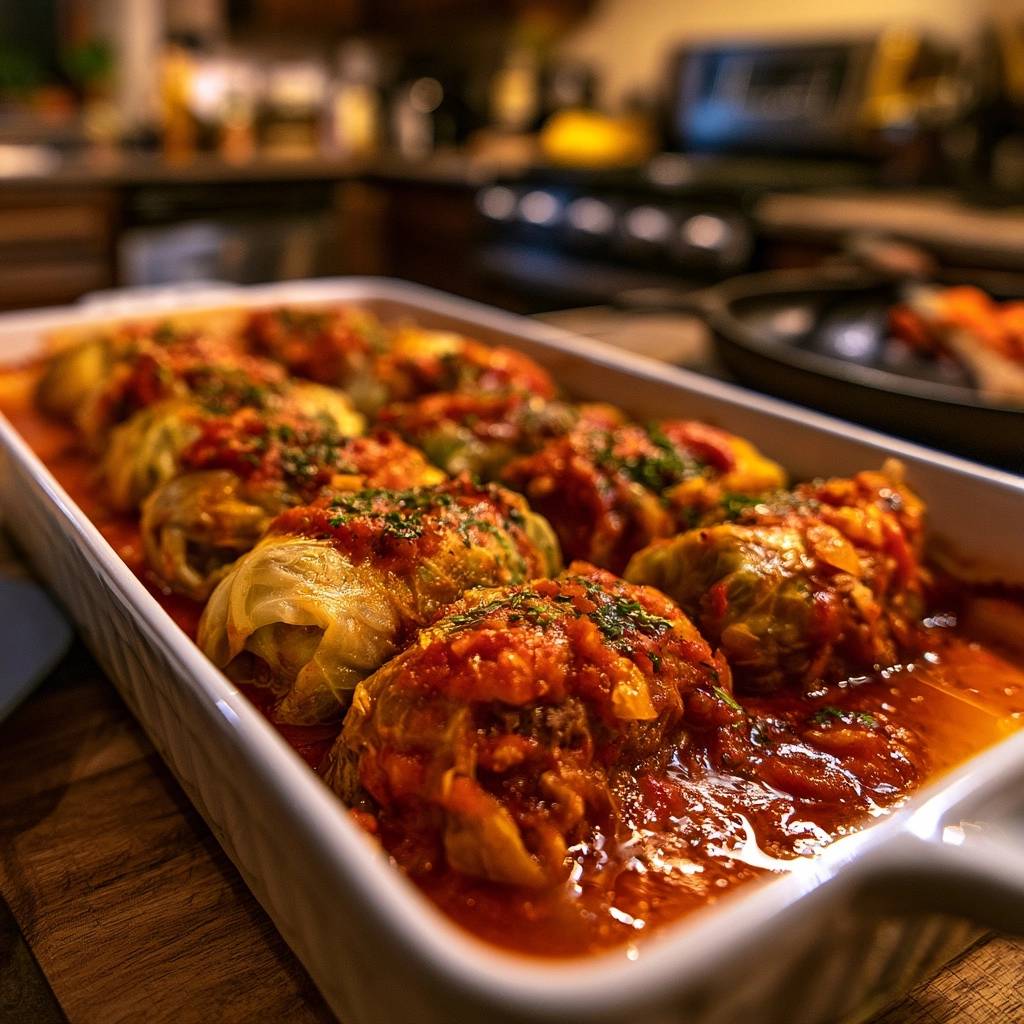
Think of the par-boiling step as a way to “relax” the cabbage so it becomes pliable enough to roll without snapping. Once they are soft, laying them out on clean kitchen towels is non-negotiable. Removing that surface moisture ensures the sauce sticks to the cabbage rather than sliding off into a puddle at the bottom of the pan.
Essential Components for the Filling and Sauce
The backbone of this dish is a pound of lean ground beef. Since we aren’t using high-fat additives, the quality of the beef really shines through. If you find your beef is exceptionally lean, you can add a tablespoon of extra virgin olive oil to the mix to keep the interior moist and succulent without being greasy.
Cooked white rice acts as the perfect sponge within the filling, soaking up the juices released by the meat and aromatics. It’s vital to use rice that has already been cooked and cooled. If you use raw rice, it will steal moisture from the meat, often resulting in a crumbly, dry interior that lacks that cohesive, “meatloaf-like” texture we want.
Selecting the Right Cabbage Variety
When you’re at the grocery store, look for a head of cabbage that feels heavy for its size. A heavy cabbage means the leaves are tightly packed and full of moisture, which actually makes them easier to peel after boiling. Savoy cabbage is my favorite for its flexible, emerald-green leaves that rarely tear during the rolling process.
Standard green cabbage is the classic choice and offers a slightly sweeter flavor profile once roasted. It has a sturdier structure, which is great if you like a bit more “tooth” to your rolls. Whichever you choose, make sure the outer leaves are vibrant and free of large brown spots or wilting.
The Role of Aromatics and Spices
Smoked paprika is the “hidden” ingredient that provides a subtle, wood-fired depth to the filling. It complements the sweetness of the cooked onions and the sharp bite of the minced garlic. These aromatics should be diced as finely as possible so they distribute evenly throughout the meat mixture.
The egg serves as the essential binder, holding the beef and rice together in a tight cylinder. Without it, the filling might fall apart the moment your fork hits it. Just remember to beat the egg lightly before adding it to the bowl so it incorporates quickly without requiring you to over-handle the meat.
Step-by-Step: Preparing the Cabbage Leaves
Start by using a long, sharp knife to cut deeply around the core of the cabbage. You want to loosen the base of the leaves before the head ever hits the water. Submerge the entire head in a large pot of boiling salted water, and as the outer leaves turn translucent, use tongs to gently peel them away one by one.
This process usually takes about 8 minutes for the whole head. Don’t rush it! If you pull a leaf too early, it will crack when you try to fold it. Once you have a pile of beautiful, pliable leaves, move them immediately to a colander to drain. The steam will continue to soften them slightly as they sit.
The Rib-Shaving Technique for Even Cooking
Lay a leaf flat on your cutting board with the “back” side facing up. You’ll see a thick, prominent vein running down the center. Hold a small paring knife parallel to the board and carefully shave off the raised part of that rib. You aren’t trying to cut the rib out entirely; you just want it to be the same thickness as the rest of the leaf.
This technical step is what separates amateur cabbage rolls from chef-quality ones. A flattened rib allows the leaf to roll tightly like a burrito, ensuring the filling is fully encased. It also prevents that awkward moment where the center of the roll is still tough while the rest is perfectly cooked.
Ensuring Bone-Dry Leaves Before Assembly
After shaving the ribs, pat each leaf dry with paper towels. I usually lay them out in a single layer on a clean tea towel and press another towel on top. Any water left on the surface will create steam in the oven, which is exactly what we want to avoid if we’re aiming for a thick, lacquered glaze.
Dry leaves also provide a better surface for the sauce to grab onto. If the leaf is wet, the tomato reduction will simply slide off the sides. Taking three minutes to ensure they are bone-dry makes a massive difference in the final presentation and the concentration of flavor in the sauce.
Step-by-Step: Mixing and Rolling the Filling
When you combine your beef, rice, and spices, use a light touch. I prefer using my hands to gently fold the ingredients together until they are just combined. If you squeeze the meat too hard or over-mix it, the proteins will cross-link and create a rubbery, dense texture that feels more like a hockey puck than a tender filling.
The raw filling should look speckled with rice and herbs, and it should feel moist but hold its shape when you form a small ball. If it feels too loose, you can add an extra tablespoon of cooked rice to help bind the excess moisture from the onions and egg.
The Geometry of a Tight Roll
Place about three tablespoons of the meat mixture near the stem end of the leaf. Fold the bottom of the leaf over the meat, then tuck in the sides firmly. Roll it toward the top edge, keeping the tension tight but being careful not to tear the cabbage. It’s exactly like rolling a small, tight burrito.
Place each roll seam-side down in your baking dish. Packing them tightly together is actually beneficial here. When the rolls are snuggled up against each other, they support one another’s shape and prevent the leaves from unfurling as the meat expands slightly during the cooking process.
Crafting the Concentrated Tomato Reduction
This sauce is a powerhouse of flavor because it relies on tomato paste and apple cider vinegar rather than just plain tomato sauce. The paste provides a deep, umami-rich base, while the vinegar cuts through the richness of the beef. A touch of brown sugar balances the acidity, creating a complex, sweet-and-savory profile.
We use a small amount of beef broth to keep the sauce fluid enough to pour, but the goal is for most of that liquid to evaporate or be absorbed. This leaves behind a thick, jammy reduction that coats the cabbage. It’s a far cry from the watery tomato soup often found in lesser recipes.
Achieving the Deep Red Glaze Consistency
Whisk your sauce ingredients until the tomato paste is completely dissolved and the mixture is smooth. When you pour it over the rolls, focus on the center of the dish. Leaving the very edges of the cabbage rolls exposed allows them to catch the direct heat of the oven, leading to those delicious caramelized bits.
As the dish bakes for 90 minutes, the sugars in the tomato and the cabbage will begin to brown. This is the Maillard reaction in action. By the time you pull the dish out, the sauce should have transformed from a bright red liquid into a dark, mahogany glaze that looks almost like a lacquer.
The Two-Stage Baking Process for Maximum Flavor
The first 70 minutes of baking are done under a tight seal of aluminum foil. This creates a pressurized environment where the cabbage steams in its own juices and the meat cooks through perfectly. The foil prevents the top from burning before the interior is safe to eat, ensuring the rice and beef are tender.
The second stage is where the magic happens. Removing the foil for the final 20 minutes allows the moisture to escape and the sauce to thicken. This is when the flavors truly concentrate. You’ll notice the edges of the cabbage starting to turn golden brown, which adds a wonderful nutty flavor to the dish.
Basting for Color and Texture
During those final 20 minutes, take a large spoon and carefully scoop up some of the bubbling sauce from the corners of the pan. Drizzle it back over the tops of the rolls. This basting technique ensures the cabbage doesn’t dry out and helps build that signature shiny, glazed appearance.
This step also helps the flavors of the sauce penetrate the outer layers of the cabbage. By the time you’re done, the rolls will have a beautiful, uniform color. Garnish with a heavy hand of fresh parsley right before serving to provide a bright, herbaceous contrast to the deep, cooked flavors of the dish.
Troubleshooting Common Cabbage Roll Issues
If you find your cabbage leaves are too small to roll properly, don’t panic. You can “patch” them by overlapping two small leaves to create a larger surface area. The weight of the other rolls in the dish will help hold the patches together while they bake, and once the sauce thickens, no one will notice the difference.
If your sauce still looks too thin after the full baking time, simply remove the rolls to a serving platter and pop the baking dish back in the oven for another 5 to 10 minutes. The increased surface area will help the sauce reduce rapidly. Conversely, if the sauce is too thick, whisk in a tablespoon of warm beef broth to loosen it up.
Make-Ahead Strategies and Storage Tips
Cabbage rolls are famous for being even better the next day. As they sit in the fridge, the spices in the meat mixture continue to permeate the rice, and the cabbage absorbs more of the tomato glaze. They will stay fresh in an airtight container for up to four days, making them a fantastic meal-prep option.
When reheating, I recommend using the oven rather than the microwave if you have the time. Place the rolls in a small oven-safe dish, add a splash of water or broth to the bottom, and cover with foil. Heat at 350°F until warmed through. This prevents the cabbage from becoming rubbery and keeps the filling moist.
Freezing and Thawing Guidelines
These rolls freeze beautifully, provided you freeze them in their sauce. The sauce acts as a protective barrier against freezer burn. Place the cooled rolls in a freezer-safe container or a heavy-duty zip-top bag, ensuring they are well-coated in the tomato reduction. They will maintain their quality for up to three months.
To serve from frozen, it is best to let them thaw in the refrigerator overnight. Thawing them slowly prevents the cabbage from becoming mushy. Once thawed, follow the standard reheating instructions. I don’t recommend freezing the cabbage leaves alone, as the cell structure breaks down and they become too soft to roll later.
Expert Tips for Filling Variations
If you want to experiment with textures, try replacing the white rice with cooked quinoa or even toasted buckwheat. Quinoa adds a slight nuttiness and a boost of protein, while buckwheat offers a more robust, earthy flavor that pairs exceptionally well with the tomato glaze. Just ensure whatever grain you use is fully cooked before mixing.
For an extra hit of umami, you can finely chop 4 ounces of cremini mushrooms and sauté them with the onions before adding them to the meat. The mushrooms mimic the texture of the beef while adding a savory depth that makes the dish feel even richer. It’s a great way to bulk up the filling without adding more meat.
What to Serve with Savory Stuffed Cabbage Rolls
Since this dish is quite rich and savory, it pairs best with sides that offer a bit of brightness or crunch. A crisp cucumber salad with a vinegar-based dressing is a classic accompaniment that cleanses the palate between bites. The acidity of the salad mirrors the vinegar in the tomato glaze perfectly.
Roasted root vegetables, like carrots or parsnips, also make a wonderful side, as their natural sweetness complements the cooked cabbage. If you want to lean into the comfort food vibe, a dollop of cold Greek yogurt or sour cream on top of the hot rolls provides a creamy, tangy contrast that is absolutely delicious.
Frequently Asked Questions
Can I use a slow cooker for this recipe?
You can use a slow cooker, but you will lose the “glaze” effect. Because slow cookers trap all moisture, the sauce will remain thin and soup-like. If you choose this method, cook on low for 6-7 hours, but reduce the beef broth in the sauce by half to compensate for the lack of evaporation.
What is the best substitute for Savoy cabbage?
Standard green cabbage is the best substitute. It is more widely available and holds its shape well. If you want something more delicate, Napa cabbage can work, but it cooks much faster, so you would need to reduce the baking time by about 20 minutes to prevent it from falling apart.
How do I keep the rice from getting mushy?
The key is using pre-cooked rice that has been allowed to cool completely. Cold rice has a firmer structure and won’t overcook as easily during the long bake. Avoid using “instant” or overcooked rice in the filling, as these will disintegrate into the meat and create a pasty texture.
Can I make this vegetarian?
Yes! You can replace the ground beef with a mixture of cooked brown lentils and finely chopped walnuts. The lentils provide the bulk and protein, while the walnuts offer a fatty, savory crunch that mimics the mouthfeel of meat. Use vegetable broth in the sauce instead of beef broth to keep it fully vegetarian.
Why is my sauce too acidic?
The acidity usually comes from the canned tomatoes or the apple cider vinegar. If it tastes too sharp, stir in an extra teaspoon of brown sugar or a small pat of butter at the very end. The fat in the butter helps coat the tongue and mellows out the harsh acidic notes of the vinegar.
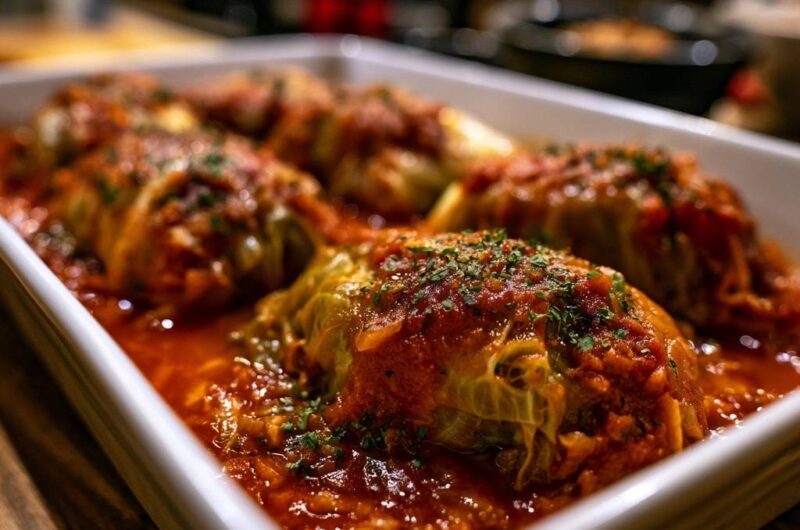
Savory Stuffed Cabbage Rolls
Course: Main CourseCuisine: Eastern EuropeanDifficulty: easy6
servings40
minutes1
hour30
minutes130
Minutes360
kcalEastern European
Ingredients
1 large head Savoy or Green cabbage
1 pound lean ground beef
1/2 pound ground beef (80/20, for fat and flavor)
1 cup cooked white rice
1 small onion, finely diced
3 cloves garlic, minced
1 egg, lightly beaten
1 teaspoon salt
1/2 teaspoon black pepper
1 teaspoon smoked paprika
2 cups crushed tomatoes
2 tablespoons tomato paste
1 tablespoon brown sugar
1 tablespoon apple cider vinegar
1/2 cup beef broth (to prevent scorching)
2 tablespoons fresh parsley, finely chopped (for garnish)
Directions
- Bring a large pot of salted water to a boil. Core the cabbage and submerge the whole head. Boil for 5-8 minutes, peeling off the outer leaves with tongs as they become translucent and pliable. Drain the leaves and pat them completely dry with paper towels.
- To prevent a “soggy bottom,” use a paring knife to shave down the thick, woody rib on the back of each leaf until it is flush with the leaf surface. This ensures even cooking and a better “bite.”
- In a large bowl, combine the ground beef, cooked rice, diced onion, minced garlic, egg, salt, pepper, and smoked paprika. Mix by hand until just combined; do not overwork the meat.
- Lay a cabbage leaf flat. Place 3 tablespoons of the meat mixture near the stem end. Fold the sides inward and roll tightly toward the top of the leaf.
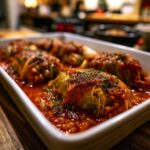
- In a medium bowl, whisk together the crushed tomatoes, tomato paste, brown sugar, apple cider vinegar, and beef broth. This concentrated base provides the deep red, thick consistency shown in the image.
- Spread 1/2 cup of the sauce across the bottom of a 9×13 inch ceramic baking dish. Arrange the rolls seam-side down, packed tightly together.
- Pour the remaining sauce over the center of the rolls, leaving some of the cabbage edges exposed to allow for slight caramelization.
- Cover the dish tightly with aluminum foil. Bake at 350°F (175°C) for 70 minutes.
- Remove the foil. Spoon some of the thickened juices from the side of the pan back over the tops of the rolls. Bake uncovered for an additional 20 minutes to reduce the sauce into a thick glaze and brown the cabbage slightly.
- Garnish heavily with fresh chopped parsley before serving directly from the dish.
Notes
- To prevent a soggy bottom, shave down the thick woody rib on the back of each leaf and pat the leaves completely dry before rolling. Use a concentrated tomato base instead of watery soup for a thicker sauce.