
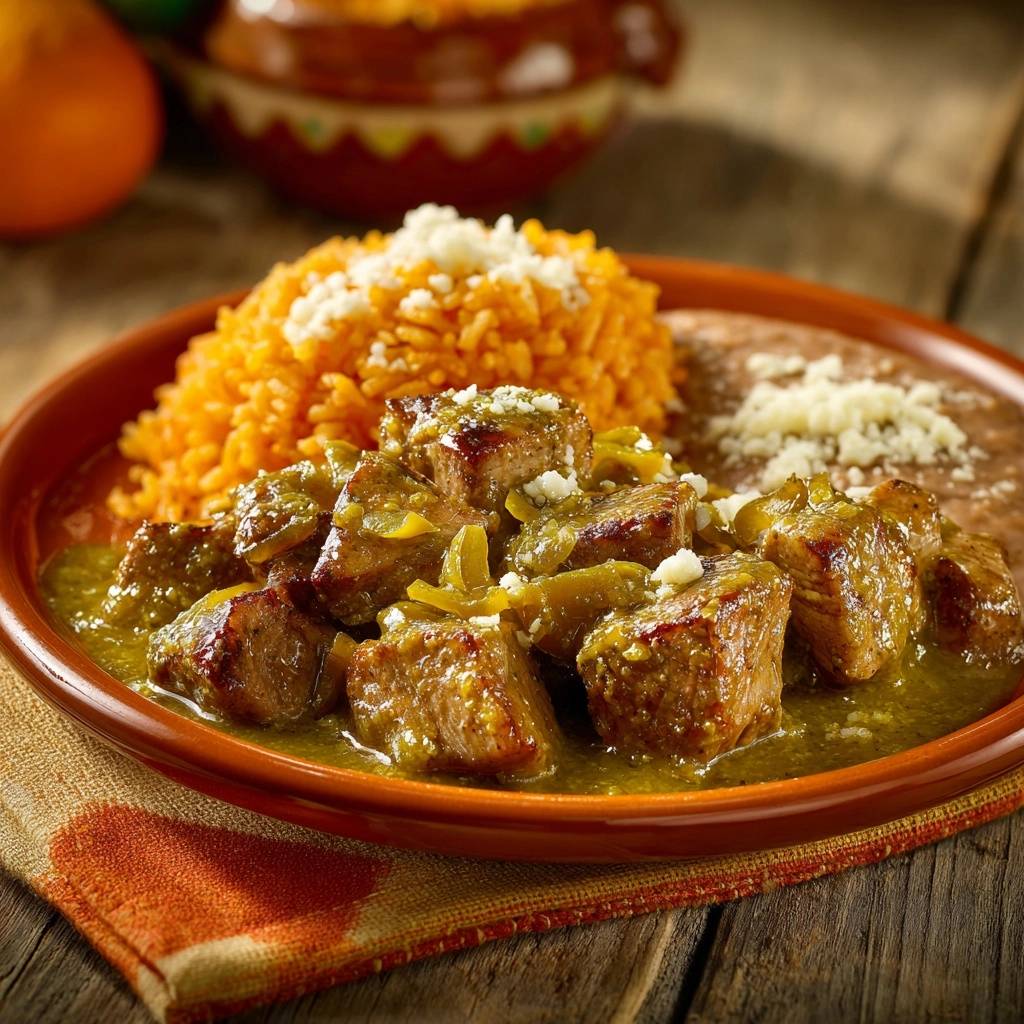
Few things in the kitchen are more frustrating than spending hours over a stove only to bite into a piece of gray, rubbery beef. We’ve all been there, expecting a tender morsel and getting something that feels like a pencil eraser. This Slow-Simmered Chile Verde Beef is the antidote to that disappointment, offering a vibrant, piquant alternative to the heavy, tomato-based stews we usually see in the winter.
The secret to this dish isn’t just about the time it spends on the heat; it’s about the “Anti-Tough” philosophy. This method relies on a strategic marriage of high-heat searing and a low-temperature, acid-based braise. By understanding how the acidity of tomatillos interacts with beef fibers, you can transform a humble chuck roast into something that practically melts on your tongue.
If you want to master this, you have to respect the sear. Most home cooks crowd the pan, which drops the temperature and steams the meat instead of browning it. I’ve found that browning the beef in three small batches is the only way to lock in that deep, savory crust that defines the final flavor of the sauce. Let’s dive into the science of why this works.
The Science of Tenderness in Beef Chuck
Beef chuck roast comes from the shoulder of the animal, a muscle group that does a lot of heavy lifting. Consequently, it’s packed with collagen and tough connective tissues. While this makes the meat too chewy for a quick sear like a ribeye, it makes it the perfect candidate for a long, slow braise.
During the 2.5-hour simmer, a magical transformation occurs. The heat gradually breaks down that tough collagen into gelatin, which provides a rich, silky mouthfeel. Without this time, the meat remains knotted and tight; with it, the fibers relax and separate with just the pressure of a fork.
The tomatillos in this recipe play a dual role. Beyond their bright flavor, their natural acidity acts as a gentle tenderizer. As the beef simmers in the green sauce, the acid helps weaken the protein bonds, accelerating the breakdown of the connective tissue while keeping the meat juicy.
Essential Components for the Green Chile Base
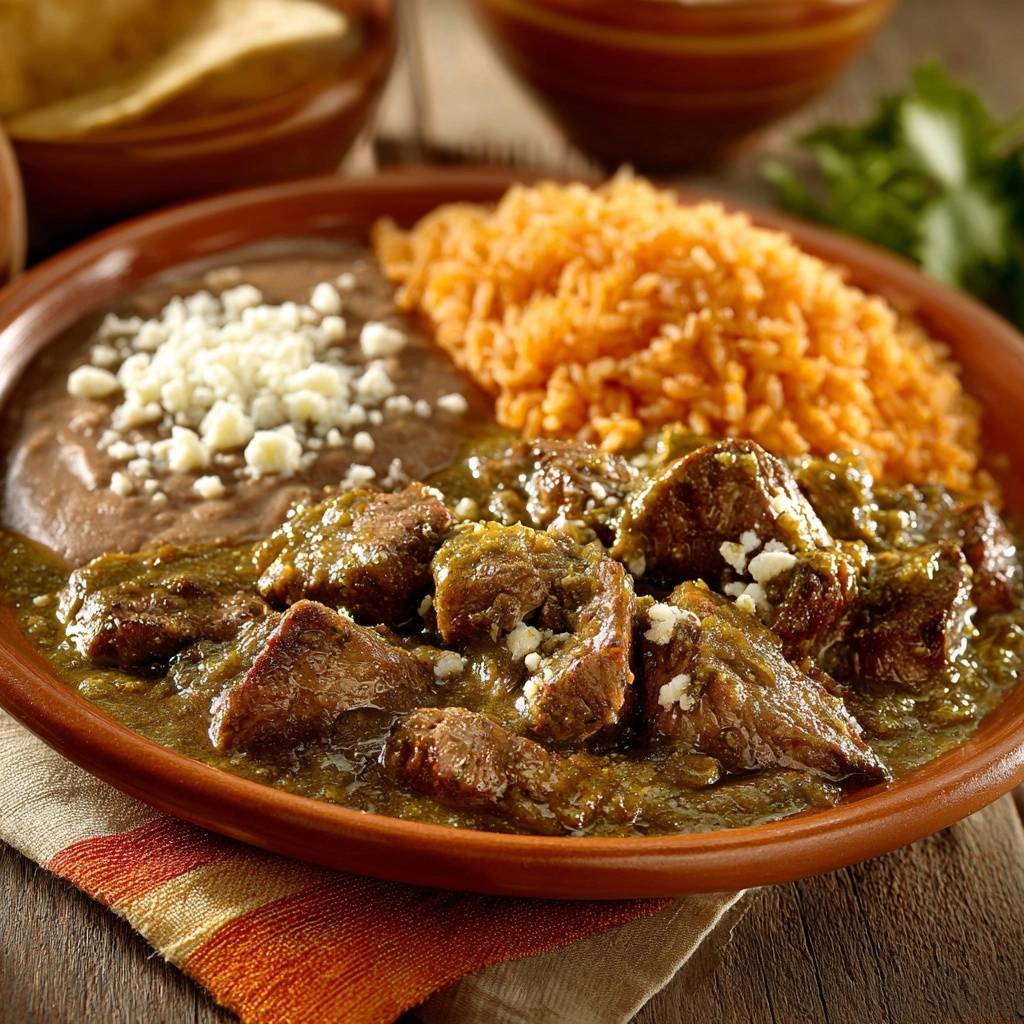
The foundation of a great Chile Verde is the balance between tartness, smoke, and heat. Tomatillos provide the base, offering a citrusy tang that cuts through the richness of the beef. Unlike red tomatoes, tomatillos have a firm texture and a higher pectin content, which helps the sauce thicken naturally as it reduces.
Poblano peppers add a smoky, earthy depth without overwhelming the palate with spice. We pair these with jalapeños to provide a controlled kick. Using beef broth instead of water is a non-negotiable step here; it adds a layer of savory complexity that water simply cannot provide.
Finally, the dry spices like oregano and cumin bring everything together. Cumin adds a warm, nutty aroma, while dried oregano provides a subtle floral note. These spices bloom in the hot oil and beef fat, ensuring their flavor permeates every inch of the sauce.
Selecting and Prepping Fresh Tomatillos
When you’re at the store, look for tomatillos that are firm and have husks that are tight and green. If the husk is shriveled or the fruit feels soft, it’s past its prime. Once you peel back that papery husk, you’ll notice a sticky residue on the skin; this is totally normal and washes off easily under warm water.
That sticky coating is actually a natural defense mechanism for the plant, but you want it gone before cooking. Once cleaned, these little green gems are ready to be charred. Their high pectin content is your best friend, as it ensures your sauce has a beautiful, body-coating consistency without needing any flour or cornstarch.
The Role of Roasted Poblano Peppers
Raw poblanos are crunchy and mild, but roasting them changes their entire DNA. The heat of the broiler blisters the skin and softens the flesh, releasing a deep, smoky sweetness. This step is essential for a professional-grade sauce.
You must peel off the charred skin after roasting. If you leave it on, you’ll end up with tough, papery bits in your sauce that won’t break down. Once peeled and sliced into strips, or “rajas,” these peppers provide a beautiful texture that contrasts perfectly with the tender beef cubes.
The Critical Importance of the Maillard Reaction
The Maillard reaction is the chemical process that occurs when proteins and sugars are exposed to high heat, creating that beautiful brown crust on meat. This isn’t just about color; it’s about creating hundreds of different flavor compounds that don’t exist in raw or boiled meat. If you skip the sear, your stew will taste flat and one-dimensional.
Moisture is the absolute enemy of the Maillard reaction. If your beef cubes are wet when they hit the oil, the energy of the pan goes into evaporating that water rather than browning the meat. This creates steam, which turns the meat gray and rubbery. You must pat the beef completely dry with paper towels before it touches the pan.
I always season the meat with salt and pepper immediately before searing. If you salt it too early and let it sit, the salt will draw moisture out of the interior of the meat through osmosis, making the surface wet again. For the best results, pat dry, season, and sear immediately in a smoking hot pot.
Batch Searing: Avoiding the Steam Trap
It is tempting to throw all two pounds of beef into the pot at once to save time, but you must resist. Adding too much cold meat causes the pan’s temperature to plummet. Instead of a sizzle, you’ll hear a hiss as the meat begins to release its juices and boil in its own liquid.
Work in three separate batches. You want enough space between the cubes so that the steam can escape freely. You are looking for a deep, mahogany-brown crust on at least two sides of every cube. This crust will eventually dissolve into the sauce, providing the savory backbone the dish needs.
Step-by-Step: Constructing the Chile Verde Sauce
Once the meat is browned and set aside, the pot will be coated in a layer of dark, flavorful bits. Don’t wash the pot! This is liquid gold. Lower the heat slightly and toss in your chopped onions and garlic. They will pick up the leftover beef fat and start to soften, becoming translucent and sweet.
As the onions cook, they release moisture that begins to loosen the browned bits from the bottom. This is the first step in building your flavor layers. Once the aromatics are fragrant, you’re ready to introduce the liquid elements that will form the braising environment.
Deglazing the Pot for Maximum Flavor
Deglazing is the act of adding liquid to a hot pan to lift the “fond,” which is the French term for those stuck-on browned bits. When you pour in the blended tomatillo puree and beef broth, use a wooden spoon to scrape the bottom of the pot vigorously. You’ll see the liquid darken as it absorbs all that concentrated beef flavor.
This step ensures that none of the hard work you put into searing the meat goes to waste. Those bits are packed with umami. By incorporating them into the green sauce, you create a bridge between the bright acidity of the vegetables and the rich, savory notes of the beef.
Blending and Charring the Aromatics
Before the tomatillos and jalapeños go into the blender, they need a trip under the broiler. You want them to be charred and blackened in spots, which usually takes about 5 to 7 minutes. This char adds a subtle bitterness and smokiness that balances the natural tartness of the fruit.
Be careful not to over-char them to the point of being completely burnt, as this can make the sauce taste acrid. Once they have a good color, blend them until smooth. This vibrant green puree is the heart of the dish, providing the liquid that will slowly tenderize the beef over the next few hours.
The Low-Temperature Braise Technique
The most common mistake people make during a braise is letting the liquid boil. High heat causes muscle fibers to contract violently, squeezing out moisture and leaving the meat dry and tough. To achieve that “Anti-Tough” result, you must maintain a bare simmer.
A bare simmer means you should only see one or two bubbles breaking the surface every few seconds. It should look lazy. This gentle heat allows the connective tissue to melt without shocking the proteins. Keep a heavy, tight-fitting lid on the pot to trap the moisture and ensure the beef stays submerged in the flavorful liquid.
Monitoring the 2.5-Hour Transformation
Cooking is a process, not just a timer. At the 60-minute mark, the beef will still feel quite tough if you poke it. By the two-hour mark, you’ll notice the sauce has thickened and the meat is starting to yield. The final 30 minutes are where the magic happens, as the last of the collagen turns to gelatin.
To test for doneness, lift a cube of beef out and press it with a fork. It should give way easily without you having to apply much pressure. However, you don’t want it to be so soft that it falls apart into shreds; the goal is tender cubes that hold their shape until they hit your tongue.
Troubleshooting Common Chile Verde Issues
If your sauce feels too thin after two hours, simply remove the lid for the last 20 minutes of cooking. This allows some of the water to evaporate, concentrating the flavors and thickening the pectin-rich tomatillo base. If the sauce tastes too tart, a tiny pinch of sugar can help balance the acidity without making the dish sweet.
What if the timer goes off and the meat is still tough? Don’t panic. Every cow is different, and some cuts just have more connective tissue than others. The solution is simple: keep simmering. Give it another 20 or 30 minutes, and it will eventually reach that melt-in-your-mouth stage. Patience is the most important ingredient here.
Optimal Pairings for Slow-Simmered Beef
This beef is incredibly rich and tangy, so it needs sides that can stand up to those bold flavors. Spanish rice is the classic choice, as the grains soak up the green sauce beautifully. Refried beans provide a creamy, earthy contrast that rounds out the plate.
The final touch is a generous sprinkle of crumbled cotija cheese. Cotija is a dry, salty Mexican cheese that doesn’t melt. Its saltiness is the perfect functional finish, cutting through the acidity of the tomatillos and highlighting the savory depth of the beef. A few fresh cilantro leaves can also add a pop of freshness.
Alternative Serving Suggestions
If you aren’t in the mood for a traditional plate, this beef makes an incredible filling for heavy-duty flour tortillas. The thick sauce clings to the meat, making it perfect for tacos or burritos. Just add some sliced avocado to provide a cool, fatty element that complements the spice.
You can also serve this in a “bowl” style. Start with a base of rice, add a big ladle of the beef and sauce, and top it with thinly sliced radishes for crunch. A squeeze of fresh lime juice right before eating can brighten the whole dish if you prefer an even zestier profile.
Make-Ahead Strategies and Storage
Like most stews and braises, Chile Verde actually tastes better the next day. As the dish sits in the fridge, the flavors have more time to marry and penetrate the meat. If you’re hosting a dinner party, I highly recommend making this a day in advance to save yourself stress and improve the flavor.
When storing, let the pot cool down slightly before transferring the beef and sauce to an airtight container. Make sure the meat is completely covered by the sauce to prevent it from drying out in the fridge. It will stay fresh and delicious for up to four days.
Freezing and Reheating Without Losing Texture
This dish freezes exceptionally well because of the high fat and gelatin content. Use a freezer-safe bag or container, leaving a little bit of headspace for expansion. It will keep its quality for up to three months. Just thaw it in the refrigerator overnight before you plan to eat it.
When reheating, avoid the microwave if possible, as it can make the beef rubbery. Instead, place the beef and sauce in a small saucepan over low heat. Add a splash of beef broth or water if the sauce has thickened too much in the fridge. Stir gently until it’s heated through, and it will taste just as good as the day you made it.
Expert Troubleshooting and Technique FAQ
Can I make this in a slow cooker instead of on the stovetop?
You can, but you will lose some of the depth of flavor. A slow cooker doesn’t allow for the same level of reduction as a stovetop pot, so your sauce might end up thinner and less concentrated. If you use a slow cooker, you still must sear the meat in a pan first, and I recommend using slightly less beef broth to compensate for the lack of evaporation.
Why does my Chile Verde sauce taste bitter?
Bitterness usually comes from over-charring the tomatillos or the peppers. If the skins are completely black and turned to ash, that flavor will permeate the sauce. Another culprit could be the garlic; if it burns during the sautéing phase, it becomes very bitter. To fix a bitter sauce, try adding a tiny pinch of salt and a teaspoon of honey or sugar to balance the palate.
Can I use frozen peppers if I can’t find fresh poblanos?
Frozen roasted peppers are a decent substitute in a pinch, but they often lack the firm texture of fresh ones. If you use frozen, make sure to pat them dry very well, as they tend to hold a lot of excess water. You won’t need to roast them again, so just slice them and add them directly to the pot with the liquid.
What is a good substitute for Cotija cheese?
If you can’t find Cotija at your local grocery store, Feta cheese is the best substitute. Both are salty, crumbly, and don’t melt easily. While Feta has a slightly more tangy, “sheepy” flavor, it provides that necessary hit of salt that balances the acidity of the green sauce perfectly.
How can I thicken the sauce without using flour or a roux?
The best way to thicken this sauce is through natural reduction. The tomatillos are naturally high in pectin, which is a thickening agent. If the sauce is too thin, simply simmer it with the lid off for the last 15-20 minutes. You can also take a few of the cooked tomatillo pieces and mash them against the side of the pot to release more of their thickening power into the liquid.
Why is my meat still tough after two hours of simmering?
If the meat is tough, it simply hasn’t cooked long enough for the collagen to break down. This often happens if the simmer was too low or if the cut of beef was particularly lean. The solution is never more heat; it is more time. Keep the pot at a bare simmer and check it every 15 minutes. It will eventually yield and become tender.
Slow-Simmered Chile Verde Beef
Course: Main CourseCuisine: Mexican-AmericanDifficulty: easy4
servings20
minutes2
hours120
Minutes450
kcalMexican-American
Ingredients
2 pounds beef chuck roast, cut into 1.5-inch cubes
2 tablespoons vegetable oil
1 pound tomatillos, husked and rinsed
2 jalapenos, seeded and halved
2 poblano peppers, roasted, peeled, and sliced into strips
1 white onion, chopped
4 cloves garlic, minced
1 cup beef broth
1 teaspoon dried oregano
1 teaspoon ground cumin
Salt and black pepper to taste
1/2 cup crumbled cotija cheese
Prepared Spanish rice and refried beans for serving
Directions
- Pat the beef cubes completely dry with paper towels. This is the most important step to avoid tough meat; moisture on the surface causes the meat to steam rather than sear. Season generously with salt and pepper.
- Heat oil in a large heavy-bottomed pot over medium-high heat. Brown the beef in three separate batches. Do not crowd the pan or the temperature will drop, leading to a gray, rubbery texture. Sear until a deep brown crust forms on all sides, then remove to a plate.
- While the meat browns, roast the tomatillos and jalapenos under a broiler for 5 to 7 minutes until charred. Blend them into a smooth puree. Separately, char the poblano peppers, peel off the skin, and slice them into thin strips (rajas).
- In the same pot used for the beef, saute the onion and garlic until soft. Pour in the tomatillo puree, beef broth, oregano, and cumin. Use a wooden spoon to scrape up the brown bits from the bottom of the pan for maximum flavor.
- Return the beef and any accumulated juices to the pot. Add the sliced poblano strips. Bring to a very gentle simmer, then turn the heat to low. Cover and cook for 2 to 2.5 hours.
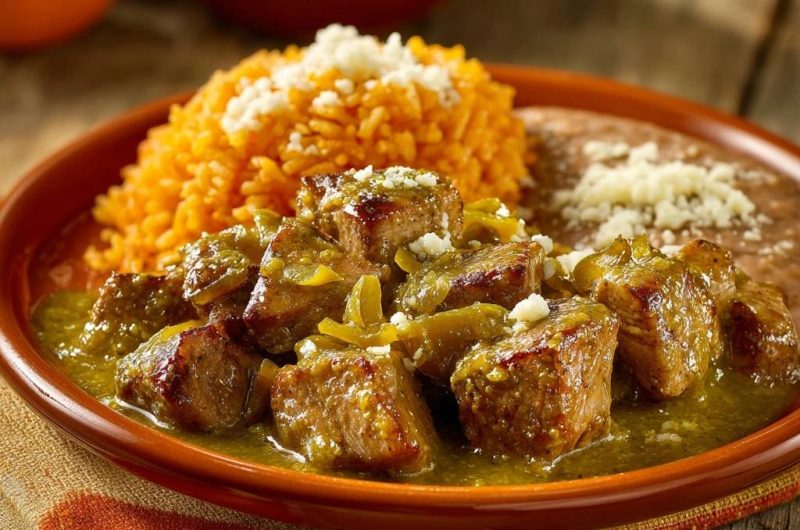
- The “Anti-Tough” secret: Maintain a bare simmer where only a few bubbles break the surface. Boiling the meat will tighten the proteins and make it tough. Simmer until the beef is tender but still holds its cubed shape as seen in the image.
- Serve the beef and green sauce over Spanish rice with a side of refried beans. Ensure the sauce is thick enough to coat the meat. Top the beef, rice, and beans with crumbled cotija cheese for a salty finish.
Notes
- The ‘Anti-Tough’ secret: Maintain a bare simmer where only a few bubbles break the surface. Boiling the meat will tighten the proteins and make it tough. Always pat the beef dry before searing to ensure a proper crust.