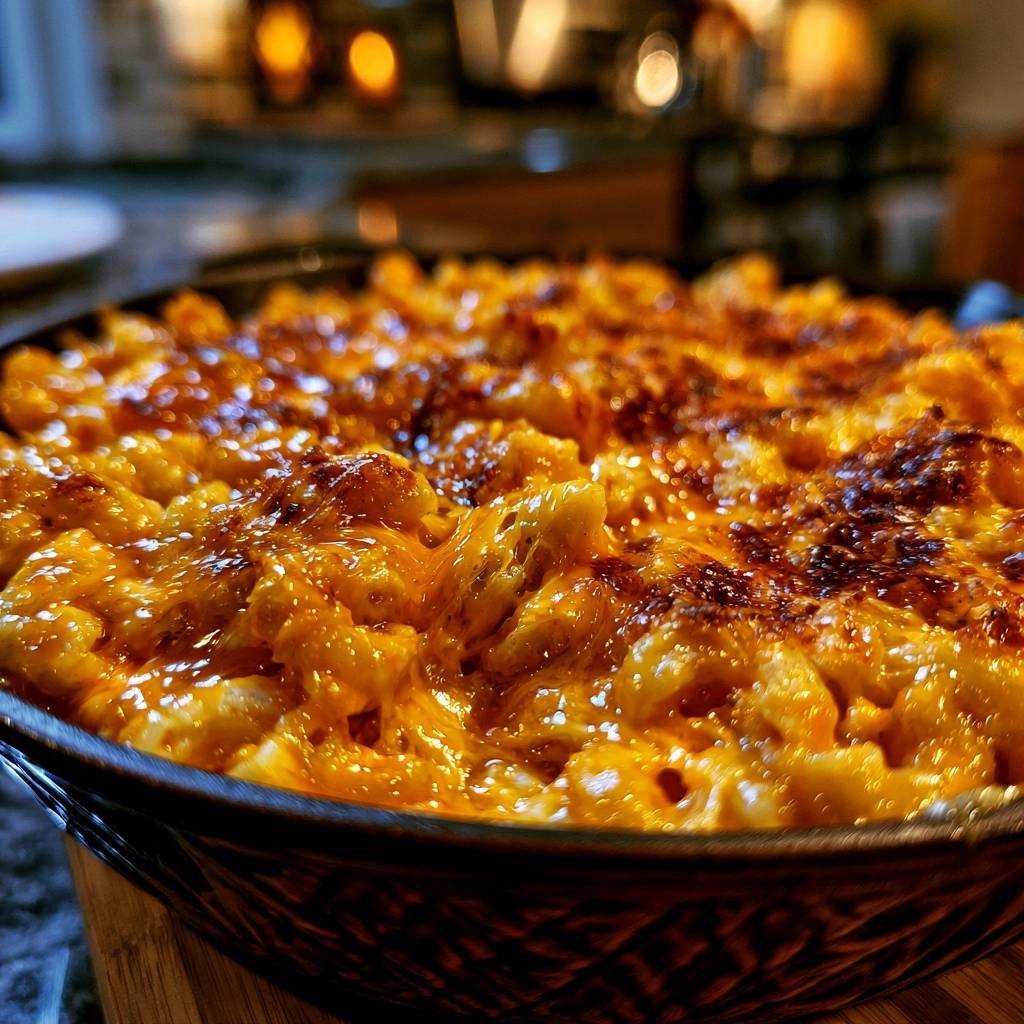
Southern Baked Macaroni and Cheese isn’t just a side dish; it’s the undisputed soul of the Sunday dinner table. When you pull that bubbling cast iron skillet out of the oven, the room should fill with the scent of toasted cheddar and savory spices. However, many home cooks struggle with the ultimate holiday heartbreak: a cheese sauce that turns out gritty, oily, or separated.
You’ve likely experienced that disappointing texture where the cheese clumps together and leaves a pool of oil at the bottom of the dish. This happens because dairy proteins are sensitive to high heat, causing them to tighten and “break” the emulsion. Therefore, achieving a professional-grade result requires more than just a good recipe; it requires a specific technique to keep the sauce velvety.
The secret to a flawless, silky finish is the “Anti-Grainy” tempering method. By controlling the temperature of your base before the cheese ever touches the pan, you ensure the fats and proteins stay bonded. I’ve found that moving the pan to a cool burner for just sixty seconds before whisking in your cheddar makes the difference between a grainy mess and a masterpiece.
The Science of Smooth Cheese Sauce
Understanding the chemistry of a cheese emulsion is the first step toward mastery. Cheese is essentially a stable mixture of milk fat, water, and protein held together by an emulsifier. When you subject this delicate balance to boiling temperatures, the proteins contract violently, squeezing out the fat like a soaked sponge. This results in the dreaded “broken” sauce where the oil separates from the solids.
To prevent this, we utilize the tempering method. After your roux and milk have thickened into a creamy bechamel, the residual heat is actually enough to melt the cheese. By turning off the flame and letting the liquid sit for a minute, you drop the temperature just below the breaking point of the cheddar’s proteins.
Furthermore, this cooling period allows the molecular structure of the cheese to relax as it melts. Instead of shocking the dairy, you are gently coaxing it into a liquid state. This preserves the smooth mouthfeel that defines authentic Southern comfort food. Consequently, your sauce will cling to every curve of the macaroni rather than sliding off into a greasy puddle.
Why Pre-Shredded Cheese Ruins the Texture
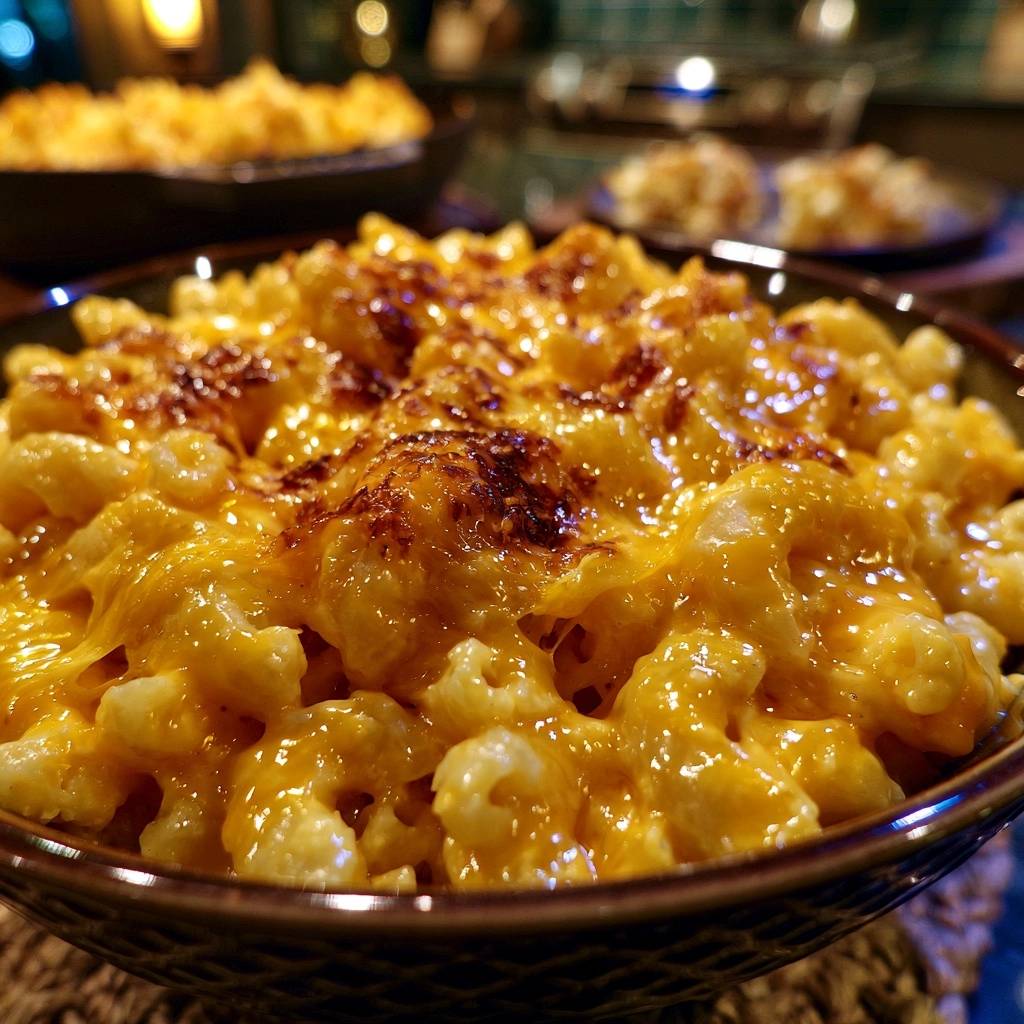
If you want a truly smooth Southern Baked Macaroni and Cheese, you must grate your own cheese from the block. Bagged, pre-shredded cheeses are coated in cellulose and potato starch to prevent the strands from sticking together in the package. While convenient, these anti-caking agents act as a barrier to melting and often create a sandy, gritty texture in your finished sauce.
Freshly grated cheese lacks these additives, meaning it melts at a lower temperature and integrates seamlessly into your roux. Additionally, block cheese typically retains more moisture than the pre-shredded variety. This extra moisture is vital for creating that stretchy, gooey pull that everyone looks for when the first scoop is served.
Essential Components for Southern Baked Macaroni and Cheese
Quality ingredients are the foundation of this dish, starting with the dairy. Whole milk provides the necessary fat content for a rich base, while heavy cream adds a layer of stabilization. The higher fat content in the cream actually helps prevent the sauce from curdling under the high heat of the oven.
Using unsalted butter is another pro move because it allows you to control the sodium levels precisely. Since different brands of cheddar vary in saltiness, starting with a neutral fat base ensures your final dish isn’t an oversalted disaster. For the pasta, large elbows or cavatappi are the best choices because their hollow centers and ridges act as “sauce traps,” holding onto the liquid during the bake.
The Three-Cheese Profile: Sharpness and Meltability
A great Southern mac relies on a balance of flavor and function. Sharp cheddar provides that iconic “bite” and deep orange color, but it doesn’t always melt as smoothly as younger cheeses. Therefore, we pair it with Monterey Jack, which is a champion of meltability and provides that luxurious, stretchy texture.
If you want to experiment, you can swap the Monterey Jack for Muenster or even a mild Gruyère. These cheeses maintain the Southern profile while adding a slightly nutty undertone. However, always keep the sharp cheddar as your primary flavor driver to ensure the dish tastes traditional and bold.
Aromatic Spices: Beyond Just Salt
While cheese is the star, the spices provide the “savory backbone” that prevents the dish from tasting flat. Ground mustard is a secret weapon in many Southern kitchens; it acts as a natural emulsifier to help the sauce stay bonded. It also adds a subtle tang that cuts through the heavy richness of the cream.
Smoked paprika and onion powder add depth and a hint of “wood-fired” flavor without the need for actual smoke. These aromatics ensure that every bite is complex. When you taste your sauce before adding the pasta, it should taste slightly over-seasoned, as the noodles will absorb and mellow the flavors during the baking process.
Phase One: Preparing the Pasta and Roux
The most common mistake in baked macaroni is overcooking the pasta on the stove. You must par-boil your noodles for about three minutes less than the package directions. The pasta should still have a very firm, almost crunchy bite in the very center because it will continue to cook and absorb moisture in the oven.
While the water boils, you will start your roux by melting butter and whisking in the flour. Cook this mixture for at least two minutes until it smells like toasted nuts and looks golden. This step is non-negotiable because it cooks out the raw flour taste, ensuring your sauce tastes like cream and cheese rather than paste.
Phase Two: Executing the Anti-Grainy Secret
Once your roux is ready, slowly stream in your room-temperature milk and cream while whisking vigorously. This gradual addition prevents lumps from forming. Continue cooking over medium heat until the sauce reaches “Nappe” consistency, which means it is thick enough to coat the back of a spoon without running off.
Now, perform the critical anti-grainy step: turn off the heat and move the pan to a cool spot on the stove. Wait a full sixty seconds. This brief pause is the insurance policy for your sauce. Once the temperature has dipped slightly, begin adding your hand-shredded cheese one handful at a time.
Whisk each handful until it is completely incorporated before adding the next. This “handful-by-handful” technique ensures the cheese melts evenly and stays suspended in the liquid. By the time you finish, the sauce should look like liquid gold—glossy, thick, and perfectly smooth.
Phase Three: The Cast Iron Bake and Broil
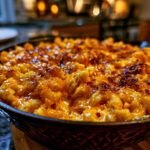
A cast iron skillet is the superior vessel for this recipe because it retains heat better than glass or ceramic. This leads to edge-to-edge browning and a crust that is truly crispy. After folding your undercooked noodles into the sauce, pour the mixture into the buttered skillet and top with the remaining cheese.
Bake at 375°F for about 25 minutes to allow the pasta to finish softening and the flavors to meld. For the final touch, switch your oven to the broiler for the last two or three minutes. Watch it like a hawk! You are looking for those deep brown, toasted spots that taste like a “Cheez-it” cracker. This caramelization adds a salty, crunchy contrast to the creamy interior.
Troubleshooting Common Macaroni and Cheese Issues
If you find your sauce is too thick before adding the pasta, simply whisk in a splash of the reserved pasta water or a little extra milk. The starch in the pasta water can actually help stabilize the emulsion further. However, if the sauce looks oily, it usually means the heat was too high; you can sometimes save it by whisking in a tablespoon of cold heavy cream off the heat.
Mushy noodles are almost always the result of over-boiling in the first phase. Remember that the pasta acts like a sponge in the oven. If it is already soft when it goes in, it will turn to mush as it absorbs the cheese sauce. Always lean toward undercooking the pasta during the initial boil.
Make-Ahead Strategies and Storage Logistics
You can assemble this dish up to 24 hours in advance, but there is a trick to it. If you mix the noodles and sauce while they are hot and let them sit overnight, the noodles will drink up all the sauce, leaving you with a dry bake. Instead, let the sauce and noodles cool separately before combining them in the skillet, then cover and refrigerate.
Store leftovers in an airtight container in the fridge for up to four days. When reheating, add a tiny splash of milk to the bowl before microwaving or placing it in the oven. This extra moisture helps revive the emulsion so the sauce becomes creamy again rather than staying stiff and oily. Freezing is generally discouraged as the dairy can become grainy upon thawing.
Traditional Pairings for a Southern Feast
Because Southern Baked Macaroni and Cheese is so rich and decadent, it pairs best with dishes that offer acidity or crunch. Vinegar-based collard greens are a classic choice because the acid cuts right through the heavy cheese. Crispy fried chicken or a tangy, pepper-flecked coleslaw also provide a necessary texture contrast.
While cornbread is a Southern staple, serving it alongside mac and cheese can sometimes feel like “starch overkill.” If you want a bread side, consider something lighter like a flaky biscuit or simply let the macaroni be the star carb of the plate. A bright, acidic cucumber and onion salad is another fantastic way to balance the plate.
Expert Troubleshooting and Technical FAQ
Can I use gluten-free flour for the roux?
Yes, you can use a high-quality 1-to-1 gluten-free flour blend for the roux. However, keep in mind that gluten-free flours can sometimes make the sauce feel slightly more viscous or “gummy” if overcooked. Watch the sauce closely as it thickens and be prepared to add an extra splash of milk if it becomes too dense before the cheese is added.
Why did my cheese sauce turn oily on top?
An oily top usually indicates an “oil break,” which happens when the fats in the cheese separate from the solids. This is typically caused by overheating the sauce during the baking phase or using a cheese with an extremely high fat-to-protein ratio. Using heavy cream in the base helps prevent this, as the extra proteins in the cream act as a stabilizer for the cheese fats.
Is the ground mustard absolutely necessary?
While you can leave it out, ground mustard serves a functional purpose beyond flavor. It contains a natural compound that acts as an emulsifier, helping the water and fat in the cheese sauce stay bonded together. It doesn’t make the dish taste like yellow mustard; instead, it provides a subtle “lift” to the cheddar flavor and ensures a smoother result.
How do I get the dark toasted spots without burning the edges?
The key is rack positioning. Bake the macaroni on the middle rack to ensure the pasta cooks through evenly. When it is time to broil, move the skillet to the top rack, but stay right there and watch it. The transition from “perfectly toasted” to “burnt” happens in seconds. If the edges are browning too fast, you can protect them with a ring of aluminum foil.
What is the best substitute for heavy cream?
If you don’t have heavy cream, the best Southern substitute is evaporated milk. It has a higher protein density than regular milk and is much more stable under heat. Do not use half-and-half if possible, as it lacks the fat content needed to properly stabilize the sharp cheddar, which may lead to a thinner or less creamy sauce.
Southern Baked Macaroni and Cheese
Course: Main CourseCuisine: AmericanDifficulty: easy8
servings15
minutes30
minutes45
Minutes510
kcalAmerican
Ingredients
1 pound large elbow macaroni or cavatappi
4 cups sharp cheddar cheese, freshly shredded (avoid pre-shredded bagged cheese)
2 cups Monterey Jack cheese, freshly shredded
1/2 cup unsalted butter
1/2 cup all-purpose flour
3 cups whole milk, room temperature
1 cup heavy cream
1 teaspoon garlic powder
1 teaspoon onion powder
1/2 teaspoon smoked paprika
1/4 teaspoon ground mustard (optional, for depth)
Salt and black pepper to taste
Directions
- Preheat your oven to 375 degrees F. Grease a large cast iron skillet or deep baking dish with butter.
- Boil the macaroni in heavily salted water for 3 minutes less than the package directions for al dente. The pasta should still have a firm bite in the center as it will finish cooking in the sauce. Drain and set aside.
- In a large saucepan or dutch oven, melt the butter over medium heat. Whisk in the flour and cook for 2 minutes, whisking constantly, to remove the raw flour taste and create a golden roux.
- Slowly pour in the milk and heavy cream in a steady stream while whisking vigorously to prevent lumps. Continue to cook over medium heat, whisking occasionally, until the sauce thickens enough to coat the back of a spoon (about 5-7 minutes).
- THE ANTI-GRAINY SECRET: Turn the heat off completely and move the pan to a cool burner. Wait 60 seconds. Adding shredded cheese to a boiling liquid causes the proteins to tighten and clump, creating a grainy mess. Stir in 4 cups of the shredded cheese (reserve 2 cups for the top) in small handfuls, whisking until completely smooth before adding the next handful.
- Stir in the garlic powder, onion powder, smoked paprika, ground mustard, salt, and pepper. Taste the sauce; it should be highly seasoned.
- Fold the cooked macaroni into the smooth cheese sauce until every noodle is thoroughly submerged and the holes are filled with sauce.
- Pour the mixture into your prepared cast iron skillet. Top evenly with the remaining 2 cups of cheese.
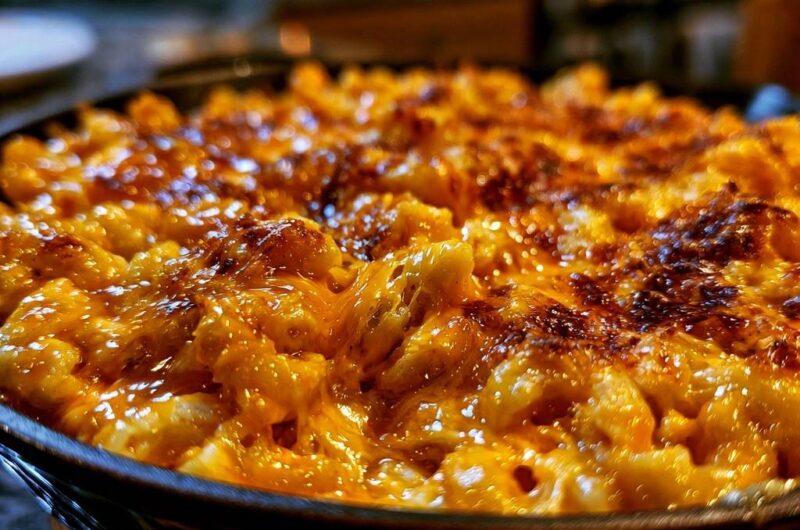
- Bake for 25 to 30 minutes. For the specific dark, crispy “cheez-it” crust shown in the photo, turn the broiler on for the final 2-3 minutes, watching closely until the cheese is bubbling and develops deep brown toasted spots.
- Let it sit for 10 minutes before serving. This allows the sauce to thicken and set so it clings to the pasta rather than pooling at the bottom.
Notes
- The secret to avoiding a grainy sauce is adding the cheese off the heat. Avoid pre-shredded bagged cheese as it contains anti-clumping agents that affect melting.