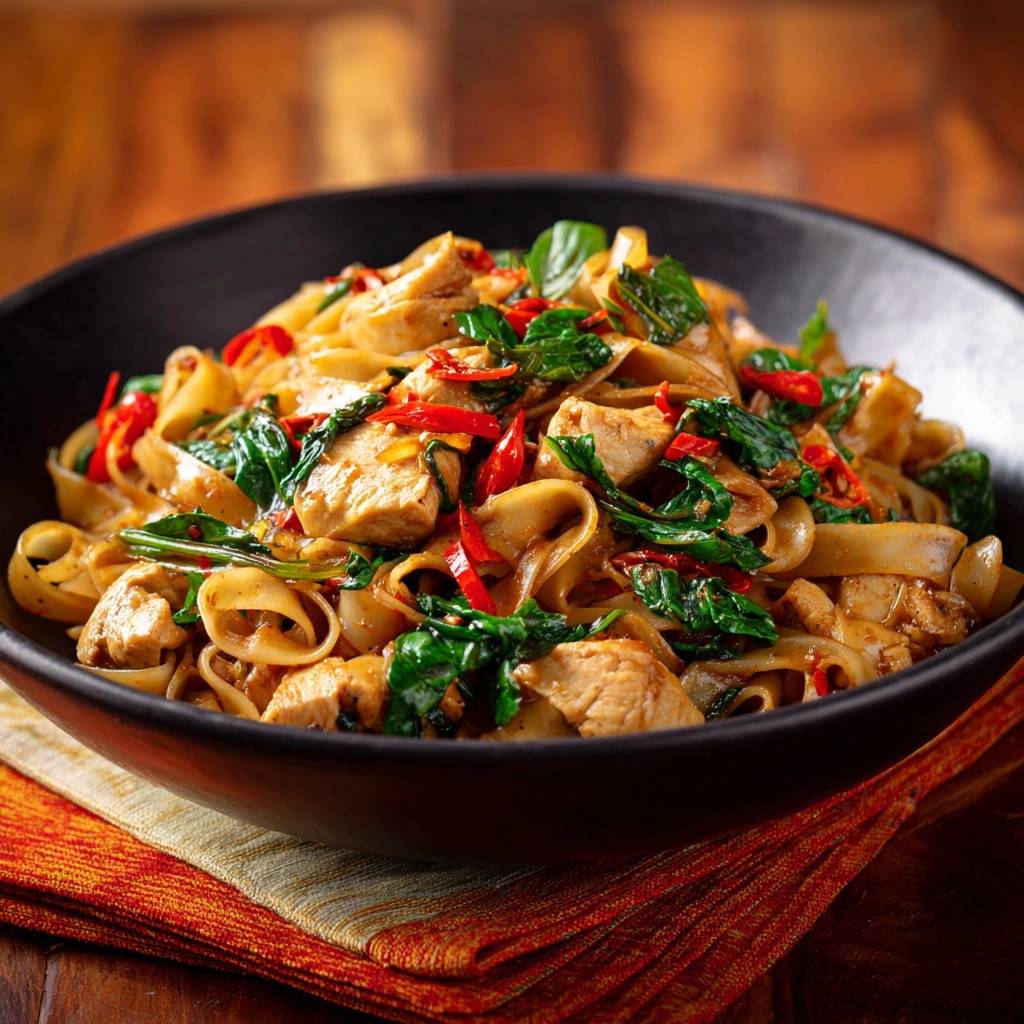
Imagine walking through a bustling night market in Bangkok, where the air is thick with the scent of caramelized soy sauce and the sharp, peppery bite of fresh basil. You hear the rhythmic clang of a metal spatula against a seasoned wok and see the flicker of high flames licking the sides of the pan. That first bite of Pad Kee Mao—or Drunken Noodles—is a revelation of chewy, wide rice noodles, succulent chicken, and a heat that builds beautifully with every mouthful.
However, many home cooks find themselves frustrated when their kitchen experiments result in a sticky, gummy mass of broken pasta rather than those distinct, glossy ribbons. The goal today is to bridge the gap between soggy takeout and the smoky, “wok hei” infused noodles found at the best street stalls. We aren’t just making a stir-fry; we are mastering the physics of heat and starch to create a dish that is as vibrant as it is satisfying.
The secret to restaurant-quality results lies in the “sear and sit” method. Most people toss their noodles constantly, which breaks the delicate rice starch and creates a mushy texture. By letting the noodles sear undisturbed in a screaming hot pan for nearly a minute, you create a structural barrier that keeps them separate and chewy. This technique, combined with a concentrated sauce, ensures your Spicy Basil Chicken Drunken Noodles come out perfect every single time.
The Anatomy of Perfect Spicy Basil Chicken Drunken Noodles
A truly great plate of Drunken Noodles relies on a precise balance of four pillars: salty, sweet, spicy, and umami. The saltiness comes from the fish sauce and light soy, while the palm sugar provides a mellow sweetness that rounds out the sharp edges of the chilies. The umami depth is anchored by oyster sauce, creating a complex profile that keeps you coming back for more.
Texture is just as important as taste in Thai stir-fry. You are looking for “Al Dente” rice noodles that offer a slight resistance when you bite into them. If the noodles are too soft, the dish loses its character; if they are too hard, they won’t absorb the sauce. Achieving that perfect “chew” is the hallmark of a skilled cook.
Why High Heat is Non-Negotiable
The physics of the wok are simple: you need intense heat to flash-evaporate moisture. When you add noodles and vegetables to a lukewarm pan, they begin to steam in their own juices, leading to that dreaded gummy texture. High heat prevents this by searing the ingredients instantly, locking in the crunch of the greens and the juices of the chicken.
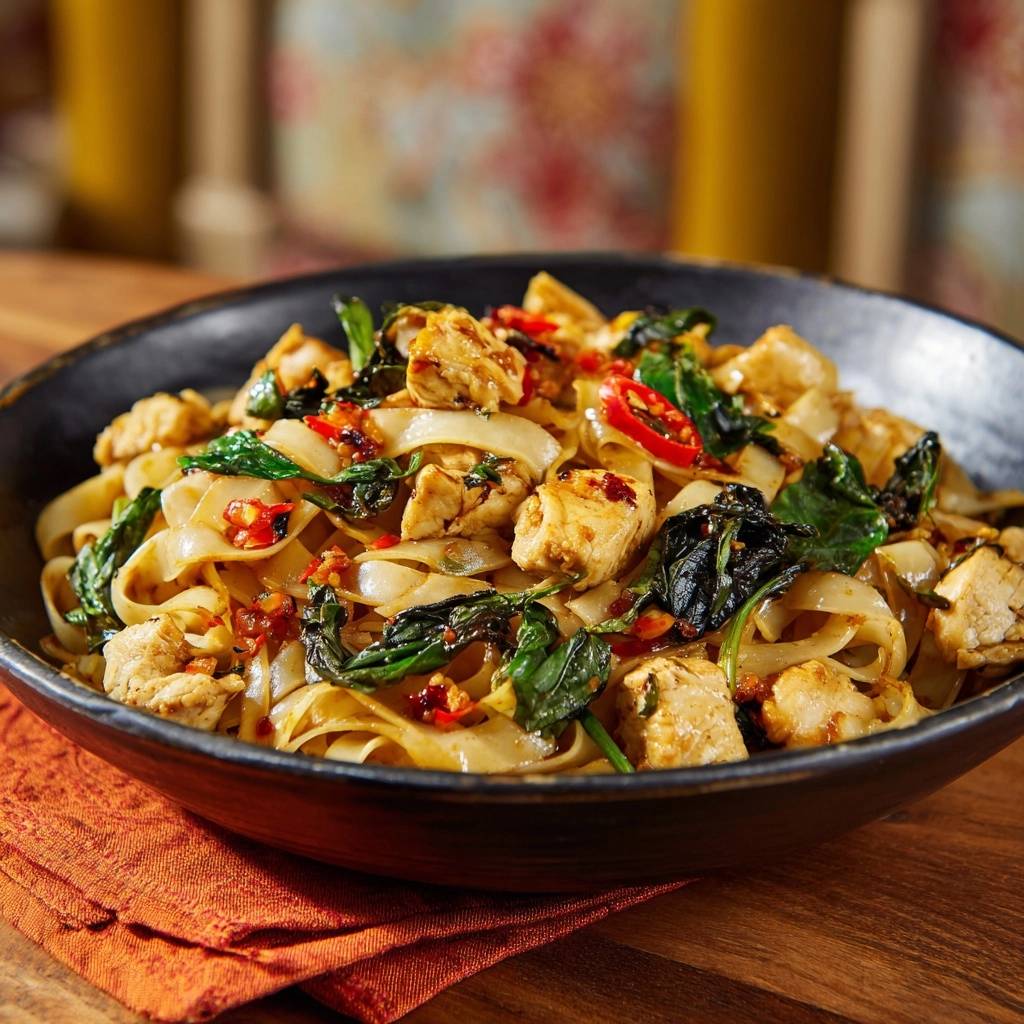
Furthermore, high heat triggers the Maillard reaction, which is the chemical reaction between amino acids and reducing sugars that gives browned food its distinctive flavor. As the dark soy sauce hits the hot metal, it caramelizes, creating a deep mahogany glaze and a smoky aroma that defines the “Drunken” style. Without that heat, you’re just boiling noodles in sauce.
Essential Components for Authentic Thai Flavor
To get that authentic flavor, you need the right building blocks. Thai Bird’s Eye chilies are essential for their fiery, floral heat, which is much more intense than a standard serrano. We also use palm sugar because its caramel-like undertones are far more complex than white table sugar, providing a bridge between the salty fish sauce and the spicy peppers.
Don’t overlook the greens. Chinese broccoli, or Gai Lan, is the traditional choice because its thick, hardy stems provide a necessary crunch that contrasts with the soft noodles. If you can’t find it, baby bok choy is a fantastic substitute, but ensure you don’t overcook it; you want those stalks to retain their snap.
Selecting the Right Rice Noodle
The foundation of this dish is the wide rice noodle, known as Sen Yai. If you can find fresh noodles at an Asian grocery store, use them! They are supple and ready to go. However, dried wide rice noodles are more common for most home cooks. The trick is to soak them in lukewarm water until they are flexible but still firm in the center.
Never boil your dried rice noodles like you would Italian pasta. Boiling makes them too hydrated, causing them to disintegrate the moment they hit the wok. The “soak, don’t boil” method ensures they finish cooking in the sauce, absorbing all those incredible flavors without losing their shape.
The Role of Thai Holy Basil vs. Sweet Basil
This is a critical distinction for any Thai food enthusiast. While many Western recipes simply list “basil,” authentic Pad Kee Mao traditionally uses Holy Basil (Bai Grapow). Holy Basil has a peppery, clove-like scent that stands up to the intense heat and spice of the dish. It is quite different from the anise-heavy Italian Sweet Basil found in most supermarkets.
If you can’t find Holy Basil, Thai Purple Basil is the next best thing. If you are forced to use Italian Sweet Basil, add a generous pinch of extra black pepper to the dish to mimic that signature peppery bite. Regardless of which variety you use, always add the leaves at the very end so they just barely wilt, preserving their aromatic oils.
The Secret Sauce: Achieving the Deep Mahogany Glaze
The sauce is a concentrated blend of oyster sauce, light soy, dark soy, and fish sauce. It is important to understand that “Dark Soy” is used primarily for its thick viscosity and rich color, while “Light Soy” provides the actual salt. Do not try to use a standard “All-Purpose” soy sauce as a 1:1 replacement for both, or the flavor and color will be off.
By whisking these ingredients together before you start cooking, you ensure the noodles are seasoned instantly. This prevents you from having to pour individual liquids into the pan, which would lower the temperature and increase the risk of the noodles becoming soggy while you scramble to find the next bottle.
Balancing Umami and Heat Levels
Thai chilies pack a punch, usually landing between 50,000 and 100,000 Scoville units. If you want the flavor without the intense burn, you can deseed the chilies before slicing them. This allows the floral aroma of the pepper to shine through without overwhelming your palate. For a medium heat, three chilies usually do the trick, while five or more will provide that authentic “Drunken” kick.
Step-by-Step: Executing the Flash-Sear Technique
Success in the wok is all about timing and movement. Because the actual cooking process takes less than ten minutes, you need to be focused and ready to move through each phase with confidence. The goal is a dry, glossy finish where the sauce has become a part of the noodle itself.
Phase 1: Searing the Protein for Maximum Texture
Start by heating your oil until it just begins to smoke. Add your chicken pieces in a single layer and leave them alone! This “undisturbed sear” is vital. If you move the chicken too soon, it will release its juices and begin to boil in the pan. You want a golden-brown crust on the outside while keeping the inside tender and juicy.
Phase 2: Aromatics and the Oil Infusion
Once the chicken is set aside, add the remaining oil along with the garlic and chilies. You only have about 30 seconds here. You want the garlic to turn golden and the chilies to release their spice into the oil. This infused oil becomes the delivery vehicle for the heat, ensuring every inch of the dish is seasoned evenly later on.
Phase 3: The “Anti-Gummy” Noodle Sear
This is the most important part of the process. When you add the noodles to the screaming hot pan, spread them out and let them sit. Do not touch them for at least 45 seconds. This “fries” the exterior starch, creating a barrier that prevents the noodles from sticking together. You will hear them sizzle and pop; that is the sound of success.
Troubleshooting Common Stir-Fry Pitfalls
The most common issue is “Soggy Vegetable Syndrome.” This usually happens when the pan isn’t hot enough or the vegetables are added too early. If you find your sauce is thickening too fast before the noodles are coated, add a tiny splash of water or broth to the edges of the pan. The steam will help loosen the sauce without making the dish watery.
How to Fix Clumped Noodles Mid-Cook
If your noodles start to clump despite your best efforts, don’t panic. Add a small teaspoon of oil directly onto the clump and use a folding motion with your spatula to gently pry them apart. Increase the heat to the maximum setting and keep the noodles moving rapidly to dry out any excess moisture that might be causing the stickiness.
Flavor Variations and Protein Swaps
While chicken is the classic choice, this recipe is incredibly versatile. You can easily swap the chicken for thinly sliced beef flank or succulent shrimp. If you prefer a plant-based option, extra-firm tofu works beautifully. Just make sure to press the tofu well to remove excess water so it can achieve a crispy exterior during the searing phase.
Vegetarian Adjustments Without Losing Depth
To make this dish vegetarian, you need to replace the fish sauce and oyster sauce without losing that savory “oomph.” Use a mushroom-based vegetarian stir-fry sauce in place of the oyster sauce and a high-quality light soy sauce with an extra pinch of sea salt to mimic the salinity of fish sauce. These swaps maintain the deep umami profile that makes the dish so addictive.
Optimal Serving and Pairing Suggestions
Drunken Noodles are meant to be eaten the second they leave the wok. As they sit, the rice noodles continue to absorb moisture and will eventually lose their perfect chew. To balance the richness and heat, serve this with a crisp, cold side like a smashed cucumber salad or a light lime-based slaw. The acidity will cut through the savory sauce and refresh your palate between spicy bites.
Expert Tips for Wok Management at Home
Most home stoves don’t produce the same BTUs as a commercial burner, but you can compensate for this. Use a heavy cast-iron skillet if you don’t have a carbon steel wok; cast iron retains heat much better than thin non-stick pans. Another pro tip is to cook in smaller batches. If you crowd the pan, the temperature drops instantly, and you’ll end up with steamed noodles instead of seared ones.
The Importance of “Mise en Place”
In Thai cooking, “Mise en Place”—having everything prepped and ready—is mandatory. Because the cook time is so fast, a five-second delay while you look for the sugar can result in burnt garlic or overcooked noodles. Line up your bowls of prepped chicken, chopped greens, and whisked sauce in the order they will enter the pan. This organization allows you to focus entirely on the heat and texture of the food.
Frequently Asked Questions
Can I use regular basil if I can’t find Thai basil?
Yes, you can use Italian Sweet Basil, but the flavor profile will shift toward a sweeter, anise-like taste. To compensate for the missing peppery notes of Thai Holy Basil, add a generous half-teaspoon of freshly cracked black pepper to the sauce. It won’t be an exact match, but it will still be delicious.
Why are my noodles breaking into small pieces?
Noodles usually break because they were either over-soaked before cooking or over-handled in the pan. If they are too soft before they hit the heat, they can’t withstand the tossing. Use a gentle “folding” motion with your spatula—lifting from the bottom and folding over—rather than a vigorous stirring motion to keep the long ribbons intact.
How do I store and reheat leftovers?
Store leftovers in an airtight container in the fridge for up to two days. Rice noodles naturally firm up and get “crunchy” when cold. To reheat, the stovetop is best. Add a splash of water to a pan, add the noodles, and cover with a lid for one minute to steam them back to life. Avoid the microwave if possible, as it tends to make the noodles rubbery.
Is there a substitute for Chinese Broccoli?
Broccolini is the best substitute as it has a similar flavor and crunch. You can also use Baby Bok Choy or even regular broccoli florets cut into very small pieces. If using regular broccoli, blanch it in boiling water for 60 seconds before adding it to the stir-fry to ensure the stems are tender by the time the dish is finished.
How can I make this dish even spicier?
If the fresh Thai chilies aren’t enough, you can add a teaspoon of dried Thai chili flakes (Prik Bon) to the sauce. The dried flakes provide a smoky, lingering heat that complements the sharp, immediate sting of the fresh peppers. You can also serve the dish with a side of “Prik Nam Pla”—fish sauce with sliced raw chilies—for an extra punch of salt and heat.
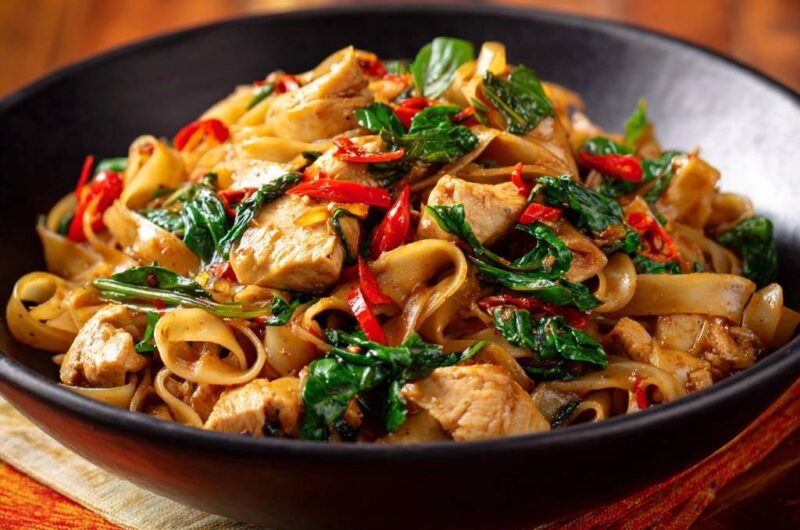
Spicy Basil Chicken Drunken Noodles
Course: Main CourseCuisine: ThaiDifficulty: easy4
servings15
minutes10
minutes25
Minutes480
kcalThai
Ingredients
1 pound wide rice noodles (fresh or dried, prepared according to package instructions until al dente)
1 pound chicken breast, cut into bite-sized pieces
2 cups fresh Thai basil leaves
4 cloves garlic, minced
3-5 Thai bird’s eye chilies, sliced (adjust for heat)
1 cup Chinese broccoli (Gai Lan) or baby bok choy, chopped
2 tablespoons oyster sauce
1 tablespoon light soy sauce
1 tablespoon dark soy sauce (for the deep mahogany color seen in the image)
1 tablespoon fish sauce
1 teaspoon palm sugar or brown sugar
3 tablespoons vegetable oil, divided
Directions
- In a small bowl, whisk together the oyster sauce, light soy sauce, dark soy sauce, fish sauce, and sugar. This concentrated sauce ensures the noodles are seasoned instantly without excess moisture soaking into the starch.
- Heat 1 tablespoon of oil in a large wok or heavy skillet over high heat until it begins to smoke slightly. Add the chicken pieces in a single layer. Sear undisturbed for 2 minutes to get a golden crust, then toss until cooked through. Remove chicken and set aside.
- Add the remaining 2 tablespoons of oil to the hot wok. Add the garlic and sliced chilies. Stir-fry for 30 seconds until fragrant but not burnt.
- Add the greens (Chinese broccoli or bok choy) to the wok and toss for 1 minute until they begin to soften.
- To solve the gummy pasta problem, add the noodles to the screaming hot pan. Spread them out and let them sit undisturbed for 45-60 seconds. This “sears” the rice starch, creating a structural barrier that prevents them from clumping.
- Pour the sauce mixture around the edges of the wok so it sizzles before hitting the noodles. Toss rapidly for 1 minute using a folding motion to coat every noodle. The high heat will caramelize the sugars and thicken the sauce into a glossy glaze.
- Return the chicken to the pan and add the fresh basil leaves. Toss for 30 seconds until the basil is just wilted and aromatic. Serve immediately while the noodles maintain their distinct, chewy texture.
Notes
- To prevent gummy noodles, ensure the wok is screaming hot before adding the pasta and let them sear undisturbed for nearly a minute to set the starch.