Nothing ruins a seafood dinner faster than biting into a piece of shrimp that feels like a rubber band. We’ve all been there—you’re craving that snappy, succulent texture, but you end up with tough, shrunken curls that lost their juice minutes ago. The secret to restaurant-quality Spicy Garlic Chili Shrimp isn’t a fancy appliance; it’s all about mastering the high-heat sear and a perfectly timed glaze.
This dish hits every sensory note your palate craves. You get the immediate punch of pungent garlic, the creeping warmth of chili oil, and a subtle kiss of honey to round out the edges. When that vibrant red sauce hits the screaming hot pan, it bubbles into a glossy lacquer that clings to the shrimp without making them soggy. It’s a bold, aromatic experience that transforms simple ingredients into a centerpiece meal.
The real trick to success here is moisture management. Most home cooks pull shrimp straight from the fridge and toss them into a lukewarm pan, which effectively steams the protein instead of searing it. If you want that golden-red crust and a tender interior, you must pat your shrimp bone-dry with paper towels before they ever touch the oil. This one small step ensures the Maillard reaction happens instantly, locking in moisture before the shrimp can overcook.
The Anatomy of the Perfect Spicy Garlic Chili Shrimp
A great chili shrimp dish relies on a delicate balance of four pillars: heat, umami, acidity, and sweetness. The umami comes from the soy sauce, providing a deep, savory backbone that anchors the lighter ingredients. Without this salty foundation, the spice can feel thin and one-dimensional rather than rich and complex.
The heat in this recipe is layered. We use chili garlic sauce for a fermented, tangy spice and chili oil with flakes for a sharp, clean burn and a stunning visual pop. To keep the capsaicin from overwhelming your taste buds, we introduce rice vinegar. This acid cuts through the fat of the oil, brightening the entire flavor profile and making each bite feel fresh rather than heavy.
Why Moisture Control is Your Best Friend
Science tells us that water is the enemy of a good sear. When shrimp hit the pan with surface moisture, that liquid immediately turns to steam. This steam acts as a thermal barrier, preventing the shrimp from reaching the high temperatures needed for browning. Instead of a crisp exterior, you get grey, limp seafood that has spent too much time in the pan.
By drying the shrimp thoroughly, you allow the proteins and sugars to react directly with the heat. This creates a beautiful crust and a complex flavor profile that steaming simply cannot achieve. Therefore, spend an extra minute pressing those shrimp between layers of paper towels; it is the most important prep work you will do.
Essential Components for the Chili Garlic Glaze
The glaze is the soul of this dish, and the ingredients you choose matter. While many people reach for Sriracha, a true chili garlic sauce or Sambal Oelek offers a much chunkier texture and a more garlic-forward profile. These sauces contain bits of chili skin and seeds that provide a rustic, homemade feel to the final glaze.
In addition to the sauce, using a chili oil that contains actual fried flakes is a game-changer. These flakes add a toasted, nutty element and ensure the vibrant red color coats every nook and cranny of the shrimp. The honey in the mix isn’t just for sweetness; it acts as a thickener, helping the sauce reduce into a sticky, professional-looking lacquer in seconds.
Selecting the Right Shrimp: Size and Prep Matters
Size definitely matters when you are working with high heat. I recommend using “Large” shrimp, typically labeled as 16/20 or 21/25 count. These are big enough to withstand a 90-second sear without turning into tiny, tough knots. Smaller shrimp cook too quickly, often reaching the “overdone” stage before the sauce has a chance to reduce.
Leaving the tails on is a smart move for both flavor and aesthetics. The tail shell protects the thinnest part of the shrimp from drying out and provides a convenient “handle” if you’re serving these as an appetizer. Just make sure they are thoroughly deveined so the flavor remains clean and sweet.
Fresh Asparagus and Long-Grain Rice: The Supporting Cast
Asparagus is the perfect partner for spicy seafood because its natural earthiness and slight bitterness provide a palate cleanser between spicy bites. When you char it in the same pan, it picks up the residual flavors of the garlic without becoming mushy. It adds a necessary crunch that contrasts beautifully with the tender shrimp.
For the base, long-grain white rice is the gold standard. Unlike short-grain or sticky rice, long-grain varieties like Jasmine or Basmati stay fluffy and separate. This allows the spicy chili oil to drizzle down between the grains, flavoring the entire bowl without turning the rice into a heavy, sodden mass.
Step-by-Step: Achieving the Perfect High-Heat Sear
Success starts with your mise en place. Because the actual cooking happens in under five minutes, you cannot be chopping garlic while the pan is hot. Start by getting your rice simmering. While that cooks, whisk your chili garlic sauce, oil, honey, soy, and vinegar in a small bowl. Trim your asparagus and dry your shrimp until they feel tacky to the touch.
First, we tackle the asparagus. Heat a tablespoon of oil until it’s shimmering. Toss in the spears and let them sit undisturbed for a minute to get those beautiful charred spots. You want them tender-crisp—bright green but with a bit of “snap” left in them. Once they’re done, pull them out and wipe that skillet clean. We need a fresh surface for the star of the show.
Now, crank the heat to high. Add the remaining oil and wait until you see the first wisps of smoke. This is the “danger zone” where the magic happens. Lay the shrimp in a single layer. If you hear a loud sizzle, you’re doing it right. If the pan is quiet, it’s not hot enough. Let them sear for 60 to 90 seconds. You’re looking for a golden-pink crust to form on the bottom.
Flip the shrimp and immediately pour in your sauce mixture. The pan will erupt with bubbles and steam—this is exactly what you want. The sugars in the honey will caramelize instantly, and the sauce will thicken into a deep red glaze. Toss everything together for another 30 seconds. As soon as the shrimp are opaque and the sauce looks like a shiny coating, kill the heat. Every second counts here!
The 90-Second Rule for Searing Seafood
The 90-second rule is your safeguard against the “rubbery shrimp” syndrome. On high heat, the first side needs just enough time to develop color and structure. By the time you flip them, the shrimp are already 70% cooked. The final 30 to 45 seconds in the bubbling sauce is just to finish the centers and coat them in flavor.
Watch the shape of the shrimp as a visual cue. A perfectly cooked shrimp looks like the letter “C.” If it has curled so tightly that the tail is touching the head to form an “O,” it has been on the heat too long. Aim for that relaxed “C” shape to ensure the meat stays succulent and juicy.
The Late-Stage Glaze Technique
You might be tempted to marinate the shrimp in the sauce beforehand, but please resist! The honey and soy sauce contain high amounts of sugar, which will burn and turn bitter long before the shrimp are actually cooked. By adding the sauce at the very end, you get all the flavor and a beautiful glossy finish without the scorched aftertaste.
This technique creates a “lacquered” effect. The sauce reduces so quickly that it forms a thick, concentrated coating that sticks to the shrimp rather than pooling at the bottom of the plate. It ensures that every single bite delivers the maximum amount of garlic and chili punch.
Troubleshooting Common Shrimp Texture Issues
If your shrimp end up tough, the culprit is almost always heat duration. Remember that shrimp continue to cook for a minute even after you take them out of the pan due to residual heat. If they look “perfect” in the pan, they might be overdone by the time they hit the table. Pull them off the heat when they are just barely opaque.
Another common issue is “mushy” shrimp. This usually happens if the shrimp were frozen and not thawed properly, or if they sat in their own juices for too long. Always thaw shrimp in a bowl of cold water, then drain and dry them immediately. Never let them sit in a puddle of water in the fridge, as this breaks down the delicate muscle fibers.
Managing Heat Levels in the Chili Oil
Not everyone has the same tolerance for spice, and that’s okay! If you want the flavor of the chili garlic sauce without the mouth-numbing heat, you can easily adjust the recipe. Try swapping half of the chili oil for plain toasted sesame oil. This maintains the aromatic profile while significantly lowering the Scoville units.
If you find the final sauce is too spicy, a tiny squeeze of fresh lime juice or an extra teaspoon of honey can help neutralize the capsaicin. The acid and sugar work together to mellow the burn on your tongue. Conversely, if you’re a heat seeker, toss in some sliced Thai bird’s eye chilies during the final toss for an extra kick.
Flavor Variations and Ingredient Substitutions
If you can’t find Sambal Oelek or chili garlic sauce at your local grocer, don’t panic. You can make a quick substitute by mixing a tablespoon of tomato paste with a teaspoon of crushed red pepper flakes and an extra clove of minced garlic. It won’t have the same fermented depth, but it will provide the body and heat needed for the glaze.
Asparagus is fantastic, but this recipe is very forgiving with vegetables. Sliced bok choy, snap peas, or even thin strips of red bell pepper work beautifully. The key is to choose a vegetable that cooks quickly at high heat so you can maintain the fast pace of the recipe. Just ensure whatever you use is dried well to maintain that charred texture.
Plating and Presentation for Maximum Impact
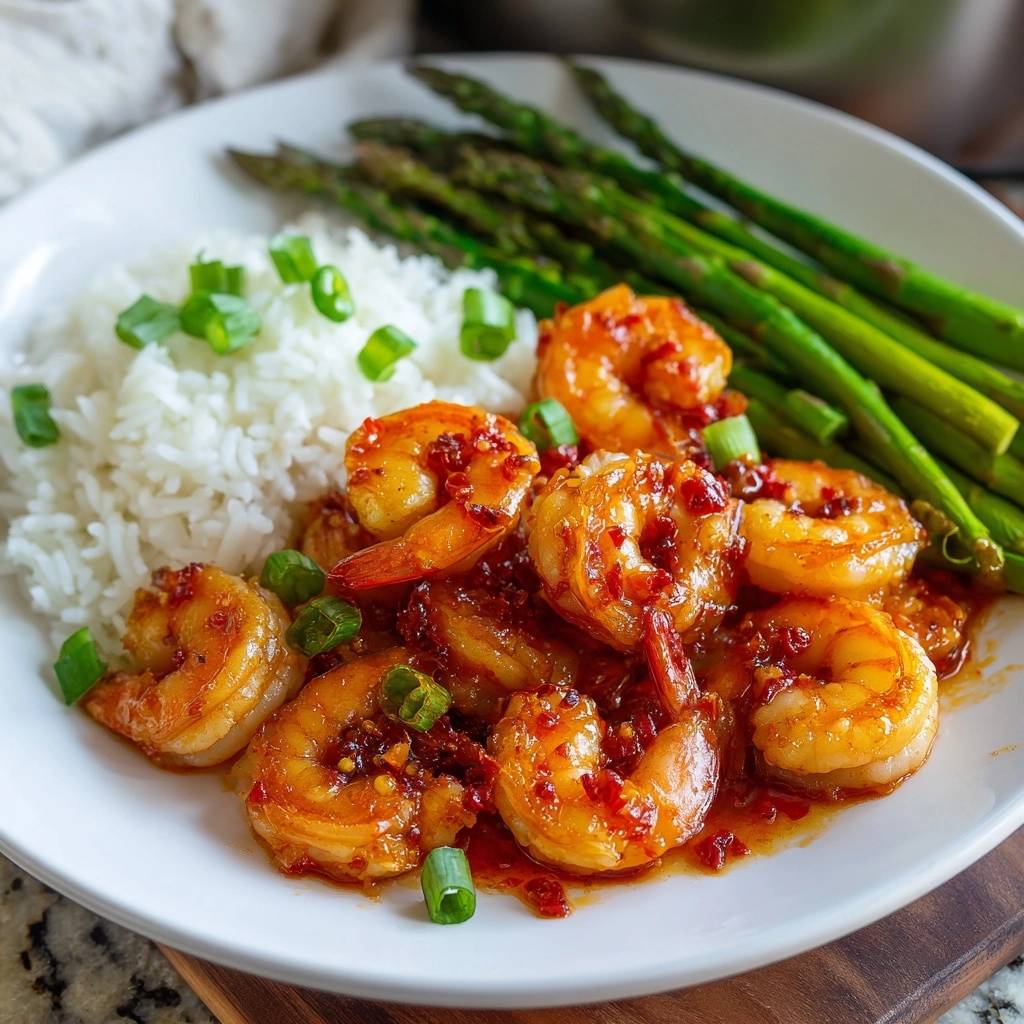
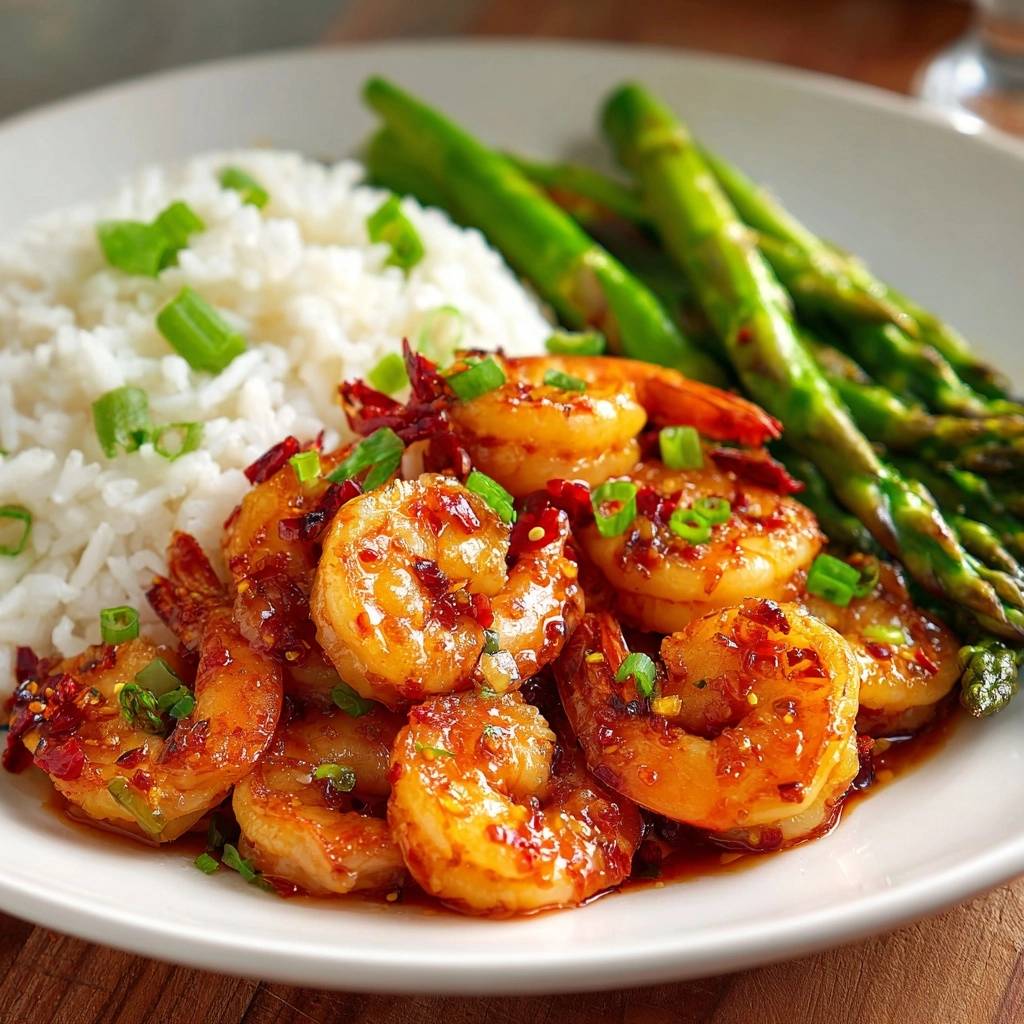
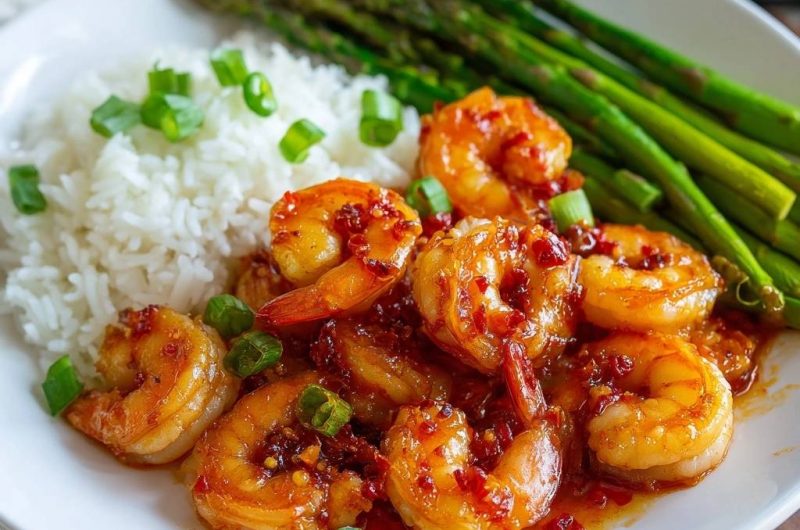
We eat with our eyes first, and this dish is a showstopper. Start with a generous bed of fluffy white rice in a shallow bowl. Arrange the charred asparagus spears to one side, pointing them in the same direction for a clean, architectural look. Pile the glistening, red-glazed shrimp right in the center.
Don’t leave any of that liquid gold in the pan! Drizzle the remaining spicy oil and bits of fried garlic over the rice and shrimp. Finally, hit the dish with a heavy garnish of sliced green onions. The bright, cool green provides a stunning color contrast against the deep red sauce and makes the whole plate look fresh and vibrant.
Expert Tips for Scaling and Storage
This is a “flash-cook” meal, meaning it is at its absolute peak the second it leaves the pan. If you are cooking for a larger crowd, do not try to double the recipe in one skillet. Crowding the pan will drop the temperature, causing the shrimp to boil in their own juices. Instead, cook in batches to maintain that high-heat sear.
If you have leftovers, store them in an airtight container in the fridge for up to two days. When reheating, avoid the microwave at all costs—it will turn your shrimp into erasers. Instead, warm them in a skillet over low heat with a splash of water or broth just until they are heated through. This gentle method helps preserve the tender texture.
Pairing Suggestions: What to Drink
When you’re dealing with significant heat and garlic, you need a drink that cleanses the palate. Sparkling water with a heavy squeeze of lime is a classic choice, as the carbonation helps scrub the spicy oils off your tongue. The citrus also complements the rice vinegar in the glaze.
For something with more body, a cold ginger beer is an incredible partner. The spicy-sweet notes of the ginger echo the aromatics in the shrimp. If you prefer tea, a chilled cucumber-infused green tea offers a cooling contrast that settles the heat between bites, allowing you to enjoy the complexity of the garlic without being overwhelmed by spice.
Frequently Asked Questions About Spicy Garlic Chili Shrimp
Can I use frozen shrimp for this recipe?
Yes, you absolutely can. In fact, most “fresh” shrimp at the grocery store were previously frozen anyway. The key is to thaw them completely in a bowl of cold water. Once thawed, you must dry them extremely well with paper towels. If they are even slightly damp, they will steam instead of sear, resulting in a rubbery texture.
What is the best substitute for rice vinegar?
If you don’t have rice vinegar in your pantry, apple cider vinegar is the best substitute. It has a similar mild acidity and a hint of sweetness. White wine vinegar also works well. Avoid using plain distilled white vinegar if possible, as it is much harsher and can make the sauce taste overly sharp.
How do I make the sauce even spicier?
To ramp up the heat, you can add a teaspoon of cayenne pepper to the sauce mix or sauté two sliced Thai bird’s eye chilies with the garlic. You can also increase the amount of chili oil flakes you use. For a different kind of heat, a teaspoon of freshly grated ginger added to the sauce provides a warm, zesty kick that complements the garlic perfectly.
Can I make the chili garlic sauce in advance?
Definitely. You can whisk the chili garlic sauce, soy sauce, honey, and vinegar together and store it in a jar in the refrigerator for up to seven days. This makes the actual weeknight cooking process even faster. Just give the jar a good shake before pouring it into the pan to ensure the honey hasn’t settled at the bottom.
Why did my sauce turn out too thin?
If your sauce didn’t thicken into a glaze, your pan likely wasn’t hot enough, or you didn’t let it bubble for long enough. The honey and the natural sugars in the chili sauce need high heat to reduce and become syrupy. Next time, make sure the pan is screaming hot before adding the liquid, and let it boil vigorously for at least 30 seconds while tossing the shrimp.
Is it okay to use pre-minced garlic from a jar?
While you can use it in a pinch, fresh garlic is highly recommended for this dish. Pre-minced garlic is often stored in citric acid, which changes its flavor profile and prevents it from mellowing correctly in the heat. Freshly minced garlic provides that pungent, aromatic punch that defines this specific style of spicy shrimp.
Spicy Garlic Chili Shrimp
Course: Main CourseCuisine: Asian FusionDifficulty: easy2
servings10
minutes10
minutes20
Minutes385
kcalAsian Fusion
Ingredients
1 pound large shrimp, peeled and deveined (tails left on for presentation)
1 bunch fresh asparagus, woody ends trimmed
1 cup long-grain white rice
3 tablespoons chili garlic sauce (or Sambal Oelek)
1 tablespoon chili oil with flakes (for the vibrant red color and heat)
3 cloves garlic, minced
1 tablespoon honey
1 tablespoon soy sauce
1 teaspoon rice vinegar
2 tablespoons vegetable oil, divided
2 green onions, sliced
Salt and pepper to taste
Directions
- Cook the white rice according to package instructions. While the rice simmers, prepare your vegetables and sauce.
- In a small bowl, whisk together the chili garlic sauce, chili oil, minced garlic, honey, soy sauce, and rice vinegar. Set this aside.
- To solve the rubbery shrimp problem, pat the shrimp completely dry with paper towels. Moisture is the enemy of a good sear. Season lightly with salt and pepper.
- Heat 1 tablespoon of oil in a large skillet over medium-high heat. Add the asparagus and cook for 4 to 5 minutes, tossing occasionally, until tender-crisp and slightly charred. Remove asparagus from the pan and set aside.
- Wipe the skillet clean and add the remaining tablespoon of oil. Increase heat to high. Once the oil is shimmering and just starting to smoke, add the shrimp in a single layer. Do not crowd the pan; cook in batches if necessary.
- Sear the shrimp for exactly 60-90 seconds on the first side until a golden crust forms. Flip the shrimp.
- Immediately pour the sauce mixture into the pan. The sauce will bubble and reduce rapidly. Toss the shrimp continuously for 30-45 seconds until the sauce thickens into a glossy, vibrant red glaze and the shrimp are just opaque.
- Remove from heat immediately to prevent the shrimp from tightening.
- Plate the fluffy white rice and charred asparagus. Arrange the glazed shrimp over the rice, drizzling any remaining spicy oil and sauce from the pan over the top. Garnish generously with sliced green onions.
Notes
- To prevent rubbery shrimp, ensure they are patted completely dry before searing and do not exceed the recommended cooking time. Use chili oil with flakes for the best color and heat profile.