Nothing ruins a tropical condiment faster than a mushy, grainy texture that dissolves the moment it hits your tongue. Most people assume that pickling fruit requires a boiling hot brine, but that is exactly where the trouble starts. When you pour a bubbling liquid over fresh mango, you aren’t just pickling it; you’re essentially poaching it, which destroys the structural integrity of the fruit.
This Spicy Pickled Mango and Red Onion recipe is designed to be the ultimate “Anti-Soggy” solution for your pantry. We’ve balanced the natural, honey-like sweetness of the mango with the sharp, pungent snap of red onion and a creeping heat from fresh chilies. It’s a vibrant, crunchy powerhouse that brings a bright acidity to any meal without turning into a jar of fruit jam.
The secret to this success lies in the cold-shock technique, which preserves the fruit’s fiber while allowing the vinegar to penetrate deeply. By controlling the temperature of the brine, we ensure the mango stays firm and the onions keep their satisfying crunch. You’ll get a condiment that looks like a professional deli staple and tastes like a tropical explosion.
The Science of Texture: Why Most Pickled Mango Fails
Mangoes are packed with natural starches and enzymes that react quickly to heat. When you introduce boiling vinegar to a ripe mango, those starches gelatinize almost instantly. This process is what creates that dreaded “mushy” mouthfeel that plagues most homemade fruit pickles.
To combat this, we focus on firmness retention by selecting fruit that hasn’t fully softened yet. Slightly under-ripe mangoes contain higher levels of pectin, a natural fiber that acts as the “glue” for the fruit’s cell walls. This pectin is much more resilient against the acidic environment of a pickling brine.
Furthermore, the cold-shock method we use prevents the thermal breakdown of these fibers. By letting the brine cool slightly before it touches the fruit, we bypass the cooking phase entirely. This allows the mango to absorb the spicy, tangy flavors through osmosis rather than heat-induced absorption, keeping every cube crisp for weeks.
Essential Components for Spicy Pickled Mango and Red Onion
Quality ingredients are the backbone of a successful pickle, especially when you’re dealing with delicate fruit. We use a blend of white vinegar and apple cider vinegar to achieve a complex flavor profile. The white vinegar provides a sharp, clean acidic punch, while the apple cider vinegar adds a mellow, fruity undertone that complements the mango.
Turmeric is another essential player here, acting as a natural dye to give the mango a brilliant, golden glow. For the heat, you can choose between Fresno chilies for a mild, fruity spice or Bird’s Eye chilies if you want a serious kick. Both varieties hold up well in the brine without losing their color.
When it comes to seasoning, sea salt is the only way to go. Standard table salt often contains anti-caking agents that can turn your pickling liquid cloudy and unappealing. Sea salt dissolves cleanly, ensuring your brine stays crystal clear so the vibrant colors of the onion and mango can shine through the glass.
Selecting the Perfect Mango for Pickling
Choosing the right mango is a tactile experience that requires a bit of patience at the grocery store. You want a fruit that feels heavy for its size but offers very little “give” when you press your thumb against the skin. If it feels like a soft peach, it’s already too ripe for this specific recipe.
Varieties like Kent or Tommy Atkins are excellent choices because they tend to be less fibrous and hold their shape well. Look for skins that are still mostly green with just a blush of yellow or red. These “green” mangoes have the structural integrity needed to withstand the acidity of the vinegar without collapsing into a grainy mess.
The Role of Whole Spices and Aromatics
We use whole mustard seeds and peppercorns because they act as tiny flavor capsules that release their oils slowly over time. Ground spices would make the brine gritty and overpower the delicate fruit flavors too quickly. Whole spices also provide a beautiful, rustic aesthetic that makes the jar look stunning on a shelf.
As the brine boils, the mustard seeds soften slightly, allowing their spicy, earthy aroma to infuse the liquid. Once the jar is refrigerated, these seeds settle into the gaps between the mango cubes. This ensures that every bite you take is accompanied by a subtle pop of texture and a burst of savory spice.
Step-by-Step: Preparing the Spicy Pickled Mango and Red Onion
Precision is your best friend when preparing this recipe. Start by peeling your firm mangoes and cutting them into uniform 1-inch cubes. Consistency is vital here; if the pieces are different sizes, they will absorb the brine at different rates, leading to an uneven texture across the batch.
While you’re prepping, slice your red onion into thick wedges rather than thin rings. Thick wedges maintain their “snap” much longer than thin slices, which tend to wilt in the acid. Once your produce is ready, it’s time to build the flavor profile in the jar and the saucepan.
Phase 1: Precision Cutting and Jar Packing
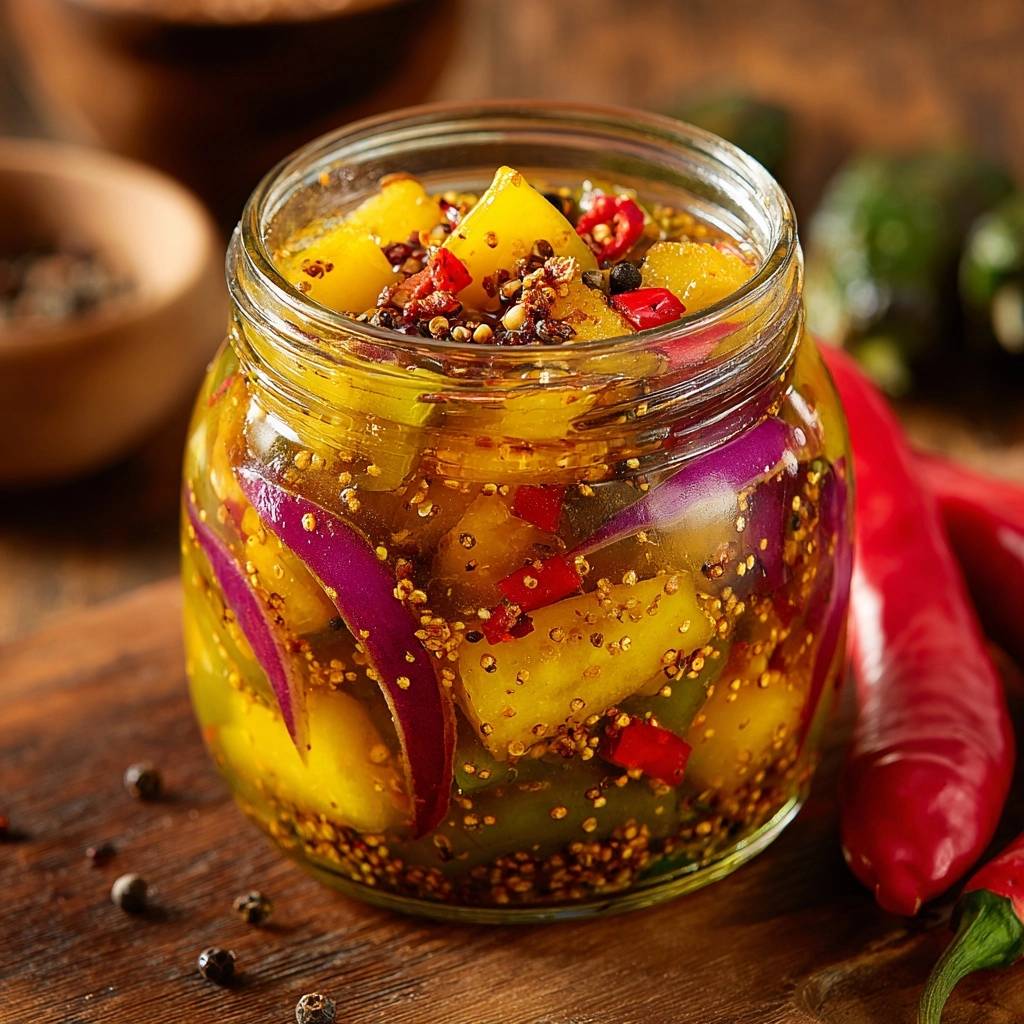
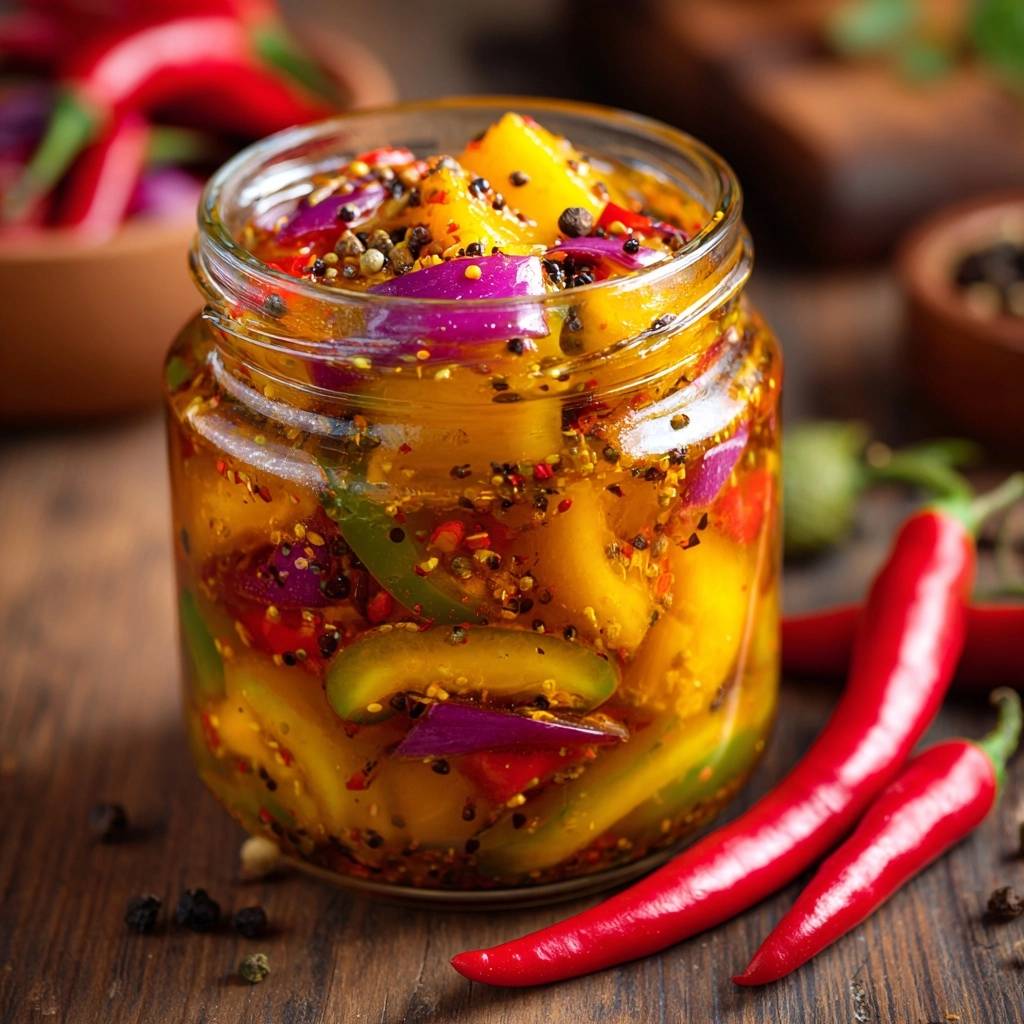
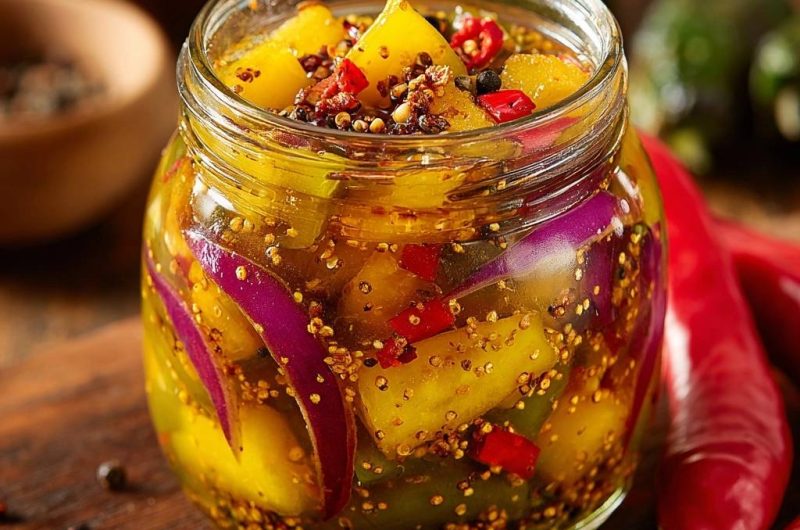
Packing the jar is about more than just fitting everything inside; it’s about visual presentation and flavor distribution. Start by dropping a few chili rounds at the bottom, then layer in your mango cubes and onion wedges. Press the onion wedges firmly against the glass so their deep purple color contrasts with the bright yellow mango.
Pack the ingredients tightly but don’t crush the fruit. You want enough space for the brine to circulate around every single piece. This “deli-style” layering ensures that the heat from the peppers and the bite of the onions are evenly distributed throughout the jar, preventing any “dead zones” of flavor.
Phase 2: The High-Density Spice Brine
In a small saucepan, combine your vinegars, water, sugar, salt, and all the whole spices. Bring this mixture to a rolling boil over medium-high heat. You’ll notice an immediate aromatic shift as the turmeric hits the vinegar, turning the liquid into a bright, neon yellow gold.
Stir the mixture constantly until you can no longer see any grains of sugar or salt at the bottom of the pan. This ensures a stable brine that won’t crystallize later in the fridge. Once the liquid is clear and the spices are dancing in the pot, you’ve reached the perfect concentration.
Phase 3: The 10-Minute Cooling Window
This is the most critical step for maintaining that “Anti-Soggy” texture. Remove the brine from the heat and set a timer for exactly 10 minutes. You want the liquid to drop below the steaming point so it’s warm to the touch but no longer aggressively hot.
This specific temperature threshold is the “sweet spot” for fruit pickling. It’s warm enough to encourage the fruit to open its pores and accept the vinegar, but cool enough that it won’t cook the mango’s starch. If you see heavy steam rising from the pot, it’s still too hot to pour.
Phase 4: The Cold-Shock Refrigeration Technique
Once the brine has cooled slightly, pour it over the mango and onions until they are completely submerged. Seal the jar tightly and place it immediately into the coldest part of your refrigerator. This rapid temperature drop is the “shock” that locks the fruit’s fibers in place.
The cold environment halts any further softening and begins the curing process. Over the next 24 hours, you’ll see the mango transition from an opaque, solid yellow to a translucent, vibrant gold. This visual change tells you the brine has successfully moved into the center of the fruit while the exterior remains firm.
Flavor Variations and Ingredient Swaps
If you prefer a more natural sweetness, you can easily swap the white sugar for honey or agave nectar. Keep in mind that honey will add a slight floral note and may make the brine a bit cloudier. For a milder onion flavor, try using large shallots cut into halves; they offer a sophisticated, garlicky sweetness that pairs beautifully with mango.
For those who love an earthy undertone, adding a few thin coins of fresh ginger or a smashed garlic clove to the brine can transform the profile. You can also experiment with the acidity by using rice vinegar for a softer, more Asian-inspired tang. Just ensure you maintain the 2:1 ratio of vinegar to water to keep the preservation levels safe.
Troubleshooting Common Pickling Obstacles
If you notice your brine looks exceptionally cloudy after a few days, it’s usually due to the minerals in your tap water or the additives in table salt. While it might look less appealing, it’s generally safe as long as the jar was clean. To avoid this next time, always use filtered water and high-quality sea salt or pickling salt.
If the batch turns out too spicy, don’t panic. You can dilute the heat by pouring out a bit of the brine and replacing it with a simple mixture of equal parts water and sugar. Conversely, if the mangoes were a bit too ripe and started to soften, simply blend the entire jar into a “pickled mango salsa” to use as a glaze for grilled chicken.
Serving Suggestions: Beyond the Jar
These spicy pickled mangoes are incredibly versatile and shouldn’t just sit in the back of the fridge. They are the perfect topping for grilled fish tacos, where their acidity cuts through the richness of the fish. You can also chop them up and toss them into a chilled quinoa or farro bowl for a sudden pop of tropical flavor.
What to Pair with Your Pickled Mango
To round out your meal, consider these complementary dishes that offer satisfying textures and familiar flavors.
- For a heartier option, enjoy these crispy beef paratha rolls, which provide a delightful contrast to the bright tang of the pickled mango.
- Explore the vibrant tastes of the Mediterranean mixed grill platter, offering a variety of grilled meats and vegetables that pair well with the sharp pickled elements.
For a modern appetizer, place a few slices of mango and onion on a vegan charcuterie board alongside salty nuts and dairy-free cheeses. The leftover brine is also a “liquid gold” ingredient; whisk it with a little olive oil and Dijon mustard to create a stunning vinaigrette for a summer spinach salad. It’s a waste-free way to keep the flavor going.
Expert Pickling Logistics
Because this is a refrigerator pickle and not a fermented or water-bath canned product, it must stay chilled. It will maintain its peak crunch and flavor for about 3 to 4 weeks. Do not attempt to water-bath can this specific recipe, as the high heat of the canning process will completely destroy the texture we worked so hard to preserve.
You might notice the mustard seeds floating at the top of the jar initially. This is perfectly normal and is caused by surface tension and the density of the seeds. Over time, as they absorb the brine, they will eventually sink and settle into the crevices of the mango, creating that beautiful, textured look you see in high-end specialty shops.
How long does this pickled mango last in the refrigerator?
When kept in a clean, airtight glass jar, these pickles will stay fresh and crunchy for 3 to 4 weeks. Always use a clean fork to remove the fruit from the jar to prevent introducing bacteria, which could shorten the shelf life. If you notice any off-smells or visible mold, discard the batch immediately.
Why did my mangoes turn soft even though I followed the cooling step?
The most common culprit for soft mangoes is using fruit that was too ripe to begin with. If the mango has any “give” or soft spots before you slice it, the cell walls are already breaking down. For the best results, use mangoes that are very firm, almost like a green apple in texture.
Can I substitute the white vinegar with something else?
Yes, you can use rice vinegar or white wine vinegar if you prefer a softer acidity. However, avoid using balsamic or malt vinegar, as these will discolor the fruit and overwhelm the tropical flavors. Always ensure your substitute has at least 5% acidity to ensure proper pickling.
Is there a way to make this recipe less spicy?
To reduce the heat, simply remove the seeds and the white pith from the chilies before slicing them, as that is where most of the capsaicin lives. You can also reduce the amount of red chili flakes or omit the bird’s eye chilies entirely, replacing them with a mild bell pepper for color without the burn.
Why are my mustard seeds floating at the top?
Mustard seeds are very light and often trapped by surface tension or small air bubbles when you first pour the brine. This is completely normal. As the seeds soak up the liquid over 24 hours, many will settle down into the jar. Give the jar a gentle shake before serving to redistribute them.
Can I use frozen mango for this recipe?
I don’t recommend using frozen mango for pickling. The freezing and thawing process breaks down the cellular structure of the fruit, making it naturally mushy once it hits the liquid. For the signature “snap” of this recipe, fresh, firm mango is a requirement.
Spicy Pickled Mango
Course: CondimentCuisine: FusionDifficulty: easy12
servings15
minutes5
minutes120
kcal20
MinutesA unique pickling recipe designed to maintain the firm texture of fresh mango and red onion using a specific temperature-controlled brine and high-density spices.
Ingredients
2 large firm mangoes (slightly under-ripe), peeled and cut into 1-inch cubes
1 medium red onion, sliced into thick wedges
3 red chili peppers, sliced into rounds (fresno or bird’s eye)
1 cup white vinegar
1/2 cup apple cider vinegar
1/2 cup water
1/2 cup granulated sugar
1 tablespoon sea salt
2 tablespoons whole yellow mustard seeds
1 tablespoon black peppercorns
1 teaspoon red chili flakes
1/2 teaspoon turmeric (for vibrant color)
Directions
- Prepare the produce by cutting the mango into uniform cubes and the red onion into thick wedges. It is vital to use mangoes that are firm to the touch (green or just turning yellow) to prevent them from breaking down in the liquid.
- Pack the mango cubes, red onion wedges, and sliced chili peppers tightly into a clean glass jar. Layer them intentionally so the red onions are visible against the glass and the peppers are distributed throughout.
- In a small saucepan, combine the white vinegar, apple cider vinegar, water, sugar, salt, mustard seeds, peppercorns, chili flakes, and turmeric. Bring the mixture to a rolling boil over medium-high heat, stirring until the sugar and salt are completely dissolved.
- To solve the soggy fruit problem, do not pour the boiling brine directly onto the mango. Remove the brine from the heat and let it cool for 10 minutes until it is warm but no longer steaming aggressively. This prevents the hot vinegar from “cooking” the mango starch, which is what causes mushy texture.
- Pour the warm brine and all the whole spices over the fruit and onions until they are completely submerged. The high volume of mustard seeds will settle into the crevices, providing the textured look seen in the image.
- Seal the jar immediately and place it directly into the refrigerator. This rapid temperature drop “shocks” the fruit fibers, sealing the exterior of the mango cubes so they stay crisp while absorbing the spicy, tangy flavors.
- Let the jar sit for at least 24 hours before serving. The mango will transition from opaque to a translucent, vibrant gold while maintaining its structural integrity.
Notes
- It is vital to use mangoes that are firm to the touch to prevent them from breaking down. The rapid temperature drop in the fridge is the secret to maintaining the crunch.