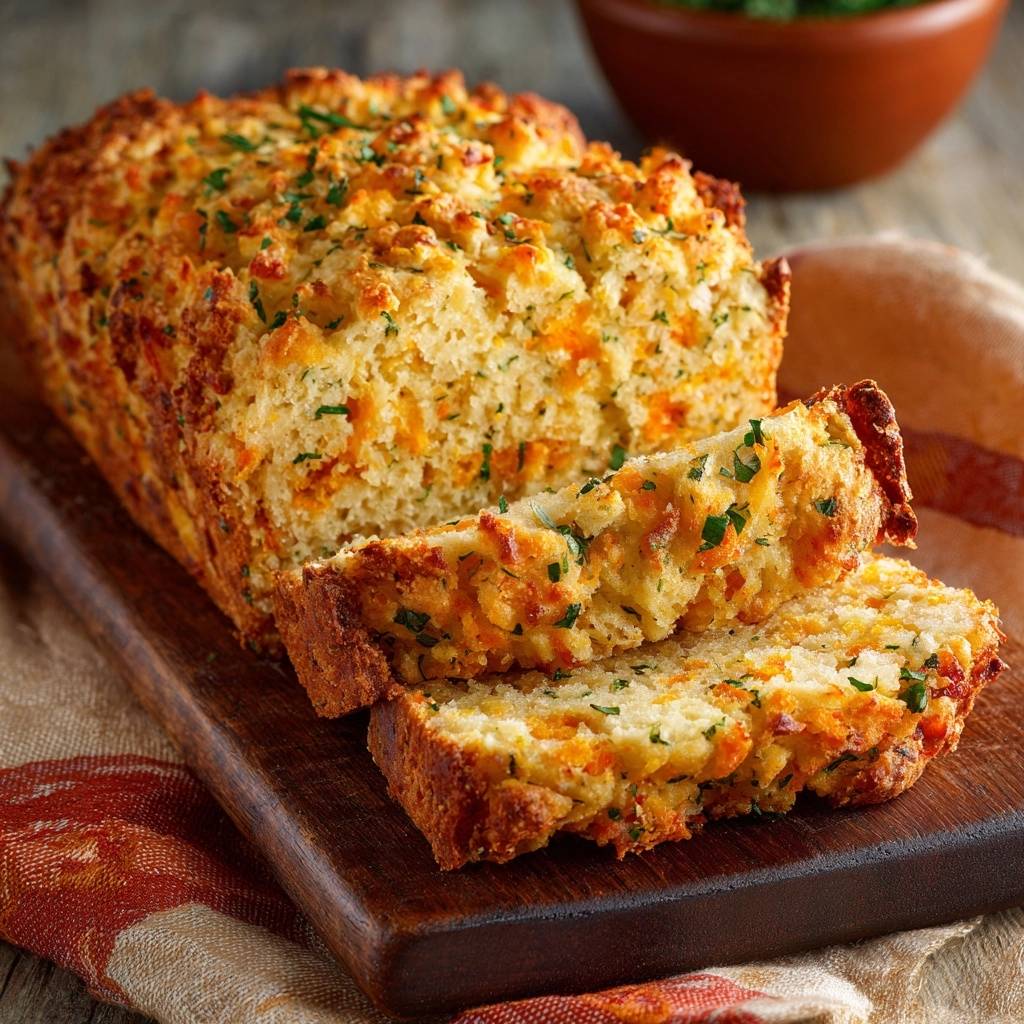
Most savory quick breads suffer from a common, disappointing fate. You expect a light, fluffy slice, but you end up with a dense, gummy brick that feels more like a lead weight than a snack. This happens because the heavy moisture from the cheese and butter often collapses the delicate air bubbles before they can set.
This Garlic Cheddar Quick Bread changes the game by focusing on a specific crumb structure. You get a dramatic contrast between the craggy, golden-brown crust and a soft, cloud-like interior studded with molten cheese pockets. It’s the ultimate solution when you need a warm, impressive side dish in under an hour without the hassle of yeast.
The secret to this recipe’s success lies in the “muffin method” combined with a strategic temperature shift. By coating your cheese in flour before adding the liquids, you create a structural bridge that keeps the cheddar suspended. This prevents the cheese from sinking to the bottom and ensures every single bite is airy and balanced.
The Science of the Non-Dense Crumb
Achieving a light texture in a bread loaded with fat and dairy requires a bit of kitchen physics. Since we aren’t using yeast to create lift over several hours, we rely entirely on chemical leavening and steam. The baking powder reacts twice: once when it hits the liquid and again when it meets the heat of the oven.
The “High-Heat Burst” technique is the most critical part of this process. Starting the oven at 400°F creates an immediate expansion of water vapor within the batter. This rapid steam production pushes the dough upward before the outer crust has a chance to harden and set.
If you started at a lower temperature, the heavy cheddar would likely weigh down the gluten strands as they slowly warmed up. By hitting the batter with intense heat immediately, you lock in a tall, airy structure. Once that initial lift is achieved, dropping the temperature to 375°F allows the interior to cook through without burning the exterior.
Essential Components for Garlic Cheddar Quick Bread
Quality ingredients are the foundation of any great bake, but temperature is just as important. For this loaf, all-purpose flour provides the perfect protein balance. It offers enough strength to hold the cheese in place without making the bread chewy like a traditional yeast loaf.
Freshness matters immensely when it comes to your leavening agent. If your baking powder has been sitting in the pantry for over six months, your bread will likely stay flat. Always test it by dropping a pinch into hot water; if it doesn’t fizz vigorously, it’s time for a new tin.
Using melted butter instead of oil creates a tighter, more tender crumb that carries the garlic flavor beautifully. However, you must ensure your milk and egg are at room temperature. Cold dairy will cause the melted butter to seize into tiny clumps, preventing a smooth emulsion and leading to an uneven bake.
The aromatics provide the soul of this bread. Garlic powder and onion powder offer a consistent, savory base that permeates every crumb. A tiny pinch of cayenne pepper doesn’t make the bread spicy, but it adds a hidden depth that makes the cheddar taste even sharper and more complex.
Freshly Shredded vs. Pre-Shredded Cheddar
It is tempting to grab a bag of pre-shredded cheese, but I strongly recommend grating your own. Bagged cheeses are coated in cellulose or potato starch to keep the strands from sticking together in the package. These anti-caking agents prevent the cheese from melting smoothly into the batter.
When you shred a block of sharp cheddar yourself, the cheese integrates perfectly, creating those gooey pockets we love. Freshly shredded cheese also retains more moisture, which helps keep the crumb soft. A sharp or extra-sharp variety provides the best flavor punch against the savory garlic notes.
Step-by-Step: Achieving the Perfect Rise
Making this bread is a fast process, so it helps to understand the three distinct phases of the build. You aren’t just mixing ingredients; you are managing the development of gluten and the distribution of fats.
Phase 1: Coating the Inclusions
Before you introduce any liquids, you must toss your shredded cheese and parsley directly into the dry flour mixture. This is known as the “flour-dredge” method. By coating each strand of cheese in a layer of flour, you increase its surface friction.
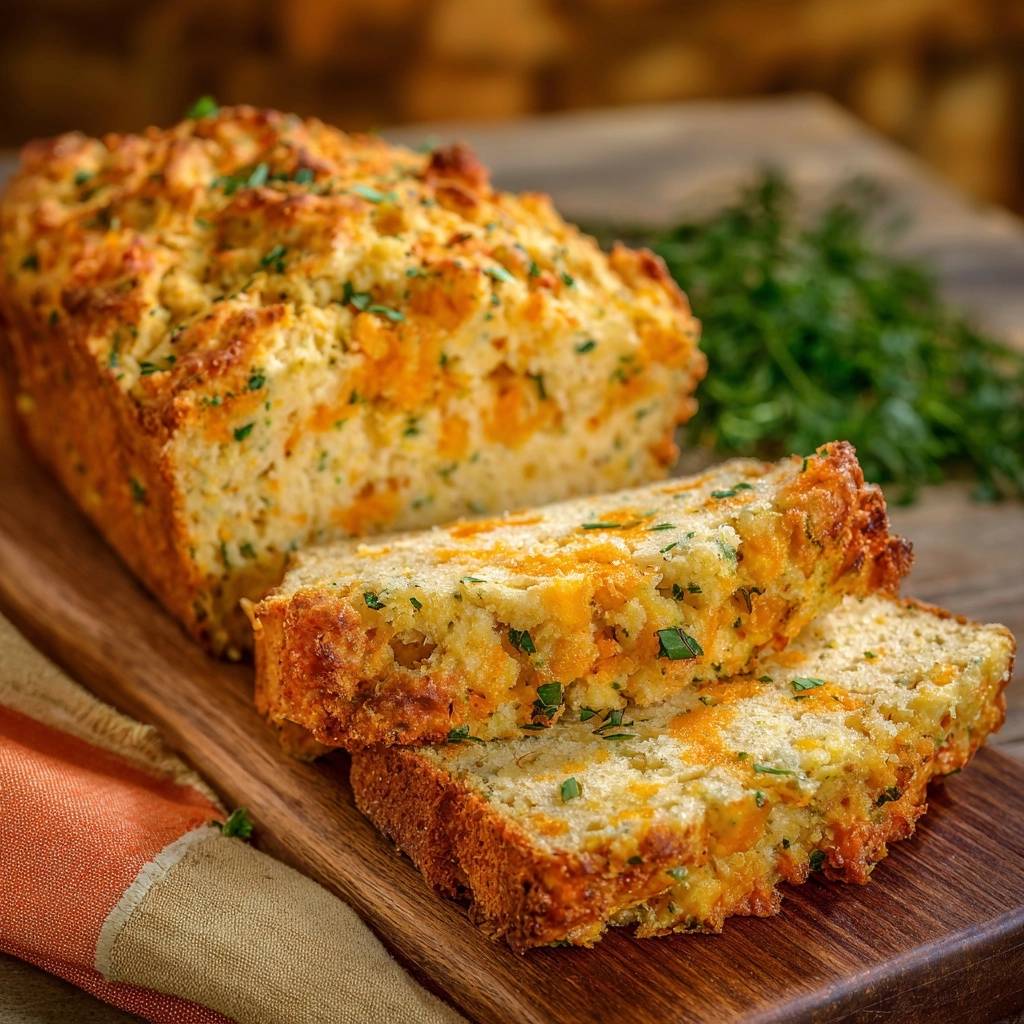
This simple step ensures the cheese stays suspended in the batter rather than sliding to the bottom of the pan. It also prevents the cheese from clumping into one giant mass. When you slice the bread later, you’ll see an even distribution of yellow cheddar and green parsley throughout the entire loaf.
Phase 2: The Shaggy Batter Technique
The most common mistake in quick bread is over-mixing. When you pour the wet ingredients into the dry, use a large spatula and a gentle folding motion. You want to scrape the bottom and bring the dry flour over the top of the liquids.
Stop the very second you no longer see streaks of white flour. The batter should look lumpy, thick, and “shaggy.” If you stir until the batter is smooth, you’ve developed too much gluten. This leads to “tunneling,” which are those long, vertical holes in the bread, and a rubbery, tough texture.
Phase 3: Managing the Oven Temperature
Once the batter is in the pan, resist the urge to smooth out the top with a spoon. Those craggy peaks and valleys are exactly what you want. They create more surface area for the cheese to crisp up, leading to a crunchy, flavorful crust.
Remember to turn the oven down to 375°F immediately after sliding the pan inside. This transition is what manages the “carry-over” heat. It ensures the middle of the loaf reaches the proper internal temperature without the edges becoming too dark or bitter.
Troubleshooting Common Savory Bread Issues
If your bread comes out gummy in the center, it’s usually due to underbaking or slicing too soon. Even if a toothpick comes out clean, the cheese needs time to set. Slicing into a steaming hot loaf allows the internal moisture to evaporate too fast, which collapses the crumb and makes it feel wet.
A loaf that fails to rise is almost always the result of expired baking powder or using cold ingredients that inhibited the chemical reaction. If the crust is getting too dark but the inside is still raw, move your oven rack to the middle position. You can also tent the top loosely with foil for the last 10 minutes of baking.
Flavor Variations and Herb Swaps
Once you master the base chemistry, you can easily customize the flavor profile. For a Mediterranean twist, swap the cheddar for crumbled feta and add dried oregano and chopped sun-dried tomatoes. Just make sure to pat the tomatoes dry so you don’t add too much extra oil.
If you love a smoky flavor, try using smoked gouda and a teaspoon of pimentón (smoked paprika). For a garden-fresh version, use white cheddar and a mix of fresh chives and dill. Always keep your dry-to-wet ratios the same to ensure the bread rises correctly.
Optimal Pairings for Savory Loaves
This bread is a superstar alongside a bowl of roasted tomato soup or a hearty beef stew. The airy crumb is perfect for soaking up broths and sauces. It also makes an incredible base for a gourmet grilled cheese sandwich.
If you have leftovers, try thick-slicing the bread and toasting it with a light brush of olive oil. The heat from the toaster oven re-crisps the cheese on the edges, making it taste just as good as it did the moment it came out of the oven.
Storage and Reheating for Longevity
To keep the bread fresh, store it in an airtight container at room temperature for up to three days. Avoid the refrigerator, as it can actually speed up the staling process of the starch. If you want to keep it longer, this bread freezes beautifully.
Slice the loaf first, then wrap individual slices in plastic wrap and place them in a freezer bag. When you’re ready for a snack, pop a slice directly into the toaster or air fryer. Using an oven or air fryer is much better than a microwave, as it restores that signature craggy, crispy crust.
Expert Baking FAQ
Can I use buttermilk instead of whole milk?
Yes, you can use buttermilk, but you will need to make a small adjustment. Because buttermilk is acidic, you should replace 1/2 teaspoon of the baking powder with 1/4 teaspoon of baking soda. This neutralizes the acid and provides an even better rise and a tangier flavor profile.
Can I bake this as muffins instead of a loaf?
Absolutely! This batter works wonderfully for muffins. Grease a standard muffin tin and fill the cups about three-quarters full. Bake at 375°F for 18 to 22 minutes. The high-heat burst isn’t as necessary for muffins since they have less mass to lift, but it still helps with the crust.
Why did my cheese all end up at the bottom?
This usually happens if the cheese wasn’t thoroughly tossed with the dry flour before the wet ingredients were added. That flour coating acts like “velcro,” holding the cheese in place within the batter. Also, ensure your cheese isn’t cut into large, heavy cubes; a standard shred is best for suspension.
Is a glass or metal loaf pan better for this recipe?
A light-colored metal pan is generally superior for quick breads. Metal conducts heat more quickly, which aids in that initial “steam lift” we want. Glass takes longer to heat up and holds heat longer, which can sometimes lead to over-browned edges before the center is fully cooked.
Can I use fresh garlic instead of powder?
You can, but garlic powder actually works better for a uniform flavor in this specific bread. Fresh garlic contains moisture and can create “hot spots” of intense flavor. If you insist on fresh, sauté three minced cloves in the butter first and let it cool before adding it to the milk and egg.
Garlic Cheddar Quick Bread
Course: BreadCuisine: AmericanDifficulty: easy8
servings15
minutes45
minutes60
MinutesAmerican
Ingredients
3 cups all-purpose flour
1 tablespoon baking powder
1 teaspoon salt
1 teaspoon garlic powder
1/2 teaspoon onion powder
1/4 teaspoon cayenne pepper (optional, for depth)
2 1/2 cups sharp cheddar cheese, freshly shredded (divided: 2 cups for batter, 1/2 cup for topping)
1 1/4 cups whole milk, room temperature
1/2 cup unsalted butter, melted and cooled
1 large egg, beaten
3 tablespoons fresh parsley, finely chopped (divided)
Directions
- Preheat your oven to 400°F (200°C). Grease a 9×5 inch loaf pan thoroughly with butter or non-stick spray.
- In a large bowl, whisk together the flour, baking powder, salt, garlic powder, onion powder, and cayenne.
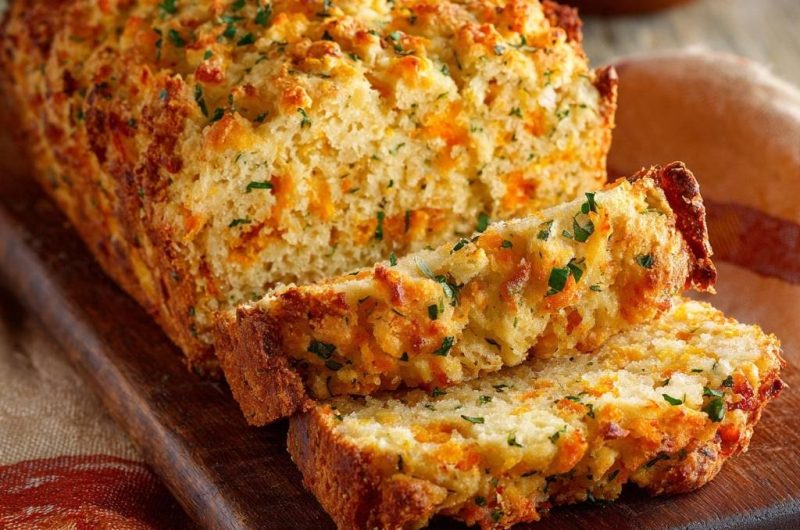
- Add 2 cups of the shredded cheddar and 2 tablespoons of the chopped parsley to the dry ingredients. Toss thoroughly until every strand of cheese is coated in flour. This prevents the cheese from clumping and sinking, ensuring the “muffin-like” airy crumb shown in the image.
- In a separate bowl, whisk together the milk, melted butter, and egg.
- Make a well in the center of the dry ingredients and pour in the wet mixture. Using a spatula, gently fold the ingredients together. Stop the moment the flour streaks disappear. The batter should look thick, lumpy, and shaggy; overmixing will result in a tough, flat loaf.
- Transfer the batter to the prepared pan. Do not smooth the top perfectly; leave it craggy to achieve the textured crust seen in the photo.
- Sprinkle the remaining 1/2 cup of cheese and the remaining 1 tablespoon of parsley over the top.
- Place the pan in the oven and immediately turn the heat down to 375°F (190°C). This initial burst of high heat activates the baking powder rapidly, creating an immediate “steam lift” for a taller, lighter rise.
- Bake for 45 to 50 minutes. The top should be deeply golden brown and a toothpick inserted into the center should come out clean (aside from a bit of melted cheese).
- Let the bread cool in the pan for at least 15 minutes before transferring to a wire rack. Slicing too early allows steam to escape too quickly, which can cause the airy crumb to collapse. Slice with a serrated knife to maintain the texture.
Notes
- To ensure the airy texture, do not overmix the batter; it should remain lumpy. The initial 400°F oven temperature is crucial for the ‘steam lift’ before reducing to 375°F. Always use freshly shredded cheese for the best melting results.