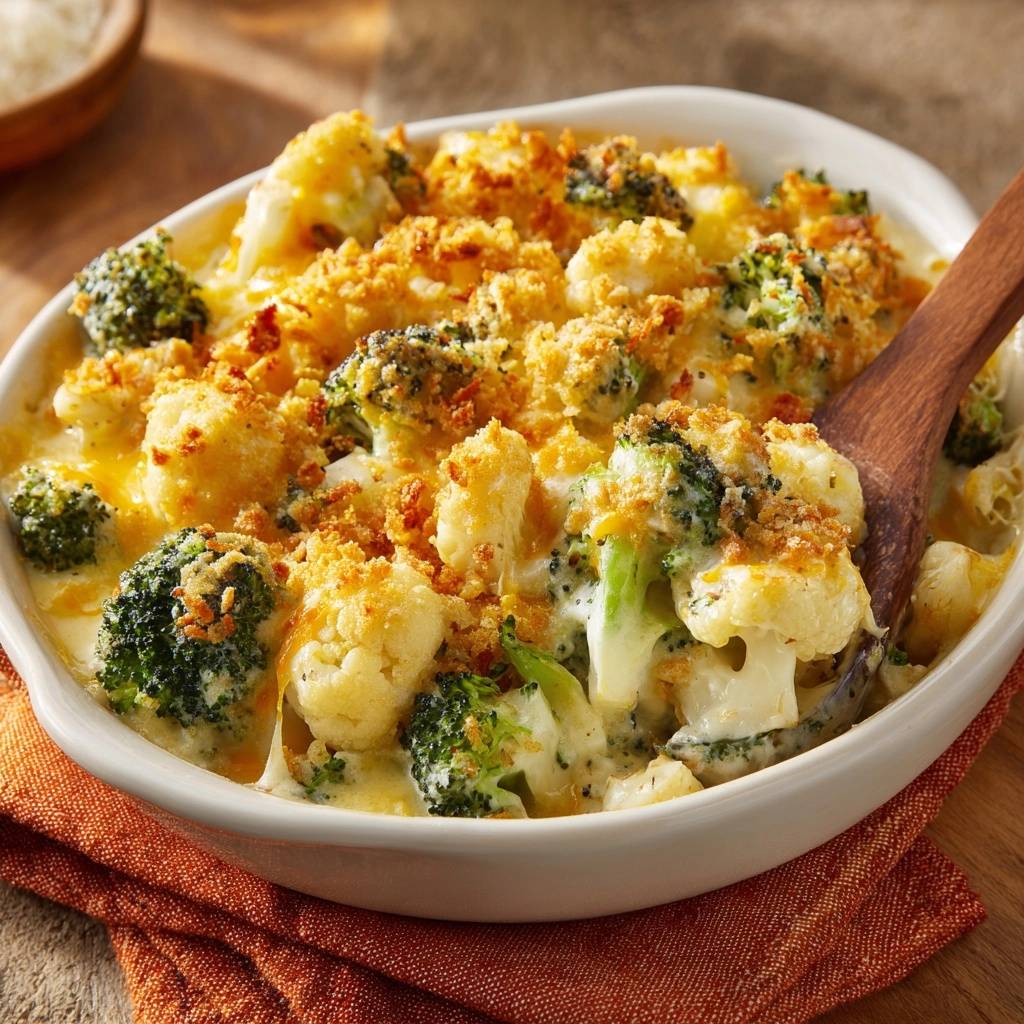
Most vegetable casseroles suffer from a fatal flaw: they end up sitting in a pool of watery liquid that ruins the cheese sauce and turns the topping into a mushy mess. You’ve likely experienced it before, where a promising dish becomes a soggy disappointment the moment you dig in. This Cheesy Broccoli Cauliflower Bake solves that problem entirely by focusing on moisture control and a high-fat, stable emulsion.
The secret lies in the contrast between the tender-crisp vegetables and the velvety, rich sauce. By using a specific drying technique, we ensure the broccoli and cauliflower hold their shape while the sharp cheddar and cream cheese cling to every floret. The result is a decadent side dish that feels indulgent but maintains the structural integrity of the fresh produce.
I’ve found that the biggest mistake home cooks make is overcooking the vegetables before they even hit the oven. If you steam them until they’re soft, they’ll release all their internal water into your sauce during the bake. Instead, we aim for an “al dente” steam followed by a thorough air-dry. This extra five minutes on a kitchen towel is the difference between a watery disaster and a professional-grade gratin.
The Science of Preventing Watery Casseroles
Cruciferous vegetables like broccoli and cauliflower are roughly 90% water. When you apply heat, the cellular structure breaks down, and that water has to go somewhere. In a closed casserole dish, it usually leaks directly into your sauce, thinning it out and causing the fats to separate. This is why many recipes that start with raw vegetables end up soupy.
Par-steaming for exactly three to four minutes initiates the cooking process without fully collapsing the plant’s cell walls. However, the most critical step happens after the steam. By spreading the florets out on a clean kitchen towel, you allow surface moisture to evaporate. This air-drying phase is non-negotiable because it creates a dry surface for the cheese sauce to adhere to, preventing a slippery texture.
Furthermore, we bypass the issue of osmosis by avoiding heavy salting during the steaming phase. Salt draws moisture out of vegetables. If you salt them too early, they will continue to weep liquid while baking. By seasoning the sauce instead of the water, we keep the moisture locked inside the vegetable fibers where it belongs, ensuring a thick, creamy consistency from the first bite to the last.
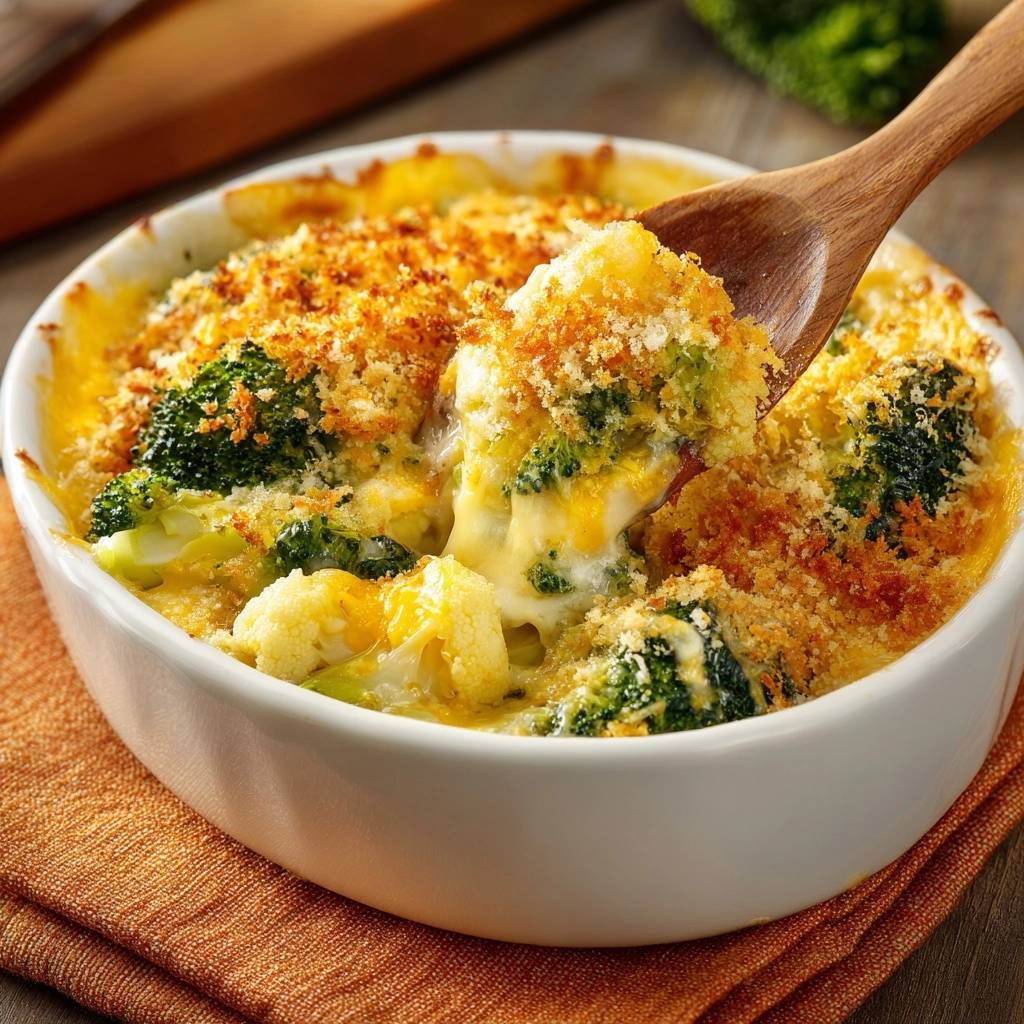
Essential Components for the Vegetable Base
Success starts with the quality of your produce. When you’re at the grocery store, look for broccoli with tight, bluish-green florets and cauliflower that is creamy white without any brown spots or “fuzz.” If the stems feel woody or the florets are starting to yellow, the vegetables will be bitter and fibrous, which no amount of cheese can fully fix.
Fresh heads are vastly superior to frozen bags for this specific bake. Frozen vegetables are blanched and then frozen, which damages the cell membranes and leads to a much higher water release. Fresh vegetables provide a superior “snap” and a more robust fiber integrity that stands up to the heavy cream and cheese sauce without turning into mush.
Selecting and Prepping Fresh Crucifers
When prepping, aim for the “uniformity rule.” Cut your broccoli and cauliflower into consistent, bite-sized florets about one inch in diameter. If you have massive chunks of cauliflower mixed with tiny bits of broccoli, the small pieces will disintegrate before the large ones are even tender. Consistent sizing ensures every forkful has the same perfect texture.
Building a Stable Three-Cheese Emulsion
Traditional casseroles often rely on a flour-based roux, but this recipe uses a combination of heavy cream, cream cheese, and sour cream. This creates a much more stable fat-to-protein ratio. Flour-thickened sauces can sometimes turn grainy or “pasty” if they aren’t cooked perfectly, but a dairy-based emulsion stays silky and rich even at high temperatures.
Sharp cheddar is the star here because it provides the necessary acidity to cut through the heavy fats. While a mild cheddar might melt well, it lacks the punch needed to stand up to the earthy flavors of the cauliflower. The sour cream adds a subtle tang that brightens the entire dish, making it feel less heavy on the palate.
The Role of Cream Cheese as a Stabilizer
Cream cheese acts as a powerful emulsifier in this sauce. Because it contains stabilizers like carob bean gum or guar gum, it helps hold the heavy cream and shredded cheddar together. This prevents the sauce from “breaking”—that oily separation that happens when cheese gets too hot. It ensures the sauce remains glossy and cohesive throughout the baking process.
Step-by-Step: Preparing the Cheesy Broccoli Cauliflower Bake
Preparing this dish is a three-phase process that focuses on texture management. First, you’ll handle the vegetables, then build the sauce, and finally assemble the layers for the perfect crunch. Start by preheating your oven to 400 degrees F and greasing a 2-quart baking dish with butter or a light coating of oil.
Phase 1: The Critical Steam and Dry Technique
Place your florets in a steamer basket over boiling water. Cover and steam for only 3 to 4 minutes. You are looking for a vibrant color change—the broccoli should be bright green—and a texture that is just barely tender when pierced with a fork. Immediately remove them from the heat to stop the cooking process.
Spread the hot vegetables out on a layer of paper towels or a clean lint-free kitchen towel. Pat the tops dry and let them sit for at least 5 minutes. You’ll actually see steam rising off them; that is the excess moisture leaving the vegetables so it doesn’t end up in your casserole. This step is the secret to a thick, restaurant-quality sauce.
Phase 2: Whisking the Aromatics and Dairy
In a medium saucepan over medium-low heat, combine the heavy cream, softened cream cheese, and sour cream. Whisk steadily as the cream cheese melts. Using garlic and onion powder instead of fresh aromatics ensures the sauce stays perfectly smooth without any gritty bits of raw onion or burnt garlic.
Once the mixture is bubbling slightly and smooth, remove it from the heat. Fold in 1.5 cups of the shredded cheddar. Stir gently until the cheese is fully melted and the sauce looks glossy. The residual heat is enough to melt the cheddar without overcooking the proteins, which keeps the sauce from becoming grainy.
Phase 3: Achieving the Golden Panko Crust
Place your dried vegetables into the baking dish and pour the warm cheese sauce over them. Toss gently so every nook and cranny of the florets is filled with sauce. In a separate small bowl, toss your Panko breadcrumbs with melted butter and a pinch of paprika. The paprika doesn’t add heat, but it gives the crust a beautiful, deep golden hue.
Sprinkle the remaining half-cup of cheddar over the vegetables first, then top with the buttery Panko. Bake for 15 to 20 minutes. You’ll know it’s done when the sauce is vigorously bubbling around the edges and the breadcrumbs have turned a deep, toasted brown. Let it rest for 5 minutes before serving; this allows the sauce to thicken as it cools slightly.
Troubleshooting Common Texture Issues
If your sauce looks too thick before it goes into the oven, don’t panic. Simply whisk in a tablespoon of heavy cream or milk to loosen it up. The sauce will naturally thicken more as it bakes and cools, so you want it to be pourable but not watery when it hits the vegetables.
If you accidentally over-steamed your vegetables and they feel mushy, shorten the oven time. Focus on getting the topping crispy under the broiler for 2-3 minutes instead of a full 20-minute bake. This prevents the vegetables from turning into a puree while still giving you that essential cheesy, crunchy finish.
Flavor Variations and Dairy Substitutions
While sharp cheddar is the classic choice, you can easily swap it for Gruyère or Fontina if you want a nuttier, more sophisticated flavor profile. If you like a bit of a kick, adding a teaspoon of dry mustard powder to the sauce or a pinch of red pepper flakes can provide a subtle bite that cuts through the richness of the cream.
For a smokier version, use smoked paprika in the breadcrumb topping or swap half the cheddar for smoked gouda. If you find yourself without sour cream, plain Greek yogurt works as a fantastic substitute, providing that same necessary acidity and creamy texture without changing the chemistry of the bake.
Make-Ahead Strategies and Storage Logistics
You can easily prep this dish 24 hours in advance, which makes it perfect for holiday hosting. Steam and dry the vegetables, then make the sauce and toss them together in the baking dish. Cover tightly and refrigerate. However, do not add the Panko topping until you are ready to put the dish in the oven, or the breadcrumbs will absorb moisture and lose their crunch.
Store any leftovers in an airtight container in the refrigerator for up to 3 days. When reheating, the oven is your best friend. A microwave will make the breadcrumbs soggy, so I recommend placing a portion in a small oven-safe dish at 350 degrees F for about 10 minutes. This helps re-crisp the topping while gently warming the cheese sauce.
Optimal Pairings for a Rich Vegetable Side
Because this bake is so rich and creamy, it pairs best with lean proteins that have a bit of char or acidity. A simple roasted chicken with lemon and herbs or a grilled steak provides a great savory balance. The brightness of a lemon-garlic butter sauce on seared fish also complements the heavy cheddar beautifully.
If you’re serving this as part of a larger spread, try to avoid other heavy, cream-based sides like mashed potatoes with gravy. Instead, opt for a crisp green salad with a vinaigrette or some roasted carrots with a balsamic glaze. These lighter, more acidic sides help cleanse the palate between bites of the decadent cheesy vegetables.
Expert Tips for Casserole Success
Can I use frozen broccoli and cauliflower?
You can, but you must be extra careful. Thaw them completely and squeeze them in a clean kitchen towel to remove as much water as possible. Skip the steaming step entirely, as frozen vegetables are already softened. Be aware that the texture will be significantly softer than if you used fresh produce.
Why is my cheese sauce grainy?
Graininess usually happens if the sauce gets too hot or if you use pre-shredded cheese. Pre-shredded cheese is coated in potato starch or cellulose to prevent clumping, which can interfere with a smooth melt. For the best results, grate your own cheese from a block and never let the sauce reach a rolling boil once the cheese is added.
How do I make this gluten-free?
This recipe is very easy to adapt! Simply swap the Panko breadcrumbs for your favorite gluten-free breadcrumb brand. Alternatively, crushed pork rinds or a mix of almond flour and parmesan cheese make an excellent crunchy, gluten-free topping that browns beautifully in the oven.
Can I add other vegetables like carrots?
Yes, but keep in mind that carrots take longer to soften than broccoli. If you add carrots, slice them very thin and start steaming them 2 minutes before you add the broccoli and cauliflower to the basket. This ensures all the vegetables reach that perfect tender-crisp stage at the same time.
What is the best baking dish material for even heat?
Ceramic or glass baking dishes are ideal for this recipe. They retain heat well and distribute it evenly, which helps the sauce bubble consistently without scorching the bottom. Metal pans can sometimes heat up too quickly, potentially causing the dairy in the sauce to separate or the edges to burn before the center is hot.
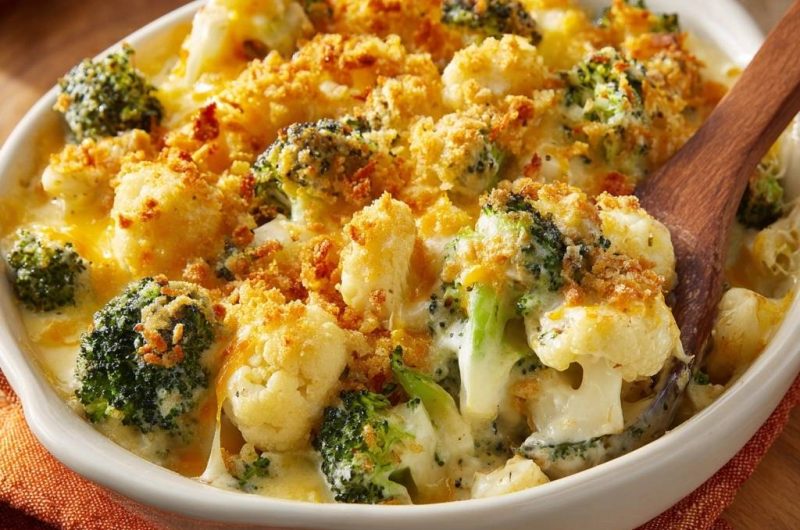
Cheesy Broccoli Cauliflower Bake
Course: Side DishCuisine: AmericanDifficulty: easy6
servings15
minutes25
minutes40
Minutes285
kcalAmerican
Ingredients
1 head broccoli, cut into bite-sized florets
1 head cauliflower, cut into bite-sized florets
2 cups sharp cheddar cheese, shredded (divided)
1/2 cup heavy cream
4 ounces cream cheese, softened
1/4 cup sour cream
1/2 teaspoon garlic powder
1/2 teaspoon onion powder
1/2 teaspoon kosher salt
1/4 teaspoon black pepper
3/4 cup Panko breadcrumbs
3 tablespoons butter, melted
1/4 teaspoon paprika (for color)
Directions
- Preheat your oven to 400 degrees F. Lightly grease a 2-quart baking dish.
- To prevent a watery bake, steam the broccoli and cauliflower for only 3 to 4 minutes until just barely tender (al dente). Immediately drain them and spread the florets out on a clean kitchen towel or paper towels. Pat them dry thoroughly and let them air dry for 5 minutes. This step is the secret to removing excess moisture that usually thins out the sauce.
- In a medium saucepan over medium-low heat, whisk together the heavy cream, cream cheese, sour cream, garlic powder, onion powder, salt, and pepper. Stir constantly until the cream cheese is completely melted and the sauce is smooth and bubbling slightly.
- Remove the sauce from the heat and fold in 1.5 cups of the shredded cheddar cheese until melted and glossy.
- Place the dried vegetables into the prepared baking dish. Pour the cheese sauce over the top and toss gently to coat every floret thoroughly.
- In a small bowl, mix the Panko breadcrumbs with the melted butter and paprika until the crumbs are evenly coated.
- Sprinkle the remaining 1/2 cup of cheddar cheese over the vegetables, followed by an even layer of the buttery breadcrumb mixture.
- Bake for 15 to 20 minutes until the sauce is bubbling at the edges and the breadcrumb topping is deeply golden brown and crispy. Let the dish sit for 5 minutes before serving to allow the sauce to set and thicken perfectly.
Notes
- The secret to the anti-soggy bottom is patting the steamed vegetables dry and letting them air dry for 5 minutes before mixing with the sauce. Let the dish rest for 5 minutes after baking to allow the sauce to set.