Nothing ruins a cozy dinner faster than a vegetable casserole sitting in a puddle of gray, watery liquid. We’ve all been there—you expect a rich, creamy bite, but instead, you get soggy florets and a broken sauce. This common kitchen fail happens because vegetables like broccoli and cauliflower release massive amounts of moisture as they cook, thinning out your beautiful cheese sauce into a soupy mess.
The secret to a restaurant-quality side dish is abandoning the traditional “dump and bake” method. By roasting the vegetables at a high temperature first, you evaporate that excess water and lock in a deep, nutty flavor that steaming simply can’t touch. This “Roast-then-Sauce” technique ensures every forkful is packed with tender-crisp greens and a velvety, triple-cheese Mornay that actually clings to the vegetables.
I’ve found that the real magic happens when you use a heavy rimmed baking sheet and give those veggies plenty of elbow room. If you crowd the pan, they’ll steam in their own juices rather than roasting. Give them space to breathe, and you’ll be rewarded with charred, caramelized edges that provide the perfect smoky contrast to the sharp cheddar and creamy mozzarella. It’s a total game-changer for anyone who thinks they don’t like their greens.
The Science of Preventing Watery Vegetable Bakes
To understand why most vegetable bakes fail, you have to look at the biology of the ingredients. Broccoli and cauliflower are roughly 90% water. When you toss raw vegetables into a dish and cover them with sauce, the oven’s heat breaks down the plant’s cell walls, releasing all that internal liquid directly into your cream. This dilutes the fats and proteins in the cheese, causing the sauce to “break” and become grainy or thin.
Roasting at 425°F (218°C) is the definitive solution to this physics problem. At this high heat, the moisture evaporates into steam before it ever touches the sauce. Furthermore, this temperature triggers the Maillard reaction—a chemical reaction between amino acids and reducing sugars that gives browned food its distinctive, savory flavor. You aren’t just drying the vegetables out; you’re concentrating their natural sugars.
By the time you toss these roasted gems into your baking dish, they’ve lost their “water weight” and gained a firm, meaty texture. This allows the Mornay sauce to sit on top and seep into the crevices without being watered down. The result is a stable, emulsified masterpiece that stays thick and luscious from the first scoop to the very last bite on the plate.
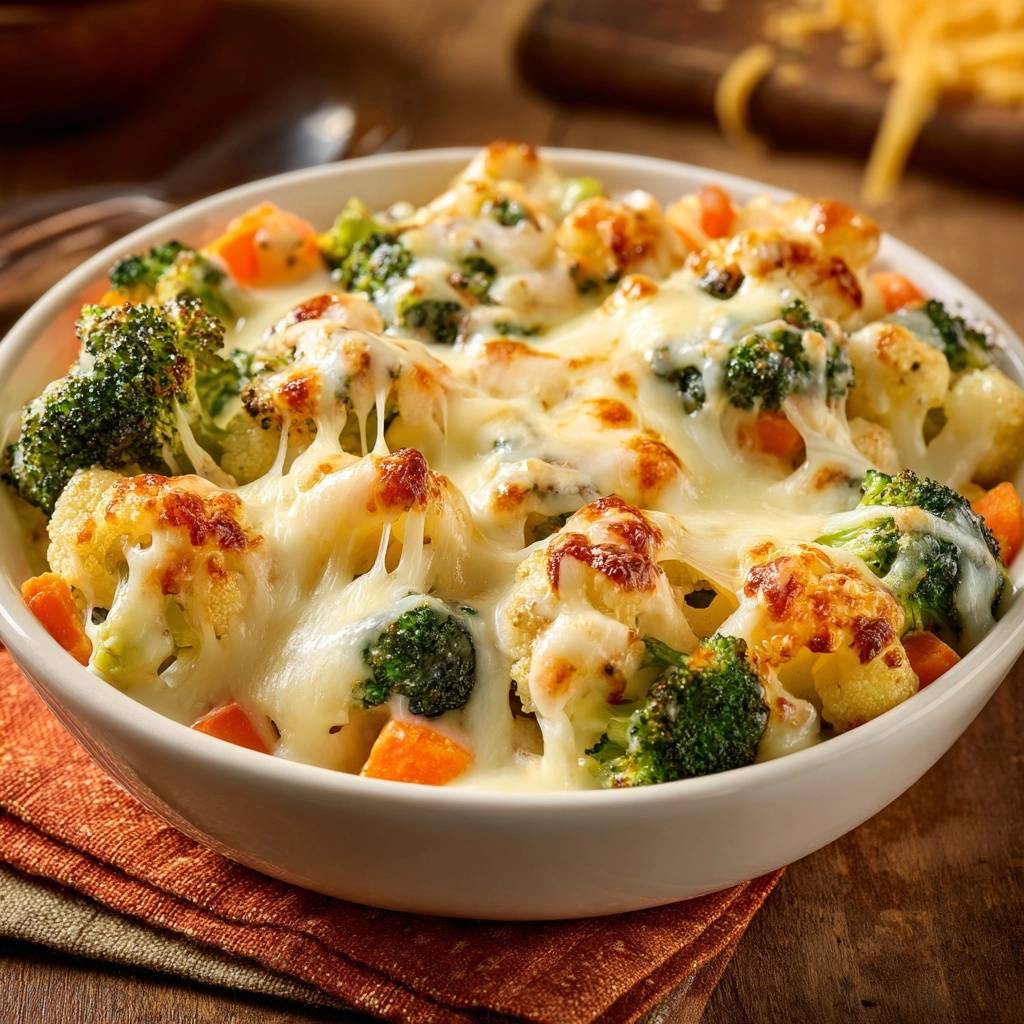
Essential Components for the Perfect Vegetable Gratin
Success starts with the produce aisle. When picking out your broccoli and cauliflower, look for heads that feel heavy for their size with tightly closed buds. If the broccoli looks yellowed or the cauliflower has dark soft spots, it’s already losing its structural integrity. I always aim for uniform floret sizes—about one-inch pieces—so they all finish roasting at the exact same moment.
Carrots aren’t just here for a pop of color, though the vibrant orange looks stunning against the white and green. They provide a necessary structural crunch and a natural sweetness that balances the earthy brassicas. Since carrots are denser, cutting them into 1/2-inch chunks ensures they soften at the same rate the florets char. It’s all about that perfect “fork-tender” harmony.
The fat profile is equally important. I use olive oil for the roasting phase because it has a higher smoke point, which prevents the vegetables from tasting acrid at 425°F. Save the butter for the sauce! Speaking of the sauce, the “Cheese Trio” is a deliberate choice. Mozzarella provides that iconic, stretchy pull; sharp cheddar brings a necessary acidic tang; and Parmesan adds a salty, umami punch that ties everything together. Using just one type of cheese often results in a flat flavor profile.
Phase One: High-Heat Roasting for Maximum Flavor
Once your vegetables are prepped, toss them thoroughly in a large bowl with the oil and spices. You want every nook and cranny of those florets coated so the garlic and onion powders can toast against the heat. When you move them to the baking sheet, remember the “Single Layer Rule.” If the vegetables are piled on top of each other, they will trap steam, leading to the very sogginess we’re trying to avoid.
Slide the tray into the center of the oven and let the heat do the work. You’re looking for specific visual cues: the tips of the broccoli should start to turn a dark, crispy brown, and the cauliflower should show golden spots. After about 15 to 18 minutes, test a carrot chunk with a fork. If it slides in with just a little resistance, you’re ready for the next phase. That slight char is where the “roasted” flavor lives, so don’t be afraid of a little color!
Phase Two: Crafting a Velvety Three-Cheese Mornay
While the oven works its magic, it’s time to build the Mornay sauce. This starts with a simple roux—equal parts butter and flour. Cook this mixture for at least a minute to toast out the “raw flour” taste, but don’t let it brown. You want a pale, bubbling paste. Slowly whisking in the heavy cream is the most critical part; add it a splash at a time at first to prevent lumps from forming.
Once the sauce is thick enough to coat the back of a spoon, pull it off the heat before adding the cheese. This is a pro tip: if you boil the sauce after the cheese is in, the proteins can clump and turn the sauce grainy. Stir in the cheddar, parmesan, and half the mozzarella until the residual heat melts them into a smooth, glossy ribbon. The heavy cream provides a stable base that won’t separate under the broiler later.
Phase Three: Assembly and the Final Broil
Transfer your beautifully charred vegetables into a baking dish and pour that liquid gold right over the top. I like to use a “Crevice Technique” here—gently tossing the vegetables so the sauce works its way into the bushy tops of the broccoli. This ensures that every single bite is seasoned and creamy, rather than just having a layer of cheese sitting on top of dry veggies.
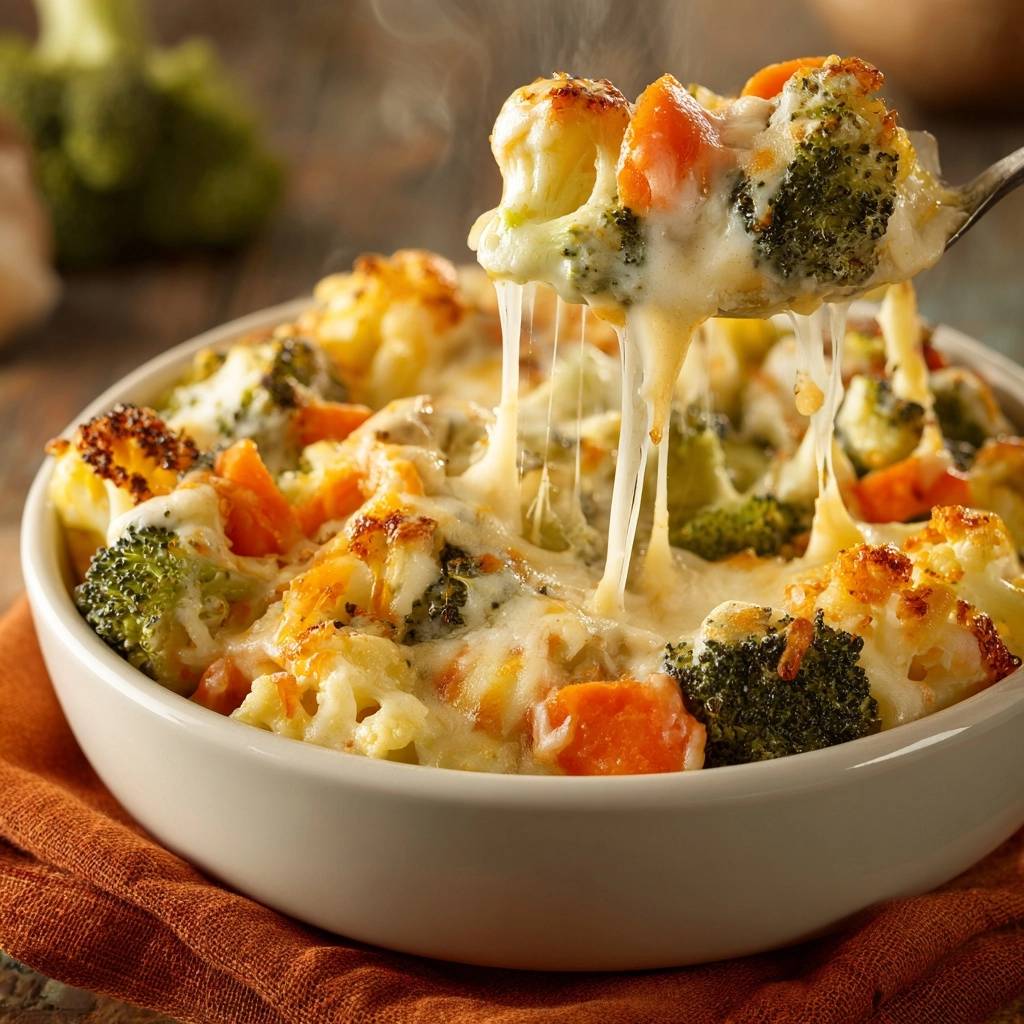
Top the dish with the remaining mozzarella and switch your oven to the broil setting. Keep a close eye on it! It only takes 3 to 5 minutes for the cheese to transform into a bubbling, golden-brown crust. You’re looking for those “GBD” (Golden Brown and Delicious) spots that indicate the sugars in the cheese have caramelized. Let the dish rest for 5 minutes before serving; this allows the sauce to thicken slightly as it cools, ensuring it stays on the vegetables instead of running to the bottom of the plate.
Flavor Variations and Ingredient Substitutions
This recipe is incredibly adaptable if you want to switch things up. If you’re looking for a different spice profile, try adding a teaspoon of smoked paprika to the roasting stage for a campfire vibe, or a pinch of freshly grated nutmeg to the Mornay sauce to lean into a classic French flavor. A handful of red pepper flakes stirred into the sauce adds a lovely back-end heat that cuts through the richness of the cream.
For those who crave an audible crunch, you can add a texture topper. Mix a half-cup of panko breadcrumbs or crushed butter crackers with a tablespoon of melted butter and sprinkle it over the cheese before broiling. If you need to swap the dairy, a high-fat cashew milk can work for the sauce, though you’ll want to add a tablespoon of nutritional yeast to mimic that savory cheese depth. Just keep the roasting method the same, as that’s the key to the texture!
Optimal Pairings for Roasted Brassica Bakes
Because this side dish is so rich and savory, it pairs beautifully with lean, simple proteins. A lemon-herb roasted chicken is a classic choice, as the acidity of the lemon cuts through the heavy cheese sauce. It’s also a fantastic partner for a seared steak or grilled salmon, where the earthy roasted flavors of the cauliflower complement the char on the meat.
If you’re serving this as part of a larger holiday spread, it stands up well alongside a roast turkey or a beef tenderloin. The combination of textures—the soft carrots, the crispy broccoli tops, and the gooey cheese—makes it a standout dish that often outshines the main course. It’s hearty enough to be a vegetarian main dish too, perhaps served alongside a simple wild rice pilaf.
Make-Ahead Strategies and Storage Troubleshooting
If you’re planning for a big dinner party, you can absolutely prep this in advance. The best way to do it is to roast the vegetables and make the sauce separately a day ahead. Store them in airtight containers in the fridge. When you’re ready to eat, toss them together and bake at 350°F until heated through, then finish with the cheese and the broiler. This prevents the vegetables from sitting in the sauce too long and getting soft.
Leftovers will stay fresh in the fridge for about 3 days. When reheating, I highly recommend using the oven or a toaster oven rather than the microwave. A microwave tends to heat unevenly, which can cause the butter in the sauce to separate and become oily. A quick 10-minute stint at 350°F will revive the creamy texture and keep the vegetables from turning into mush. I don’t recommend freezing this dish, as the cellular structure of the broccoli breaks down when frozen, leading to a watery mess upon thawing.
Troubleshooting Common Preparation Hurdles
Why did my cheese sauce turn grainy?
Graininess usually happens if the sauce gets too hot after the cheese is added. Cheese is an emulsion of fat and protein; high heat causes the proteins to tighten and squeeze out the fat. Always remove your cream base from the heat before stirring in your cheeses to ensure a silky-smooth finish.
Can I use frozen broccoli or cauliflower for this bake?
You can, but you must take extra care. Frozen vegetables are blanched before freezing, meaning they are already partially cooked and hold a lot of extra water. Roast them directly from frozen at 450°F to blast away the moisture quickly. They won’t be quite as firm as fresh, but the high-heat roast will still prevent a soupy casserole.
My carrots are still hard while the broccoli is done. What happened?
This is almost always a cutting issue. Carrots are much denser than florets, so they need to be cut into smaller, 1/2-inch pieces. If your carrots are still too firm, you can microwave the carrot chunks with a teaspoon of water for 2 minutes before tossing them with the other vegetables to give them a head start.
How do I fix a sauce that has become too thick?
If your Mornay sauce looks more like a paste than a pourable liquid, simply whisk in a splash of warm heavy cream or even a little vegetable broth. Add it one tablespoon at a time over low heat until it reaches a velvety, coat-the-back-of-a-spoon consistency.
How should I store and reheat leftovers?
Store leftovers in an airtight glass container for up to 3 days. To reheat, place the desired portion in an oven-safe dish and cover with foil. Bake at 350°F for 12-15 minutes. This gentle heating method preserves the emulsion of the cheese sauce much better than a microwave, which can cause the sauce to break and become oily.
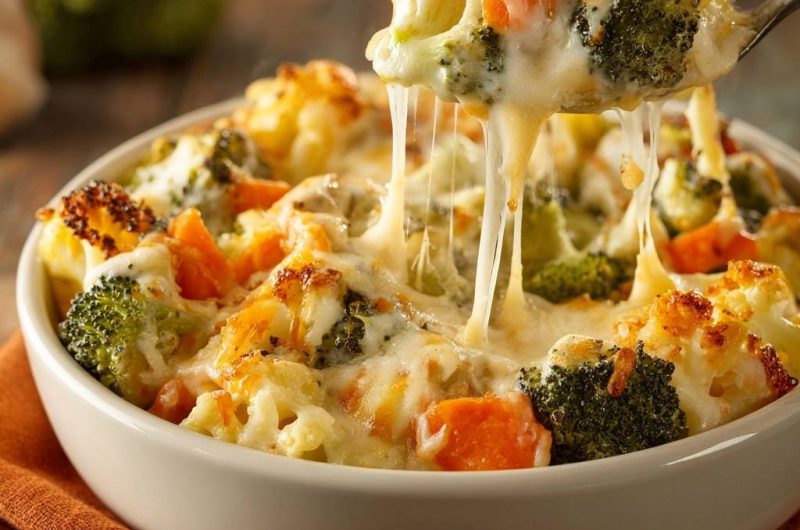
Cheesy Roasted Broccoli and Cauliflower Bake
Course: Side DishCuisine: AmericanDifficulty: easy6
servings15
minutes25
minutes40
Minutes285
kcalAmerican
Ingredients
1 large head broccoli, cut into bite-sized florets
1 large head cauliflower, cut into bite-sized florets
2 large carrots, peeled and cut into 1/2-inch chunks
3 tablespoons olive oil
1 teaspoon garlic powder
1/2 teaspoon onion powder
Salt and black pepper to taste
For the Cheese Sauce:
2 tablespoons unsalted butter
2 tablespoons all-purpose flour
1 1/4 cups heavy cream
1 cup shredded mozzarella cheese (divided)
1/2 cup shredded sharp cheddar cheese
1/4 cup grated parmesan cheese
Directions
- Preheat your oven to 425°F (218°C). This high temperature is the secret to preventing sogginess as it evaporates excess moisture from the vegetables quickly.
- Toss the broccoli, cauliflower, and carrots in a large bowl with olive oil, garlic powder, onion powder, salt, and pepper until evenly coated.
- Spread the vegetables in a single layer on a large rimmed baking sheet. Do not crowd the pan or the vegetables will steam instead of roast. Roast for 15 to 18 minutes until the edges are slightly charred and the carrots are fork-tender.
- While the vegetables roast, prepare the sauce: Melt butter in a small saucepan over medium heat. Whisk in the flour and cook for 1 minute. Slowly whisk in the heavy cream and simmer until thickened. Remove from heat and stir in the cheddar, parmesan, and 1/2 cup of the mozzarella until smooth.
- Transfer the roasted vegetables into a baking dish. Pour the cheese sauce evenly over the vegetables, tossing gently to ensure the sauce gets into the crevices of the florets.
- Top with the remaining 1/2 cup of mozzarella cheese.
- Switch the oven to the broil setting. Place the dish on the top rack under the broiler for 3 to 5 minutes until the cheese is bubbling, stretchy, and develops golden-brown toasted spots as seen in the image.
- Let the dish rest for 5 minutes before serving. This allows the sauce to set, ensuring a perfect, non-watery consistency.
Notes
- The high temperature is the secret to preventing sogginess as it evaporates excess moisture from the vegetables quickly. Do not crowd the pan during roasting to avoid steaming.