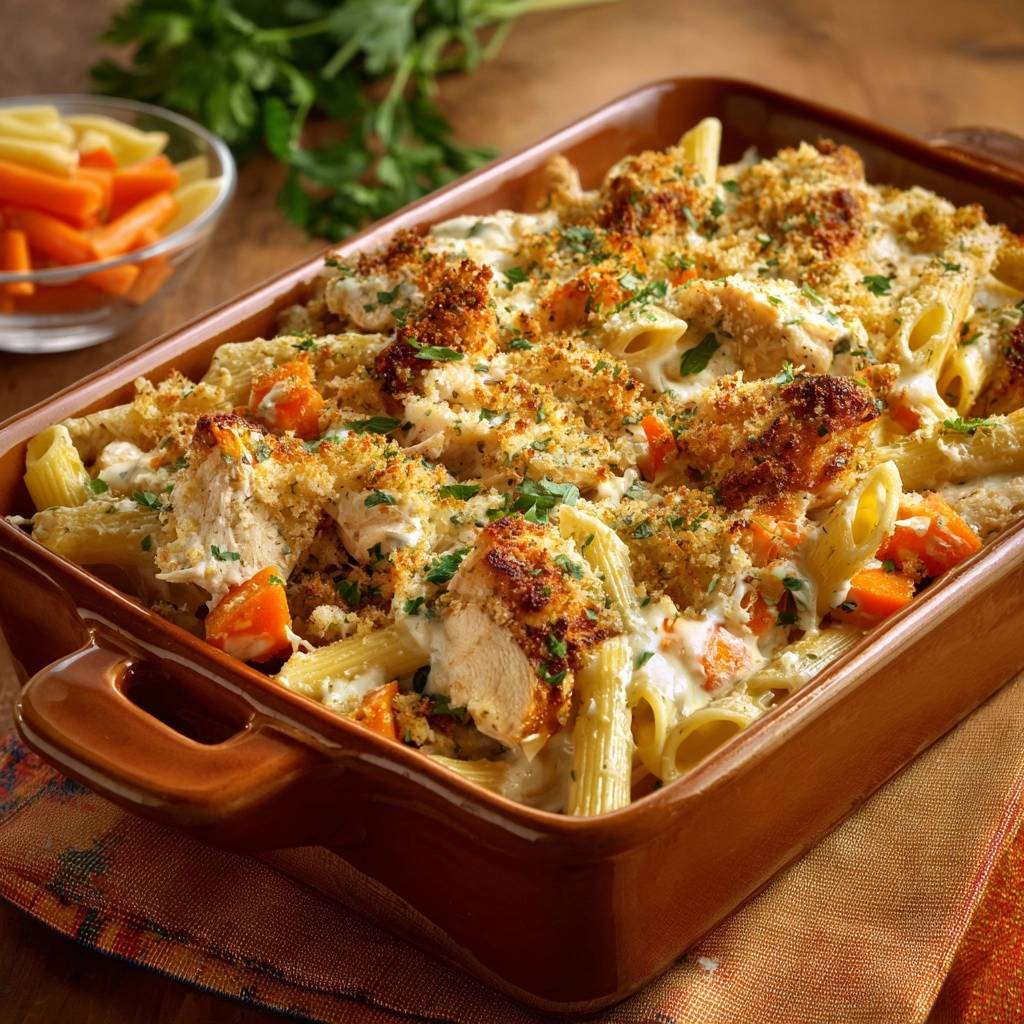
You pull a bubbling pasta bake from the oven, expecting a rich, velvety dinner, but instead, you find a pool of thin, watery liquid at the bottom of the dish. It’s a common kitchen heartbreak that ruins the texture of the noodles and leaves the chicken feeling bland. This Creamy Chicken and Carrot Penne Bake solves that problem forever by using a specific starch-locking technique that ensures your sauce stays thick and clings to every single piece of pasta.
The secret lies in the way we handle the moisture before the dish even hits the oven. By combining a traditional roux with undercooked pasta, we create a vacuum effect where the penne actually drinks up any excess liquid during the baking process. You aren’t just making a sauce; you’re engineering a stable emulsion that won’t break or separate under high heat.
Expertise in pasta bakes comes down to one golden rule: never cook your pasta to completion in the boiling water. If you boil the penne until it’s soft, it has no capacity to absorb the cream sauce in the oven, which is exactly why those puddles form. We’re going to pull that pasta out while it still has a firm bite, allowing it to finish its transformation directly inside the sauce.
The Science of Preventing Watery Pasta Sauce
Understanding the chemistry of a bake helps you avoid the dreaded “broken” sauce. When you whisk flour into melted butter, you’re creating a roux that coats starch granules in fat. This prevents the flour from clumping and allows it to thicken the heavy cream and chicken broth into a stable matrix. This starch-bind is your first line of defense against wateriness.
Furthermore, we have to consider the “osmosis” of the pasta. Pasta is essentially a dry sponge made of flour. If you undercook the penne by two minutes, it remains “thirsty.” As the dish bakes at 375°F, the pasta pulls moisture from the sauce into its center. This thickens the remaining sauce naturally while seasoning the pasta from the inside out.
In addition, the choice of dairy is a matter of science, not just calories. Heavy cream contains a higher fat-to-water ratio than milk or half-and-half. This makes it significantly more stable at high temperatures. While milk might curdle or “break” when it hits the bubbling point, heavy cream remains smooth and cohesive, providing that luxurious mouthfeel you crave.
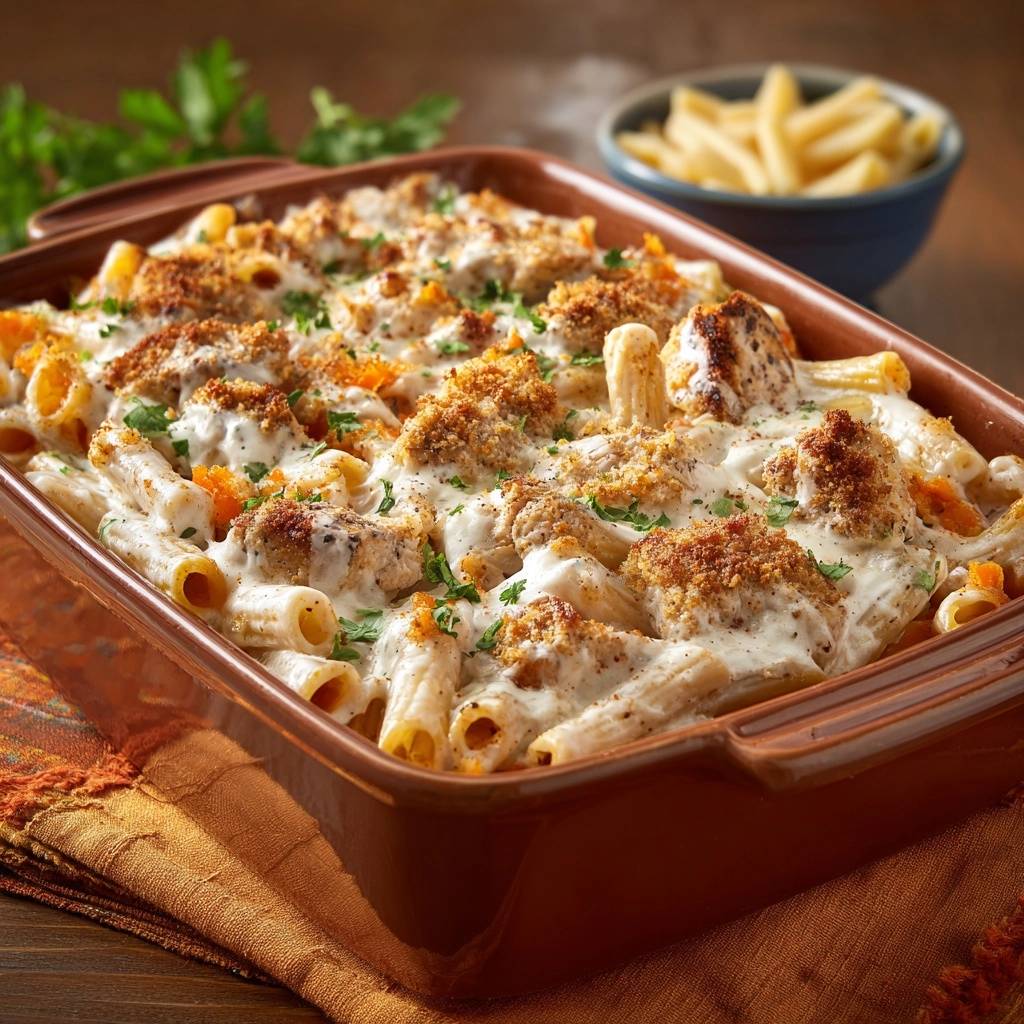
Essential Components for the Perfect Penne Bake
Quality ingredients dictate the final texture of this dish. We use large carrots peeled and cut into 1/2-inch thick half-moons. This specific size is vital because it provides structural integrity; they stay tender-crisp and don’t vanish into the sauce. If you slice them too thin, they turn to mush; too thick, and they’ll stay crunchy in an unpleasant way.
The topping requires Panko breadcrumbs rather than the fine, sandy traditional version. Panko flakes are larger and airier, which means they don’t absorb the sauce from underneath as quickly. This keeps the top shatteringly crisp while the interior stays gooey. It’s the ultimate contrast in textures.
However, don’t overlook the cheese. Freshly grated Parmesan is a must here. The pre-shredded stuff in the green can or even the bagged shredded variety is often coated in potato starch or cellulose to prevent clumping. Those additives can make your sauce feel gritty. Grating it yourself ensures it melts into a fluid, salty ribbons of flavor.
Selecting and Preparing the Chicken
You have flexibility with the protein, but the size of the cut matters immensely. If you’re in a rush, a rotisserie chicken works beautifully, but make sure you tear it into large, bite-sized chunks. Small shreds tend to get lost and dry out during the 30-minute bake time.
If you prefer to pan-sear fresh chicken breasts, cook them just until they are opaque. They will finish cooking in the oven’s residual heat. By keeping the pieces large, you preserve the juices inside the meat, ensuring every forkful of chicken is succulent rather than chewy.
The Role of Aromatics and Dried Herbs
Garlic, oregano, and onion powder provide the aromatic backbone that cuts through the richness of the heavy cream. We “bloom” the minced garlic in the melted butter for exactly 30 seconds. This short window is crucial because it releases the essential oils and softens the sharp bite without letting the garlic turn brown and bitter.
Dried oregano and onion powder are preferred over fresh here because they withstand the long bake time better. They infuse the sauce with a consistent, savory warmth that complements the sweetness of the par-boiled carrots. This creates a balanced flavor profile that feels like a hug in a bowl.
Step-by-Step: Building the Starch-Lock Base
Creating the roux is the most technical part of the process. Once your butter is melted and the garlic is fragrant, whisk in the flour until a thick paste forms. You want to cook this for about two minutes. Look for the mixture to start bubbling and smelling slightly nutty; this indicates the raw flour taste is gone.
Next, use the “slow-stream” method for the liquids. Pour in the chicken broth a quarter-cup at a time, whisking vigorously between each addition. It will look like a thick paste at first, but keep going. Once the broth is incorporated, stream in the heavy cream. This gradual process prevents lumps and ensures a silky finish.
Continue whisking over medium heat until the sauce reaches a gentle simmer. You’ll know it’s ready when it passes the “back of the spoon” test. Dip a metal spoon into the sauce and run your finger through the coating. If the line stays clean and the sauce doesn’t run back into the gap, your starch-lock is perfect.
The Par-Boiling Method for Carrots and Pasta
Efficiency is key, so we use a one-pot boiling strategy. Carrots take longer to soften than pasta, so they need a four-minute head start in the boiling salted water. This ensures they reach a “tender-crisp” state where they are soft enough to eat but still have a slight snap.
After the carrots have had their head start, drop the penne into the same pot. Set your timer for two minutes less than the “al dente” instructions on the box. This is non-negotiable. The pasta should feel slightly too firm in the center when you drain it.
By boiling them together, the pasta also picks up a hint of sweetness from the carrots. Once drained, don’t rinse them! The natural starches remaining on the surface of the pasta and carrots will help the cream sauce adhere even better when you mix everything together.
Assembling the Creamy Chicken and Carrot Penne Bake
When you’re ready to assemble, fold the pasta, carrots, and chicken into the sauce gently. Use a large spatula to ensure every tube of penne is filled with that liquid gold. At this stage, stir in only half of your mozzarella. This creates internal pockets of melted cheese that stretch when you pull a serving out.
Transfer the mixture to your greased 9×13 dish, smoothing it out to the edges. Top it with the remaining mozzarella and the freshly grated Parmesan. The double-layer of cheese acts as a seal, trapping steam inside to keep the chicken moist while the top browns.
Finally, toss your Panko with a little melted butter before sprinkling it over the cheese. This ensures the breadcrumbs toast evenly. Without that bit of fat, the Panko can stay dry and white even after 30 minutes in the oven. You want a uniform, golden crust across the entire surface.
Oven Calibration and the Golden Crust Phase
We bake this at 375°F because it’s the “sweet spot” for casseroles. It’s hot enough to create those crispy, browned cheese edges that everyone fights over, but it’s not so hot that the heavy cream begins to separate into oil and solids. Consistency is everything here.
Keep an eye on the dish during the last five minutes. You are looking for the sauce to be bubbling vigorously around the perimeter of the pan. The Panko should be a deep, toasted brown. If the top is browning too fast, you can loosely tent it with foil, but usually, 25-30 minutes is the perfect window.
Why the 10-Minute Rest is Mandatory
I know it’s tempting to scoop into the bake the second it leaves the oven, but you must wait. This 10-minute resting period is just as important as the cooking itself. As the temperature drops slightly, the proteins in the cheese and the starches in the sauce begin to “set.”
Think of it like resting a steak. If you cut it too soon, the juices run out. If you scoop this pasta too soon, the sauce will look thin. During these ten minutes, the sauce thickens into a heavy glaze that grips the penne. When you finally serve it, the sauce stays on the pasta instead of running to the bottom of the plate.
Flavor Variations and Ingredient Swaps
This recipe is a fantastic canvas for variations. If you want more greens, fold in two cups of fresh baby spinach right before you put the mixture into the baking dish; the heat of the sauce will wilt it perfectly. You could also swap the oregano for smoked paprika if you want a deeper, woodsy flavor profile.
For those needing a gluten-free version, use a high-quality corn or brown rice-based penne. However, be aware that gluten-free pasta releases more starch, so you may need to undercook it by three minutes instead of two. Use a 1:1 gluten-free flour blend for the roux to maintain that essential starch-lock.
In addition, you can easily swap the chicken for sautéed mushrooms or steamed broccoli for a vegetarian-friendly meal. Just ensure any vegetables you add are relatively dry so they don’t introduce extra water into your carefully balanced sauce.
Make-Ahead Strategies and Storage Logistics
You can absolutely prep this dish 24 hours in advance, but there is a trick to it. If you mix the pasta and sauce and let it sit overnight, the pasta will absorb all the sauce and become mushy. Instead, prepare the sauce and the pasta/carrot mix separately. Store them in different containers and combine them just before you’re ready to bake.
Leftovers store beautifully in an airtight container for up to three days. When you’re ready to reheat, the sauce will have thickened significantly in the fridge. Add a tiny splash of milk or water to the bowl before microwaving to loosen the sauce back to its original creamy state.
Freezing is also an option, though dairy-based sauces can sometimes change texture. To freeze, wrap the unbaked dish tightly in plastic wrap and then foil. Thaw it completely in the refrigerator before baking. You may need to add an extra five minutes to the bake time to ensure the center is piping hot.
Troubleshooting Your Pasta Bake
Why is my sauce still a bit thin?
This usually happens if the sauce didn’t simmer long enough before you added the pasta. The roux needs to reach a bubble to activate its thickening power. If it happens again, ensure the sauce coats the back of a spoon firmly before you proceed to the assembly step.
Why did the cheese on top get oily?
If the oven temperature is too high or you use a lower-quality “part-skim” mozzarella, the fat can separate from the solids. Stick to full-fat mozzarella and ensure your oven is truly at 375°F using an oven thermometer. High-quality cheese melts much more smoothly.
The pasta is too soft even though I followed the time.
Different brands of pasta react differently to boiling. If your penne turned out mushy, try reducing the boiling time even further next time. Remember, the pasta continues to cook for 30 minutes in the oven, so it only needs to be barely edible when it leaves the pot.
My carrots are still a little crunchy.
This is a result of inconsistent slicing. If some half-moons are thicker than 1/2-inch, they won’t soften in time. Try to keep your knife work uniform, or give the carrots an extra minute of par-boiling before adding the pasta to the water.
Expert Tips for a Professional Finish
To really make this dish pop, don’t skip the fresh parsley at the end. The bright, grassy notes of the herb cut right through the heavy cream and cheese, refreshing your palate between bites. It also adds a vibrant green color that makes the orange carrots and golden crust look even more appetizing.
Therefore, if you have a white ceramic or stoneware baking dish, use it. These materials hold heat more evenly than thin metal pans, which helps prevent the sauce from breaking at the edges. Plus, it looks beautiful when you bring it straight from the oven to the center of the dinner table.
How long can I store leftovers in the fridge?
You can store this bake in an airtight container for up to 3 days. When reheating, add a teaspoon of water or milk to the portion to help the cream sauce regain its silky texture, as the pasta will continue to absorb moisture while sitting in the fridge.
Can I use milk instead of heavy cream?
You can, but the sauce will be much thinner and more prone to breaking. If you must use milk, increase the flour in the roux to 4 tablespoons to provide extra stability. However, for the intended velvety result, heavy cream is highly recommended.
Why do I have to par-boil the carrots separately?
Carrots are much denser than dried pasta. If you threw them in at the same time as the penne, the pasta would be mush by the time the carrots were soft. Giving the carrots a 4-minute head start ensures both ingredients reach the perfect texture at the exact same moment.
Can I freeze this pasta bake?
Yes, you can freeze it for up to 2 months. It is best to freeze it before baking. Wrap the dish tightly with plastic wrap and then a layer of heavy-duty aluminum foil. Thaw it in the refrigerator overnight before baking as directed.
What is the best way to reheat a large portion?
For a large portion, place it back in the oven at 350°F covered with foil. This prevents the top from burning while the middle heats through. Adding a small splash of liquid before covering helps steam the pasta and loosen the sauce.
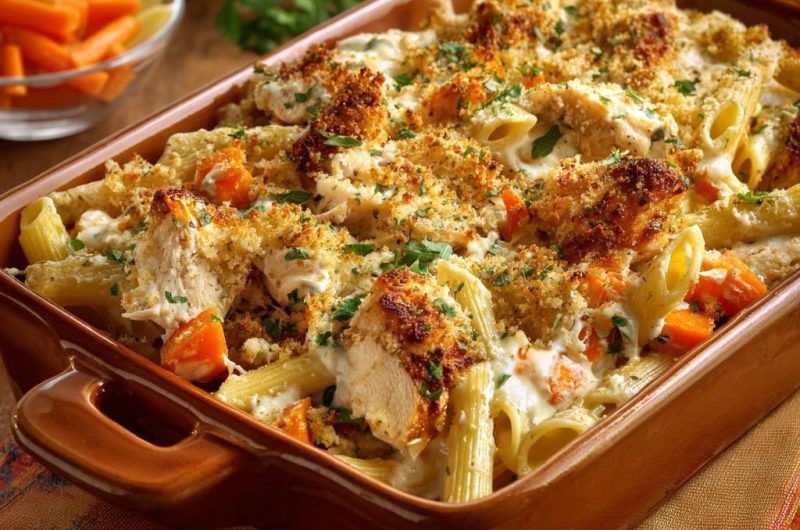
Creamy Chicken and Carrot Penne Bake
Course: Main CourseCuisine: AmericanDifficulty: easy6
servings20
minutes30
minutes50
Minutes510
kcalAmerican
Ingredients
1 pound penne pasta
2 cups cooked chicken breast, cut into large chunks
2 large carrots, peeled and cut into 1/2-inch thick half-moons
2 cups heavy cream
1 cup chicken broth
2 cups shredded mozzarella cheese
1/2 cup grated parmesan cheese
1 cup Panko breadcrumbs
3 tablespoons butter
3 tablespoons all-purpose flour
2 cloves garlic, minced
1 teaspoon dried oregano
1/2 teaspoon onion powder
Salt and black pepper to taste
Fresh parsley, chopped for garnish
Directions
- Preheat your oven to 375°F (190°C). Grease a deep 9×13 inch baking dish.
- Bring a large pot of salted water to a boil. Add the sliced carrots and cook for 4 minutes. Add the penne to the same pot and continue boiling for 2 minutes less than the package directions for al dente. Drain the pasta and carrots together. (Undercooking the pasta is the first secret; it will absorb excess moisture from the sauce in the oven, preventing wateriness).
- In a large saucepan or Dutch oven, melt the butter over medium heat. Add the minced garlic and cook for 30 seconds until fragrant.
- Whisk the flour into the butter to create a roux. Cook for 1-2 minutes until the mixture smells slightly nutty but does not brown.
- Slowly whisk in the chicken broth followed by the heavy cream. Add the oregano, onion powder, salt, and pepper. Continue whisking constantly until the sauce reaches a simmer and thickens significantly. This starch-bind ensures the sauce remains stable and creamy under high heat.
- Remove the sauce from heat. Stir in 1 cup of the mozzarella cheese until melted and smooth.
- Fold the undercooked penne, par-boiled carrots, and chicken chunks into the sauce. Ensure the pasta is thoroughly coated and the chicken is distributed evenly. Transfer the mixture to the prepared baking dish.
- Top with the remaining 1 cup of mozzarella and the parmesan cheese. In a small bowl, toss the Panko breadcrumbs with a tablespoon of melted butter or oil and sprinkle generously over the top.
- Bake for 25 to 30 minutes until the breadcrumbs are deeply golden brown and the sauce is bubbling at the edges.
- Let the dish rest for 5 to 10 minutes before serving. This resting period is crucial for the sauce to fully set into a velvety coating. Garnish with fresh parsley.
Notes
- Undercooking the pasta by 2 minutes and allowing the dish to rest for 10 minutes after baking are essential steps to ensure the sauce sets perfectly and does not become watery.