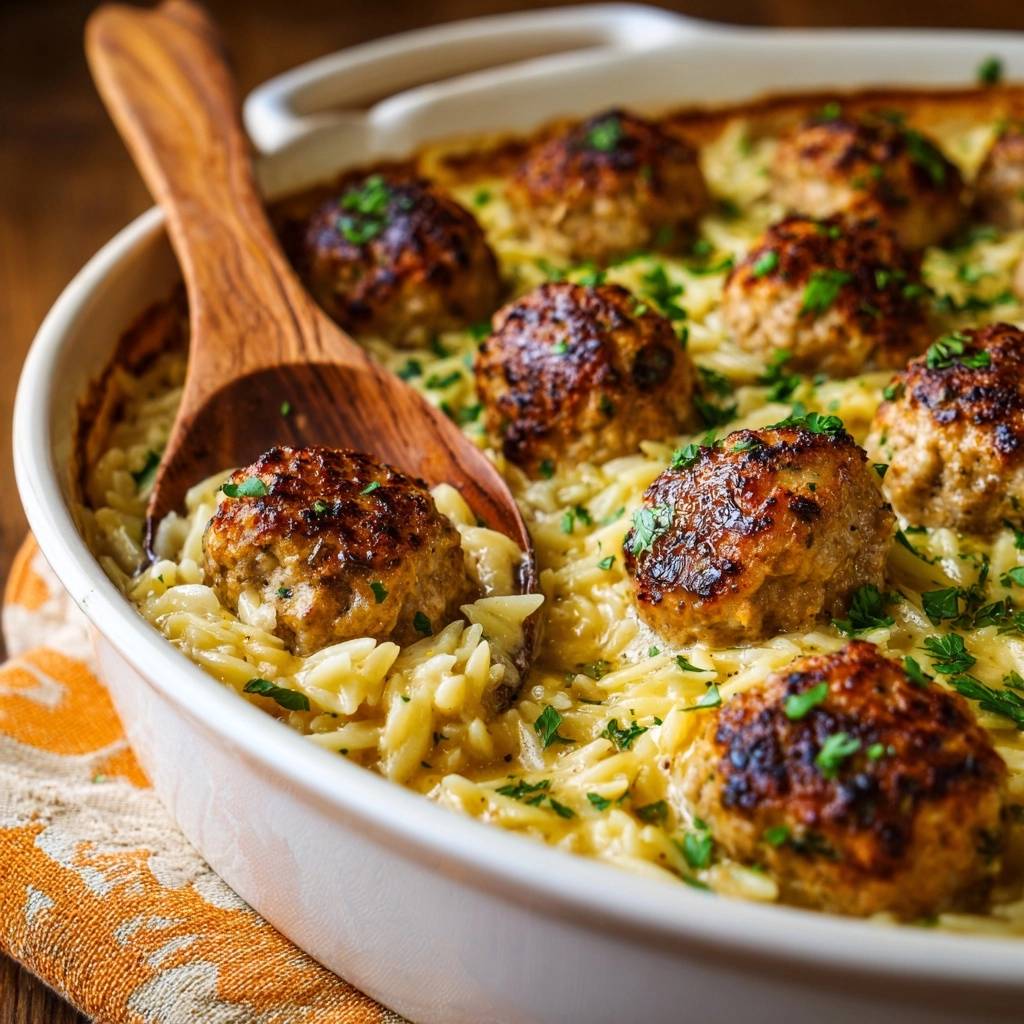
Most pasta bakes suffer from a tragic flaw: the pasta turns into a gummy, indistinguishable mass that loses all its structural integrity. You’ve likely experienced that disappointing mushiness where the sauce and the starch merge into one heavy texture. This Creamy Meatball Orzo Bake solves that problem by focusing on the mechanics of starch control and the Maillard reaction.
The secret to this dish lies in the contrast between the deeply seared, savory beef and the velvety, individual grains of toasted pasta. We aren’t just tossing ingredients into a pan and hoping for the best. Instead, we use specific heat management to ensure every bite offers a distinct mouthfeel and a rich, savory depth.
The real game-changer here is the toasted orzo method. By browning the dry pasta in meat drippings before adding any liquid, you create a protective barrier around each grain. This prevents the starch from “blowing out” and turning your dinner into porridge. It’s a simple professional technique that guarantees an al dente finish every single time.
The Science of Toasting Dry Orzo
Toasting dry pasta is a process known as dextrinization. When you subject the dry orzo to the direct heat of the skillet, the starches on the surface break down into smaller, more flavorful molecules called dextrins. This doesn’t just add a beautiful golden color; it fundamentally changes how the pasta interacts with moisture.
As the orzo toasts, it develops a nutty, popcorn-like aroma that provides a sophisticated base for the cream sauce. More importantly, this heat treatment hardens the exterior of the grain. While standard “boil and bake” methods allow the pasta to swell and release excess starch into the sauce, toasted orzo holds its shape. It absorbs the savory chicken broth and heavy cream without becoming bloated or sticky.
You’ll notice the difference the moment you stir the liquid into the pan. Instead of the liquid immediately turning cloudy and thick from raw starch, it remains a clean sauce that coats the pasta. This technique is the ultimate antidote to the dreaded “mushy pasta” syndrome that plagues most home-cooked casseroles. It ensures your Creamy Meatball Orzo Bake feels like a restaurant-quality meal rather than a cafeteria side dish.
Essential Components for the Meatball Base
The foundation of this bake starts with the meatballs, and ingredient quality is paramount. I always recommend an 80/20 ground beef blend. While lean grinds might seem healthier, they often result in dry, rubbery meatballs that lack flavor. That 20% fat content is essential for moisture retention and creates the flavorful drippings you need to toast the orzo later.
For the binder, we use Panko breadcrumbs and a beaten egg to create a “panade.” Panko is superior to traditional fine breadcrumbs because its larger, airy flakes trap more moisture within the meat. This keeps the meatballs tender and juicy even after they finish cooking in the high heat of the oven. It’s the difference between a dense meatball and one that practically melts in your mouth.
Fresh parsley is another non-negotiable component. While dried herbs have their place, fresh parsley provides a necessary chemical brightness. It offers a clean, grassy finish that cuts through the richness of the heavy cream and the savory beef. Always save a little extra to sprinkle on top right before serving to wake up the flavors with a hit of fresh chlorophyll.
Selecting the Right Liquid Gold: Broth and Cream
The liquid you choose defines the final seasoning of the dish. I strongly suggest using low-sodium chicken broth. This allows you to control the salt levels yourself, especially since the Parmesan cheese adds a significant salty punch. If you use full-sodium broth, the reduction process in the oven might leave the final dish unpleasantly salty.
When it comes to the dairy, heavy cream is the gold standard for stability. Half-and-half or milk can easily “break” or curdle when exposed to the high temperatures of a 400°F oven. Heavy cream has a higher fat content that emulsifies beautifully with the cheese and broth, creating a silky sauce that stays smooth. The Parmesan acts as both a natural thickener and a source of umami, so grate it fresh from the block for the best melt.
Phase One: Engineering the Perfect Sear
Browning the meatballs is about more than just cooking the meat; it is about building the “fond.” Fond is the collection of dark, caramelized bits that stick to the bottom of your skillet during the searing process. This is concentrated flavor gold. You want to sear the meatballs over medium-high heat until a deep, dark golden crust forms on all sides.
Don’t worry about cooking the meatballs all the way through at this stage. If you cook them completely on the stovetop, they will become overdone and tough by the time the orzo is finished in the oven. The goal here is the Maillard reaction—the chemical reaction between amino acids and reducing sugars that gives browned food its distinctive flavor. Once they are crusty and brown, pull them out and let them rest on a plate.
Phase Two: Deglazing and Emulsifying the Sauce
After you’ve toasted your orzo in those leftover beef drippings, it’s time to deglaze. Slowly pour in the chicken broth while using a wooden spoon to scrape up every bit of that fond from the bottom of the pan. As the liquid hits the hot surface, it will lift those caramelized juices and incorporate them directly into your sauce, turning it a rich, savory tan color.
Once the broth is simmering, whisk in the heavy cream and Parmesan. You are looking for a visual cue of emulsification: the sauce should look uniform and glossy, with no oil streaks on the surface. The lemon zest added at this stage might seem small, but it acts as a flavor bridge, connecting the heavy fats of the cream with the savory notes of the beef. It provides a subtle “lift” that keeps the dish from feeling too heavy on the palate.
Phase Three: The Oven Finish and Resting
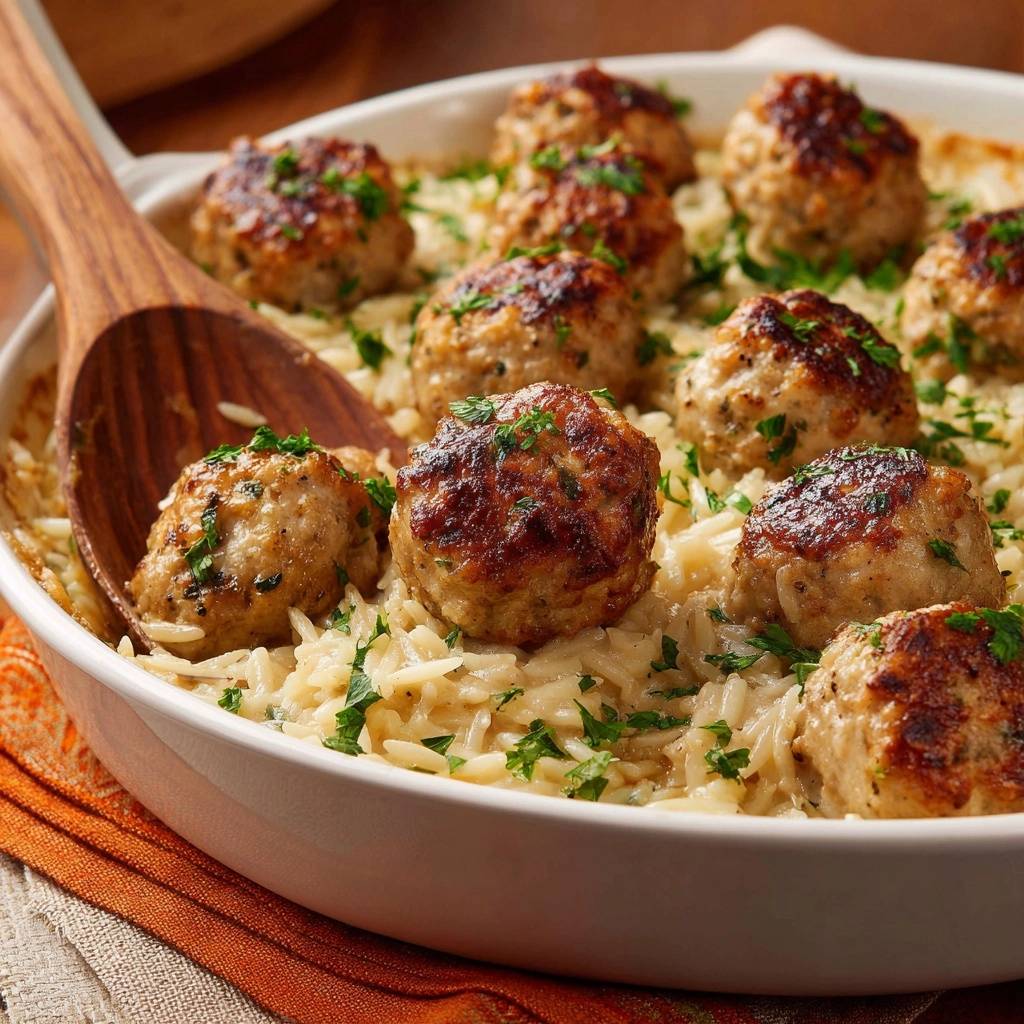
When you nestle the meatballs back into the pan, leave the tops exposed. This “uncovered” baking strategy is intentional. The submerged bottom of the meatball stays tender and soaks up the cream sauce, while the exposed top maintains that beautiful crust you worked so hard to create. This creates a fantastic texture contrast in every bite.
The most difficult part of this recipe is the wait. When the pan comes out of the oven, the sauce might look a little loose. However, you must let it rest for at least two minutes. During this time, carry-over cooking finishes the center of the meatballs, and the orzo absorbs the final bits of moisture. Rushing to the table will result in a runny sauce, but a short rest rewards you with a velvety, cohesive glaze that clings perfectly to the pasta.
Troubleshooting Common Orzo Texture Issues
If you find your orzo is still too firm after the suggested baking time, your oven might be running cool, or you may not have used enough liquid. You can fix this by adding a splash more broth and popping it back in for three minutes. Conversely, if the orzo is too soft, it usually means the toasting step was skipped or rushed. That golden-brown color during the sauté phase is your insurance policy against mushiness.
For a sauce that looks oily or “broken,” it usually means the heat was too high or the cheese was added too quickly. You can often bring it back together by adding a tablespoon of hot water and giving it a gentle stir. If the flavor feels flat, it almost always needs a tiny pinch more salt or an extra squeeze of lemon juice. Acid and salt are the volume knobs for flavor; if it tastes dull, turn them up slightly.
Flavor Variations and Ingredient Swaps
This Creamy Meatball Orzo Bake is a fantastic canvas for different flavor profiles. For a Mediterranean twist, you can swap the Parmesan for crumbled feta and stir in a handful of fresh baby spinach right before the pan goes into the oven. The spinach will wilt perfectly in the residual heat, adding a pop of color and earthy flavor that pairs beautifully with the lemon zest.
If you prefer something with a bit more kick, try a “Zesty” version. Increase the lemon zest, add a teaspoon of crushed red pepper flakes to the orzo while it toasts, and swap the parsley for fresh basil. You can even use ground lamb instead of beef for a richer, more robust meatball. As long as you maintain the ratio of liquid to orzo and don’t skip the toasting step, the technique will hold up to almost any ingredient swap.
Optimal Side Dish Pairings
Because this dish is rich, creamy, and savory, you want to avoid serving it with other heavy starches like garlic bread or mashed potatoes. Instead, look for high-acid or bitter accompaniments that can cleanse the palate. A simple arugula salad dressed with lemon juice and olive oil is a perfect partner. The peppery bite of the greens cuts right through the heavy cream sauce.
Charred broccolini with plenty of garlic or a shaved fennel salad also works wonders. These vegetables provide a crunch that contrasts with the tender orzo and juicy meatballs. If you want something warm, try roasted carrots with a splash of balsamic vinegar. The goal is to provide a bright, crisp balance to the comforting, velvety nature of the main course.
Make-Ahead Strategies and Storage Logistics
Pasta bakes are notorious for soaking up sauce as they sit in the fridge. If you have leftovers, the orzo will continue to absorb moisture, which can make the dish seem dry the next day. To revive that velvety texture, add a splash of broth or a tiny bit of water before reheating. This loosens the sauce and brings back the original creaminess without making the pasta soggy.
For the best results, reheat leftovers in a covered skillet over low heat rather than using the microwave. This prevents the meatballs from becoming rubbery. If you want to prep ahead, you can roll and sear the meatballs up to 24 hours in advance. Store them in the fridge, then proceed with toasting the orzo and building the sauce when you are ready to eat. I don’t recommend freezing the fully assembled dish, as the cream sauce can change texture, but the seared meatballs freeze beautifully for up to three months.
Expert Tips for Success
Always use a heavy-bottomed skillet, like cast iron or stainless steel. These materials distribute heat more evenly, which is crucial for toasting the orzo without burning it. If your pan is too thin, you’ll get “hot spots” that scorch the pasta before it has a chance to turn golden. It also helps with the sear on the meatballs, giving you that professional crust.
Another pro tip is to use a small cookie scoop to portion your meatballs. Uniformity isn’t just about looks; it ensures that every meatball cooks at the exact same rate. Finally, always grate your Parmesan from a block. Pre-shredded cheeses are coated in potato starch or cellulose to prevent clumping in the bag, but those additives will prevent the cheese from melting smoothly into your sauce, leading to a grainy texture.
Frequently Asked Questions
How do I store leftovers and does this freeze well?
Store any leftovers in an airtight container in the refrigerator for up to three days. When reheating, add a tablespoon of broth or water to help loosen the sauce, as the orzo will absorb liquid while sitting. I do not recommend freezing the entire baked dish because the cream sauce may separate and the orzo can become grainy. However, you can freeze the browned meatballs separately in a freezer bag for up to three months and then use them to start the recipe fresh.
Why is my orzo still crunchy after the bake?
Crunchy orzo usually happens if the pan wasn’t tightly covered (if the recipe called for it) or if the liquid evaporated too quickly. In this uncovered version, it usually means the orzo wasn’t fully submerged in the liquid or your oven temperature is running too high. Ensure the orzo is spread in an even layer and mostly covered by the broth-cream mixture before it goes into the oven. If it’s still hard, add 1/4 cup of warm broth and bake for another 5 minutes.
Can I use a different type of pasta?
You can use other small pasta shapes like ditalini or stelline, but the cooking times and liquid ratios may vary slightly. Orzo is unique because its shape allows it to cook quickly and mimic the texture of a risotto. If you switch to a larger pasta like penne, you will likely need to boil the pasta separately first, which means you lose the benefit of the toasting technique that makes this specific dish so special.
What can I use instead of heavy cream?
If you don’t have heavy cream, the best substitute is a mixture of whole milk and a little extra butter, though it won’t be quite as stable. Avoid using fat-free milk or non-dairy milks with high water content, as they are prone to curdling at 400°F. If you need a dairy alternative, a full-fat canned coconut milk can work, though it will significantly change the flavor profile of the dish.
Why did my meatballs fall apart in the pan?
Meatballs usually fall apart for two reasons: they weren’t chilled slightly before cooking or the pan wasn’t hot enough. When you place the meatballs in the oil, let them sit undisturbed for at least 2-3 minutes to develop a crust. If you try to flip them too early, the meat will stick to the pan and tear. Also, ensure your “panade” (the egg and breadcrumb mixture) is well-incorporated, as this acts as the glue holding everything together.

Creamy Meatball Orzo Bake
Course: Main CourseCuisine: AmericanDifficulty: easy4
servings15
minutes30
minutes45
Minutes650
kcalAmerican
Ingredients
1 pound ground beef (80/20 blend for best browning)
1/2 cup panko breadcrumbs
1 egg, beaten
3 tablespoons fresh parsley, chopped (divided)
1 teaspoon garlic powder
1/2 teaspoon onion powder
1 teaspoon kosher salt
1/2 teaspoon black pepper
2 tablespoons olive oil
1.5 cups dry orzo pasta
2.5 cups low-sodium chicken broth
1/2 cup heavy cream
1/2 cup freshly grated parmesan cheese
1/2 teaspoon lemon zest (optional, for brightness)
Directions
- In a large bowl, combine the ground beef, breadcrumbs, egg, 1 tablespoon of parsley, garlic powder, onion powder, salt, and pepper. Shape into 12 to 14 even meatballs.
- Heat olive oil in a deep, oven-safe skillet or heavy-bottomed casserole pan over medium-high heat. Brown the meatballs thoroughly on all sides until a deep, dark golden crust forms (about 8-10 minutes). The meatballs do not need to be cooked through yet. Remove meatballs from the pan and set aside on a plate.
- Preheat your oven to 400°F (200°C).
- To solve the mushy pasta problem, pour the dry orzo directly into the hot pan with the leftover meat drippings. Stir constantly for 3 minutes over medium heat until the orzo smells nutty and turns a distinct golden brown. This toasting step is vital as it prevents the starch from “blowing out” and becoming gummy during the bake.
- Slowly pour in the chicken broth, scraping the bottom of the pan with a wooden spoon to release the flavorful browned bits (fond). Bring to a simmer.
- Stir in the heavy cream, parmesan cheese, and lemon zest. Whisk briefly until the liquid is smooth and beginning to thicken.
- Nestle the browned meatballs back into the orzo mixture, ensuring they are partially submerged but the crispy tops remain exposed.
- Transfer the pan to the oven and bake uncovered for 12 to 15 minutes. The orzo will absorb the liquid and become tender while remaining distinct and firm.
- Remove from the oven. The sauce will continue to thicken as it sits for 2 minutes. Garnish with the remaining fresh parsley and serve immediately while the sauce is velvety and the meatballs are juicy.
Notes
- The toasting step is vital as it prevents the starch from ‘blowing out’ and becoming gummy during the bake. Ensure the skillet is oven-safe before starting.