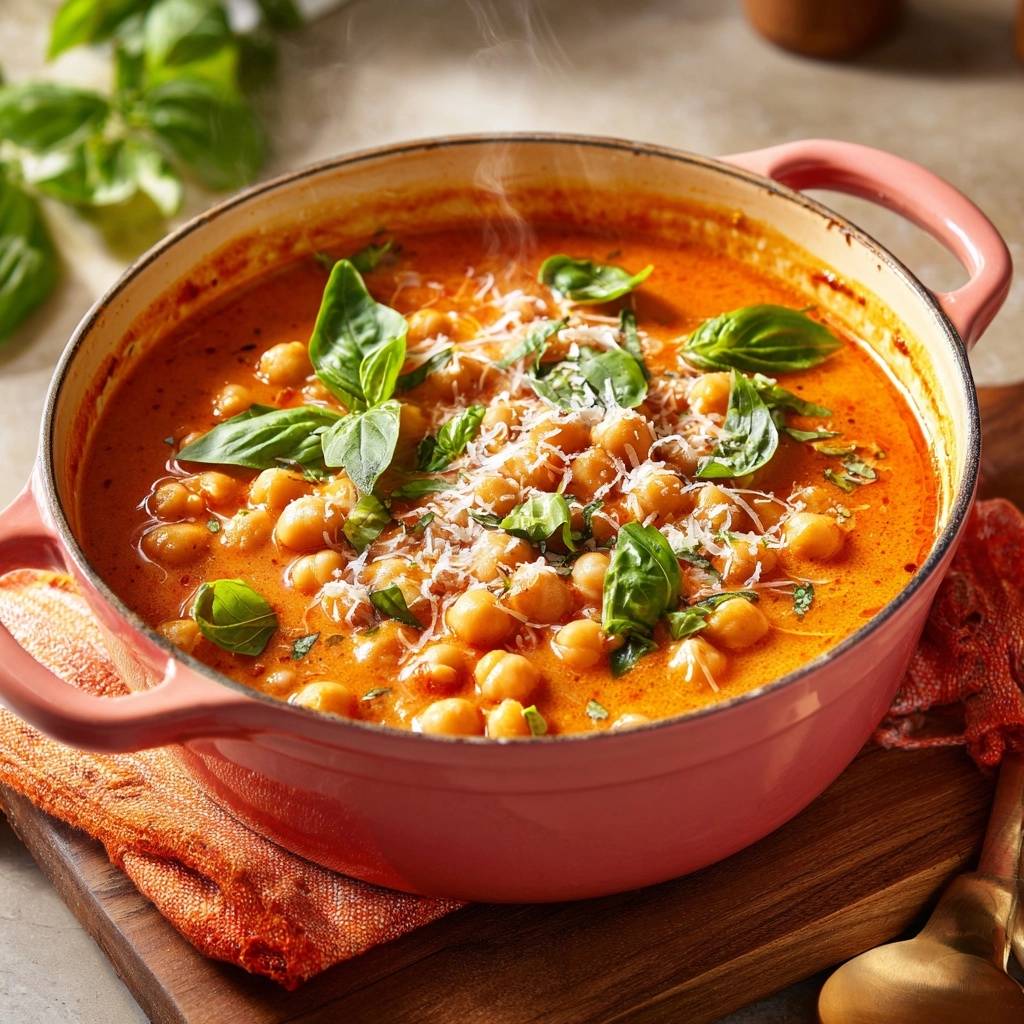
Most home cooks have experienced the disappointment of a vegetable stew that looks more like a watery soup than a rich, cohesive meal. You sit down expecting a velvety sauce, but instead, the liquid separates on the plate, leaving the vegetables high and dry. This Creamy Tomato and Chickpea Stew solves that problem entirely by focusing on a restaurant-grade emulsion that clings to every single legume.
The beauty of this dish lies in its efficiency, delivering a deep, slow-cooked flavor profile in just 35 minutes. While many recipes rely on heavy flour thickeners or hours of reduction, we use a specific layering technique to build body naturally. You’ll get a hearty, comforting dinner on the table faster than you could get a delivery driver to your door.
The secret to this success is the “brick red” transformation of your tomato paste. By frying the paste in oil before adding any liquid, you strip away the metallic canned taste and unlock a natural sweetness that acts as a binder. This single step ensures your sauce stays thick and stable, even after it hits the bowl.
The Chemistry of a Thick Tomato Base
Creating a thick sauce isn’t just about boiling things down; it’s about the Maillard reaction. When you “bloom” tomato paste in olive oil, you’re essentially caramelizing the natural sugars and intensifying the lycopene. You’ll notice the color shift from a bright, vibrant red to a dark, moody brick red, which signals that the raw acidity has vanished.
This process also allows the fat-soluble flavors in your dried herbs and red pepper flakes to dissolve into the oil. Since oil carries flavor more efficiently than water, this creates a high-impact foundation for the rest of your ingredients. Therefore, the oil becomes a flavored vehicle that carries the essence of the aromatics through the entire pot.
Furthermore, this concentrated base acts as a stabilizer for the dairy we add later. Because the tomato mixture is already thick and reduced, the heavy cream can easily bond with the tomato solids. This prevents that unappealing “broken” look where oil slicks sit on top of a thin liquid.
Why Your Stew Usually Turns Watery
The most common culprit for a thin stew is the liquid inside the chickpea can. That starchy water, while useful for some recipes, often carries a metallic tang and thins out your sauce too much. Always rinse your chickpeas thoroughly until the water runs clear to ensure you’re only adding the beans themselves.
Another mistake is simmering with the lid on. While it seems like a good way to keep heat in, it traps steam that should be escaping. That steam eventually condenses and drips back into the pot, diluting your hard-earned flavors. Finally, adding dairy too early or using low-fat milk can cause the sauce to split, resulting in a grainy texture rather than a smooth one.
Essential Components for the Creamy Tomato and Chickpea Stew
Quality matters immensely when the ingredient list is this focused. If you choose a high-quality jarred marinara, you’re starting with a base that already has onions, herbs, and slow-simmered depth. However, if you prefer more control, crushed tomatoes work beautifully as long as you’re prepared to season a bit more aggressively with salt and pepper.
I always reach for shallots instead of standard yellow onions for this specific stew. Shallots have a higher sugar content and a finer cell structure, meaning they melt into the sauce almost completely. This contributes to that “velvet” mouthfeel without leaving behind chunky bits of onion that can disrupt the texture.
Fresh garlic is non-negotiable here. Pre-minced garlic from a jar often has a harsh, acidic preservative flavor that can ruin the delicate creaminess of the final dish. Take the extra two minutes to smash and mince four fresh cloves; your taste buds will thank you when that sweet, nutty aroma fills your kitchen.
Selecting and Preparing the Chickpeas
While dried chickpeas are wonderful for long-simmered soups, canned chickpeas are the hero of this 35-minute meal. They are already tender, so our only job is to infuse them with the tomato base. Rinsing them is vital because it removes excess sodium and that “bean-y” liquid that can make the sauce taste muddy.
If you want an even creamier result, you can gently pat the chickpeas dry after rinsing. This ensures that no extra water hitches a ride into your pot. It might seem like a small detail, but it’s these tiny adjustments that separate a good home cook from a great one.
The Role of Heavy Cream and Parmesan
Heavy cream is the magic ingredient that transforms this from a basic tomato sauce into a luxurious stew. You need that high fat content (usually 36% or more) because it acts as a stabilizer against the acidity of the tomatoes. Lower-fat options like half-and-half are much more likely to curdle when they hit the simmering pot.
Parmesan cheese serves a dual purpose: it adds a salty, savory “umami” punch and acts as a natural thickener. As the cheese melts, the proteins bind with the sauce, giving it extra body. Always grate your Parmesan fresh from the block, as pre-shredded cheeses are coated in potato starch that can make your sauce feel gritty.
Step-by-Step: Building the Emulsified Sauce
Building this sauce is all about patience in the first five minutes. Start by heating your olive oil over medium heat and adding the shallots and garlic. You aren’t looking for a dark brown color here; you just want them to turn translucent and smell incredible. If they start to brown too quickly, turn your heat down immediately.
Phase 1: Aromatics and the Tomato Paste Fond
Once the aromatics are soft, clear a spot in the center of the pan and drop in your tomato paste. This is the most important part of the recipe. Stir it constantly, mashing it into the oil. You’ll see it go from a bright red to a dark, rusty color. It might even start to stick to the bottom of the pot, creating a “fond” or a layer of toasted flavor.
Phase 2: Deglazing and the Reduction Simmer
Next, pour in your crushed tomatoes or marinara. Use a wooden spoon to scrape up all those dark bits of tomato paste from the bottom of the pot. This is called deglazing, and it incorporates all that concentrated flavor back into the liquid. Add your chickpeas and let the pot simmer uncovered for at least 12 minutes.
During this time, you’ll see the liquid level drop slightly. This is exactly what you want. The sauce is concentrating, and the chickpeas are absorbing the spices. If you see large bubbles, turn the heat down to a gentle “smile”—just a few small bubbles breaking the surface occasionally.
Phase 3: Tempering the Cream and Final Emulsion
Before adding the cream, turn the heat to low. This prevents the dairy from being shocked by high heat, which causes curdling. Pour the cream in a slow, steady stream while stirring. You’ll watch the sauce transform from a deep red to a gorgeous, sunset orange. Finally, stir in the Parmesan until it disappears into the silkiness.
Troubleshooting Common Stew Textures
If you find your stew has become too thick—perhaps you simmered it a bit too long—don’t panic. Simply stir in a tablespoon of vegetable broth or water at a time until it reaches your desired consistency. The flavors are concentrated enough that a little extra liquid won’t hurt the taste.
On the flip side, if it still feels a bit thin for your liking, use the “mash trick.” Take a fork or a potato masher and crush about half a cup of the chickpeas directly in the pot. The natural starches released from the chickpeas will act as an instant thickener, giving the sauce a rustic, chunky body.
Flavor Variations and Dietary Adjustments
This recipe is a fantastic canvas for your favorite flavors. If you love a bit of smokiness, try adding a teaspoon of smoked paprika when you bloom the tomato paste. For those who want more greens, you can stir in a few handfuls of baby spinach at the very end; the residual heat will wilt it perfectly in about thirty seconds.
Infusing Heat and Herbal Notes
The dried oregano provides a classic earthy backbone, but the fresh basil at the end is what brings the dish to life. Always add fresh herbs at the very last second so they don’t lose their bright color or oils. If you want more heat, increase the red pepper flakes, or even add a dollop of Calabrian chili paste for a fruity, spicy kick.
Dairy-Free and Vegan Alternatives
You can easily make this dish vegan without losing that signature creaminess. Substitute the heavy cream with full-fat canned coconut milk. Don’t worry, the tomato and garlic are strong enough that you won’t end up with a coconut-flavored stew. For the Parmesan, use two tablespoons of nutritional yeast to maintain that savory, cheesy depth.
Optimal Pairings for a Hearty Stew
A sauce this good demands something to soak it up. A thick slice of toasted sourdough or a piece of warm naan is the perfect companion. The acidity of the sourdough especially complements the richness of the cream and the sweetness of the tomatoes.
If you want to add some crunch to the meal, serve this alongside a simple arugula salad dressed with lemon juice and olive oil. The bitterness of the greens cuts right through the heavy cream, refreshing your palate between bites. Roasted broccolini with a bit of char also provides a nice textural contrast to the soft chickpeas.
Storage, Reheating, and Make-Ahead Tips
This stew actually tastes even better the next day because the chickpeas have more time to soak up the sauce. Store any leftovers in an airtight container in the fridge for up to four days. You’ll notice the sauce thickens significantly as it cools, almost becoming a paste.
When reheating, do it gently on the stove over low heat. You will likely need to add a splash of water or broth to loosen it back up to its original creamy state. I don’t recommend freezing this dish; the heavy cream can separate and become grainy when thawed, which ruins that perfect emulsion we worked so hard to create.
Expert Troubleshooting FAQ
Can I use milk instead of heavy cream?
It is generally not recommended to use regular milk. The fat content in milk is too low, which means it is much more likely to curdle when it hits the acidic tomatoes. If you must use milk, whisk a teaspoon of cornstarch into it first to help stabilize the mixture, but the result won’t be nearly as rich or silky.
Why is my garlic bitter?
Garlic turns bitter the moment it burns. If your oil is too hot when you add the minced garlic, it can brown in seconds. Always keep your heat at a true medium and be ready to add the tomato paste quickly to lower the temperature of the oil. If you see the garlic turning dark brown, it’s best to start over.
Can I add greens like spinach or kale?
Yes, but timing is everything. Spinach should be stirred in at the very end because it wilts in seconds. If you use kale, add it about 5 minutes before the stew is finished simmering so the leaves have enough time to soften without becoming mushy or losing their vibrant green color.
How do I scale this for a crowd?
When doubling the recipe, use a wider pot rather than a deeper one. A wider surface area allows for the same rate of evaporation, ensuring your sauce reduces properly. If the pot is too narrow and deep, the steam can’t escape as easily, and you might end up with a thinner sauce than intended.
What if I don’t have shallots?
You can substitute with a small yellow onion or the white parts of a few green onions. Just make sure to mince them very finely so they cook down at the same rate as the garlic. The flavor will be slightly more pungent than a shallot, but it will still produce a delicious result.
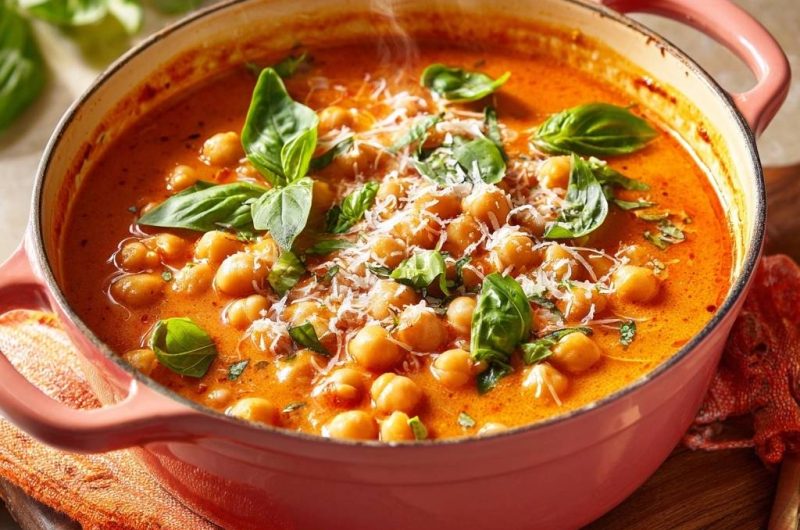
Creamy Tomato and Chickpea Stew
Course: Main CourseCuisine: AmericanDifficulty: easy4
servings10
minutes25
minutes35
MinutesAmerican
Ingredients
2 cans (15 oz) chickpeas, drained and rinsed
1 jar (24 oz) high-quality tomato marinara or crushed tomatoes
3 tablespoons tomato paste
3/4 cup heavy cream
4 cloves garlic, minced
1 small shallot, finely minced
2 tablespoons olive oil
1 teaspoon dried oregano
1/2 teaspoon red pepper flakes
1/2 cup freshly grated parmesan cheese
Large handful of fresh basil leaves
Salt and black pepper to taste
Directions
- Heat olive oil in a large heavy-bottomed pot or Dutch oven over medium heat. Add the minced garlic and shallot. Sauté for 2 minutes until softened and fragrant, ensuring they do not brown.
- To solve the watery sauce problem, add the tomato paste directly to the oil and aromatics. Stir constantly for 3 to 4 minutes until the paste turns a deep brick red and begins to stick slightly to the bottom. This caramelization step removes excess moisture and creates a thick, flavor-dense foundation.
- Pour in the crushed tomatoes or marinara, dried oregano, and red pepper flakes. Stir well to deglaze the bottom of the pot. Bring the mixture to a gentle simmer.
- Add the drained chickpeas. Reduce the heat to medium-low and simmer uncovered for 12-15 minutes. Simmering without a lid allows steam to escape, concentrating the sauce so it never turns runny.
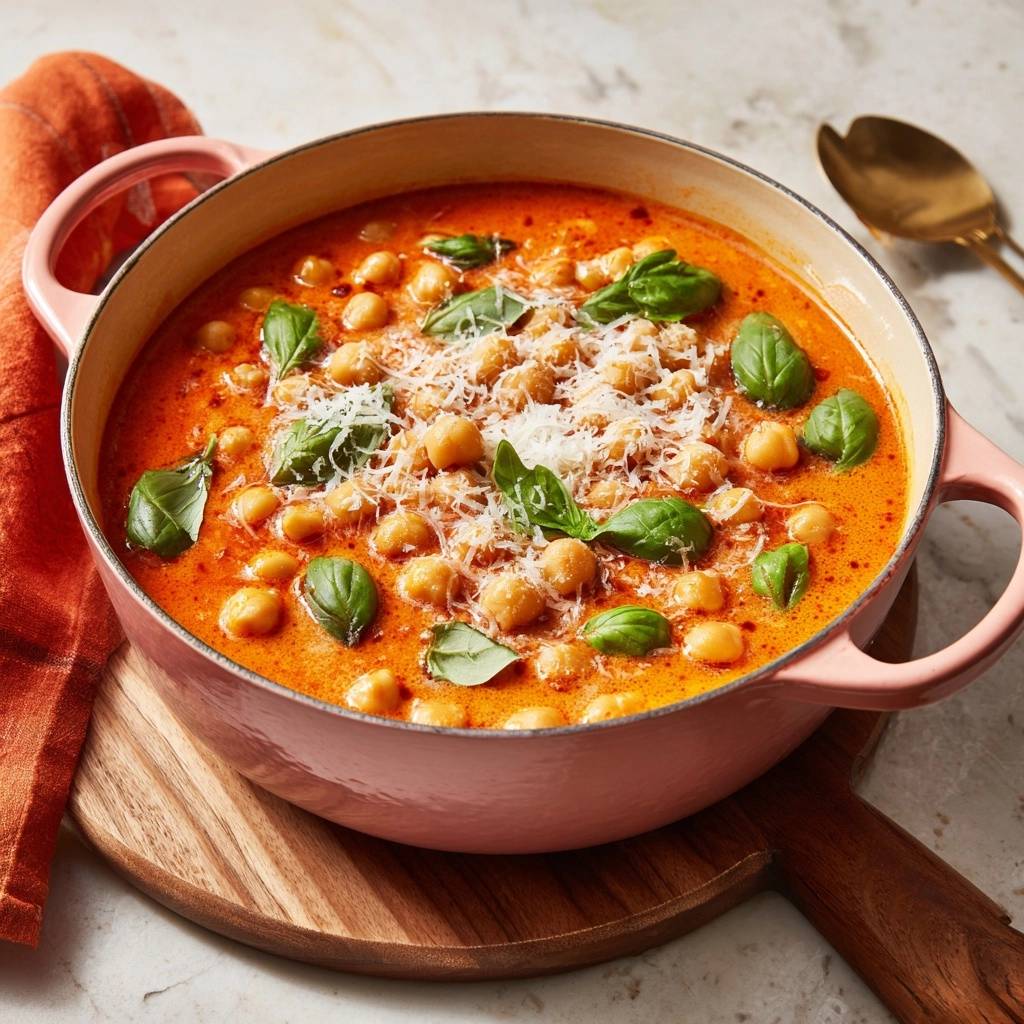
- Lower the heat to low. Slowly pour in the heavy cream while stirring constantly. The fat in the cream binds with the concentrated tomato sugars to create the silky, orange-hued stable emulsion seen in the image.
- Stir in half of the grated parmesan cheese until fully melted into the sauce. This adds body and a savory depth. Season with salt and black pepper to taste.
- Garnish the pot directly with the remaining parmesan cheese and a generous amount of whole and torn fresh basil leaves. Serve hot directly from the pot or in deep bowls.
Notes
- The secret to the thick sauce is blooming the tomato paste until brick red and simmering uncovered to allow steam to escape.