Stop settling for mushy, falling-off toppings that ruin your fish. Most nut-crusted recipes fail because the steam from the salmon makes the crust soggy and soft. This version changes everything by focusing on a specific layering technique that creates a moisture barrier, locking in juices while keeping the pistachio topping incredibly crunchy and intact.
You’re about to discover how a few simple pantry staples can create a restaurant-quality crust that shatters with every forkful. This 22-minute meal delivers a sophisticated balance of buttery, flaky fish and a vibrant, nutty exterior. It’s the perfect high-protein dinner that feels like a celebration but fits into a busy weeknight schedule.
The secret to this success isn’t just the nuts; it’s the “sacrificial” Panko breadcrumbs. By mixing a small amount of Panko with the pistachios, you create tiny air pockets that absorb excess oils and moisture. This prevents the topping from turning into a paste, ensuring a distinct, toasted texture that stays firmly attached to the fillet.
The Physics of the Perfect Nut Crust
Cooking salmon involves managing moisture. As the fish heats up, it releases steam and a white protein called albumin. If you place a dense layer of nuts directly on the flesh, that steam gets trapped, turning your expensive pistachios into a damp, flavorless mush.
Therefore, we use a honey-mustard glaze as a strategic moisture barrier. This tacky layer seals the surface of the fish, forcing the steam to escape through the sides of the fillet rather than up through the crust. It acts like a culinary glue that protects the integrity of the topping.
In addition, the Panko breadcrumbs act as a desiccant. They are designed to absorb moisture while maintaining their structure. When combined with the natural oils in the pistachios, the Panko helps the entire mixture toast evenly in the dry heat of the oven.
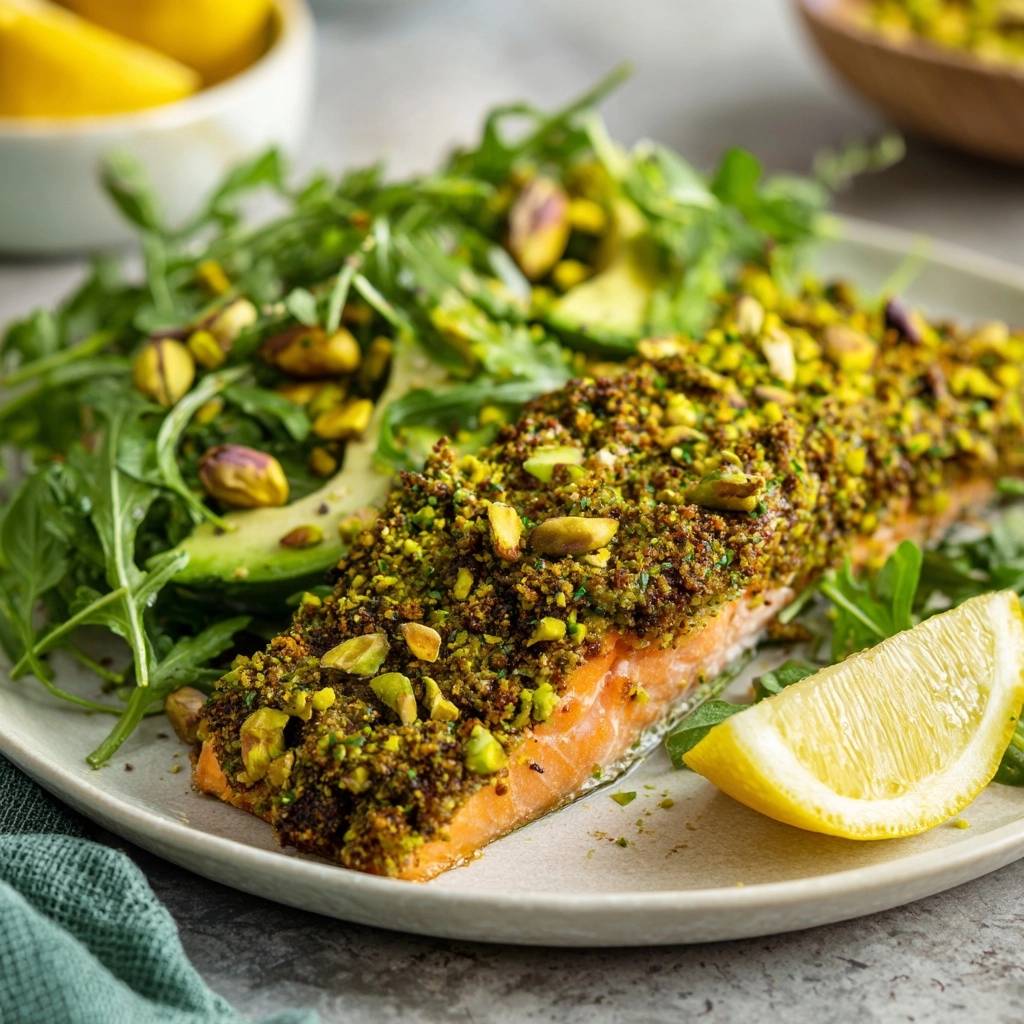
Essential Components for Pistachio Crusted Salmon
Quality ingredients are the foundation of this dish. You want to use raw, unsalted pistachios because they have a higher moisture content than pre-roasted ones. This allows them to toast perfectly in the oven without burning or becoming bitter before the salmon is cooked through.
Dijon mustard is another non-negotiable component. It acts as an emulsifier, helping the honey and spices bind together into a thick, spreadable paste. The sharp tang of the mustard also cuts through the rich fats found in both the salmon and the nuts.
Finally, honey provides the necessary sugars for caramelization. However, it also adds a subtle floral sweetness that complements the earthy flavor of the pistachios. Together, these ingredients create a complex flavor profile that hits every part of your palate.
Selecting High-Quality Salmon Fillets
When shopping, look for fillets that are vibrant in color and firm to the touch. Atlantic salmon is widely available and offers a high fat content that stays moist under the crust. Sockeye is leaner and more intense, while King salmon is the “wagyu of the sea” with a buttery texture.
Always choose skin-on fillets if possible. The skin acts as a thermal buffer between the hot pan and the delicate flesh, preventing the bottom of the fish from overcooking. It also makes it much easier to slide a spatula under the fish once it’s finished roasting.
Before you even think about seasoning, you must pat the salmon completely dry with paper towels. If the surface is wet, the mustard glaze will slide right off. A dry surface ensures the “glue” sticks, which is the first step toward a crust that doesn’t slump.
The Role of Panko in Texture Engineering
Using 100% ground nuts often results in a topping that feels heavy or oily. Because nuts are dense, they don’t allow for much heat circulation. This is why many home cooks end up with a crust that is burnt on the very top but raw and doughy underneath.
Panko breadcrumbs solve this problem because they are flaky and jagged. They create a “scaffold” within the nut mixture, allowing hot air to penetrate deeper into the crust. This results in a lighter, crunchier mouthfeel that doesn’t distract from the star of the show.
Furthermore, the Panko helps the crust hold its shape when you slice into the fish. It provides structural integrity that nuts alone cannot achieve. You’ll notice the difference the moment your knife hits the topping and you hear that satisfying crackle.
Phase One: Preparing the Pistachio Topping
To get the best texture, you want a mix of “pebbles and meal.” If you grind the pistachios into a fine powder, the crust will be too dense. If the pieces are too large, they won’t stick to the mustard glaze and will fall off during cooking.
Pulse the pistachios in a food processor just a few times. You are looking for some pieces the size of coarse sea salt and others that are slightly larger, like small pebbles. This variation creates a beautiful, rustic look and a more interesting eating experience.
Once chopped, toss the nuts with the Panko and a tablespoon of olive oil. The oil is vital because it coats the dry ingredients, ensuring they fry and toast in the oven heat. Without this bit of fat, the topping can look dull and dusty instead of golden and glistening.
Phase Two: Building the Moisture Barrier
Whisk the Dijon, honey, garlic powder, and lemon zest in a small bowl until smooth. The lemon zest is a small addition that makes a huge impact. It provides a bright, citrusy aroma that wakes up the entire dish and balances the savory garlic.
Apply the glaze in a thin, even layer only on the top surface of the salmon. Do not coat the sides of the fillets. Leaving the sides exposed is a pro tip that allows internal steam to escape laterally, which is essential for keeping the top crust dry and crisp.
Now, press the pistachio mixture firmly into the glaze. Don’t just sprinkle it on; use the palm of your hand to pack it down tight. This mechanical bond is what keeps the crust from crumbling away when you move the fish to a plate.
Phase Three: The High-Heat Roasting Technique
Preheating your baking sheet is a game-changer for salmon. When you place the cold fish onto a screaming-hot pan, the skin sears instantly. This prevents sticking and ensures the bottom of the fish starts cooking immediately, leading to a more even result.
Line your hot pan with a piece of parchment paper before adding the fish. This provides an extra layer of insurance against sticking and makes cleanup a breeze. You should hear a faint sizzle the moment the salmon touches the pan.
Slide the pan into the center of the oven. The 400°F heat is high enough to toast the nuts and crisp the Panko before the salmon becomes overcooked. This high-heat environment is exactly what you need for that “shatteringly crisp” finish.
Temperature Control and Timing Precision
Most salmon fillets will be perfectly cooked in 10 to 12 minutes. At the 8-minute mark, take a quick peek. The salmon should be turning opaque on the sides, and the pistachio crust should be starting to take on a golden hue.
If you have an instant-read thermometer, aim for an internal temperature of 125°F to 130°F for medium-rare, or 135°F for medium. Remember that the temperature will rise a few degrees as the fish rests, so pull it out just before it hits your target.
If the fish is done but the crust looks a little pale, you can move the pan to the top rack for the last 60 seconds. Watch it like a hawk, though. Pistachios have a high oil content and can go from perfectly toasted to burnt in the blink of an eye.
Troubleshooting Common Crust Failures
If your crust is slumping or sliding off, you likely used too much mustard glaze. You only need enough to make the surface tacky. A thick layer of mustard will act like a lubricant rather than a glue, causing the whole topping to slide off in the oven.
Burnt nuts are usually the result of placing the fish too close to the top heating element for the entire cook time. If your oven runs hot, keep the salmon on the middle rack. You can always move it up at the end if you need more color.
Lastly, if the fish tastes bland despite the topping, make sure you season the salmon flesh itself with salt and pepper before applying the glaze. The crust is flavorful, but it can’t season the entire thickness of the fillet on its own.
Flavor Variations and Ingredient Swaps
While pistachios offer a unique color and flavor, you can use this same technique with other nuts. Walnuts or pecans provide a deeper, earthier taste that pairs beautifully with the honey-mustard glaze. Just ensure they are raw and unsalted before you start.
If you don’t have honey, maple syrup is an excellent substitute. It offers a different kind of sweetness that feels very autumnal. For the mustard, a spicy brown mustard can be used if you prefer a bit more “kick” than Dijon provides.
For a gluten-free version, simply swap the Panko for gluten-free breadcrumbs or even crushed rice crackers. The goal is to maintain that “sacrificial” dry element that absorbs moisture, so any light, crispy cracker crumb will work in a pinch.
Plating and Side Dish Synergy
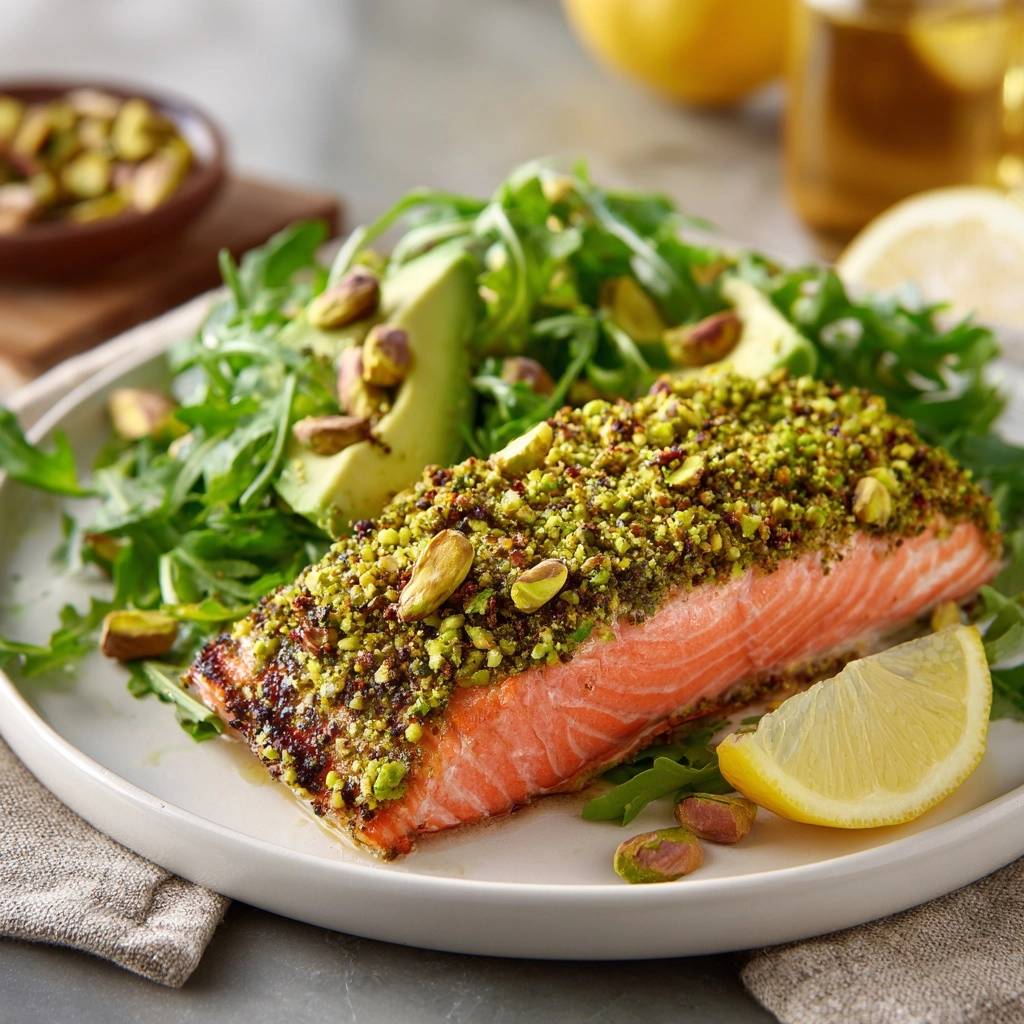
The richness of the salmon and the nutty crust needs a bright, acidic partner. A simple bed of fresh arugula tossed with lemon juice and olive oil is the perfect choice. The natural peppiness of the greens cuts right through the fat of the fish.
Adding sliced avocado provides a creamy contrast to the crunchy topping. It echoes the healthy fats in the salmon and makes the meal feel incredibly substantial. The cool temperature of the salad also balances the heat of the roasted fish.
If you want a heartier meal, consider serving this over a lemon-herb quinoa or alongside roasted asparagus. The key is to keep the sides relatively simple so they don’t compete with the complex textures of the pistachio crust.
Expert Tips for Professional Presentation
Heat can sometimes dull the vibrant green of the pistachios. To bring that color back to life, garnish the finished dish with a few whole, raw pistachios and a fresh dusting of lemon zest. This adds a pop of brightness that makes the plate look professional.
When it’s time to serve, use a wide fish spatula to lift the fillets. If you try to use tongs, you risk cracking the crust or breaking the delicate fish. Slide the spatula all the way under the skin to ensure the fillet stays in one piece.
Finally, always serve with extra lemon wedges on the side. A final squeeze of fresh juice right before eating brightens the fats and makes the flavors of the pistachio and salmon truly sing. It’s the finishing touch that takes the dish from good to great.
Frequently Asked Questions
Can I use pre-roasted pistachios?
It is best to avoid pre-roasted pistachios for this recipe. Since they have already been subjected to heat, putting them in a 400°F oven for 12 minutes will likely cause them to over-toast, resulting in a bitter or burnt flavor. Raw nuts allow for a perfect synchronization between the cooking of the fish and the toasting of the crust.
How do I prevent the salmon skin from sticking?
The most effective way to prevent sticking is to use the “hot sheet” method combined with parchment paper. By preheating the baking sheet, you create an immediate sear on the skin. The parchment paper provides a non-stick surface that allows the fish to slide off easily once it is finished roasting. Also, ensure the skin is dry before placing it on the pan.
Is this recipe suitable for meal prep?
Salmon is best enjoyed fresh, as the crust will lose its signature crunch in the refrigerator. However, if you must reheat it, avoid the microwave. Instead, place the salmon in a toaster oven or air fryer at 300°F for about 5-7 minutes. This “low and slow” approach helps warm the fish through without drying it out while helping the nut crust regain some of its crispness.
What if my crust is falling off after baking?
This usually happens if the nuts weren’t pressed firmly enough into the mustard glaze or if the salmon wasn’t patted dry. Use the “packing technique” by applying firm pressure with your palm to create a mechanical bond. Additionally, make sure your mustard-honey glaze isn’t too watery; it should be a thick, tacky paste that can support the weight of the nuts.
Can I air fry this Pistachio Crusted Salmon?
Yes, the air fryer is excellent for this dish because the 360-degree airflow helps the crust get exceptionally crispy. Set your air fryer to 375°F and cook for 8 to 10 minutes depending on the thickness of the fillets. Since air fryers vary in power, check the internal temperature at the 7-minute mark to ensure the fish doesn’t overcook.
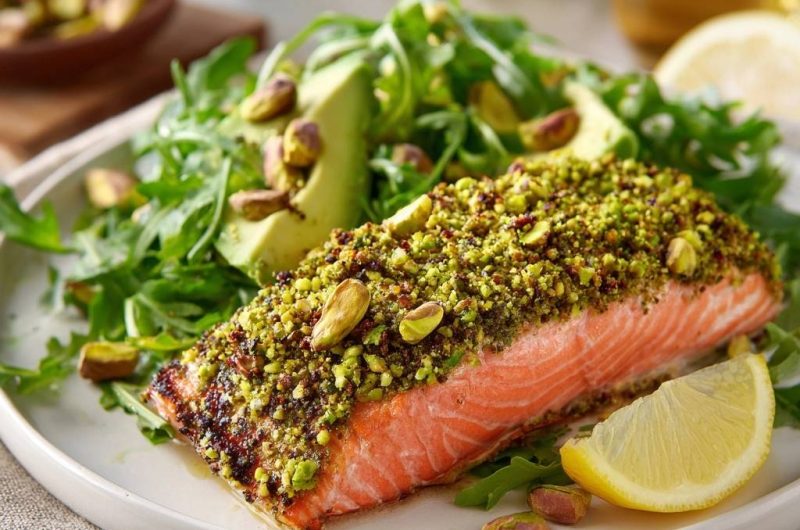
Pistachio Crusted Salmon
Course: Main CourseCuisine: AmericanDifficulty: easy2
servings10
minutes12
minutes22
Minutes510
kcalAmerican
Ingredients
2 salmon fillets (6 oz each), skin-on
1/2 cup shelled pistachios (raw, unsalted)
2 tablespoons Panko breadcrumbs (for extra crunch and oil absorption)
1 tablespoon Dijon mustard
1 tablespoon honey
1 tablespoon olive oil (plus extra for the pan)
1/2 teaspoon lemon zest
1/4 teaspoon garlic powder
1/2 teaspoon kosher salt
1/4 teaspoon cracked black pepper
2 cups fresh arugula
1 ripe avocado, sliced
Extra whole pistachios for garnish
Lemon wedges for serving
Directions
- Preheat your oven to 400°F (200°C). Place a heavy-duty baking sheet in the oven while it preheats; a hot surface prevents the bottom of the fish from steaming.
- Prepare the crust: Pulse the pistachios in a food processor until they are a mix of fine meal and small pebbles. In a small bowl, toss the chopped pistachios with the Panko breadcrumbs and 1 tablespoon of olive oil. The oil coats the nuts, ensuring they toast rather than steam.
- Pat the salmon fillets completely dry with paper towels. This is the critical step to preventing a soggy base. Season the flesh side lightly with salt and pepper.
- Create the barrier: In a small bowl, whisk together the Dijon mustard, honey, garlic powder, and lemon zest.
- Spread a thin, even layer of the mustard mixture ONLY on the top of the salmon. Do not coat the sides; leaving the sides exposed allows internal steam to escape laterally rather than rising through and softening your crust.
- Press the pistachio-panko mixture firmly into the mustard layer. Use the palm of your hand to pack it down tight. This “packing” method ensures the crust stays intact and creates the dense, vibrant green layer seen in the image.
- Carefully place the salmon onto the preheated baking sheet (lined with parchment). Roast for 10 to 12 minutes. For a perfectly vibrant green crust that doesn’t burn, check at 8 minutes; if the salmon is nearly opaque but the nuts aren’t toasted, move to the top rack for the final 2 minutes.
- While the salmon cooks, toss the arugula and avocado with a squeeze of lemon and a drizzle of olive oil.
- Serve the salmon immediately over the greens. Garnish with a few whole pistachios and a fresh lemon wedge. The result is a buttery, flaky interior protected by a distinct, shatteringly crisp nut crust.
Notes
- To ensure a vibrant green crust that does not burn, check the fish at 8 minutes. If the salmon is nearly opaque but the nuts are not toasted, move the pan to the top rack for the final 2 minutes of cooking.