Imagine walking through a bustling street market in the heart of the Mediterranean. The air hangs heavy with the scent of charred wood, earthy cumin, and the unmistakable aroma of succulent meats hitting a scorching hot grill. You’ve likely tried to recreate that experience at home, only to end up with chicken that feels like a pencil eraser or ground kebabs that crumble into dry bits the moment they hit the plate.
The secret to those legendary restaurant platters isn’t a hidden spice or a fancy charcoal pit. It’s all about the “Moisture-Lock” technique. By using the natural chemistry of onion juice and high-heat searing, you can transform humble cuts of meat into a feast that stays incredibly juicy. A true Mediterranean Mixed Grill Platter is more than just a meal; it’s a communal celebration of textures, from the snap of pickled peppers to the fluffiest saffron-stained rice.
I’ve found that the biggest mistake home cooks make is treating the meat like a standard burger or stir-fry. To get that authentic, tender bite, you have to manipulate the proteins before they ever touch the heat. The secret is in the onion juice—it acts as a natural tenderizer that breaks down tough fibers while adding a deep, savory base that water-based marinades just can’t match.
The Science of the Moisture-Lock Technique
When you grate a yellow onion, you’re releasing a potent cocktail of sulfur compounds and proteolytic enzymes. These enzymes are the “magic” behind the moisture-lock. When applied to chicken breast, they gently break down the lean protein fibers. This prevents the meat from tightening up and squeezing out its juices during the cooking process, ensuring every cube remains plump and tender.
However, the onion pulp plays a completely different role in your Kofta (ground meat kebabs). While the juice tenderizes the chicken, the pulp provides structural moisture for the ground lamb or beef. Think of the pulp as a tiny, moisture-rich sponge distributed throughout the meat. As the fat renders under the heat, the onion pulp holds onto that moisture, preventing the fat from simply leaking out and leaving you with a dry, shrunken kebab.
This dual-use approach ensures that both types of meat on your platter reach their peak potential. You get the bright, aromatic infusion from the juice in the chicken and the hearty, succulent texture from the pulp in the Kofta. It’s a balanced system that guarantees a professional result every single time you fire up the grill.
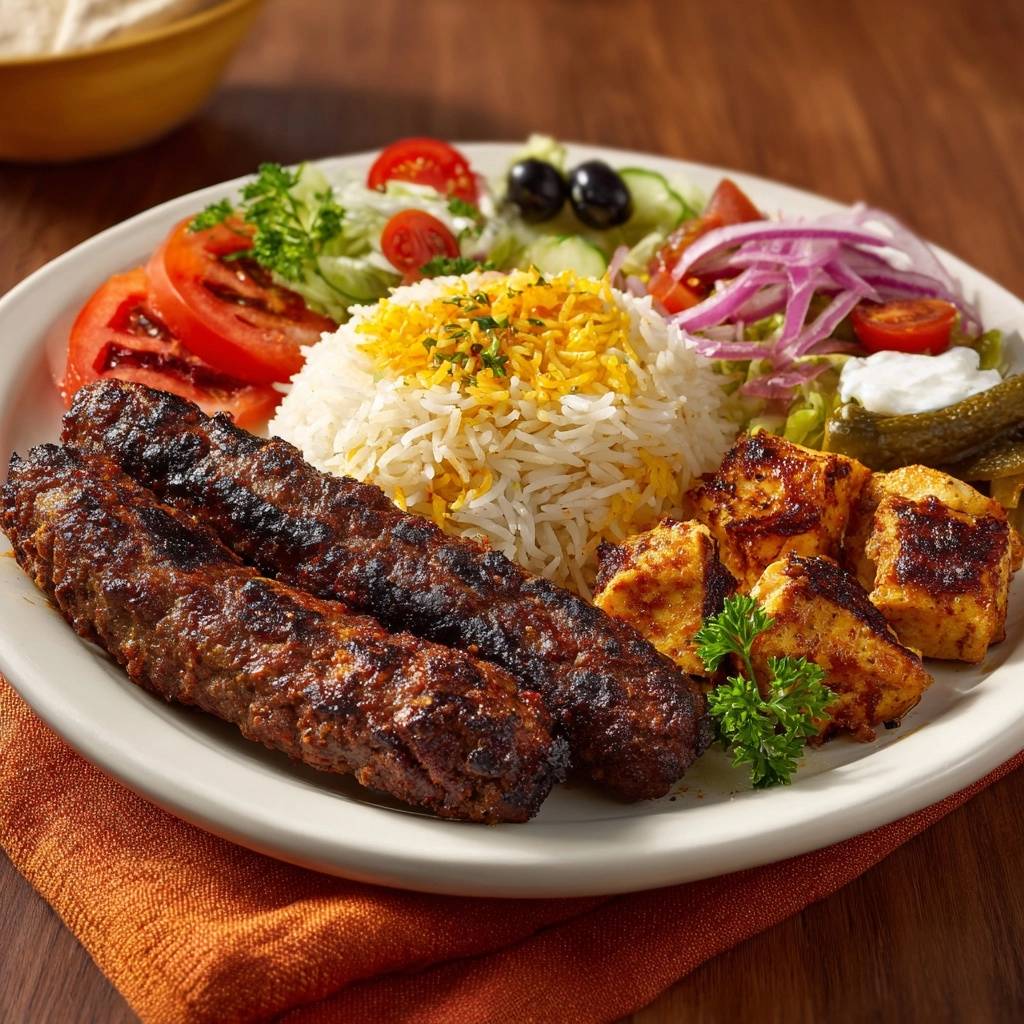
Why Fat Content Matters for Kofta
If you try to make Kofta with 90/10 lean ground beef, you’re going to end up with that dreaded “sponge” texture. You absolutely need a 20% fat content to achieve a restaurant-quality mouthfeel. This fat doesn’t just add flavor; it acts as an internal basting liquid. As the kebab sears, the fat melts and coats the meat fibers from the inside out, creating a rich, buttery finish that lean meat simply cannot replicate.
The Role of Tacky Proteins
Have you ever had a kebab fall off the skewer or break apart in the pan? That happens because the proteins weren’t properly “activated.” By kneading the ground meat for a full two minutes, you develop myosin. This is a sticky protein that creates a web-like structure, making the meat tacky to the touch. This stickiness is exactly what you want—it ensures the meat clings together and holds its shape throughout the intense heat of the grill.
Essential Components for the Mixed Grill
Quality ingredients are the backbone of this platter, so don’t settle for the dusty jars in the back of the pantry. Smoked paprika is a non-negotiable here. Unlike standard sweet paprika, the smoked variety provides that “cooked over an open flame” flavor even if you’re using a standard kitchen stove. It adds a layer of complexity that mimics the traditional wood-fired grills of the Mediterranean.
Furthermore, always reach for Kosher salt rather than fine table salt. The larger grains of Kosher salt allow for much better control when seasoning. It draws out just enough moisture to help the spices adhere to the meat without making it tough. When combined with freshly cracked black pepper and earthy coriander, these spices create a crust that is both aromatic and deeply savory.
Selecting the Right Basmati Rice
For a platter this grand, you need long-grain Basmati rice. Look for “extra-long grain” on the label, as these varieties provide the most elegant presentation. Basmati is prized for its ability to stay separate and fluffy, but you must rinse it thoroughly. Rinsing removes the excess surface starch that causes rice to turn into a gummy, sticky mass. Keep rinsing until that water runs crystal clear.
The Visual Impact of Saffron and Turmeric
We eat with our eyes first, and the “mottled” look of professional rice is easy to achieve. Turmeric provides a warm, golden base color and a subtle earthy flavor to the entire pot. However, the real luxury comes from the saffron. By drizzling a concentrated saffron infusion over the cooked rice before fluffing, you create beautiful streaks of bright yellow and orange. This contrast makes the platter look like it came straight from a high-end bistro.
Step-by-Step: Preparing the Proteins
Preparation is where the battle for flavor is won. Start by focusing on your onion prep, as this dictates the success of both meats. Use the finest side of your grater to turn the yellow onion into a watery mush. When you press this through a fine-mesh strainer, you should be left with a clear, pungent liquid and a thick, dryish pulp. Don’t rush this—the drier the pulp, the better your Kofta will hold together.
Once you have your components, mix the pulp into your ground meat with the spices. You’ll notice the meat changing texture as you knead it; it will go from loose and grainy to smooth and slightly stretchy. For the chicken, whisk the onion juice with olive oil and spices to create a thin, potent marinade. This liquid will penetrate the chicken much faster than a thick sauce would, flavoring it all the way to the center.
Extracting Onion Juice and Pulp
To protect your eyes from the stinging onion vapors, try chilling the onion in the freezer for 10 minutes before grating. Work quickly and use the back of a large metal spoon to really grind the pulp into the strainer. You want every drop of that juice. If the pulp still feels very wet after straining, give it a final squeeze with your hands to ensure it doesn’t add too much liquid to your ground meat mixture.
Marinating for Maximum Flavor Penetration
Timing is everything. Let your meats sit at room temperature for about 20 to 30 minutes. This serves two purposes: it allows the flavors to penetrate, and it takes the chill off the meat. Cold meat hitting a hot pan will often seize up and cook unevenly. However, don’t let the chicken sit in the onion juice for more than an hour, or the enzymes will begin to over-tenderize the meat, making it mushy.
Executing the High-Heat Sear
The goal of the grill is to achieve the Maillard reaction—that beautiful, brown, flavorful crust. To do this, your cooking surface must be screaming hot. Whether you’re using an outdoor grill or a heavy cast-iron pan, you want to hear a loud, aggressive sizzle the moment the meat touches the metal. This high heat locks in the juices instantly, creating a protective barrier that keeps the interior moist.
Avoid the temptation to move the meat around. Let the kebabs sit undisturbed for at least three or four minutes. This allows the crust to form and the meat to naturally release from the pan. If you try to flip it too early and it sticks, you’ll tear that delicious outer layer. Patience in the first few minutes of cooking is the difference between a charred masterpiece and a shredded mess.
Managing the Cast-Iron Surface
If you aren’t sure if your pan is hot enough, try the water droplet test. Flick a few drops of water onto the surface; if they dance and skitter around before evaporating, you’re ready to go. Be careful not to overcrowd the pan. If you put too much meat in at once, the temperature of the cast iron will drop, and the meat will start to steam in its own juices rather than sear. Cook in batches if you have to!
The Importance of the Five-Minute Rest
This is the hardest part: waiting. When meat cooks, the muscle fibers contract and push all the juices toward the center. If you cut into a kebab immediately, those juices will pour out onto the plate, leaving the meat dry. By letting the meat rest for five minutes, the fibers relax and reabsorb that moisture. This ensures that every single bite is as juicy as the last.
Assembling the Professional Platter
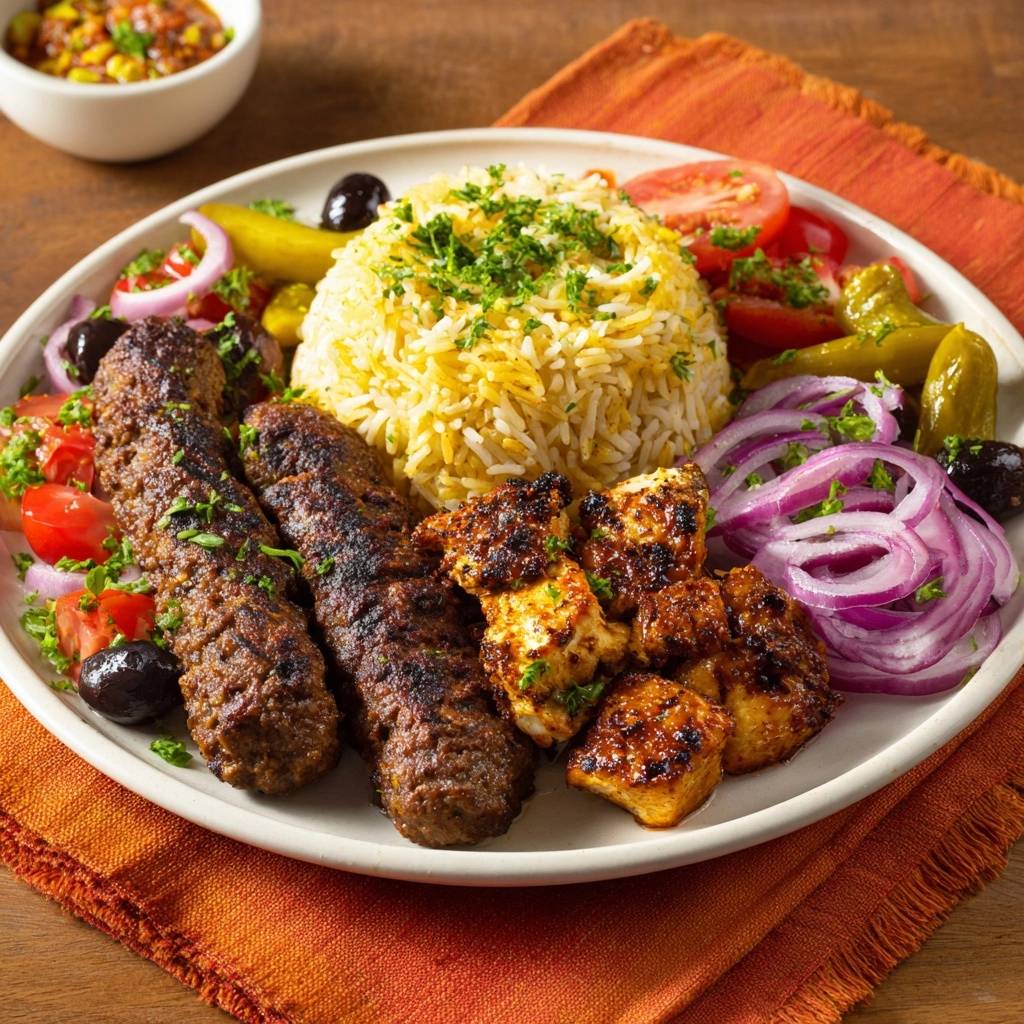
Plating a Mediterranean grill is an art form that focuses on abundance and color. Start with a massive bed of your fluffy, two-toned rice. The rice acts as a base that catches any stray juices from the meat, becoming even more flavorful as the meal progresses. Arrange your Kofta and chicken cubes with intention, creating a mountain of protein that looks inviting and generous.
The raw components are just as important as the cooked ones. The sharp bite of thinly sliced red onions and the vinegary pop of pickled pepperoncini provide a necessary contrast to the rich, fatty meats. Halved cherry tomatoes and briny Kalamata olives add bursts of freshness and salt that keep your palate excited. This balance of hot and cold, cooked and raw, is what makes a Mediterranean platter so addictive.
Plating for Texture and Color
To get that perfect rice dome, lightly grease a small bowl with olive oil, pack the rice in firmly, and invert it onto the center of your platter. Surround the dome with your meats and vegetables. Finally, don’t be shy with the fresh parsley. A heavy dusting of green not only adds a fresh, herbal note but also makes the reds and yellows of the platter pop, creating a “garden” effect that looks stunning on the table.
Troubleshooting Common Grilling Hurdles
Even the best cooks run into trouble sometimes. If your Kofta fell apart, it’s usually due to one of three things: the onion pulp was too wet, the meat wasn’t kneaded long enough to develop that “tacky” protein, or you tried to flip it before the crust had fully formed. Next time, squeeze that pulp until it’s nearly dry and give the meat a few extra slaps against the bowl to ensure it’s sticky.
If your chicken turned out dry, you likely overcooked it. Chicken breast is very unforgiving. It should be pulled off the heat the moment it hits an internal temperature of 160°F, as carry-over cooking will bring it to the safe 165°F while it rests. Using a digital meat thermometer is the only way to guarantee perfection every time. It’s a small investment that pays off in juicy chicken for years to come.
Achieving Fluffy, Non-Sticky Rice
If your rice turned out mushy, you probably used too much water or didn’t rinse enough starch away. Remember the 1.75 to 1 ratio (3.5 cups water for 2 cups rice). Also, once the rice is done, let it sit covered for 10 minutes before you even think about touching it with a fork. This allows the last bit of steam to finish the grains perfectly without breaking them.
Flavor Variations and Regional Swaps
Once you master the base recipe, you can start to play with regional flavors. If you want a tarter, more Lebanese-style profile, sprinkle the finished meat with a generous amount of sumac. For those who prefer a richer bite, swap the chicken breast for boneless, skinless chicken thighs. Thighs have a higher fat content and are even more resistant to drying out on the grill.
If you’re feeding a larger crowd, you can easily stretch this platter by adding grilled vegetables. Thick slices of zucchini, eggplant, or bell peppers tossed in the same marinade as the chicken are incredible when charred. You can also serve this with a side of warm pita bread and a bowl of creamy tahini or garlic sauce to turn it into a full-blown Mediterranean feast.
Expert Tips for Success
If you’re using wooden skewers, make sure to soak them in water for at least 30 minutes before grilling so they don’t catch fire. Metal skewers are even better as they conduct heat to the center of the meat, helping it cook more evenly. For the saffron, always bloom the threads in a tablespoon of warm water for 10 minutes before drizzling; this extracts the maximum color and aroma.
Freshness is key for the garnish. Only chop your parsley right before you’re ready to serve. If you chop it too early, the volatile oils evaporate, and the herb loses its bright, peppery punch. Finally, if you have leftovers, don’t microwave them on high heat. Instead, place the meat in a pan with a splash of water, cover it, and steam it gently over low heat. This gently rehydrates the proteins without making them rubbery.
How should I store and reheat the leftovers?
Store the meat and rice in separate airtight containers in the refrigerator for up to three days. To reheat without drying out the meat, place it in a skillet with a tablespoon of water or broth, cover with a lid, and warm over medium-low heat. This creates a steam chamber that keeps the meat moist. Avoid the microwave if possible, as it tends to toughen the proteins.
Why did my ground meat kebabs (Kofta) feel rubbery?
Rubbery Kofta usually happens if the meat is too lean or if it was over-processed in a food processor. Always use 80/20 ground meat for the right fat-to-protein balance. Additionally, knead the meat by hand rather than using a machine. Hand-kneading develops just enough protein structure to hold the meat together without turning it into a dense, rubbery mass.
Can I use a different type of onion?
Yellow onions are the best choice because they have a high juice content and a strong, savory flavor that mellows beautifully when cooked. White onions are a decent substitute, but they are slightly more pungent. Avoid using red onions for the marinade or the Kofta pulp, as they can turn a muddy, unappealing color when cooked inside the meat.
What can I use if I don’t have saffron?
While saffron provides a unique floral aroma and bright yellow color, you can still get a beautiful platter without it. The turmeric in the rice already provides a lovely golden hue. If you want more color variation, you can mix a tiny bit of extra turmeric with a teaspoon of water and drizzle that over the rice, or simply rely on the fresh green parsley and red tomatoes for visual contrast.
Is it safe to marinate the chicken at room temperature?
Yes, for a short period of 20 to 30 minutes, it is perfectly safe and actually recommended. Bringing the meat closer to room temperature ensures that it cooks evenly from the edges to the center. However, if your kitchen is extremely hot (above 80°F) or if you need to marinate for longer than 30 minutes, you should keep the meat in the refrigerator and take it out 10 minutes before grilling.
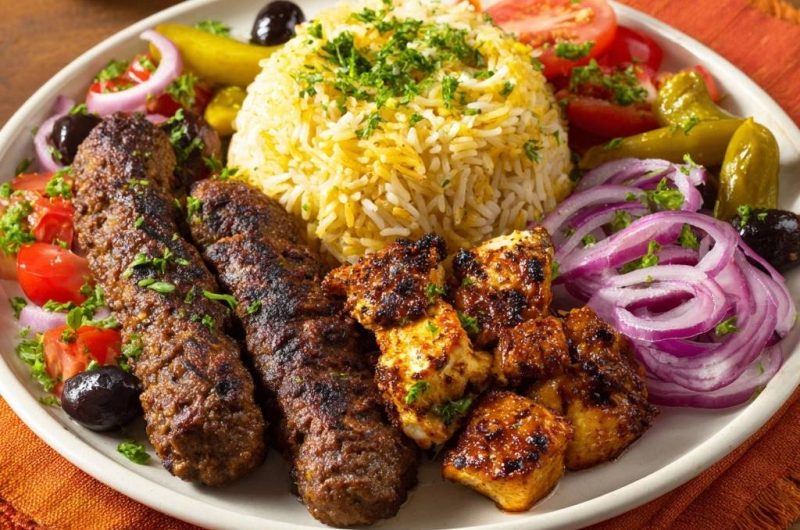
Mediterranean Mixed Grill Platter
Course: Main CourseCuisine: MediterraneanDifficulty: easy4
servings25
minutes20
minutes45
Minutes650
kcalMediterranean
Ingredients
1 pound ground lamb or beef (20% fat content for juiciness)
1 pound chicken breast, cut into 1-inch cubes
1 large yellow onion, grated
3 tablespoons olive oil
2 teaspoons smoked paprika
1 teaspoon ground cumin
1 teaspoon garlic powder
1/2 teaspoon ground coriander
1.5 teaspoons kosher salt, divided
1 teaspoon black pepper
2 cups basmati rice
1/2 teaspoon turmeric powder
1/4 teaspoon saffron threads (optional, for visual color variation)
Fresh parsley, finely chopped
1 large red onion, thinly sliced into rings
1 cup cherry tomatoes, halved
1/2 cup Kalamata olives
1/2 cup pickled pepperoncini or banana peppers
Directions
- The Moisture-Lock Secret: Grate the yellow onion over a fine-mesh strainer set over a bowl. Use the back of a spoon to press the pulp, extracting all the juice. Reserve the juice and the pulp separately.
- For the Ground Kebabs (Kofta): In a large bowl, combine the ground meat with the reserved onion pulp (this adds texture and moisture), 1/2 teaspoon salt, pepper, cumin, and coriander. Knead the meat for 2 minutes until it becomes tacky-this prevents it from falling apart. Shape into long, thick cylinders.
- For the Chicken: In a separate bowl, whisk the extracted onion juice with olive oil, smoked paprika, garlic powder, and 1/2 teaspoon salt. Toss the chicken cubes in this marinade. Let both the ground meat and chicken marinate at room temperature for 20-30 minutes.
- Prepare the Rice: Rinse the basmati rice until the water runs clear. Boil in 3.5 cups of water with turmeric and a pinch of salt. For the visual “mottled” look in the image, dissolve saffron in 1 tablespoon of hot water and drizzle over the top of the rice once cooked, then fluff gently. Fold in half of the fresh parsley.
- Heat a cast-iron grill pan or outdoor grill to medium-high heat. Lightly brush the grates with oil.
- Grill the ground kebabs for 5 minutes per side until a deep brown crust forms. Grill the chicken cubes for 4 minutes per side until charred and cooked through. High heat is essential to lock in the juices quickly before the interior overcooks.
- Remove the meat from the heat and let it rest for 5 minutes. This allows the juices to redistribute so they don’t run out when you take your first bite.
- Assemble the Platter: Use a bowl to mold the rice into a dome in the center of the plate. Arrange the kebabs and chicken cubes alongside. Surround with raw red onion rings, tomatoes, olives, and pickled peppers. Garnish the entire plate generously with the remaining fresh parsley.
Notes
- Kneading the ground meat for 2 minutes is crucial to develop the proteins so the kebabs don’t fall apart. Always let the meat rest for 5 minutes after grilling to retain juices.