We’ve all been there. You spend an hour carefully layering noodles, cheese, and fresh vegetables, only to pull a tray out of the oven that looks more like a vegetable soup than a lasagna. When you cut into it, the layers slide apart, and a pool of gray liquid floods the bottom of the pan. It’s frustrating, but it’s actually a simple matter of biology and physics.
Vegetable lasagnas often fail because mushrooms and spinach are mostly water. Without proper intervention, that water releases during the baking process, thinning your sauce and ruining the structural integrity of the dish. My “Anti-Soggy Bottom” philosophy changes the game by treating the vegetables as individual components that need to be “dried out” before they ever touch a noodle.
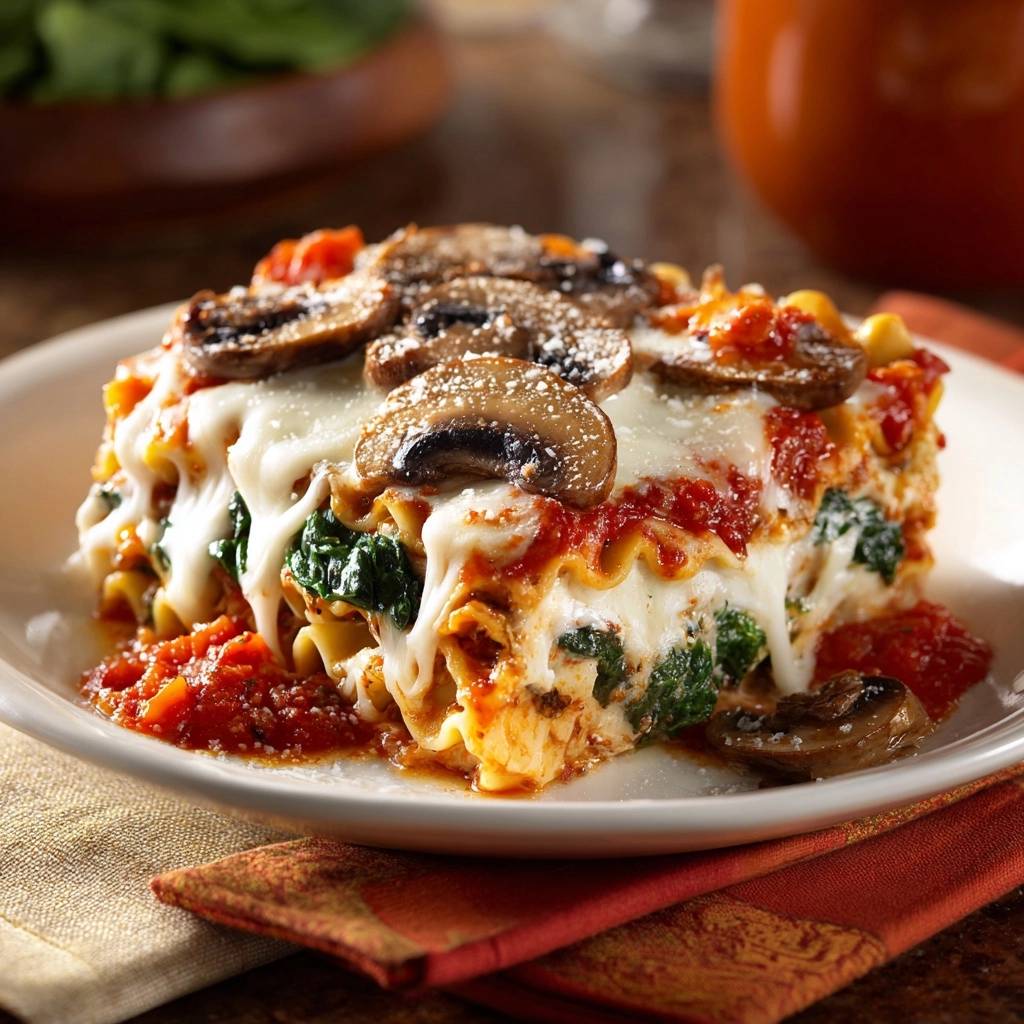
The secret to a restaurant-quality slice that stands tall on the plate is pre-roasting your mushrooms at a high temperature. By roasting them first, you evaporate their internal moisture and concentrate their savory, earthy flavor. This ensures your Roasted Mushroom and Spinach Lasagna stays firm, stackable, and incredibly rich in every single bite.
The Science of Moisture Control in Vegetables
Mushrooms have a unique cellular structure that acts exactly like a sponge. If you put raw, sliced mushrooms directly into a lasagna, they will “weep” as they heat up, releasing all that liquid into your marinara. This creates a diluted, watery sauce that can’t hold the weight of the cheese and noodles above it.
Spinach is equally problematic because its leaves are packed with water that stays trapped until the heat breaks down the cell walls. Even if you sauté it, the greens often hold onto hidden moisture in their folds. To get a firm lasagna, you have to treat these vegetables with a “moisture-first” mindset, removing the liquid before the assembly begins.
Why High-Heat Roasting Beats Sautéing
Most recipes suggest sautéing mushrooms in a pan, but that often leads to crowding, which causes the mushrooms to steam in their own juices rather than brown. By using a 425°F oven, you utilize dry heat to trigger the Maillard reaction. This chemical reaction creates those deep, savory flavors we love while removing up to 40% of the mushroom’s water weight.
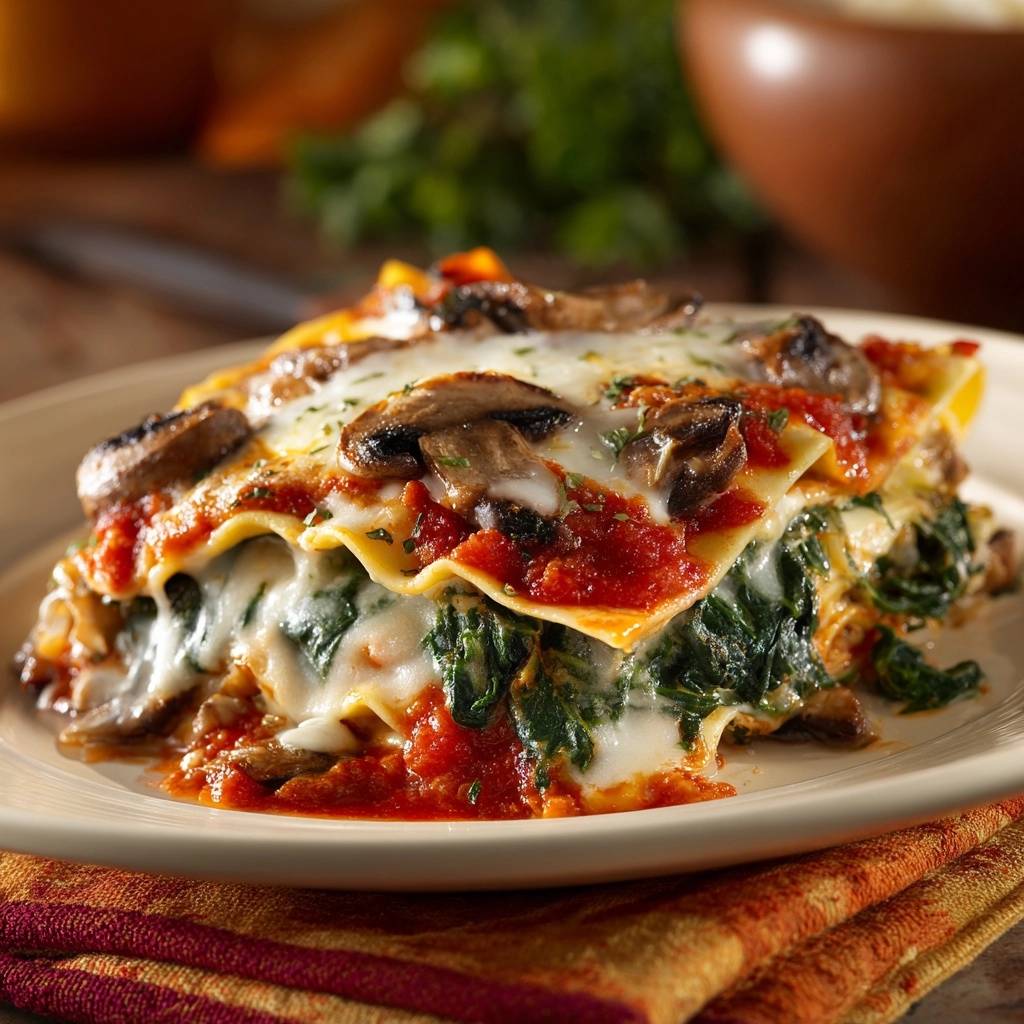
Roasting also gives you a much more consistent texture. Instead of some mushrooms being slimy and others being burnt, the oven provides even heat that shrinks the slices into “meaty” morsels. This concentrated umami flavor is what makes this vegetarian dish feel just as hearty as a traditional meat lasagna.
The Physics of the Squeezed Spinach Technique
Sautéing spinach is only the first half of the job. Once those leaves wilt, they are still holding onto a surprising amount of water. If you mix that wet spinach into your ricotta, the cheese will become runny and grainy during the bake.
The solution is to wait until the spinach is cool enough to handle, then gather it into a kitchen towel or your bare hands and squeeze with everything you’ve got. You want to transform that pile of greens into a dry, compact ball. When you chop this “spinach puck,” you’re left with pure flavor and zero excess liquid to mess with your cheese layers.
Essential Components for a Structural Lasagna
Building a lasagna that doesn’t collapse requires the right materials. You want to look for “low-moisture” mozzarella specifically. Fresh mozzarella balls stored in water are delicious on pizza, but they are the enemy of a stable lasagna because they release too much whey as they melt.
For the ricotta layer, always choose whole milk ricotta. The higher fat content provides a creamy, luxurious mouthfeel that doesn’t turn watery or “weepy” in the oven. When you combine high-quality fats with your dry vegetables, the result is a filling that stays exactly where you put it.
Selecting the Right Mushroom Varieties
Cremini mushrooms, often sold as “Baby Bellas,” are the workhorse of this recipe because they have a deeper flavor than white button mushrooms. However, you can certainly experiment with Shiitake or Portobello for a more intense, woody profile. Just make sure you slice them thick.
Since mushrooms shrink significantly in the oven, a thin slice will practically disappear. By starting with a thick, hearty cut, you ensure that even after the roasting process, you still have a substantial “bite” that mimics the texture of ground meat in a classic ragu.
The Role of the Ricotta Binder
The ricotta layer isn’t just about flavor; it’s a structural “glue.” Adding a lightly beaten egg to the ricotta and spinach mixture is a non-negotiable step. As the lasagna bakes, the egg proteins coagulate, or “set,” which binds the cheese and spinach together into a solid layer.
Without the egg, the ricotta would remain loose and ooze out the sides the moment you cut a slice. With it, the white layers stay thick, opaque, and perfectly defined against the red sauce and golden noodles. It’s the difference between a messy pile of food and a professional-looking entree.
Step-by-Step: Executing the Anti-Soggy Method
Success in the kitchen is all about the order of operations. By following these phases, you’ll manage your time efficiently while ensuring every component is prepped for maximum stability. Don’t rush the prep work; it’s the foundation of the entire meal.
Phase 1: Pre-Roasting for Flavor Concentration
Start by cranking your oven to 425°F. Toss your sliced cremini mushrooms with olive oil, salt, and pepper on a large rimmed baking sheet. Make sure they are in a single layer; if they are piled on top of each other, they will steam instead of roast.
Roast them for about 15 to 18 minutes. You’re looking for the mushrooms to be browned, slightly shrunken, and fragrant. When you see that deep golden color and no liquid left on the pan, you’ve successfully concentrated the flavor. Set aside a few of the prettiest slices to use as a garnish later.
Phase 2: Preparing the Spinach-Ricotta Emulsion
While the mushrooms are in the oven, wilt your spinach in a hot skillet with a little olive oil. It only takes about two minutes. Once it’s wilted, move it to a colander and let it cool. Squeeze it until it’s a dry ball, then give it a rough chop.
In a bowl, fold the chopped spinach into your ricotta along with the beaten egg, garlic, and oregano. Use a gentle folding motion rather than aggressive stirring. If you over-mix, the chlorophyll from the spinach can actually tint the ricotta green, which tastes fine but doesn’t look as appetizing.
Phase 3: Strategic Layering for Maximum Stability
Lower your oven to 375°F. Start with a thin smear of marinara on the bottom of your 9×13 dish to prevent the noodles from sticking. Lay down your first layer of noodles, overlapping them by about half an inch to create a solid “floor.”
Spread a third of your ricotta mixture, then a layer of roasted mushrooms, followed by sauce and mozzarella. Repeat this twice more. For the final top layer, use your remaining sauce and a very generous “blanket” of mozzarella. This heavy top layer of cheese acts as a weight that helps compress the layers below.
Phase 4: The Two-Stage Baking Process
Cover the dish with foil, but “tent” it slightly so the foil doesn’t touch the cheese. Bake for 25 minutes. This initial covered phase traps steam to finish cooking the noodles and melts the cheese without burning it. It’s the “gentle” part of the bake.
Remove the foil for the final 15 to 20 minutes. This is when the magic happens. The edges will start to bubble, and the cheese will develop those beautiful brown spots. Once it’s golden and the sauce is thick and bubbling at the perimeter, it’s ready to come out.
Troubleshooting Common Lasagna Pitfalls
Even with the best prep, things can go sideways. If you notice your top layer of cheese is browning too fast before the middle is hot, simply pop the foil back on loosely. If your sauce seems a bit too acidic, a tiny pinch of sugar in the marinara can balance the flavors perfectly.
The most common mistake is using noodles that are too soft. Always cook your lasagna noodles “al dente”—meaning they still have a firm bite. They will continue to absorb moisture and soften during the 45 minutes they spend in the oven, so starting with mushy noodles is a recipe for disaster.
Preventing the “Noodle Slide”
The hardest part of this recipe is waiting. You must let the lasagna rest for at least 20 minutes after it comes out of the oven. This isn’t just about temperature; it’s about chemistry. The proteins in the cheese and the egg need time to firm up as they cool slightly.
If you cut into it immediately, the layers will slide right off each other. During that 20-minute rest, the lasagna “tightens,” and the noodles absorb any remaining stray moisture. This patience is what rewards you with those clean, vertical layers that look like they came from a high-end Italian kitchen.
Adjusting Sauce Consistency
Not all marinara sauces are created equal. If you open your jar and it looks thin or watery, don’t just pour it in. Simmer it in a small saucepan for 10 minutes to reduce it slightly before you start layering. A thick, robust sauce is essential for maintaining the structure of a vegetable-heavy lasagna.
Make-Ahead Strategies and Storage
Lasagna is the ultimate make-ahead meal. You can assemble the entire dish 24 hours in advance and keep it in the fridge. Because we’ve pre-roasted the mushrooms and squeezed the spinach, the noodles won’t get soggy while they sit overnight. Just add about 10 minutes to the covered baking time if you’re starting from a cold fridge.
Freezing and Reheating Without Quality Loss
To freeze, wrap the unbaked lasagna tightly in plastic wrap and then a double layer of aluminum foil to prevent freezer burn. It will stay fresh for up to three months. When you’re ready to eat, it’s best to thaw it in the refrigerator for 24 hours before baking as usual.
If you need to bake it from frozen, keep it covered with foil and bake at 375°F for about an hour and 15 minutes, then uncover for the final 15 minutes. For leftovers, the microwave works, but reheating a slice in the oven at 350°F for 15 minutes will help maintain that crispy cheese topping.
Pairing Suggestions for a Balanced Meal
Since this lasagna is rich, earthy, and cheesy, you want side dishes that offer a bright, acidic contrast. A heavy meal needs a “lift” to keep your palate from getting overwhelmed by the richness of the whole milk ricotta and mozzarella.
Crisp Greens and Acidic Vinaigrettes
A simple arugula salad with a lemon-shallot vinaigrette is my favorite pairing. The peppery bite of the arugula and the sharp citrus of the dressing cut right through the savory mushrooms. A radicchio slaw with a bit of honey and vinegar also provides a great crunch and color contrast to the golden-brown lasagna.
Expert Tips for Customizing Your Lasagna
If you want to take this dish to the next level, use a bench scraper to make your cuts. It’s much more effective than a knife for getting through all the layers cleanly. Also, always grate your Parmesan fresh from a wedge; the pre-shredded stuff is coated in potato starch, which prevents it from melting smoothly.
For a “hidden” depth of flavor, add a tiny pinch of freshly grated nutmeg to your ricotta mixture. You won’t taste “nutmeg,” but it enhances the creaminess of the cheese and the earthiness of the spinach. Finally, don’t forget to use those reserved roasted mushrooms on top—it signals to your guests exactly what delicious flavors are waiting inside.
How do I store leftovers and does this freeze well?
Store leftovers in an airtight container in the refrigerator for up to 4 days. This lasagna freezes exceptionally well because the “Anti-Soggy” prep prevents it from becoming mushy when thawed. To freeze, wrap individual slices or the whole pan in a double layer of foil and plastic wrap for up to 3 months. Thaw in the fridge overnight before reheating for the best texture.
Why is my lasagna still watery even after roasting the mushrooms?
The most likely culprit is the spinach. If you don’t squeeze the spinach until it is a dry, compact ball, it will release moisture into the ricotta layer during baking. Another possibility is using a thin, watery marinara sauce. Always choose a “thick” or “chunky” style sauce, or simmer a thinner sauce for 10 minutes to reduce it before assembly.
Can I use no-boil (oven-ready) noodles for this recipe?
Yes, you can use no-boil noodles, but you must ensure they are completely covered by sauce or the ricotta mixture. No-boil noodles rely on the moisture from the other ingredients to cook. Since this recipe is designed to be “dry” and structural, you may need to add an extra 1/2 cup of marinara sauce to the layers to ensure the noodles soften properly.
What can I use if I don’t have ricotta cheese?
Small-curd cottage cheese is the best substitute for ricotta. However, cottage cheese has a much higher water content. To use it successfully in this “Anti-Soggy” recipe, you must strain the cottage cheese through a fine-mesh sieve or cheesecloth for at least 30 minutes to remove the excess liquid before mixing it with the egg and spinach.
How do I prevent the cheese from sticking to the foil?
The best way to prevent a “cheese disaster” is to tent the foil so it doesn’t physically touch the top of the lasagna. Alternatively, you can lightly spray the underside of the foil with a bit of olive oil cooking spray. This ensures that when you pull the foil off after 25 minutes, your beautiful melted blanket of mozzarella stays on the lasagna where it belongs.
Can I add other vegetables like zucchini or peppers?
You can, but you must apply the same “Anti-Soggy” logic. Zucchini and bell peppers are very high in water. If you want to add them, they should be roasted on a separate sheet pan alongside the mushrooms until they are browned and dry. Never add raw, high-moisture vegetables directly to the layers or the lasagna will lose its structural integrity.
Roasted Mushroom and Spinach Lasagna
Course: Main CourseCuisine: Italian-AmericanDifficulty: easy8
servings25
minutes45
minutes70
MinutesItalian-American
Ingredients
1 pound lasagna noodles (curly edge), cooked al dente
1.5 pounds cremini mushrooms, sliced thick
1 pound fresh spinach
24 ounces thick marinara sauce
15 ounces whole milk ricotta cheese
3 cups shredded mozzarella cheese (low-moisture)
1/2 cup grated parmesan cheese
1 egg, lightly beaten
3 tablespoons olive oil
2 cloves garlic, minced
1 teaspoon dried oregano
Salt and black pepper to taste
Directions
- Preheat your oven to 425°F. High heat is essential for the “Anti-Soggy Bottom” method to ensure rapid evaporation.
- Spread the sliced mushrooms on a large rimmed baking sheet. Toss with 2 tablespoons of olive oil, salt, and pepper. Roast for 15-18 minutes, stirring halfway through, until the mushrooms are browned and have shrunk significantly. This removes the water that usually thins out the sauce. Set aside 1/2 cup of the best-looking roasted slices for the top garnish.
- While mushrooms roast, heat 1 tablespoon of olive oil in a large skillet over medium-high heat. Add the spinach in batches, sautéing just until wilted (about 2 minutes). Transfer the spinach to a colander and, once cool enough to handle, squeeze it firmly with your hands or a kitchen towel until it is a dry, compact ball. Roughly chop the squeezed spinach.
- In a medium bowl, combine the ricotta cheese, beaten egg, minced garlic, oregano, and the squeezed-dry spinach. The egg and the dry spinach ensure the white layers stay thick and opaque rather than bleeding into the sauce.
- Lower the oven temperature to 375°F.
- Spread 1/2 cup of marinara sauce in the bottom of a 9×13 inch baking dish.
- Layering: Place a layer of noodles (overlapping slightly). Spread 1/3 of the ricotta-spinach mixture, followed by a layer of roasted mushrooms, a layer of marinara, and a generous sprinkle of mozzarella.
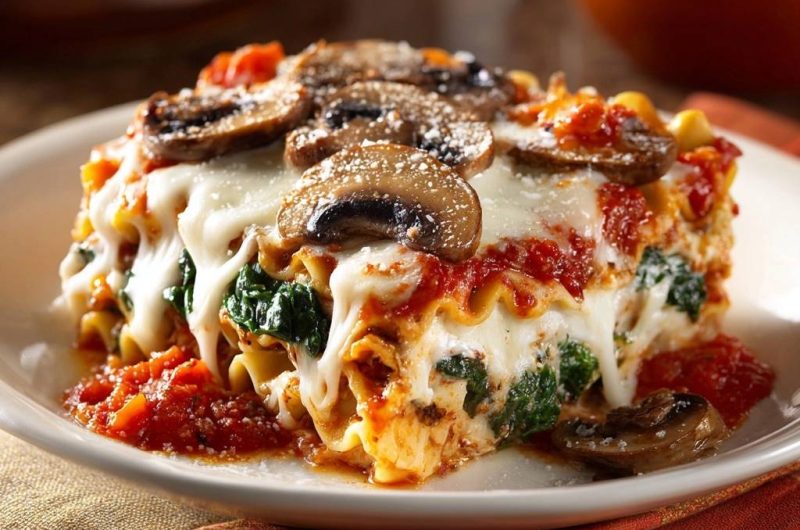
- Repeat the layers twice more. For the final top layer, place the last noodles, cover with the remaining marinara, and a heavy layer of mozzarella to achieve the “melted blanket” look seen in the image.
- Arrange the reserved 1/2 cup of roasted mushrooms on top of the cheese. Sprinkle with parmesan cheese.
- Cover with foil (tented so it doesn’t touch the cheese) and bake for 25 minutes. Remove the foil and bake for an additional 15-20 minutes until the cheese is melted and the sauce is bubbling at the edges.
- Let the lasagna rest for at least 20 minutes before slicing. This is the final “Anti-Soggy” step; it allows the proteins in the cheese and egg to set, ensuring clean, vertical layers when served.
Notes
- Let the lasagna rest for at least 20 minutes after baking. This allows the cheese and egg binder to set, which is crucial for achieving clean, vertical slices.