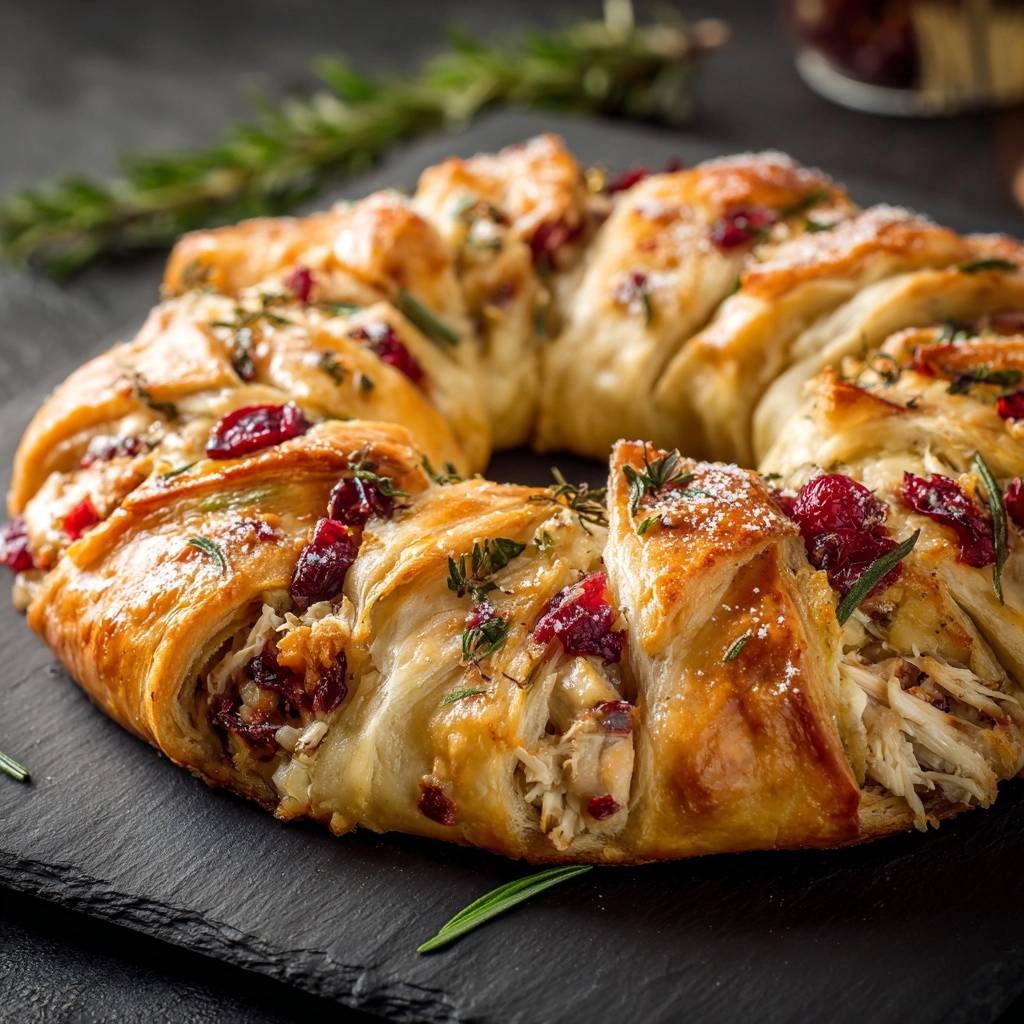
Imagine the scent of woodsy rosemary and sweet cranberries wafting through your kitchen as a golden, flaky pastry ring emerges from the oven. This Savory Cranberry Chicken Crescent Ring offers a sophisticated balance of flavors, but it also solves a common culinary frustration. Most people struggle with the “soggy bottom” syndrome, where the weight of the filling turns the delicate pastry base into a doughy, unappetizing mess.
The secret to this recipe lies in thermal physics rather than just luck. By utilizing a preheated baking surface, you create an immediate sear on the bottom layer of the dough. This flash-heating process sets the starches before the moisture from the chicken and cheese can migrate into the pastry. It ensures every bite has that satisfying, shatteringly crisp texture you expect from a high-end bakery.
I’ve found that the key to success is managing the moisture content of your filling. While many recipes result in a “weeping” interior that ruins the crust, this version uses a specific binding technique. By combining cream cheese and Dijon mustard, you create a thick emulsion that locks in the juices of the chicken. This keeps the meat succulent while protecting the integrity of the crescent dough.
Essential Components for the Savory Filling
Choosing the right chicken is the first step toward a perfect ring. I always recommend using rotisserie chicken because it has already been roasted, which naturally reduces its water content compared to poached or boiled meat. If your chicken is too wet, that excess steam will get trapped inside the dough, leading to a gummy interior. Shred the meat while it’s still slightly warm so it incorporates better with the other ingredients.
The cream cheese acts as more than just a flavor enhancer; it’s a structural moisture barrier. You must use full-fat cream cheese for this to work effectively. Low-fat versions often contain higher water content and stabilizers that can break down under high heat, causing the filling to “weep” during the bake. When you mix it with the Dijon mustard, you’re creating a tangy, thick paste that coats the chicken and prevents it from releasing steam.
Dijon mustard serves as a brilliant emulsifier in this mix. It adds a sharp, acidic punch that cuts through the richness of the dough and cheese. Without this acidity, the dish can feel heavy on the palate. It also helps the herbs stick to the chicken, ensuring that every forkful is seasoned perfectly from the inside out.
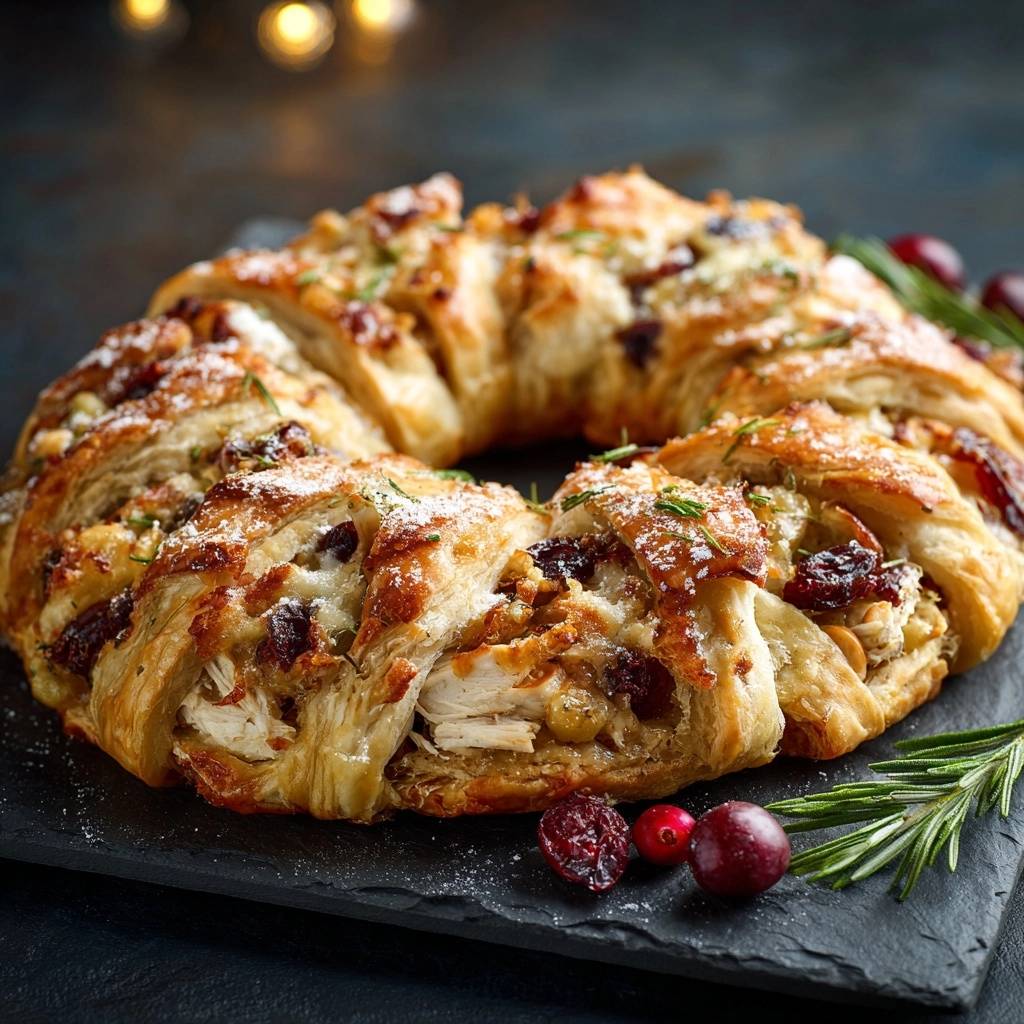
Herbs and Aromatics: Rosemary and Thyme
Fresh herbs are non-negotiable for this recipe. While dried herbs are convenient, they can sometimes taste dusty or overly concentrated in a quick-baking pastry. Fresh rosemary contains volatile oils that begin to release the moment they hit the heat of the oven. As the ring bakes for 25 minutes, these oils actually infuse the fat in the crescent dough, flavoring the crust from the outside in.
Thyme provides a softer, earthy backnote that complements the sweetness of the cranberries. I like to chop the rosemary very finely so you don’t end up with “pine needle” textures in your bite. The combination of these two aromatics creates a holiday-inspired scent that makes the entire house smell incredible before you even sit down to eat.
Selecting the Right Cranberries and Cheese
Dried cranberries provide the necessary acid balance to the savory chicken and salty cheese. Look for cranberries that are still slightly plump rather than bone-dry. As they bake, they’ll absorb a tiny bit of moisture from the chicken, becoming little jewels of tart flavor that pop against the savory background. They provide a chewy contrast to the crunch of the pastry.
For the cheese, shredded mozzarella is the gold standard here. It has a high moisture-to-fat ratio that gives you that classic “cheese pull” without being overly oily. Its mild saltiness doesn’t compete with the rosemary or the Dijon. If you use a very aged cheese, it might release too much oil, which could compromise the crispness of the bottom crust.
The Science of the Anti-Soggy Bottom Hack
To understand why this recipe works, you have to think about heat transfer. When you place cold dough on a cold baking sheet and slide it into the oven, the fats in the dough begin to melt before the starch structure has a chance to set. This creates a window of time where the dough is vulnerable to soaking up any liquids from the filling. This is the primary cause of a mushy base.
By preheating a pizza stone or a heavy rimless baking sheet at 375°F, you are essentially “searing” the pastry. The moment the dough touches that hot surface, the water in the dough turns to steam, puffing up the layers and creating an immediate barrier. This thermal shock sets the bottom crust instantly, making it impervious to the moisture sitting right on top of it.
This method mimics the environment of a professional deck oven. The heat is transferred through conduction (direct contact) rather than just convection (hot air). This ensures that the bottom of the ring is just as golden and crispy as the top. It’s a simple change in workflow that makes a massive difference in the final structural integrity of the dish.
Step-by-Step: Assembling the Crescent Ring
Assembling the ring is a tactile process that requires a bit of geometry. You want to start with a 5-inch hole in the center. This isn’t just for aesthetics; that central opening allows hot air to circulate through the middle of the ring. Without it, the inner edges of the triangles would stay pale and doughy while the outside burnt.
The overlapping bases of the triangles create a sturdy foundation. You are essentially building a circular “braid” that needs to support about three cups of filling. Make sure the wide ends of the triangles overlap by at least half an inch. This creates a double-layered floor for the chicken mixture, providing extra insurance against any potential leaks.
Phase 1: Preparing the Moisture Barrier
When you mix your chicken, cream cheese, and mustard, look for a consistency similar to a thick chicken salad. It should be cohesive enough to hold its shape on a spoon. If it feels too loose, you can add a tablespoon more of shredded cheese to help bind it. This thickness is your first line of defense for the pastry.
Don’t be tempted to add extra liquids like chicken broth or heavy cream. While they might seem like they’d add moisture, they will almost certainly lead to a soggy crust. Trust the cream cheese to provide all the creaminess you need. The goal is a filling that stays put exactly where you spoon it.
Phase 2: The Radial Arrangement Technique
Working with refrigerated dough can be tricky if it gets too warm. If the dough becomes sticky, it will stretch unevenly and lose its flaky layers. I recommend keeping the cans in the fridge until the exact moment you are ready to unroll them. This keeps the fat solid, which is what creates those beautiful layers during the bake.
Lay your triangles out in a sunburst pattern on a piece of parchment paper. This makes it incredibly easy to slide the entire assembly onto your preheated stone. Trying to move the assembled ring without parchment is a recipe for disaster. The parchment acts as a vehicle, allowing you to move the ring safely without burning your hands or deforming the shape.
Phase 3: Securing the Points and Finishing
Once your filling is piled high on the wide bases, it’s time for the “tuck and roll.” Bring the pointed end of each triangle over the filling toward the center. Don’t just lay it there; actually tuck the tip under the bottom layer of dough in the center hole. This locks the filling inside and prevents the ring from expanding outward and losing its shape.
The egg wash is your final touch for a professional look. It provides a beautiful lacquered shine and acts as a culinary glue. Brush it generously over every visible inch of dough. This is what allows the coarse sea salt and extra rosemary to stick to the surface, ensuring every bite is seasoned on the outside as well.
Optimal Baking and Heat Management
We bake this at 375°F because it’s the “sweet spot” for crescent dough. It’s hot enough to trigger the leavening but not so hot that the sugar in the cranberries burns. You are looking for a deep, rich golden brown. If the pastry looks pale tan, it’s not done yet. That extra two minutes of browning is where the flavor lives.
The internal layers of the dough take longer to cook than the exterior. By pushing the bake time until the cheese is bubbling and the crust is dark gold, you ensure the “inner” dough is fully flaky. If you pull it out too early, the parts touching the filling might still be raw. Trust your eyes more than the timer.
Flavor Variations and Ingredient Swaps
This recipe is a fantastic canvas for variations. If you have leftover smoked turkey from a holiday meal, it makes an incredible substitute for the chicken. The smokiness pairs beautifully with the tart cranberries. You could also swap the mozzarella for a sharp white cheddar if you want a more aggressive flavor profile that stands up to the rosemary.
For added texture, try incorporating half a cup of toasted pecans or walnuts into the filling. They add a delightful crunch without introducing any extra moisture. If you want a bit of heat, a pinch of red pepper flakes in the chicken mixture provides a nice “sweet and spicy” contrast with the cranberries. Just keep the ratios the same to protect the pastry.
Make-Ahead Strategies and Storage
You can easily prep the chicken filling up to 24 hours in advance. In fact, letting the chicken sit with the herbs and mustard in the fridge allows the flavors to marry and deepen. However, do not assemble the ring until you are ready to bake. If the dough sits with the filling for more than 30 minutes, it will begin to oxidize and soften, ruining your chances of a crisp crust.
If you have leftovers, store them in an airtight container in the refrigerator for up to three days. To reheat, avoid the microwave at all costs, as it will turn the pastry rubbery. Instead, use an oven or an air fryer at 350°F for about 5-7 minutes. This will recrisp the bottom and the flaky layers, making it taste almost as good as the moment it first came out of the oven.
Troubleshooting Common Pastry Issues
If your dough tears during assembly, don’t panic. Crescent dough is very forgiving; just pinch the edges back together with a little bit of water on your finger. If the center of the ring looks a bit doughy after the suggested bake time, you can cover the outer edges with foil to prevent over-browning and give the center another 5 minutes to firm up.
The “Resting Rule” is the most important part of the process. Let the ring sit on the hot pan for at least 5 minutes after you take it out of the oven. During this time, the residual heat from the stone or pan continues to “fry” the bottom of the pastry. This final rest allows the cheese to set slightly so the filling doesn’t spill out when you slice it.
Preventing Filling Leakage
Leakage usually happens if the points aren’t tucked tightly enough or if the filling is too thin. Ensure you are using the “tuck and roll” method mentioned earlier. If you see a little cheese bubbling out of the sides, don’t worry—that’s part of the rustic charm. As long as the main structure holds, those crispy cheese bits are actually a chef’s treat!
Managing Oven Hot Spots
Most home ovens have hot spots, usually in the back corners. To ensure an even bake, rotate your baking sheet 180 degrees about halfway through the cooking time. This prevents one side of your rosemary and cranberries from charring while the other side stays pale. It also helps the egg wash develop a uniform, mahogany color across the entire ring.
Serving Suggestions and Side Pairings
Because this dish is rich and buttery, it pairs best with high-acid side dishes. A simple arugula salad with a sharp lemon vinaigrette is the perfect companion. The peppery greens and citrus dressing cut right through the cream cheese and pastry, refreshing your palate between bites.
If you want something heartier, a roasted root vegetable medley with carrots and parsnips works well. The natural sweetness of the roasted vegetables echoes the dried cranberries in the ring. For a festive touch, serve it with a side of extra cranberry sauce for dipping. The bright red color makes the golden ring pop on the serving platter.
How do I store leftovers and can I freeze this?
Store any leftover slices in an airtight container in the refrigerator for up to 3 days. While you can freeze the baked ring, the texture of the crescent dough may become slightly less flaky upon thawing. If you do freeze it, wrap it tightly in plastic wrap and then foil for up to a month. Reheat directly from frozen in a 350°F oven until heated through to help maintain the crust’s integrity.
Why was my crescent ring soggy on the bottom?
The most common reason for a soggy bottom is placing cold dough on a cold baking sheet. This allows the moisture from the filling to soak into the dough before it has a chance to bake. Using a preheated baking sheet or pizza stone is the best way to fix this. Additionally, ensure your chicken filling isn’t too wet; using full-fat cream cheese and rotisserie chicken helps keep the moisture levels in check.
Can I use a different type of meat or a meat substitute?
Absolutely! You can substitute the chicken with shredded turkey or even chopped roast beef. For a vegetarian version, a mixture of sautéed mushrooms and spinach works beautifully, though you must cook the mushrooms until all their liquid has evaporated to avoid a soggy crust. Just ensure whatever protein you use is relatively dry before mixing it with the cream cheese and mustard.
What if I don’t have a pizza stone?
If you don’t have a pizza stone, a heavy-duty rimless baking sheet works just as well. The key is the “heavy-duty” part, as thin pans can warp at high temperatures and don’t hold heat as effectively. If you only have rimmed pans, turn one upside down and use the bottom surface as your baking “stone.” Just make sure to preheat it for at least 10 minutes before sliding the ring onto it.
Can I use dried herbs instead of fresh?
You can use dried herbs if you’re in a pinch, but you should reduce the amount by two-thirds since dried herbs are much more potent. Use about 2 teaspoons of dried rosemary and 1 teaspoon of dried thyme. However, keep in mind that dried herbs won’t provide the same aromatic oil infusion into the pastry that fresh herbs offer, and they can sometimes become unpleasantly crunchy or “woody” during the bake.
How do I prevent the cheese from leaking out everywhere?
To keep the cheese contained, make sure you don’t overstuff the ring. Leave enough room at the edges of the triangle bases to create a seal. When you tuck the points under the center, press them firmly into the bottom dough to create a locked pocket. Also, using shredded mozzarella rather than fresh mozzarella (which has a very high water content) will significantly reduce the amount of liquid released during baking.
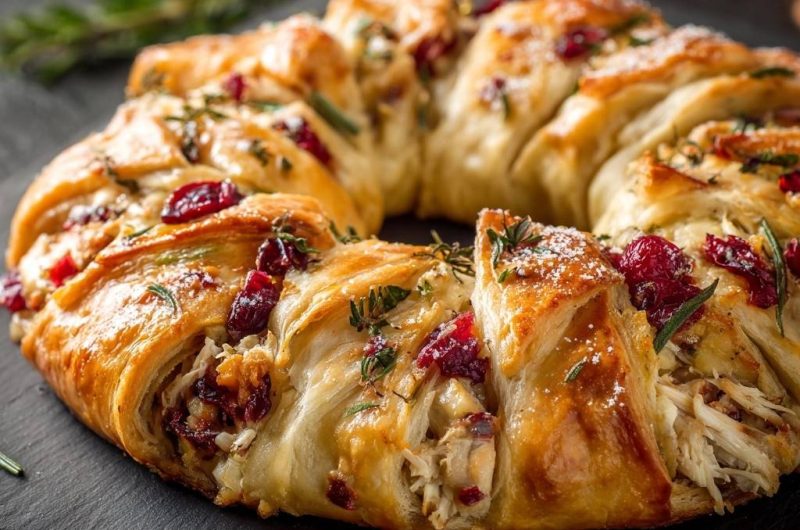
Savory Cranberry Chicken Crescent Ring
Course: Main CourseCuisine: AmericanDifficulty: easy8
servings20
minutes25
minutes45
MinutesAmerican
Ingredients
2 cans (8 oz each) refrigerated crescent roll dough
2 cups shredded cooked chicken (rotisserie works best)
1 cup shredded mozzarella cheese
1/2 cup dried cranberries (plus extra for topping)
2 tablespoons fresh rosemary, finely chopped
1 tablespoon fresh thyme leaves
1/4 cup cream cheese, softened
1 tablespoon Dijon mustard
1 egg, beaten (for wash)
1/2 teaspoon garlic powder
1/4 teaspoon black pepper
Coarse sea salt (for finishing)
Directions
- Preheat your oven to 375°F (190°C). Place a large rimless baking sheet or pizza stone in the oven while it preheats. This is the secret to the Anti-Soggy Bottom; placing the dough onto a hot surface sears the bottom pastry immediately, preventing moisture from the filling from soaking in.
- In a medium bowl, combine the shredded chicken, softened cream cheese, Dijon mustard, garlic powder, black pepper, and half of the rosemary. The cream cheese and mustard act as a moisture barrier, binding the chicken so it does not release excess steam into the pastry.
- Prepare a sheet of parchment paper on your counter. Unroll the crescent dough and separate into triangles. Arrange the triangles on the parchment paper in a circle with the wide bases overlapping in the center and the points facing outward, leaving a 5-inch hole in the middle.
- Spoon the chicken mixture evenly onto the wide bases of the triangles. Sprinkle the mozzarella cheese and 1/2 cup of dried cranberries over the chicken.
- Bring the points of the triangles over the filling and tuck them under the inner edge of the dough to secure the ring.
- Carefully slide the parchment paper with the assembled ring onto the preheated baking sheet or stone.
- Brush the top of the dough thoroughly with the beaten egg wash. Press a few extra dried cranberries and the remaining rosemary and thyme into the gaps of the dough so they are visible on top. Sprinkle lightly with coarse sea salt.
- Bake for 22 to 25 minutes or until the pastry is a deep, rich golden brown and the cheese is bubbling.
- Let the ring rest for 5 minutes on the hot pan. This allows the bottom to finish “frying” in its own heat for maximum crunch before slicing and serving.
Notes
- The secret to the ‘Anti-Soggy Bottom’ is placing the assembled ring onto a pre-heated baking sheet or pizza stone. Let the ring rest for 5 minutes on the hot pan after baking to maximize the crunch of the bottom crust.