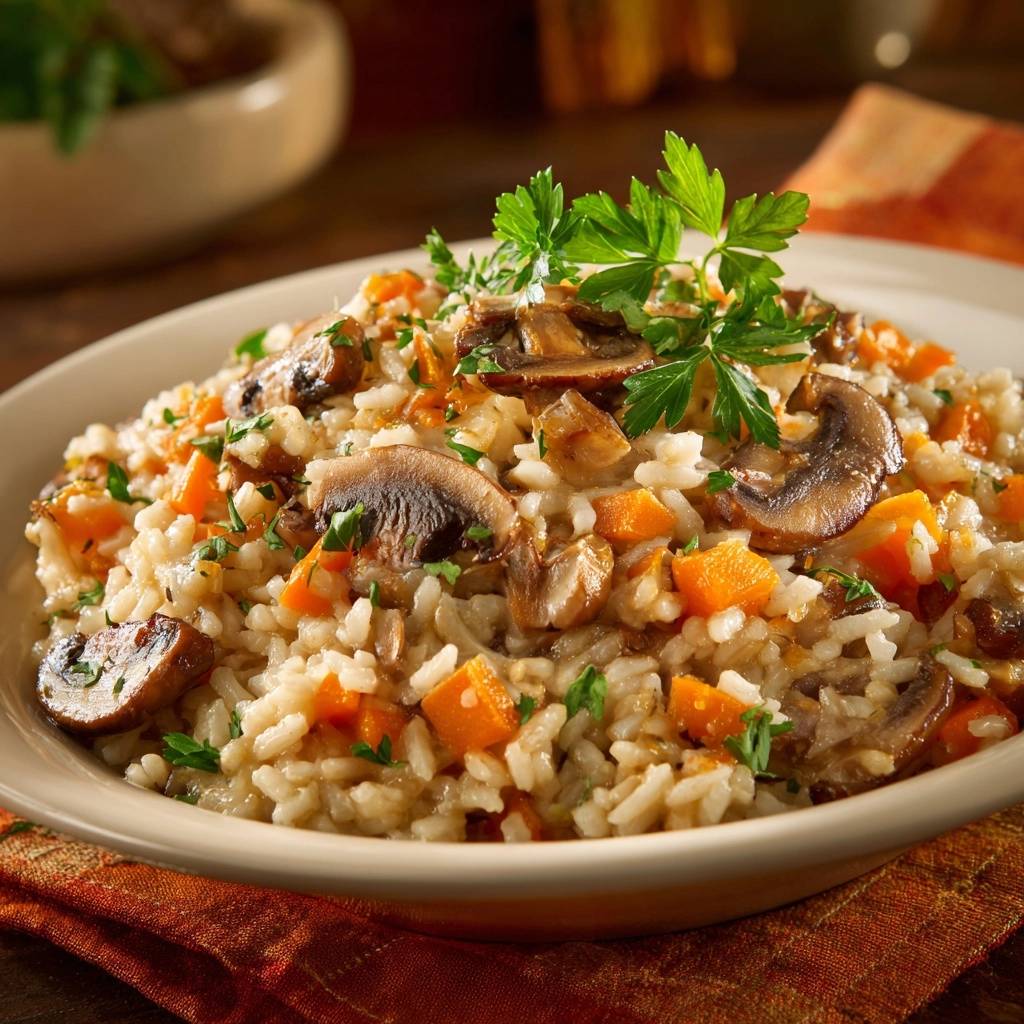
Forget everything you know about that gummy, heavy rice often served at lackluster buffets. A truly great Savory Mushroom and Carrot Risotto is a revelation of texture—creamy and velvety on the outside, yet each individual grain maintains a firm, distinct heart. When you pull a spoon through a perfect batch, it should flow like a slow wave rather than sitting in a stiff, sticky clump.
The magic happens through a process I call the “starch massage.” By slowly coaxing the amylopectin out of the rice through consistent stirring and gradual liquid additions, you create a natural, luxurious sauce. This isn’t just cooking; it’s a transformation of simple pantry staples into a dish that feels like a warm hug from a professional chef. The earthy depth of browned cremini mushrooms paired with the subtle sweetness of tender carrots creates a flavor profile that is both sophisticated and deeply comforting.
If you want to avoid the dreaded “cafeteria mush,” the secret lies in the temperature of your ingredients. Never, ever add cold broth to your hot rice. Doing so shocks the grain, causing the outside to cook unevenly while the inside stays hard. Keep your vegetable broth at a low simmer on the burner right next to your skillet. This ensures the cooking temperature remains steady, allowing the rice to swell perfectly and release its starches in a smooth, controlled flow.
The Anatomy of a Non-Gummy Risotto
To understand risotto, you have to understand the science of the rice grain. We use Arborio rice because it is packed with amylopectin, a type of starch that dissolves easily into liquid to create that signature silkiness. Unlike long-grain rice, which we want to stay fluffy and separate, Arborio is designed to create its own gravy. However, if you treat it like regular white rice and boil it in a big pot of water, you’ll end up with a sticky mess.
One of the biggest mistakes home cooks make is rinsing the rice before starting. While you might do this for basmati or jasmine to remove excess starch, rinsing Arborio is a fatal error. You need every bit of that surface starch to build the creamy emulsion that defines the dish. If you wash it away, your risotto will be watery and thin rather than rich and glossy.
The goal is a delicate balance where the liquid is thick enough to coat a spoon, but the rice grains themselves aren’t falling apart. This requires patience and a bit of elbow grease. By adding the broth in small increments, you force the grains to rub against one another. This friction is exactly what “massages” the starch into the broth, turning a simple liquid into a decadent sauce without needing a drop of heavy cream.
Selecting the Right Mushroom and Carrot Varieties
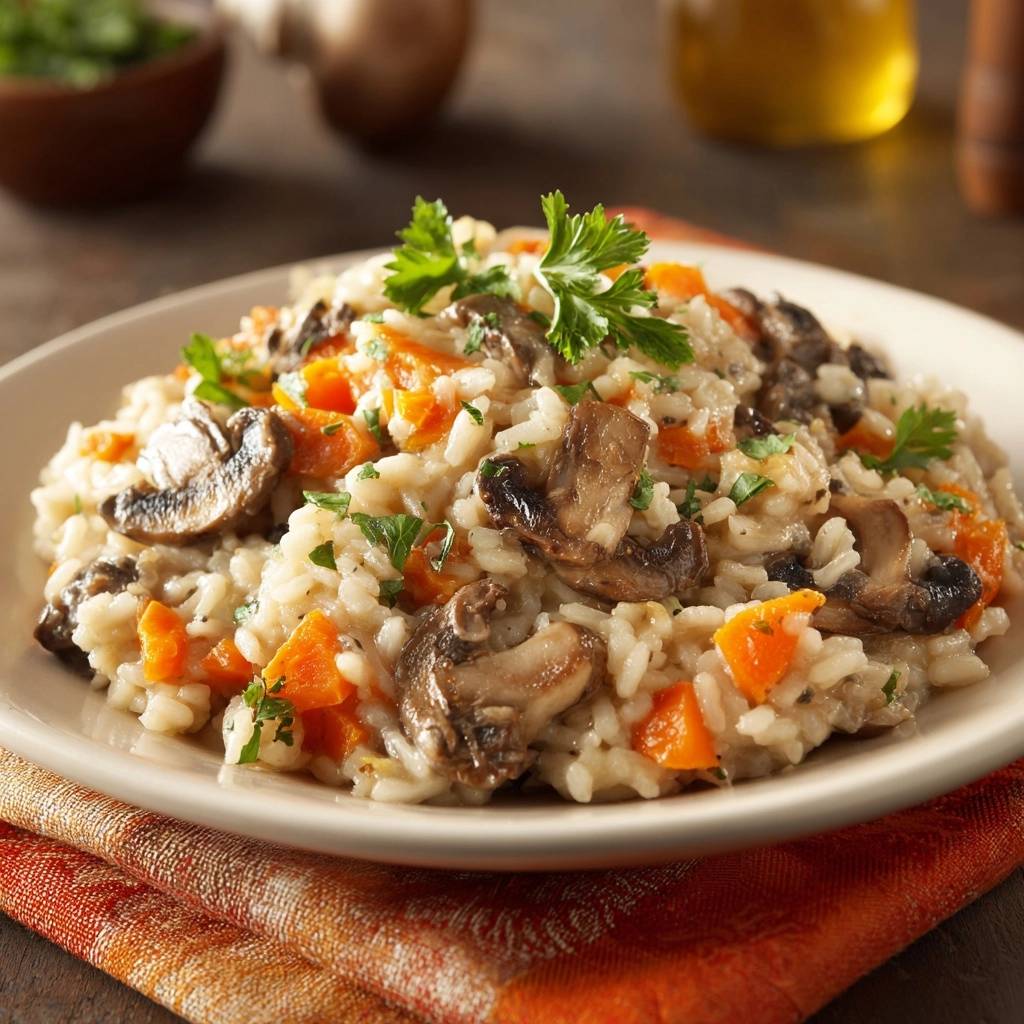
For the best flavor, skip the basic white button mushrooms and reach for Cremini, often labeled as “Baby Bellas.” They have a lower water content and a much more intense, savory flavor that stands up well to the richness of the butter and cheese. If you want to get fancy, adding a few dried porcini mushrooms (rehydrated in your broth) can add an incredible “umami” punch that makes the dish taste like it came from a high-end trattoria.
When it comes to the carrots, size matters more than you think. I recommend cutting them into 1/2-inch cubes. This specific size ensures they soften just enough during the sauté and simmering phases to be tender, but they won’t turn into baby food. If you can find heirloom carrots in purple or yellow, they add a stunning visual pop, though standard orange carrots provide that classic, reliable sweetness we’re looking for.
The Role of Temperature-Controlled Vegetable Broth
Think of your risotto pan as a delicate ecosystem. Every time you add liquid, you want to maintain the “simmer.” If you pour in cold broth, the temperature of the pan drops instantly, the cooking process halts, and the rice grains begin to absorb liquid too slowly, leading to a grainy texture. Therefore, keeping your 5 cups of vegetable broth in a small saucepan over low heat is a non-negotiable step for success.
As you work, you’ll notice the broth evaporating and being absorbed. By using warm liquid, the rice stays at a constant “bloom.” This allows the starch to move freely from the grain into the sauce. It might seem like an extra dish to wash, but the difference in the final mouthfeel is worth every second of effort.
Essential Components for Savory Mushroom and Carrot Risotto
High-quality fats are the backbone of this recipe. I use a combination of extra virgin olive oil for the initial sear and unsalted butter for the finishing touch. Using unsalted butter is key because it allows you to control the seasoning perfectly. Since the Parmesan cheese and vegetable broth both contain salt, starting with a neutral fat prevents the dish from becoming an salt bomb by the time it hits the table.
Speaking of cheese, please put down the green shaker can! Freshly grated Parmesan is essential here. Pre-shredded cheeses are often coated in potato starch or cellulose to prevent clumping in the bag. Those additives will ruin the texture of your sauce, making it gritty instead of smooth. A block of Parmigiano-Reggiano, grated right before you need it, melts beautifully and provides a sharp, salty kick that balances the earthy mushrooms.
The liquid you choose also defines the character of the dish. While vegetable broth is the primary mover, the optional addition of a dry white wine adds a necessary layer of acidity. This brightness cuts through the fat of the butter and cheese, making the dish feel lighter on the palate. If you prefer not to use it, simply ensure your broth is well-seasoned and perhaps add a tiny squeeze of lemon at the very end to provide that same lifting effect.
Aromatics: The Foundation of Flavor
The onion and garlic shouldn’t be “chunks” in your risotto; they should be a whisper of flavor that melts into the background. I use a very fine mince for the yellow onion so that it practically dissolves during the 6-8 minute sauté. You want them translucent and sweet, not browned or crispy. This creates a soft, savory base that supports the more prominent mushroom and carrot flavors.
Garlic should always be added last in the aromatic phase. Because it has a high sugar content, it burns quickly and becomes bitter. Just sixty seconds of heat is all it needs to release its fragrance before you hit the pan with the rice. This careful layering of flavors ensures that every bite is complex and well-rounded.
The Deglazing Liquid: Wine vs. Broth
If you choose to use a splash of extra broth instead of white wine, you might find the dish tastes a bit “flat” or overly heavy. To fix this, I like to add a teaspoon of lemon juice or a tiny splash of white grape juice (the unsweetened kind) during the deglazing phase. This mimics the tartness of the wine and helps scrape up those delicious browned bits—the “fond”—left behind by the mushrooms.
Deglazing is a vital step because it captures all the caramelized flavor stuck to the bottom of the pan. Whether you use wine or broth, make sure you use a wooden spoon to really scrub those bits loose. That deep brown color is where the “savory” in Savory Mushroom and Carrot Risotto truly comes from.
Phase One: Achieving the Perfect Mushroom Sear
Most people end up with rubbery, grey mushrooms because they crowd the pan. When you put too many mushrooms in at once, they release their moisture and end up steaming in their own juices. To get that gorgeous, deep golden crust, you must cook them in a single layer. If your pan isn’t big enough, do it in two batches. It’s a bit more work, but the texture difference is night and day.
Place the sliced cremini in the hot oil and then—this is the hard part—don’t touch them! Let them sit undisturbed for at least 3-4 minutes. You want to hear that sizzle. Once they are browned on one side, then you can toss them and add your salt. Adding salt too early draws out moisture and prevents browning, so wait until the Maillard reaction has worked its magic before seasoning.
Phase Two: Toasting the Arborio Grains
Before a single drop of broth hits the pan, you must perform the “Tostatura,” or the toast. After your onions and carrots are soft, stir in the dry rice and let it cook in the butter and oil for about 2-3 minutes. You are looking for the edges of the rice to become translucent while the center remains a bright, opaque white. It should smell slightly nutty, almost like popcorn.
This step is crucial because it creates a protective heat-shell around each grain. This shell helps the rice maintain its structural integrity during the long simmering process. Without toasting, the rice absorbs liquid too quickly and the exterior turns to mush before the interior is cooked. This simple three-minute step is the difference between a professional risotto and a bowl of rice porridge.
Phase Three: The Gradual Liquid Integration
Now we enter the heart of the process. Adding the broth one ladle at a time is what separates risotto from every other rice dish. When you add a small amount of liquid, the rice has room to move and bump into other grains. This constant friction is what physically knocks the starch off the rice and into the liquid, creating that creamy “sauce” without any actual cream.
You should stir frequently, but you don’t need to be a slave to the pan. A good stir every minute or so is plenty. Wait until the liquid is almost entirely absorbed—when you pull your spoon through the rice, it should leave a dry path behind it—before adding the next ladle. This rhythmic process usually takes about 20 to 25 minutes, and it’s actually quite meditative once you get into the flow.
Identifying the Al Dente Threshold
Start tasting your rice around the 18-minute mark. You are looking for “al dente,” which literally translates to “to the tooth.” The grain should be tender and creamy on the outside, but when you bite down, there should be a distinct, firm “spine” in the center. It shouldn’t be crunchy or stick to your teeth, but it definitely shouldn’t be soft all the way through.
Keep in mind that you might not use all five cups of broth. Depending on the humidity in your kitchen, the width of your pan, and how high your heat is, the rice might reach perfection with a half-cup of broth still left in the pot. Trust your taste buds over the measurements. If the rice is done but the pan looks a little dry, add one tiny splash of broth right at the end to keep it loose.
Phase Four: The Mantecatura Finish
The final and most important step is the “Mantecatura.” This is an Italian term for “mounting” the dish with fat to create an emulsion. Once the rice is cooked, take the pan completely off the heat. Fold in your browned mushrooms, the remaining cold butter, and the freshly grated Parmesan. Stir vigorously for about thirty seconds.
This rapid stirring off the heat beats the cold butter and cheese into the starchy liquid, creating a glossy, professional sheen that looks like silk. The cold temperature of the butter is important here; it helps create a more stable emulsion than melted butter would. The result is a risotto that is incredibly rich and decadent, with a finish that catches the light on the plate.
Troubleshooting Common Risotto Textures
If you finish your risotto and it looks more like a mountain than a pool, it’s too thick. Risotto should be “all’onda,” or “wavy.” If you shake the plate, the rice should ripple. To fix a thick batch, simply stir in one extra tablespoon of warm broth or even a splash of warm water right before serving. This will loosen the starches and restore that elegant, flowing texture.
On the flip side, if it’s too thin and soupy, let it sit for exactly sixty seconds off the heat. The rice will continue to absorb a small amount of moisture as it rests. However, be careful not to let it sit too long. Risotto is a “live” dish; the starches begin to set as it cools, and within ten minutes, that perfect creaminess will turn into a solid block. Serve it immediately on warmed bowls for the best experience.
Fixing Overly Salty or Bland Batches
If you find the dish is a bit too salty—perhaps from a salty batch of broth—don’t panic. A small squeeze of fresh lemon juice can help mask the saltiness by distracting your taste buds with acidity. Conversely, if the dish tastes bland despite the cheese and mushrooms, it likely needs more black pepper or a tiny pinch of salt. Always taste the risotto *after* adding the Parmesan, as the cheese provides a significant amount of seasoning.
Vegetarian Pairings and Serving Suggestions
Because this Savory Mushroom and Carrot Risotto is so rich and earthy, it pairs beautifully with something bright and peppery. A simple arugula salad tossed in a light lemon vinaigrette is the perfect companion. The bitterness of the greens cuts right through the buttery rice, refreshing your palate between bites. It’s a classic pairing for a reason!
For garnish, I love a heavy hand with fresh Italian parsley. It adds a pop of green color and a grassy freshness that wakes up the deep, roasted flavors of the cremini mushrooms. If you want to go even further, a drizzle of high-quality truffle oil or a few extra shavings of Parmesan on top can make a Tuesday night dinner feel like a five-star event.
Storage and Repurposing Leftovers
I’ll be honest: risotto does not reheat well in its original form. The rice continues to absorb moisture in the fridge, and by the next day, it will be quite stiff. If you must reheat it, do so in a small saucepan with a splash of broth or water over low heat, stirring constantly to try and loosen the sauce. It won’t be quite as creamy as day one, but it will still taste delicious.
The best way to handle leftovers is to transform them into Arancini. Take the cold, stiff risotto, roll it into balls, and stuff a little piece of mozzarella in the center. Dredge the balls in flour, egg, and breadcrumbs, then fry them until golden brown. The cold rice is much easier to handle, and you end up with a completely different, crispy, cheesy snack that ensures nothing goes to waste.
Expert Tips for Success
Can I use Brown Rice for this recipe?
Unfortunately, no. Brown rice still has its outer bran layer intact, which prevents the starch from being released into the liquid. You will end up with a pot of boiled rice and broth rather than a creamy risotto. Stick to Arborio, Carnaroli, or Vialone Nano for the best results.
Can I make this in a Slow Cooker?
I strongly advise against it. The magic of risotto comes from the agitation of stirring, which physically removes the starch from the grain. In a slow cooker, the rice just sits still and absorbs liquid, resulting in a texture that is mushy and flat rather than creamy and al dente.
How do I scale this recipe for a dinner party?
You can easily double this recipe, but you will need a very wide pan. The more surface area you have, the better the rice will cook. If you crowd a small, deep pot with too much rice, the weight of the rice on the bottom can crush the grains, leading to a gummy texture. Use your largest wide skillet or a wide-bottomed Dutch oven.
What is the best pan to use?
A wide, straight-sided skillet or a Dutch oven is ideal. You want a heavy bottom that distributes heat evenly so you don’t get “hot spots” that burn the rice. A wide pan also allows for more evaporation, which concentrates the flavors of the broth as the rice cooks.
Why is my risotto taking longer than 25 minutes?
This usually happens if your heat is too low or if you are adding too much liquid at once. Ensure the broth is simmering and the rice pan is at a steady medium heat. If the pan is just “soaking” rather than “simmering,” the starch won’t release properly and the grain will take forever to soften.
Can I substitute the Parmesan cheese?
If you don’t have Parmesan, Pecorino Romano is a great alternative, though it is much saltier, so adjust your added salt accordingly. For a different flavor profile, a bit of aged Gruyère can add a lovely nuttiness, but Parmesan is the gold standard for that classic Italian finish.
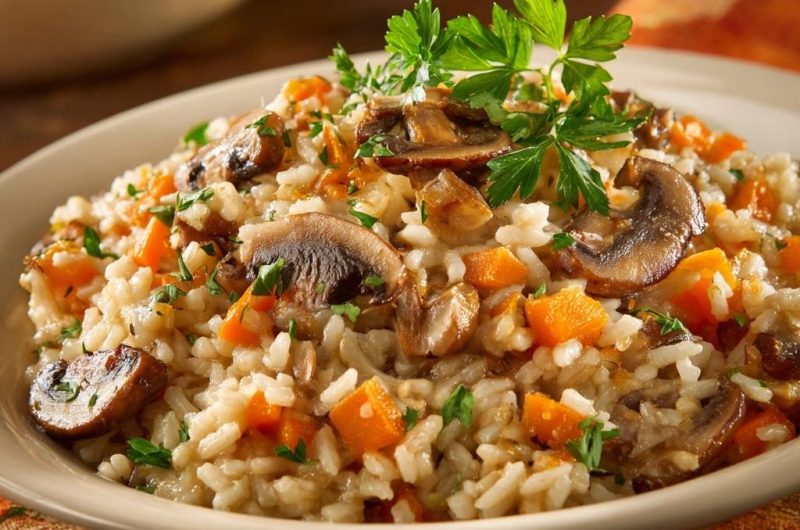
Savory Mushroom and Carrot Risotto
Course: Main CourseCuisine: Italian-AmericanDifficulty: easy4
servings15
minutes35
minutes50
Minutes420
kcalItalian-American
Ingredients
1.5 cups Arborio rice
1 pound cremini mushrooms, sliced
2 large carrots, cut into 1/2-inch cubes
5 cups vegetable broth, kept warm on low heat
1/2 cup dry white wine (optional, or extra broth)
2 tablespoons olive oil
3 tablespoons unsalted butter, divided
1 small yellow onion, finely minced
3 cloves garlic, minced
1/2 cup freshly grated Parmesan cheese
1/4 cup fresh Italian parsley, roughly chopped
Salt and black pepper to taste
Directions
- Heat olive oil in a large, wide skillet or Dutch oven over medium-high heat. Add the sliced mushrooms in a single layer. To avoid rubbery mushrooms, let them brown undisturbed for 3-4 minutes until deep golden. Season with salt, stir, and cook for 2 more minutes. Remove mushrooms from the pan and set aside.
- In the same pan, melt 1 tablespoon of butter over medium heat. Add the cubed carrots and onion. Sauté for 6-8 minutes until the onions are translucent and the carrots begin to soften. Add the garlic and cook for 1 minute until fragrant.
- Add the dry Arborio rice to the pan. Toast the grains for 2-3 minutes, stirring constantly, until the edges look translucent and the rice smells nutty. This toasting creates a protective shell that prevents the rice from becoming gummy.
- Pour in the white wine (if using) to deglaze the pan, scraping up any browned bits from the mushrooms. Stir until the liquid is fully absorbed.
- To solve the texture issue, add the warm broth one ladle (about 1/2 cup) at a time. Stir frequently-this constant friction is what rubs the starch off the rice to create a natural creamy sauce without overcooking the grain. Wait until the liquid is almost completely absorbed before adding the next ladle.
- Continue this process for 20-25 minutes. Taste the rice periodically; it should be tender with a slight, firm bite in the center (al dente). You may not need all 5 cups of broth.
- Once the rice is cooked, fold the browned mushrooms back into the pan. Stir in the remaining 2 tablespoons of butter and the grated Parmesan cheese. This “mantecatura” stage creates the final glossy, velvety finish seen in the image.
- Season with salt and plenty of black pepper. Remove from heat immediately. Garnish generously with fresh parsley and serve while the texture is at its peak creaminess.
Notes
- Keep the vegetable broth on low heat throughout the process; adding cold broth will shock the rice and ruin the texture. Toasting the rice before adding liquid is essential to prevent a gummy consistency.