There is nothing quite like the scent of cinnamon and warm butter wafting through the house on a slow morning. However, most of us have been disappointed by a coffee cake that looks stunning on the outside but hides a gummy, wet mess at the bottom. That dreaded “soggy bottom” usually happens when the sugar filling liquefies and sinks, ruining the texture of the crumb.
This recipe changes the game by focusing on structural integrity without sacrificing that melt-in-your-mouth quality. We aren’t just making a simple snack cake; we are building a foundation that supports heavy ribbons of spice. By using a specific layering technique, you ensure every bite is light, airy, and perfectly balanced.
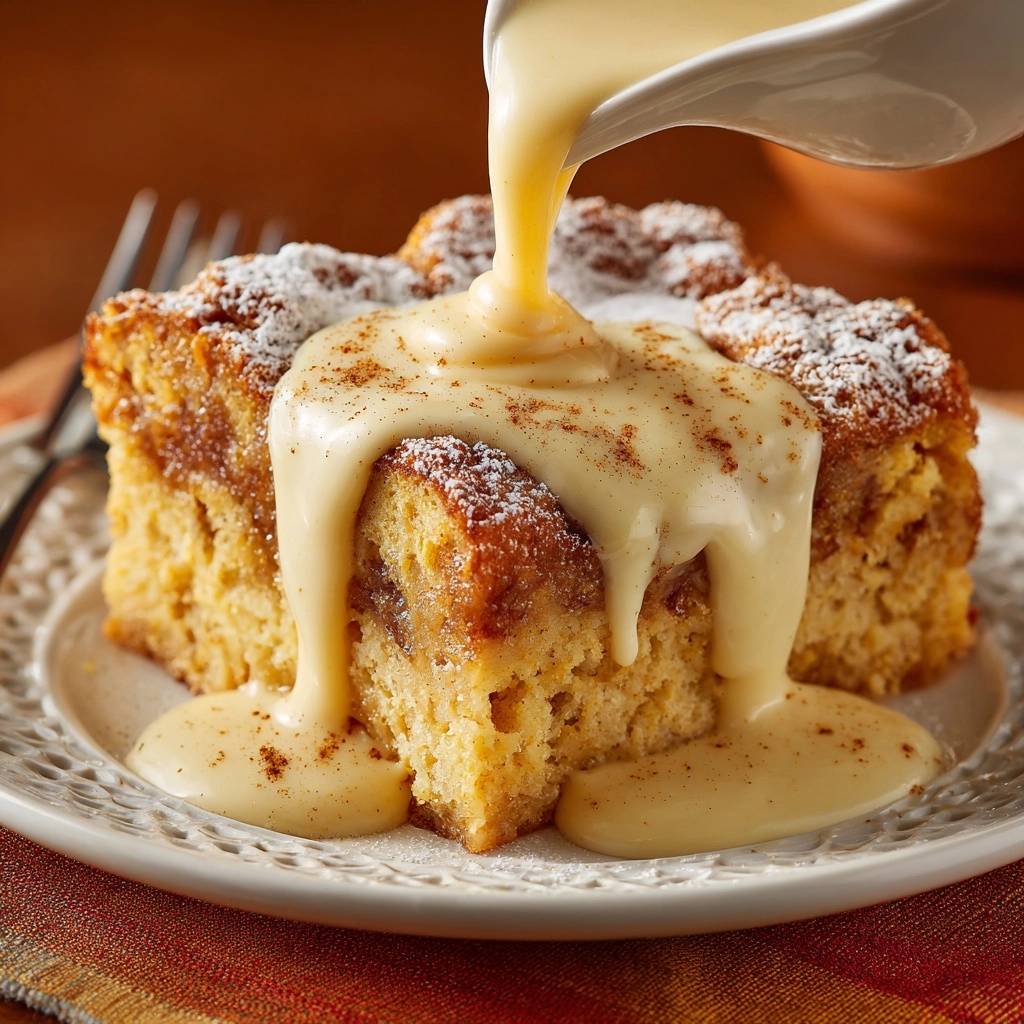
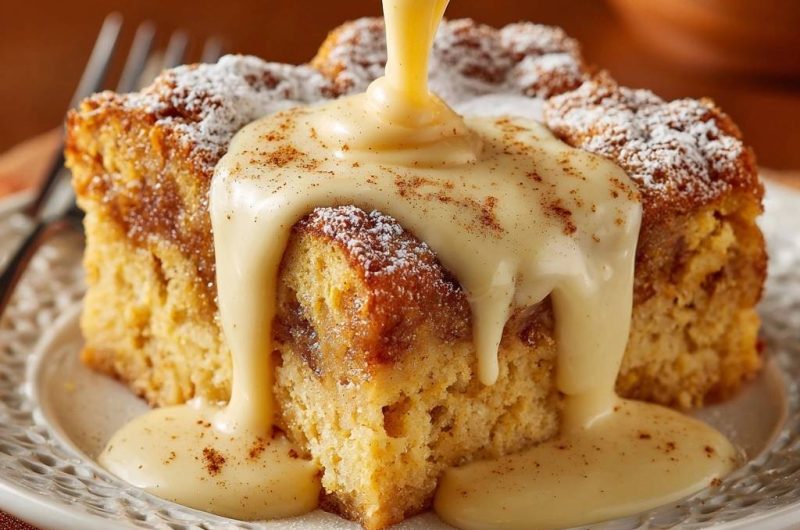
The real secret to this masterpiece is the addition of a warm vanilla custard sauce. Instead of a standard sugary glaze that just adds sweetness, this silky custard adds a sophisticated, creamy element. It elevates the dish from a basic breakfast treat to a dessert-worthy experience that will have everyone asking for your secret.
The Science of Preventing a Soggy Base
Baking is essentially a series of chemical reactions, and the soggy bottom is a failure of physics. When you use a standard 350°F oven, the sugar in the filling has plenty of time to melt into a heavy syrup before the cake batter sets. This syrup is denser than the raw batter, so it naturally tunnels toward the bottom of the pan.
To combat this, we use a “Temperature Jump” by preheating the oven to 375°F. This higher initial heat forces the bottom and sides of the cake to set almost immediately. By creating this sturdy “crust” early on, you build a physical barrier that prevents the melting cinnamon from penetrating the base layer.
Furthermore, the consistency of your filling matters just as much as the heat. Most recipes call for a dry mix of cinnamon and sugar, which turns to liquid instantly in the oven. By binding the cinnamon and brown sugar with melted butter to create a “sandy paste,” we slow down the melting process. This fat-bound mixture stays suspended in the batter much longer, giving the cake time to rise and firm up around it.
Essential Components for the Perfect Crumb
The texture of a great coffee cake should be sturdy enough to hold its shape but soft enough to yield to a fork. Whole milk is a non-negotiable ingredient here because the fat content provides a tender mouthfeel. If you use skim or low-fat milk, you lose that richness, and the crumb can become unpleasantly lean and dry.
You might notice this recipe calls for a full tablespoon of baking powder. This isn’t a typo! Because the cinnamon paste is quite heavy, the batter needs a significant amount of lift to stay fluffy. This extra leavening ensures the cake doesn’t collapse under the weight of the swirl, maintaining a beautiful height and airy pockets.
I always recommend using unsalted butter for this recipe. Different brands of salted butter have varying levels of sodium, which can make your cake taste inconsistently salty. Using unsalted butter allows you to control the seasoning perfectly, ensuring the sweet vanilla and spicy cinnamon remain the stars of the show.
Selecting the Right Flour and Leavening
While cake flour is great for delicate sponges, it’s too weak for a loaded coffee cake. All-purpose flour provides the necessary gluten structure to support the cinnamon ribbons and the heavy pour of custard later. It gives the cake a “hearty” crumb that feels substantial without being tough.
Check the expiration date on your baking powder before you start. Since we are relying on it to fight gravity against that heavy sugar swirl, you need maximum CO2 release. If your powder is older than six months, it might not have the strength to keep the cake from sinking in the middle.
The Role of Room Temperature Ingredients
It is vital that your egg and milk are at room temperature before you begin mixing. If you add cold milk to your creamed softened butter, the butter will seize and form tiny hard clumps. This leads to an uneven bake and a dense, speckled texture rather than a smooth, uniform crumb.
Step-by-Step: Building the Structural Layers
When you start mixing, remember that less is more. Whisk your dry ingredients thoroughly first, then add the wet components. Use a hand mixer on low speed just until the streaks of flour disappear. Overmixing develops too much gluten, which will turn your light coffee cake into something resembling a loaf of bread.
The “Two-Thirds Rule” is your best defense against a failed bake. Instead of splitting the batter in half, pour two-thirds of it into the bottom of your greased pan. This creates a thick, reinforced foundation. This extra-thick base layer acts as a safety net, catching any cinnamon that tries to migrate downward during the bake.
Once that base is down, you can start adding your flavor. Don’t just dump the cinnamon mixture in; you want to be strategic. By placing the filling in specific spots, you create concentrated pockets of flavor that look beautiful when sliced and don’t overwhelm the delicate batter.
Creating the High-Density Cinnamon Paste
Your cinnamon, brown sugar, and melted butter mixture should look like wet sand. It shouldn’t be runny, but it should be moist enough to hold together. If it feels too dry, add a tiny bit more butter; if it’s too liquid, a pinch more cinnamon will thicken it right up.
When adding this to the pan, use a spoon to drop small dollops over the batter. This “dolloping” method is much better than pouring because it keeps the sugar from spreading too thin. These thick clusters of cinnamon are what create those gooey, decadent bites we all love in a premium coffee cake.
The “Surface-Only” Swirl Technique
This is where many bakers go wrong. Take a butter knife or a wooden skewer and swirl it through the top layer of batter only. You should never feel the knife touch the bottom of the pan. If you swirl too deeply, you puncture that thick foundation layer we worked so hard to build.
Keep your movements light and swirling. You are looking for a marbled effect on the surface. By keeping the swirl shallow, you ensure the cinnamon stays in the top and middle sections of the cake, leaving the bottom perfectly golden and dry.
Crafting the Silky Warm Vanilla Custard
This custard is a classic Crème Anglaise, and it requires a bit of patience. Start by whisking your egg yolks, sugar, and cornstarch until they turn a pale, buttery yellow. Meanwhile, heat your milk in a saucepan until you see tiny bubbles forming around the edges, but don’t let it reach a rolling boil.
Tempering is the most important step here. Slowly drizzle a small amount of the hot milk into the egg mixture while whisking constantly. This gently raises the temperature of the eggs so they don’t scramble. Once the egg mixture is warm, you can safely pour it back into the saucepan with the rest of the milk.
Cook the sauce over medium-low heat, stirring constantly with a wooden spoon. You’ll know it’s ready when it thickens enough to “coat the back of a spoon.” Run your finger through the sauce on the spoon; if the line stays clean and doesn’t fill back in, your custard is perfect. Remove it from the heat immediately and stir in the vanilla.
Troubleshooting Common Coffee Cake Failures
If you notice the top of your cake is browning too quickly but the center still wobbles, don’t panic. Simply “tent” the pan by loosely placing a piece of aluminum foil over the top. This reflects some of the heat, allowing the center to finish cooking without burning the sugary crust.
Testing for doneness can be tricky with a swirl cake. If your toothpick hits a pocket of cinnamon paste, it might come out looking wet even if the cake is done. Test in two or three different spots. You are looking for a few moist crumbs, but no raw, liquid batter.
Another common issue is a cake that collapses after being removed from the oven. This usually happens if the cake was underbaked or if the oven door was opened too many times during the first 20 minutes. Keep that door closed to maintain the steady heat needed for the structure to set!
Equipment: Why Heavy Metal Pans Matter
The material of your baking pan significantly impacts the final result. Glass pans are poor conductors of heat and can cause the edges to overcook before the center is set. For this recipe, a heavy-gauge aluminized steel or light-colored metal pan is the gold standard.
These metal pans conduct heat evenly and quickly, which is essential for that “crust set” we need to prevent the cinnamon from sinking. If you only have a dark-colored non-stick pan, reduce your oven temperature by 25°F, as dark metal absorbs heat more aggressively and can burn the bottom of your cake.
Make-Ahead Strategies and Storage Solutions
This cake is best enjoyed warm, but you can certainly make it ahead of time. If you have leftovers, store them in an airtight container at room temperature. Avoid the refrigerator! The cold air causes the starches in the flour to recrystallize, which makes the cake taste stale and tough much faster.
The custard sauce should be stored separately in the fridge. When you are ready to serve, reheat the custard gently in a small saucepan over low heat or in a double boiler. If it has thickened too much in the fridge, whisk in a splash of milk to loosen it back up to a pourable consistency.
Expert Tips for Serving and Presentation
For a professional look, use the “Double Dusting” method. Dust the cake with powdered sugar about 10 minutes after it comes out of the oven. Some of it will melt into the warm crust. Then, right before serving, give it a second light dusting for that pristine, snowy white finish.
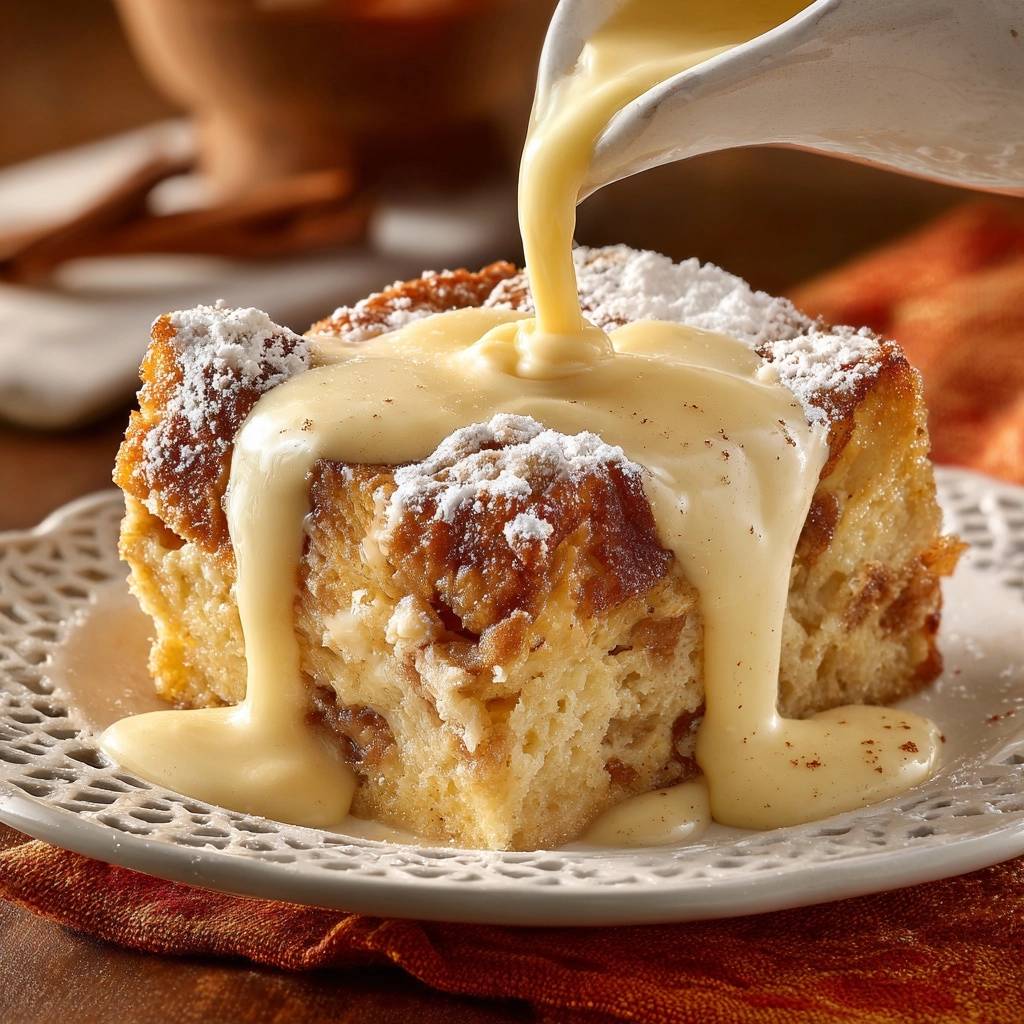
Wait at least 15 minutes before slicing. If you cut into it while it’s piping hot, the steam escapes too quickly and the crumb can collapse. Letting it rest allows the internal structure to firm up so it can easily hold the weight of that glorious warm vanilla custard you’re about to pour over it.
Frequently Asked Troubleshooting Questions
Why did my cinnamon swirl sink to the bottom?
This usually happens for two reasons: the batter was too thin or the cinnamon mixture was too liquid. Ensure you are using the “Two-Thirds Rule” to create a thick base layer of batter. Also, make sure your cinnamon mixture is a thick, sandy paste bound with butter rather than just dry sugar, which melts into a heavy syrup and sinks immediately.
Can I substitute the whole milk with almond or soy?
You can, but keep in mind that plant-based milks often have less fat and protein than whole milk. This can result in a slightly less tender crumb. If you choose to use a thinner alternative like almond milk, I recommend adding one teaspoon of neutral oil (like vegetable or canola) to the batter to compensate for the missing fats and maintain the cake’s structure.
How do I prevent the custard from forming a skin?
A skin forms on custard when the surface dries out as it cools. To prevent this, use the “contact wrap” method. Take a piece of plastic wrap or parchment paper and press it directly onto the surface of the warm custard. This prevents air from reaching the liquid, keeping it perfectly smooth and creamy until you are ready to serve.
What is the best way to reheat leftovers?
Avoid the microwave if possible, as it can make the cake rubbery. Instead, wrap a slice in foil and place it in a 300°F oven or toaster oven for about 5 to 8 minutes until warmed through. For the custard, reheat it very gently on the stove over low heat, whisking constantly to ensure it stays smooth and doesn’t curdle.
Can I add nuts or fruit to this specific structure?
Yes, but you must be careful with the weight. If you want to add pecans or walnuts, fold them directly into the cinnamon-butter paste rather than the batter. This keeps the weight concentrated within the swirl layers. For fruit like blueberries, toss them in a little flour first to prevent them from sinking, and only fold them into the top third of the batter.
Warm Cinnamon Swirl Coffee Cake
Course: DessertCuisine: AmericanDifficulty: easy9
servings15
minutes40
minutes55
Minutes385
kcalAmerican
Ingredients
2 cups all-purpose flour
1 cup granulated sugar
1 tablespoon baking powder
1/2 teaspoon salt
1/2 cup unsalted butter, softened
1 large egg
3/4 cup whole milk
1 teaspoon vanilla extract
Cinnamon Swirl & Topping:
1/2 cup brown sugar
1 tablespoon ground cinnamon
2 tablespoons unsalted butter, melted (to bind the swirl)
2 tablespoons powdered sugar for dusting
Warm Vanilla Custard Sauce:
2 cups whole milk
4 large egg yolks
1/3 cup granulated sugar
1 tablespoon cornstarch
1 teaspoon vanilla extract
Directions
- Preheat your oven to 375°F. This higher starting temperature is the first step to preventing a soggy bottom, as it sets the base of the cake before the sugars can melt downward. Grease an 8×8 inch square baking pan.
- In a large bowl, whisk together flour, 1 cup granulated sugar, baking powder, and salt.
- Add the softened butter, egg, milk, and vanilla. Mix using a hand mixer or whisk until just combined and smooth. Do not overmix.
- In a small bowl, combine the brown sugar, cinnamon, and 2 tablespoons of melted butter. Stir until it forms a thick, sandy paste. This prevents the sugar from liquefying too quickly and sinking to the bottom.
- To solve the soggy bottom issue, pour two-thirds of the batter into the pan first. This creates a thick, sturdy foundation. Drop small dollops of half the cinnamon mixture over this layer.
- Carefully spread the remaining batter over the top. Sprinkle the rest of the cinnamon mixture on the surface. Use a knife to swirl gently through the top layers only; do not touch the bottom of the pan with the knife.
- Bake for 35 to 40 minutes, or until a toothpick comes out clean. The high heat ensures the bottom crust forms quickly, acting as a barrier against the melting cinnamon.
- While the cake bakes, make the custard: Whisk egg yolks, 1/3 cup sugar, and cornstarch in a bowl. Heat milk in a saucepan until simmering. Slowly whisk the hot milk into the egg mixture, then return everything to the pan. Stir over medium-low heat until thickened enough to coat the back of a spoon. Stir in vanilla and keep warm.
- Let the cake cool in the pan for 10 minutes. Dust the top generously with powdered sugar.
- Slice and serve immediately, pouring the warm vanilla custard over individual slices as shown in the image.
Notes
- The secret to preventing a soggy bottom is pouring two-thirds of the batter first to create a foundation and starting the oven at 375 degrees Fahrenheit to set the base quickly. Do not let the knife touch the bottom of the pan when swirling.