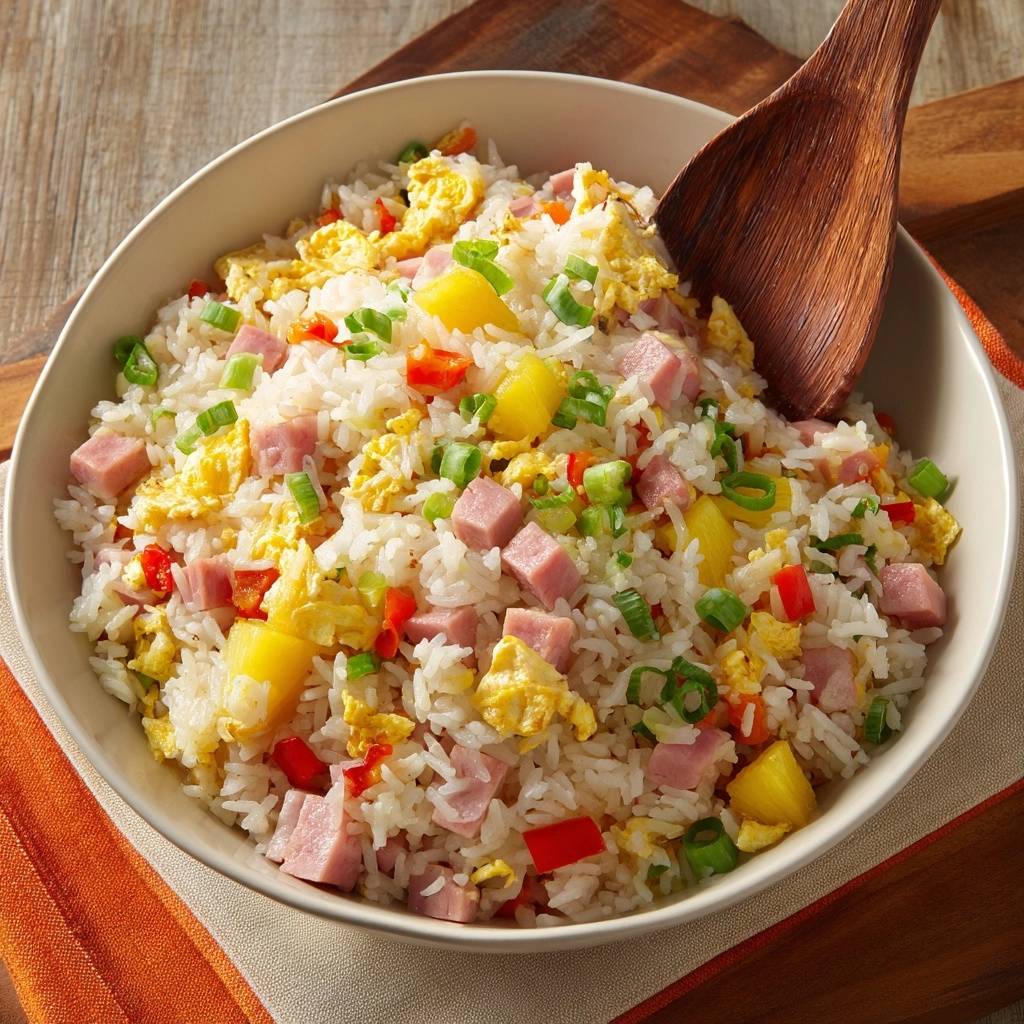
Imagine the smell of sweet, golden pineapple hitting a scorching hot pan, its sugars caramelizing into a deep amber glaze. Now, pair that with the salty, smoky bite of seared ham and the nutty aroma of toasted jasmine rice. This Tropical Pineapple and Ham Fried Rice isn’t just a quick weeknight meal; it’s a vibrant explosion of island flavors that balances sweet and savory notes perfectly.
However, most home cooks struggle with the dreaded “mushy rice” syndrome, where the dish turns into a soft, clumped-up mess instead of the distinct, chewy grains you find at your favorite Thai spot. The secret to restaurant-quality results lies entirely in moisture management and heat control. We’re going to move beyond basic stir-fry techniques to ensure every single grain of rice stays firm, flavorful, and beautifully separated.
The real pro tip that changes everything? Sear your pineapple and ham separately before they ever touch the rice. By locking in the juices of the fruit and crisping the edges of the protein first, you prevent excess liquid from leaching out and steaming your grains. This simple step ensures your Tropical Pineapple and Ham Fried Rice has that signature “dry” fry texture that defines a masterpiece.
The Science of Non-Mushy Fried Rice
Achieving the perfect texture for Tropical Pineapple and Ham Fried Rice starts with understanding the chemistry of starch. Jasmine rice is the gold standard here because it possesses a delicate floral aroma and a medium-grain length that strikes the right balance between sticky and firm. However, freshly cooked rice is a disaster for the wok because it’s laden with surface moisture and internal steam.
When you use chilled, overnight rice, a process called retrogradation occurs. As the rice cools in the fridge, the starch molecules realign and harden, creating a firm exterior. This structural change allows the grains to withstand the intense heat of the pan without breaking or clumping together. If you use warm rice, the starch remains gelatinized and soft, which leads to a gummy texture the moment you add soy sauce.
Furthermore, the cold environment of the refrigerator dehydrates the surface of each grain. This lack of surface moisture is critical because it allows the oil to coat the rice instantly, creating a barrier. When that dry grain hits the hot oil, it toasts rather than steams, giving you that elusive, chewy mouthfeel that makes fried rice so addictive.
Essential Components for Tropical Pineapple and Ham Fried Rice
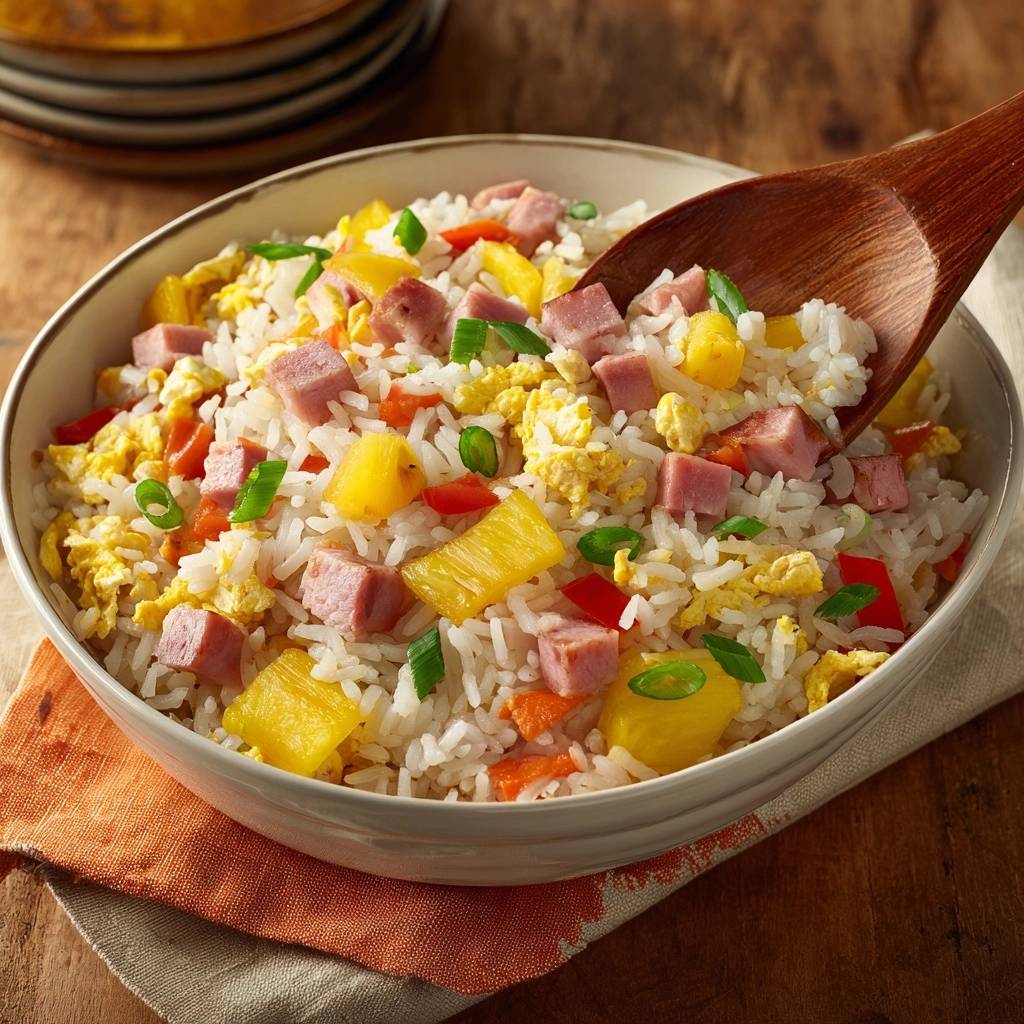
Quality ingredients are the backbone of this dish, and how you prep them matters just as much as how you cook them. For the protein, choose a thick-cut ham steak over thin deli slices. The structural integrity of a half-inch cube of ham provides a satisfying “chew” that stands up to the rice, whereas thin ham tends to disappear or become rubbery under high heat.
The choice of seasoning is equally strategic. We use light soy sauce specifically to keep the rice bright and golden rather than muddy and dark. Light soy sauce provides the necessary salt and umami without the heavy molasses content found in dark varieties. Additionally, white pepper is the secret weapon of professional chefs; it offers a sharp, floral heat that cuts through the sweetness of the pineapple without leaving black specks in your vibrant dish.
Selecting and Prepping Fresh Pineapple
While it might be tempting to grab a can, fresh pineapple is non-negotiable for the best Tropical Pineapple and Ham Fried Rice. Canned pineapple is often oversaturated with syrup, which introduces too much sugar and moisture into the pan. Look for a fresh pineapple that smells sweet at the base and has vibrant green leaves; if you can easily pull a leaf from the center, it’s ready to go.
When dicing your fruit, aim for uniform 1/2-inch cubes. This size is large enough to hold its shape during the sear but small enough to distribute evenly through the rice. After cutting, pat the chunks dry with a paper towel. Removing that surface juice ensures that the fruit caramelizes the moment it hits the oil, locking the remaining sweetness inside the cube.
The Importance of High-Smoke Point Oils
Because this recipe requires intense, flickering heat, your choice of fat is vital. Vegetable oil, avocado oil, or peanut oil are the best candidates because they have high smoke points. These oils can handle the heat without breaking down or imparting a bitter, burnt flavor to your meal.
Avoid using butter or extra virgin olive oil as your primary cooking fat. Butter contains milk solids that will burn at the temperatures needed to toast the rice, and olive oil’s distinct flavor can clash with the tropical profile. Save the toasted sesame oil for the very end; it’s a finishing oil used for aroma, not a cooking medium, as its flavor degrades quickly under high heat.
Pre-Cooking Phase: Managing Moisture and Temperature
In the world of stir-frying, “Mise en Place” isn’t just a fancy French term; it’s a survival tactic. Once the heat is on, the entire cooking process for Tropical Pineapple and Ham Fried Rice takes less than 10 minutes. You won’t have time to chop a pepper or beat an egg once the rice is in the pan, so every ingredient must be prepped and within arm’s reach.
Temperature management starts before the stove is even lit. While the rice should be cold from the fridge to maintain its structure, try to bring your eggs to room temperature. Adding cold eggs to a hot wok can cause a sudden drop in temperature, leading to sticking. By having everything ready, you maintain the high-energy environment needed for a successful flash-fry.
Step-by-Step: Searing Fruit and Protein
The first stage of cooking is all about building layers of flavor through the Maillard reaction. This chemical reaction between amino acids and reducing sugars is what gives seared meat and caramelized fruit their savory, complex depth. By searing the ham and pineapple first, you’re creating a flavor foundation that will eventually coat every grain of rice.
Start with a very hot pan and a small amount of oil. You should see a faint wisp of smoke before the first ingredient hits the surface. This ensures an immediate sear rather than a slow simmer, which is the key to keeping the interiors of your add-ins juicy while the exteriors get crispy.
Caramelizing Pineapple to Lock in Juice
When you toss the pineapple into the wok, leave it alone for at least a minute. You’re looking for those edges to turn a deep, golden brown. This caramelization creates a “crust” that acts as a seal. If you stir too much, the fruit will release its juice, turning your stir-fry into a soup. Once you see that golden color, toss them quickly and remove them from the heat immediately.
Crisping the Ham for Texture Contrast
Next, the ham goes in. You want the edges of the cubes to become slightly jagged and crispy. This texture provides a brilliant contrast to the soft eggs and chewy rice. As the ham sears, it releases a small amount of fat into the pan, which is seasoned with smoky saltiness. This “liquid gold” will help season the rice in the next step, so don’t wipe the pan unless there are burnt bits.
The Flash-Fry: Achieving the Perfect Grain
This is the most critical part of making Tropical Pineapple and Ham Fried Rice. Crank your heat to the highest setting. Add your oil and peppers, then the rice. Instead of stirring frantically, use your spatula to press the rice into a flat layer against the bottom and sides of the wok. Let it sit undisturbed for about 30 seconds.
This “spread and wait” technique allows the rice to develop a slight toast, often referred to as “wok hei” or the breath of the wok. You’ll hear a distinct crackling sound; that’s the moisture leaving the surface of the rice and the grains beginning to fry. Once you smell a nutty, toasted aroma, toss the rice and repeat the process until every grain is hot and separated.
Incorporating Aromatics and Seasoning
When it’s time to add the soy sauce and sesame oil, do not pour them directly onto the rice. Instead, drizzle the liquids around the very top edge of the wok. As the sauce slides down the scorching hot metal, it sizzles and reduces instantly. This creates a concentrated steam that coats the rice in flavor without soaking into the grain and making it soggy.
Avoiding Common Fried Rice Mistakes
If your rice starts sticking to the pan, it’s usually a sign that your pan wasn’t hot enough or you didn’t use enough oil. Don’t panic; just add a tiny drizzle of oil around the edges and turn up the heat. Another common mistake is using too much soy sauce, which results in “grey” rice. Remember, you can always add more salt, but you can’t take away the moisture of excess sauce.
Overcrowding the pan is the fastest way to ruin Tropical Pineapple and Ham Fried Rice. If you’re doubling the recipe, cook it in two batches. If there’s too much food in the pan, the steam can’t escape, and the temperature drops. Instead of frying, your ingredients will begin to boil in their own juices, leading to that mushy texture we’re trying to avoid.
Flavor Variations and Ingredient Swaps
While ham is traditional, you can easily adapt this recipe to what you have on hand. Sliced beef strips or smoked turkey cubes work beautifully as a protein substitute. If you want to lean further into the tropical theme, try adding a handful of toasted cashews or macadamia nuts at the very end for an extra layer of crunch.
For those who crave heat, finely diced Thai bird’s eye chilies can be stir-fried with the bell peppers. Alternatively, a drizzle of chili oil over the finished dish adds a spicy depth that complements the sweet pineapple. You can also swap the red bell pepper for snap peas or shredded carrots if you want to increase the vegetable count without changing the cooking method.
Optimal Serving Suggestions and Pairings
Tropical Pineapple and Ham Fried Rice is a rich, flavorful dish that benefits from a bright, acidic side. A simple cucumber ribbon salad with a rice vinegar dressing provides a cooling contrast. Alternatively, a ginger-lime slaw with shredded cabbage can cut through the saltiness of the ham and the richness of the fried grains.
If you’re serving this as part of a larger meal, it pairs excellently with grilled chicken skewers or a light seafood dish. Because the fried rice is so hearty, you don’t need heavy sauces on your side dishes. Keep the pairings fresh and crisp to let the complex flavors of the pineapple and ham shine as the star of the show.
Storage and Reheating for Maximum Freshness
Leftover fried rice can be just as delicious the next day if stored correctly. Place the cooled rice in an airtight container and refrigerate for up to three days. Do not freeze this dish, as the pineapple will release too much water upon thawing, and the rice grains will lose their pleasant chewiness and become grainy.
To reheat, avoid the microwave if possible, as it tends to make the ham rubbery. Instead, heat a skillet with a teaspoon of oil. Add the rice and a tablespoon of water, then cover with a lid for one minute. The steam will revive the rice grains, making them plump and tender again. Remove the lid and stir-fry for another minute to restore that signature crispness.
Expert Troubleshooting
Why is my rice still clumping together?
Clumping usually happens for two reasons: the rice was too fresh or it wasn’t broken up before hitting the pan. Always use rice that has been chilled for at least 12 hours. Before you start cooking, use clean hands to gently break apart any large clumps of cold rice in a bowl so the grains enter the wok individually.
Can I use frozen pineapple for this recipe?
You can use frozen pineapple, but you must thaw it completely and drain it in a colander first. Once thawed, pat the chunks extremely dry with paper towels. Frozen fruit releases significantly more moisture than fresh, so you may need to sear it for an extra minute to ensure the exterior is properly caramelized.
My eggs disappeared into the rice; what happened?
If the eggs seem to vanish, you likely added the rice before the eggs were fully set, or you scrambled them into too small of pieces. The trick is to scramble the eggs until they form large, soft curds, then remove them from the pan immediately. Only fold them back in at the very end of the process to keep them visible and fluffy.
How do I make this spicier without ruining the tropical profile?
To add heat without masking the pineapple, use a garnish of fresh jalapeños or a side of sriracha. Another great option is to whisk a teaspoon of red curry paste into the eggs before scrambling. This adds a complex, aromatic heat that feels right at home with the tropical ingredients.
Is a wok mandatory for this recipe?
While a carbon steel wok is ideal for its ability to reach high temperatures and its unique shape, you can achieve great results with a heavy cast-iron skillet or a large non-stick pan. The key is to use a pan with enough surface area so the rice can spread out and make contact with the heat. If using non-stick, just be careful not to exceed the manufacturer’s recommended temperature.
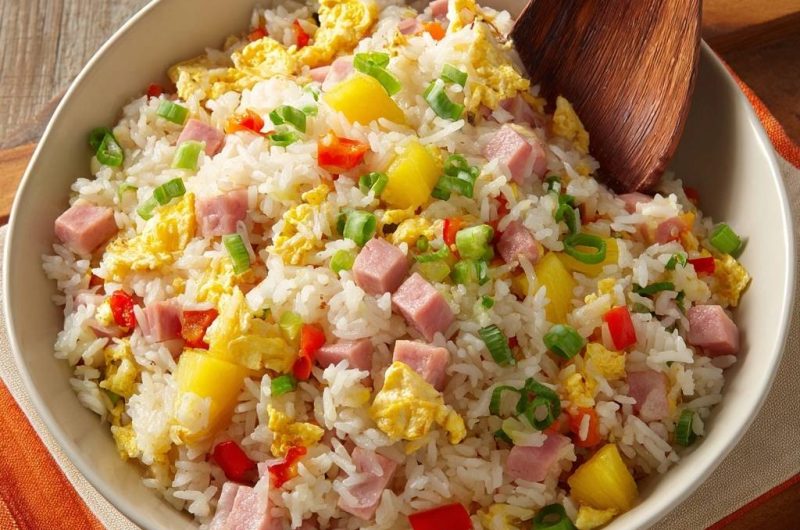
Tropical Pineapple and Ham Fried Rice
Course: Main CourseCuisine: Asian FusionDifficulty: easy4
servings15
minutes10
minutes25
Minutes385
kcalAsian Fusion
Ingredients
4 cups cooked jasmine rice (chilled overnight is best)
1 cup diced ham steak (1/2-inch cubes)
1 cup fresh pineapple chunks
3 large eggs, lightly beaten
1 red bell pepper, finely diced
3 green onions, sliced
2 tablespoons vegetable oil
1 tablespoon light soy sauce (to keep the rice bright and white)
1 teaspoon toasted sesame oil
1/2 teaspoon salt
1/4 teaspoon white pepper
Directions
- The key to avoiding mushy rice starts with the fruit. Heat a large wok or non-stick skillet over high heat with a drizzle of oil. Add the pineapple chunks and sear for 2 minutes until the edges are golden. This caramelizes the sugars and prevents the juice from leaking into the rice later. Remove and set aside.
- In the same pan, sear the diced ham until slightly crispy on the edges. Remove and set aside with the pineapple.
- Wipe the pan if needed, add another tablespoon of oil, and pour in the beaten eggs. Scramble quickly until just set but still soft and in distinct yellow curds. Remove and set aside.
- Crank the heat to its highest setting. Add the remaining oil and the diced red bell pepper. Stir-fry for 30 seconds, then add the chilled rice.
- Use a spatula to break up any large clumps. Spread the rice out and let it sit undisturbed for 30 seconds to develop a slight “toast” before tossing. This high-heat contact creates a barrier that prevents the rice from absorbing too much liquid.
- Season with salt and white pepper. Drizzle the soy sauce and sesame oil around the edges of the pan so it sizzles and evaporates slightly before hitting the rice. This seasons the rice without making it dark or soggy.
- Fold the seared pineapple, ham, and eggs back into the pan. Toss everything together for 1 minute until heated through and the colors are vibrant.
- Garnish with fresh green onions and serve immediately while the texture is at its peak.
Notes
- Using chilled, day-old jasmine rice is essential for the best texture. Searing the pineapple separately prevents excess moisture from making the rice soggy.