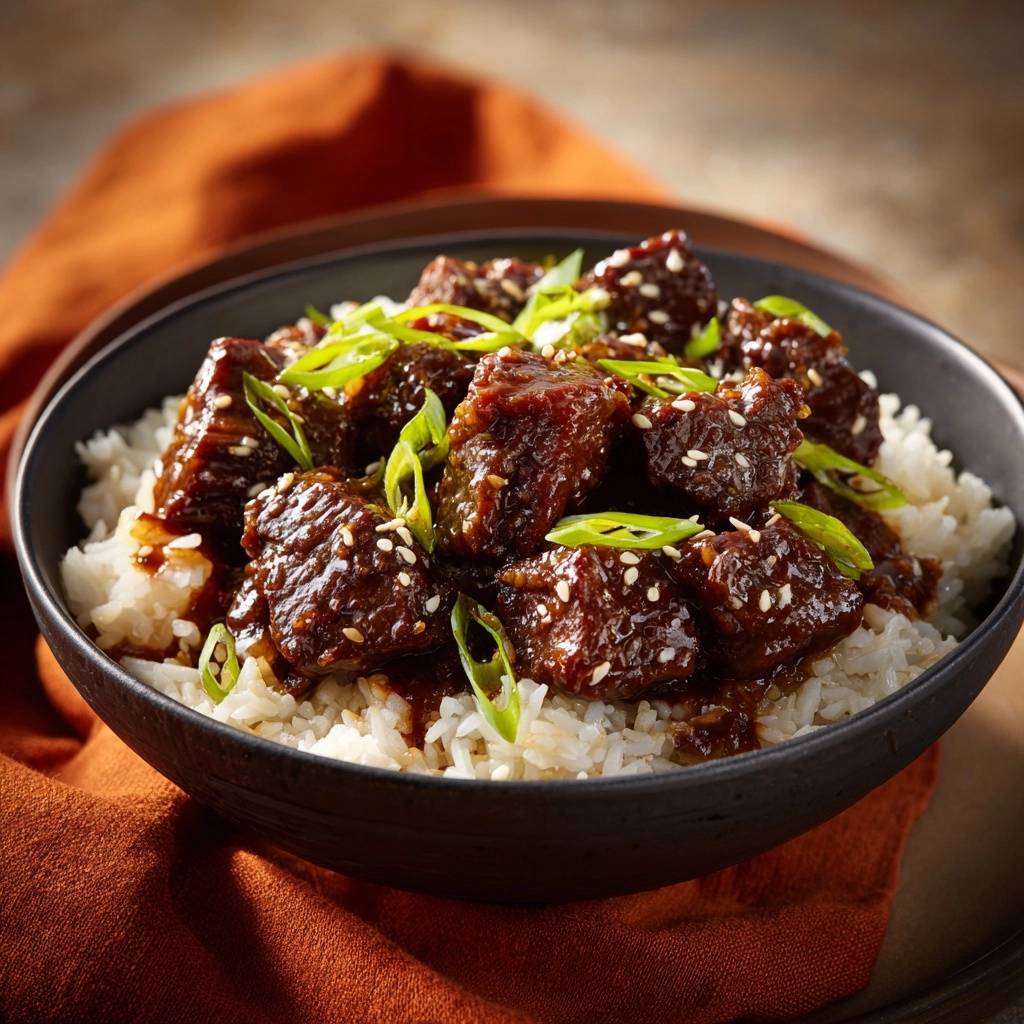
Chewy beef in stir-fries drives you nuts, doesn’t it? Most home cooks battle tough meat that never hits that takeout tenderness. But this Mongolian beef recipe changes everything with a quick cornstarch marinade. You’ll have dinner ready in 20 minutes, fork-tender and sticky-sweet, better than any delivery.
Therefore, you get that glossy sauce clinging to juicy beef cubes. No more disappointment. In addition, it pulls from American-Chinese roots, where Taiwanese immigrants perfected this crowd favorite.
The secret lies in velveting. Toss the beef with cornstarch, soy, and water for just 10 minutes at room temp. It forms a shield that locks in juices during high-heat searing. That’s why this Mongolian beef stays melt-in-your-mouth soft every time.
Origins of Mongolian Beef
Mongolian beef stir-fry captivates with its bold flavors, but it doesn’t hail from Mongolia. Instead, it emerged from Taiwanese-American kitchens. The name nods to Mongolian grill styles, where meats sizzle fast over high flames.
However, in the US, it exploded on takeout menus. Chefs adapted it with sweeter, stickier sauces for Western tastes. This version highlights velveting, a Chinese technique ensuring tender Mongolian beef.
From Taipei to American Tables
Back in the 1950s, Taiwanese immigrants in Taipei created early versions. They brought it to the US, opening restaurants. It’s not Mongolian cuisine at all. Rather, it’s a fusion star, loved for its quick prep and juicy results.
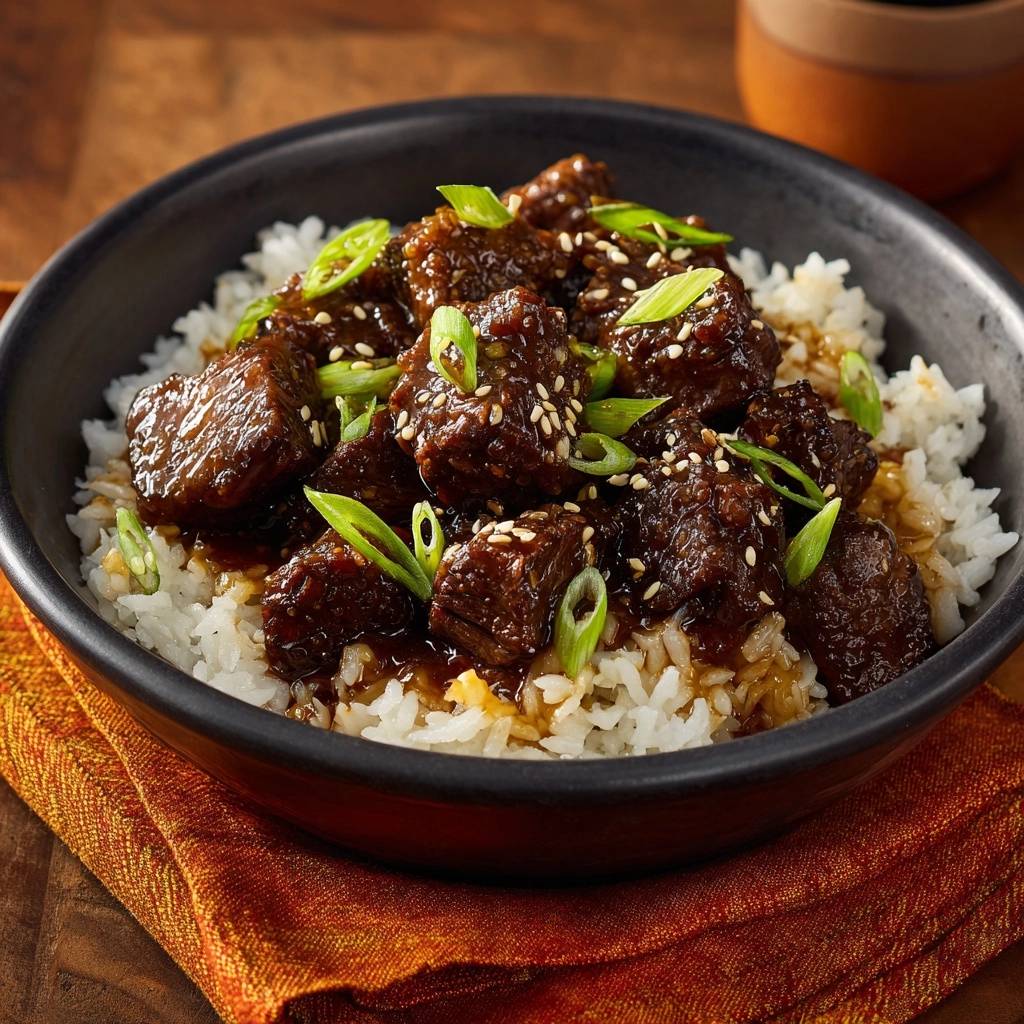
Evolution in Takeout Menus
By the 1980s, Mongolian beef dominated menus. Sauce tweaks added more brown sugar for caramel gloss. Therefore, it became sweeter than authentic styles. You still get that addictive sticky pull today.
Key Ingredients for Mongolian Beef
Start with 1.5 pounds beef chuck or sirloin, cut into 1-inch cubes. These cuts velvet best because they’re flavorful yet tenderize easily. In addition, 1/4 cup low-sodium soy sauce balances salt without overpowering.
Brown sugar, 1/4 cup, drives caramelization for that glossy shine. Fresh ginger, grated, and garlic add punch, way better than powdered. Cornstarch and water create the magic marinade. Sub high-heat vegetable oil if needed.
Green onions and sesame seeds garnish for crunch. Serve over 2 cups cooked white rice. These picks ensure your Mongolian beef shines with authentic gloss and tenderness.
Beef Cuts That Stay Juicy
Chuck offers rich flavor but needs velveting. Sirloin cooks quicker with less fat. Avoid flank unless slicing thin against the grain. Cube at 1-inch for even searing and sauce coating.
Sauce Builders: Soy and Sugar
Brown sugar beats white for deeper gloss and chew. Use low-sodium soy to control salt; regular can overwhelm. Whisk with cornstarch slurry for lump-free thickness.
Velveting Power of Cornstarch
Cornstarch coats beef, forming a barrier at high heat. Mix 1 tablespoon each with soy and water. Exact ratio prevents gumminess. It tenderizes without enzymes or long rests.
Velveting Technique Science
Velveting makes Mongolian beef tenderness legendary. Cornstarch gelatinizes at high heat, sealing juices inside. It traps moisture, preventing dryness. Traditional Chinese methods use egg whites too, but this simplifies it.
Therefore, a 10-minute room-temp marinate works fast. No fridge needed; it activates enzymes gently. Before, beef toughens quick. After, it stays pink and succulent inside.
How Cornstarch Locks in Juices
Molecules swell, creating a shield against overcooking. At 300°F, it crisps outside while keeping inside juicy. pH shifts tenderize proteins. You’ll see browned edges with soft centers.
Marinate Time vs. Toughness
Five minutes softens slightly; 10 minutes perfects it. Fifteen risks toughness from over-tenderizing. Room temp speeds absorption without bacteria risk. Test by feel: beef feels slick and coated.
Equipment for Perfect Mongolian Beef
A carbon steel wok retains heat best for searing. Large skillets work too, 12-inch minimum. High sides prevent splatters. Nonstick fails here; it can’t hit sear temps.
Vegetable oil’s smoke point handles high heat. Heat until shimmering, not smoking. Single-layer batches ensure browning, not steaming. This setup nails Mongolian beef every time.
Best Wok or Skillet Choice
14-inch carbon steel woks excel for tosses. Cast iron skillets hold heat steady. Avoid small pans; they crowd beef. Seasoned surfaces prevent sticking.
Oil and Heat Essentials
Vegetable oil smokes at 450°F, perfect for stir-fries. Test by ripple and faint smoke. Therefore, it crisps without burning aromatics.
Step-by-Step Mongolian Beef Cooking
Active time hits 20 minutes for this Mongolian beef. Marinate first for tenderness. Sear hot and fast. Glossy sauce finishes it. You’ll crave seconds.
Phase 1: Marinate Beef Cubes
Toss 1.5 pounds cubes with 1 tablespoon each soy, cornstarch, water. Coat evenly; let sit 10 minutes. Beef turns slick, ready for juices to lock in.
Phase 2: Whip Up Sticky Sauce
Whisk remaining soy, brown sugar, cornstarch, water. Go slow to avoid lumps. Taste; add pinch sugar if needed. It smells sweet and savory.
Phase 3: High-Heat Sear Batches
Heat 1 tablespoon oil till shimmering. Add beef single-layer; sear 2-3 minutes per side. Brown crust forms via Maillard. Batch if crowded; remove to plate.
Phase 4: Aromatics and Sauce Simmer
Add oil, then garlic and ginger 30 seconds till fragrant. Pour sauce; stir till bubbly and thick, 1 minute. Bubbles slow as it coats spoon.
Phase 5: Toss and Serve Hot
Return beef; toss 1 minute to glaze. Plate over rice. Garnish with green onions, sesame. Steam rises, sauce glistens.
Avoiding Mongolian Beef Pitfalls
Top errors kill tender Mongolian beef. Over-marinate toughens it. Low heat steams instead of sears. Lumpy sauce ruins gloss. Fixes keep it perfect.
Therefore, stick to timings. Velvet always. High heat transforms chewy cuts into bliss.
Overcooking the Meat
Pull at medium-rare pink center. Rest on plate 1 minute. Over 3 minutes per side dries it. Cut one to check juiciness.
Sauce Not Thickening
Slurry extra cornstarch in water if thin. Simmer longer on medium. It clings when ready, not runny.
Chewy Results Fixes
Cut against grain for short fibers. Uniform 1-inch cubes cook even. Velvet skips this issue entirely.
Sides That Pair with Mongolian Beef
Sticky Mongolian beef needs crisp balance. Steamed broccoli cuts richness. Bok choy stir-fry adds bite. Portions serve four generously.
In addition, upgrade rice with veggies. Low-carb cauliflower rice works too. These elevate weeknight meals.
Crispy Vegetable Complements
Stir-fry bok choy with garlic, 3 minutes till crisp-tender. Cucumber salad with sesame dressing refreshes. Snap peas steam fast for crunch.
Rice and Noodle Matches
Jasmine rice soaks sauce best. Brown rice adds chew. Cold sesame noodles contrast sweet heat.
Mongolian Beef Storage Guide
Store leftovers airtight in fridge up to 4 days. Freezer bags hold 3 months without texture loss. Reheat gently to keep tender Mongolian beef intact.
Meal prep in singles. Thaw overnight safely. Pro tip: add water splash when reheating.
Freezing for Later Meals
Portion into zip bags, flatten for space. Freeze flat, thaw in fridge 24 hours or ice bath 1 hour. Avoid microwave thaw; it unevenly heats.
Reheating Without Drying
Stovetop with splash water over medium, 2-3 minutes. Microwave covered, stir halfway. Sauce refresh prevents chewiness.
Mongolian Beef FAQ
Can I Use Flank Steak?
Yes, flank works great for Mongolian beef. Slice thin against the grain before cubing. Marinate same way; it tenderizes beautifully without chew.
Gluten-Free Mongolian Beef?
Swap soy for tamari or coconut aminos. Cornstarch is naturally gluten-free. Sauce thickens same; full flavor intact.
Why Is My Beef Tough?
Skipping velveting or overcooking causes toughness. Sear just 2-3 minutes per side, medium-rare. Always marinate 10 minutes for juice lock-in.
Spicy Mongolian Beef Version?
Add 1 teaspoon chili flakes to marinade or 1 tablespoon sriracha to sauce. Stir in fresh chilies with aromatics. Heat builds without overpowering sweet.
Scale for More Servings?
Double beef and sauce ingredients for eight. Sear in more batches to avoid steaming. Sauce scales perfectly; cook time adds 5 minutes.
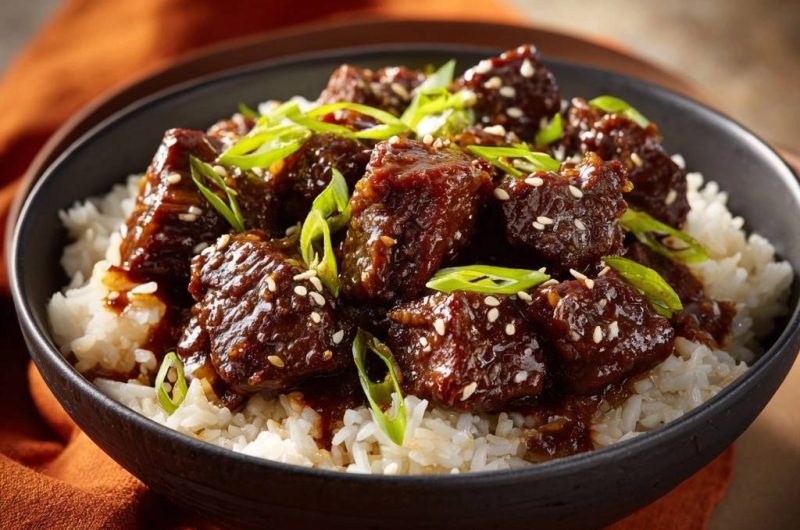
Mongolian Beef
Course: Main CourseCuisine: Chinese-AmericanDifficulty: easy4
servings15
minutes15
minutes30
Minutes550
kcalChinese-American
Ingredients
1.5 pounds beef chuck or sirloin, cut into 1-inch cubes
1/4 cup soy sauce
1/4 cup brown sugar
2 tablespoons cornstarch
2 tablespoons water
3 green onions, sliced (plus extra for garnish)
1 tablespoon sesame seeds
2 cups cooked white rice
2 tablespoons vegetable oil
3 garlic cloves, minced
1 tablespoon grated fresh ginger
Directions
- In a bowl, toss beef cubes with 1 tablespoon soy sauce, 1 tablespoon cornstarch, and 1 tablespoon water. Mix well to coat evenly. Let marinate for 10 minutes at room temperature. This velveting technique tenderizes the beef by forming a protective barrier that keeps it juicy during cooking, solving the
Notes
- The velveting technique with cornstarch tenderizes the beef by forming a protective barrier that keeps it juicy during cooking.