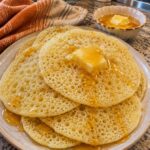
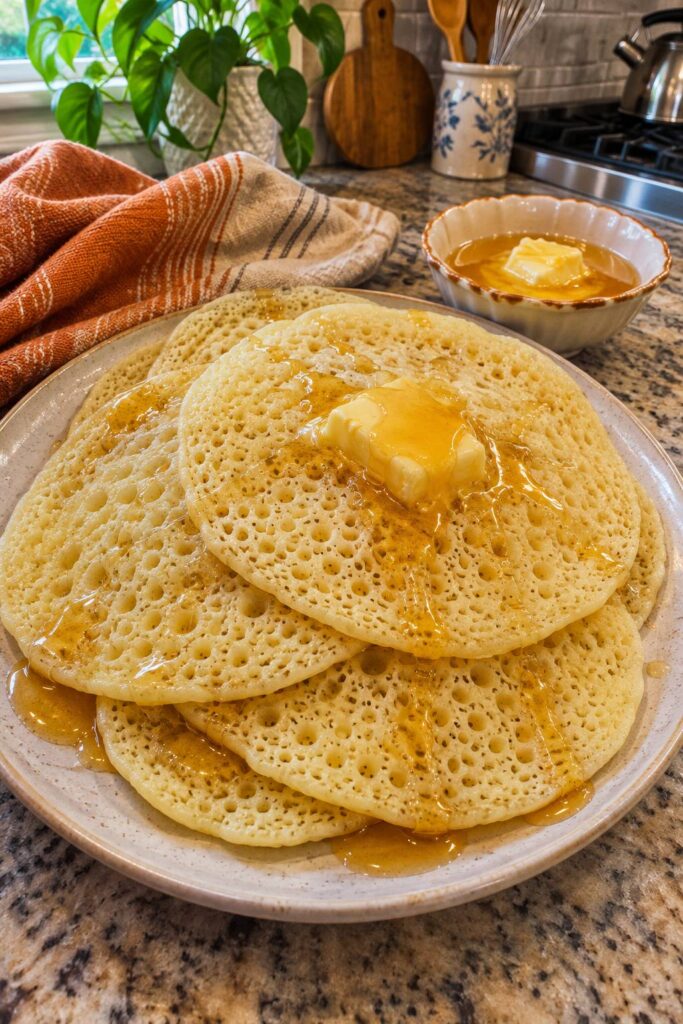
These Moroccan honeycomb pancakes look far more impressive than the effort they take. The batter is built from fine semolina and all-purpose flour, along with yeast and a little sugar, and it is thin enough to pour like heavy cream. As each pancake cooks, bubbles rise through the surface and set into a dense pattern of small holes, creating a pale, lacy finish. Served warm with honey butter and a drizzle of honey, they make a cozy breakfast that feels special without being fussy.
This guide focuses on the choices that shape the final result, from how you mix the batter to how you handle the pan. Understanding why each step matters will help you troubleshoot if your first batch looks different from what you expected, and it will make the whole process feel calmer and more intuitive.
Why Semolina and Flour Work Together
Fine semolina gives these pancakes their pale color, gentle bite, and sturdy structure. All-purpose flour balances it, so the texture stays soft enough to eat comfortably rather than turning gritty. Because the two grains behave differently, measuring both carefully matters. A small shift in the ratio can change how the batter spreads and how well the surface holds its pattern.
The leavening is what creates the honeycomb effect. Instant yeast produces the bubbles that travel up through the batter, while baking powder adds extra lift during cooking. Sugar gives the yeast a little something to work with and adds mild sweetness that pairs well with the honey later on.
Getting the Batter Texture Right
Aim for a batter that is thin and pourable, similar to heavy cream. If it looks thick, the pancakes will cook up dense and the holes will be small or missing. Warm water and milk help the yeast become active, but liquid that is too hot can damage the yeast, so you want a comfortable warmth that is never hot to the touch.
After mixing, cover the bowl with a clean towel and let the batter rest in a warm spot until bubbles form on the surface. Whisk gently just before cooking to recombine everything. You want to blend the batter without deflating the air the yeast has built, so a light hand is the goal.
Cooking Only One Side
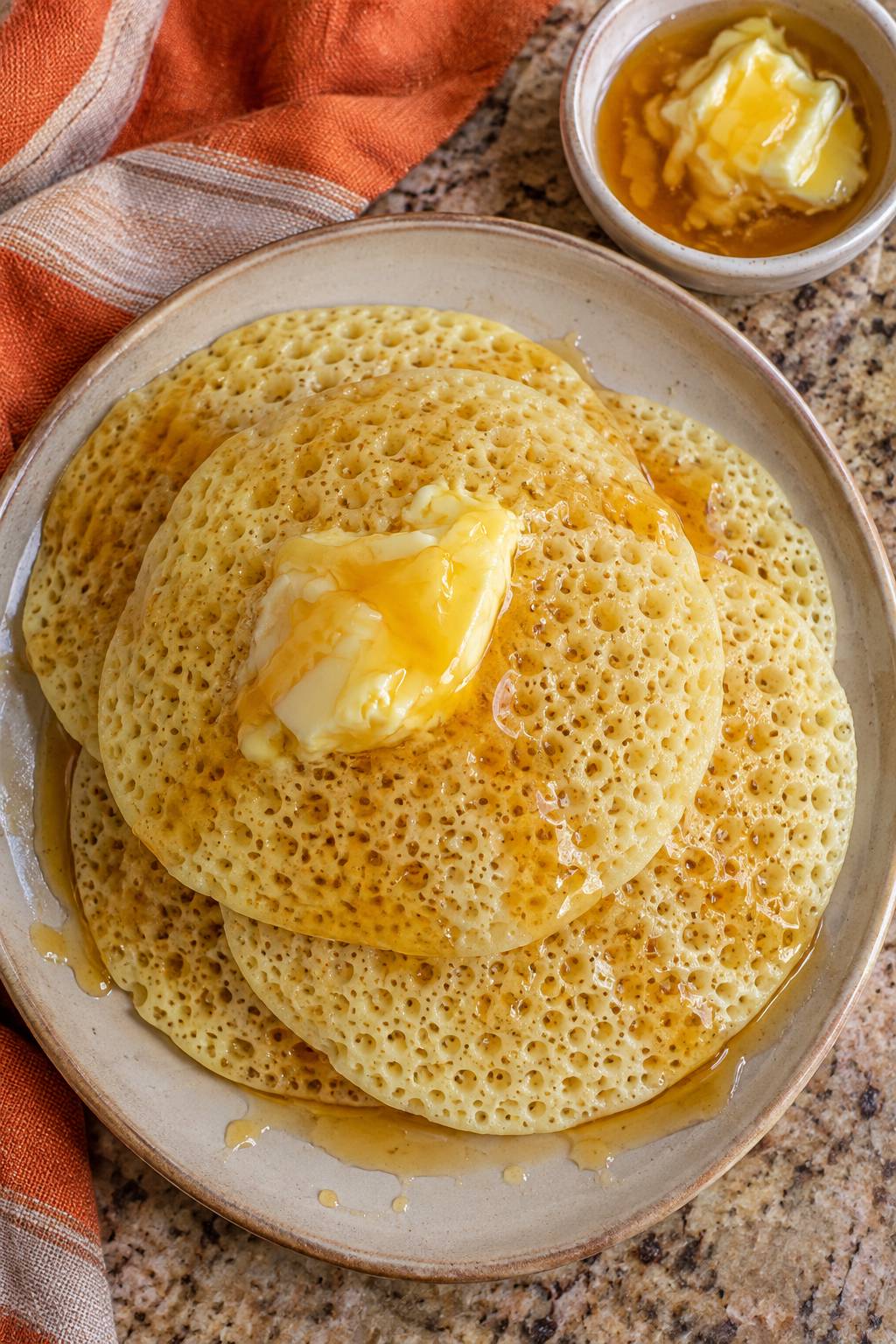
The most important habit is patience. Those bubbles rise through the top and set as holes while the bottom cooks, so flipping would collapse the pattern you worked to create. Keep the pancake in the pan until the top is covered in holes and looks dry and matte. That visual cue tells you it is ready to slide onto a plate.
Your pan matters too. A nonstick skillet helps the pancake release cleanly, and a thin film of oil wiped on with a folded paper towel is plenty. Pour the batter into the center and tilt the pan so it spreads into an even circle. Do not be discouraged if the first one looks uneven, since most cooks find their rhythm after a few rounds.
Finishing with Honey Butter
Softened butter, honey, and a pinch of flaky salt beaten together with a fork make a simple spread that melts into every hole. The salt keeps the sweetness in check, and the fork gives you a smooth, spreadable texture without any special equipment. Spoon the mixture into a small dish so it is ready when the pancakes come off the pan.
Serve these right away, while they are warm and their surface is at its most delicate. Add a spoonful of honey butter to each pancake, then finish with a drizzle of honey for shine and extra sweetness. If you have leftovers, a dry nonstick skillet is the gentlest way to bring them back to softness.
Frequently Asked Questions
Why can’t I flip these honeycomb pancakes?
Flipping would deflate the bubbles that the yeast and baking powder push up through the batter, flattening the pattern you want on top. Cooking only one side lets those holes set while the surface stays dry and matte. Once the top looks right, slide the pancake onto a plate and keep going.
What should I do if my batter does not bubble?
First, check the temperature of your water and milk, since liquid that is too hot can stop the yeast from working. Then give the batter more time in a warm spot until bubbles form on the surface. Whisk gently before cooking so the texture stays light and pourable.
How do I make the honey butter smooth?
Start with softened butter, then beat it with the honey and flaky salt using a fork until everything is fully combined and smooth. Softened butter blends easily, so you do not need a mixer. Spoon the finished mixture into a small serving dish before you start cooking.
Moroccan Honeycomb Pancakes with Honey Butter
Course: BreakfastCuisine: MoroccanDifficulty: Easy4
servings15
minutes30
minutes500
kcal1
hour15
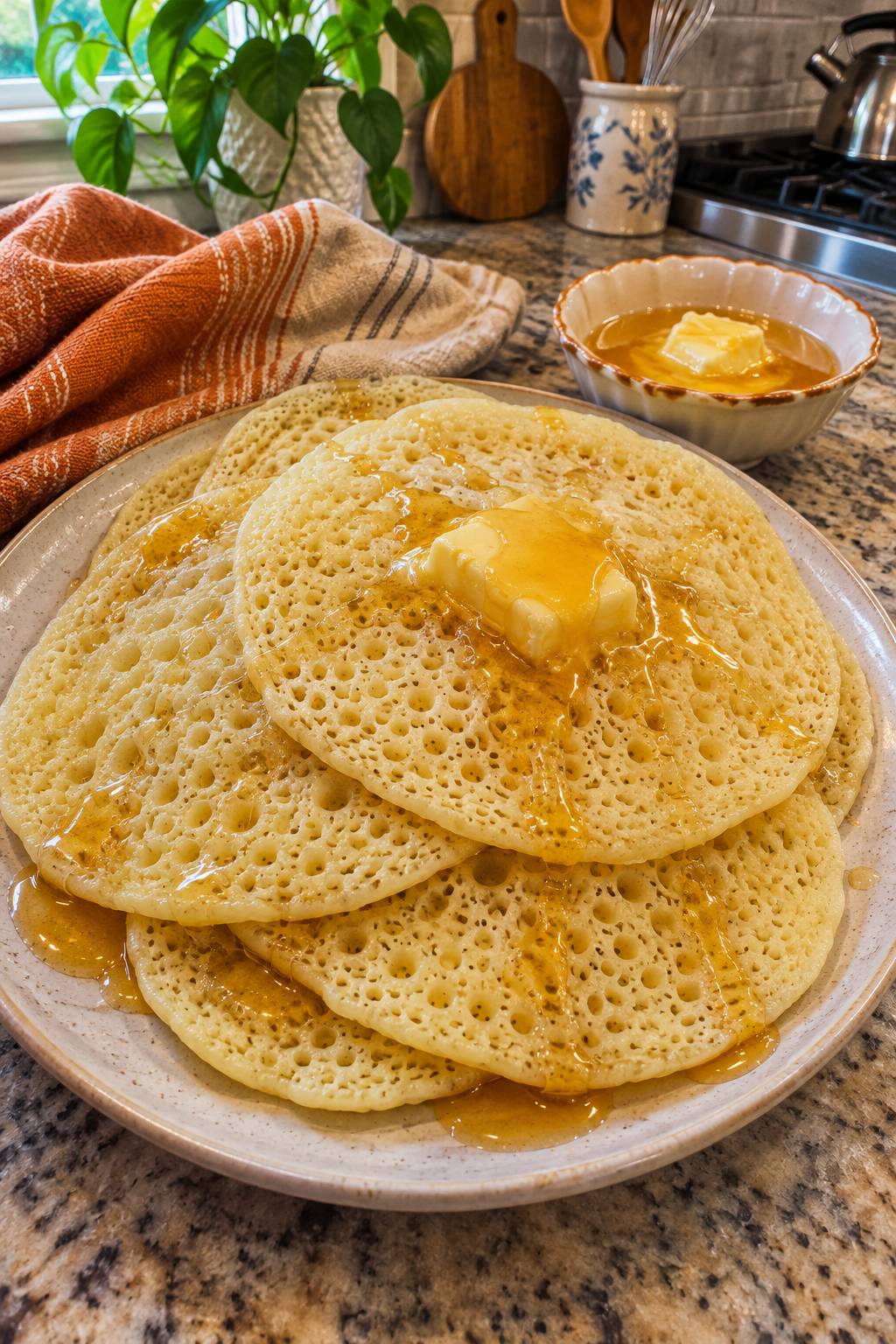
minutesThin, pale pancakes made from semolina and flour are cooked on one side only, so the yeast bubbles set into a dense pattern of small holes on top. They are served warm with honey butter and a drizzle of honey.
Ingredients
- Pancakes
1 cup fine semolina (about 5.5 oz)
1 cup all-purpose flour (about 4.5 oz)
1 tsp sugar
1/2 tsp fine salt
2 1/4 tsp instant yeast (1 packet)
1 tsp baking powder
1 1/2 cups warm water (about 110°F)
1 cup warm whole milk (about 110°F)
1 tsp neutral oil, for the pan
- Honey butter and topping
4 tbsp unsalted butter, softened
2 tbsp honey
Pinch flaky salt
1/4 cup honey, for drizzling
Directions
- Pancakes
- In a large bowl, whisk together the semolina, flour, sugar, fine salt, instant yeast and baking powder until evenly combined.
- Add the warm water and warm milk and whisk until smooth. The batter should be thin and pourable, similar to heavy cream.
- Cover the bowl with a clean towel and let the batter rest in a warm spot for 30 minutes, until bubbles form on the surface. Whisk gently to recombine before cooking.
- Heat a 10-inch nonstick skillet over medium-low heat. Wipe the pan with a thin film of oil using a folded paper towel.
- Pour about 1/3 cup of batter into the center of the pan and tilt the pan gently so the batter spreads into a 7-inch circle.
- Cook without flipping until the top is covered in holes and looks dry and matte, about 2 1/2 minutes. Slide the pancake onto a plate.
- Repeat with the remaining batter, wiping the pan with oil as needed, to make 12 pancakes total. Stack them on the plate as they finish.
- Honey butter
- In a small bowl, beat the softened butter, 2 tbsp honey and flaky salt with a fork until smooth and fully combined. Spoon the honey butter into a small serving dish.
- Serving
- Top the warm pancakes with a spoonful of honey butter, then drizzle with the 1/4 cup honey and serve right away.
Notes
- Cook the pancakes on one side only. The bubbles from the yeast and baking powder rise through the top surface and set as holes, so flipping would deflate the pattern.
- Warm liquid around 110°F helps the yeast become active. Liquid that is much hotter can kill the yeast, and the batter may not rise.
- Leftover pancakes keep in an airtight container in the refrigerator for up to 3 days. Warm them in a dry nonstick skillet over medium-low heat, about 30 seconds per side, to soften them again.