Flat cookies got you down? You’ve creamed the butter just right, but they spread into sad little pancakes in the oven. This orange glazed cookies recipe fixes that fast with a simple 30-minute chill. You’ll get tall, mounded beauties bursting with fresh citrus zest every time.
So why does this work wonders? Most recipes skip the chill, and the dough warms up, causing butter to melt too quick and gluten to toughen. However, chilling firms the fat and relaxes those proteins. In addition, the orange juice and zest add bright flavor without extra liquid that could make things soggy.
Here’s the pro tip that seals the deal: use softened but not melted butter for creaming. It traps air bubbles perfectly, and when chilled, those hold shape during baking. Oh man, the first bite’s zesty crunch into soft center? Pure bliss.
Why Chilling Transforms Orange Glazed Cookies
Gluten Relaxation in Cookie Dough
You mix the dough, and gluten starts forming right away. If you bake immediately, that tension makes cookies spread thin and chewy-tough. However, a 30-minute chill in the fridge lets those proteins relax fully.
Picture this: rested dough holds its scoop shape, puffing up tall instead of flattening. Therefore, your orange glazed cookies stay soft-mounded with crisp edges. It’s science you can taste.
Fat Firming for Shape Retention
Softened butter creams fluffy, but at room temp, it melts fast in the oven. Fat leaks out, spreading the dough flat. Chilling firms it up solid.
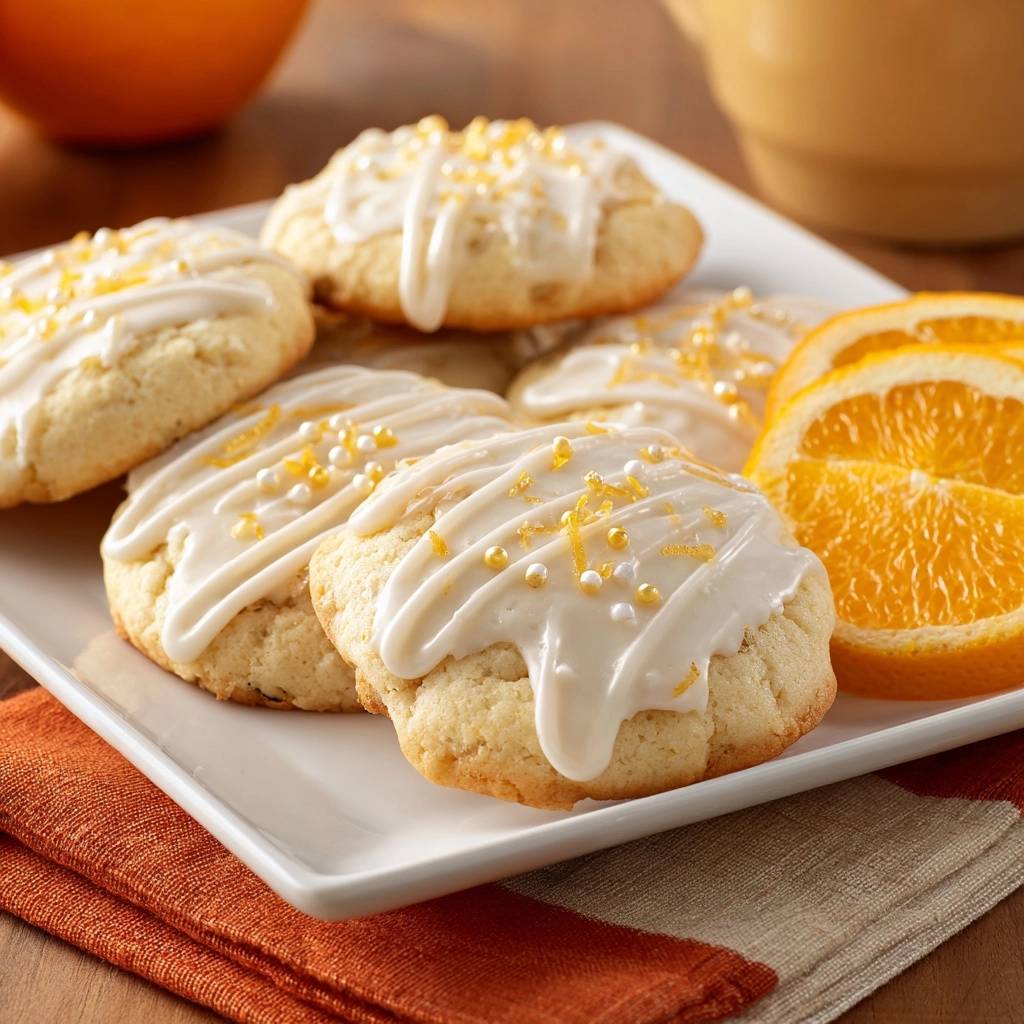
In addition, this locks structure so cookies mound perfectly. We use unsalted butter here too. That keeps the clean orange zest shining without extra saltiness muddying things.
Result? Tall stacks that dunk like a dream in milk.
Key Ingredients for Orange Glazed Cookies
Flour and Leaveners Balance
Grab 2 1/4 cups all-purpose flour, 1 teaspoon baking powder, 1/2 teaspoon baking soda, and 1/2 teaspoon salt. This combo lifts tenderly without turning cakey. Baking powder gives quick rise; soda reacts with orange juice’s acid for extra puff.
Whisk them even first. That distributes leaveners so no bitter pockets. Sift if lumps hide.
Citrus Zest and Juice Power
Zest from 2 oranges packs oils for punchy flavor; 1/4 cup fresh juice adds tang without sogginess. Bottled juice tastes flat and cooked, so squeeze real ones. Meanwhile, 3/4 cup sugar, 1/2 cup butter, 1 egg, and 1 teaspoon vanilla build the creamy base.
Room-temp egg blends smooth. Excess juice? It’ll make dough sticky and spread more. Balance is key for that zesty pop.
Glaze Components for Shine
Mix 2 cups powdered sugar, 3 tablespoons fresh orange juice, and zest from 1 orange. This hits drizzle-thick, not runny. Powdered sugar dissolves smooth for glossy shine.
Sprinkle pearl sugar on top right away. It adds crunch contrast. Stick with fresh citrus; it keeps flavors pure and bright.
Essential Tools for Baking Orange Glazed Cookies
Mixer and Bowl Precision
A stand mixer creams butter and sugar fluffy in 2 minutes flat. Hand mixers work but tire your arm faster. Line sheets with parchment; nothing sticks.
Wire racks cool cookies even. They crisp edges while centers stay soft.
Scoop and Measuring Accuracy
Use a tablespoon scoop for uniform balls. Space them 2 inches apart so they don’t merge. A digital scale weighs flour precisely; cups pack too dense sometimes.
Even sizes bake together perfect.
Phase 1: Mixing Orange Glazed Cookie Dough
Whisking Dry Ingredients First
In a medium bowl, whisk flour, baking powder, baking soda, and salt. Do this first to break lumps. Set aside so they blend even later.
Look for a light, airy mix. No clumps means tender cookies.
Creaming Butter and Wet Additions
Beat softened butter and sugar in a large bowl till pale and fluffy, about 2 minutes. Add egg, orange juice, zest, and vanilla. Scrape sides; beat till smooth.
Don’t overbeat here. It keeps dough tender, not tough. Smell that citrus bloom? You’re on track.
Phase 2: Combining and Chilling Dough
Gradual Dry-to-Wet Incorporation
Add dry ingredients to wet in thirds, mixing low speed just till dough forms. Stop immediately. Overmixing wakes gluten early.
Dough feels soft but firm, slightly sticky. Perfect for chilling.
Refrigerate for 30 Minutes Minimum
Cover the bowl tight and chill at least 30 minutes. Fat firms; gluten chills out. Overnight deepens flavors even more.
Pro tip: portion dough balls before chilling for grab-and-bake ease later.
Phase 3: Shaping, Baking, Cooling
Scooping Even Dough Balls
Preheat to 350°F. Scoop tablespoon balls, roll lightly, place 2 inches apart. Don’t flatten; chill keeps the mound.
Chilled dough scoops clean, no mess.
Bake to Set Edges Only
Bake 10-12 minutes till edges set golden but centers stay soft. Cool on sheet 5 minutes; they firm up. Then racks finish the job.
This stabilizes shape. Undercook slightly for chewy bliss.
Phase 4: Crafting Zesty Orange Glaze
Whisking to Drizzle Consistency
Whisk powdered sugar, juice, and zest till smooth and drizzle-thick. Test on a spoon; it should ribbon slow. Drizzle over cooled cookies.
Too thick? Add juice drop by drop. Shine sets fast.
Topping for Texture Contrast
Sprinkle pearl sugar right after glaze. It sticks before drying. Crunch pops against soft cookie and slick glaze.
Let set 10 minutes. Store airtight after.
Avoiding Pitfalls in Orange Glazed Cookies
Overmixing Leads to Density
Overmixed dough develops tough gluten. Cookies turn dense, not tender. Mix just till flour vanishes.
Fix next batch: pulse in food processor if worried. Light hand wins.
Skipping Chill Causes Spreading
No chill means butter melts quick; cookies flatten wide. Always fridge 30 minutes minimum. Check oven temp too; too hot speeds spread.
Chilled? They mound tall every time.
Glaze Too Thin or Thick
Thin glaze soaks in; thick won’t drizzle. Balance sugar and juice precisely. Spoon test fixes it quick.
Flavor Twists on Orange Glazed Cookies
Lemon or Lime Zest Swaps
Swap orange zest for lemon or lime. Use same juice amount; acidity matches. Glaze follows suit for tart twist.
Fresh keeps brightness. Cookies stay tall and zingy.
Spice or Nut Additions
Fold in 1/2 teaspoon cinnamon or ginger with dries. Add chopped pecans to dough for nutty crunch. Glaze pairs perfect.
Don’t overdo; spotlight stays on citrus.
Storage and Make-Ahead for Orange Glazed Cookies
Freezing Unglazed Dough Balls
Scoop balls, freeze flat on sheet, then bag up to 3 months. Bake straight from freezer; add 2 minutes time. No thawing needed.
Fresh-baked taste anytime.
Glazed Cookie Shelf Life
Store airtight at room temp up to 3 days. Fridge keeps them 1 week; soften before eating. Freeze glazed with parchment layers up to 1 month; thaw slow.
Pairing Orange Glazed Cookies
Classic Milk Dunk Ritual
Whole milk softens the cookie just right without total sogginess. Almond milk works too for nutty vibe. Dunk and savor that citrus burst.
Tea and Coffee Matches
Earl Grey’s bergamot boosts orange zest. Espresso cuts the sweet with bold roast. Perfect for holiday cookie swaps too.
Frequently Asked Questions on Orange Glazed Cookies
Can I Skip the Chill Step?
No way; skipping chill lets butter melt too fast, spreading cookies flat and thin. That 30 minutes firms fat and relaxes gluten for tall mounds. Rushed? Pop in freezer 15 minutes, but fridge is best.
Substitute Gluten-Free Flour?
Yes, use a 1:1 gluten-free blend. Add 1/2 teaspoon xanthan gum if not included for structure. Chill longer, maybe 45 minutes; they bake up tender and tall still.
Make Vegan Orange Glazed Cookies?
Swap egg for 3 tablespoons aquafaba, butter for plant-based stick, juice stays. Cream same way; chill essential. They hold shape and zing just as bright.
Why Use Pearl Sugar Topping?
Pearl sugar adds crisp crunch that doesn’t melt in glaze. It contrasts soft cookie perfectly. No pearl? Turbinado or coarse white works for bite without dissolving.
Scale Recipe for Larger Batches?
Doubles or triples easy; yield about 24 per batch, so 48 or 72. Mix in bigger bowl, chill dough longer (1 hour) for big batches. Bake same temp, rotate sheets midway.

Orange Glazed Cookies
Course: DessertCuisine: AmericanDifficulty: easy24
cookies20
minutes12
minutes60
Minutes150
kcalAmerican
Ingredients
2 1/4 cups all-purpose flour
1 teaspoon baking powder
1/2 teaspoon baking soda
1/2 teaspoon salt
3/4 cup granulated sugar
1/2 cup unsalted butter, softened
1 large egg
1/4 cup fresh orange juice
Zest of 2 oranges
1 teaspoon vanilla extract
For the glaze:
2 cups powdered sugar
3 tablespoons fresh orange juice
Zest of 1 orange
Pearl sugar or white nonpareils for topping
Directions
- In a medium bowl, whisk together flour, baking powder, baking soda, and salt. Set aside.
- In a large bowl, beat butter and granulated sugar until light and fluffy, about 2 minutes. Add egg, orange juice, orange zest, and vanilla; beat until combined.
- Gradually add dry ingredients to wet, mixing just until a dough forms. Do not overmix.
- Cover dough and chill in the refrigerator for at least 30 minutes. This crucial step relaxes the gluten and firms the fat, preventing spreading for perfect mounded cookies.
- Preheat oven to 350 degrees F. Line baking sheets with parchment paper.
- Scoop tablespoon-sized balls of dough, roll lightly, and place 2 inches apart on sheets. Bake 10 to 12 minutes until edges are set but centers are soft. Cool on sheets 5 minutes, then transfer to racks.
- For glaze, whisk powdered sugar, orange juice, and zest until smooth and drizzleable. Drizzle over cooled cookies, then sprinkle with pearl sugar. Let set 10 minutes. Serve with milk.
Notes
- Chilling the dough for at least 30 minutes is crucial to prevent spreading and achieve perfect mounded cookies.