Why Pappardelle Pairs with Beef Ragu
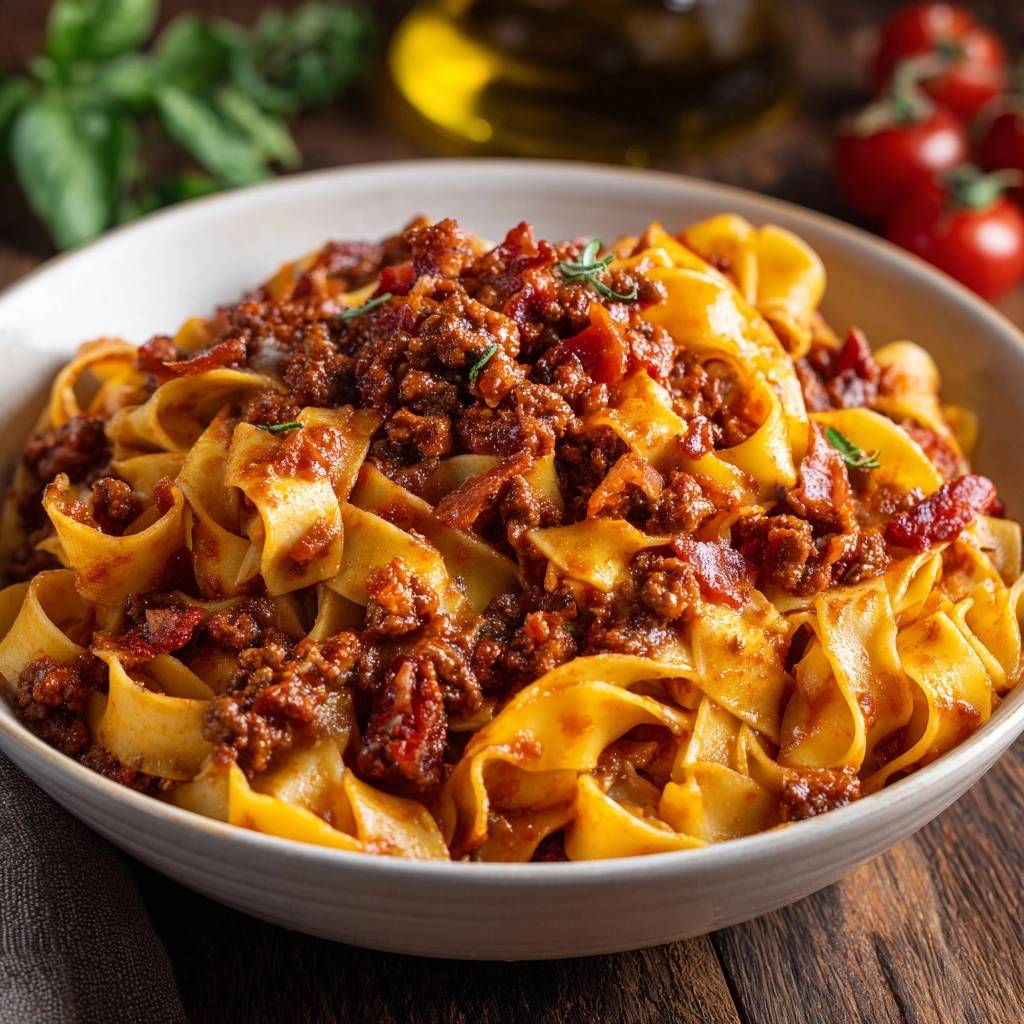
Picture wide, silky ribbons of pappardelle cradling a thick, meaty ragu that clings without a drop of watery sauce in sight. That’s the magic here. In Italy, these broad noodles hail from Tuscany, designed to scoop up hearty sauces like this beef ragu.
However, shortcuts often lead to soupy disasters. You know the kind, where liquid pools under your pasta. This recipe fixes that with a high-heat browning step that evaporates moisture right from the start.
Therefore, you’ll get that restaurant-thick texture every time. The secret lies in undisturbed browning of the beef. It creates a flavorful crust while driving off excess water, so your sauce coats the noodles perfectly. Oh man, the rich aroma alone will have everyone hovering in the kitchen.
History of Pappardelle Beef Ragu
Ragu traces its roots to Tuscany, where hunters simmered wild game into rich stews. Over time, it evolved into a beef version perfect for draping over pappardelle. Those wide ribbons developed alongside to hold the chunky, flavorful sauce during family feasts.
In addition, Sunday gatherings in Italy featured ragu as the star. Ground beef simplifies the tradition for home cooks today. You still capture that deep, slow-cooked depth without hunting wild boar.
Now, modern kitchens embrace it fully. Ground beef renders fat for richness, and the simmer builds complexity. It’s comfort food that transports you straight to Tuscany with every bite.
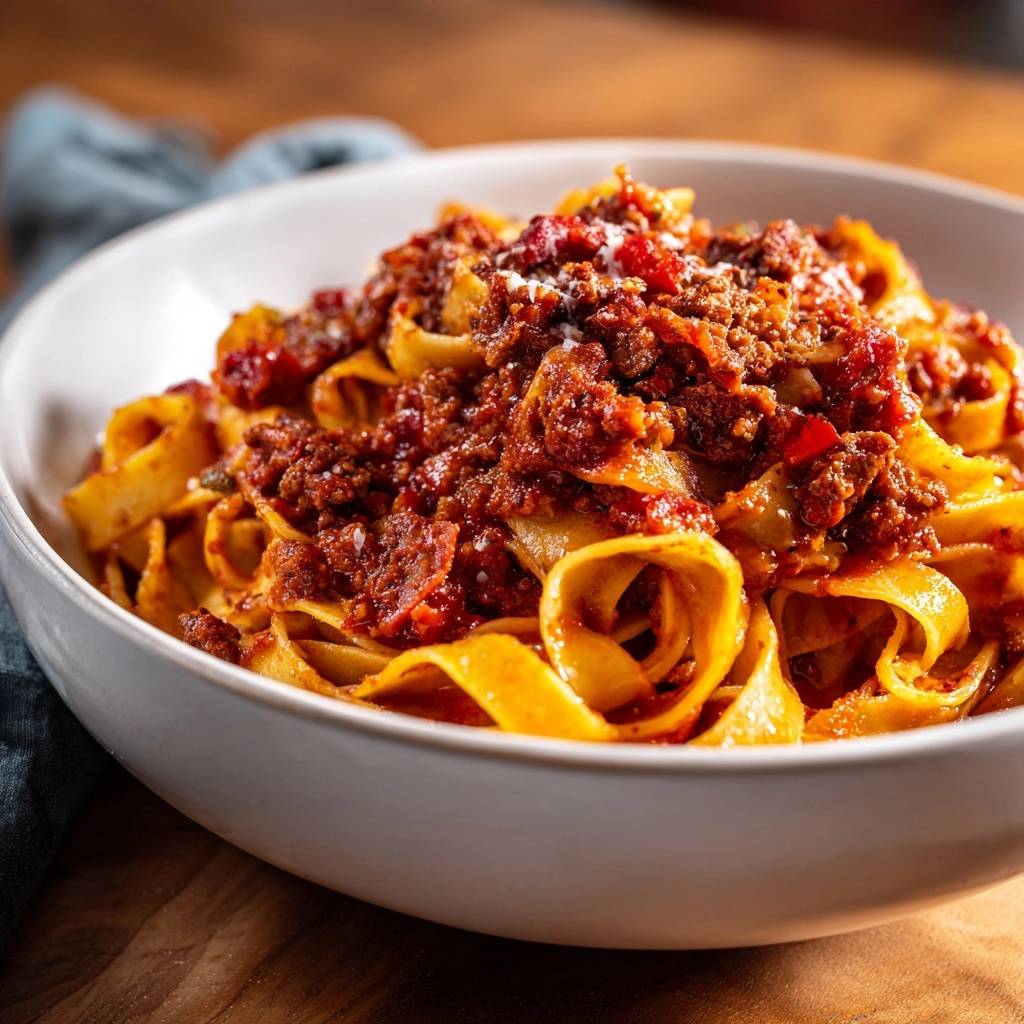
From Tuscan Hunters to Home Kitchens
Back in the 18th century, Tuscan ragu started as a hunter’s stew with game meats. Ingredients shifted to beef as it became more accessible. Pappardelle’s width grew to match these hearty sauces, ensuring every noodle got coated.
Today, ground beef makes it weeknight-friendly. You lose none of the soul. The long simmer melds flavors just like nonna’s version.
Key Ingredients for Pappardelle Beef Ragu
Start with 1 pound ground beef for 4 servings. Its fat renders into the sauce, building richness without greasiness. Choose 80/20 for the best balance; leaner cuts dry out too fast.
Next, 1/4 cup tomato paste concentrates umami. Cook it until it darkens for caramelized depth. Then, a 28-ounce can of crushed tomatoes provides body and acidity to balance the beef.
Fresh thyme sprigs add earthiness during the simmer. However, tear in basil at the end for bright pops of flavor. Use good olive oil, about 3 tablespoons total, since it carries all those aromas. Salt and pepper go in early on the meat to draw out moisture.
Ground Beef Selection Tips
Go for 80/20 ground beef. The fat content renders perfectly, thickening the sauce as it evaporates. Leaner meat steams instead of browns, leaving you with watery results.
Tomato Paste vs. Crushed Tomatoes
Tomato paste caramelizes for intense flavor. Crushed tomatoes give the sauce its chunky body. San Marzano crushed tomatoes boost authenticity with their sweetness.
Science of Non-Watery Beef Ragu
The Maillard reaction happens when you brown the beef at medium-high heat, around 350-400°F. It evaporates the meat’s natural water, creating a crusty base. No more diluted sauce.
Collagen in the beef breaks down into gelatin during the low simmer, about 200°F. This gives clingy texture. Finally, the uncovered finish lets steam escape, reducing to spoon-coating thickness.
Common boiled methods trap moisture, leading to soup. Here, physics works for you. High heat first, then low and slow wins every time.
Browning Meat’s Moisture Magic
High-heat searing drives off water fast. Let the beef sit undisturbed 4-5 minutes for a deep crust. You’ll see browned edges and no pink; that’s your cue to stir.
Essential Tools for Beef Ragu
Grab a wide skillet for maximum evaporation surface. A heavy-bottomed pot works for pasta boiling. Use a wooden spoon to break up the beef without scratching.
Skip non-stick; cast iron retains heat for even browning. It promotes that Maillard magic. Everything simmers evenly, no hot spots.
Skillet Size for Sauce Reduction
A 12-inch skillet prevents crowding. Meat browns instead of steams. More surface area means faster evaporation and thicker sauce.
Step-by-Step Pappardelle Beef Ragu Build
We’ll build in phases for foolproof results. First, brown the beef undisturbed. That crust is key to thickness.
Phase 1: Browning Beef Base
Heat 2 tablespoons olive oil in your skillet until shimmering, medium-high. Add 1 pound ground beef, season with salt and pepper. Cook undisturbed 4-5 minutes for a browned underside, then stir another 4-5 until no pink remains. Drain excess fat if it pools. The kitchen fills with that irresistible savory smell.
Phase 2: Tomato Integration Simmer
Stir in 1/4 cup tomato paste; cook 2 minutes until it darkens and smells sweet. Add crushed tomatoes and thyme. Simmer partially covered on low for 1 hour, stirring now and then. Flavors meld beautifully.
Phase 3: Thickening and Pasta Finish
Uncover the last 15 minutes. Simmer until sauce coats a spoon, no pooling. Meanwhile, boil salted water for 12 ounces pappardelle, 8-10 minutes al dente. Reserve 1/2 cup water.
Phase 4: Combining Pappardelle Ragu
Toss drained pasta with ragu over low heat. Add pasta water bit by bit for silkiness. Drizzle last tablespoon oil, top with torn basil.
Avoiding Pappardelle Beef Ragu Pitfalls
Don’t stir the beef too soon; it releases water and stays pale. Overcook pasta, and it turns mushy, unable to hold sauce. Skip draining fat, and the ragu gets oily.
For blandness, taste after simmering and adjust salt. If sauce separates, whisk in a splash of pasta water. Pro tip: Simmer a day ahead for deeper flavor.
Fixing Watery Ragu Texture
Simmer uncovered longer on low. As a last resort, stir in 1 teaspoon cornstarch slurry. It thickens without altering taste. Always better to prevent with proper browning.
Make-Ahead Beef Ragu Strategies
Make the ragu a day ahead; flavors intensify in the fridge up to 3 days. Portion into airtight containers. Reheat gently on stovetop with a lid, stirring in water if thick.
Freezing works great for 3 months. Thaw overnight, then simmer fresh pasta. Pro tip: Freeze flat in bags for quick thawing.
Freezing Pappardelle Beef Ragu
Cool ragu completely, then bag in portions. Thaw in fridge, reheat low and slow. Cook pappardelle fresh; it freezes poorly.
Pairing Sides with Pappardelle Beef Ragu
Balance the richness with a crisp arugula salad and lemon vinaigrette. Garlic bread soaks up every bit. Roasted broccoli adds char and earthiness.
Chianti cuts through the beef beautifully. Keep sides light to let the ragu shine.
Beef Ragu Flavor Variations
Add chopped mushrooms for umami depth; they soak up sauce. Swap thyme for oregano for a bolder herb note. A handful of spinach wilts in at the end for green freshness.
Pro tip: Stir in a grated carrot during simmer for subtle sweetness. Keeps it versatile for picky eaters.
Pappardelle Beef Ragu FAQ
Can I Use Different Pasta?
Yes, tagliatelle holds sauce well with its similar width. Pappardelle’s broad ribbons excel at trapping thick ragu. Spaghetti slips off, leaving watery pools; stick to wide shapes for best results.
How Long Does Ragu Last?
Store ragu in an airtight container in the fridge for up to 4 days. It freezes beautifully for 3 months; cool fully first to avoid ice crystals. Reheat on stovetop low; discard if it smells off or shows mold.
Substitute Ground Turkey?
Ground turkey works but it’s leaner, so add an extra tablespoon olive oil during browning. Boost flavor with more tomato paste or a dash of Worcestershire. It won’t be as rich as beef, but still clings nicely.
Why Uncovered Simmer End?
Uncovering the last 15 minutes lets steam escape, evaporating excess liquid. Sauce reduces to coat-a-spoon thickness. Covered fully traps moisture, leading to soupy results every time.
Vegetarian Beef Ragu Option?
Use lentils or finely chopped mushrooms for meaty texture. Brown them first like beef to evaporate water. Add extra tomato paste and soy sauce for umami; simmer same way for thick, satisfying results.
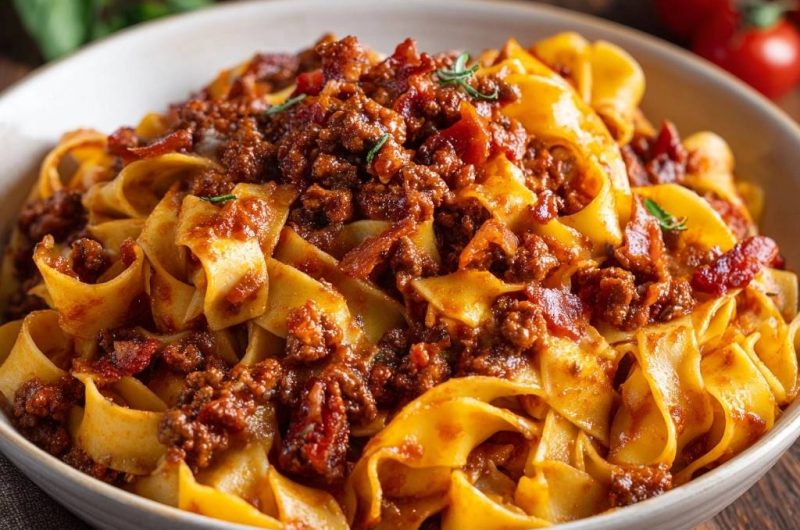
Pappardelle with Beef Ragu
Course: Main CourseCuisine: ItalianDifficulty: easy4
servings15
minutes1
hour60
Minutes650
kcalItalian
Ingredients
1 pound ground beef
12 ounces pappardelle pasta
1 (28-ounce) can crushed tomatoes
1/4 cup tomato paste
3 tablespoons olive oil
2 sprigs fresh thyme
Handful fresh basil leaves, torn
Salt and black pepper to taste
Directions
- Heat 2 tablespoons olive oil in a large skillet over medium-high heat until shimmering. Add ground beef, breaking it up with a spoon. Season with salt and pepper. Cook undisturbed for 4-5 minutes until browned on one side, then stir and cook 4-5 more minutes until fully browned and no pink remains. This high-heat browning evaporates the meat’s natural water, preventing a watery base, thats the never-watery sauce secret. Drain any excess fat if needed.
- Stir in tomato paste and cook 2 minutes until darkened and fragrant. Add crushed tomatoes and thyme sprigs. Bring to a simmer.
- Reduce heat to low, cover partially, and simmer 1 hour, stirring occasionally. Uncover for the last 15 minutes, simmering until sauce thickens to coat the back of a spoon, no liquid pooling. Remove thyme sprigs. Taste and adjust salt/pepper.
- Meanwhile, bring a large pot of salted water to a boil. Cook pappardelle al dente per package, about 8-10 minutes. Reserve 1/2 cup pasta water, then drain.
- Toss pasta with ragu in skillet over low heat, adding reserved pasta water 1 tablespoon at a time if needed for silky cling. Drizzle with remaining 1 tablespoon olive oil and top with torn basil. Serve hot.
Notes
- High-heat browning evaporates the meat’s natural water, preventing a watery base—that’s the never-watery sauce secret. Adjust simmering time for desired thickness.