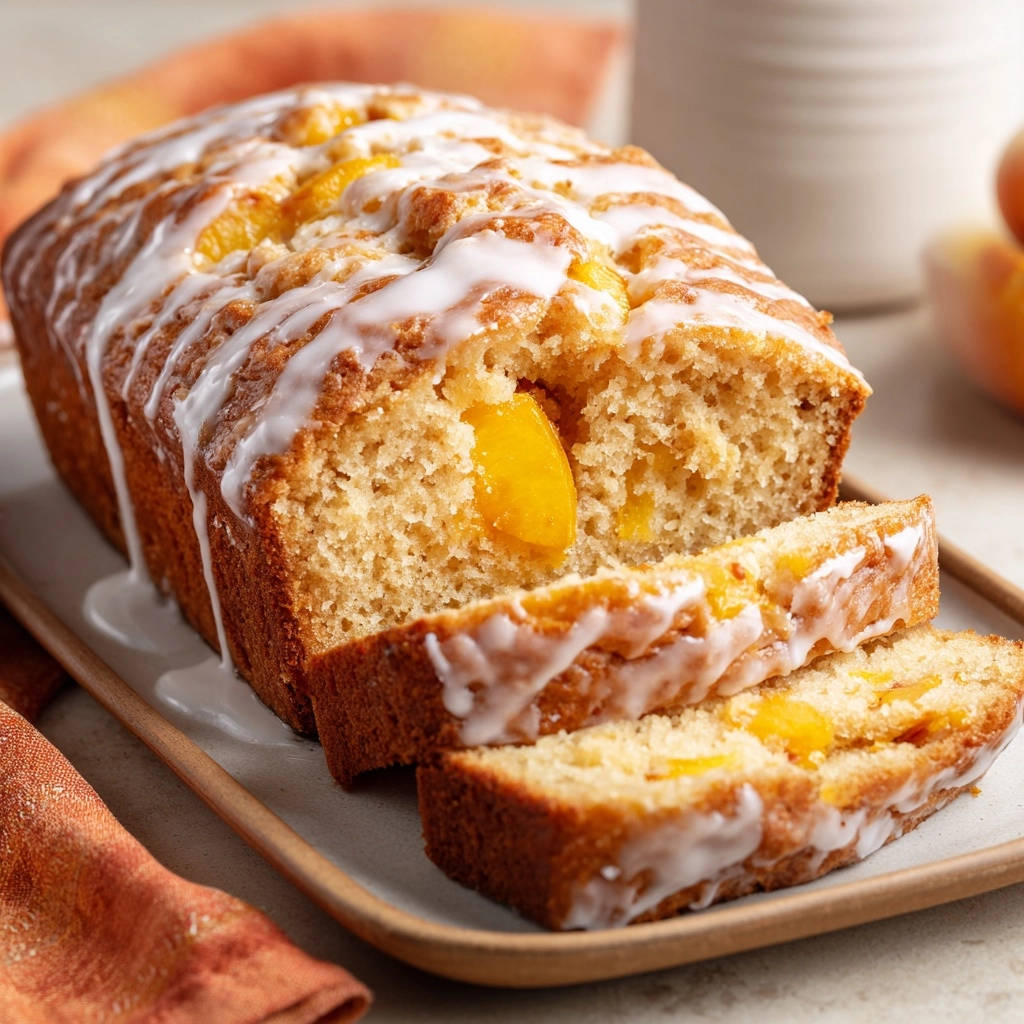
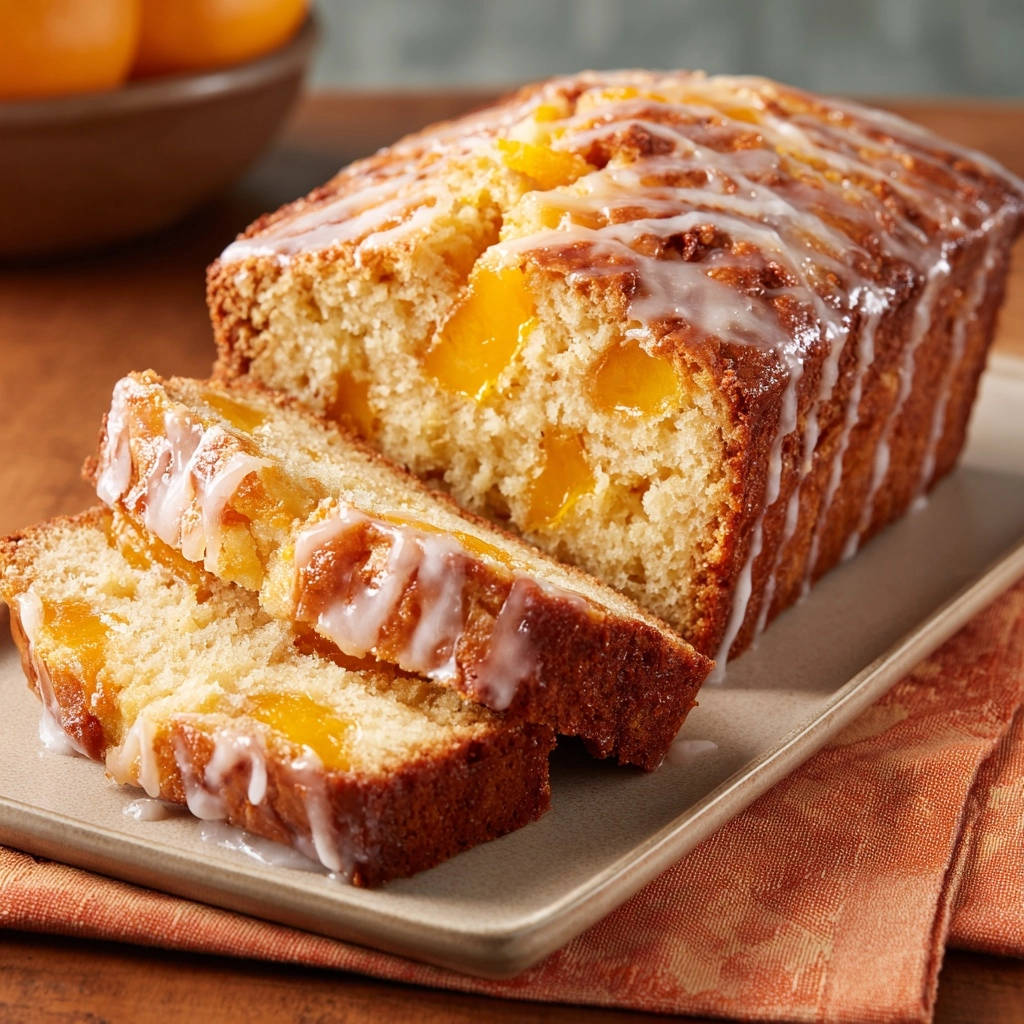
There’s nothing quite like slicing into a homemade quick bread, only to discover all the delicious fruit has sunk to the bottom. I’ve been there countless times, but after years of experimenting, I’ve cracked the code to making a truly Perfect Peach Loaf where every juicy piece stays beautifully suspended.
This recipe isn’t just about delicious flavor; it’s about a simple, reliable technique that guarantees a moist, tender crumb bursting with perfectly distributed peaches every single time. Get ready to bake a loaf that looks as incredible as it tastes, ideal for sharing or savoring yourself.
Why This Perfect Peach Loaf Will Become Your Go-To Recipe
This isn’t just another peach loaf recipe; it’s a testament to how a simple technique can elevate your baking. We focus on creating a stunning loaf that solves common baking frustrations, making it an instant favorite.
The Game-Changing Trick: No More Sinking Peaches!
The secret lies in a quick flour coating for your diced peaches. This creates a barrier, allowing them to cling to the batter and distribute evenly, ensuring every slice boasts vibrant, juicy peach pieces.
Achieving a Perfectly Moist and Tender Crumb
Our careful method of combining ingredients prevents overmixing, which often leads to dry, tough loaves. The result is an incredibly moist, delicate crumb that melts in your mouth.
Effortless Elegance: Simple Ingredients, Stunning Results
With readily available ingredients and straightforward steps, you can achieve a bakery-quality loaf at home. The finished loaf, with its luscious glaze, looks incredibly impressive yet requires minimal fuss.
Gathering Your Baking Arsenal: Essential Ingredients
Great ingredients are the foundation of a great loaf. Here’s a closer look at what you’ll need and why each component is important for your Perfect Peach Loaf.
Flour Power: The Loaf’s Structural Backbone
All-purpose flour provides the primary structure for our quick bread. Dividing the flour ensures we have just enough to properly coat the peaches without altering the batter’s consistency, preventing that frustrating sinking effect.
Sweeteners: Balancing Brightness and Depth
Granulated sugar offers essential sweetness and contributes to the loaf’s moist texture and golden-brown crust. Powdered sugar forms the smooth, elegant glaze, adding a final touch of sweetness and visual appeal.
The Juicy Stars: Selecting and Prepping Your Peaches
Choose ripe, fragrant peaches that yield slightly to gentle pressure for the best flavor. Peel and dice them into uniform 1/2-inch pieces to ensure even distribution and cooking throughout the loaf.
Remember the critical step: tossing these diced peaches with the reserved flour. This light coating is your guarantee against sinking, allowing those juicy fruit bits to stay suspended in every slice.
Dairy & Leavening: Creating That Light, Airy Texture
Unsalted butter, softened to room temperature, is crucial for creaming, which incorporates air into the batter, leading to a lighter loaf. Milk adds moisture and tenderness, creating a rich mouthfeel.
Baking powder is our leavening agent, creating the necessary lift and fluffy texture. Ensure it’s fresh for optimal results; old baking powder can result in a dense loaf.
Flavor Boosters: Vanilla and Salt’s Subtle Impact
Vanilla extract enhances all the other flavors, adding a warm, aromatic note that complements the peaches beautifully. A touch of salt balances the sweetness and brings out the full depth of flavor in the loaf.
Essential Tools for Baking Success
Loaf Pan (9×5 inch): This standard size is perfect for achieving the classic loaf shape. Preparing it by greasing and flouring, or lining with parchment paper, ensures your beautiful creation slides out easily.
Electric Mixer: An electric mixer, either hand-held or stand, is invaluable for creaming the butter and eggs until light and fluffy. This step incorporates crucial air for a tender crumb.
Mixing Bowls: You’ll need one medium bowl for dry ingredients and a large one for wet ingredients and combining the batter. This keeps your workspace organized and efficient.
Whisk & Spatula: A whisk ensures dry ingredients are evenly combined, while a flexible spatula is perfect for gentle folding, especially when incorporating the delicate floured peaches.
Wire Rack: Essential for proper cooling, a wire rack allows air to circulate around the entire loaf. This prevents condensation and keeps the bottom from becoming soggy, ensuring an even texture.
Wooden Skewer or Toothpick: Your most reliable tool for checking doneness. When inserted into the center of the loaf, it should come out clean, indicating the loaf is fully baked through.
Crafting Your Perfect Peach Loaf: A Step-by-Step Guide
- Prepare Your Workspace and Pan:
Preheat your oven to 350°F (175°C).
Lightly grease and flour a 9×5 inch loaf pan, or line it with parchment paper for easy removal. This preparation ensures a perfect release after baking, preserving your loaf’s beautiful shape.
- Whisk the Dry Ingredients:
In a medium bowl, thoroughly whisk together 1 ¾ cups of the all-purpose flour, granulated sugar, baking powder, and salt. Setting this aside ensures all leavening agents are evenly distributed, contributing to an even rise.
- Cream the Wet Base:
In a large bowl, use an electric mixer to cream the softened unsalted butter until it’s light and fluffy, about 2-3 minutes. This step incorporates air, contributing significantly to the loaf’s tender crumb and overall texture.
Beat in the large eggs one at a time, ensuring each is fully incorporated before adding the next. Finish by mixing in the vanilla extract until just combined, being careful not to overbeat.
- Combine Wet and Dry Alternately:
Add half of the reserved dry ingredients to the wet mixture and mix on low speed until just combined. Overmixing at this stage can develop gluten too much, leading to a tough loaf.
Pour in the milk and mix until it’s fully incorporated. Then, add the remaining dry ingredients and continue mixing on low speed until the batter is smooth, but stop as soon as it’s combined. This gentle approach maintains the tender texture.
- The Anti-Sinking Peach Trick:
In a separate small bowl, toss your peeled, pitted, and diced peaches with the remaining ¼ cup of all-purpose flour. This crucial step creates a light coating that helps suspend the peaches evenly throughout the batter, preventing them from sinking to the bottom during baking.
- Gently Fold in the Peaches:
Using a spatula, gently fold the floured peaches into the batter. Distribute them evenly throughout the mixture to ensure every slice gets a burst of sweet, juicy peach flavor and a beautiful appearance.
- Fill and Smooth:
Pour the batter into your prepared loaf pan and use the spatula to smooth the top. This helps create an even rise and a uniformly golden-brown crust, making your loaf look professionally baked.
- Bake to Golden Perfection:
Bake for 50-60 minutes, or until a wooden skewer inserted into the center of the loaf comes out clean. If the top begins to brown too quickly, loosely tent it with aluminum foil during the last 15-20 minutes of baking to prevent over-browning while the interior finishes cooking.
- Cooling Protocol:
Let the loaf cool in the pan for 10 minutes. This allows it to firm up and prevents it from breaking when you move it. Carefully invert the loaf onto a wire rack to cool completely, which is essential before glazing and slicing for optimal texture.
- Whip Up the Luscious Glaze:
Once the loaf is fully cooled, prepare the glaze. In a small bowl, whisk together the powdered sugar and 2 tablespoons of milk until smooth. If the glaze is too thick, add a tiny bit more milk, a half teaspoon at a time, until it reaches a perfect drizzle-able consistency.
- Glaze and Serve:
Drizzle the prepared glaze evenly over the cooled peach loaf. Allow the glaze to set for a few minutes before slicing and serving your magnificent creation. This allows the glaze to firm up slightly for a clean cut.
Baker’s Best-Kept Secrets for a Flawless Loaf
Elevate your peach loaf from good to truly extraordinary with these expert tips, ensuring a perfect bake every time.
Don’t Overmix! This is the golden rule for quick breads. Overmixing develops gluten, leading to a tough, dense loaf rather than a tender one. Mix only until ingredients are just combined, especially after adding flour.
Room Temperature Ingredients are Key: Softened butter and eggs at room temperature emulsify better with other ingredients. This creates a smoother, more uniform batter and a finer crumb in the finished loaf.
Testing for Doneness: Beyond the wooden skewer test, gently press the top of the loaf with your finger. If it springs back, it’s likely done. If it leaves an indentation, it needs a few more minutes in the oven.
Patience with Cooling: Resist the urge to slice a warm loaf! Cooling completely allows the internal structure to set properly and prevents a gummy texture. It also ensures the glaze sets beautifully.
Vary Your Peaches: While fresh, ripe peaches are unbeatable, frozen diced peaches (thawed and patted very dry) can work well in a pinch. You can also experiment with other stone fruits like nectarines or even a mix of berries for a different twist, like in these classic peach pie recipes.
Solving Common Loaf Woes: Expert Solutions
Even seasoned bakers encounter hiccups. Here are solutions to common issues you might face when making your peach loaf.
Why Did My Peaches Still Sink?
Even with the flour trick, peaches that are too wet or too large can still sink. Ensure your diced peaches are patted very dry with paper towels before tossing them in flour, and aim for consistently small dice, around 1/2 inch, to help them suspend better.
My Loaf is Dry and Crumbly!
A dry loaf is usually a sign of overbaking. Every oven is different, so start checking for doneness at the 50-minute mark and trust the skewer test. For precision, an internal temperature of 200-205°F (93-96°C) using an instant-read thermometer indicates perfect doneness.
Additionally, overmixing the batter can lead to a dry, tough texture by over-developing gluten. Mix until just combined to keep your loaf tender.
The Top of My Loaf Is Too Brown!
If you notice the crust browning excessively before the center is cooked through, tenting the loaf loosely with aluminum foil during the last 15-20 minutes of baking will protect the top. This allows the inside to cook completely without the exterior becoming too dark or burnt.
Your Perfect Peach Loaf Questions Answered
Can I Use Frozen Peaches Instead of Fresh?
Yes, absolutely! Just ensure they are fully thawed and then thoroughly patted dry with paper towels to remove any excess moisture. Too much water can thin the batter and negatively impact the loaf’s texture, making it slightly soggy.
How Can I Make This Loaf Gluten-Free?
You can successfully substitute the all-purpose flour with a high-quality 1:1 gluten-free baking blend that contains xanthan gum. While the texture might be slightly different, the results should still be delicious and moist. Always check the specific brand’s recommendations for quick breads for the best outcome.
Can I Reduce the Sugar Content?
While this recipe is balanced for flavor and moisture, you can slightly reduce the granulated sugar by ¼ cup without significantly affecting the loaf’s structure. However, reducing it too much might impact the overall moisture and desirable golden-brown crust. For the glaze, you can simply make less or omit it entirely if you prefer less sweetness.
How Do I Store Leftover Peach Loaf?
Store your Perfect Peach Loaf tightly wrapped in plastic wrap or in an airtight container at room temperature for up to 3 days to maintain its freshness. For longer storage, consider our make-ahead and freezing tips below.
Serving & Savoring Your Peach Masterpiece
This Perfect Peach Loaf is truly versatile. Enjoy it in many delightful ways and ensure its freshness lasts.
Irresistible Serving Suggestions
This pistachio loaf cake counterpart is delightful on its own for a simple treat, but it also pairs beautifully with a dollop of freshly whipped cream, a scoop of vanilla bean ice cream, or a light dusting of cinnamon. It’s perfect for breakfast with your morning coffee, a leisurely brunch, or a sweet afternoon pick-me-up.
Optimal Storage for Lasting Freshness
To keep your loaf fresh and delicious, store it at room temperature, wrapped tightly in plastic wrap or aluminum foil, or in an airtight container for up to 3-4 days. Proper storage helps maintain its tender crumb and prevent it from drying out.
Make-Ahead & Freezing Tips
This peach loaf freezes wonderfully! Once completely cooled and before glazing, wrap it tightly in plastic wrap, then in aluminum foil, and freeze for up to 3 months. Thaw overnight at room temperature before glazing and serving. You can also freeze individual slices for convenient, quick treats, just like you would with a moist banana bread.
Ready to Impress? Share Your Perfect Peach Loaf Masterpiece!
Now that you’re armed with the secret to perfectly suspended peaches and all the tips for a flawless bake, it’s time to create your own “Perfect Peach Loaf.” This recipe is more than just a quick bread; it’s a testament to how simple techniques can elevate humble ingredients to extraordinary heights.
We can’t wait to see your beautiful creations! Share your photos and tag us on social media, or tell us about your experience in the comments below. Happy baking!

Perfect Peach Loaf
Course: BakingCuisine: American CuisineDifficulty: easy8
servings15
minutes50
minutes60
minutesAmerican Cuisine
Ingredients
2 cups all purpose flour, divided
1 cup granulated sugar
2 teaspoons baking powder
1/2 teaspoon salt
1/2 cup (1 stick) unsalted butter, softened
2 large eggs
1 teaspoon vanilla extract
1/2 cup milk
2 medium peaches, peeled, pitted, and diced
For the glaze:
1 cup powdered sugar
2-3 tablespoons milk
Directions
- Preheat your oven to 350 degrees Fahrenheit. Lightly grease and flour a 9×5 inch loaf pan, or line with parchment paper.
- In a medium bowl, whisk together 1 and 3/4 cups of the all purpose flour, granulated sugar, baking powder, and salt. Set aside.
- In a large bowl, using an electric mixer, cream together the softened butter until light and fluffy. Beat in the eggs one at a time, then mix in the vanilla extract until well combined.
- Add half of the dry ingredients to the wet ingredients and mix on low speed until just combined. Pour in the milk and mix until incorporated. Add the remaining dry ingredients and mix until the batter is smooth, being careful not to overmix.
- In a separate small bowl, toss the diced peaches with the remaining 1/4 cup of all purpose flour. This is the key step to prevent sinking! Make sure each peach piece is lightly coated.
- Gently fold the floured peaches into the batter using a spatula. Distribute them evenly throughout the mixture.
- Pour the batter into the prepared loaf pan and smooth the top.
- Bake for 50-60 minutes, or until a wooden skewer inserted into the center of the loaf comes out clean. If the top browns too quickly, you can tent it loosely with aluminum foil during the last 15-20 minutes of baking.
- Let the loaf cool in the pan for 10 minutes before carefully transferring it to a wire rack to cool completely.
- Once the loaf is fully cooled, prepare the glaze. In a small bowl, whisk together the powdered sugar and 2 tablespoons of milk until smooth. If the glaze is too thick, add a tiny bit more milk, a half teaspoon at a time, until it reaches a drizzleable consistency.
- Drizzle the glaze over the cooled peach loaf and let it set before slicing and serving.
Notes
- The key to preventing peaches from sinking is to toss them in 1/4 cup of flour before folding into the batter. If the top browns too quickly, tent loosely with aluminum foil during the last 15-20 minutes of baking.