
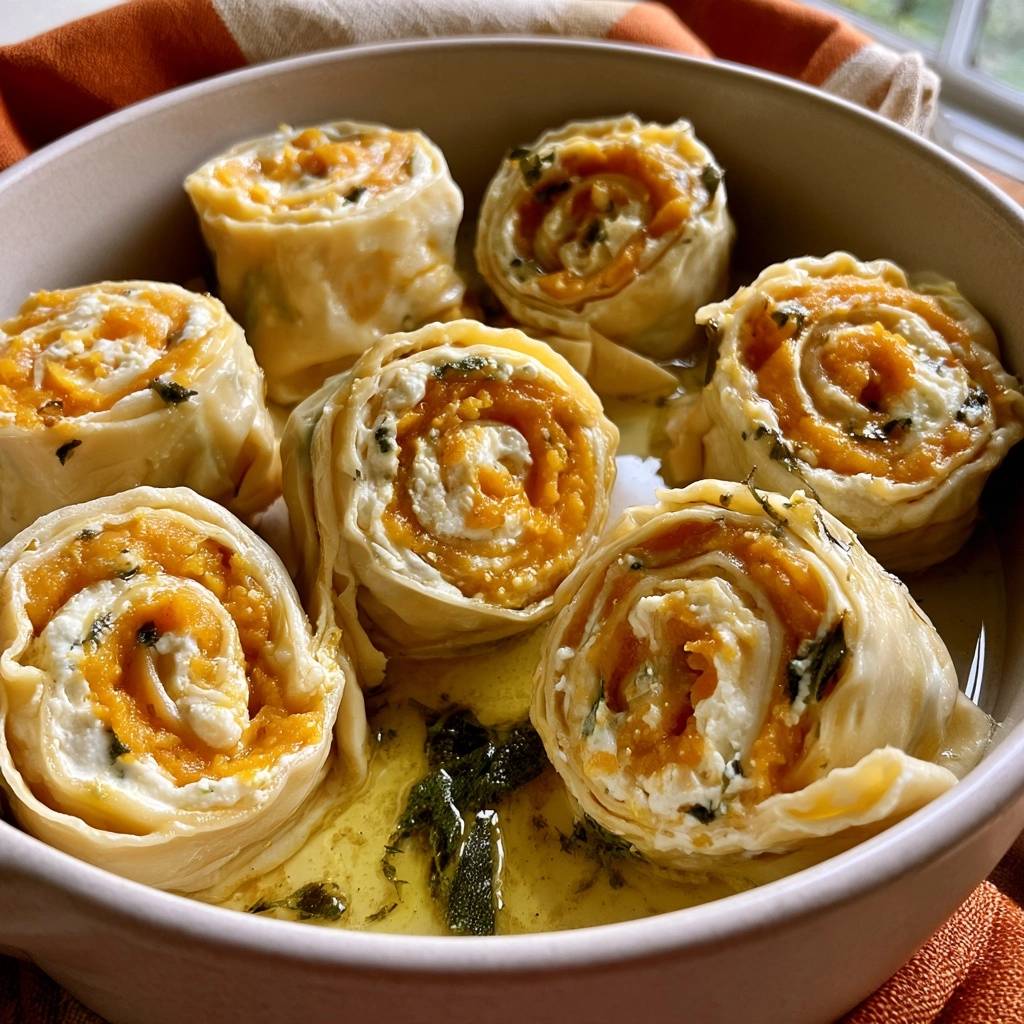
Pumpkin and ricotta rotolo turns familiar lasagna noodles into soft spirals filled with a savory, gently seasoned mixture. As the rolls bake, chicken broth warms the filling while golden sage butter coats the tops and gathers in the dish.
The finished rotolo is tender inside, lightly browned on top, and fragrant with fresh sage. A few details make the difference: use plain pumpkin puree, keep the noodles pliable, and pour the broth around the rolls so their tops stay ready for the butter.
Choose plain pumpkin and a smooth filling
Canned pumpkin puree gives the filling a mellow, earthy flavor and soft texture. Check the label to make sure you have plain puree rather than pumpkin pie filling; the latter includes sugar and spices that would pull this savory dish in a sweeter direction. Part-skim ricotta keeps the mixture creamy, while grated Parmesan adds a salty, savory note.
The egg helps bind the ricotta and pumpkin as they bake. Finely chopped fresh sage and ground nutmeg season the filling without overwhelming it, and black pepper adds a little warmth. Stir until the mixture looks smooth and evenly combined, so each noodle gets a consistent layer rather than pockets of seasoning or cheese.
Keep the noodles flexible enough to roll
Cook the lasagna noodles until they bend easily but still hold their shape. If they are undercooked, they may crack as you roll them; if they become too soft, they are more likely to tear or stick together. Drain them gently and lay them flat on a clean kitchen towel or parchment, with space between the noodles.
Spread the filling in an even layer and leave a border at the far short end. That open edge gives the filling room to settle as you roll and helps keep it from squeezing out. Roll each noodle snugly into a spiral, then set it seam side down so it is less likely to loosen in the baking dish.
Let the sage butter and broth do their jobs
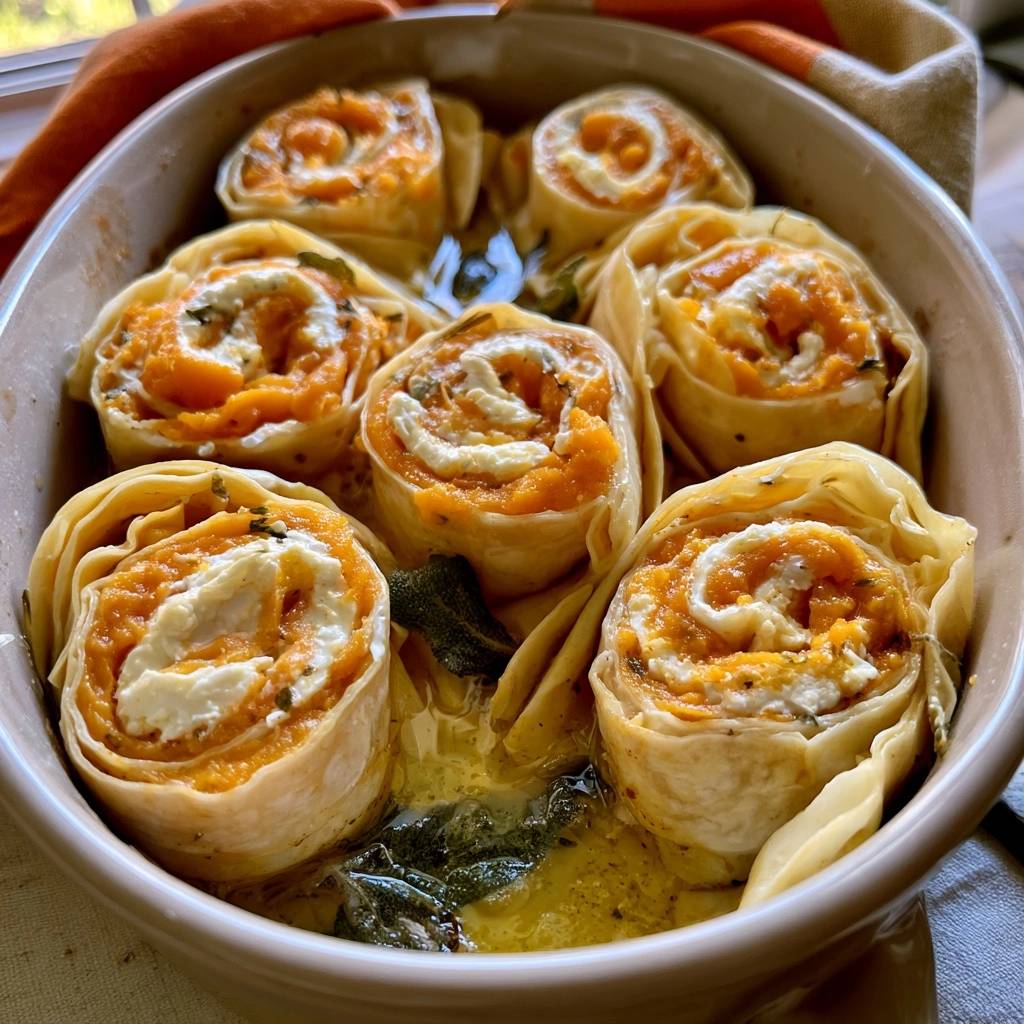
Low-sodium chicken broth goes around the rolls, not over them. It helps keep the dish moist as it bakes, while leaving the exposed tops ready to take on the sage butter. Coating the baking dish with nonstick cooking spray also helps keep the rolls from sticking as you lift them out.
Brown the butter with fresh sage leaves, swirling the pan as it cooks. Watch for a golden color, a nutty aroma, and crisp leaves; those cues tell you the butter is ready. Pour it over the rolls so the leaves are distributed across the dish. If the butter darkens too far, its flavor can turn bitter, so keep your attention on the pan.
Use the covered bake for a tender center
Covering the baking dish tightly with foil traps steam around the rolls and helps heat the ricotta filling through. Removing the foil for the final part of baking lets the tops brown lightly. The rolls are ready when they are hot in the center and their tops have a gentle golden color; the goal is a tender rotolo, not a crisp or deeply browned crust.
Let the dish rest before serving so the rolls settle and are easier to handle. Spoon the buttery pan juices over them to bring the sage-scented sauce back across the tops. If a roll starts to unwind, place it seam side down again and handle it gently.
Frequently Asked Questions
Can I use pumpkin pie filling in the rotolo?
Use plain canned pumpkin puree. Pumpkin pie filling is already sweetened and seasoned, which would change the savory balance of the ricotta, Parmesan, sage, and nutmeg filling.
How do I keep lasagna noodles from tearing?
Cook them until pliable but still able to hold their shape, then drain gently and lay them flat. Overcooked noodles can become too soft to roll neatly, while undercooked noodles may crack when bent.
Why does the broth go around the rolls?
Pouring broth around the rolls adds moisture to the baking dish while keeping their tops exposed for the sage butter. The covered bake helps heat the filling, and uncovering the dish lets the tops brown lightly.
Pumpkin and Ricotta Rotolo with Sage Butter
Course: Main CourseCuisine: AmericanDifficulty: Medium4
servings20
minutes38
minutes555
kcal1
hour3
minutesCooked lasagna noodles are spread with a pumpkin and ricotta filling, rolled into spirals, and baked in a golden sage butter until hot and lightly browned on top. The result is a soft, savory rotolo with a nutty, herb-scented sauce.
Ingredients
- For the rolls
8 lasagna noodles
1 tbsp kosher salt, for the pasta water
15 oz part-skim ricotta cheese
1 cup canned pumpkin puree (not pie filling)
1/2 cup grated Parmesan cheese
1 large egg
1 tbsp finely chopped fresh sage
1/4 tsp ground nutmeg
1/2 tsp kosher salt
1/4 tsp black pepper
Nonstick cooking spray, for the baking dish
- For the sage butter
4 tbsp unsalted butter
12 fresh sage leaves
1/2 cup low-sodium chicken broth
Directions
- Bring a large pot of water with 1 tablespoon salt to a boil. Add the lasagna noodles and cook for 9 minutes, until pliable but not falling apart. Drain and lay the noodles flat on a clean kitchen towel or sheet of parchment paper.
- In a medium bowl, stir together the ricotta, pumpkin puree, Parmesan, egg, chopped sage, nutmeg, 1/2 teaspoon salt and the pepper until smooth.
- Heat the oven to 375°F. Coat a 9×13-inch baking dish with nonstick cooking spray.
- Spread about 6 tablespoons of the filling over each noodle, leaving a 1/2-inch border at the far short end. Starting from the short end nearest you, roll each noodle into a tight spiral. Place the rolls seam side down in the baking dish in two rows of four.
- Pour the chicken broth into the dish around the rolls, not over the tops.
- Melt the butter in a small saucepan over medium heat. Add the sage leaves and cook for 4 minutes, swirling the pan, until the butter turns golden brown, smells nutty and the sage leaves are crisp.
- Pour the sage butter and leaves evenly over the rolls.
- Cover the dish tightly with foil and bake for 15 minutes. Remove the foil and bake for 10 minutes more, until the rolls are hot in the center and the tops are lightly golden.
- Let the rolls rest for 5 minutes. Spoon the buttery pan juices over the rolls and serve warm.
Notes
- Use plain canned pumpkin puree, not pumpkin pie filling, which contains sugar and spices that would make the filling too sweet for a savory dish.
- Cooking the noodles for only 9 minutes keeps them flexible enough to roll without cracking. Longer cooking makes them soft and more likely to tear.
- Covering the dish with foil traps steam, which heats the ricotta filling through. Removing the foil for the last 10 minutes lets the tops brown lightly.