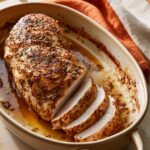
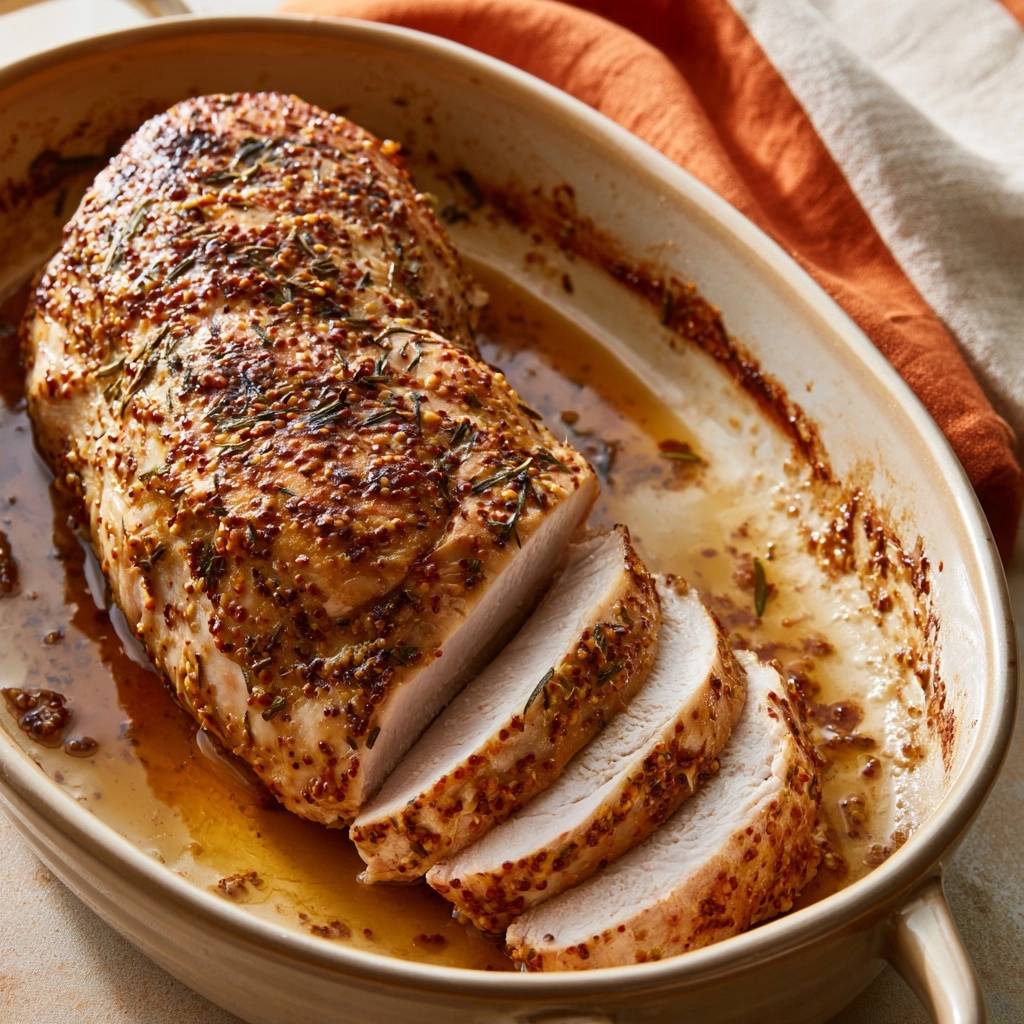
Rosemary Dijon turkey tenderloin brings a bold mustard coating and aromatic herbs to a lean turkey dinner. As it roasts, the outside browns while the tenderloin stays juicy, and the chicken broth in the baking dish becomes part of the savory drippings.
The recipe card has the oven temperature and roasting time for your tenderloin. Use those details as your guide, then check the thickest part with an instant-read thermometer so you can tell when the meat is ready.
Why Dijon and whole-grain mustard work together
Dijon mustard gives the coating a smooth, tangy base that spreads easily over the turkey. Whole-grain mustard adds a more textured bite, so each slice carries a little contrast. Olive oil helps the mixture coat the surface, while chopped fresh rosemary and minced garlic bring an herbal, savory aroma.
Paprika, kosher salt, and black pepper round out the seasoning without taking over the mustard and rosemary. Spread the mixture over the entire tenderloin for an even layer. The coating is meant to cling to the meat as it roasts, so take a moment to cover the sides as well as the top.
Keep the turkey juicy as it roasts
Patting the tenderloin dry before coating it helps the mustard mixture adhere instead of sliding across a damp surface. Place the meat in a baking dish and pour low-sodium chicken broth around it, rather than over the coating. That keeps the seasoned top in place while the broth collects beneath the turkey.
Roast the tenderloin uncovered, following the recipe card. Its size and thickness affect how quickly the center cooks, so avoid relying on appearance alone. Insert an instant-read thermometer into the thickest part. If it has not reached the temperature listed on the card, continue roasting in short increments and check again.
Rest before slicing and use the drippings
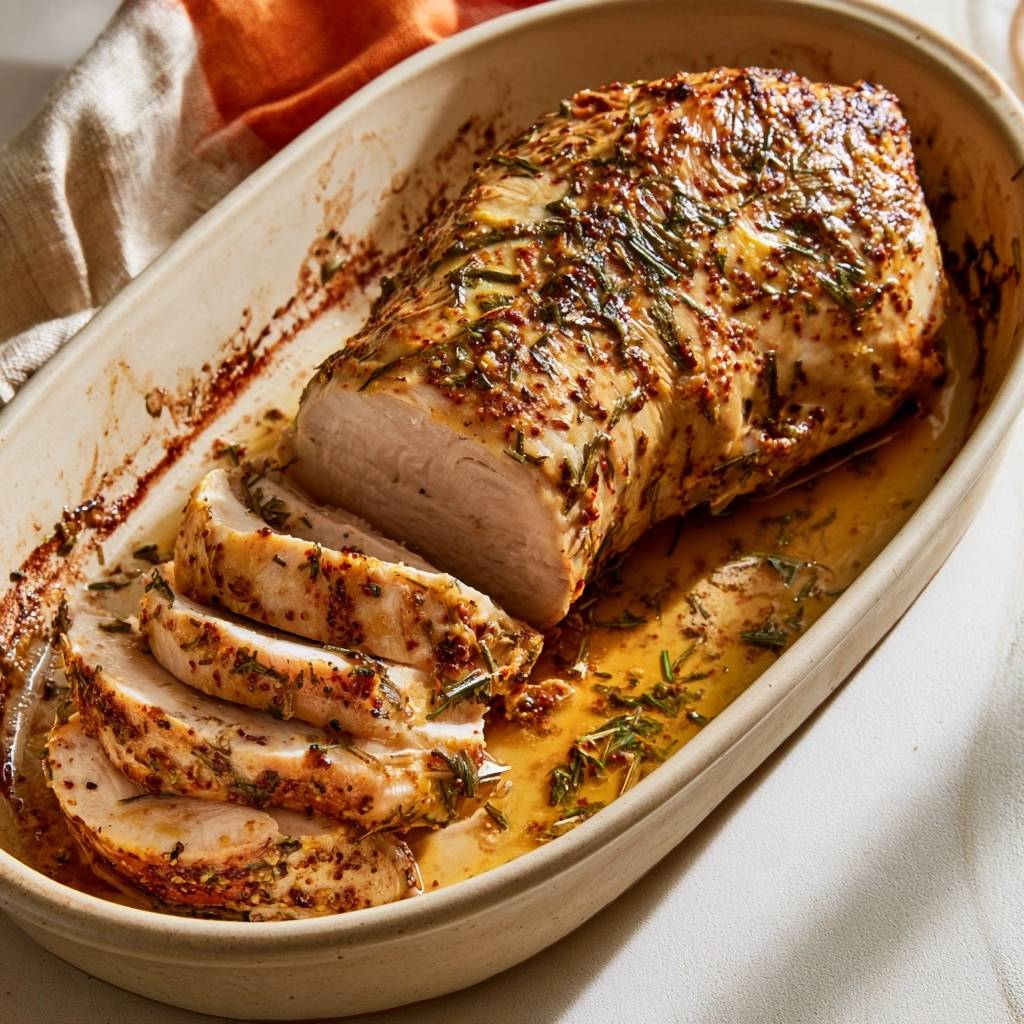
After roasting, let the turkey rest for the time specified on the recipe card before slicing. Cutting right away can make it harder to keep the slices juicy. Once rested, slice across the tenderloin and spoon the pan drippings over the meat.
The broth and the seasoned coating mingle in the baking dish as the turkey cooks, making the drippings a simple finish for the slices. Spoon them over just before serving so the rosemary, garlic, and mustard flavor reaches the meat.
Frequently Asked Questions
How do I know when turkey tenderloin is done?
Check the thickest part with an instant-read thermometer and compare the reading with the temperature listed on the recipe card. If it has not reached that temperature, keep roasting in short increments and check again; thickness can affect how long the tenderloin takes.
Why add chicken broth around the turkey?
The low-sodium chicken broth sits in the baking dish beneath the tenderloin and combines with the cooking juices and seasoning. Pour it around the meat so the mustard coating stays on the turkey, then spoon the drippings over the slices after roasting.
Should I slice the turkey tenderloin as soon as it comes out of the oven?
Let it rest for the time listed on the recipe card before slicing. Resting gives you a better chance of keeping the meat juicy as you cut it. Afterward, slice the tenderloin and finish with the pan drippings.
Rosemary Dijon Turkey Tenderloin
Course: Main CourseCuisine: AmericanDifficulty: Easy4
servings15
minutes25
minutes230
kcal50
minutesTurkey tenderloin roasts with Dijon, whole-grain mustard, rosemary, and garlic until browned and juicy. Serve it sliced with the pan drippings.
Ingredients
1 1/2 lb turkey tenderloin
2 tbsp Dijon mustard
1 tbsp whole-grain mustard
1 tbsp olive oil
1 tbsp chopped fresh rosemary
2 garlic cloves, minced
1/2 tsp paprika
3/4 tsp kosher salt
1/4 tsp black pepper
1/4 cup low-sodium chicken broth
Directions
- Preheat the oven to 400°F. Pat the turkey tenderloin dry and place it in a baking dish.
- In a small bowl, stir together the Dijon mustard, whole-grain mustard, olive oil, rosemary, garlic, paprika, salt, and pepper. Spread the mixture over the turkey. Pour the chicken broth into the dish around the meat.
- Roast uncovered for 25 minutes. Check the thickest part with an instant-read thermometer; if it has not reached 165°F, continue roasting in short increments until it does.
- Rest the turkey for 10 minutes, then slice and spoon the pan drippings over the top.
Notes
- Check the temperature in the thickest part of the tenderloin; its size and thickness can affect how long it takes to reach 165°F.