
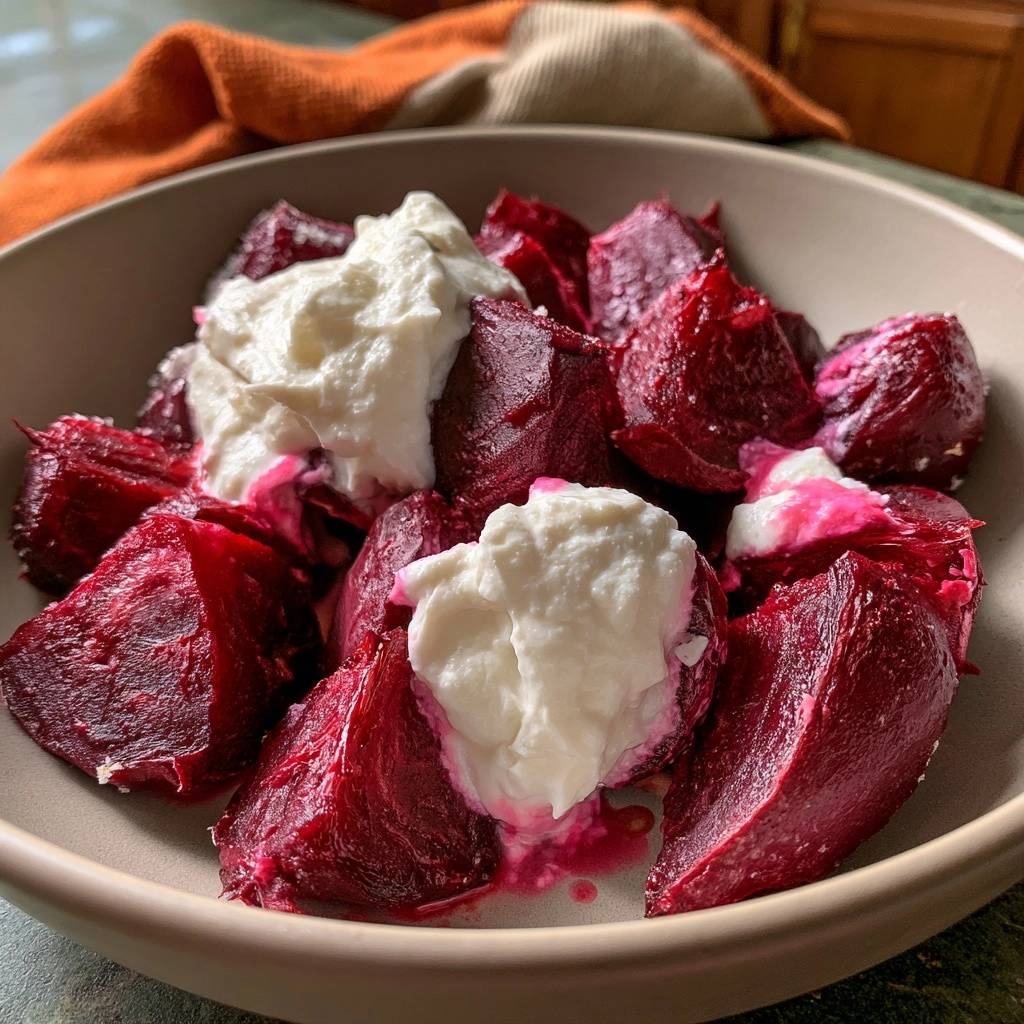
Salt-baked beets are one of the easiest ways to make a vegetable side feel special. Whole beets roast inside a coarse salt crust until tender, then get cut into wedges and topped with a tangy horseradish cream made with plain Greek yogurt.
This side also fits well into high-protein meals. The yogurt gives the cream a thick, spoonable body, so it clings to warm beets instead of running across the plate.
Why a Salt Crust Works
Coarse kosher salt is the key. Stirred with water, it should feel like damp sand, which lets it pack tightly around the beets and form a firm shell. That shell keeps the flesh moist while it softens, so the beets turn out tender rather than dry.
Pack the salt snugly over every surface, especially the top. Gaps let steam escape and leave thin spots that can dry out. Once the crust has set, cracking it with a sturdy spoon is easier than you might expect.
Choosing and Prepping Your Beets
Pick beets of similar size so they finish together. Larger beets need more time, which is why the skewer test matters more than any fixed schedule. Leaving a bit of stem attached gives you a handle for lifting them out of the crust.
Scrub the skins well before they go into the salt. Beets stain easily, so protect your cutting board and keep a damp towel nearby.
Balancing a Horseradish Cream
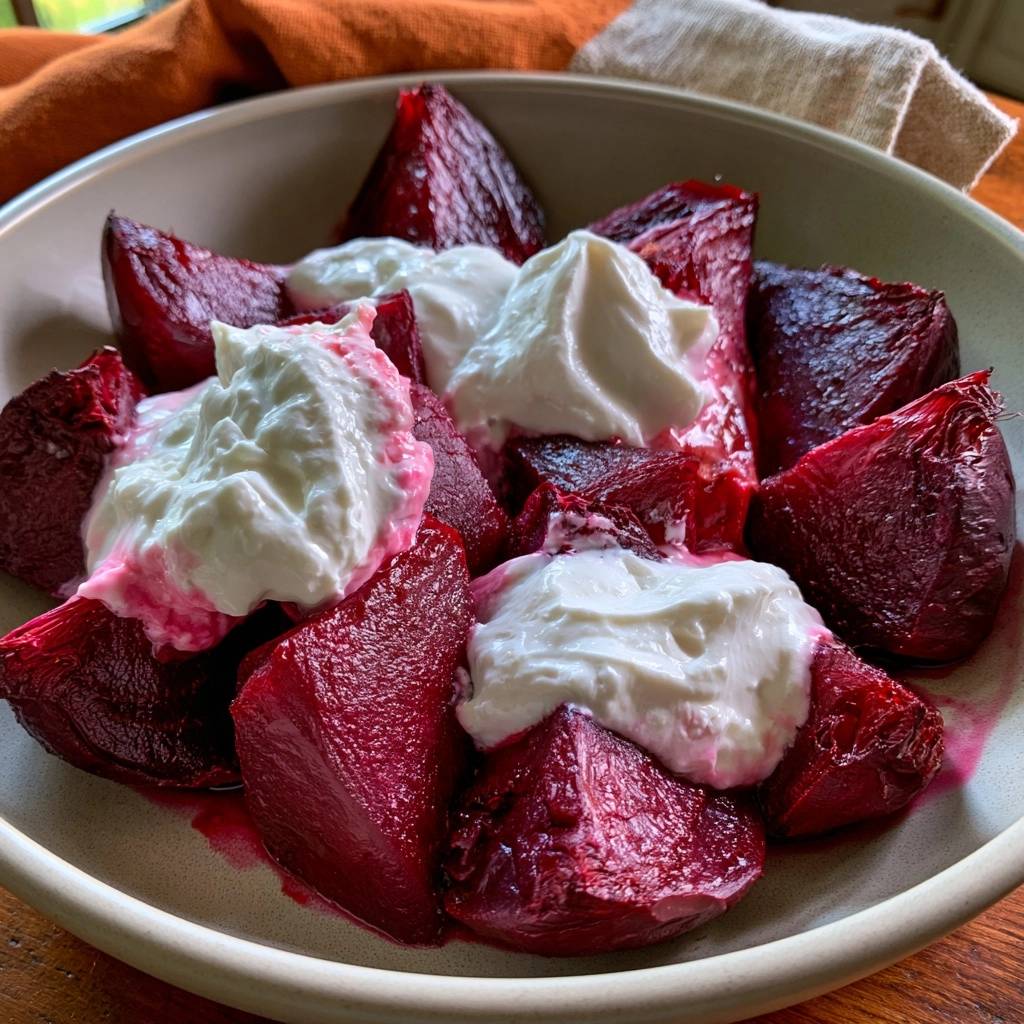
Each ingredient in the cream has a purpose. Greek yogurt gives a cool, tangy base, lemon juice adds brightness, and Dijon mustard brings a savory edge that complements the earthy sweetness of the beets.
Prepared horseradish varies quite a bit from jar to jar. Start with a modest amount, taste, and keep adding until the cream has the kick you like. A sharper cream stands up well to sweet beets, while a milder one lets the vegetables lead.
Avoiding Common Mistakes
The biggest mistake is pulling the beets too soon. If a skewer meets resistance in the center, give them more time even if the outside looks done. Undercooked beets stay firm and taste raw, while patient roasting gives you the soft texture that makes this dish worth making.
Brush off clinging salt before peeling, or the flesh can taste gritty. Dress the wedges while they are still warm so they absorb the olive oil, vinegar, and pepper. Spoon the cream on at the end so it stays thick and bright.
Frequently Asked Questions
How can I tell when the beets are done?
Push a skewer through the crust into the center of a beet. If it slides in easily, the beets are tender and ready to rest. If you feel resistance, return them to the oven and test again after more time, as the recipe card directs.
Will the beets taste too salty?
Usually not. The crust mostly protects the flesh and keeps it moist, so the sweet earthy flavor comes through. Brush away any clinging salt before you peel and cut. Then season the wedges with the kosher salt listed on the recipe card.
Why does my horseradish cream taste mild?
Prepared horseradish varies in strength from brand to brand, so the same amount can taste different. Stir in a little more, taste again, and repeat until the cream has the sharpness you want. The yogurt and lemon mellow the heat, so the final cream will be gentler than plain horseradish.
Salt-Baked Beets with Horseradish Cream
Course: Side DishCuisine: AmericanDifficulty: Easy4
servings15
minutes1
hour5
minutes170
kcal1
hour40
minutesWhole beets roast inside a coarse salt crust until tender, then get cut into wedges and topped with tangy Greek yogurt and horseradish cream. Serve warm as a simple vegetable side.
Ingredients
- Salt-baked beets
2 lb medium beets, scrubbed, with about 1 inch of stems left attached
3 lb coarse kosher salt
1/2 cup water
1 tbsp olive oil
2 tsp apple cider vinegar
1/4 tsp black pepper
1/4 tsp kosher salt
- Horseradish cream
1 cup plain nonfat Greek yogurt
1 tbsp prepared horseradish
1 tsp lemon juice
1 tsp Dijon mustard
1/8 tsp kosher salt
Directions
- Heat the oven to 400°F. Stir the coarse kosher salt and water together until the salt feels like damp sand. Spread about 1 inch of the mixture over the bottom of a 9×13-inch baking dish.
- Set the beets on the salt, then cover them completely with the remaining salt mixture, packing it around the beets. Bake for 65 minutes. Check a beet by pushing a skewer through the crust; if it does not slide into the center easily, bake in 10-minute increments until tender.
- While the beets bake, stir together the Greek yogurt, horseradish, lemon juice, Dijon mustard, and 1/8 teaspoon kosher salt. Set the horseradish cream aside.
- Let the beets rest in the crust for 20 minutes. Carefully crack the salt crust with a sturdy spoon, remove the beets with tongs, and brush or rinse away any clinging salt. Peel the beets and cut them into wedges.
- Toss the warm beet wedges with the olive oil, apple cider vinegar, black pepper, and 1/4 teaspoon kosher salt. Arrange them on a serving plate and spoon the horseradish cream over the top.
Notes
- Beet size affects roasting time; continue baking in 10-minute increments until a skewer reaches the center easily.
- Prepared horseradish varies in strength, so stir in a little more to taste if you prefer a sharper cream.