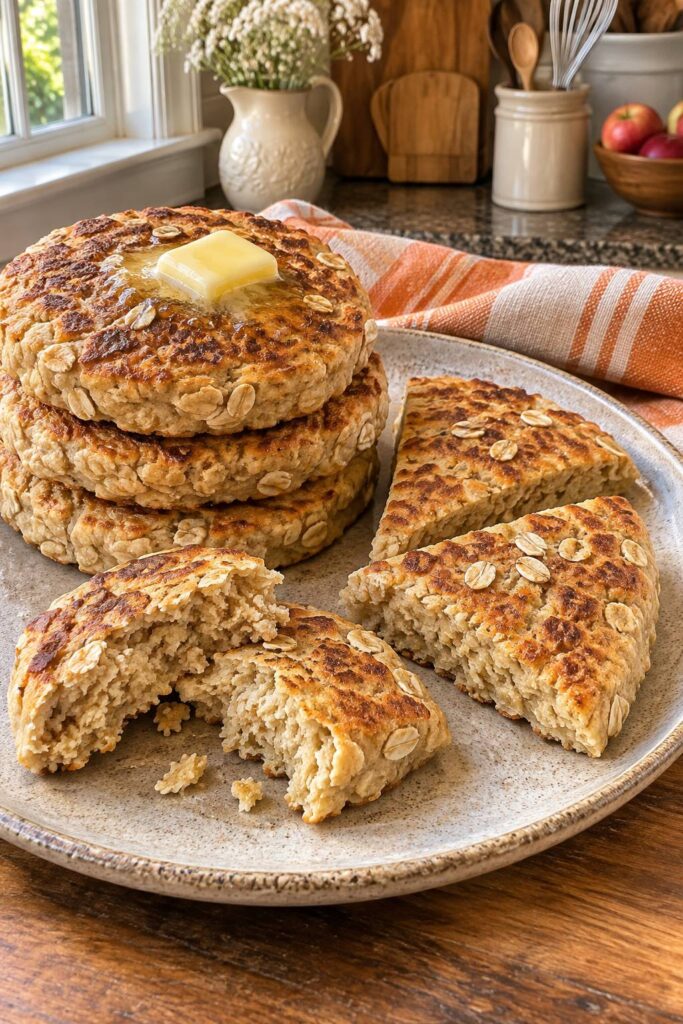
Bannocks are a traditional Scottish oat and flour round, and this version uses buttermilk for a tender crumb with a gentle tang. Cooked in a skillet instead of an oven, they turn golden and crisp on the outside while staying soft inside. They make a warm, filling breakfast that feels special without much effort on a slow weekend morning.
The dough comes together quickly from simple pantry staples, so you can have fresh bannocks on the table in no time. The key is texture. You want a dough that is soft and slightly sticky but still holds its shape when you pat it out. Once you understand what the dough should feel like, the rest of the process becomes much easier to manage.
Why Old-Fashioned Oats and Buttermilk Work Together
Old-fashioned rolled oats keep their shape and give bannocks a pleasant, hearty bite. Thinner, faster-cooking oats break down more and turn pastier, so it pays to stick with the classic style. Resting the dough gives the oats time to soften and absorb the liquid, which is why the rest period on the recipe card matters. A dough that skips this pause can feel dry and gritty.
Buttermilk does more than add moisture. It gives the rounds a tender crumb and a slight tang that balances the richness of the butter. Stir it in gently, just until the dough holds together, because overworking it can make the bannocks tough.
Getting the Dough Texture Right
The dough should feel soft and slightly tacky, never wet or runny. If it sticks to your hands, dust in a little more flour, adding it gradually and working lightly so the rounds stay tender. If the edges look dry and crack as you pat them out, work in a small splash of buttermilk at a time until the surface smooths out.
Shape the rounds on a lightly floured surface and aim for an even thickness across each one. Even rounds cook at the same pace, which keeps the centers from lagging behind the edges.
Controlling the Heat in the Skillet
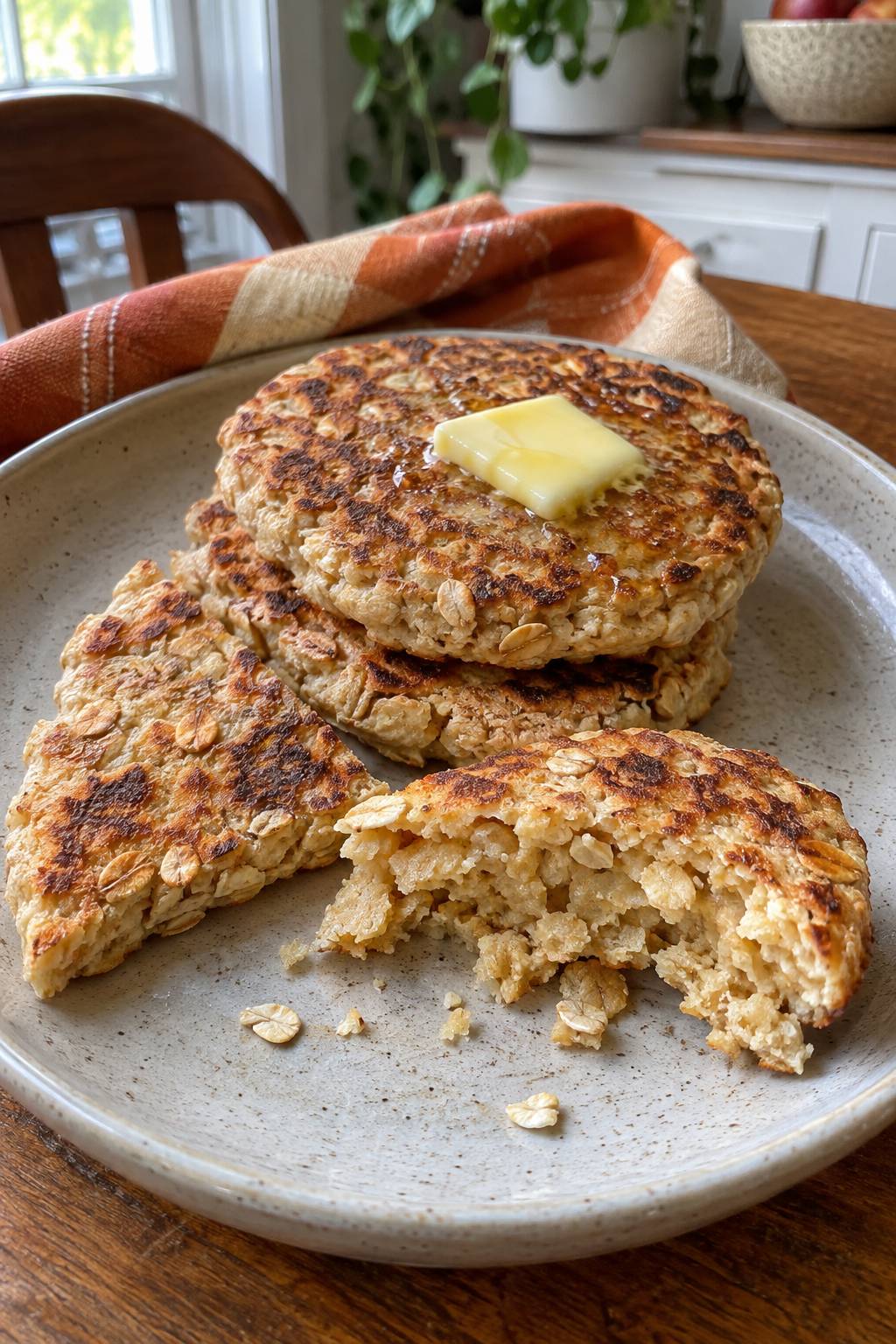
Medium-low heat is the most important habit to build. Bannocks are thick enough that the centers need time to cook through, and a hot pan will brown the outside long before the middle is set. The melted butter in the pan gives the bottoms a rich, golden finish, but it should sizzle gently rather than smoke.
Watch the color of the bottoms rather than the clock, and be patient. A thicker round needs a little extra time on each side. Before you flip, lift an edge with a wide spatula to check that the underside is evenly browned and not pale in spots.
Serving Bannocks Warm with Softened Butter
Bannocks are at their best while still warm, when the crisp edges contrast with the soft, tender inside. Cut them into wedges just before serving and set a small dish of softened butter alongside so everyone can spread it as they like. Because they are simple and sturdy, they suit a relaxed family breakfast as well as a quick start to a busy day.
Frequently Asked Questions
Why does this recipe call for old-fashioned rolled oats?
Old-fashioned rolled oats hold their shape during the rest and the skillet cook, giving the rounds a chewy, hearty bite. Faster-cooking oats break down more and produce a pastier texture, which is why the classic style is the better choice for this bannock.
What should I do if my dough is too sticky to shape?
Dust the dough with a little all-purpose flour, adding it gradually as you pat each portion out. Work lightly on a floured surface and avoid adding too much at once, since extra flour can make the rounds dense. Once the dough feels soft but manageable, shape the rounds evenly.
How can I tell when the bannocks are done?
Look for deep golden brown bottoms and a second side that is golden as well. Then press the center gently. It should feel firm rather than soft or doughy. Thicker rounds need more time, so trust the color and firmness over the clock before you transfer them to a board to cut.
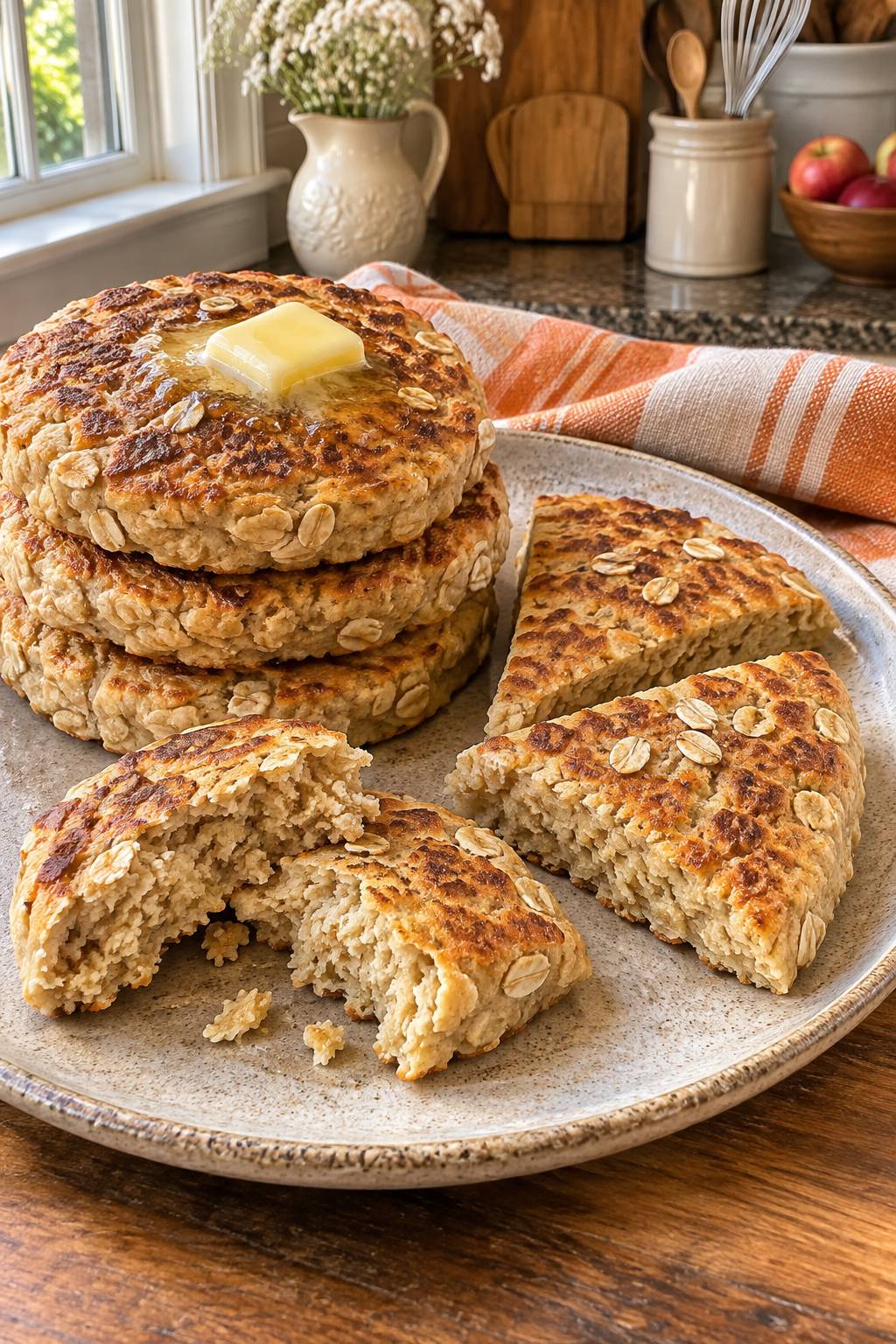
Scottish Oat Bannocks with Buttermilk
Course: BreakfastCuisine: ScottishDifficulty: Easy4
servings15
minutes14
minutes340
kcal39
minutesSoft oat and flour rounds are cooked in a skillet until golden and crisp on both sides, then cut into wedges and served warm with butter. Buttermilk gives them a tender crumb and a slight tang.
Ingredients
- For the bannocks
1 1/2 cups old-fashioned rolled oats
1/2 cup all-purpose flour, plus more for shaping
1 tablespoon packed brown sugar
1/2 teaspoon baking soda
1/2 teaspoon kosher salt
1 1/4 cups buttermilk
2 tablespoons unsalted butter, melted
- For cooking and serving
1 tablespoon unsalted butter
2 tablespoons unsalted butter, softened, for serving
Directions
- Make the dough
- In a large bowl, whisk together the rolled oats, flour, brown sugar, baking soda and salt.
- Stir in the buttermilk and melted butter until a soft, slightly sticky dough forms. Let it rest for 10 minutes so the oats can soften and absorb the liquid.
- Shape the bannocks
- Divide the dough in half. On a lightly floured surface, pat each half into a 6-inch round about 1/2 inch thick, dusting with flour as needed.
- Cook
- Melt the 1 tablespoon of butter in a 12-inch skillet over medium-low heat. Add both rounds and cook for 7 minutes, until the bottoms are deep golden brown.
- Flip the rounds with a wide spatula and cook for 7 minutes more, until the second side is golden and the centers feel firm when pressed.
- Serve
- Transfer the bannocks to a cutting board or wire rack. Cut each round into 4 wedges and serve warm with the softened butter.
Notes
- Use old-fashioned rolled oats rather than instant oats. Instant oats break down more and produce a pastier texture.
- If the dough is too sticky to shape, add flour 1 tablespoon at a time. If it is dry and cracks at the edges, add buttermilk 1 tablespoon at a time.
- Keep the heat at medium-low so the outside browns at the same pace as the center cooks through. A thicker round needs a few extra minutes per side.